
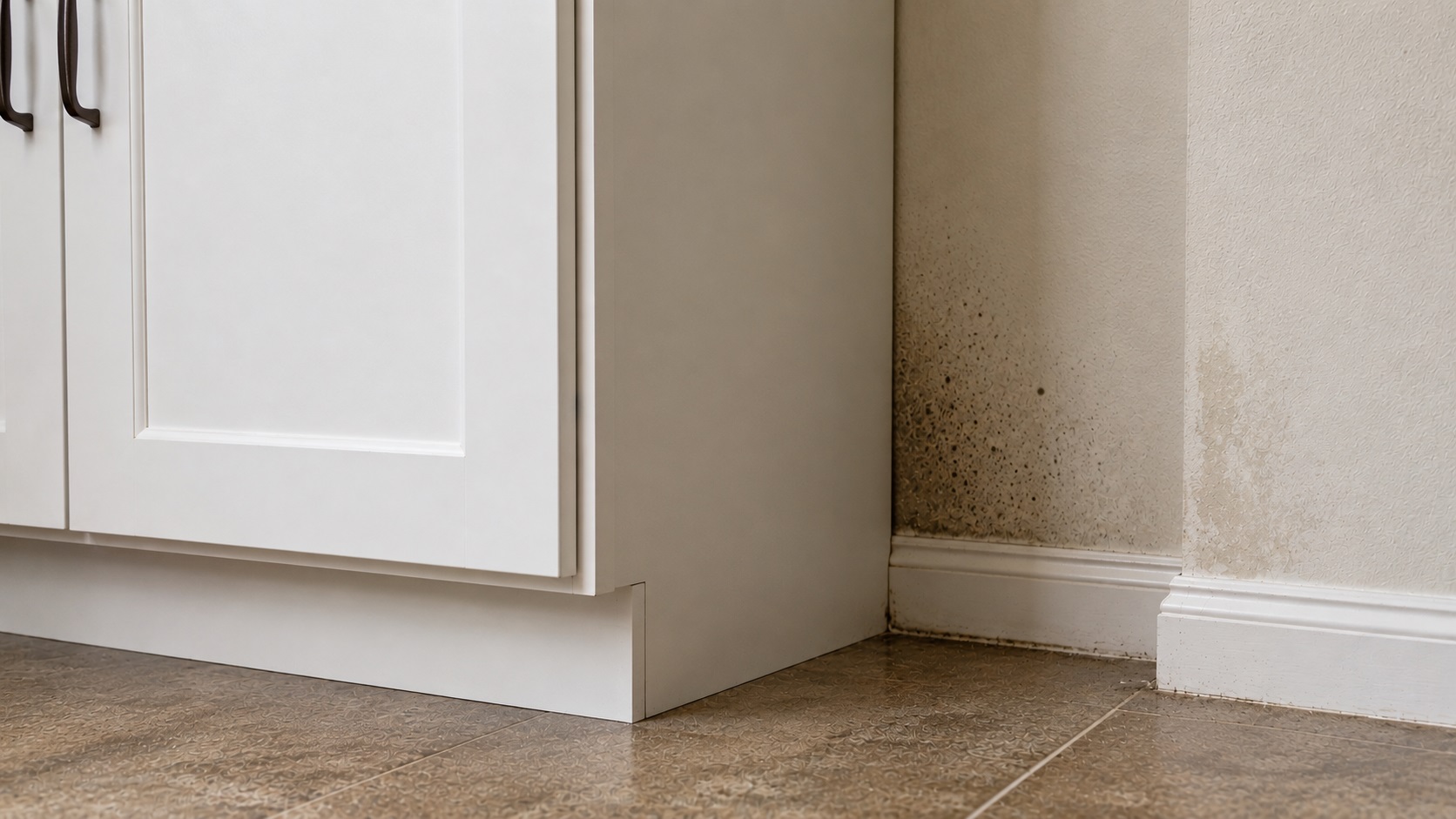
Why Mold Forms Behind Kitchen Cabinets (Hidden Causes Most Homeowners Miss)
Mold behind kitchen cabinets is a common but often hidden problem in many homes. Because cabinets sit tightly against walls and restrict airflow, moisture that enters these areas can remain trapped for long periods. When moisture combines with wood-based cabinet materials and limited ventilation, mold growth can begin quickly—often without obvious warning signs.
Many homeowners first discover mold only after noticing symptoms such as odors, cabinet swelling, or wall staining. These warning signs are explained in this guide to recognizing water damage behind kitchen cabinets, which helps identify early indicators of hidden moisture exposure.
This article explains the most common causes of mold behind kitchen cabinets and how damp conditions become trapped in these concealed areas. Because recurring cabinet mold usually means the source has not been fully corrected, this topic also connects closely with why moisture problems keep returning in hidden areas of the home.
Why Areas Behind Kitchen Cabinets Are Prone to Mold
The space behind kitchen cabinets creates a unique environment where moisture can accumulate easily. Unlike open areas of a kitchen, cabinet backs restrict airflow and prevent surfaces from drying naturally. When moisture enters these enclosed spaces, it often remains hidden and difficult to remove.
Several structural factors make cabinet areas particularly vulnerable to mold:
- Limited airflow behind cabinet backs
- Cooler wall surfaces that encourage condensation
- Wood-based materials that absorb moisture
- Restricted visibility that delays detection
- Proximity to plumbing and appliances
Cabinets are commonly installed tightly against walls, leaving little room for air movement. Without consistent airflow, moisture evaporates slowly and remains inside cabinet structures longer than expected. Even small amounts of trapped moisture can support mold growth when conditions remain damp.
Temperature differences between walls and indoor air also increase mold risk. Exterior walls behind cabinets may remain cooler than surrounding areas, especially in humid kitchens. When warm, humid air contacts these cooler surfaces, condensation can form. This moisture may remain unnoticed because it develops behind cabinet panels rather than on visible surfaces.
In many kitchens, cabinet locations place them directly beside plumbing systems. Water supply lines, drain pipes, and appliance connections introduce additional moisture risks. Even slow leaks can introduce enough moisture to support mold development over time.
The Most Common Moisture Sources Behind Kitchen Cabinets
Mold behind kitchen cabinets rarely develops without a moisture source. In most cases, mold forms because water enters concealed cabinet areas and remains trapped. Identifying the specific moisture source is essential for preventing recurring mold growth and avoiding long-term structural damage.
Several moisture sources are responsible for most mold problems behind cabinets. These sources often develop slowly and may go unnoticed for extended periods.
Sink Plumbing Leaks
Sink plumbing leaks are one of the most common causes of mold behind kitchen cabinets. Because sink pipes are hidden inside cabinets, leaks can remain undetected until moisture has already spread into surrounding materials.
Typical plumbing-related moisture sources include:
- Loose supply line connections
- Cracked drain pipes
- Leaking shutoff valves
- Worn pipe seals or fittings
- Slow drips beneath sink basins
Even a slow drip can create significant moisture problems over time. Water may collect beneath cabinet floors, wick into cabinet backs, or seep into nearby wall materials. Sink-specific warning signs are covered in signs of water damage under kitchen sinks.
Dishwasher Leaks
Dishwashers are another frequent source of hidden moisture near kitchen cabinets. Because dishwashers connect to both water supply and drainage systems, multiple components may fail and introduce water into surrounding cabinet spaces.
Common dishwasher-related moisture causes include:
- Door seal failure allowing water escape
- Loose drain hose connections
- Damaged water supply tubing
- Overflow events during operation
- Internal component leaks
Dishwasher leaks often allow water to spread beneath cabinets and into flooring materials before becoming visible. This hidden spread increases the likelihood of mold growth behind adjacent cabinets.
Refrigerator Water Line Leaks
Refrigerator water supply lines are another common source of hidden moisture. These small tubing connections can develop cracks or loosen over time, leading to slow leaks that persist unnoticed.
Typical refrigerator-related moisture issues include:
- Cracked plastic water lines
- Loose fittings behind appliances
- Ice maker line leaks
- Condensation around water dispensers
Because refrigerators are often installed against cabinets or walls, leaks may remain hidden for long periods. Moisture may accumulate behind cabinet panels before visible symptoms appear.
Wall Moisture Intrusion
Water entering walls from outside the home can also lead to mold behind cabinets. Exterior wall leaks sometimes allow moisture to travel downward inside wall cavities, eventually reaching cabinet locations.
Common external moisture sources include:
- Roof leaks allowing water into wall cavities
- Window leaks near kitchen walls
- Poor exterior sealing around siding
- Cracked exterior wall materials
Moisture entering from outside may remain hidden behind cabinets for long periods. Water traveling through wall cavities often spreads downward before becoming visible. Similar moisture movement patterns are explained in this guide to recognizing moisture inside exterior walls, which describes how water travels through concealed structures.
Condensation and Humidity Buildup
Not all mold problems behind cabinets originate from leaks. In some kitchens, condensation and high humidity create enough moisture to support mold growth without visible water intrusion.
Condensation typically occurs when warm, humid air contacts cooler surfaces behind cabinets. This condition is especially common in kitchens with poor ventilation or cabinets installed along exterior walls.
Humidity-related moisture sources include:
- Steam from cooking and dishwashing
- Poor kitchen ventilation
- High indoor humidity levels
- Cold exterior wall surfaces
When moisture remains trapped in enclosed cabinet spaces, even small amounts of condensation may create long-term damp conditions. Without proper ventilation, repeated humidity cycles can sustain mold growth over time.
How Trapped Moisture Leads to Mold Growth
Mold does not require large amounts of standing water to develop. In many kitchens, mold forms because small amounts of moisture remain trapped in enclosed cabinet spaces. Once moisture becomes trapped behind cabinet panels, it creates the damp conditions mold needs to grow.
Mold growth depends on three essential factors:
- Moisture that remains on or inside materials
- Organic materials such as wood or paper-backed surfaces
- Limited airflow that prevents drying
Kitchen cabinets naturally provide all three conditions. Most cabinet materials contain wood fibers that support mold growth, while cabinet installation methods restrict airflow and create enclosed spaces where moisture can persist.
Once moisture enters cabinet structures, it often spreads beyond the original wet area. Water can move through seams, joints, and porous materials, reaching areas that are not immediately visible.
Moisture Spreads Through Hidden Pathways
Water does not remain in one place after a leak or condensation event. Instead, moisture spreads through materials in several ways:
- Capillary movement through wood fibers
- Gravity-driven flow toward cabinet bases
- Absorption into subfloor materials
- Migration into wall surfaces behind cabinets
This spreading behavior explains why mold sometimes appears far from the original leak location. Even small leaks can affect larger areas if moisture continues moving through hidden pathways.
Many homeowners assume that drying visible surfaces is enough to stop mold growth. However, hidden moisture inside materials often remains long after surfaces appear dry. The drying process described in this guide to drying cabinets after kitchen leaks explains how moisture removal helps prevent these hidden conditions.
How Quickly Mold Can Begin Growing
Mold can begin forming much sooner than many people expect. Under favorable conditions, growth may begin within 24 to 48 hours after moisture exposure.
Several factors accelerate mold growth:
- Warm indoor temperatures
- High humidity levels
- Persistent moisture in enclosed spaces
- Organic materials such as wood and drywall
Behind cabinets, these conditions often occur simultaneously. Once mold begins growing, it may spread gradually along cabinet backs, wall surfaces, and nearby materials.
Environmental Factors That Increase Mold Risk
Environmental conditions inside the home play a major role in determining whether mold forms behind cabinets. Even without major leaks, certain conditions increase the likelihood of long-term moisture problems.
High Indoor Humidity
Humidity levels above 60 percent significantly increase mold risk. Kitchens commonly produce moisture through cooking, dishwashing, and cleaning activities. Without adequate ventilation, this moisture remains trapped indoors.
When humid air enters enclosed cabinet spaces, moisture may condense on cooler surfaces. Repeated humidity cycles create damp conditions that allow mold to develop gradually.
Poor Kitchen Ventilation
Ventilation plays a critical role in removing moisture from kitchen environments. Without proper airflow, humidity accumulates and increases moisture exposure behind cabinets.
Ventilation problems that increase mold risk include:
- Lack of exhaust fan usage
- Blocked ventilation pathways
- Sealed cabinet backs with no airflow access
- Restricted airflow beneath cabinet bases
Improving airflow helps reduce moisture buildup and supports long-term dry conditions.
Cabinets Installed on Exterior Walls
Cabinets installed against exterior walls face higher mold risk due to temperature differences. Exterior walls often remain cooler than interior surfaces, especially during colder seasons.
When warm indoor air contacts cooler wall surfaces, condensation may develop behind cabinets. This moisture often goes unnoticed because it forms in concealed areas.
These conditions are especially important when cabinets are installed along exterior-facing walls, where hidden dampness may develop before visible cabinet damage appears.
Persistent Minor Moisture Sources
Small moisture sources can be just as dangerous as large leaks when they remain active for extended periods. Persistent minor moisture may result from:
- Slow plumbing drips
- Condensation cycles
- Humidity buildup inside enclosed cabinets
- Improper sealing around fixtures
These small moisture sources often operate unnoticed for weeks or months. Over time, they create stable conditions that allow mold colonies to develop behind cabinet surfaces.
Why Mold Often Returns Behind Kitchen Cabinets
Mold behind kitchen cabinets often returns because the original moisture source was never fully corrected. Cleaning visible mold may temporarily improve appearance, but if moisture remains trapped behind cabinets, mold growth will usually continue.
Recurring mold usually points to moisture that is still active inside cabinet materials, wall cavities, or nearby flooring.
Common reasons mold returns behind cabinets include:
- Undetected plumbing leaks that continue slowly
- Incomplete drying after previous water exposure
- High humidity levels that remain uncontrolled
- Moisture trapped inside wall cavities
- Poor airflow behind cabinet installations
Temporary cleanup without moisture control allows mold to reappear over time. In many cases, recurring mold is linked to moisture that remains hidden inside cabinet structures. If cabinets were previously exposed to water, following proper drying methods—such as those outlined in this cabinet drying guide—helps reduce the likelihood of repeated mold growth.
Recurring mold often signals ongoing moisture exposure rather than isolated incidents. In some homes, moisture cycles develop slowly and may go unnoticed until mold returns multiple times.
How to Identify the Real Cause Before Fixing the Problem
Before cleaning, repainting, or covering damaged cabinet areas, identifying the true source of moisture is essential. Without locating the origin of moisture, visible cleanup may fail to stop mold from returning.
Begin with the most likely wet zones: sink plumbing, dishwasher edges, refrigerator water lines, exterior-facing walls, and cabinet areas that smell musty or stay damp after normal kitchen use.
Check Plumbing Connections First
Sink plumbing remains one of the most likely moisture sources behind kitchen cabinets. Inspect supply lines, shutoff valves, and drain connections carefully.
Watch for signs such as:
- Water droplets on pipe surfaces
- Damp cabinet floors beneath pipes
- Staining near plumbing joints
- Rust or corrosion around fittings
Even minor leaks can create ongoing moisture exposure that supports mold development.
Inspect Adjacent Appliances
Appliances such as dishwashers and refrigerators may introduce moisture into nearby cabinets. Because these components operate regularly, small leaks may go unnoticed for extended periods.
Inspect surrounding areas for:
- Water pooling beneath appliances
- Moisture along cabinet edges near appliances
- Visible signs of repeated dampness
- Unusual humidity levels near cabinet bases
Leaks from appliances often spread beneath cabinet structures, increasing the risk of hidden mold development.
Look for Wall and Exterior Moisture Sources
Moisture entering from exterior walls can travel behind cabinets and support mold formation. External water intrusion may result from roof leaks, siding damage, or window sealing failures.
Watch for signs such as:
- Stains appearing along wall surfaces
- Dampness near wall corners
- Peeling paint or wall discoloration
- Recurring moisture near exterior-facing cabinets
Moisture originating from exterior sources often spreads downward before becoming visible, so stains, damp corners, peeling paint, or recurring cabinet moisture should be checked as part of the same moisture pattern.
Evaluate Humidity and Ventilation Conditions
Humidity-related mold problems often develop gradually. Kitchens that lack proper ventilation may accumulate moisture during cooking and cleaning activities.
Humidity-related warning signs include:
- Condensation on nearby surfaces
- Musty odors inside cabinets
- Persistent dampness without visible leaks
- Moisture buildup during cooking or dishwashing
If humidity contributes to mold formation, use a hygrometer near the kitchen and inside problem cabinets if possible. Persistent readings above about 60% relative humidity, condensation on nearby surfaces, or musty odors after cooking are signs that ventilation and moisture control need improvement.
If cabinet materials feel soft, crumble when touched, show widespread mold, or remain damp after the obvious leak source is corrected, stop before covering or repainting the area. Hidden wall, cabinet, or subfloor moisture may require professional inspection before repairs are closed up.
Frequently Asked Questions About Why Mold Forms Behind Kitchen Cabinets
Why does mold grow behind kitchen cabinets?
Mold grows behind kitchen cabinets because moisture becomes trapped in enclosed spaces with limited airflow. When moisture combines with wood-based cabinet materials and restricted ventilation, mold growth conditions develop quickly.
Can mold form behind cabinets without visible leaks?
Yes, mold can form behind cabinets without visible leaks. Condensation, high humidity, or moisture entering from exterior walls can create damp conditions even when water leaks are not obvious.
Why does mold keep coming back behind cabinets?
Mold usually returns because the moisture source was never eliminated. Hidden leaks, trapped humidity, or incomplete drying allow moisture to remain inside cabinet structures.
Is humidity alone enough to cause mold behind cabinets?
Yes, high humidity can support mold growth if moisture remains trapped inside enclosed cabinet spaces. Poor ventilation increases the likelihood of humidity-related mold problems.
How long does it take mold to form behind cabinets?
Mold can begin forming within 24 to 48 hours when moisture remains present. Warm temperatures and high humidity accelerate growth.
The Real Cause Must Be Fixed Before Cabinet Mold Stops Returning
Mold behind kitchen cabinets forms when moisture becomes trapped in enclosed spaces that lack proper airflow. Whether moisture originates from plumbing leaks, appliance failures, humidity buildup, or exterior wall intrusion, the underlying cause must be identified before lasting solutions can be implemented.
Understanding how mold forms behind cabinets helps homeowners recognize early risks and take preventive action before damage spreads. Once moisture sources are identified and controlled, long-term mold prevention becomes far more effective.
When cabinet moisture keeps returning after leaks, humidity, or exterior moisture sources have been addressed, the problem may require a deeper evaluation of hidden wall, cabinet, or flooring conditions. These next-step decisions are explained in how to fix persistent moisture behind kitchen cabinets.
One Comment
Comments are closed.