Signs of Mold Under Kitchen Floors
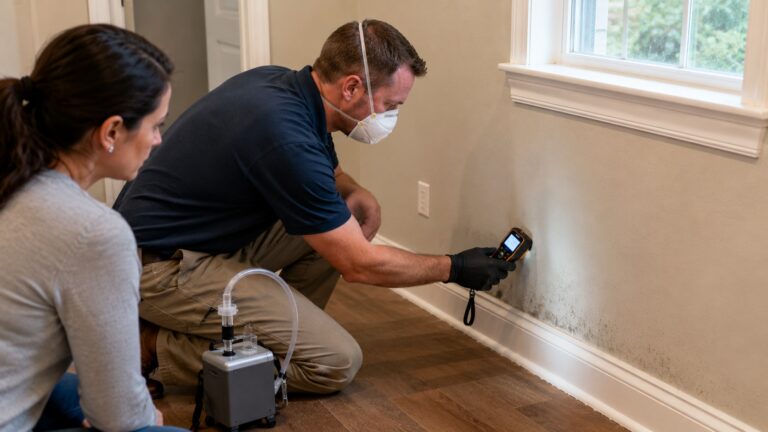
Mold under kitchen floors is often suspected before it is visible. The most common warning signs are persistent musty odors near the floor, dark seams or stains that return after cleaning, soft or spongy flooring, warping, and symptoms that appear near dishwashers, refrigerators, or sink cabinets.
Because kitchens have several moisture sources, a single stain or odor does not prove mold is present. The concern increases when several symptoms appear together or keep returning after cleaning. This guide explains the most realistic signs of mold under kitchen floors, how to tell them apart from ordinary dirt or wear, and when deeper inspection may be needed. For a broader room-by-room overview, see this guide to finding moisture in different areas of your home.
Early Signs of Mold Under Kitchen Floors
Hidden mold under kitchen flooring usually develops after moisture enters the floor system and fails to dry completely. The earliest signs are often subtle, but the concern increases when odor, staining, softness, or dampness near appliances appear together.
Persistent Musty Odors Near the Floor
A persistent musty odor is one of the most reliable early warning signs of mold developing under kitchen floors. Unlike temporary smells caused by cooking or garbage, mold-related odors tend to linger and return even after the area has been cleaned.
This smell often develops when moisture becomes trapped beneath flooring materials. Mold growth can produce a distinctive musty scent that is frequently strongest near seams, edges, or areas where flooring meets cabinets or walls.
In many kitchens, the odor may be most noticeable:
- Near the dishwasher
- Around the refrigerator water line
- Under sink cabinets
- Along baseboards or toe-kick areas
- Near previously repaired leak locations
If musty smells repeatedly return after cleaning, it may indicate moisture remains trapped beneath the floor. This article on why kitchen floors develop mold after leaks explains how moisture becomes trapped in flooring systems after leaks.
Mold odors can appear before visible staining or floor damage. If the flooring surface still looks clean but the musty smell keeps returning from the same low area, the odor may be the first warning sign of hidden growth below the surface.
Odors That Return After Cleaning
Odors that disappear after mopping but return later often point below the finished floor rather than to surface dirt. For example, if the kitchen smells fresh for a few hours and then the same low musty odor returns near a seam, cabinet, or appliance, the source is likely below the surface. Surface cleaning will not remove mold hidden in underlayment or subfloor materials.
This recurring odor pattern is particularly common after:
- Dishwasher leaks that were cleaned but not fully dried
- Refrigerator water line drips
- Slow plumbing leaks under the sink
- Repeated heavy mopping
If recurring odors follow known moisture exposure, the situation may warrant closer inspection. This guide on how to inspect kitchen flooring for hidden moisture explains what to check before the damage spreads farther.
Dark Stains, Dirty-Looking Seams, and Discoloration
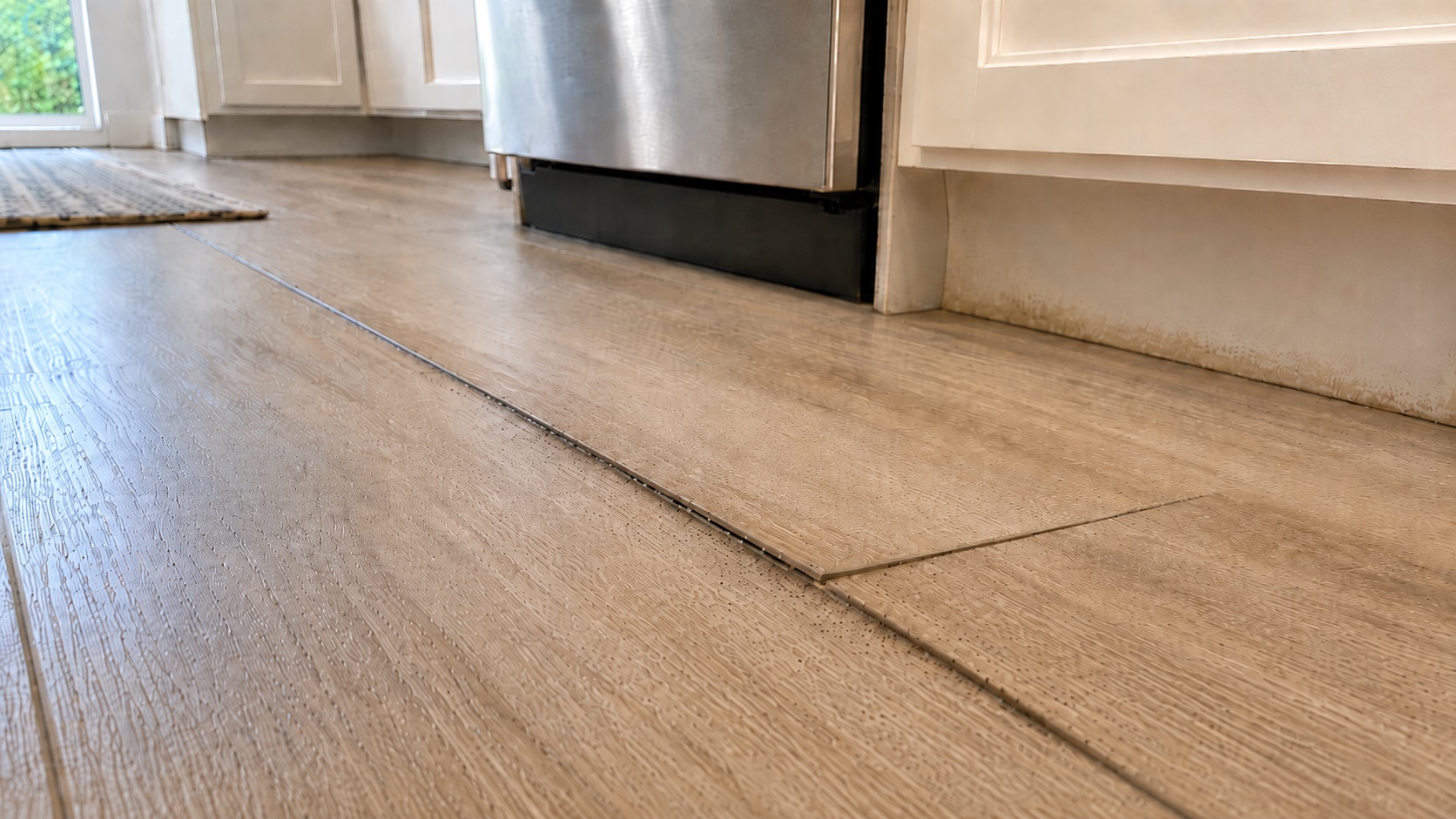
Visual changes are another warning sign, especially when dark seams, unusual staining, or dirty-looking areas remain after cleaning. In laminate, vinyl, tile, and wood flooring, moisture often enters at seams, grout lines, edges, or damaged transitions before spreading beneath the finished surface.
Darkening Along Flooring Seams
One of the most recognizable visual signs is darkening along seams or edges of flooring panels. This often appears as thin dark lines that become more noticeable over time.
In laminate and vinyl flooring, seams are vulnerable to moisture entry. Once water enters through these joints, it can spread sideways beneath the flooring and darken the seam line before broader floor damage becomes obvious.
Common locations where seam discoloration appears include:
- Edges near dishwashers
- Around refrigerator bases
- In front of sink cabinets
- Near floor transitions between rooms
- Along perimeter walls
If seam darkening continues to spread despite regular cleaning, it may signal hidden moisture. This guide on detecting moisture under kitchen floors explains how to confirm whether the floor system is still damp.
Stains That Do Not Clean Easily
Another concerning sign is staining that remains after repeated cleaning attempts. Unlike food spills or surface dirt, mold-related staining may appear embedded in the flooring material or seem to come from below the surface.
These stains may:
- Appear dark gray, brown, or black
- Return shortly after cleaning
- Spread slowly over time
- Appear near areas previously exposed to water
Persistent staining is especially concerning when it appears near known moisture sources such as sink cabinets or appliances. In these cases, moisture exposure may have occurred long before visible signs appeared.
If staining continues to expand after a known leak, the issue may no longer be only cosmetic. When flooring has been wet, proper steps to dry kitchen flooring after leaks can help prevent moisture from remaining trapped below the surface.
Soft, Warped, Loose, or Spongy Flooring
Changes in how kitchen flooring feels underfoot are often among the clearest signs that moisture—and possibly mold—has developed below the surface. Laminate, vinyl, and wood-based products may swell, weaken, loosen, or separate when moisture remains trapped underneath.
These physical changes often occur gradually. Many homeowners first notice a slight softness or movement when stepping in certain areas. Over time, the damage may spread outward as moisture travels through the underlayment or subfloor.
Spongy or Soft Areas Underfoot
A spongy feeling under kitchen flooring is often one of the earliest physical signs of trapped moisture. When mold develops beneath the surface, it usually follows moisture damage that has softened wood-based materials or adhesives.
You may notice this symptom when:
- Walking across specific areas feels slightly uneven
- The floor depresses slightly under pressure
- The surface rebounds slowly after stepping
- The softness appears near appliances or cabinets
This softness typically develops when underlayment or subfloor materials absorb water and fail to dry properly. Wood-based layers, paper backings, adhesives, and trapped debris can then provide surfaces where mold may grow.
If flooring softness is present, it’s important to determine whether moisture is still trapped beneath the surface. Understanding how to detect moisture under kitchen floors can help confirm whether further action is needed.
Warping, Buckling, or Lifting Edges
Warping or lifting edges are additional signs that moisture has affected flooring materials. When moisture enters seams or joints, materials expand unevenly, causing edges to curl upward or panels to shift.
Common warping patterns include:
- Edges that lift slightly along seams
- Raised ridges forming across flooring panels
- Uneven transitions between adjacent boards
- Loose flooring sections near water sources
These symptoms frequently appear in laminate and vinyl flooring systems where water intrusion occurs at seams. Once water spreads beneath the surface, mold growth may begin in areas that remain damp for extended periods.
Warping that continues to worsen usually indicates ongoing moisture problems. This article on why kitchen floors develop mold after leaks explains how trapped moisture can lead to mold after a leak.
Warning Signs Near Kitchen Appliances and Sink Cabinets
Many cases of mold under kitchen flooring begin near appliances or plumbing fixtures. Start by checking the floor seams, toe-kick areas, cabinet edges, and flooring directly in front of the dishwasher, refrigerator, and sink base.
Signs Near Dishwashers
Dishwashers are one of the most common sources of hidden moisture in kitchens. Even small leaks or hose failures can release water beneath flooring materials without immediately becoming visible.
Signs of mold under flooring near dishwashers include:
- Musty odors when the dishwasher runs
- Dark staining along seams in front of the appliance
- Soft flooring near the dishwasher door
- Moisture marks along the toe-kick area
- Recurring dampness after wash cycles
These symptoms often develop slowly as small amounts of water collect near the dishwasher opening, front legs, or toe-kick area. If moisture exposure is suspected, learning how to inspect kitchen flooring for hidden moisture can help confirm whether the problem extends below the surface.
Signs Near Refrigerators
Refrigerators with water lines or ice makers create another common risk area. Small leaks from supply lines, connectors, or defrost drains can release moisture beneath flooring materials.
Typical refrigerator-related mold warning signs include:
- Darkening seams behind or beside the refrigerator
- Musty odors when the refrigerator is moved
- Sticky or damp flooring near the appliance
- Discoloration that spreads outward from the refrigerator base
Because refrigerators are rarely moved during routine cleaning, moisture problems in this area can go unnoticed for long periods. A musty odor when the refrigerator is pulled forward, dark seams near the rear corners, or damp flooring beside the appliance is more concerning than ordinary dust behind the unit.
Signs Near Sink Cabinets
Under-sink cabinets are among the highest-risk areas for hidden moisture exposure. Plumbing connections, supply lines, and drain pipes can develop slow leaks that release water into surrounding floor materials.
Common warning signs near sink cabinets include:
- Musty odors inside cabinet spaces
- Darkened flooring around cabinet edges
- Swelling along cabinet bases
- Persistent dampness after plumbing repairs
- Stains appearing near the front of cabinet toe-kicks
If mold-related symptoms appear near plumbing fixtures, the first concern is whether a supply line, drain connection, dishwasher line, or cabinet base is still damp. In cases where water exposure has already occurred, following appropriate methods to dry kitchen flooring after leaks may help limit further damage.
Signs Mold May Be Under the Flooring, Not Just on the Surface
Not all mold-related problems appear on the surface of kitchen flooring. In many cases, the visible floor looks relatively clean while odor, dampness, or softness points to a problem below.
Odors That Appear Without Visible Staining
When musty odors occur without visible mold growth, the problem often exists beneath the flooring rather than on top of it. This pattern typically indicates that moisture has entered hidden layers such as underlayment or subfloor materials.
These odors may be strongest:
- Early in the morning
- After appliance use
- During humid weather
- When entering the kitchen after being away
Because mold growth may be concealed beneath flooring, surface cleaning alone rarely resolves these odor issues. If symptoms persist, the next step is to check whether moisture is still present beneath or around the flooring. For a more focused next step, see this guide on how to inspect kitchen flooring for hidden moisture.
Recurring Dampness Without an Obvious Spill
Recurring dampness that cannot be traced to a specific spill is another warning sign. In kitchens, this often points to a slow appliance leak, plumbing drip, wet cabinet base, or moisture moving through seams from a nearby source.
Examples include:
- Damp areas appearing repeatedly near appliances
- Moisture returning after the floor has dried
- Wet spots forming near seams or edges
- Flooring remaining cool or clammy to the touch
Recurring dampness is especially concerning when combined with musty odors or physical floor damage. These combined symptoms often indicate ongoing moisture problems that may support mold growth beneath the surface.
How Kitchen Floor Mold Is Different From Ordinary Dirt or Stains
One of the biggest challenges homeowners face is determining whether unusual marks or odors indicate mold or simply normal wear and tear. Kitchens experience frequent spills, grease buildup, and tracked-in dirt, all of which can create surface stains that resemble mold at first glance.
Surface Dirt Usually Cleans Away Completely
Most kitchen dirt and residue remain on the surface. When cleaned properly with a cleaner approved for the flooring type, these marks usually disappear without returning.
Signs that a stain is likely surface-related include:
- The discoloration fades or disappears after cleaning
- The affected area does not spread over time
- No musty odor develops near the area
- The flooring remains firm and stable
- The stain does not return after drying
Grease splatters, food residue, and tracked-in debris commonly collect near cooking areas and entrances. These stains may appear dark or uneven, but they rarely produce persistent odors or cause structural changes in the flooring.
Mold-Related Stains Often Spread or Reappear
Mold-related staining behaves differently than surface dirt. Instead of disappearing completely, the stain may return or expand over time as moisture continues feeding growth beneath the flooring.
Warning signs that staining may be mold-related include:
- Stains that reappear after cleaning
- Discoloration that spreads outward from seams
- Marks concentrated near water sources
- Persistent musty odors accompanying the stain
- Flooring that feels damp or soft nearby
If staining continues to spread or appears alongside recurring moisture symptoms, further inspection may be necessary. After the moisture source is identified, this guide on how to prevent mold under kitchen flooring explains the longer-term prevention steps.
When Mold Symptoms Under Kitchen Floors Need Further Inspection
A single minor stain or temporary odor does not prove mold is under the floor. Further inspection becomes more important when several warning signs appear together or continue returning after cleaning.
Multiple Symptoms Occurring Together
When several symptoms appear at the same time, the likelihood of hidden mold increases significantly. For example, a musty odor combined with seam discoloration and soft flooring strongly suggests moisture has been present beneath the surface.
Situations that commonly justify deeper inspection include:
- Persistent musty odors plus visible discoloration
- Soft flooring combined with recurring dampness
- Stains appearing after known leaks
- Floor warping accompanied by spreading dark seams
- Repeated moisture exposure near appliances
These patterns suggest moisture may be trapped beneath the finished floor surface. Understanding how to properly inspect kitchen flooring for hidden moisture can help determine whether further steps are necessary.
Symptoms That Continue to Worsen Over Time
Progressive symptoms are another strong indication that mold may be developing beneath the floor. If signs worsen despite routine cleaning or drying attempts, the problem is likely deeper than surface-level contamination.
Examples of worsening symptoms include:
- Musty odors becoming stronger over time
- Stains expanding along seams or edges
- Floor sections becoming increasingly soft
- New symptoms appearing in nearby areas
- Damage spreading outward from appliances
Ignoring progressive symptoms allows moisture to continue affecting the flooring system. Early inspection can limit damage and help determine whether drying, removal, or professional evaluation is needed.
When Kitchen Floor Mold Signs Need Professional Help
Not all mold-related situations can be safely handled without professional evaluation. Avoid cutting into flooring, pulling up large sections, or disturbing moldy materials if odors are strong, flooring is soft, or contamination may be widespread. Professional inspection may be needed when symptoms suggest hidden contamination or structural damage.
Strong or Widespread Mold Odors
If mold odors become strong enough to fill large portions of the kitchen or nearby rooms, the growth beneath the flooring may be extensive. At this stage, simply cleaning the surface is unlikely to resolve the issue.
Professional inspection is often recommended when:
- Odors are persistent and widespread
- The smell extends into adjacent rooms
- Multiple floor areas show symptoms
- Moisture problems have lasted several weeks
These conditions may indicate mold growth within underlayment or subfloor materials, which may require controlled removal, drying, containment, or professional remediation rather than surface cleaning alone.
Visible Structural Damage Appears
Structural damage such as severe warping, buckling, or collapsing floor sections indicates advanced moisture damage. Mold may already be well established beneath the surface at this point.
Examples of serious structural warning signs include:
- Large sections of flooring lifting or buckling
- Flooring separating from subfloor materials
- Significant swelling near cabinets or appliances
- Water damage that extends into surrounding rooms
When structural damage is visible, professional evaluation may be needed to determine whether flooring, underlayment, or subfloor sections must be dried, removed, repaired, or replaced. Long-term prevention depends on correcting the moisture source before new flooring or repairs are installed.
Frequently Asked Questions About Signs of Mold Under Kitchen Floors
Can Mold Grow Under Kitchen Tile?
Yes, mold can grow beneath kitchen tile when moisture becomes trapped below the tile surface. Although tile itself is water-resistant, grout lines and underlying materials such as backer boards or subfloors can absorb moisture. If water enters through cracks or gaps, mold may develop below the tile while remaining hidden from view.
Can Mold Under Kitchen Floors Smell Without Being Visible?
Yes, musty odors can develop before visible mold appears. This is especially concerning when the smell is strongest near floor seams, toe-kicks, sink cabinets, dishwashers, or refrigerators. Persistent odors without visible staining may indicate hidden mold beneath finished flooring.
Is Black Staining Around Kitchen Floor Seams Always Mold?
No, black staining is not always mold. Dirt buildup, adhesive residue, or moisture-related discoloration can create similar appearances. However, staining that spreads, reappears after cleaning, or occurs alongside odors and soft flooring may indicate mold growth.
Should I Pull Up My Kitchen Flooring If I Suspect Mold?
Not immediately in most cases. Removing flooring prematurely can worsen contamination or spread mold spores, especially if the affected area is large or the floor is soft. It is usually safer to investigate the moisture source and confirm conditions before removing materials. In situations involving significant damage, professional guidance may help determine the safest course of action.
Can a Small Dishwasher or Refrigerator Leak Cause Mold Under the Floor?
Yes, even small dishwasher or refrigerator leaks can lead to mold growth when water reaches seams, toe-kick areas, underlayment, or subfloor materials. Repeated slow leaks can cause more damage than a single spill because moisture may stay trapped below the finished floor.
Key Takeaways
- Persistent musty odors are one of the earliest and most reliable signs of mold under kitchen floors.
- Dark seams, spreading stains, and soft flooring often indicate trapped moisture beneath the surface.
- Kitchen appliances and sink cabinets are common starting points for hidden mold growth.
- Worsening symptoms or structural damage may require professional evaluation.
- Early inspection can help determine whether the problem is surface staining, trapped moisture, or hidden mold.
If musty odors, dark seams, recurring stains, or soft flooring keep appearing in the same kitchen area, treat the pattern as a moisture warning rather than a surface-cleaning problem.