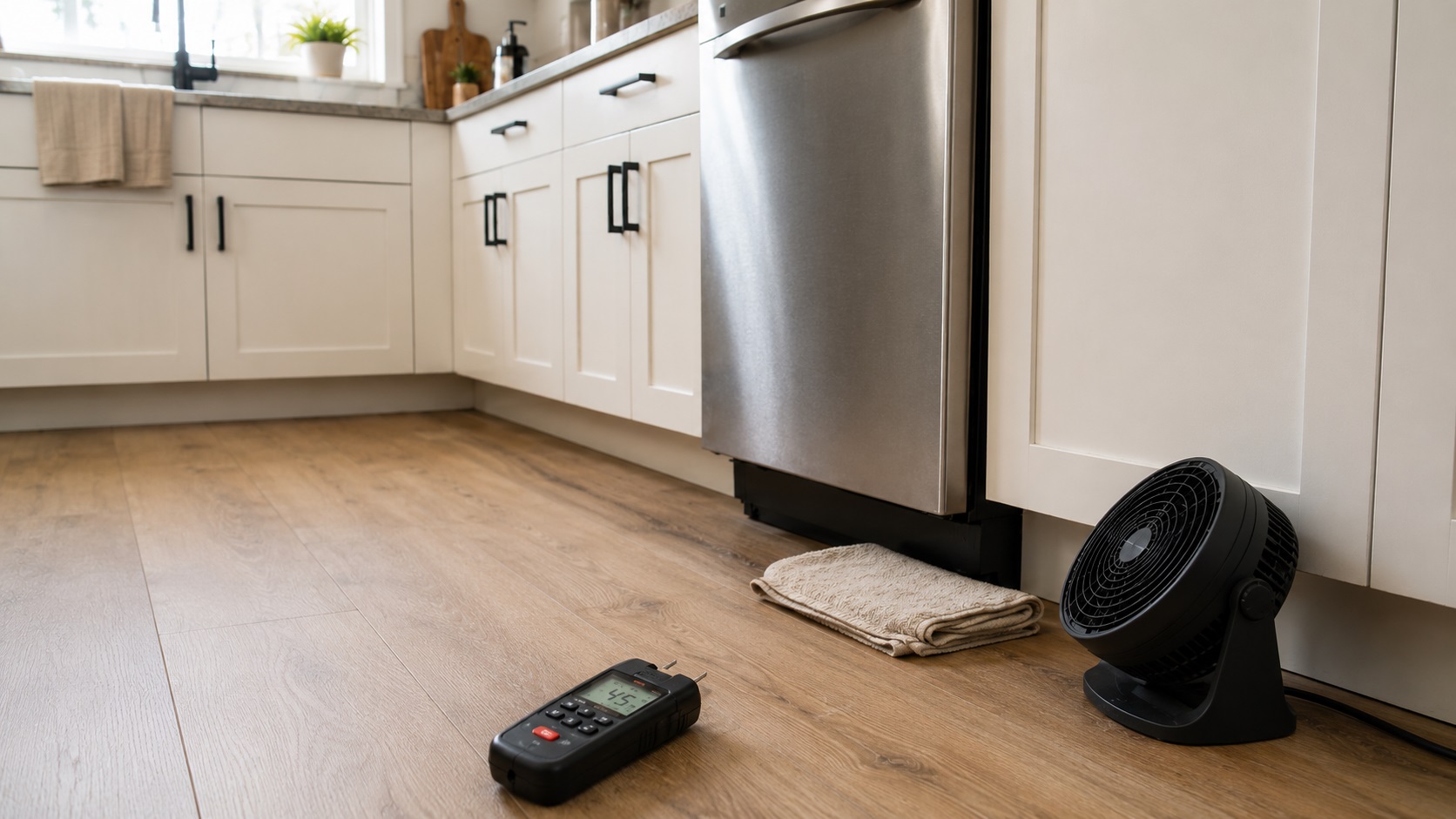
How to Prevent Mold Under Kitchen Flooring
Preventing mold under kitchen flooring starts with controlling moisture before it becomes trapped beneath the surface. Kitchens contain multiple water sources, and even small leaks or repeated moisture exposure can create hidden conditions that support mold growth.
Many mold problems begin long before visible damage appears. If you’ve previously noticed symptoms such as swelling seams, soft flooring, or persistent odors described in signs of water damage under kitchen flooring, prevention becomes even more important to avoid future damage.
The most effective prevention steps are simple: stop small leaks early, keep water out of seams and edges, control indoor humidity, and check high-risk areas before moisture stays trapped long enough for mold to develop.
For a broader prevention strategy across the home, see how to prevent recurring moisture damage, which explains how to stop moisture problems from returning after leaks, repairs, or repeated damp conditions.
Why Kitchen Floor Mold Prevention Starts Before Damage Is Visible
Mold under kitchen flooring is difficult to remove because the moisture is usually trapped below the visible surface. Prevention matters because it protects the subfloor, underlayment, cabinet bases, and flooring edges before hidden growth begins.
Prevention Reduces Long-Term Structural Damage
Moisture weakens materials over time. Wood subfloors, cabinet bases, and underlayment panels absorb moisture and gradually lose strength when exposed to repeated water exposure.
Preventive measures help protect:
- Subfloor stability
- Cabinet integrity
- Flooring performance
- Wall framing connections
Protecting these materials reduces the likelihood of costly repairs and extends the lifespan of kitchen flooring systems.
Preventing Mold Is Easier Than Removing It
Mold removal often requires significant labor, material replacement, and structural repairs. In contrast, preventive maintenance involves routine inspection and moisture control practices that reduce risk before damage occurs.
Understanding the underlying causes of mold growth described in why kitchen floors develop mold after leaks helps explain why prevention must begin before moisture becomes trapped beneath flooring.
Early Prevention Helps Maintain Indoor Air Quality
Keeping the flooring system dry also reduces musty odors and hidden microbial growth that may affect indoor air quality.
Dry flooring systems reduce the risk of:
- Musty odors
- Hidden microbial growth
- Airborne mold spores
- Persistent indoor moisture problems
How to Prevent Water Leaks Under Kitchen Flooring
Preventing water leaks is the first and most important step in mold prevention. Most mold problems begin with unnoticed moisture entering beneath flooring materials.
Routine inspection of water connections helps detect early warning signs before leaks become severe.
Inspect Plumbing Connections Regularly
Plumbing connections are among the most common sources of hidden moisture beneath kitchen flooring. Checking these connections on a routine schedule helps reduce the likelihood of unnoticed leaks.
Focus inspections on:
- Sink supply line connections
- Drain pipe fittings
- Garbage disposal connections
- Water supply shutoff valves
Inspecting these components every few months helps identify loose fittings or early signs of wear.
Maintain Appliance Hoses and Fittings
Appliance hoses experience repeated pressure changes during normal operation. Over time, these hoses may weaken or develop small cracks that allow water to escape.
Appliance components that require regular inspection include:
- Dishwasher supply hoses
- Refrigerator water lines
- Ice maker tubing
- Drain hoses behind appliances
Replacing aging hoses reduces the risk of sudden leaks beneath flooring systems.
Check Appliance Door Seals
Appliance door seals prevent water from escaping during operation. Damaged or worn seals allow moisture to leak onto flooring surfaces.
Common seal inspection targets include:
- Dishwasher door gaskets
- Refrigerator door seals
- Freezer compartment seals
Replacing worn seals helps prevent moisture from reaching vulnerable flooring areas.
Watch for Early Warning Signs of Leaks
Preventing mold often depends on recognizing early leak symptoms before moisture spreads beneath flooring.
Warning signs may include:
- Unexpected moisture near appliances
- Water stains around cabinet bases
- Damp flooring edges
- Unusual sounds from plumbing connections
When these signs appear, check the nearest water source first: the sink base, dishwasher edge, refrigerator water line, shutoff valve, or drain connection. Stopping the source quickly is what prevents moisture from staying trapped below the flooring.
How to Control Moisture Beneath Kitchen Floors
Preventing mold under kitchen flooring requires more than stopping leaks. Moisture can also develop from humidity, condensation, and repeated water exposure. Controlling moisture conditions reduces the chance that hidden water will accumulate beneath flooring materials.
Effective moisture control focuses on reducing humidity levels, improving airflow, and limiting standing water exposure.
Manage Indoor Humidity Levels
High humidity slows drying and increases the chance that small leaks, spills, or cleaning moisture will stay trapped beneath flooring long enough to support mold growth.
Recommended humidity practices include:
- Keeping indoor humidity between 30% and 50%
- Monitoring humidity levels during humid seasons
- Reducing moisture buildup from cooking activities
- Maintaining consistent indoor airflow
Use Exhaust Fans During Moisture-Producing Activities
Kitchens generate significant moisture during cooking, dishwashing, and cleaning. Using exhaust fans helps remove moisture before it settles into flooring materials.
Use ventilation systems during:
- Cooking with boiling water
- Dishwasher operation
- Heavy steam production
- Cleaning tasks involving water
Proper ventilation reduces airborne moisture and improves drying efficiency.
Clean Spills Immediately
Spills that remain on the floor for extended periods increase the risk of moisture entering seams and edges. Even small amounts of water can migrate beneath flooring when left unattended.
Best practices include:
- Drying spills immediately after they occur
- Avoiding standing water on flooring surfaces
- Checking edges where spills commonly accumulate
- Inspecting areas near appliances after spills
Immediate spill cleanup reduces the chance of moisture penetrating beneath flooring materials.
Pay special attention to water that reaches flooring seams, cabinet toe-kicks, appliance gaps, and transition strips. These areas are more likely to let moisture move below the visible surface.
Avoid Excessive Water During Cleaning
Using too much water during cleaning can introduce moisture beneath flooring. Flood mopping or allowing water to pool along seams increases the likelihood of hidden moisture buildup.
Safer cleaning methods include:
- Using damp rather than saturated mops
- Drying floors after cleaning
- Limiting water exposure near seams
- Using controlled moisture cleaning techniques
Reducing cleaning water exposure helps protect flooring systems from unnecessary moisture stress.
How to Protect Floor Edges, Cabinets, and Subfloor Materials
Structural protection strengthens vulnerable areas where moisture commonly enters flooring systems. These preventive measures create barriers that limit water penetration.
Seal Flooring Edges and Vulnerable Areas
Flooring edges are among the most common entry points for moisture. Maintaining protective seals prevents water from reaching subfloor materials.
Important sealing locations include:
- Floor edges along walls
- Cabinet base junctions
- Appliance openings
- Transition strips between rooms
Regularly inspecting and maintaining these seals helps prevent moisture from entering hidden areas.
Do not seal over damp seams, swollen flooring, or musty areas. Sealing should only happen after the moisture source has been corrected and hidden materials are confirmed dry.
Maintain Sealants and Protective Barriers
Sealants degrade over time due to wear, cleaning chemicals, and temperature changes. Maintaining protective barriers ensures long-term moisture resistance.
Maintenance practices include:
- Inspecting sealants periodically
- Replacing cracked or damaged seals
- Reapplying sealants when needed
- Monitoring areas exposed to frequent moisture
Maintaining seal integrity helps prevent water infiltration beneath flooring materials.
Protect Cabinet Base Materials
Cabinet bases often sit directly on flooring surfaces. Moisture that collects beneath cabinets can remain hidden and support mold growth.
Protection strategies include:
- Keeping cabinet bases dry
- Cleaning moisture near toe-kicks promptly
- Inspecting base materials for swelling
- Sealing exposed cabinet edges
Cabinet base protection reduces moisture exposure in enclosed spaces where airflow is limited.
Maintain Tight Transition Strips
Transition strips connect flooring between rooms and seal exposed edges. Loose or damaged strips allow moisture to enter beneath flooring.
Routine maintenance includes:
- Inspecting transitions for looseness
- Replacing worn strips
- Repairing cracked seals
- Maintaining tight edge connections
Well-maintained transitions help reduce moisture migration between rooms.
Routine Monitoring to Prevent Hidden Mold Problems
Preventing mold under kitchen flooring depends heavily on routine monitoring. Even well-installed flooring systems can develop problems over time if moisture conditions change or components wear out. Regular observation helps detect small issues before they become serious mold risks.
Routine monitoring does not require specialized tools in most cases. Many prevention steps rely on simple visual checks and consistent maintenance habits.
Perform Monthly Visual Inspections
Monthly visual inspections help identify early signs of moisture exposure. Catching these signs early allows corrective action before mold growth begins.
During inspections, check for:
- Swelling along flooring seams
- Soft or uneven floor sections
- Discoloration near cabinet bases
- Gaps forming along wall edges
- Changes in flooring texture
These changes may indicate moisture entering beneath the surface.
Monitor High-Risk Areas More Frequently
Certain areas in the kitchen carry higher moisture risk than others. These areas should be inspected more often than standard flooring zones.
High-risk areas include:
- Beneath sinks
- In front of dishwashers
- Behind refrigerators
- Along cabinet toe-kicks
- Near plumbing access points
Moisture often begins in these areas before spreading outward.
Use Periodic Moisture Testing When Needed
In homes with previous leaks, recurring odors, swelling seams, or appliance failures, periodic moisture testing can confirm whether flooring materials are staying dry beneath the surface.
If testing becomes necessary, techniques explained in how to detect moisture under kitchen floors provide structured methods for identifying hidden moisture conditions.
Testing is especially useful after repairs, appliance replacement, or suspected water exposure.
Watch for Changes in Odors
Persistent musty odors may signal moisture problems beneath flooring. Even without visible damage, odors often indicate early microbial activity or prolonged damp conditions.
If unusual odors appear, inspect nearby flooring areas and confirm whether moisture conditions exist.
Seasonal Checks That Help Keep Kitchen Floors Dry
Different seasons introduce different moisture risks. Temperature changes, humidity shifts, and increased water use patterns affect kitchen moisture conditions.
A seasonal check is most useful before humid weather, after heavy appliance use, or after any plumbing work near the kitchen floor.
Prepare Plumbing Systems for Seasonal Changes
Seasonal temperature changes place stress on plumbing systems. Pipes and fittings expand and contract, increasing the likelihood of minor leaks.
Preventive seasonal steps include:
- Checking visible plumbing connections
- Inspecting hose connections for wear
- Looking for signs of corrosion
- Tightening loose fittings when necessary
These preventive checks reduce leak risks during temperature transitions.
Adjust Humidity Control During Humid Seasons
Humidity levels often increase during warmer months. Higher humidity slows drying and increases the likelihood of hidden moisture accumulation beneath flooring.
Helpful practices include:
- Using ventilation during humid conditions
- Reducing indoor moisture buildup
- Maintaining consistent airflow
- Monitoring humidity levels during peak seasons
Seasonal humidity management reduces the chance of mold development beneath flooring systems.
Inspect Flooring After High Moisture Events
Heavy cleaning, appliance failures, or unexpected leaks increase moisture risk. After these events, inspecting flooring helps confirm that moisture has not entered beneath the surface.
Post-event inspections should include:
- Checking seams for swelling
- Inspecting cabinet base edges
- Looking for surface distortion
- Monitoring changes over several days
Follow-up inspections help confirm that moisture has been fully controlled.
If water has gone under flooring, reached electrical appliances, or come from contaminated sources such as sewage or floodwater, stop DIY prevention steps and get professional help before sealing the area or reinstalling materials.
If a leak has already soaked the flooring, follow the drying steps in how to dry kitchen flooring after leaks before treating the area as a prevention problem.
Prevention Opportunities During Renovation or Flooring Replacement
Renovation projects create valuable opportunities to reduce future mold risk. When flooring systems are replaced or updated, homeowners can introduce protective features that improve long-term moisture resistance.
Choose Moisture-Resistant Materials
Material selection plays an important role in preventing mold formation. Certain materials resist moisture penetration better than others.
Moisture-resistant material options include:
- Water-resistant underlayment materials
- Sealed subfloor panels
- Improved flooring seam systems
- Durable protective coatings
Selecting appropriate materials helps reduce moisture retention beneath flooring.
Improve Subfloor Protection
Subfloors form the foundation of the flooring system. Improving subfloor protection reduces moisture absorption and helps maintain structural strength.
Protective improvements may include:
- Installing moisture barriers where appropriate
- Sealing exposed subfloor edges
- Protecting high-risk zones near appliances
- Ensuring proper installation methods
Subfloor protection reduces the likelihood of long-term moisture damage.
Upgrade Plumbing Components During Remodeling
Renovation projects allow aging plumbing components to be replaced before failures occur. Upgrading hoses and fittings reduces the chance of future leaks beneath flooring systems.
Recommended upgrades include:
- Replacing aging supply hoses
- Installing updated connection fittings
- Inspecting water supply systems
- Using high-quality plumbing materials
Preventive upgrades reduce long-term leak risks and improve system reliability.
Frequently Asked Questions About How to Prevent Mold Under Kitchen Flooring
What is the most effective way to prevent mold under kitchen flooring?
The most effective prevention method is controlling moisture before it becomes trapped beneath flooring materials. This includes inspecting plumbing connections regularly, cleaning spills immediately, maintaining seals, and managing humidity levels inside the kitchen.
How often should kitchen flooring be inspected to prevent mold?
Visual inspections should be performed at least once per month, with more frequent checks in high-risk areas such as under sinks and near appliances. Regular inspections help identify early signs of moisture before mold develops.
Does sealing flooring edges help prevent mold growth?
Yes. Properly sealed flooring edges help prevent water from entering beneath the surface. Maintaining these seals reduces moisture penetration into subfloor materials where mold commonly develops.
Can humidity alone cause mold under kitchen flooring?
High humidity can contribute to mold risk, but mold under kitchen flooring usually also needs trapped moisture, poor drying, or repeated water exposure. Maintaining indoor humidity levels between 30% and 50% helps reduce long-term risk.
Is mold prevention necessary even if there has never been a leak?
Yes. Kitchens contain multiple moisture sources, including spills, condensation, and cleaning water. Preventive maintenance reduces the likelihood of hidden moisture developing beneath flooring materials.
If moisture exposure has already occurred, prevention alone is not enough. Use how to inspect kitchen flooring for hidden moisture to decide whether deeper investigation is needed before sealing, covering, or reinstalling flooring materials.
Key Takeaways
- Preventing mold under kitchen flooring begins with controlling moisture sources.
- Regular inspection of plumbing connections reduces leak risks.
- Managing humidity levels helps prevent moisture accumulation.
- Maintaining sealants protects vulnerable flooring edges.
- Routine monitoring helps detect problems before mold develops.