How to Dry Crawl Spaces After Moisture Exposure
To dry a crawl space after moisture exposure, remove standing water first, create controlled airflow across wet materials, run dehumidification, remove saturated insulation when needed, and keep drying until wood and humidity readings confirm the area is dry. A crawl space is not dry just because puddles disappear.
Moisture often remains trapped in floor joists, subfloor panels, insulation, soil, and foundation edges long after the surface looks normal. If drying stops too early, mold growth and wood damage can continue below the living space.
If mold may already be present, review signs of mold growth in crawl spaces before disturbing contaminated materials.
For the broader prevention strategy after any leak, flood, or damp-material event, see how to prevent recurring moisture damage.
Key Takeaways
- Removing standing water is the first and most important drying step.
- Airflow and humidity control must work together for effective drying.
- Structural wood and insulation often remain wet long after surfaces appear dry.
- Drying timelines vary widely depending on moisture severity.
- Confirming dryness prevents mold growth from returning.
- Persistent moisture may require long-term structural solutions.
Why Fast Drying Is Critical After Moisture Exposure
Fast drying matters because wet crawl space materials can keep releasing moisture into the air even after visible water is gone. The longer joists, subfloor panels, insulation, and soil stay damp, the greater the risk of mold growth, wood movement, and decay.
Under favorable conditions, mold can begin developing within 24 to 48 hours after materials become damp, which is why wet materials should be dried or removed quickly. The EPA also emphasizes drying water-damaged areas and items within 24–48 hours to help prevent mold growth. See the EPA guidance on mold and moisture control for additional safety context.
Fast drying also helps protect important structural materials, including:
- Wood floor joists and beams
- Subfloor panels supporting living spaces
- Insulation materials
- Metal components such as ducts and fasteners
When these materials remain wet for extended periods, insulation loses effectiveness and wood may swell, soften, or begin to decay. The longer moisture remains trapped, the harder it becomes to dry the crawl space fully.
If the underlying moisture source remains active, such as ground vapor, poor drainage, plumbing leaks, or humid outdoor air entering the crawl space, moisture can return after drying. For the cause side of the problem, see why crawl spaces develop moisture problems.
Safety Steps Before Entering a Wet Crawl Space
Before attempting to dry a crawl space, safety must come first. Crawl spaces can contain electrical hazards, unstable surfaces, and contaminated water. Entering a wet crawl space without proper precautions can lead to serious injury.
Before entering a damp or flooded crawl space, take the following safety precautions:
- Turn off electrical power to crawl space circuits if flooding has occurred
- Avoid entering areas with deep standing water
- Wear protective gloves to reduce exposure to contaminated surfaces
- Use proper footwear to prevent slipping on wet surfaces
- Wear respiratory protection if musty odors, visible mold, or disturbed insulation are present
If water levels are high or electrical hazards are suspected, professional assistance may be necessary before attempting any drying steps.
Do not enter a crawl space with sewage, floodwater, chemical contamination, or unknown water sources without professional help. Contaminated water changes the job from simple drying to cleanup and remediation.
Remove Standing Water First
If standing water is present in a crawl space, removing it is always the first step in the drying process. Fans and dehumidifiers cannot function effectively while water remains pooled on the ground. Standing water continuously evaporates into the air, raising humidity levels and slowing the drying of nearby materials.
Standing water commonly enters crawl spaces through:
- Heavy rainfall or foundation seepage
- Broken or leaking plumbing lines
- Overflowing gutters or short downspouts
- Improper grading directing water toward the home
The removal method depends on the amount of water present. Shallow puddles may be removed with a wet/dry vacuum or small pump, while deeper or recurring water may require sump pumping, drainage correction, or professional extraction. Remove water from low spots first so the ground and foundation edges can begin drying.
When removing standing water, focus on removing as much water as possible before beginning airflow or humidity control steps. Leaving even shallow water behind allows moisture to continue entering the air and surrounding materials.
If standing water has been present for more than a short period, nearby insulation and wood materials are likely wet. Treat those materials as part of the drying zone, not as separate surfaces that can be ignored once the puddles are gone.
Increase Airflow to Start Drying
Once standing water has been removed, increasing airflow helps move moisture away from wet surfaces. Air movement accelerates evaporation by carrying moisture-laden air away from damp materials.
Airflow can be increased using:
- Portable fans positioned to circulate air across wet surfaces
- Opening accessible vents when weather conditions allow
- Creating cross-flow air movement from one side of the crawl space to another
- Positioning fans to push air along wood framing and insulation areas
Avoid pointing fans into sealed cavities or directly at loose moldy material. The goal is to move air across damp wood, soil, and foundation surfaces, not to blow contamination through the crawl space.
Effective airflow helps reduce localized moisture buildup. However, airflow alone does not remove moisture from the air — it simply redistributes it. For this reason, airflow must be combined with humidity control methods to achieve effective drying.
In some homes, airflow improvements may also help reveal areas where moisture remains trapped. Damp zones that remain wet despite air movement often indicate hidden moisture sources. If certain areas remain persistently damp, reviewing how to detect hidden moisture in crawl spaces can help identify concealed moisture locations.
Reposition fans during drying if one corner, foundation edge, or joist bay stays damp longer than the rest. Crawl spaces often dry unevenly because air does not move equally through every bay.
Use Dehumidifiers to Reduce Humidity Levels
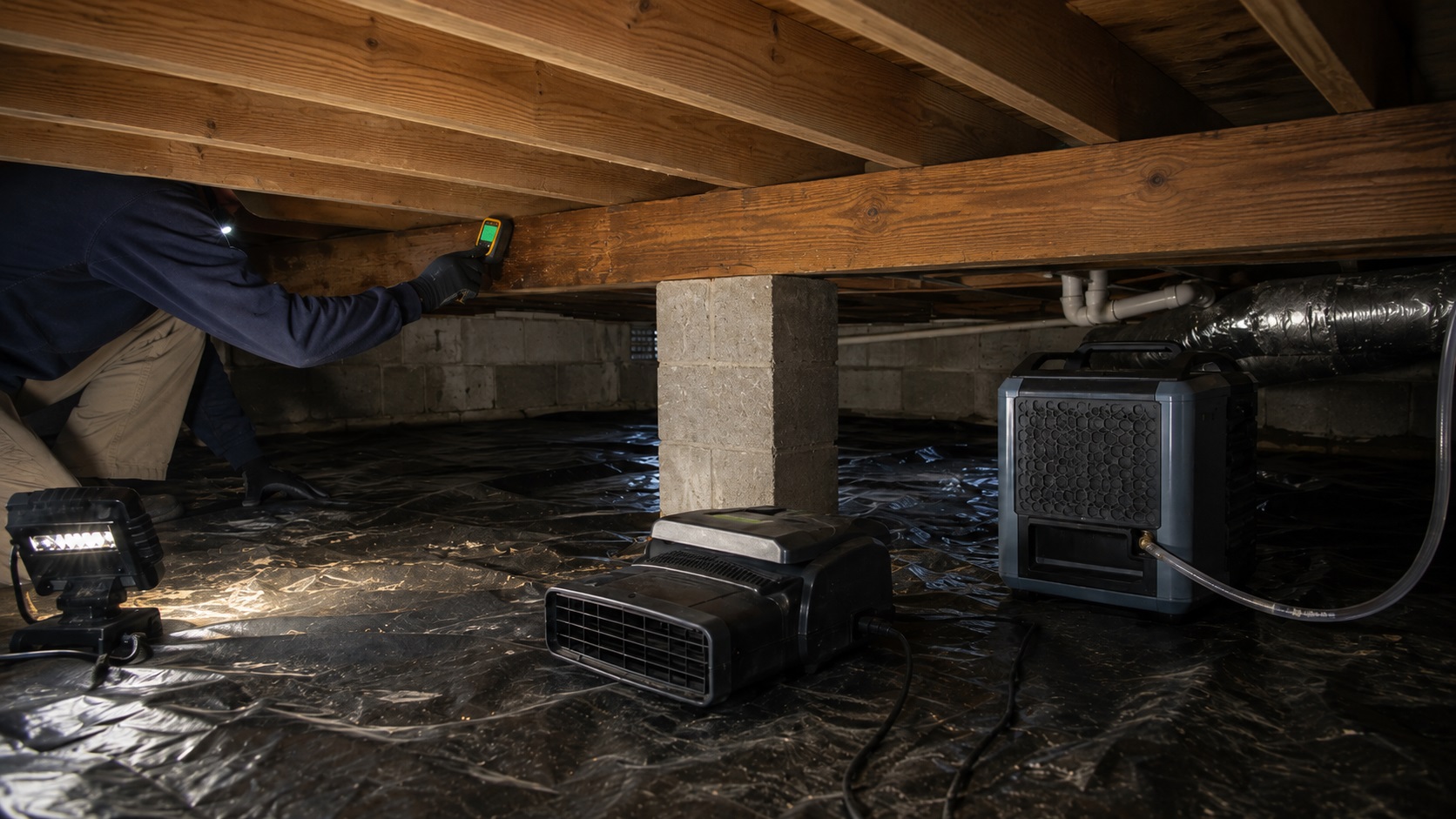
After airflow has been established, reducing humidity levels becomes essential. Dehumidifiers remove moisture from the air, allowing damp materials to release trapped moisture more effectively. Without humidity reduction, moisture remains suspended in the air and slows the drying process.
Dehumidifiers are particularly useful in crawl spaces where humidity levels remain high even after standing water has been removed. As moisture evaporates from wet materials, humidity levels rise quickly. Dehumidifiers capture this moisture and prevent it from settling back onto surfaces.
When using dehumidifiers, consider the following:
- Place units in central areas where air circulation is strongest
- Allow continuous operation until humidity levels stabilize
- Empty collection containers regularly if automatic drainage is not available
- Monitor humidity levels to confirm progress
As a practical target, keep crawl space relative humidity below about 60% during and after drying. If humidity stays high while the dehumidifier is running, moisture is still entering the crawl space or wet materials are still releasing water.
If humidity remains high after visible water is gone, the crawl space is still not dry. Keep dehumidification running until readings stabilize instead of stopping when surfaces merely look dry.
If moisture returns repeatedly despite drying efforts, the crawl space may still have ground vapor, poor drainage, plumbing leakage, missing vapor protection, or humid air entry. In these cases, reviewing why crawl spaces stay damp can help identify factors that allow moisture to remain trapped beneath the home.
Dry Structural Wood and Subfloor Materials
After standing water is removed and humidity control has begun, the next priority is drying structural materials. Wood framing and subfloor materials absorb moisture internally, which means they often remain wet long after the surrounding air begins to dry.
Structural components most affected by moisture exposure include:
- Floor joists and beams
- Subfloor panels
- Wood blocking and supports
- Wood near foundation walls
If you have a moisture meter, check the same joists, beams, and subfloor areas repeatedly during drying. Readings should trend downward over time; one dry-looking surface reading does not prove that thicker wood or hidden edges are dry.
Drying structural wood requires consistent airflow and reduced humidity over time. Fans should move air along joists, beams, subfloor surfaces, and foundation edges rather than blowing into dead-end cavities. Continuous air movement helps surface moisture evaporate while dehumidification pulls that moisture out of the air.
Wood dries from the outside inward. Joist surfaces may feel dry while deeper wood, subfloor edges, or areas behind insulation remain damp. Keep airflow and dehumidification in place until readings and conditions show steady improvement.
If visible mold begins forming during the drying process, reviewing signs of mold growth in crawl spaces can help determine whether moisture has remained present long enough to support mold development.
Dry or Replace Wet Insulation
Insulation materials are highly vulnerable to moisture damage and often require special attention during drying. Wet insulation traps moisture against structural wood, slowing the drying process and increasing mold risk.
Fiberglass batts may look intact after moisture exposure, but wet batts can sag, hold moisture against joists, and block airflow from reaching the subfloor. Insulation that has been saturated, contaminated, moldy, or slow to dry should usually be removed instead of left in place.
Typical signs that insulation may require removal include:
- Insulation that feels heavy or saturated
- Visible mold growth on insulation backing
- Insulation pulling away from joists
- Persistent dampness despite airflow
In many cases, removing heavily saturated insulation speeds drying significantly. Removing wet insulation allows airflow to reach wood surfaces that would otherwise remain trapped behind damp materials.
After insulation is removed or dried, it is important to continue monitoring moisture levels to ensure surrounding materials dry completely.
How Long Crawl Space Drying Takes
Drying timelines vary depending on the amount of moisture present, environmental conditions, and the size of the crawl space. Many homeowners underestimate how long proper drying requires.
Typical drying timelines include:
- Minor humidity or surface dampness: often 1 to 3 days with good airflow and dehumidification
- Wet soil, damp joists, or small water entry: often 3 to 7 days
- Standing water, saturated insulation, or wet subfloor edges: often 1 to 3 weeks
- Repeated water entry or deeply saturated structural wood: several weeks or professional drying may be needed
Drying speed depends on several key factors:
- Airflow strength and direction
- Humidity levels during drying
- Outdoor weather conditions
- Amount of water absorbed by materials
Continue drying until humidity levels stabilize and previously wet materials show steady improvement. Visible dryness alone is not enough.
If moisture exposure occurred repeatedly or drying appears unusually slow, the crawl space may have an active moisture source. Review why crawl spaces stay damp if the area does not respond normally to water removal, airflow, and dehumidification.
How to Confirm the Crawl Space Is Fully Dry
One of the most common mistakes homeowners make is stopping the drying process too early. Even when surfaces appear dry, moisture can remain trapped inside wood, insulation cavities, and soil beneath the crawl space. Proper verification helps prevent mold growth from returning after drying appears complete.
Several practical signs indicate that drying is progressing successfully:
- No visible condensation on pipes, foundation walls, insulation facing, or subfloor surfaces
- Wood framing feels dry and moisture readings are trending down
- Musty odors fade instead of returning after fans are turned off
- Humidity remains stable below about 60% after dehumidification has run for a while
- Previously wet corners, low spots, and joist bays no longer feel cooler or damp compared with surrounding areas
Humidity monitoring plays an important role in confirming dryness. If humidity levels remain elevated despite airflow and dehumidification, moisture may still be present in hidden areas. Tools designed to detect hidden moisture can help verify whether materials have dried completely. For additional guidance, review how to detect hidden moisture in crawl spaces.
It is also important to check previously wet areas multiple times during the drying process. Some materials dry unevenly, meaning certain locations may remain damp longer than others.
When Drying Alone Is Not Enough
In some situations, drying efforts may not fully solve the problem. If moisture continues returning after drying, it usually indicates an ongoing source of water intrusion or humidity buildup.
Warning signs that drying alone may not be sufficient include:
- Moisture returning shortly after drying
- Repeated standing water events
- Structural wood remaining damp for extended periods
- Persistent mold odors despite drying efforts
These situations often require corrective actions beyond simple drying. Long-term solutions may involve drainage improvements, vapor barrier repairs, or structural modifications. If moisture problems continue despite drying attempts, reviewing how to fix persistent crawl space moisture problems can help determine when more permanent solutions are necessary.
Understanding when drying is no longer enough helps prevent repeated moisture cycles that lead to long-term structural damage.
Prevent Mold Growth After Drying
After drying is complete, the goal is to keep the crawl space from returning to the same damp conditions. Humidity, wet insulation, ground vapor, and small leaks can restart the problem even after a successful drying effort.
Helpful post-drying practices include:
- Monitoring humidity levels regularly
- Inspecting crawl spaces after heavy rainfall
- Keeping insulation dry and intact
- Addressing minor moisture issues quickly
Early detection of new moisture helps prevent conditions that allow mold to form. If mold begins developing despite drying efforts, reviewing signs of mold growth in crawl spaces can help identify warning signs before the problem spreads.
Frequently Asked Questions About How To Dry Crawl Spaces After Moisture Exposure
How long does it take to dry a crawl space?
Drying time depends on how much water entered, whether insulation or wood absorbed moisture, and how well airflow and dehumidification are controlled. Minor dampness may dry within a few days, while saturated materials or repeated water entry can take one to several weeks.
Can crawl spaces dry on their own?
Some minor moisture may evaporate naturally, but most crawl spaces require airflow and humidity control to dry completely. Without assistance, moisture often remains trapped in materials.
Should wet insulation be removed immediately?
Heavily saturated insulation usually needs to be removed because it traps moisture against wood surfaces and slows drying. Removing wet insulation often improves airflow and speeds recovery.
Do fans help dry crawl spaces?
Fans help when they move air across damp soil, joists, subfloor panels, and foundation edges. They should usually be paired with dehumidification because fans move moisture into the air but do not remove that moisture from the crawl space.
When should professionals handle crawl space drying?
Professional drying may be needed when water is deep, electrical hazards are possible, sewage or floodwater is involved, insulation is saturated, structural wood stays wet, or moisture returns after drying.
Conclusion
A crawl space is dry only when standing water is gone, humidity is controlled, wet insulation has been addressed, and structural materials have had enough time to release trapped moisture. Do not stop drying based only on surface appearance.
If moisture returns after drying, the problem has moved beyond drying and into source control. At that point, drainage, vapor barriers, plumbing, grading, or persistent crawl space moisture repairs may need to be addressed.