
How to Prevent Water Seepage Through Basement Walls
The best way to prevent water seepage through basement walls is to keep rainwater from collecting against the foundation and saturating the soil. Start with gutters, downspouts, grading, surface drainage, and visible wall monitoring before relying on interior coatings or temporary patching.
Most basement wall seepage begins outside the home. Rainwater collects near the foundation, soil becomes saturated, and pressure builds against basement walls. When that pressure finds cracks, seams, porous wall material, or weak joints, moisture can move indoors.
If seepage mostly appears during storms, review Why Basement Walls Leak During Rain for the cause. This guide focuses on preventing future seepage by controlling water around the foundation and watching the wall areas most likely to leak.
Why Basement Wall Seepage Prevention Starts Outside
Preventing basement wall seepage starts with a simple principle: reduce the amount of water that reaches the foundation before it can soak into the soil beside the wall.
Interior drying and surface coatings may help manage symptoms, but they do not address the outside conditions behind most seepage. If the soil beside the wall stays saturated, moisture can continue entering through weak points.
Water Pressure Is the Real Problem
Basement wall seepage is usually pressure-driven. During rain, soil absorbs water until it becomes saturated. Once the soil can no longer drain quickly enough, water pressure increases against the foundation.
This pressure can force moisture through:
- Hairline cracks in concrete walls
- Mortar joints in block foundations
- The seam where the wall meets the floor
- Porous concrete or masonry surfaces
- Utility penetrations and poorly sealed openings
Prevention works best when it keeps excess water from building up beside the wall in the first place.
Drying the Basement Is Not the Same as Preventing Seepage
Drying damp walls, running fans, or using a dehumidifier can help after a minor seepage event, but these steps do not stop water from entering again. They manage indoor moisture after the fact.
True prevention focuses on the outside conditions that allow seepage to return. This includes roof runoff, surface grading, downspout discharge, drainage patterns, and repeated soil saturation.
For a broader view of how moisture problems connect across the home, see How to Find, Fix, and Prevent Moisture Problems in Homes.
Prevention Should Match the Severity of the Problem
Not every seepage problem requires the same response. A small damp patch after extreme rain is different from water entering during every storm.
Basic prevention may be enough when:
- Moisture appears only after heavy rainfall
- Damp areas are small and localized
- Walls dry completely between events
- No mold or structural damage is visible
More advanced help may be needed when:
- Water enters during most rain events
- Seepage spreads to new wall areas
- Water pools along the basement perimeter
- Cracks widen or continue leaking
- Basement humidity stays high after storms
Keep Roof Water Away From the Foundation
Roof runoff is one of the most common sources of water near basement walls. A single roof can shed a large volume of water during a storm, and if that water is discharged beside the foundation, it can quickly saturate the soil.
Controlling roof water is often one of the highest-impact prevention steps a homeowner can take.
Clean and Maintain Gutters
Gutters are designed to collect roof runoff and move it toward downspouts. When they clog, sag, or overflow, water spills directly beside the house.
To reduce seepage risk:
- Clean leaves, debris, and sediment from gutters
- Check for overflow during heavy rain
- Repair sagging gutter sections that hold water
- Make sure gutters slope properly toward downspouts
- Fix leaks at seams and corners
Gutters do not waterproof basement walls directly. Their purpose is to prevent roof runoff from saturating the soil near the foundation.
Extend Downspouts Away From Basement Walls
Downspouts matter just as much as gutters. If downspouts end too close to the foundation, they concentrate roof water exactly where you do not want it.
Good downspout prevention includes:
- Extending discharge at least several feet away from the foundation, and farther when water still flows back toward the house
- Using splash blocks or extensions where appropriate
- Making sure water flows away, not back toward the house
- Checking that extensions stay connected during storms
- Avoiding discharge into low spots near basement walls
If seepage appears on the same wall where a downspout discharges, that downspout should be one of the first areas checked.
Watch How Water Moves During Rain
The best time to evaluate roof runoff is during actual rainfall. Many drainage problems are not obvious when conditions are dry.
During a storm, safely observe:
- Where gutters overflow
- Where downspouts discharge
- Whether water pools beside the foundation
- Whether water flows toward basement walls
- Which wall areas become damp after the rain
Matching outdoor water movement to indoor damp spots can help identify which prevention steps will matter most.
If the outside drainage pattern does not match the damp indoor wall, also check for condensation, plumbing leaks, or seepage entering through a different wall path before assuming the nearest outdoor puddle is the source.
Improve Grading Around Basement Walls
Grading controls where surface water travels after rain. If the ground slopes toward the house, water naturally flows toward the foundation and increases the chance of seepage through basement walls.
Good grading helps move water away before it can soak into the soil beside the foundation. This does not eliminate every form of basement seepage, but it can significantly reduce the amount of water pressing against basement walls during storms.
Make Sure Soil Slopes Away From the Foundation
The ground around the home should direct water away from basement walls. When soil slopes inward, rainwater collects near the foundation and saturates the area most likely to leak.
As a practical benchmark, the soil should visibly slope away from the house, with a fall of about 1/2 inch to 1 inch per foot near the foundation where site conditions allow.
Warning signs of poor grading include:
- Water pooling against the foundation after rain
- Soil that visibly slopes toward the house
- Low spots beside basement walls
- Muddy areas close to the foundation
- Repeated seepage on the same wall after storms
If surface water consistently moves toward the home, basement wall seepage becomes much harder to prevent.
Correct Settled Soil Near the House
Soil often settles around foundations over time. This settling can create shallow depressions that trap rainwater near basement walls.
These low areas may look minor when dry, but during rain they can collect water and increase pressure against the wall. Filling and reshaping these depressions can help surface water drain away instead of soaking downward beside the foundation.
When correcting settled areas, the goal is not to pile soil against the wall. The goal is to create a stable slope that carries water away from the house without covering siding, vents, or weep paths.
Avoid Trapping Moisture With Mulch or Landscaping
Landscaping can unintentionally increase seepage risk when it holds water against the foundation. Thick mulch, dense plantings, and raised beds can all slow drying near basement walls.
Risk factors include:
- Mulch piled high against the foundation
- Landscape edging that traps water near the wall
- Plant beds sloping toward the home
- Dense vegetation that keeps soil damp
Landscaping should support drainage, not hold moisture against the basement wall. If moisture patterns inside match landscaped areas outside, the exterior layout may be contributing to seepage.
Reduce Water Pressure Against Basement Walls
Once roof runoff and grading are addressed, the next prevention goal is reducing standing water and repeated soil saturation beside the foundation.
This does not always require major waterproofing work. Sometimes it starts with correcting the outdoor areas where water collects, slows down, or repeatedly soaks the soil near the basement wall.
Eliminate Standing Water Near the Foundation
Standing water near the foundation is a warning sign. Even shallow puddles can contribute to soil saturation if they form repeatedly after storms.
Check for standing water near:
- Downspout outlets
- Basement window wells
- Walkways that slope toward the house
- Patios or slabs beside basement walls
- Low spots in landscaped beds
If puddles appear in the same locations after every storm, those areas should be corrected before focusing only on the interior basement wall.
Understand the Limits of Surface Drainage
Gutters, downspouts, and grading can solve many surface-water problems, but they may not be enough if water pressure is coming from deeper soil conditions.
Surface improvements may not fully solve seepage when:
- The water table rises after storms
- Footing drains are clogged or missing
- Exterior waterproofing has failed
- Water enters at the wall-floor joint
- Large foundation cracks remain active
When seepage continues despite surface improvements, the problem may require a broader basement water-control strategy. System-level options such as drainage systems, sump pumps, and waterproofing assemblies are covered in How to Waterproof Basements and Control Water Intrusion.
Monitor the Same Wall Areas After Each Storm
Prevention is easier when you know where seepage tends to begin. After rain, check the same wall areas each time so small changes are easier to spot.
Monitor:
- Corners of basement walls
- The wall-floor seam
- Areas below downspouts
- Cracks or old repair patches
- Block wall mortar joints
- Utility penetrations through the wall
If the same area becomes damp after every storm, that pattern matters. It can help separate a general humidity problem from an active seepage path.
For warning signs that water is already entering, see Signs of Water Seepage Through Basement Walls.
Seal and Monitor Vulnerable Basement Wall Areas
Basement wall seepage often enters through weak points rather than through the entire wall evenly. Cracks, seams, joints, and penetrations deserve regular attention.
Sealing can help in some cases, but sealing should not be treated as the only prevention step if water pressure remains high outside the wall.
Watch Cracks for Moisture and Movement
Foundation cracks are common seepage paths. Some are stable and minor, while others continue to leak or widen over time.
Watch for:
- Cracks that darken during rain
- White mineral deposits along cracks
- Water beads forming on crack edges
- Cracks that widen over time
- New staining below old cracks
Minor cracks may only need monitoring at first, but cracks that leak repeatedly, expand, or show structural movement should be evaluated more seriously.
Do not hide an actively leaking, widening, horizontal, or displaced crack with paint or surface patching alone. Those signs can indicate pressure or movement that needs proper evaluation.
Check the Wall-Floor Seam
The seam where the basement wall meets the floor is a common seepage location. Water may appear along this joint when pressure builds outside the foundation or beneath the slab.
Warning signs include:
- Dampness along the basement perimeter
- Water beads where the wall meets the floor
- Staining at the base of the wall
- Peeling coatings near the floor line
- Repeated wetness after rain
This area should not be ignored if it leaks repeatedly. Wall-floor seepage can indicate pressure that may require drainage improvements, not just surface sealing.
Inspect Utility Penetrations
Pipes, wires, hose bibs, and other penetrations through basement walls can create small openings where water enters. These locations are easy to overlook because they may only leak during wind-driven rain or saturated soil conditions.
Check around penetrations for:
- Dark rings or stains
- Cracked sealant
- Loose mortar or gaps
- Moisture trails below the opening
- Repeated dampness after storms
If moisture consistently appears around one penetration, the opening may need targeted sealing after the surrounding material is dry and the outside water source has been reduced.
Be Careful With Waterproof Paint Claims
Waterproof paint or interior coatings may reduce minor surface dampness, but they do not remove the water source outside the wall. If water is being forced through cracks, joints, or seams, coating the inside surface can hide early symptoms while pressure continues behind it.
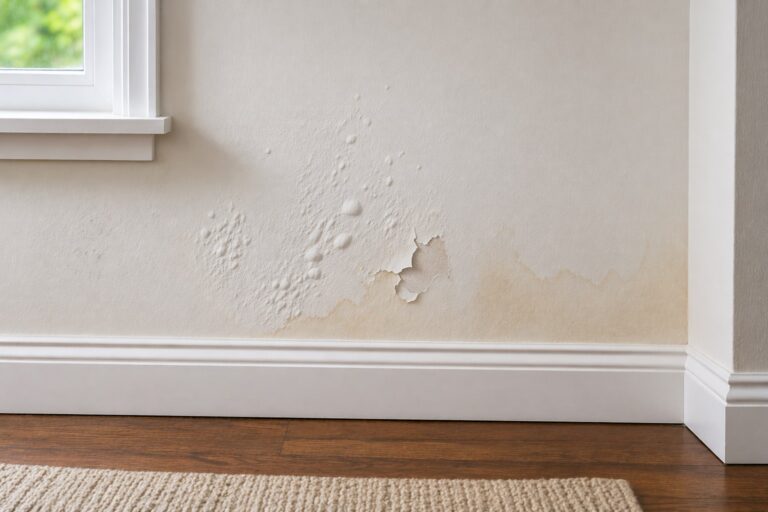
Use coatings carefully and only as part of a broader prevention approach. If paint blisters, peels, bubbles, or becomes stained after rain, moisture may still be moving through the wall.
Control Indoor Moisture After Minor Seepage
Indoor moisture control does not prevent seepage, but it helps reduce secondary damage after a minor event. Damp basement materials can stay wet long after rain ends.
Dry Damp Surfaces Promptly
If a small amount of seepage occurs, dry the affected surfaces as soon as possible. Prompt drying helps reduce moisture absorption into framing, insulation, stored items, and finishes near the wall.
After minor seepage:
- Remove wet cardboard, fabric, and stored items from the wall area
- Dry visible dampness from floors and wall surfaces
- Improve airflow if conditions are safe
- Use a dehumidifier if humidity remains high
- Check the same area again after the next rain
Drying is not the same as waterproofing, but it helps limit secondary damage while the source is being corrected.
Keep Stored Items Away From Basement Walls
Stored items can hide early seepage signs and trap moisture against the wall. Cardboard boxes, fabric, wood furniture, and paper goods are especially vulnerable.
To reduce damage risk:
- Keep storage several inches away from basement walls
- Use shelves instead of placing boxes directly on the floor
- Avoid storing absorbent materials against seepage-prone walls
- Check behind storage after heavy rain
- Use plastic bins instead of cardboard where dampness is possible
This does not stop seepage, but it helps prevent hidden moisture damage while larger prevention steps are being handled.
Manage Basement Humidity
Seepage can raise basement humidity even after visible dampness dries. Use a hygrometer after storms so you are not relying only on smell or how the wall feels.
Watch for:
- Musty odors after rain
- Condensation on pipes or windows
- Damp stored items
- Humidity that rises after rain events
- Walls or floors that feel cool and damp long after the storm ends
Managing indoor humidity can reduce secondary moisture problems, but it should be paired with exterior water control if seepage continues. For long-term prevention strategy beyond one isolated leak area, see How to Prevent Recurring Moisture Damage.
When Prevention Requires Basement Waterproofing Help
Basic prevention steps can reduce many minor seepage problems, especially when water is caused by poor drainage, short downspouts, or surface runoff. However, some basement wall seepage problems require more than homeowner maintenance.
If water continues entering after reasonable exterior water-control improvements, the issue may involve deeper drainage failure, high groundwater pressure, active foundation cracks, or missing waterproofing protection.
Repeated Seepage During Most Storms
If water enters through basement walls during most rain events, the foundation may be under regular pressure. This is different from occasional dampness during extreme weather.
Escalation signs include:
- Moisture appearing after light or moderate rain
- Recurring dampness in the same wall areas
- Water returning soon after surfaces are dried
- Basement humidity staying high after storms
Repeated seepage usually means the water source has not been controlled effectively.
Water Pooling Along Walls or Seams
Pooling water at the base of basement walls suggests that seepage has moved beyond surface dampness. This is especially concerning when water collects along the wall-floor seam.
Watch for:
- Water lines along the basement perimeter
- Pooling in corners
- Wet floor edges after rain
- Water spreading outward from the wall base
When water accumulates repeatedly, professional evaluation may be needed to determine whether drainage, crack repair, or waterproofing systems are required.
Cracks That Leak or Widen Over Time
Cracks that actively leak should be treated differently from dry, stable hairline cracks. If a crack changes size, leaks repeatedly, or appears with wall movement, it may signal a more serious issue.
- Vertical cracks with repeated seepage
- Diagonal cracks that widen
- Horizontal cracks with moisture or staining
- New cracks forming near existing seepage zones
These conditions should not be hidden with paint or ignored after temporary drying.
When Drainage Improvements Do Not Reduce the Problem
If gutters, downspouts, grading, and surface drainage have been improved but seepage continues, the problem may be below the surface. Possible causes include clogged footing drains, high groundwater, failed exterior waterproofing, or pressure beneath the slab and wall seam.
At that point, the issue may require a broader water-control approach. The system-level options are covered in How to Waterproof Basements and Control Water Intrusion.
Frequently Asked Questions About Preventing Basement Wall Seepage
Can you stop basement wall seepage from the inside?
Sometimes minor dampness can be reduced with interior coatings or sealants, but inside-only fixes do not remove the outside water source. If seepage is caused by saturated soil, poor drainage, or hydrostatic pressure, exterior water control or drainage improvements may be needed.
Do gutters help prevent basement wall seepage?
Yes. Gutters help prevent basement wall seepage by collecting roof runoff and directing it toward downspouts. They are most effective when clean, properly sloped, and connected to downspouts that discharge water away from the foundation.
Does grading really prevent basement leaks?
Good grading can help prevent basement wall seepage when rainwater is pooling or flowing toward the foundation. It works best when the soil visibly slopes away from the house and does not leave low spots beside basement walls. Grading may not solve seepage caused by deeper groundwater pressure, clogged footing drains, or failed drainage systems.
Is waterproof paint enough to prevent water seepage?
Waterproof paint may help with minor surface dampness, but it is not enough for pressure-driven seepage. If water is being forced through cracks, seams, or porous wall materials, the source of water pressure must be addressed.
When should basement wall seepage be professionally fixed?
Professional evaluation is recommended when water enters during most storms, seepage spreads to new areas, cracks widen, mold appears, or water pools repeatedly along the wall or floor. These signs suggest the problem may require more than basic prevention.
Conclusion: Preventing Seepage Starts With Exterior Water Control
The best way to prevent water seepage through basement walls is to reduce the amount of rainwater that collects near the foundation and saturates the soil. That usually starts with simple but important steps: maintaining gutters, extending downspouts, improving grading, eliminating pooling water, and monitoring vulnerable wall areas.
Interior drying and humidity control can reduce secondary damage, but they do not replace exterior water management. If seepage continues after basic prevention steps, the problem may require deeper inspection or waterproofing support.
Key Takeaways
- Basement wall seepage prevention starts by keeping water away from the foundation.
- Clean gutters and extended downspouts reduce soil saturation near basement walls.
- Proper grading helps surface water drain away instead of pooling beside the home.
- Interior coatings may help minor dampness but do not remove exterior water pressure.
- Cracks, wall-floor seams, and utility penetrations should be monitored after storms.
- Indoor drying and humidity control reduce secondary damage but are not complete prevention.
- Recurring seepage, pooling water, widening cracks, or mold growth may require professional waterproofing help.
One Comment
Comments are closed.