
Signs of Water Seepage Through Basement Walls
Water seepage through basement walls usually shows up as recurring damp patches, vertical water streaks, white chalky deposits, musty odors, peeling coatings, or wetness along the wall-floor seam. The strongest clue is pattern: seepage often appears after rain, returns in the same locations, and dries slowly after the weather improves.
This guide focuses on symptoms — what seepage looks like, how it behaves, and how to tell it apart from condensation, plumbing leaks, and general basement humidity. If you need the cause behind the symptoms, see Why Basement Walls Leak During Rain.
Key Takeaways
- Basement wall seepage usually appears as recurring damp patches, streaks, efflorescence, musty odor, peeling coatings, or wetness at the wall-floor seam.
- Rain timing and repeated moisture in the same location are stronger clues than a single damp mark.
- Efflorescence is not mold, but it confirms that water has moved through masonry.
- Seepage is usually location-specific, while condensation is usually broader and tied to cool surfaces or high indoor humidity.
- Active water, expanding cracks, mold growth, or repeated seepage after storms should be inspected before damage spreads.
What Water Seepage Through Basement Walls Looks Like
Water seepage rarely starts as flowing water. In most cases, moisture moves slowly through concrete, mortar joints, or small cracks. The earliest visible signs often look minor but repeat over time, especially after heavy rain or snowmelt.
The key is recurrence. A one-time damp mark may be a spill or condensation, but seepage usually leaves patterns that return in the same places.
Dark or Damp Patches on Basement Walls
One of the most recognizable early signs of seepage is a darkened area on the wall surface. These patches typically appear:
- Near the lower portion of basement walls
- Along cracks or joints
- In vertical streak-like patterns
- In areas exposed to frequent rainfall conditions
The darkening occurs because moisture saturates the wall material internally. Unlike condensation, which forms on the surface, seepage often begins inside the wall and gradually moves outward.
If the same patches appear repeatedly after storms, seepage is more likely than a one-time spill or surface condensation. Condensation usually affects broad cool surfaces, while seepage tends to follow cracks, joints, corners, or lower wall sections.
Water Streaks Running Down Wall Surfaces
Water streaks are another common sign of seepage. These appear as narrow trails or lines running downward from a crack, joint, or porous section of the wall.
Typical characteristics include:
- Straight or slightly irregular vertical lines
- Darker streaks compared to surrounding wall areas
- Patterns that follow gravity from upper wall sections
- Reappearance after rain events
In poured concrete walls, these streaks often originate from small cracks or construction joints. In block walls, they frequently follow mortar lines.
White Powder or Chalky Deposits (Efflorescence)
A white, chalky residue on basement walls is a classic indicator of long-term moisture movement. This material is known as efflorescence and forms when water carries dissolved minerals through masonry materials.
When moisture evaporates from the wall surface, the minerals remain behind as a powdery deposit.
Common characteristics include:
- White or light gray powder on wall surfaces
- Accumulation near cracks or joints
- Residue that returns after cleaning
- Powder concentrated near lower wall sections
Efflorescence itself is not mold, but it confirms that water has passed through the wall material. If left untreated, continued seepage can eventually create conditions that support mold growth and structural deterioration.
A simple clue is whether the powder returns after brushing or vacuuming it away. Returning residue usually means moisture is still moving through the wall, not just that old deposits were left behind.
If mineral deposits appear with damp patches, streaks, or wall-floor wetness, use a fuller inspection process like How to Inspect Basement Walls for Water Intrusion to document where moisture is entering.
Damp or Wet Areas Along Wall-Floor Seams
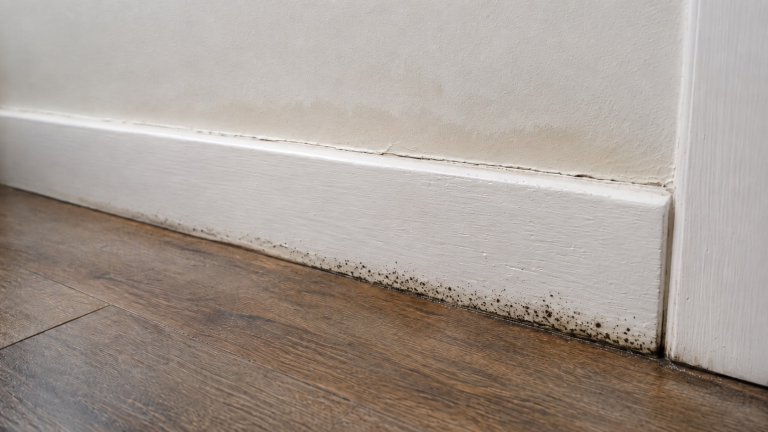
The joint where the wall meets the floor is one of the most vulnerable locations in a basement. This connection point is known as a cold joint and often becomes a primary entry path for water.
Typical warning signs include:
- Moisture forming along the base of the wall
- Dampness spreading outward across the floor edge
- Water pooling in corners after rain
- Recurring wet spots in the same location
This seam is especially important because seepage often shows up there before it appears across the open wall surface.
Early Signs of Basement Wall Seepage Homeowners Often Miss
Before visible water appears, seepage may show up through smell, coating failure, cold wall sections, or localized dampness near stored items.
Musty Odors Near Basement Walls
A persistent musty smell is one of the earliest indicators of moisture intrusion. Even when walls look dry, trapped moisture inside materials can produce odors.
Common odor-related clues include:
- Smell becomes stronger after rain
- Odor localized to one section of the wall
- Persistent damp smell near stored items
- Mustiness that returns after ventilation
These odors often result from slow moisture accumulation inside wall materials. If left unchecked, these conditions can support mold development, especially in enclosed storage areas.
Peeling Paint or Bubbling Wall Coatings
Paint and sealants applied to basement walls often react to moisture intrusion before visible water appears. When seepage occurs behind painted surfaces, moisture pressure pushes against the coating.
Typical visual indicators include:
- Paint bubbling outward
- Flaking or peeling sections
- Discoloration beneath paint layers
- Soft or swollen painted areas
This reaction happens because trapped moisture weakens adhesion between the paint and the wall surface. Although repainting may temporarily hide the problem, the moisture source remains active.
Cool or Damp Wall Surfaces
Walls affected by seepage often feel cooler than surrounding surfaces. This temperature difference occurs because moisture retains heat differently than dry materials.
Signs to watch for include:
- Cool sections when touching the wall
- Slight moisture sensation without visible water
- Localized cold areas near floor level
- Persistent damp feel after storms
If these areas expand over time, it may indicate growing moisture movement through the wall structure.
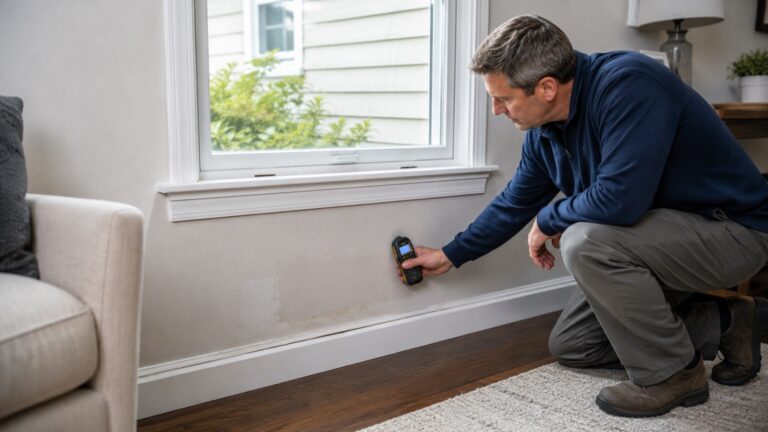
In situations where symptoms seem unclear, learning how moisture is tracked and verified in How to Detect Basement Wall Leaks can help determine whether seepage is actively occurring.
Signs of Water Seepage That Appear After Rain
Timing is one of the clearest seepage clues. Moisture that appears during rain, shortly after rain, or after snowmelt usually points to outside water reaching the foundation wall.
Exterior drainage, saturated soil, and seasonal groundwater can all make wall seepage more likely, but those are causes rather than symptoms. If the signs above appear mainly during wet weather, the cause-focused guide Why Basement Walls Leak During Rain explains those conditions in more detail.
Moisture Appearing Within Hours of Rainfall
If damp spots or streaks appear a few hours after rain begins, this often indicates direct seepage through the wall. The delay happens because water must first saturate the surrounding soil before pressure builds enough to push moisture inward.
Common patterns include:
- Damp patches forming after steady rainfall
- Moisture spreading gradually across the same wall areas
- Water streaks becoming more visible as rain continues
- Wet areas intensifying during prolonged storms
This pattern is especially common in homes with poor drainage or soil that retains water. If you notice this behavior, it aligns closely with the conditions explained in Why Basement Walls Leak During Rain.
Recurring Wet Spots in the Same Locations
Seepage tends to follow consistent paths. If water enters through a crack, joint, or porous section of the wall, it will usually return to the same location during future rain events.
Signs of recurring seepage include:
- Identical damp spots after multiple storms
- Repeated staining patterns in the same area
- Consistent moisture near specific wall sections
- Water appearing along the same floor-edge locations
This consistency is a key difference between seepage and random condensation. Seepage is location-specific because it follows structural pathways.
If the same seepage path returns after several storms, the next step is usually prevention rather than repeated cleanup. For wall-specific prevention options, see How to Prevent Water Seepage Through Basement Walls.
Moisture That Slowly Dries After Weather Improves
After rainfall stops, seepage-related moisture often lingers. Walls may remain damp for hours or even days as absorbed water gradually evaporates.
This drying behavior typically includes:
- Gradual fading of dark patches
- Residual mineral deposits left behind
- Lingering dampness along lower walls
- Odors that persist even after visible moisture disappears
This delayed drying is important because it shows that water entered the wall material itself, not just the surface.
How Seepage Differs Between Poured Concrete and Block Walls
The type of foundation wall affects how seepage appears. While all basement walls can allow water intrusion under pressure, the pathways and visible symptoms often differ based on construction materials.
Poured Concrete Wall Seepage Patterns
Poured concrete walls are relatively dense, but they are not waterproof. Moisture typically enters through small cracks, construction joints, or microscopic pores.
Common signs include:
- Vertical streaks originating from cracks
- Dark patches that spread outward from a single point
- Moisture near form-tie holes or joints
- Dampness concentrated along the wall-floor seam
Because the material is more uniform, seepage often appears in defined streaks rather than widespread dampness.
Concrete Block Wall Seepage Patterns
Block walls are more vulnerable to seepage due to their structure. They contain multiple mortar joints and hollow cavities, both of which can allow water movement.
Typical warning signs include:
- Moisture following horizontal or vertical mortar joints
- Dampness appearing in a grid-like pattern
- Water emerging from block seams
- Efflorescence concentrated along joints
In some cases, water can accumulate inside the hollow cores of the blocks and later seep outward, making the problem appear inconsistent or delayed.
Older Stone or Mixed-Material Foundations
Older homes with stone or mixed-material foundations often show less predictable seepage patterns. Irregular surfaces and aging mortar create multiple pathways for moisture.
Signs may include:
- Uneven damp patches across the wall
- Loose or crumbling mortar with moisture present
- Mineral staining in irregular patterns
- Moisture appearing in multiple small locations
Because these systems lack uniform construction, seepage can be harder to trace visually and may require a more detailed evaluation.
Hidden Warning Signs Behind Storage and Finished Surfaces
Basement wall seepage is not always visible in open areas. In many homes, early signs are hidden behind stored items, wall coverings, or finished surfaces. This can allow moisture problems to develop unnoticed.
Dampness Behind Stored Items
Items stored against basement walls often trap moisture and reduce airflow. This makes it easier for seepage to go undetected.
Warning signs include:
- Wet or warped cardboard boxes
- Damp furniture backs or shelving
- Moisture on items touching the wall
- Localized musty odors behind stored belongings
These signs may appear even when the wall surface seems dry at first glance.
Staining or Warping on Finished Walls
Finished basement walls can hide seepage until damage becomes more visible. Moisture entering from behind can affect drywall, paneling, or insulation.
Common indicators include:
- Stains bleeding through drywall
- Warped or swollen wall panels
- Soft spots in finished surfaces
- Peeling paint or bubbling beneath finished layers
Because finished walls conceal the foundation surface, seepage may go unnoticed for longer periods, increasing the risk of hidden mold growth.
Unexpected Humidity Increases in the Basement
Even when visible signs are minimal, seepage can raise overall humidity levels. Moisture entering through walls slowly releases into the air, especially in enclosed basements.
Signs of this include:
- Condensation forming on pipes or windows
- Persistent damp air despite ventilation
- Humidity rising after rainfall events
- Difficulty keeping the basement dry
If humidity changes seem linked to weather conditions, seepage may be contributing to the problem. A broader understanding of moisture behavior throughout the home can be found in How to Find, Fix, and Prevent Moisture Problems in Homes.
When Basement Wall Seepage Indicates a Larger Problem
Not all seepage is equal. While small amounts of moisture may appear occasionally in some basements, certain patterns indicate that water intrusion is becoming more serious. Recognizing when seepage goes beyond a minor issue is critical to preventing long-term structural damage.
Persistent Moisture That Does Not Fully Dry
If basement walls remain damp long after rainfall has stopped, this suggests that moisture is continuously entering or being retained within the wall.
Warning signs include:
- Dark patches that never completely disappear
- Walls that feel damp even during dry weather
- Recurring moisture without recent rain
- Odors that persist regardless of ventilation
This behavior often indicates that water is not only entering during storms but also being held within surrounding soil or wall materials.
Water Pooling Along Basement Walls
Seepage that progresses to visible water accumulation along the floor edge signals increased pressure and flow. This is especially common at the wall-floor seam.
Typical indicators include:
- Standing water along the base of walls
- Wet lines extending outward onto the floor
- Pooling in corners after rainfall
- Moisture spreading beyond the original seepage area
At this stage, seepage is no longer limited to absorption—it has become active water intrusion that may require more advanced control measures.
Expanding or Active Wall Cracks
Cracks are common pathways for seepage, but their behavior matters. Small, stable cracks may allow minor moisture entry, while expanding or shifting cracks can indicate structural movement.
Signs of concern include:
- Cracks that widen over time
- Moisture actively entering through crack lines
- Water droplets forming along cracks
- New cracks appearing in previously dry areas
Even hairline cracks can allow seepage under pressure, but changes in size or activity often signal deeper issues.
Signs of Mold Growth or Material Deterioration
Long-term seepage creates conditions that support mold growth and material breakdown. While this article focuses on seepage symptoms, these secondary effects indicate that moisture has been present for an extended period.
Warning signs include:
- Visible mold near damp wall sections
- Soft or crumbling wall surfaces
- Rotting wood components near the foundation
- Persistent staining that worsens over time
If these conditions are present, the problem has likely progressed beyond early-stage seepage. For mold-specific wall symptoms, see Signs of Mold Growth on Basement Walls.
How to Tell the Difference Between Seepage and Other Moisture Problems
Not all basement moisture comes from wall seepage. Distinguishing between seepage, condensation, and plumbing leaks helps prevent misdiagnosis and unnecessary repairs.
Seepage vs. Condensation
Condensation forms when warm, humid air contacts a cooler surface. It appears on exposed surfaces and is influenced by indoor conditions.
Key differences include:
- Condensation appears on multiple surfaces, not just walls
- Seepage occurs in consistent, localized wall areas
- Condensation often appears during humid indoor conditions
- Seepage correlates strongly with rain or saturated soil
If moisture consistently appears after storms in the same locations, seepage is far more likely than condensation.
Seepage vs. Plumbing Leaks
Plumbing leaks typically originate from pipes, fixtures, or appliances. These leaks are not directly tied to weather patterns.
Distinguishing factors include:
- Plumbing leaks occur regardless of rain conditions
- Leaks are often localized near fixtures or piping
- Seepage appears along wall surfaces or seams
- Seepage patterns repeat after storms
If moisture increases after rainfall and follows structural features of the wall, seepage is more likely than a plumbing leak.
Seepage vs. General Basement Humidity
High humidity can create a damp feeling, but it does not produce the same localized patterns as seepage.
Differences include:
- Humidity affects the entire space evenly
- Seepage appears in specific areas of the wall
- Humidity does not leave mineral deposits
- Seepage often leaves visible staining or residue
Understanding these differences helps ensure that the correct issue is addressed. If symptoms remain unclear, a structured evaluation like the one outlined in How to Detect Basement Wall Leaks can help confirm the source.
When to Call a Professional for Basement Wall Seepage
Call a professional when seepage is active, spreading, recurring after most storms, damaging materials, or appearing with cracks, pooling water, mold, or high indoor humidity.
Continuous or Heavy Water Intrusion
If water is actively flowing into the basement rather than appearing as dampness or light seepage, the issue has moved beyond minor intrusion.
- Water entering during every rain event
- Visible streams or steady dripping
- Pooling that spreads across the floor
These signs indicate that pressure and water volume are exceeding what the structure can resist.
Recurring Seepage That Worsens Over Time
If seepage becomes more frequent or spreads to new areas, it suggests that underlying conditions are deteriorating.
- New damp spots appearing in different wall sections
- Existing moisture areas expanding
- Symptoms occurring with less rainfall than before
This progression often means that drainage issues or structural vulnerabilities are increasing.
Structural or Material Damage
Seepage that leads to visible deterioration should not be ignored. This includes damage to both the foundation and interior materials.
- Cracks that grow or shift over time
- Crumbling concrete or mortar
- Rotting wood near the foundation
- Persistent mold growth near wall areas
These conditions indicate that moisture is affecting the integrity of building materials, not just the surface appearance.
If you are seeing multiple warning signs or are unsure how to interpret them, reviewing the full inspection approach in How to Inspect Basement Walls for Water Intrusion can help determine whether professional evaluation is necessary.
Seepage Combined With High Humidity or Air Quality Issues
When wall seepage contributes to overall indoor moisture levels, the problem can extend beyond structural concerns into air quality.
- Persistent musty odors throughout the basement
- Humidity levels that remain elevated
- Condensation forming on multiple surfaces
- Difficulty keeping the basement dry even with ventilation
These conditions suggest that moisture is no longer isolated and may require broader moisture control strategies, as outlined in How to Find, Fix, and Prevent Moisture Problems in Homes.
Frequently Asked Questions About Basement Wall Seepage
Is dampness on basement walls always caused by seepage?
No. Dampness can also result from condensation or high indoor humidity. However, seepage is more likely when moisture appears in the same locations after rainfall and is accompanied by staining or mineral deposits.
Why do basement walls seep after heavy rain?
Seepage after rain is typically caused by saturated soil increasing pressure against foundation walls. This pressure forces water through cracks, joints, and porous materials. A deeper explanation is available in Why Basement Walls Leak During Rain.
Can water seep through basement walls without visible cracks?
Yes. Concrete and masonry materials are naturally porous. Water can move through microscopic openings even when no visible cracks are present, especially under pressure from saturated soil.
Is white powder on basement walls a serious problem?
White powder, known as efflorescence, indicates that water has passed through the wall. While it is not harmful by itself, it confirms that moisture is present and should be monitored to prevent further issues.
Does seepage mean my basement will flood?
Not necessarily. Seepage often begins as minor moisture intrusion. However, if conditions worsen or water flow increases, it can eventually lead to more significant water entry if not addressed.
Conclusion: Track the Pattern Before the Problem Spreads
The most important seepage clue is repetition. Damp patches, streaks, white mineral deposits, wall-floor wetness, musty odors, and peeling coatings matter most when they return after rain or show up in the same wall locations. Once that pattern appears, document where the moisture shows, compare it with recent weather, and move from simple observation to inspection or prevention before the wall damage spreads.
One Comment
Comments are closed.