
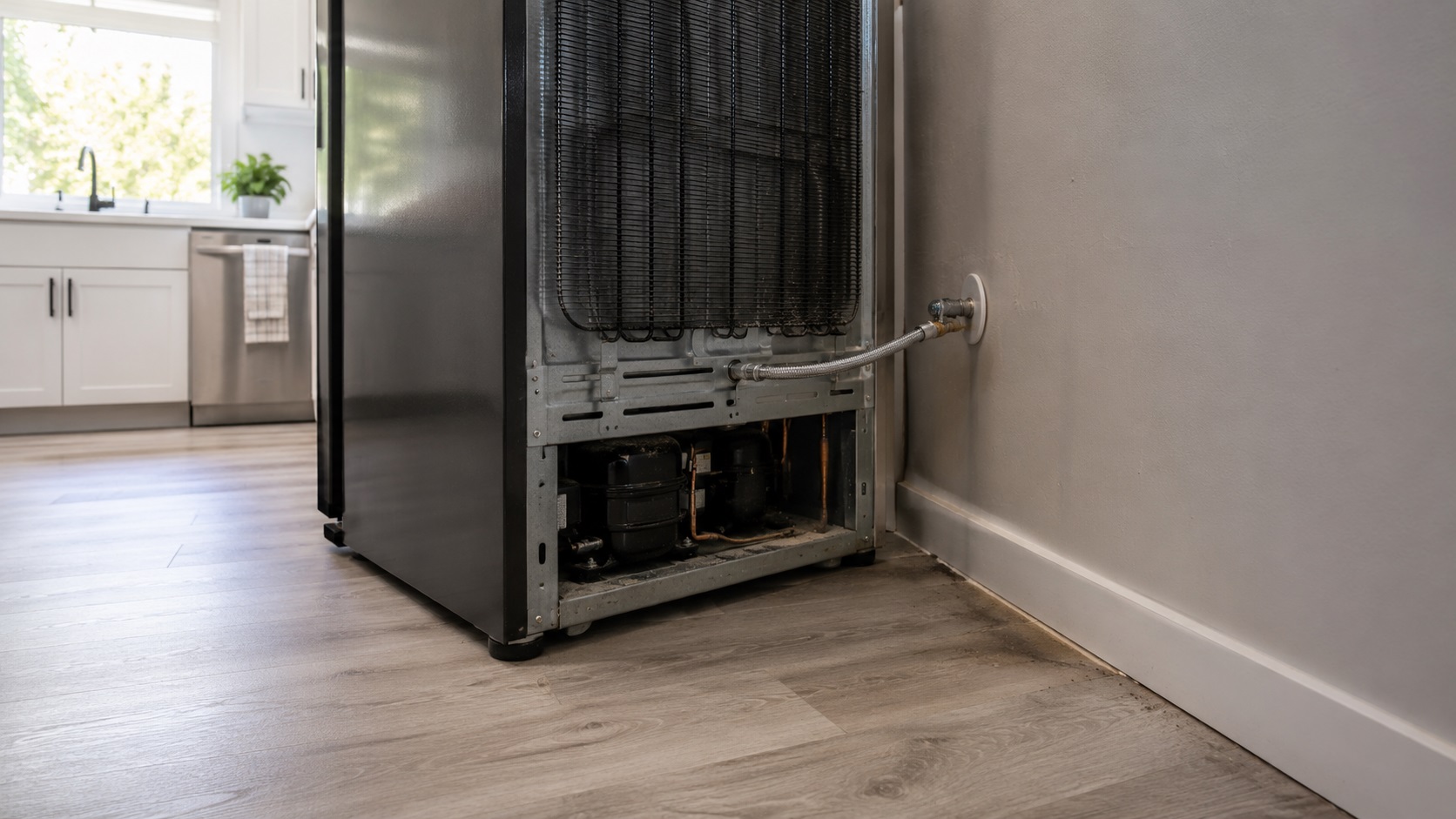
Why Refrigerators Cause Hidden Moisture Problems
Refrigerators cause hidden moisture problems because they combine pressurized water lines, cold surfaces, defrost drainage, heat-producing coils, dust, and restricted airflow in a space homeowners rarely inspect. Small leaks, condensation, or drain overflows can develop behind or underneath the appliance long before a visible puddle appears.
Many problems are first noticed as musty odors, soft flooring, warped floor edges, mold growth, or unexplained water damage near the kitchen. If you are already seeing symptoms instead of researching causes, review common signs of water leaks behind refrigerators before the damage spreads into flooring, subfloors, or nearby wall materials.
Why Refrigerators Are Prone to Hidden Moisture Problems
Refrigerators create unique conditions that make hidden moisture problems more likely than many other household appliances. They combine cold surfaces, heat generation, water supply connections, and restricted airflow into a confined space that homeowners rarely inspect.
Several design features contribute to this risk:
- Cold internal components that attract condensation
- Water lines that supply ice makers or dispensers
- Automatic defrost systems that manage melting ice
- Condenser coils that release heat behind or beneath the appliance
- Tight installation spaces that restrict airflow
- Limited visibility behind the appliance
The risk comes from the combination. A refrigerator may have a tiny water line seep, recurring condensation, or a partially blocked defrost drain, but the moisture often stays behind the appliance where airflow is weak and inspection is rare.
That is why refrigerator moisture often behaves differently from a burst pipe or obvious plumbing failure. Instead of one large leak, the damage usually comes from repeated small moisture events that let wood subfloors, laminate seams, cabinet edges, and base trim absorb water gradually.
For the broader home-risk context, see how plumbing leaks can cause structural moisture damage, especially when small appliance leaks affect surrounding materials over time.
Water Supply Lines Can Leak Slowly Behind the Appliance
One of the most common causes of hidden refrigerator moisture involves the water supply line connected to the appliance. Refrigerators equipped with ice makers or water dispensers rely on a small pressurized line that continuously supplies water to internal components.
These lines are typically made from flexible plastic tubing or braided metal hoses. While reliable under normal conditions, they remain vulnerable to wear, stress, and movement over time.
Several factors make refrigerator water lines especially prone to slow leaks:
- Movement during cleaning or repositioning
- Vibration during normal operation
- Kinking or bending of tubing
- Loose compression fittings
- Aging plastic connections
- Stress caused by tight installation spaces
Unlike major plumbing failures, refrigerator water line leaks often begin as extremely small seepage points. These slow leaks may produce only drops of water at a time, allowing moisture to spread across flooring surfaces rather than forming visible puddles.
Because the leak occurs behind the refrigerator, moisture spreads into hidden areas such as subfloors, trim, and cabinet bases. In many homes, the flooring beneath refrigerators receives little airflow, which allows moisture to linger instead of evaporating.
Another common issue occurs when homeowners push refrigerators back into position after cleaning or maintenance. This movement can place stress on tubing connections, weakening fittings and increasing the likelihood of slow seepage.
Over time, repeated small leaks can saturate materials below the surface. Wood subfloors absorb moisture gradually, leading to swelling, soft spots, and long-term structural weakening.
If your refrigerator includes a water supply system, periodic checks are essential. Detailed guidance on this process is covered in how to inspect refrigerator water connections, which explains how to evaluate fittings and tubing safely.
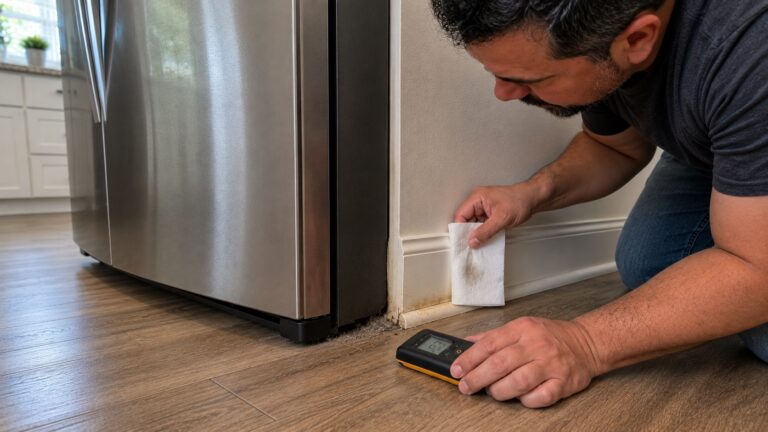
Hidden water line leaks are easy to miss because they may not create a visible puddle. If you suspect a concealed leak but cannot identify the source, learning how to detect hidden refrigerator water line leaks can help determine whether moisture is accumulating behind the appliance.
Condensation Can Form Around Cold Refrigerator Surfaces
Condensation is one of the most misunderstood sources of moisture around refrigerators. Many homeowners assume that water behind an appliance always comes from a leak, but condensation can produce significant moisture even when plumbing connections are functioning normally.
Condensation occurs when warm, humid air comes into contact with cold surfaces. Refrigerators constantly cool internal compartments, and some exterior surfaces—especially near cooling lines—can become cold enough to attract moisture from the surrounding air.
A useful clue is pattern: condensation is more likely when moisture appears during humid weather, heavy cooking, or poor kitchen ventilation, while a water line or drain problem is more likely when dampness appears consistently in the same spot regardless of room humidity.
This process becomes more noticeable in kitchens where humidity levels fluctuate throughout the day. Activities such as cooking, dishwashing, and boiling water release moisture into the air, increasing the likelihood of condensation forming on nearby cold surfaces.
Several factors increase condensation risk around refrigerators:
- High indoor humidity levels
- Poor ventilation in the kitchen
- Refrigerators placed tightly against walls
- Blocked airflow behind the appliance
- Warm air trapped in confined installation spaces
- Frequent door openings that introduce humid air
When condensation forms behind the refrigerator, moisture often travels downward due to gravity. Over time, repeated condensation cycles can leave flooring surfaces damp even when no active leak exists.
This slow moisture buildup can eventually support mold growth, especially in areas that remain dark and undisturbed. If you begin noticing musty odors or discoloration beneath the appliance, reviewing signs of mold under refrigerators can help confirm whether hidden growth may be developing.
Condensation problems are especially likely in humid climates, poorly ventilated kitchens, or refrigerator openings boxed tightly between cabinets. Even modern energy-efficient refrigerators can create localized cold zones that attract moisture when humidity rises.
Because condensation often forms gradually, homeowners may mistake early symptoms for minor spills or routine cleaning moisture. Over time, repeated exposure allows moisture to penetrate flooring seams and base materials, increasing the risk of structural deterioration.
Defrost Drain Problems Can Release Hidden Water
Most refrigerators rely on automatic defrost systems to remove frost buildup from internal cooling components. While these systems are highly effective, they also introduce another potential source of hidden moisture.
During normal operation, frost forms on evaporator coils inside the refrigerator. Periodically, the appliance activates a defrost cycle that melts accumulated frost into water. This water flows into a small drain system designed to carry it into a collection pan below the unit.
When everything works correctly, this water evaporates from the pan with help from heat released by the refrigerator’s condenser coils. If the drain, pan, coils, or airflow are not working properly, that water can escape or linger where it should not.
Common defrost-related moisture causes include:
- Clogged defrost drain lines
- Frozen drain channels
- Overflowing drain pans
- Misaligned drainage components
- Dust buildup preventing proper evaporation
- Cracked or damaged drain pans
When drain lines become clogged, water may back up inside the refrigerator and eventually escape beneath the appliance. Because this water release often happens slowly, it can remain hidden beneath flooring materials without creating visible puddles.
Another complication occurs when the collection pan cannot evaporate water efficiently. Dust accumulation around coils or restricted airflow reduces heat exchange, allowing water to remain in the pan longer than intended. If the pan fills faster than water evaporates, overflow becomes likely.
Repeated overflow cycles allow moisture to reach vulnerable surfaces such as laminate flooring edges, cabinet bases, and subfloor seams. In many cases, the damage becomes noticeable only after flooring begins to warp or separate.
Homeowners experiencing recurring dampness near their refrigerator may benefit from understanding how to prevent mold behind refrigerators, since defrost drainage problems frequently create the damp conditions that allow mold to develop.
Defrost-related moisture problems are especially common in refrigerators that have not been cleaned or maintained regularly. Over time, debris accumulation inside drainage systems increases the likelihood of restricted water flow.
Poor Airflow and Dust Can Make Moisture Problems Worse
Airflow plays a critical role in controlling moisture around refrigerators. Without adequate ventilation behind the appliance, heat and moisture can accumulate in confined spaces, creating favorable conditions for condensation and evaporation failures.
Refrigerators generate heat as part of the cooling process. This heat must dissipate into surrounding air to maintain efficient operation. When airflow becomes restricted, the appliance may operate at higher temperatures, increasing stress on internal systems and affecting moisture behavior.
Several common installation conditions contribute to poor airflow:
- Refrigerators installed tightly between cabinets
- Minimal clearance behind the appliance
- Dust buildup on condenser coils
- Obstructed ventilation openings
- Improper spacing from rear walls
- Accumulated debris beneath the appliance
Dust accumulation is particularly important. As dust collects on condenser coils, it acts as insulation that traps heat. This trapped heat reduces the appliance’s ability to evaporate moisture from defrost pans, increasing the likelihood of overflow or lingering dampness.
Poor airflow also contributes to persistent condensation problems. When warm air becomes trapped behind the refrigerator, moisture remains suspended near cold surfaces, increasing the likelihood of condensation cycles.
Repeated condensation and slow evaporation can keep the area beneath the appliance damp, especially where flooring and subfloor materials receive little natural drying.
When airflow and moisture problems persist, flooring materials may begin absorbing water repeatedly. If this occurs, reviewing how to dry flooring after refrigerator leaks can help determine appropriate recovery steps once the source of moisture is corrected.
Why Refrigerator Moisture Damages Flooring First
Flooring materials beneath refrigerators are especially vulnerable to hidden moisture because they receive repeated exposure to small amounts of water while remaining poorly ventilated. Even minor moisture sources—such as condensation droplets or slow leaks—can spread across flat surfaces and collect beneath the appliance where drying is limited.
Unlike open areas of the home, the space under a refrigerator rarely benefits from sunlight, airflow, or routine cleaning. This allows moisture to remain trapped against flooring materials longer than it would in exposed locations.
Certain flooring materials are more vulnerable to hidden moisture damage:
- Laminate flooring, which absorbs moisture through seams
- Engineered wood flooring, which can swell and separate
- Vinyl flooring installed over absorbent subfloors
- Wood subfloors, which readily absorb repeated moisture exposure
- Cabinet toe-kicks and trim materials near the appliance
Moisture often travels along flooring seams before becoming visible. This means the damage may spread several inches—or even feet—beyond the original moisture source before symptoms appear.
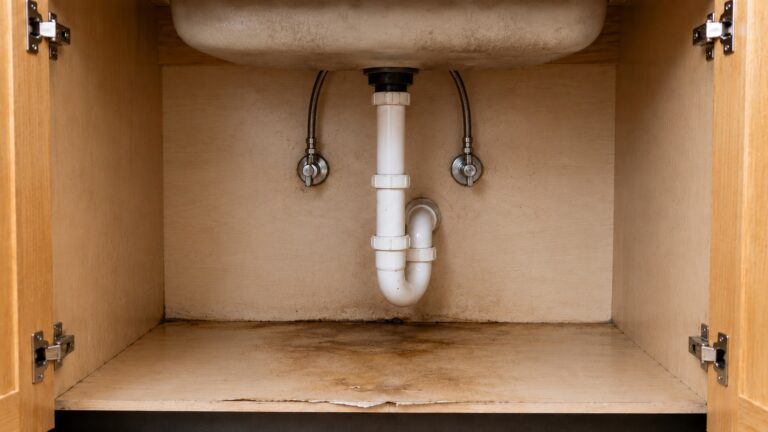
As water enters flooring joints, it may begin affecting the underlying subfloor. Wood-based subfloors expand when wet and shrink when dry, which can create long-term structural stress. Repeated moisture exposure accelerates deterioration, eventually leading to soft spots, surface distortion, or flooring separation.
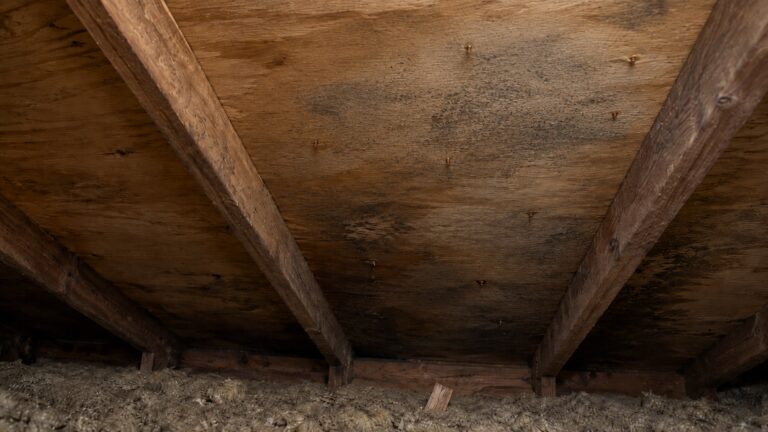
If moisture reaches these materials and remains undetected, mold growth becomes more likely, especially along seams, trim edges, and subfloor areas that stay damp after the surface appears dry.
Why Hidden Refrigerator Moisture Can Lead to Mold
Mold growth requires three basic conditions: moisture, organic material, and limited airflow. The area behind and beneath refrigerators often satisfies all three requirements, making it a favorable environment for hidden mold development.
Organic materials commonly found near refrigerators include:
- Wood flooring and subfloors
- Cabinet materials
- Dust and food debris
- Paper-backed drywall
- Baseboards and trim
When moisture remains present for extended periods, mold spores naturally present in indoor air can begin colonizing these surfaces. Growth may begin within 24 to 48 hours under favorable conditions, especially in areas that remain consistently damp.
Mold often develops unnoticed behind refrigerators because most homeowners rarely move the appliance unless they are cleaning, repairing, or replacing it.
Hidden mold growth often produces subtle warning signs before becoming visible. These signs may include musty odors, minor discoloration, or unexplained moisture smells near the kitchen floor. Reviewing signs of mold under refrigerators can help identify early indicators of hidden mold development.
Persistent moisture combined with limited airflow allows mold to remain active for extended periods. Over time, this may lead to material damage, musty odors, and more difficult cleanup.
When Refrigerator Moisture Needs Further Inspection
Not every instance of moisture near a refrigerator indicates a serious problem. However, repeated moisture events should never be ignored, especially when they occur without an obvious cause.
Certain conditions suggest that further investigation is necessary:
- Recurring dampness beneath the appliance
- Musty odors that persist after cleaning
- Visible water stains or discoloration
- Soft or warped flooring near the refrigerator
- Water appearing without recent spills
- Repeated mold growth in the same location
When these symptoms occur, the next step is to identify whether the moisture is coming from a water connection, condensation pattern, defrost drain, or drain pan.
If moisture continues after visible cleaning or adjustment, professional inspection may be required. Appliance technicians, plumbers, or restoration specialists can identify mechanical problems that may not be visible from outside the unit.
Regular cleaning, airflow maintenance, and periodic inspection reduce the likelihood of hidden problems developing over time. For the prevention workflow, see how to prevent mold behind refrigerators.
If you need to pull the refrigerator forward, avoid stretching or kinking the water supply line. Do not inspect wet areas near electrical connections while the area is still damp. Shut off the appliance water supply if you suspect an active leak, and call a qualified appliance technician or plumber if moisture appears near wiring, outlets, or damaged flooring.
Quick Summary: Why Refrigerators Create Hidden Moisture
- Refrigerators create moisture through condensation, drainage processes, and water supply systems.
- Slow leaks and condensation are easy to overlook because they often remain hidden until flooring, trim, or subfloor materials have absorbed moisture.
- Poor airflow and dust buildup increase moisture risk behind appliances.
- Flooring beneath refrigerators is especially vulnerable to repeated moisture exposure.
- Recurring dampness near a refrigerator should be traced to a specific source before flooring or trim repairs are made.
FAQ About Why Refrigerators Cause Hidden Moisture
Why is there moisture behind my refrigerator?
Moisture behind refrigerators is commonly caused by condensation, slow water line leaks, or defrost drainage problems. Restricted airflow and high humidity levels can increase the likelihood of moisture forming in hidden areas.
Can a refrigerator cause mold behind it?
Yes. A refrigerator can support mold growth behind or beneath the appliance when hidden moisture reaches dust, wood, drywall backing, trim, or subfloor materials.
Can refrigerators leak without visible water?
Yes. Small leaks may produce moisture that spreads across flooring without forming noticeable puddles. Over time, repeated exposure can damage subfloors or promote mold growth even when water is not immediately visible.
Is refrigerator condensation normal?
Some condensation can occur in humid kitchens, but persistent dampness behind or under the refrigerator is not something to ignore. It may indicate restricted airflow, excessive indoor humidity, a drainage issue, or a small water line leak.
Why does flooring near my refrigerator stay damp?
Damp flooring often indicates hidden moisture sources such as condensation, drainage overflow, or water line seepage. Flooring materials absorb moisture easily, especially when airflow is limited beneath the appliance.
3 Comments
Comments are closed.