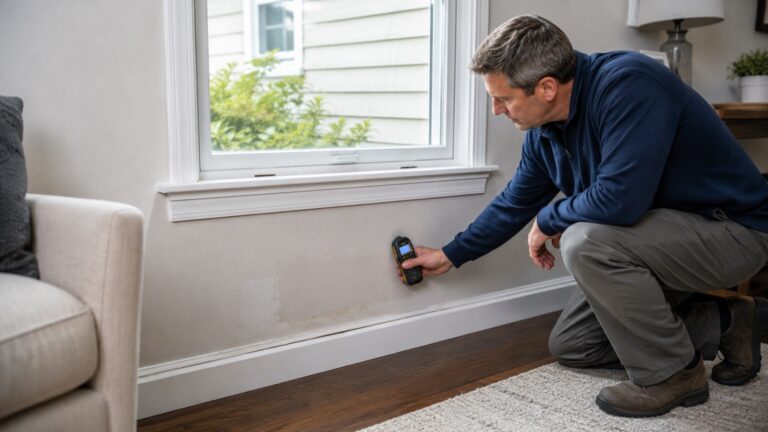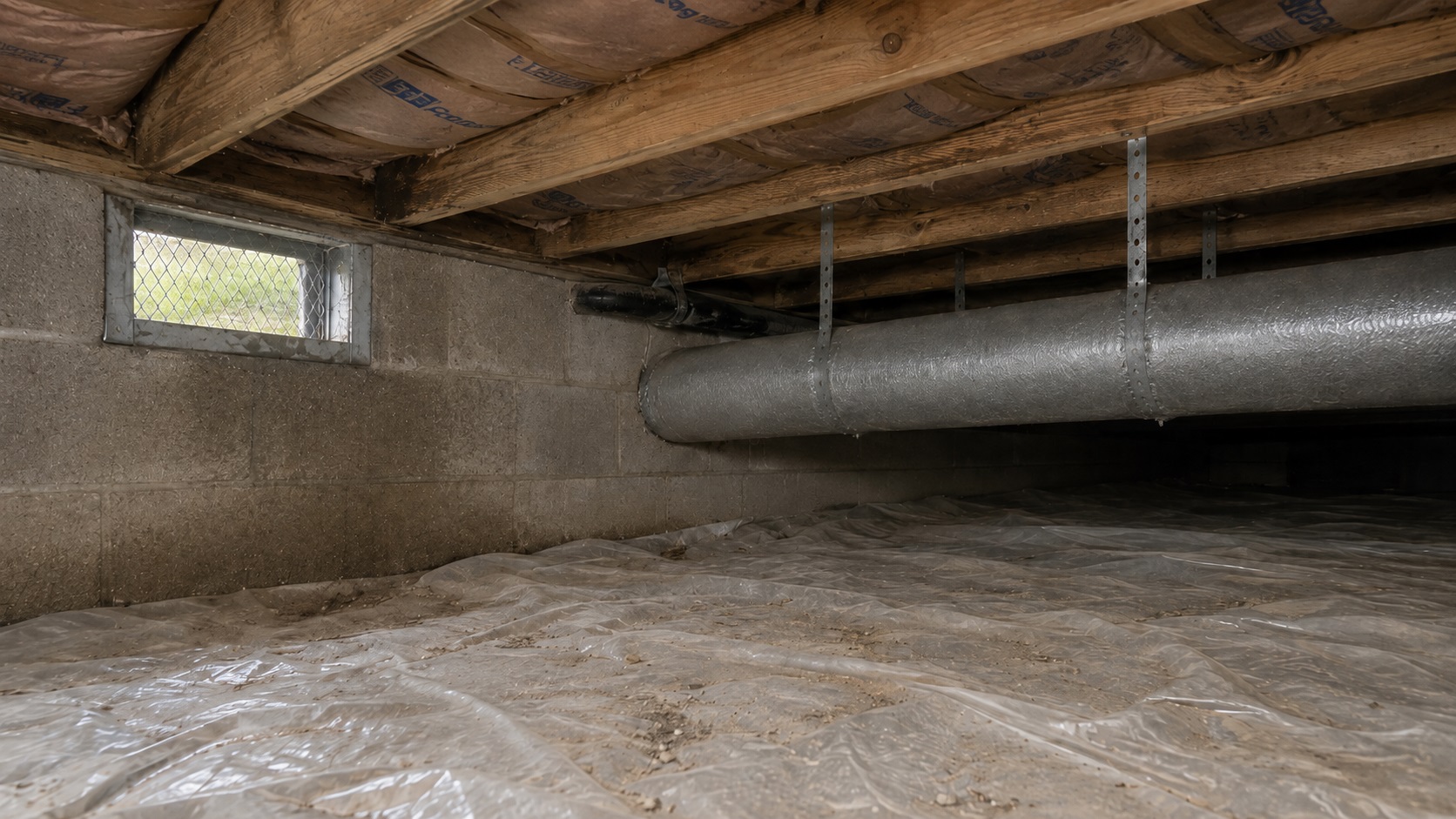
Why Crawl Space Ventilation Causes Moisture Problems
Crawl space ventilation causes moisture problems when the air entering through the vents is wetter than the air already under the home. Instead of drying the crawl space, humid outdoor air can raise humidity, condense on cooler surfaces, and keep wood, insulation, ducts, and soil moisture from drying properly.
This is why a vented crawl space can still smell musty, show damp insulation, or develop condensation on pipes even when the vents appear open. The problem is not simply whether air is moving. The real question is whether that air is dry enough, warm enough, and evenly distributed enough to remove moisture faster than the crawl space receives it.
If the symptoms match signs of poor crawl space ventilation or keep returning after minor fixes, the cause often belongs to the recurring moisture patterns explained in why moisture problems keep returning.
How Crawl Space Ventilation Is Supposed to Work
Crawl space ventilation is intended to exchange damp crawl space air with outdoor air that can carry moisture away. That only works when the incoming air is drier than the crawl space air and can move across the space instead of stalling in isolated pockets.
In a typical ventilated crawl space, air enters through foundation vents located along the perimeter of the home. This incoming air is expected to travel across the crawl space and exit through other vents, creating a continuous exchange of air. This movement helps remove moisture vapor that naturally rises from soil and structural materials.
When ventilation works properly, several key conditions occur:
- Air enters through unobstructed vents
- Air circulates evenly across the crawl space
- Moisture vapor is carried away before condensing
- Humidity levels remain stable
- Structural materials stay dry
However, these conditions depend on several factors working together. Airflow must be strong enough to move moisture out, and incoming air must be dry enough to allow evaporation to occur. If either condition fails, moisture may remain trapped or increase over time.
One common misunderstanding is that ventilation always removes moisture. In reality, ventilation only removes moisture when incoming air contains less moisture than the air already inside the crawl space. If outdoor air contains more moisture, ventilation introduces additional humidity instead of removing it.
This distinction becomes especially important during warm and humid seasons. Outdoor air during these periods often carries significant moisture. When that air enters the crawl space, it may increase humidity rather than reduce it.
Even when airflow is present, moisture removal depends on how air moves throughout the crawl space. If airflow does not reach certain areas, humidity may accumulate in isolated zones. Over time, these localized moisture pockets can lead to condensation and mold formation.
If airflow distribution problems are suspected, structured airflow evaluation methods such as those described in how to detect inadequate crawl space airflow can help determine whether ventilation performance is consistent throughout the crawl space.
How Humid Outdoor Air Enters Crawl Spaces
The main reason vented crawl spaces become damp is that outdoor air can carry a heavy moisture load. Ventilation exchanges air, but it does not remove water vapor from that air. During humid weather, every open vent can become a path for moisture to enter instead of escape.
Outdoor air contains water vapor that changes depending on temperature, weather, and seasonal conditions. During humid periods, outdoor air may already be saturated with moisture. When crawl space vents are open, this humid air flows inside, raising the moisture level within the crawl space.
This effect is most noticeable during:
- Summer months with high outdoor humidity
- Rain-heavy seasons
- Warm climates with persistent moisture in the air
- Periods following extended rainfall
Many homeowners notice that crawl space conditions worsen during humid weather even though vents remain open. This happens because ventilation does not remove moisture when outdoor humidity is already high. Instead, airflow delivers additional moisture into the crawl space environment.
This process often explains why crawl space humidity increases during certain seasons. Homes that remain dry during cooler months may experience moisture buildup when warm, humid air becomes dominant. These seasonal patterns are commonly mistaken for leaks or structural failures, even though the underlying cause is ventilation-related moisture entry.
These moisture entry patterns frequently contribute to long-term dampness behaviors such as those described in why crawl spaces stay damp, where humidity accumulates gradually rather than appearing suddenly.
Why Warm Air Creates Condensation on Cool Surfaces
Once humid outdoor air enters the crawl space, condensation becomes one of the most significant moisture-producing processes. Condensation occurs when warm, moisture-filled air contacts cooler surfaces. When this happens, water vapor changes into liquid water, creating visible dampness even when no leaks are present.
Crawl spaces naturally contain surfaces that remain cooler than outdoor air, especially during warm seasons. These cooler surfaces provide ideal conditions for condensation formation.
Common condensation-prone surfaces include:
- Metal HVAC ducts
- Cold water pipes
- Concrete foundation walls
- Wood framing beneath flooring
- Subfloor surfaces above crawl spaces
When warm humid air enters the crawl space, it cools slightly upon contacting these surfaces. As the air cools, its ability to hold moisture decreases. This causes excess moisture to condense into liquid droplets on nearby materials.
This is a dew point problem: once the surface temperature is low enough for the incoming humid air to release moisture, ventilation can create liquid water even when there is no plumbing leak or groundwater intrusion.
This process can repeat daily during warm months. Each condensation cycle may seem minor, but repeated moisture exposure can create long-term damp conditions that increase the risk of mold growth and material deterioration.
Condensation often occurs in specific patterns rather than uniformly across the crawl space. For example, droplets may form heavily on duct surfaces while nearby wood remains only slightly damp. These localized patterns help identify airflow and temperature interactions that contribute to moisture buildup.
Homeowners frequently mistake condensation for plumbing leaks because both create visible moisture. Condensation usually appears as fine droplets or sweating across cool surfaces such as ducts, pipes, or foundation walls. A leak is more likely to create a concentrated wet spot, drip trail, stained area, or moisture pattern that starts from one fixture, pipe joint, or penetration.
Repeated condensation cycles contribute to moisture-related problems such as mold growth, wood staining, and insulation damage. If condensation continues over time, symptoms similar to those outlined in signs of mold growth in crawl spaces may begin to develop.
How Poor Airflow Traps Moisture Inside Crawl Spaces
Even when crawl space vents are open, airflow may still be insufficient to remove moisture effectively. Air must travel across the entire crawl space to carry humidity out. When airflow is weak or uneven, moisture becomes trapped in certain areas, allowing humidity levels to rise gradually.
Proper ventilation depends on continuous air movement from one side of the crawl space to the other. If air enters but does not circulate fully, moisture removal becomes inconsistent. Some areas may remain damp while others appear relatively dry.
Several conditions commonly interfere with airflow movement:
- Insulation sagging below floor joists
- Ductwork blocking airflow pathways
- Stored materials restricting circulation
- Foundation vents that are too few, poorly positioned, blocked, or located where air cannot cross the crawl space
- Debris buildup inside the crawl space
These obstacles rarely stop airflow completely. Instead, they weaken airflow strength and create stagnant zones. Moisture tends to collect in these low-airflow areas, forming pockets of humidity that persist even when vents remain open.
Over time, trapped humidity increases the moisture content of surrounding materials. Wood framing absorbs moisture slowly, insulation retains dampness, and condensation forms more frequently on cooler surfaces. These conditions often produce visible warning signs similar to those described in signs of poor crawl space ventilation, where airflow limitations lead to ongoing moisture symptoms.
Weak airflow also reduces drying speed. Even if surfaces dry briefly during favorable weather, trapped humidity allows moisture to return quickly. This repeated wetting and drying cycle gradually weakens structural materials and increases the risk of mold growth.
If one corner stays musty while another area looks dry, the issue is often uneven airflow rather than a whole-crawl-space failure. Damp insulation, rusted duct surfaces, or condensation near one vent path can point to a stagnant zone.
Why Summer Ventilation Often Increases Moisture
One of the most common and confusing crawl space problems occurs during summer. Many homeowners expect ventilation to improve drying conditions during warm weather. However, summer ventilation often increases moisture levels instead of reducing them.
This happens because warm outdoor air typically contains higher moisture levels than cooler crawl space air. When this humid air enters through vents, it introduces additional moisture into the crawl space environment.
Summer moisture problems typically follow this pattern:
- Warm, humid outdoor air enters the crawl space
- Air contacts cooler structural surfaces
- Moisture condenses onto these surfaces
- Humidity levels rise rather than fall
- Moisture problems gradually worsen
This cycle explains why crawl spaces often feel more humid during summer months, even when ventilation appears functional. Outdoor humidity levels may be too high for ventilation alone to maintain dry conditions.
Many homeowners incorrectly assume that increasing ventilation during summer will reduce moisture. In reality, increasing airflow may introduce more humid air, intensifying condensation and humidity problems.
Summer-related moisture buildup often contributes to recurring humidity patterns described in why moisture problems keep returning, where seasonal humidity repeatedly triggers moisture accumulation.
How Soil Moisture Contributes to Ventilation Problems
Soil beneath crawl spaces constantly releases moisture vapor into the surrounding air. This natural process occurs even when no standing water is visible. Ground moisture slowly evaporates and becomes trapped inside the crawl space if airflow is insufficient.
Soil moisture levels increase due to several environmental factors, including:
- Rainwater absorption into surrounding soil
- Poor exterior drainage near foundation walls
- High groundwater levels
- Surface runoff accumulating near the home
When soil releases moisture vapor, ventilation must remove that vapor to maintain stable humidity levels. If airflow is weak or incoming air is already humid, moisture accumulates instead of dissipating.
Even crawl spaces with vapor barriers can experience moisture buildup if the barrier is incomplete, damaged, poorly sealed, or overwhelmed by humid outdoor air. A vapor barrier slows ground moisture, but it does not correct condensation, drainage problems, or humid air entering through open vents.
Over time, soil-driven moisture contributes to persistent dampness that affects insulation, wood framing, and air quality. These patterns closely resemble long-term moisture behaviors outlined in why crawl spaces stay damp, where ground moisture remains a constant source of humidity.
Why Moisture Problems Keep Returning in Ventilated Crawl Spaces
One of the most frustrating crawl space issues homeowners face is recurring moisture. Even after clearing vents, removing debris, or improving airflow, moisture often returns. This repeated cycle happens because ventilation alone does not eliminate the conditions that produce moisture.
Moisture problems return when the underlying balance between air movement and moisture production remains unstable. In many homes, crawl spaces experience continuous moisture input from soil, outdoor humidity, or seasonal weather patterns. When ventilation cannot keep up with this moisture input, humidity gradually rises again.
Recurring moisture problems typically involve one or more of the following factors:
- Outdoor air containing high humidity levels
- Ground moisture releasing vapor into the crawl space
- Airflow pathways that are partially restricted
- Seasonal humidity changes that overwhelm ventilation capacity
- Uneven air circulation creating stagnant moisture zones
These conditions often create a repeating moisture cycle. Even after surfaces dry temporarily, moisture returns because the underlying cause remains active. This pattern is commonly observed in homes where crawl spaces remain damp despite regular maintenance.
Understanding this cycle helps explain why short-term improvements do not always provide lasting results. Recurring moisture patterns are frequently connected to environmental behavior rather than isolated damage. In many cases, these long-term cycles mirror the moisture behavior patterns described in why moisture problems keep returning, where recurring humidity reflects ongoing environmental conditions.
When moisture repeatedly returns after cleaning, clearing vents, or minor airflow adjustments, it usually means the crawl space still has an active moisture source or the incoming air is too humid for ventilation to control by itself.
When Ventilation Alone Cannot Control Moisture
Ventilation is only one part of crawl space moisture control. It cannot compensate for wet soil, poor exterior drainage, missing vapor control, humid outdoor air, cold condensation surfaces, or airflow paths that never reach damp areas.
Ventilation alone often fails under the following conditions:
- Soil remains consistently wet due to poor drainage
- Outdoor humidity levels remain high for extended periods
- Crawl space design restricts airflow distribution
- Moisture sources remain active beneath the home
- Airflow capacity is too small to remove excess humidity
These conditions create situations where airflow cannot remove moisture as quickly as it accumulates. As a result, humidity levels remain elevated even when vents remain open.
For example, homes located in regions with heavy rainfall may experience persistent soil moisture beneath the foundation. In these cases, ventilation alone cannot overcome the constant release of moisture vapor. Additional moisture control strategies are often required to stabilize humidity levels.
Understanding the limitations of ventilation helps prevent unnecessary repairs and misdiagnosis. When airflow alone fails to control moisture, investigating related moisture sources becomes essential. Reviewing conditions similar to those outlined in why crawl spaces stay damp can help identify additional environmental factors contributing to humidity problems.
Recognizing ventilation limits also supports long-term prevention planning. Once the cause is understood, homeowners can use targeted strategies such as vapor control, drainage correction, dehumidification, or the ventilation practices explained in how to prevent moisture with proper crawl space ventilation.
Frequently Asked Questions About Crawl Space Ventilation Moisture Problems
Why do crawl space vents increase humidity?
Crawl space vents increase humidity when humid outdoor air enters a cooler crawl space and cannot dry before contacting ducts, pipes, foundation walls, or subfloor materials. In that situation, the vent is not removing moisture; it is supplying it.
Does opening vents always reduce crawl space moisture?
No. Opening vents only reduces moisture when incoming air is drier than crawl space air. If outdoor humidity is high, opening vents may increase moisture levels instead of reducing them.
Why is crawl space moisture worse in summer?
Summer air typically contains more moisture than cooler air. When warm humid air enters crawl spaces, it creates condensation on cooler surfaces, increasing moisture buildup over time.
Can ventilation cause mold growth?
Ventilation itself does not directly cause mold, but it can create conditions that allow mold to grow. When humid air enters and remains trapped, moisture accumulates on materials that support mold growth.
When does ventilation stop working effectively?
Ventilation stops working effectively when outdoor humidity is high, airflow does not reach damp areas, soil vapor continues rising from below, or cool crawl space surfaces keep collecting condensation faster than air movement can remove it.
Conclusion: Why Ventilation Can Make Crawl Space Moisture Worse
Crawl space ventilation causes moisture problems when humid outdoor air, cool crawl space surfaces, soil vapor, and weak airflow combine faster than the crawl space can dry. Open vents may move air, but they do not guarantee that the incoming air is dry enough to lower humidity.
If moisture keeps returning, the next step is to identify whether the problem is humid outdoor air, condensation, soil moisture, blocked airflow, or a separate leak. That distinction helps prevent unnecessary repairs and points homeowners toward the right moisture control strategy.
Key Takeaways
- Crawl space ventilation can introduce moisture when outdoor air is humid.
- Condensation occurs when warm humid air contacts cooler crawl space surfaces.
- Summer ventilation often increases humidity rather than reducing it.
- Soil moisture contributes continuous humidity beneath homes.
- Recurring moisture problems indicate ventilation limits or environmental imbalance.
- Ventilation alone cannot solve all crawl space moisture problems.