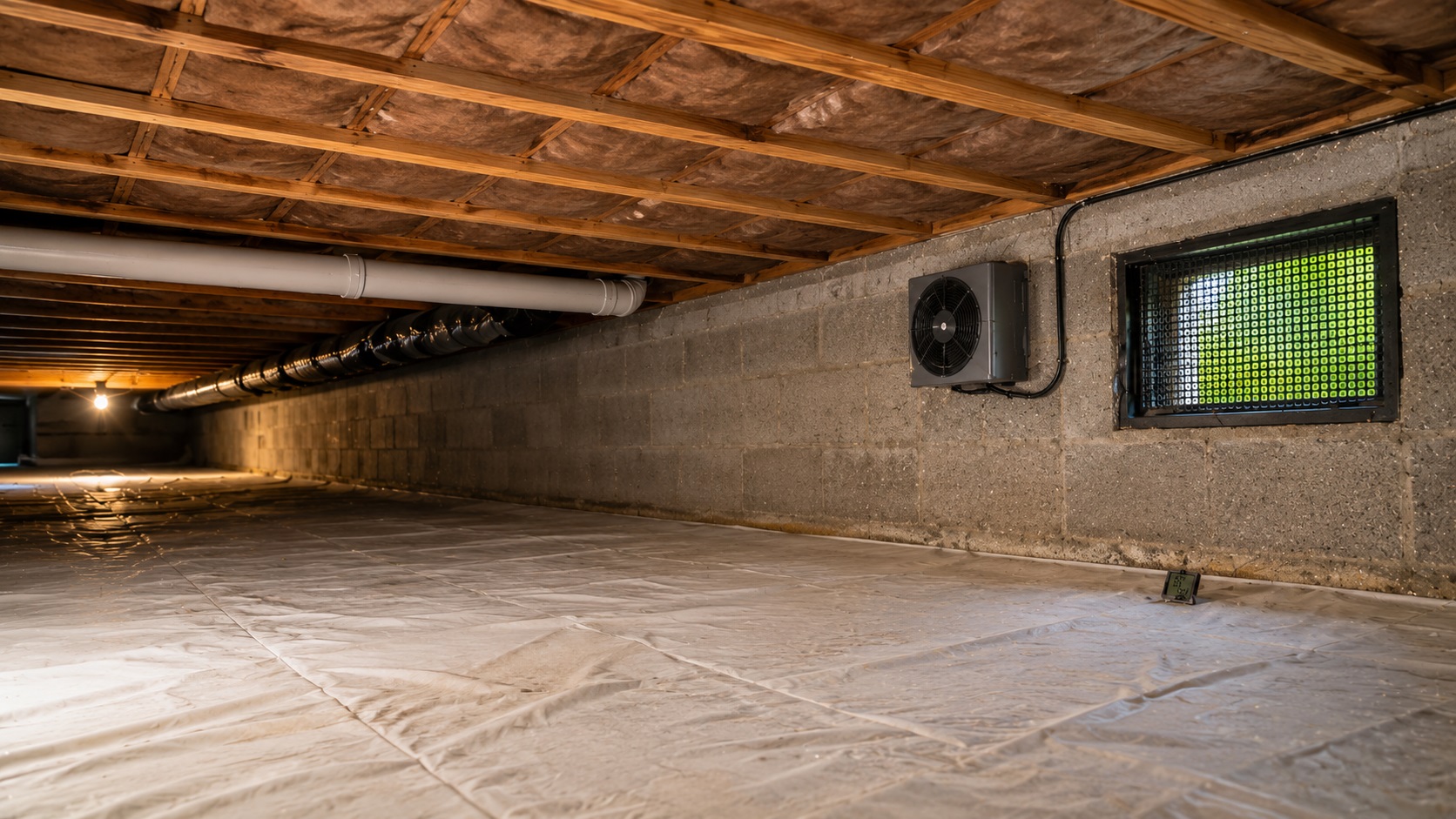
How to Prevent Moisture with Proper Crawl Space Ventilation
Preventing moisture with proper crawl space ventilation means keeping air moving, keeping vents clear, watching humidity, and controlling moisture sources that ventilation cannot handle by itself. Vents help only when airflow paths stay open and outside conditions do not add more moisture than the crawl space can release.
A good prevention routine includes clearing exterior vents, checking interior airflow paths, monitoring humidity, managing soil moisture, and adjusting for seasonal conditions. These habits help prevent mold growth, wood deterioration, damp insulation, and musty odors before visible damage appears.
If your crawl space already has warning signs such as musty odors, condensation, or damp insulation, review signs of poor crawl space ventilation before treating this as simple maintenance. For broader prevention planning across the home, see how to prevent recurring moisture damage.
Why Preventive Ventilation Maintenance Matters
Crawl space ventilation only prevents moisture when air can enter, move across the space, and leave without obstruction. If vents are blocked, insulation sags, or soil moisture increases, humidity can build up even when the vents are technically open.
Several long-term problems can develop when ventilation maintenance is neglected:
- Gradual humidity buildup beneath the home
- Condensation forming on pipes and ductwork
- Wood framing absorbing moisture over time
- Insulation losing its effectiveness
- Increased likelihood of mold growth
- Indoor air quality becoming affected
If dampness keeps returning after vents are cleared, the issue may be part of a larger recurring moisture pattern. See why moisture problems keep returning for the broader diagnosis.
Regular maintenance provides an opportunity to identify small problems before they grow into larger ones. Clearing debris, adjusting insulation, and checking airflow pathways are simple steps that protect structural materials and improve long-term durability.
Preventive maintenance also helps reveal ventilation failures before damage appears. If certain areas begin staying damp, musty, or cooler than nearby sections, airflow may no longer be reaching those areas effectively.
Maintaining proper ventilation is not a one-time task. Instead, it is an ongoing process that adapts to environmental conditions, seasonal weather changes, and natural aging of materials.
Keeping Crawl Space Vents Clear Year-Round
Keeping crawl space vents clear is one of the simplest and most effective ways to prevent moisture buildup. Even minor obstructions can reduce airflow enough to allow humidity levels to rise gradually. Because crawl space ventilation depends on consistent air movement, blocked or restricted vents often lead to long-term moisture problems.
Vent blockages develop slowly in many homes. Leaves, soil, mulch, and vegetation can accumulate over time, especially around foundation walls. Insects and animals may also build nests inside vent openings, further restricting airflow. These changes often occur without obvious warning, making regular inspection essential.
To prevent airflow reduction, inspect crawl space vents regularly and check for the following:
- Leaves, mulch, or soil covering vent openings
- Grass or shrubs growing too close to vents
- Insect screens clogged with debris
- Damaged vent covers allowing animals inside
- Paint buildup reducing airflow through vent slats
- Moisture stains forming around blocked vents
Clear obstructions without bending vent covers, tearing screens, or packing soil against the foundation opening. Keep mulch, leaves, grass, and storage materials away from the vent face so air can pass through the full opening.
Vent inspections are especially important after storms, landscaping work, or seasonal weather changes. Heavy rain can shift soil and mulch, while falling leaves can accumulate quickly during autumn months. Even minor changes in ground conditions may restrict airflow without being immediately noticeable.
If vent blockages are suspected, using structured inspection methods such as those described in how to inspect crawl space vents for blockages can help identify hidden airflow restrictions before moisture problems develop.
Managing Airflow Pathways Inside Crawl Spaces
Clear exterior vents alone are not enough to maintain proper ventilation. Air must also move freely inside the crawl space. Internal obstructions often reduce airflow without being visible from outside, allowing moisture to accumulate in isolated areas.
Maintaining open airflow pathways ensures that air entering through vents can circulate across the crawl space and exit through opposing vents. When airflow becomes uneven, humidity levels rise in areas where circulation is weak.
Common internal conditions that restrict airflow include:
- Insulation sagging below floor framing
- Stored items placed inside crawl spaces
- Loose debris blocking movement between vents
- Ductwork positioned directly in airflow paths
- Collapsed insulation batts restricting circulation
Preventive maintenance involves inspecting crawl space interiors periodically to confirm that airflow remains unobstructed. Insulation should remain secured against floor framing, and stored items should never block vent pathways or airflow channels.
Airflow restrictions often create localized humidity zones. These areas may develop damp surfaces even when nearby sections remain dry. Recognizing these uneven moisture patterns helps identify airflow limitations before widespread damage occurs.
If one area stays damp while nearby areas stay dry, the crawl space may have uneven airflow. Use how to detect inadequate crawl space airflow for the fuller airflow-checking process.
Managing airflow pathways is particularly important in crawl spaces with insulation or mechanical equipment. These components can shift over time, gradually blocking circulation paths without obvious signs. Routine inspection prevents minor changes from turning into long-term airflow failures.
Monitoring Humidity to Prevent Moisture Buildup
Humidity monitoring is one of the most effective ways to prevent crawl space moisture problems before visible damage occurs. Because moisture accumulation usually begins as increased humidity rather than standing water, tracking humidity levels helps identify problems early—often before insulation, wood, or structural materials are affected.
Relative humidity (RH) measures the amount of moisture in the air. Maintaining proper humidity levels inside the crawl space helps prevent condensation, mold growth, and material deterioration. Without monitoring, humidity may rise slowly without being noticed until symptoms appear.
Typical humidity ranges for crawl spaces include:
- Below 60% RH: Generally considered safe and stable
- 60%–70% RH: Warning range requiring attention
- Above 70% RH: High-risk range where mold growth becomes more likely
A digital hygrometer or wireless humidity monitor helps confirm whether ventilation is actually controlling moisture. One high reading after a storm is less useful than a pattern: repeated readings above 60% RH, or isolated areas that stay much higher than the rest of the crawl space, deserve closer inspection.
For best results, humidity monitors should be placed in multiple locations, including:
- Near exterior vent openings
- In central crawl space areas
- Near areas previously affected by dampness
- Close to ducts or plumbing lines
If humidity readings vary between locations, airflow may be uneven. Higher humidity levels in isolated areas often indicate restricted circulation or localized moisture buildup. Identifying these patterns early allows homeowners to correct airflow limitations before damage occurs.
Humidity monitoring also helps confirm whether preventive ventilation efforts are working. If humidity remains stable despite seasonal changes, airflow conditions are likely functioning properly. If humidity begins to rise unexpectedly, further inspection may be necessary.
Making Seasonal Ventilation Adjustments
Crawl space ventilation performance changes with seasonal weather conditions. Outdoor humidity, temperature differences, and rainfall patterns all influence how ventilation behaves. Making seasonal adjustments helps maintain stable humidity levels throughout the year.
Seasonal changes affect crawl space moisture in several ways. During warm months, outdoor air often contains high humidity levels that can increase moisture inside the crawl space. During cooler months, temperature differences may lead to condensation forming on cooler surfaces.
Common seasonal ventilation considerations include:
- Inspecting vents before humid summer weather begins
- Checking for debris accumulation after storms
- Monitoring humidity more frequently during seasonal transitions
- Observing condensation patterns during cooler weather
- Confirming airflow pathways remain open year-round
Seasonal maintenance prevents sudden moisture increases caused by environmental changes. For example, heavy rainfall during spring may increase soil moisture levels beneath the home. Without proper airflow, this moisture remains trapped and raises humidity levels.
Summer dampness does not always mean the vent system is broken. In humid weather, outdoor air can bring moisture into a cooler crawl space faster than natural ventilation can remove it, especially when soil moisture or drainage problems are also present.
Recognizing these seasonal effects helps homeowners anticipate humidity changes rather than reacting after moisture damage occurs. Understanding how seasonal humidity influences crawl space behavior—such as those explained in why crawl space ventilation causes moisture problems—supports more effective prevention planning.
Managing Soil Moisture to Support Ventilation Performance
Soil beneath crawl spaces releases moisture vapor continuously. Even when no visible water is present, soil moisture gradually evaporates into the crawl space air. If ventilation cannot remove this moisture effectively, humidity levels rise and condensation may develop.
Managing soil moisture is essential because ventilation alone cannot overcome excessive moisture entering from the ground. Preventing soil moisture buildup supports airflow performance and reduces long-term humidity risk.
Common soil moisture prevention strategies include:
- Maintaining proper grading around foundation walls
- Directing rainwater away from the home
- Preventing standing water near crawl space areas
- Inspecting vapor barriers for tears or damage
- Ensuring drainage systems function correctly
Exterior drainage plays a major role in crawl space moisture prevention. When water collects near foundation walls, soil moisture levels increase and release additional vapor into the crawl space. Over time, this continuous moisture input overwhelms ventilation capacity.
Vapor barriers also help control soil moisture. These plastic coverings reduce the amount of ground vapor entering the crawl space. However, vapor barriers must remain intact and properly positioned to function effectively.
This is why crawl space moisture guidance from the U.S. Department of Energy includes using a polyethylene vapor diffusion barrier across crawl space floors as part of moisture control.
Even small tears or loose seams allow moisture vapor to escape into the crawl space. Inspecting vapor barriers regularly helps maintain their effectiveness and supports ventilation performance.
When soil moisture remains high despite preventive maintenance, reviewing environmental conditions similar to those described in why crawl spaces stay damp helps identify additional moisture sources contributing to long-term humidity problems.
Preventing Long-Term Crawl Space Moisture Damage
Long-term crawl space prevention is about keeping moisture from repeatedly cycling into wood, insulation, ducts, and subfloor materials. Even when the space looks dry during one inspection, repeated humidity spikes can weaken materials over time.
Moisture damage usually develops slowly. Wood framing absorbs moisture gradually, insulation loses effectiveness over time, and metal components begin to corrode. Preventive ventilation maintenance reduces these long-term risks by maintaining stable humidity levels.
Key long-term prevention habits include:
- Inspecting crawl space vents at least twice per year
- Clearing debris from around foundation openings
- Monitoring humidity during seasonal changes
- Checking insulation placement periodically
- Confirming vapor barriers remain intact
- Observing for early warning signs of moisture buildup
Early prevention protects structural components that are expensive to repair. Floors, support beams, and subfloor materials depend on stable moisture levels to maintain strength. When humidity remains controlled, these materials remain durable and stable.
Long-term prevention also improves indoor comfort. Crawl space humidity often influences temperature and air quality inside living areas. Stable airflow conditions reduce musty odors and improve indoor air balance.
If early warning signs begin to appear, such as damp insulation or musty odors, reviewing conditions similar to those described in signs of poor crawl space ventilation helps confirm whether preventive adjustments are needed before damage develops.
When Preventive Maintenance Is Not Enough
Although preventive ventilation maintenance can control many moisture problems, certain conditions exceed the limits of airflow alone. When moisture sources remain active or environmental conditions become severe, additional action may be required.
Preventive maintenance may not be sufficient when:
- Humidity remains consistently above safe levels
- Moisture returns quickly after cleaning vents
- Standing water appears beneath the home
- Mold begins forming on structural materials
- Insulation remains damp despite ventilation efforts
- Outdoor conditions repeatedly overwhelm airflow capacity
These situations often indicate that ventilation alone cannot control moisture effectively. Additional measures—such as improving drainage or adjusting airflow design—may be necessary to stabilize conditions.
If vents are clear and humidity still stays high, the problem may not be simple ventilation maintenance. At that point, look for drainage issues, exposed soil moisture, damaged vapor barriers, duct condensation, or outdoor humidity conditions that natural airflow cannot overcome. For the fuller explanation, see why crawl space ventilation causes moisture problems.
Call a professional if damage continues to worsen, mold appears on structural materials, or humidity remains high despite drainage, vapor barrier, and airflow corrections. Early evaluation helps prevent extensive repairs and protects long-term structural stability.
Frequently Asked Questions About Preventing Crawl Space Moisture
How often should crawl space vents be checked?
Crawl space vents should be inspected at least twice per year, typically in spring and fall. Additional inspections are recommended after storms, landscaping work, or periods of heavy debris accumulation.
Can ventilation alone prevent crawl space moisture?
Ventilation alone does not always prevent crawl space moisture. It works best when vents are clear, airflow paths are open, soil moisture is controlled with a vapor barrier, and exterior drainage keeps water away from the foundation.
What humidity level is safe for crawl spaces?
Relative humidity below 60% is generally considered safe. Levels above 60% indicate increasing moisture risk, while levels above 70% significantly increase the likelihood of mold growth.
Should crawl space vents be closed during winter?
It depends on climate, crawl space design, and humidity readings. In some homes, vents stay open year-round; in others, seasonal closure may reduce cold-air and condensation problems. Do not rely on the calendar alone—watch humidity, condensation, and damp materials.
What maintenance steps prevent ventilation failure?
Regularly clearing vents, maintaining airflow pathways, monitoring humidity, and managing soil moisture are the most effective preventive steps. Routine maintenance prevents minor issues from becoming major moisture problems.
Conclusion: Proper Ventilation Works Best With Moisture Control
Proper crawl space ventilation prevents moisture only when vents stay clear, interior airflow paths remain open, humidity is monitored, and soil moisture is controlled. Ventilation is not a one-time fix; it needs routine maintenance and seasonal attention.
If moisture keeps returning even after vents are cleaned and airflow is improved, the crawl space may need drainage correction, vapor barrier repair, dehumidification, encapsulation, or professional inspection. For broader prevention steps, see how to prevent recurring moisture damage.
Key Takeaways
- Crawl space ventilation prevents moisture only when vents and interior airflow paths stay open.
- Blocked vents, sagging insulation, debris, and stored items can create damp pockets even when some vents are open.
- Repeated RH readings above 60% deserve closer inspection, especially if one area stays wetter than the rest.
- Soil moisture, poor drainage, and damaged vapor barriers can overwhelm natural ventilation.
- Humid outdoor air can make summer crawl space dampness worse instead of better.
- Persistent moisture may require drainage correction, vapor barrier repair, dehumidification, encapsulation, or professional inspection.