How to Inspect Crawl Space Vents for Blockages
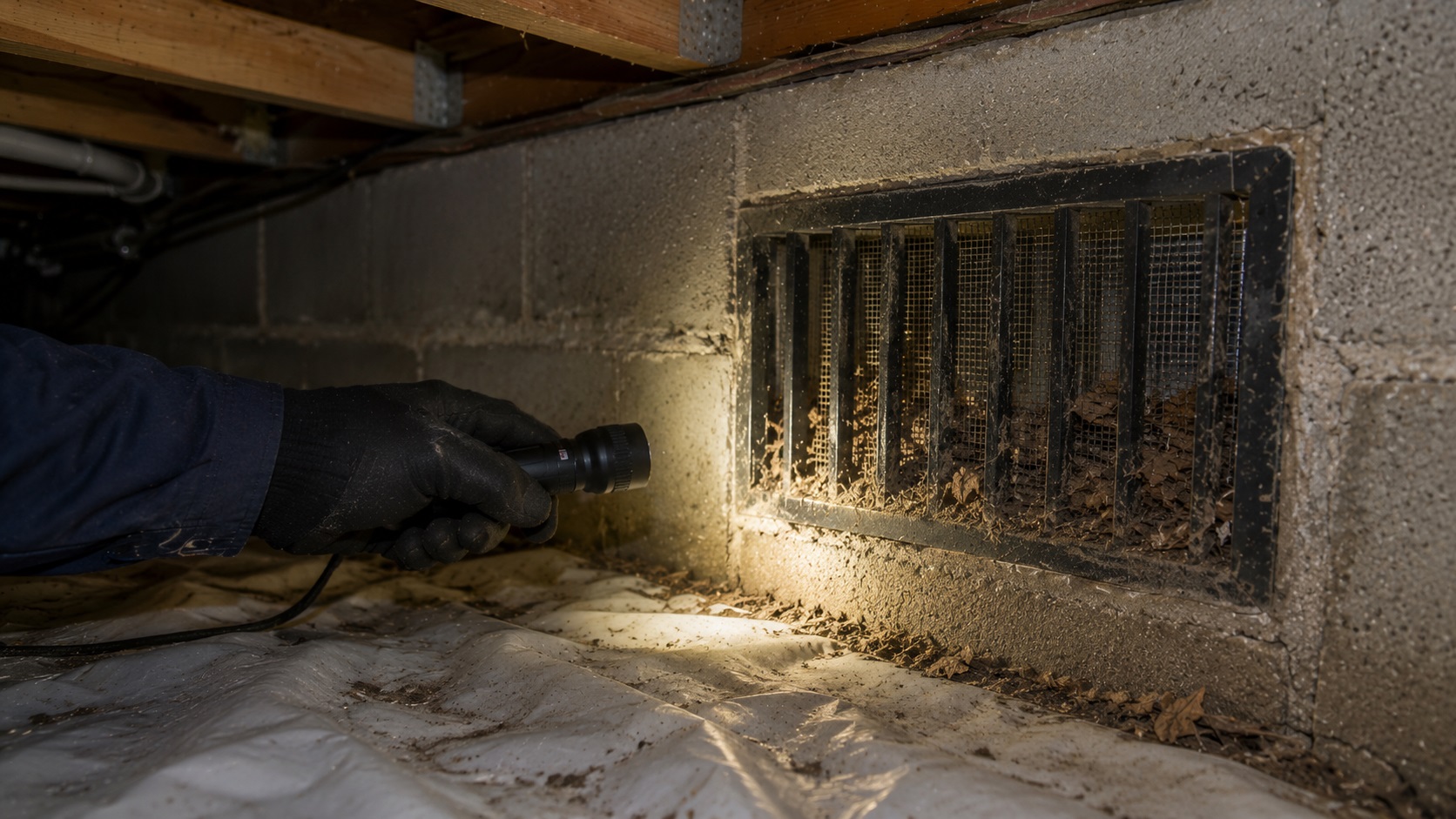
Inspect crawl space vents for blockages by checking both sides of each vent: the exterior opening at the foundation wall and the interior opening inside the crawl space. Look for leaves, mulch, soil, vegetation, damaged screens, insulation, debris, stored items, and pest nesting material that can reduce airflow.
A vent does not have to be completely covered to cause a problem. Partial blockages along the bottom edge, behind shrubs, or inside the crawl space can weaken airflow enough for humidity to linger beneath the home.
If you already notice musty odors, damp surfaces, condensation, or uneven moisture near certain vents, compare your findings with the warning signs described in signs of poor crawl space ventilation. For long-term prevention, keep this inspection connected to the broader maintenance steps in how to prevent recurring moisture damage.
Why Vent Inspection Is Important for Moisture Prevention
Vent inspection matters because crawl space vents only help when air can actually pass through them. Leaves, mulch, soil, damaged screens, and interior obstructions can leave the vent visible while still reducing airflow.
Regular vent inspection helps prevent several common moisture-related problems:
- Humidity buildup beneath flooring
- Condensation forming on pipes and ductwork
- Wood framing absorbing excess moisture
- Insulation becoming damp or compressed
- Mold growth developing in enclosed areas
- Indoor air quality becoming affected
Vent inspection also supports early detection of airflow problems before major repairs are required. If blockages are identified early, clearing debris may restore airflow quickly and prevent long-term damage.
Many moisture issues begin with restricted airflow rather than an obvious structural failure. When crawl space vents are partially blocked, humidity can rise gradually before visible damage appears.
Vent inspection also plays an important role in verifying airflow performance. If airflow remains weak after clearing visible debris, additional airflow testing—such as those described in how to detect inadequate crawl space airflow—may be necessary to confirm whether ventilation is functioning correctly.
Inspecting Exterior Crawl Space Vents
Exterior crawl space vent inspection is the first and most important step in identifying airflow blockages. Most ventilation problems begin outside the home, where debris, soil, and vegetation gradually restrict airflow into the crawl space. A careful exterior inspection helps locate these problems before moisture buildup begins.
Start by walking around the entire perimeter of the home and locating every crawl space vent. Vents are typically installed along foundation walls and may be spaced several feet apart. Each vent should be clearly visible and accessible for inspection.
Use a flashlight and check the bottom edge of each vent first. The lower edge is where mulch, soil, leaves, and sediment usually collect, even when the upper part of the vent still looks open.
During exterior inspection, examine each vent closely for visible obstructions. Common conditions to look for include:
- Leaves or debris piled against vent openings
- Mulch or soil covering lower portions of vents
- Grass or vegetation growing directly in front of vents
- Accumulated dirt or sediment blocking airflow slots
- Broken or missing vent covers
- Damaged screens allowing debris to enter
If mulch, soil, or plants are touching the vent frame, treat the vent as restricted even if some slots remain visible. A clear vent should have open space in front of it, not just a few uncovered openings.
Pay close attention to vent openings located near landscaping features. Decorative plants, shrubs, and flower beds often conceal blockages that remain unnoticed during routine yard maintenance. Dense vegetation near foundation walls traps moisture and restricts airflow simultaneously.
Foundation settling or soil movement may also reduce vent clearance. In some cases, soil levels gradually rise around foundation walls, partially burying vent openings. This condition often develops slowly and may not be immediately visible without careful inspection.
Inspect each vent from the front, both sides, and slightly above. Standing directly in front of the vent can hide soil packed along the bottom edge, mulch pushed against the frame, or vegetation covering the side of the opening.
If exterior blockages are found, they should be cleared carefully to restore airflow. After clearing debris, observe the surrounding area to ensure that similar buildup does not occur again. Maintaining open exterior vents supports long-term moisture prevention efforts described in how to prevent recurring moisture damage.
Identifying Common Types of Exterior Vent Blockages
Most exterior vent blockages fall into three groups: loose debris, vegetation, and landscaping materials that raise the ground level around the vent.
Debris Blockages
Debris accumulation is the most frequent cause of blocked crawl space vents. Wind, rain, and seasonal changes carry leaves and small particles toward foundation walls. Over time, these materials collect around vent openings and restrict airflow.
Typical debris materials include:
- Dry leaves and plant fragments
- Pine needles and small twigs
- Loose soil and sediment
- Mulch displaced during landscaping
- Dust and organic buildup
Debris buildup often forms along the bottom edge of vents, where gravity causes materials to settle. This pattern can partially block airflow even when the upper portion of the vent appears open.
Vegetation Obstructions
Vegetation growth near crawl space vents frequently causes airflow restrictions. Plants placed too close to foundation walls may grow into vent openings or trap moisture against vent surfaces.
Common vegetation-related blockages include:
- Grass growing into vent openings
- Shrubs covering vent surfaces
- Ground cover plants spreading across foundation walls
- Climbing vines attaching to vent structures
Vegetation blockages are especially problematic because they combine airflow restriction with moisture retention. Plants hold moisture against the foundation, increasing humidity levels near vent openings.
Soil and Landscaping Blockages
Landscaping changes often create airflow restrictions unintentionally. Soil, gravel, and mulch added around foundation walls may shift over time and partially bury vents.
Typical landscaping-related blockages include:
- Mulch piles covering vent openings
- Soil buildup raising ground levels near vents
- Decorative stone layers blocking airflow slots
- Retaining soil placed too close to foundation walls
After landscaping work, it is especially important to inspect crawl space vents to confirm that airflow remains unobstructed. Many moisture problems begin shortly after landscaping adjustments that reduce vent clearance.
If exterior blockages keep returning or the crawl space stays damp after vents are cleared, the problem may extend beyond simple debris. The broader ventilation limits explained in why crawl space ventilation causes moisture problems can help explain why clear vents do not always solve humidity problems.
Checking Interior Crawl Space Vent Openings
After inspecting exterior vents, the next step is checking interior vent openings inside the crawl space. Exterior inspections identify visible obstructions, but many airflow restrictions occur inside the crawl space where they are not easily seen from outside.
Interior inspection allows homeowners to verify that air entering through exterior vents can actually move into the crawl space. In many homes, insulation, debris, or stored materials block interior openings without obvious exterior signs.
Before entering a crawl space, use proper lighting, wear gloves, long sleeves, eye protection, and a respirator or mask suitable for dusty conditions. Do not enter if you see standing water near electrical components, heavy mold growth, animal activity, sewage contamination, or structural damage. In those situations, inspect from the exterior and call a qualified professional.
Once inside the crawl space, locate each interior vent opening along the foundation walls. Compare interior views with exterior vent locations to ensure airflow paths remain clear on both sides.
During interior inspection, check for the following conditions:
- Insulation pressed tightly against vent openings
- Loose insulation hanging below floor joists
- Debris buildup near interior vent openings
- Stored materials blocking airflow paths
- Nesting materials from insects or animals
- Dirt accumulation around interior vent edges
Also check whether the vent screen is packed with insect nests, spider webs, or animal nesting material. A screen can look intact from outside while being clogged from the crawl space side.
Insulation is one of the most common interior airflow obstructions. Over time, insulation may sag or shift, gradually covering vent openings. Even small sections of insulation touching vent openings can reduce airflow significantly.
Stored materials inside crawl spaces also create airflow restrictions. Boxes, tools, or construction debris placed near foundation walls may block air movement between vents. These obstructions often create localized humidity zones that promote moisture buildup.
If interior blockages are found, removing or repositioning materials helps restore airflow. After clearing obstructions, verify that airflow paths remain open and that no additional materials restrict circulation.
Interior inspections also help identify early moisture patterns that indicate airflow problems. Uneven dampness, localized condensation, or musty odors near certain vents may suggest restricted airflow pathways.
If interior airflow remains limited despite clear vents, reviewing airflow evaluation techniques such as those described in how to detect inadequate crawl space airflow helps determine whether circulation problems extend beyond visible blockages.
Recognizing Signs of Airflow Restriction Around Vents
Blocked vents do not always appear completely closed. In many cases, airflow restrictions develop gradually and produce subtle warning signs before full blockage occurs. Recognizing these signs helps detect ventilation problems before humidity levels increase significantly.
Common signs of airflow restriction include:
- Moisture buildup near specific vent locations
- Damp soil concentrated in certain areas
- Condensation forming repeatedly near vent openings
- Uneven humidity levels throughout the crawl space
- Localized mold or discoloration near restricted vents
These conditions often indicate partial airflow blockage rather than complete obstruction. Air may still enter the crawl space, but circulation remains too weak to remove moisture effectively.
For example, if one vent area repeatedly has damp soil, condensation, or musty odor while nearby vent areas stay dry, that specific vent may be restricted even if it is not fully covered.
Repeated moisture buildup near specific vents may also indicate environmental changes such as landscaping modifications or soil movement. These changes can gradually reduce vent clearance without being immediately noticeable.
Recognizing early airflow restriction patterns helps prevent recurring moisture problems. Identifying and correcting minor blockages early supports stable airflow and protects crawl space materials from long-term humidity exposure.
How Often Crawl Space Vents Should Be Inspected
Inspect crawl space vents at least twice per year and any time the area around the foundation changes. The most important inspections are after leaf fall, heavy storms, pest activity, or landscaping work near the foundation.
Recommended inspection times include:
- Spring: Check for debris buildup after winter weather
- Fall: Inspect for leaf accumulation and seasonal debris
- After storms: Confirm vents remain clear after heavy rainfall or wind
- After landscaping work: Ensure soil or mulch has not blocked vent openings
- During pest activity: Inspect for nesting materials or damaged screens
Seasonal checks are especially useful because vent blockages often form slowly. Leaves collect in fall, mulch shifts after storms, plants grow during warm months, and pest activity can clog screens from the crawl space side.
Routine inspection also supports preventive maintenance strategies outlined in how to prevent moisture with proper crawl space ventilation, where consistent airflow maintenance plays a key role in controlling humidity.
When Vent Blockages Indicate Larger Problems
Most blocked vents are simple maintenance problems, but repeated blockages or moisture that continues after cleaning can point to drainage, grading, pest, or ventilation design issues.
Vent blockages may signal larger problems when:
- Blockages return repeatedly after cleaning
- Vent openings appear damaged or misaligned
- Soil levels rise and bury vent openings
- Animal activity continues despite maintenance
- Moisture persists after vents are cleared
- Mold growth develops near vent openings
Repeated blockage often indicates underlying environmental conditions such as poor drainage, soil movement, or landscaping interference. These factors may allow debris accumulation to occur more rapidly than normal.
Damaged vent covers also increase the risk of airflow problems. Broken screens allow pests and debris to enter the crawl space, creating additional blockages inside the ventilation system.
If moisture continues despite clear vents, additional airflow limitations may exist. In these situations, reviewing airflow performance using structured evaluation methods such as those described in how to detect inadequate crawl space airflow helps identify deeper circulation problems.
Persistent moisture problems may also relate to environmental conditions described in why crawl space ventilation causes moisture problems, where ventilation alone cannot control humidity under certain conditions.
Recognizing these warning signs helps homeowners distinguish between routine maintenance needs and situations requiring professional inspection.
Frequently Asked Questions About Inspecting Crawl Space Vents
How do I know if crawl space vents are blocked?
A crawl space vent may be blocked if leaves, mulch, soil, plants, damaged screens, insulation, or pest material cover either side of the opening. Also check for damp soil, condensation, or musty odor concentrated near one vent.
What commonly blocks crawl space vents?
Leaves, mulch, soil, grass, and nesting materials from insects or animals are the most common causes of vent blockage. Landscaping changes frequently contribute to airflow restrictions as well.
How often should crawl space vents be inspected?
Crawl space vents should typically be inspected twice per year, with additional inspections performed after storms or landscaping work. Regular inspection prevents long-term airflow reduction.
Can blocked vents cause mold growth?
Yes. Blocked vents can let humidity linger around wood framing, insulation, and soil surfaces. Mold risk is higher when the same vent area stays damp, musty, or poorly ventilated after debris is cleared.
Should crawl space vents be cleaned professionally?
Homeowners can usually clear leaves, mulch, light soil, and vegetation from the exterior side of a vent. Call a professional if the blockage involves pests, heavy mold, standing water, damaged vent framing, electrical hazards, or repeated moisture after the vents are cleared.
Key Takeaways
- Crawl space vents should be inspected at least twice per year.
- Exterior debris and vegetation are common causes of vent blockages.
- Interior obstructions such as insulation can restrict airflow.
- Repeated blockages may indicate larger environmental problems.
- Check the bottom edge, side edges, screen, and interior side of each vent, not just the visible front opening.
- If humidity or musty odor remains after vents are cleared, the crawl space may need a broader airflow evaluation.