
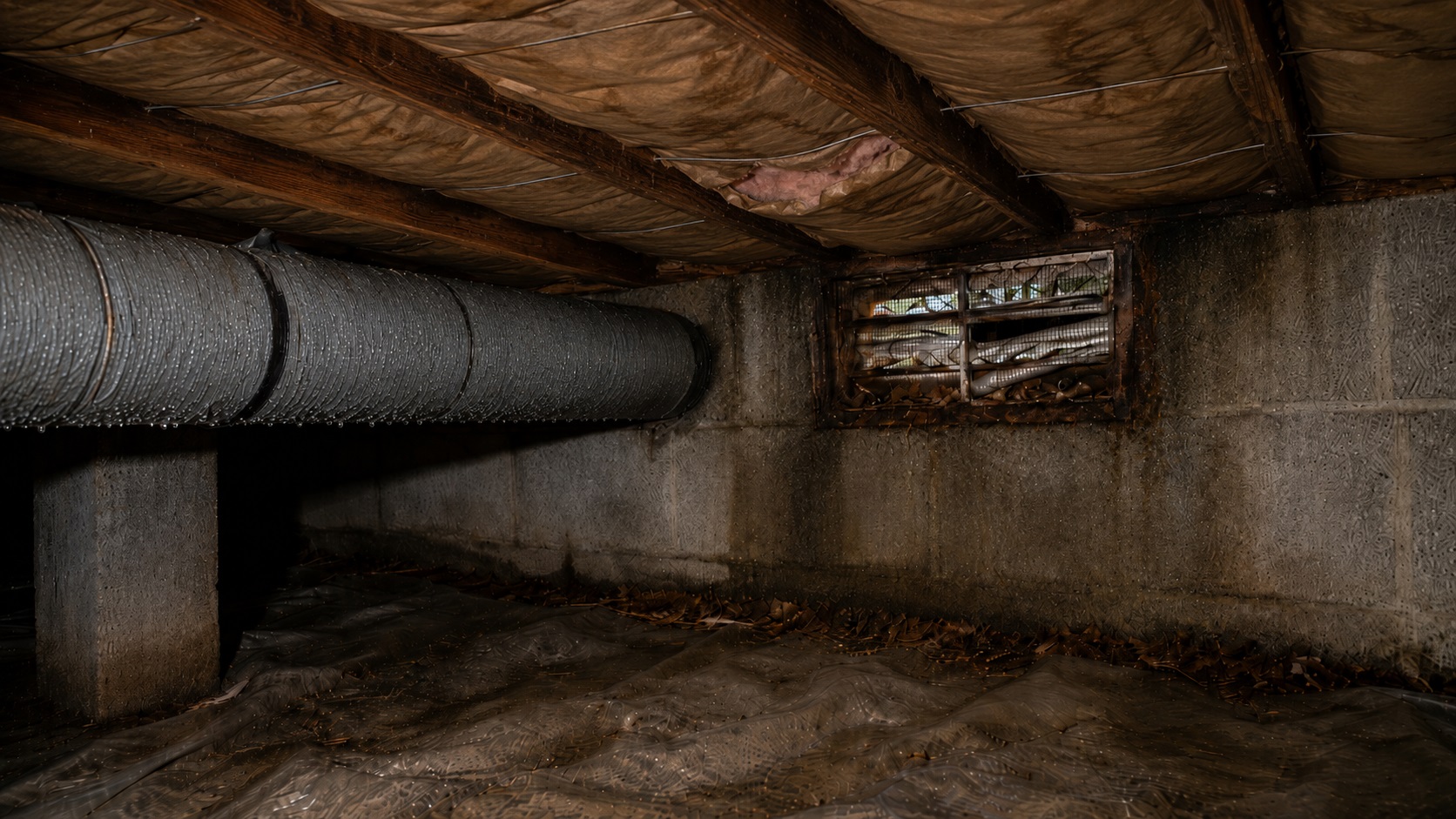
Signs of Moisture Caused by Crawl Space Vent Failure
The main signs of moisture caused by crawl space vent failure are musty odors, condensation on joists or ducts, damp insulation, rusted fasteners, persistent wet soil, elevated indoor humidity, and soft or warped flooring above the crawl space. These symptoms usually appear when vents are blocked, damaged, stuck closed, or unable to move air through the crawl space.
This article focuses on moisture symptoms linked specifically to vent failure, not plumbing leaks, flooding, foundation cracks, or general crawl space dampness. If you are comparing moisture signs across different parts of the home, this guide fits into the broader process for finding hidden moisture in different areas of your home.
A crawl space moisture pattern is more likely to involve vent failure when dampness appears near vent openings, affects several joists or insulation bays, worsens during humid weather, and returns after temporary drying.
How Crawl Space Vent Failure Leads to Moisture Problems
Moisture from vent failure usually develops gradually. Airflow slows or becomes uneven, humidity becomes trapped, condensation forms on cooler surfaces, and crawl space materials stay damp longer than they should.
Airflow Stops Circulating Properly
Crawl space vents are designed to allow outside air to move through the crawl space, helping carry moisture away. When vents fail, airflow slows or stops completely. This often happens due to:
- Blocked vents covered by soil, mulch, or debris
- Vent covers stuck closed or damaged
- Insulation blocking vent openings from the inside
- Pest nests or accumulated debris inside vents
- Improperly installed vapor barriers that trap ground moisture or block intended airflow paths
At this stage, there may be no visible water—but humidity begins to build inside the crawl space.
A vent-related moisture pattern is usually broad or seasonal. A plumbing leak is usually more concentrated, follows a pipe or fixture path, and often leaves a clearer drip point.
Humidity Becomes Trapped Beneath the Home
Even dry-looking soil can release moisture into crawl space air. When ventilation fails, that moisture lingers instead of being carried away, creating the same persistent dampness patterns described in why crawl spaces stay damp.
Condensation Begins on Cool Surfaces
As humidity rises, condensation starts forming on cooler surfaces such as:
- Floor joists
- Subfloor undersides
- Metal ducts
- Plumbing pipes
- Foundation walls
This stage marks the transition from invisible humidity problems to visible moisture damage. Condensation patterns are often mistaken for leaks, which is why many homeowners benefit from learning how to inspect crawl spaces for moisture damage properly.
Persistent Dampness Develops Over Time
Without airflow to remove moisture, materials remain wet longer than they should. Over weeks or months, persistent dampness spreads across crawl space components. Insulation absorbs moisture, wood surfaces darken, and metal hardware begins to corrode.
By this stage, moisture symptoms usually become noticeable elsewhere in the home, particularly through odors or elevated indoor humidity levels.
Musty Odors That Originate From the Crawl Space
One of the earliest signs of crawl space vent failure is a musty odor that seems to appear without a clear source. This smell often develops before visible mold forms and may be strongest during humid weather.
Why Musty Odors Develop First
Moisture trapped in crawl spaces creates an environment where organic materials—such as wood framing and dust—begin breaking down slowly. This process releases gases that produce the familiar musty smell associated with damp environments.
These odors tend to travel upward into the living space due to the natural movement of air inside homes, sometimes called the stack effect. This upward air movement explains why musty odors are often detected indoors before homeowners discover moisture beneath the house.
Where Odors Are Most Noticeable Inside the Home
Musty smells from crawl space moisture commonly appear in:
- Ground-level rooms
- Closets along exterior walls
- Areas with carpeted floors
- Rooms with limited ventilation
- Hallways above crawl space access points
These odors may become stronger during rainy periods or humid weather, especially if ventilation failure is combined with seasonal moisture patterns.
How Odors Change as Moisture Gets Worse
The smell produced by crawl space moisture usually becomes stronger over time. Early on, it may be subtle and appear only during humid weather. As moisture persists, odors can become noticeable even during dry conditions.
If the smell intensifies or spreads to multiple rooms, it may indicate that moisture levels are rising and mold risk is increasing. At that point, conditions may begin resembling those described in signs of mold growth in crawl spaces.
Odor alone does not prove vent failure, but odor that worsens during humid weather and appears with crawl space dampness is a strong warning sign.
Condensation on Crawl Space Wood Framing
One of the most reliable physical signs of moisture caused by crawl space vent failure is condensation forming on wooden structural components. This occurs when humid air becomes trapped beneath the home and settles on cooler surfaces such as joists and subfloors.
Moisture Appearing on Floor Joists
Floor joists are among the first wooden components to show moisture problems because they are directly exposed to crawl space air. When airflow stops, humidity builds and begins condensing on the underside of these beams.
Early signs of condensation on joists include:
- Darkened patches or streaks on wood surfaces
- A slightly glossy or damp appearance
- Raised wood grain when touched
- Localized moisture patterns near blocked vents
Unlike plumbing leaks, condensation usually appears across wide areas rather than in one concentrated spot. If you see moisture across multiple joists rather than along a single pipe path, ventilation failure is more likely than a leak.
If you’re unsure how to distinguish these patterns, learning how to detect inadequate crawl space airflow can help confirm whether ventilation is the root problem.
Condensation Forming on Subfloor Surfaces
The underside of the subfloor—the structural layer directly beneath finished flooring—often develops moisture when humidity rises inside a crawl space.
Signs of condensation on subfloor materials include:
- Water droplets forming on plywood or wood panels
- Surface discoloration or mild staining
- A persistent damp feeling when touched
- Moisture extending across large areas
Over time, repeated condensation cycles can weaken adhesives, fasteners, and wood fibers. This increases the risk of structural deterioration if airflow problems are not corrected.
Rim Joists Showing Early Moisture Damage
Rim joists—located along the outer edge of the crawl space—are especially vulnerable to moisture buildup when vents fail. Because they sit close to vent openings, they are often the first components affected when airflow becomes restricted.
Watch for:
- Dark staining near vent openings
- Localized moisture concentrated along exterior edges
- Early mold speckling on wood surfaces
- Wood that remains damp even during dry weather
These patterns often indicate airflow restriction rather than general humidity problems. They may also signal vent blockage or failure that should be inspected more closely using techniques outlined in how to inspect crawl space vents for blockages.
Damp or Wet Insulation in Crawl Spaces
Insulation inside crawl spaces is highly sensitive to moisture changes. Because insulation materials are designed to trap air, they also tend to trap moisture when ventilation fails. Damp insulation is one of the clearest indicators that crawl space airflow problems are affecting moisture levels.
Fiberglass Insulation Becoming Heavy or Compressed
Fiberglass insulation normally appears light, fluffy, and evenly distributed between joists. When moisture builds up, it absorbs water and begins collapsing under its own weight.
Signs of wet fiberglass insulation include:
- Insulation sagging below joists
- Compressed or flattened appearance
- Visible dampness or discoloration
- A heavy feel when touched
Wet fiberglass insulation loses insulating value, sags out of position, and can hold moisture against wood. That trapped dampness can keep joists and subfloor surfaces wet even after crawl space air begins drying.
Foam Insulation Showing Condensation Patterns
Foam insulation does not absorb water the same way fiberglass does, but moisture can still collect on its surface or around its edges. This often happens when humid crawl space air reaches cooler surfaces near insulation seams.
Watch for:
- Moisture beading on foam surfaces
- Water collecting at insulation seams
- Dampness behind or around foam boards
- Discoloration near fasteners or edges
These signs suggest that air movement and humidity control are not working properly, even if the insulation itself has not absorbed water.
Insulation That Never Fully Dries
One strong sign of vent failure is insulation that remains damp long after wet weather has passed. If insulation dries temporarily but becomes damp again during humid conditions, the problem may be ongoing airflow failure rather than a single leak event.
Persistent wet insulation increases the risk of wood decay, mold growth, and indoor air quality problems. This makes it one of the more urgent crawl space moisture signs to investigate.
Persistent Ground Moisture That Never Fully Dries
The ground inside a crawl space can reveal whether ventilation is controlling moisture properly. Even when there is no visible leak, soil and vapor barriers can show signs that humidity is not escaping as it should.
Soil That Remains Dark and Damp
Dark soil does not always mean a leak is present. However, soil that remains damp for long periods may indicate that crawl space ventilation is not allowing moisture to evaporate and disperse.
Warning signs include:
- Soil that stays dark long after rainfall
- Dampness near vent openings
- Moisture concentrated along foundation walls
- Earthy or musty odors rising from the ground
If ground moisture appears mainly near exterior walls or vent openings, it is important to rule out other causes using methods discussed in why crawl space ventilation causes moisture problems.
Moisture Building Up Around Vapor Barriers
A vapor barrier should reduce ground moisture, but it can also reveal vent failure when water beads on top, collects at seams, or remains trapped around the edges. This does not always mean the barrier caused the problem. It often means crawl space air is staying humid enough for moisture to condense or linger.
If water is pooling beneath the vapor barrier or flowing across the soil, look for drainage, grading, or groundwater problems in addition to vent failure.
Ground Areas That Feel Humid Instead of Dry
Even without visible water, high humidity creates noticeable environmental changes. Air near the ground may feel heavy, damp, or noticeably cooler than surrounding areas.
This condition matters most when it appears with other vent-failure signs, such as condensation on framing, damp insulation, rusted fasteners, or musty odors above the crawl space.
If ground moisture continues without improvement, the problem may require preventative steps outlined in how to prevent moisture with proper crawl space ventilation.
Rust and Corrosion on Metal Components
Metal components inside crawl spaces often reveal moisture problems earlier than wood or insulation. Because metal reacts quickly to humidity, rust and corrosion patterns can serve as reliable warning signs that crawl space vent failure is allowing moisture to accumulate.
Rust Forming on Nails and Fasteners
Rust is an important clue because metal can corrode from persistent humidity, not only from direct leaks. When several metal components show light corrosion across the crawl space, vent-related moisture is more likely.
Look for rust on:
- Nail heads in joists
- Metal brackets or hangers
- Duct straps
- Pipe supports
- Access door hardware
Rust near multiple vents or across several crawl space areas often suggests general humidity buildup instead of a single water source.
Corrosion on HVAC Ductwork
Metal ductwork can show condensation and corrosion when humid crawl space air is not moving properly. Ducts often become cooler than surrounding air, making them common condensation points.
Signs include:
- Rust spots on duct seams
- Water droplets on metal surfaces
- Damp insulation around ducts
- Corrosion near duct supports
Because HVAC ducts can also sweat from temperature differences, these signs should be considered alongside other crawl space moisture symptoms rather than evaluated alone.
Metal Hardware Showing Early Degradation
Metal connectors, plates, and support hardware may begin to deteriorate slowly when exposed to persistent crawl space humidity. Early corrosion may look like light orange staining, dull gray patches, or roughened surfaces.
When corrosion appears together with damp insulation, musty odors, and condensation on framing, crawl space vent failure becomes a more likely contributor.
Mold Growth Triggered by Vent Failure Moisture
Mold is usually a later sign that crawl space vent failure has allowed moisture to stay elevated long enough for biological growth. This section focuses only on mold patterns that point back to vent-related moisture. For broader mold identification, compare these symptoms with signs of mold growth in crawl spaces.
Early Mold Speckling on Wood Surfaces
Early mold growth on crawl space wood may appear as small specks, faint patches, or uneven discoloration. It often begins on joists, rim joists, or subfloor surfaces where condensation collects repeatedly.
Early signs may include:
- Small dark dots on wood framing
- Fuzzy or powdery surface patches
- Discoloration spreading across damp areas
- Mold patterns appearing near blocked vents
When mold appears in multiple areas rather than only below one leak source, poor ventilation and high humidity should be considered.
Mold Forming on Insulation Materials
Damp insulation can support mold growth when moisture remains trapped. Mold may appear on paper facings, dust-covered insulation surfaces, or surrounding wood rather than deep inside the insulation itself.
Watch for:
- Dark spots on insulation facing
- Musty smells coming from insulation bays
- Insulation that sags and smells damp
- Mold appearing where insulation touches wood
Mold on damp insulation usually means the moisture problem is no longer temporary. The insulation may need removal if it remains wet, contaminated, or visibly colonized.
Mold Growth Patterns Near Blocked Vents
When mold growth is strongest near specific vents, it may indicate that those openings are blocked, damaged, or failing to move air properly. Mold may appear along rim joists, nearby subfloor areas, or adjacent insulation.
This pattern is especially important when other vents remain relatively dry. It suggests a localized airflow failure rather than a uniform whole-crawl-space problem.
Increased Indoor Humidity Without Obvious Leaks
Indoor humidity can rise when crawl space moisture migrates upward into the living space. This is especially common in homes with leaky floors, unsealed penetrations, or poor crawl space separation.
A basic hygrometer can help confirm the pattern. If indoor humidity stays elevated even when there is no obvious leak, no recent cleaning, and no unusual indoor moisture source, the crawl space should be checked as a possible contributor.
Indoor Air Feeling Damp or Heavy
One sign of crawl space vent failure is indoor air that feels damp even when no water source is visible. This may be noticeable in rooms directly above the crawl space or in areas with limited air circulation.
Homeowners may notice:
- Rooms feeling muggy or heavy
- Air conditioning struggling to reduce humidity
- Musty air returning after windows are opened
- Humidity readings staying elevated indoors
If indoor humidity remains high without plumbing leaks or obvious indoor moisture sources, crawl space conditions should be investigated.
Humidity Returning After Dry Weather
A temporary humidity spike after rain may not indicate vent failure. However, humidity that continues returning even during dry weather suggests that moisture may be trapped below the home.
This pattern often appears when crawl space materials have absorbed moisture and continue releasing it slowly into the air. Without proper ventilation, the moisture cycle repeats.
Condensation Forming Inside Living Spaces
In some homes, crawl space moisture contributes to condensation inside the living area. This may appear on lower walls, floors, windows, or cold surfaces near the first floor.
While indoor condensation can have several causes, it becomes more suspicious when it appears together with musty crawl space odors, damp insulation, or visible condensation under the floor system.
Warping or Softening of Floor Materials Above
Moisture caused by crawl space vent failure can eventually affect flooring above the crawl space. This usually happens after humidity has remained high long enough to affect the subfloor or floor structure.
Wood Floors Showing Warping or Cupping
Wood flooring and some engineered flooring materials react to moisture changes from below. When crawl space humidity remains elevated, flooring may absorb moisture unevenly and begin to change shape.
Common signs include:
- Cupping along board edges
- Gaps opening or closing irregularly
- Raised seams
- Boards that feel slightly uneven underfoot
These flooring changes may be mistaken for normal seasonal movement. The difference is that vent-related moisture problems tend to persist or worsen instead of stabilizing.
Soft or Spongy Flooring Underfoot
Soft flooring above a crawl space may indicate that moisture has affected the subfloor or supporting structure. This is more serious than surface-level dampness and should not be ignored.
Warning signs include:
- Spongy areas near exterior walls
- Reduced firmness beneath flooring
- Movement detected when applying pressure
- Floor sections that feel uneven or weak
Do not treat soft flooring as a cosmetic issue. If the floor flexes, feels weak, or continues changing, the subfloor and joists should be inspected before more weight, repair materials, or new flooring are added.
Persistent Flooring Changes That Worsen Over Time
Unlike temporary humidity changes, ventilation-related moisture damage usually becomes progressively worse. Flooring that continues shifting, warping, or softening may indicate ongoing crawl space moisture problems.
If these symptoms appear alongside others described earlier in this guide, they strongly suggest that crawl space vent failure is affecting the structural environment beneath your home.
When Vent Failure Moisture Needs Immediate Attention
Some crawl space moisture signs are early warnings, while others suggest that vent failure has already affected insulation, framing, or indoor air conditions.
Inspect the Crawl Space Soon If You Notice
- Musty odors without a visible indoor leak
- Minor condensation on joists, ducts, pipes, or subfloor surfaces
- Damp insulation that does not dry between weather changes
- Light rust on nails, brackets, duct straps, or fasteners
- Damp soil or vapor barrier moisture near blocked vents
At this stage, check for blocked vent openings, damaged covers, interior insulation blocking airflow, and moisture patterns near the vents. A more structured process is covered in how to inspect crawl space vents for blockages.
Call a Professional If You Notice
- Soft, rotting, or visibly weakened wood framing
- Flooring that feels unstable, spongy, or severely warped
- Mold spreading across wood, insulation, or multiple crawl space surfaces
- Heavy corrosion on metal components
- Moisture returning after repeated drying attempts
These symptoms may require moisture-source diagnosis, structural evaluation, insulation removal, mold remediation, or crawl space ventilation repair rather than simple drying.
FAQ: Signs of Moisture Caused by Crawl Space Vent Failure
Can crawl space vents fail even if they look open from outside?
Yes. Vents may appear open from the outside while airflow remains restricted inside. Debris, insulation, pest nests, or internal blockages can reduce airflow without being visible from exterior inspections.
Why does moisture return after drying the crawl space?
Moisture can return after drying if the vents are still blocked, stuck closed, damaged, or unable to move air through the crawl space. Damp insulation, wet soil, and wood surfaces may also keep releasing moisture after the crawl space looks temporarily dry.
Does every crawl space moisture problem mean the vents failed?
No. Similar moisture signs can come from plumbing leaks, drainage problems, groundwater, foundation cracks, missing vapor barriers, or humid outdoor air entering the crawl space. Vent failure becomes more likely when moisture is strongest near vent openings, affects broad areas, worsens during humid weather, and appears with blocked or damaged vents.
Can blocked vents cause mold without flooding?
Yes. Mold can develop when humidity remains high for extended periods. Flooding is not required for mold growth if crawl space wood, insulation, or dust stay damp long enough.
How quickly can moisture problems develop after vent failure?
Moisture buildup typically develops over weeks or months, depending on humidity levels, soil moisture, vent blockage, and seasonal conditions. Warm, humid weather can accelerate the process.
Conclusion: Recognize the Pattern Before Damage Spreads
Moisture caused by crawl space vent failure usually shows up as a pattern, not one isolated clue. Musty odors, condensation, damp insulation, rust, wet soil, elevated indoor humidity, and soft flooring become more concerning when several appear together or keep returning after dry weather.
If the signs are mild, start by checking vent openings, airflow paths, insulation, vapor barrier conditions, and moisture near the vents. If wood feels soft, mold is spreading, flooring is unstable, or moisture keeps returning after drying, get the crawl space evaluated before covering up the symptoms.
2 Comments
Comments are closed.