Best Roofing Materials for High Humidity: How to Choose a Roof That Resists Moisture, Algae, and Mold Risk
High humidity changes the way a roof performs because moisture does not have to come from heavy rain to cause problems. In humid areas, roof surfaces often stay damp longer after dew, fog, shade, or light rain. That slow drying can make algae staining more common, keep debris damp against the roof surface, and increase the importance of good attic ventilation.
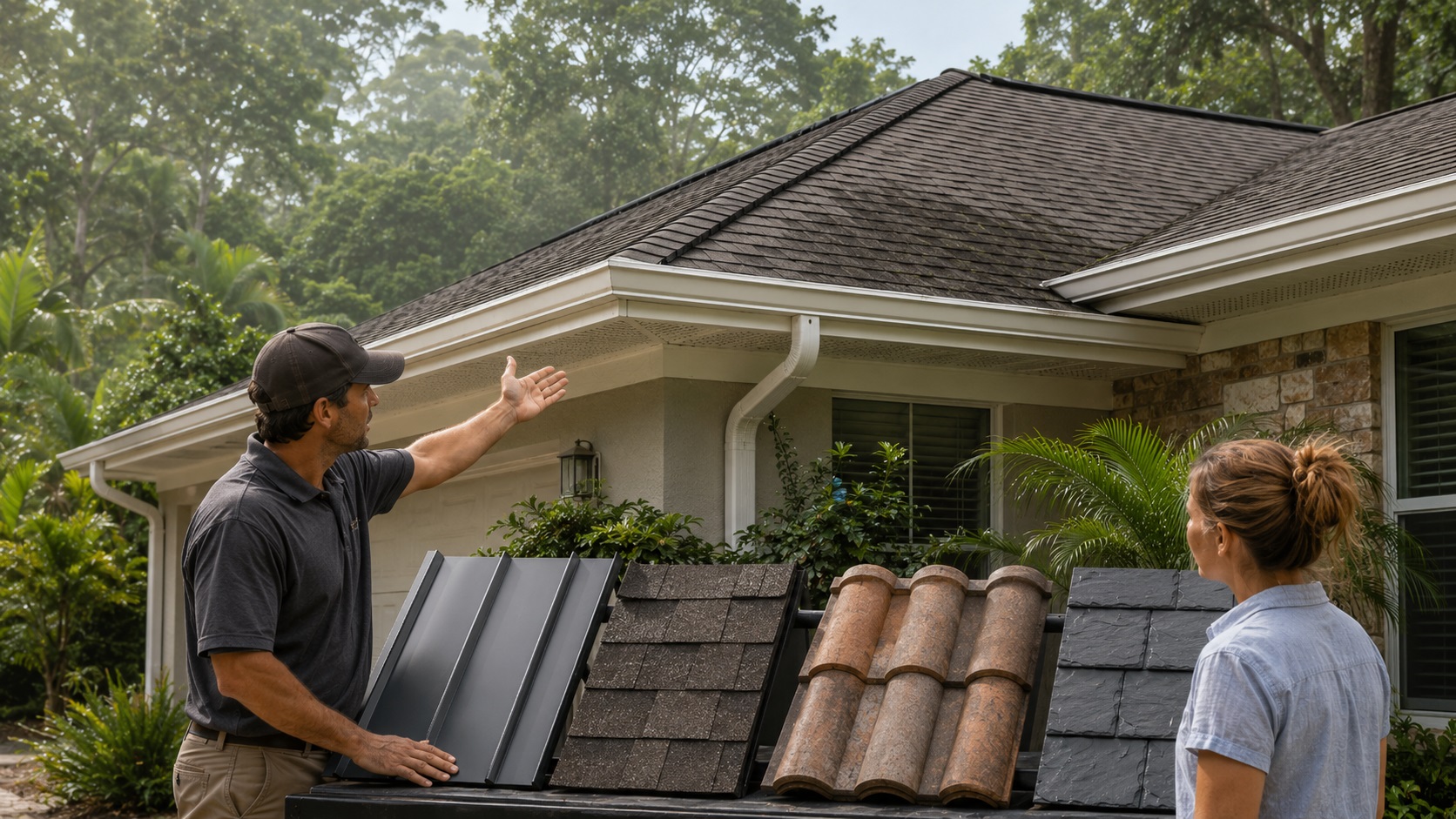
The best roofing materials for high humidity are usually materials that shed moisture quickly, absorb very little water, resist biological staining, and work well as part of a properly ventilated roof system. Metal roofing, slate, clay tile, concrete tile, and algae-resistant architectural shingles can all be good choices, but they do not perform the same way. The right choice depends on your roof slope, shade exposure, budget, maintenance tolerance, and how well the roof is installed.
This article focuses specifically on humid-air exposure. That is different from choosing roofing for constant rain, storm exposure, or wind-driven water. If your main concern is heavy rainfall, drainage, and leak resistance during frequent storms, see this guide to the best roofing materials for wet climates. If your concern is moisture that lingers because the air stays damp, the material comparison below will be more useful.
Why High Humidity Changes How Roofing Materials Perform
Humidity affects roofs differently than a single rainstorm. After a hard rain, a roof may dry quickly if the sun, slope, wind, and ventilation are working in its favor. In a humid climate, the roof may stay damp for hours longer because the surrounding air is already carrying a lot of moisture. Shaded roof planes, tree-covered areas, valleys, and low-slope sections are especially vulnerable because they dry more slowly.
That matters because many roof problems begin with repeated moisture exposure rather than one dramatic event. A roof that stays damp more often can develop algae staining, moss growth, mildew-like residue, debris buildup, and premature surface wear. Humidity can also contribute to attic moisture problems when warm moist air is trapped under the roof deck. This is why roof material choice belongs inside the broader topic of common roofing material failures, not just curb appeal or cost.
In humid areas, homeowners often notice black streaks on asphalt shingles, green growth near shaded edges, musty attic odors, damp insulation, or a roof surface that looks older than its actual age. These symptoms do not always mean the roof is leaking. Black streaks on shingles are often algae discoloration rather than mold. However, they do show that the roof surface is staying damp enough to support biological growth.
The main humidity problem is drying time. The longer moisture remains on or around roofing materials, the more stress the roof system experiences. Smooth, non-absorptive materials generally dry faster. Rough, porous, organic, or debris-holding materials tend to need more maintenance because they can hold moisture longer.
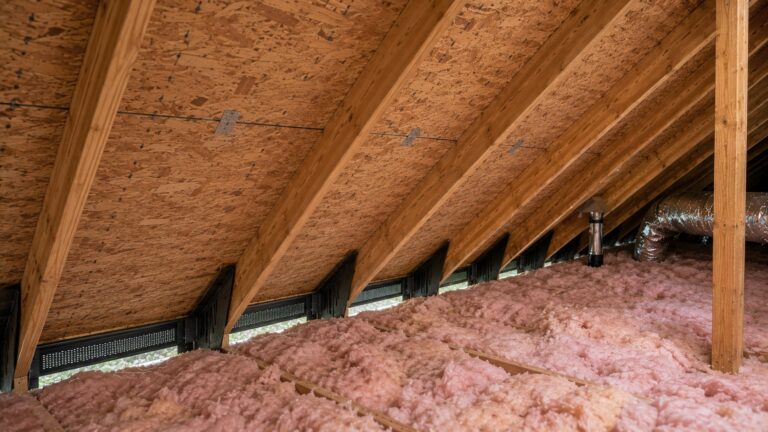
Humidity also affects the attic side of the roof. A roof material may resist surface moisture well, but the home can still develop roof sheathing moisture if the attic has poor ventilation, air leaks, or bathroom exhaust fans dumping moist air into the attic. Choosing a better roof material helps, but it does not replace a roof system that can dry from both sides.
What Makes a Roofing Material Better for Humid Climates
A roofing material does not need to be marketed as “mold-proof” to perform well in humid conditions. In fact, that phrase can be misleading. The better question is whether the material resists moisture absorption, dries quickly, resists algae staining, and works well with the rest of the roof assembly.
Low Moisture Absorption
Roofing materials that absorb less moisture are generally safer choices in humid climates. Metal, slate, clay tile, and concrete tile do not behave like wood. They are not organic materials that can hold moisture deep inside the same way cedar shakes can. This does not mean they are immune to roof problems, but it does mean the material itself is less likely to retain moisture as part of its normal behavior.
Asphalt shingles sit in the middle. They are not the worst option, especially when they are high-quality architectural shingles with algae-resistant features, but they can hold surface moisture and organic debris more readily than metal. In humid areas with shade and tree cover, basic asphalt shingles may show algae streaking faster than homeowners expect.
Fast Surface Drying
A roof that dries quickly after dew, fog, or rain is usually better suited to high humidity. Smooth materials with good slope and exposure tend to shed water efficiently. Metal roofing is strong in this category because its surface does not absorb water and usually dries fast when installed correctly.
Tile and slate can also perform very well, but their drying behavior depends on the roof design. Tiles overlap, create small shadowed areas, and depend heavily on underlayment and drainage paths. When installed properly, they can be excellent in humid regions. When installed poorly, trapped debris or failed underlayment can still create moisture problems beneath the visible surface.
Resistance to Algae and Biological Staining
In humid areas, algae resistance is a major factor. Many homeowners think black streaks on shingles are mold, but they are often algae growth on the roof surface. This is most common on shaded roof slopes and in areas where moisture lingers. Algae may start as a cosmetic issue, but it can make the roof look aged and may encourage homeowners to clean the roof in ways that damage shingles if they use harsh pressure washing.
For asphalt roofs, algae-resistant shingles are usually a better choice than basic shingles in humid climates. They often contain protective granules designed to slow algae staining. That does not make the roof maintenance-free, but it gives asphalt shingles a better chance in damp, shaded, or humid environments. If you are comparing asphalt options, it is useful to understand how to choose roofing shingles based on performance features rather than appearance alone.
Compatibility With Ventilation and Underlayment
The roof covering is only one part of the system. A good roof for high humidity also needs compatible underlayment, flashing, attic ventilation, and installation details. A premium material can still fail if the roof traps moisture underneath it.
This is why material choice should not be separated from the roof assembly. When comparing the types of roofing materials, homeowners should ask how each material handles humid air, how quickly it dries, and what conditions it needs to perform well over time.
Best Roofing Materials for High Humidity
The best roofing material for a humid climate is not always the most expensive material. It is the material that matches the roof design, dries efficiently, resists surface growth, and can be installed correctly by a qualified contractor in your area. A high-end material installed poorly can create more moisture risk than a mid-range material installed well.
Metal Roofing
Metal roofing is often the strongest overall choice for high humidity because it has a hard, non-absorptive surface that sheds moisture quickly. Unlike wood, it does not hold moisture inside the material. Unlike asphalt shingles, it does not rely on granules that can collect organic residue over time. When the roof slope, panel system, flashing, and ventilation are done correctly, metal performs very well in humid environments.
Metal roofing is especially useful in humid areas with frequent dew, fog, tree shade, or slow roof drying. Because the surface is smooth, moisture usually has less opportunity to sit in the material itself. That makes it a strong option for homeowners who want a roof that resists algae staining better than standard asphalt shingles.
However, metal roofing is not automatically moisture-proof. Coating quality matters. Fasteners, seams, penetrations, valleys, flashing, and underlayment still need to be installed correctly. In humid or coastal areas, corrosion resistance is important, especially around exposed fasteners, cut edges, and lower-quality metal panels. A good metal roof should be selected as a complete system, not just as a sheet of metal.
Metal also needs proper condensation control below the roof covering. If warm, moist indoor air reaches a cool roof deck or poorly detailed attic assembly, the home can still develop moisture problems under the roof. That is a roof assembly problem, not proof that metal is a poor humidity choice.
Slate Roofing
Slate is one of the strongest premium roofing materials for humid conditions. It is dense, durable, and highly resistant to moisture absorption compared with organic roofing materials. It does not rot like wood and does not develop surface granule loss like asphalt shingles. For homes that can support the weight and cost, slate can be an excellent long-term choice in humid climates.
The main limitation is not the slate itself. The bigger concerns are structure, installation skill, flashing quality, and cost. Slate is heavy, and not every home is built to carry it without structural evaluation. It also requires a contractor who knows how to install slate correctly. Poor fastening, broken tiles, bad flashing, or improper repairs can create leak points even when the material itself is excellent.
Slate is best for homeowners who want a long-term roof, have the budget for skilled installation, and are not trying to minimize upfront cost. It is not the most practical option for every home, but from a humidity-resistance standpoint, it is one of the strongest materials available.
Clay and Concrete Tile Roofing
Clay and concrete tile can perform very well in humid climates, especially in warm regions where tile roofing is common. Tile does not behave like wood and does not rely on asphalt granules. It handles surface moisture well when the roof is designed with proper slope, underlayment, flashing, and drainage paths.
Tile roofs are especially appealing in humid areas because the material itself is durable and not easily damaged by normal humid-air exposure. Clay tile is often associated with hot, humid, coastal, and sun-exposed regions. Concrete tile can also be strong, although it is heavier and may absorb more moisture than clay depending on the product and finish.
The main caution is that the visible tile is not the only water-control layer. Underlayment, flashing, battens, penetrations, valleys, and roof slope all matter. If debris collects beneath or between tiles, or if underlayment ages and fails, moisture can still become a problem.
Tile is a good choice for humid climates when the home can handle the weight, the roof slope is appropriate, and the installer understands how to build a tile roof that drains and dries correctly.
Algae-Resistant Architectural Asphalt Shingles
Asphalt shingles are not the top-performing roofing material for humidity, but they are often the most realistic option for homeowners because they are widely available and more affordable than metal, slate, or tile. In humid climates, the key is to choose algae-resistant architectural shingles rather than the cheapest standard shingles available.
Architectural shingles are usually thicker and more durable than basic 3-tab shingles. When they include algae-resistant features, they are better suited to humid, shaded, or tree-covered homes where black streaking is common. They will not perform like metal or slate, but they can be a practical middle-ground choice when the budget does not allow a premium roof.
Asphalt shingles need good roof conditions to perform well in humid areas. They do better on roofs with adequate slope, good sunlight exposure, clean valleys, proper attic ventilation, and limited debris buildup. They do worse on shaded roofs under trees, roofs with poor airflow, and roofs where leaves, pine needles, or organic debris sit for long periods.
If you choose asphalt shingles in a humid region, do not shop only by color or price. Look for algae resistance, wind rating, warranty terms, installer quality, and the reputation of the shingle line. For a broader decision process beyond humidity alone, see this guide on how to choose the right roofing material for your home.
Synthetic Slate or Synthetic Shake Roofing
Synthetic slate and synthetic shake roofing can be useful in humid climates when homeowners want the look of natural slate or wood without some of the moisture-related drawbacks. Many synthetic products are designed to resist rot, cracking, and moisture absorption better than natural wood shakes. That can make them attractive in damp environments.
The caution is that synthetic roofing quality varies widely by product. Some synthetic materials perform very well, while others may fade, warp, become brittle, or depend heavily on exact installation instructions. Homeowners should not assume that every synthetic roof is automatically better for humidity. Product testing, warranty terms, fire rating, impact resistance, and contractor experience all matter.
Synthetic shake can be especially appealing when the homeowner likes the appearance of cedar but does not want the maintenance burden of real wood in a humid climate. Still, the roof system must be able to dry, drain, and ventilate correctly.
Low-Slope Membrane Roofing for Flat Roof Sections
Some homes in humid climates have low-slope or flat roof sections where shingles, slate, or tile are not appropriate. In those cases, rubber, modified bitumen, TPO, PVC, or other membrane systems may be the right choice when they match the roof slope and drainage design.
For low-slope roofs, humidity is not the only issue. Drainage is critical. A membrane roof that holds ponding water, has weak seams, or drains poorly can develop problems even if the material is technically suitable for damp conditions. Seams, flashing, scuppers, drains, edges, and penetrations matter more than the general label on the product.
Membrane roofing should be treated as a special-case option for low-slope sections, not as the default answer for a typical steep-slope residential roof. In humid climates, it performs best when water has a reliable path off the roof and the assembly below the membrane is protected from trapped moisture.
Roofing Materials That Need Extra Caution in Humid Areas
Some roofing materials can still be used in high-moisture environments, but they require more caution because they either retain moisture more easily, stain faster, or depend heavily on ideal drying conditions. These materials are not automatically wrong, but homeowners should understand the tradeoffs before choosing them.
Cedar Shakes and Wood Roofing
Cedar shakes can look beautiful, but they are usually a higher-maintenance choice in humid climates. Wood is an organic material. It can absorb and release moisture, and it needs good airflow to dry properly. When cedar stays damp too long, the risk of moss, mildew-like growth, splitting, cupping, decay, and premature aging increases.
This does not mean cedar shakes always fail in humid areas. A cedar roof can perform better when it has proper spacing, good slope, regular maintenance, sunlight exposure, and enough airflow around the shakes. But compared with metal, slate, tile, or algae-resistant asphalt shingles, cedar is less forgiving when humidity remains high and the roof does not dry quickly.
Cedar is especially risky on heavily shaded roofs, homes under dense tree cover, or roof planes where leaves and needles collect. If the homeowner wants a wood-look roof in a humid region, synthetic shake may be worth considering because it can provide a similar appearance with less moisture absorption.
Standard Asphalt Shingles Without Algae Resistance
Basic asphalt shingles can be vulnerable to visible staining in humid climates, especially when they do not include algae-resistant features. The most common problem is black streaking, which many homeowners mistake for mold. These streaks are often algae discoloration that develops where roof surfaces stay damp.
The issue is usually worse on shaded roof slopes, north-facing sections, and areas below overhanging trees. Once staining appears, many homeowners try to clean it aggressively. That can create a second problem if they use high-pressure washing or harsh methods that remove granules and shorten the life of the shingles.
If asphalt shingles are the best fit for the budget, algae-resistant architectural shingles are usually a better choice than the lowest-cost standard shingle. They are not immune to staining, but they are better suited to humid conditions than basic shingles with no algae-resistance features.
Poorly Drained Low-Slope Roof Assemblies
Low-slope roofs need special attention in humid climates because they do not shed water as quickly as steep roofs. Even when the roof covering is technically appropriate, poor drainage can allow water, debris, and organic residue to sit longer than they should. In humid air, those areas dry even more slowly.
The problem is not always the membrane itself. The bigger issue is the assembly. Ponding water, weak seams, blocked drains, clogged scuppers, poor edge details, and aging flashing can all create moisture problems. A low-slope roof in a humid climate should be designed around drainage first. If water does not leave the roof efficiently, the material has to work much harder.
Comparison Table: Roofing Materials for High Humidity
| Roofing Material | Humidity Resistance | Algae or Mold-Related Risk | Maintenance Level | Best Use Case |
|---|---|---|---|---|
| Metal roofing | Excellent when coated and installed correctly | Low surface growth risk, but condensation control still matters | Low to moderate | Homeowners who want a fast-drying, moisture-resistant roof surface |
| Slate roofing | Excellent material-level moisture resistance | Low material risk, but flashing and installation are critical | Low material maintenance, high repair skill required | Premium homes that can support the weight and cost |
| Clay or concrete tile | Very good when the roof system drains correctly | Moderate risk if debris collects or underlayment fails | Moderate | Warm humid climates with appropriate roof structure and slope |
| Algae-resistant architectural shingles | Good for the cost | Moderate risk, lower than basic asphalt shingles | Moderate | Budget-conscious homeowners who still need humidity resistance |
| Synthetic slate or synthetic shake | Varies by product, often good | Usually lower than natural wood, but product quality matters | Low to moderate | Homes needing a slate or shake look without natural wood drawbacks |
| Cedar shakes or wood roofing | Fair to poor in persistently humid conditions | Higher risk because wood can retain moisture | High | Homes with excellent drying conditions and owners willing to maintain the roof |
| Low-slope membrane roofing | Good only when drainage and seams are correct | Risk increases with ponding water, debris, and poor detailing | Moderate | Flat or low-slope roof sections where shingles are not appropriate |
Why Ventilation Still Matters in Humid Roof Systems
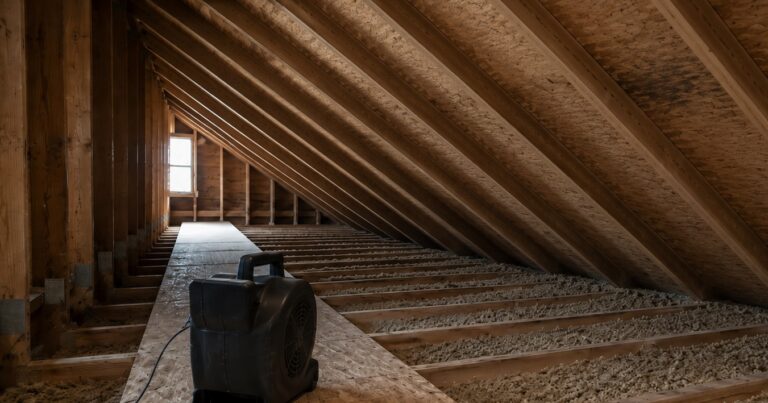
Roofing material matters, but it does not control every moisture problem. A metal roof, tile roof, or algae-resistant shingle roof can still have attic moisture if the roof assembly is poorly ventilated or if moist indoor air leaks into the attic. In humid climates, ventilation and air sealing help determine whether the roof deck stays dry from the underside.
A humid-climate roof has two moisture exposures: exterior moisture from weather and surface humidity, and interior moisture from indoor air, condensation, and attic airflow problems.
Poor attic ventilation can allow heat and humidity to build up under the roof deck. If moist air reaches cooler surfaces, condensation can form on sheathing, rafters, nails, or insulation. Over time, that can look like a roof leak even when the exterior roof covering is not the main cause. If you already see musty attic odors, damp insulation, or moisture on roof sheathing, compare those conditions with the signs of poor attic ventilation.
Ventilation should support whatever material you choose. A roof in a humid climate needs intake and exhaust ventilation that work together, bathroom and kitchen exhaust routed outdoors, and enough air sealing to keep indoor humidity from being pushed into the attic. For a deeper explanation, see this guide on why poor roof ventilation causes moisture problems.
If the roof has repeated condensation problems, blocked ridge vents, poor soffit intake, or inadequate attic airflow, a roofing contractor may need to evaluate whether the ventilation design is helping the roof dry correctly.
How to Choose the Best Roof for a Humid Climate
The best roof for a humid climate is the one that matches the home’s exposure, slope, structure, budget, and maintenance needs. A roof in full sun with a steep pitch may perform well with more material options than a shaded roof under trees. A low-slope roof, coastal home, or house with poor attic airflow needs a more careful choice.
Before choosing a material, look at which parts of the roof stay damp longest in the morning. North-facing slopes, valleys, shaded eaves, and areas below trees usually reveal the roof’s real humidity stress points better than the most visible front slope.
Consider Shade and Tree Cover
Shade is one of the biggest factors in humid roof performance. A roof plane under trees or facing away from direct sun dries more slowly after dew, fog, or rain. That slow drying increases the chance of algae staining, moss growth, and debris-related moisture problems.
If your roof is heavily shaded, metal, slate, tile, or algae-resistant architectural shingles are usually better choices than basic shingles or wood shakes. You should also plan for regular debris removal. Even a strong roofing material can develop problems if leaves, pine needles, and branches hold moisture against the surface for long periods.
Consider Roof Slope and Drying Speed
Steeper roofs usually shed water and debris faster than low-slope roofs. That gives them an advantage in humid climates because the surface is less likely to stay wet for long periods. Low-slope sections need materials designed for that slope, along with excellent drainage details.
Do not install a material only because it looks good. Asphalt shingles, tile, slate, metal panels, and membranes all have slope requirements. If the material does not match the slope, humidity will make the mistake more noticeable because water and damp debris will linger longer.
Consider Budget and Maintenance Tolerance
Metal, slate, and tile can perform very well in humid climates, but they usually cost more than asphalt shingles. If the budget does not allow a premium roof, algae-resistant architectural shingles are often the practical choice. They offer better humidity performance than basic shingles while staying within reach for many homeowners.
Maintenance tolerance matters too. Cedar shakes may require more cleaning, inspection, and upkeep in humid conditions. Tile may require periodic inspection for broken tiles, debris, and underlayment concerns. Metal may need coating, fastener, flashing, and corrosion checks over time. No roof should be treated as completely maintenance-free.
Consider Contractor Skill and Installation Quality
In humid climates, installation quality is just as important as the material label. A good product can fail early if flashing is weak, underlayment is poorly installed, ventilation is blocked, or penetrations are not sealed correctly. Roof valleys, chimneys, skylights, plumbing vents, walls, and roof edges all need careful detailing.
This is especially important for premium materials. Slate, tile, standing seam metal, and low-slope membranes require specific installation knowledge. A contractor who mostly installs asphalt shingles may not be the right choice for slate, tile, or membrane roofing unless they have real experience with those systems.
When to Talk to a Roofing Contractor
You should talk to a roofing contractor before choosing a material if your home already has signs of roof moisture problems. Existing algae streaks, moss, damp attic sheathing, musty attic odors, repeated condensation, or recurring roof leaks can all change which material makes sense. A new roof should solve the conditions that caused the old roof to struggle, not simply cover them with a different product.
A contractor should evaluate the roof slope, attic ventilation, roof deck condition, flashing, drainage, penetrations, and existing moisture damage. If the roof deck is soft, stained, moldy, or damp, the material decision should wait until the moisture source is understood. Covering damp or deteriorated roof sheathing with new roofing can trap the same problem inside the new assembly and may hide structural damage that should be repaired first.
Professional input is also important if you are considering a heavy material such as slate or tile. The home may need structural evaluation before the material can be installed safely. For low-slope sections, a contractor should confirm that the selected membrane system is appropriate for the slope, drainage layout, and roof details.
The best contractor for a humid-climate roof should be able to explain not just what material they recommend, but why that material fits the home’s drying conditions. They should also explain how they will handle ventilation, underlayment, flashing, and moisture-prone details.
FAQs About Roofing Materials for High Humidity
What is the best roofing material for high humidity?
Metal roofing is often the best overall choice for high humidity because it dries quickly and does not absorb moisture. Slate and tile are also strong premium options. For many homeowners, algae-resistant architectural shingles are the most practical balance of cost, availability, and humidity performance.
Are asphalt shingles bad in humid climates?
Asphalt shingles are not automatically bad in humid climates, but basic shingles can stain faster and hold surface moisture longer than metal, slate, or tile. If you choose asphalt, algae-resistant architectural shingles are usually a better option than low-cost standard shingles.
Is metal roofing better than shingles in humid areas?
Metal roofing is usually better than shingles for surface moisture resistance because it is smooth, non-absorptive, and fast drying. However, metal still needs proper coatings, flashing, underlayment, ventilation, and condensation control. A poorly installed metal roof can still develop moisture problems.
Does high humidity cause mold or algae on roofs?
High humidity can support biological growth, but black streaks on shingles are often algae rather than mold. Mold risk is more serious inside the attic or roof assembly when moisture, poor ventilation, air leaks, or roof leaks keep wood, insulation, or sheathing damp. Surface staining and attic mold should be evaluated differently.
Should cedar shakes be avoided in humid climates?
Cedar shakes are a higher-risk choice in humid climates because wood can retain moisture and needs good airflow to dry. They may work on some homes with proper slope, maintenance, and exposure, but they are less forgiving than metal, slate, tile, or algae-resistant shingles.
Does attic ventilation matter if I choose a moisture-resistant roof?
Yes. A moisture-resistant roof covering helps with exterior exposure, but attic ventilation affects the underside of the roof deck. Poor ventilation, air leaks, and improperly routed exhaust fans can still cause condensation or mold risk beneath a good roofing material.
Final Recommendation for Humid Climates
The best roofing materials for high humidity are materials that dry quickly, absorb little moisture, resist algae staining, and work well as part of a properly ventilated roof system. Metal roofing is often the strongest overall option. Slate and tile are excellent premium choices when the home can support them and the installation is done correctly. Algae-resistant architectural shingles are usually the most practical option for homeowners who need a more affordable roof that can still handle humid conditions.
The materials that need the most caution are wood shakes, basic asphalt shingles without algae resistance, and low-slope roof assemblies with poor drainage. These can work in some situations, but they require more careful design and maintenance.
Material choice matters, but it is not the whole roof. In a humid climate, the best roof is a complete system: the right material, proper slope, strong underlayment, clean flashing, balanced ventilation, and a contractor who understands moisture behavior. Choosing a roof that can dry correctly is what protects the home long term.