
Signs of Poor Attic Ventilation
Poor attic ventilation often shows up as moisture, heat, odor, mold, or roof damage before a homeowner realizes the attic airflow system is part of the problem. Because attics are usually out of sight, the early warning signs are easy to miss until insulation feels damp, roof sheathing becomes stained, or musty odors start moving into the living space.
The most common signs of poor attic ventilation include musty attic smells, damp insulation, dark staining on roof sheathing, rusted nail tips, condensation, frost in cold weather, mold growth, hot upper rooms, ice dams, and premature roof aging. These symptoms do not always prove that ventilation is the only issue, but they are strong clues that attic airflow should be checked.
Poor ventilation is especially confusing because it can look like a roof leak. Moisture may appear on rafters, nails, sheathing, or insulation even when no rainwater is entering through the roof. In many homes, the real problem is trapped indoor moisture rising into the attic and condensing because airflow is restricted or unbalanced.
Why These Warning Signs Appear in Poorly Ventilated Attics
Poor attic ventilation usually creates warning signs when intake air, exhaust air, or both are restricted. Cooler outside air should enter low through soffit or intake vents, while warmer attic air exits high through ridge vents, roof vents, or gable vents. When that movement is weak or unbalanced, heat and moisture remain trapped longer than they should.
The signs often appear on the underside of the roof because warm indoor air can leak upward through ceiling gaps, attic hatches, recessed lights, plumbing penetrations, and bathroom fan openings. When that moist air reaches cold roof sheathing, nail tips, or rafters, condensation can form even when no rainwater is entering through the roof.
That pattern is important. A roof leak usually follows a more specific path from a penetration, flashing detail, valley, or damaged roof area. Ventilation-related moisture is more likely to appear across wider sections of sheathing, multiple nail rows, damp insulation near the eaves, or mold patterns that follow airflow problems.
This article focuses on warning signs. For the deeper airflow mechanics behind these symptoms, see why poor roof ventilation causes moisture problems.
For the broader roofing context, see common roofing material failures that lead to moisture problems.
Common Signs of Poor Attic Ventilation
The clearest warning signs usually appear inside the attic first. Some are visible immediately, while others show up as odor, texture changes, or seasonal moisture patterns.
Musty Odors in the Attic or Upper Floors
A musty smell in the attic is one of the most common early signs that moisture is lingering longer than it should. The odor may be strongest when you open the attic hatch, but it can also drift into upstairs bedrooms, closets, hallways, or ceiling cavities.
This smell does not automatically mean there is visible mold everywhere. It often means the attic materials are staying damp enough for microbial growth, dust, insulation contamination, or stale humid air to produce an odor. Poor ventilation can make the smell worse because moist air remains trapped instead of being diluted and exhausted.
Musty odors are especially important when they appear after humid weather, winter temperature swings, or long periods when the attic has been closed up. If the smell returns after cleaning or after dry weather, that may point to an ongoing moisture source rather than a one-time event.
Dark Stains on Roof Sheathing
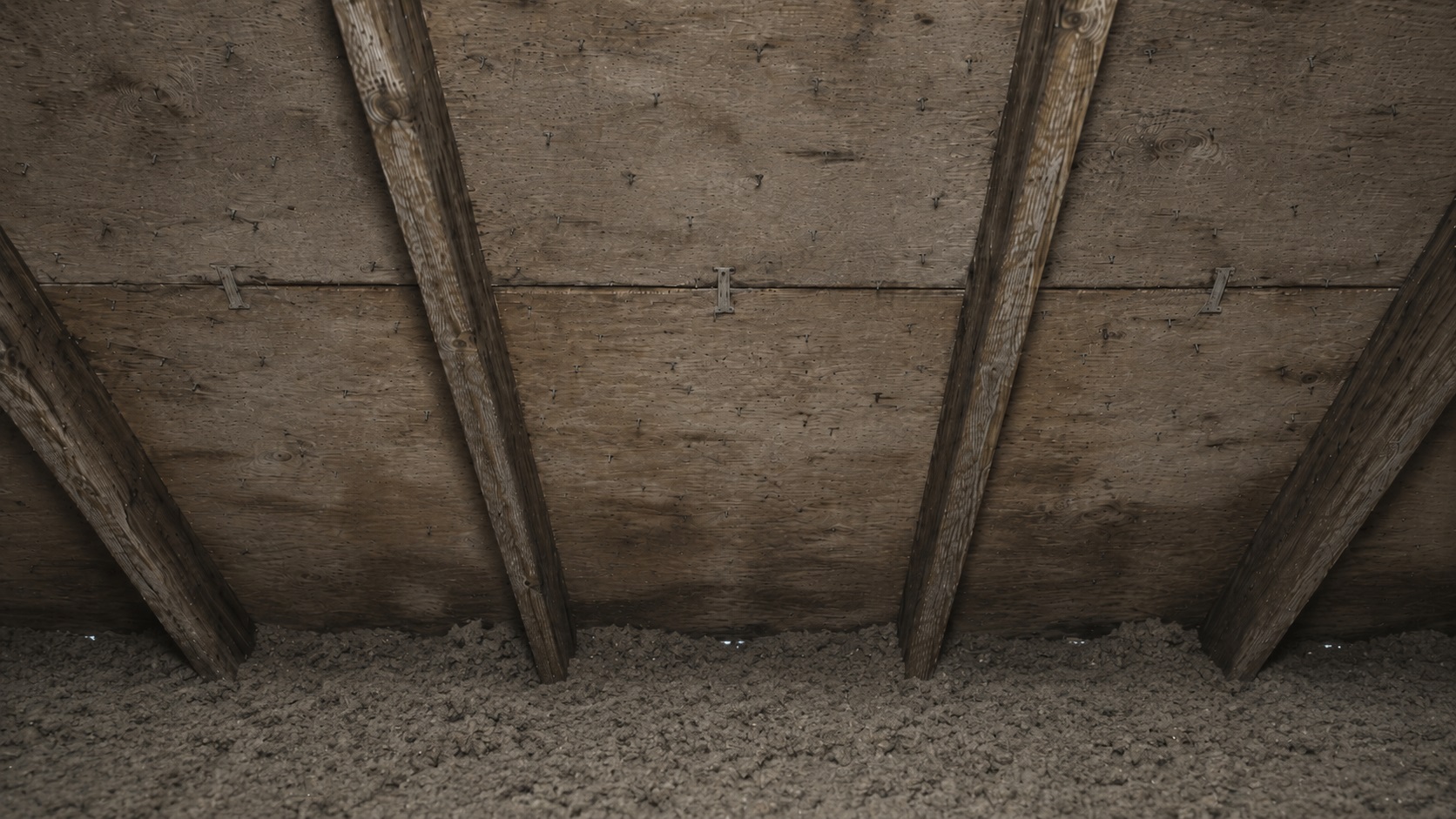
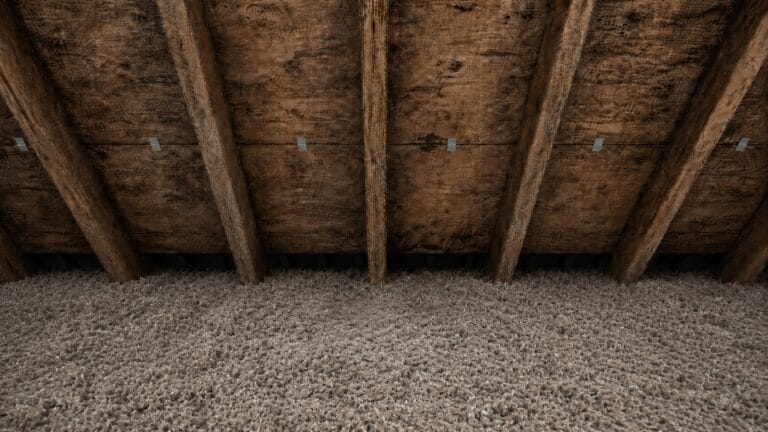
Dark stains on the underside of roof sheathing can be a warning sign of poor attic airflow, especially when the staining appears across broad areas instead of below one obvious roof penetration. Stains may look gray, brown, black, or unevenly blotchy.
Ventilation-related staining often appears where warm attic air contacts cooler roof decking. Over time, repeated condensation can darken wood, leave water marks, or create mold-friendly conditions. This can be mistaken for a roof leak, but the pattern is often different. A roof leak usually follows a path from a specific entry point, while ventilation-related condensation may appear more widely across sheathing, rafters, or nail lines.
A useful clue is the pattern: one concentrated stain below a vent boot, chimney, valley, or flashing detail points more strongly toward a leak, while repeated staining across several bays or nail rows points more strongly toward attic moisture and airflow problems.
If roof sheathing stains appear along with damp insulation, rusty nails, or attic mold, the problem deserves closer evaluation. For mold-specific attic warning signs, see signs of mold growth in attic spaces.
Rusty Nails, Fasteners, or Metal Connectors
Rust on exposed nail tips or metal connectors is one of the most recognizable signs of recurring attic moisture caused by poor ventilation. When warm, humid air rises into the attic and meets cooler roof surfaces, condensation can form on metal components. Over time, repeated moisture exposure causes oxidation, leaving visible rust on nails and brackets.
This symptom is often most visible on roofing nail tips that protrude through the underside of the roof sheathing. You may notice small rust-colored spots or streaks forming beneath rows of nails. In cold weather, these same nail tips may even collect frost before melting later in the day.
Rusting hardware is rarely caused by a single rain leak unless water is entering at a specific location. When rust appears across wide areas of the attic, especially along multiple rafters or sheathing panels, it often signals repeated condensation rather than isolated water intrusion.
If you notice rusted nail tips along with other moisture indicators, such as damp insulation or staining, the attic may be holding moisture longer than it should. In those cases, it may help to review how to detect inadequate roof ventilation to better understand how airflow problems develop.
Damp or Compressed Attic Insulation
Attic insulation is designed to remain dry and fluffy. When moisture becomes trapped in the attic due to poor ventilation, insulation may absorb water vapor and lose its structure. Instead of appearing light and evenly distributed, insulation may look flattened, clumped, or darker in color.
Damp insulation reduces thermal performance, which means heat can escape more easily in winter and enter more easily in summer. This often results in higher energy bills, uncomfortable indoor temperatures, and longer HVAC run times.
Moisture-related insulation problems usually develop gradually. You may not notice standing water, but you may see areas where insulation appears matted down, crusted, clumped, slightly discolored, or lower than surrounding insulation. In severe cases, insulation may feel heavy or cold to the touch, especially near the eaves or along the underside of the roof.
If insulation appears damp or compressed, it is important to determine whether moisture is coming from ventilation problems, roof leaks, or indoor humidity sources. For additional moisture-related insulation warning signs, see signs of moisture in attic insulation.
Moisture, Mold, and Condensation Signs
Mold becomes more likely when attic surfaces stay damp through repeated condensation cycles. In poorly ventilated attics, this often shows up on roof sheathing, rafters, nail lines, or insulation before the problem is obvious from the living space below.
Mold on Rafters or Roof Decking
Mold growth on rafters or roof decking is a strong indicator that moisture is remaining in the attic for extended periods. Mold may appear as black, gray, green, or white patches on wood surfaces. It may grow in isolated clusters or spread across large areas depending on airflow patterns and moisture levels.
Unlike mold caused by a direct roof leak, ventilation-related mold often spreads across large surfaces instead of concentrating at a single entry point. This occurs because moisture condenses repeatedly across broad sections of roof sheathing or framing.
Visible attic mold should not be ignored, especially when it appears with damp insulation, rusty nails, or sheathing stains. The key is to correct the moisture source before cleanup, or the growth may return.
To better understand how attic mold develops and spreads, review signs of mold growth in attic spaces.
Condensation on Roof Sheathing
Condensation occurs when warm, moist air contacts cooler surfaces, causing water droplets to form. In attics with poor ventilation, condensation often appears on the underside of roof sheathing during cold weather or during sudden temperature changes.
You may notice small droplets forming on wood surfaces or damp areas that appear without recent rainfall. Over time, repeated condensation can darken wood, encourage mold growth, and weaken structural materials.
Condensation is commonly mistaken for a roof leak, especially when water droplets appear unexpectedly. However, when condensation occurs evenly across large areas rather than in a single location, ventilation problems are often involved.
If you suspect condensation rather than leakage, see signs of roof condensation in attics for additional confirmation indicators.
Frost on Nails or Wood Surfaces in Winter
In colder climates, frost forming inside the attic is one of the clearest seasonal signs of poor ventilation. When warm, moist indoor air rises into the attic and meets cold roof surfaces, moisture can freeze instead of forming liquid condensation. This often appears as white frost on nail tips, rafters, or the underside of roof sheathing.
Frost may not remain visible for long. As outdoor temperatures warm during the day, the frost melts and turns into liquid water. This cycle can repeat many times during winter, leaving wood surfaces damp even though there has been no rainfall.
Many homeowners mistake frost-related moisture for a roof leak because they see water dripping during warmer parts of the day. However, when the moisture appears across wide sections of the attic rather than below one roof penetration, condensation and ventilation issues are often responsible.
Repeated frost cycles can eventually saturate insulation, stain wood, and encourage mold growth. If frost appears regularly in winter, it is important to evaluate airflow performance and moisture sources before damage becomes severe.
Indoor Signs That May Point to Poor Attic Airflow
Not all warning signs appear directly inside the attic. Some of the earliest clues develop inside living areas, especially on upper floors. These indoor symptoms can indicate that heat and moisture are not escaping the attic as they should.
Hot Upper Rooms During Warm Weather
Upper-level rooms that feel unusually hot during summer may signal trapped heat in the attic. While attics naturally become warm in hot weather, excessive heat buildup can occur when airflow is restricted or poorly balanced.
Homeowners may notice that second-floor bedrooms remain uncomfortable even when the air conditioning system is working properly. Ceiling surfaces may feel warm, and indoor temperatures may rise quickly during sunny afternoons.
This problem often becomes more noticeable in homes where ventilation pathways are blocked or where intake and exhaust vents are not properly balanced. Over time, trapped heat can place additional stress on roofing materials and increase cooling costs.
However, heat alone does not always prove poor ventilation. It becomes more concerning when combined with moisture symptoms such as odors, condensation, or mold growth.
Persistent Indoor Humidity
Indoor humidity that remains high despite normal household habits can also point to attic ventilation issues. Moist air trapped in the attic may eventually move back into the living space through ceiling gaps, attic hatches, or duct penetrations.
Homeowners may notice condensation on windows, damp-feeling air, or a general sense of humidity even when outdoor conditions are moderate. In some cases, portable humidity monitors may show readings that remain elevated throughout the day.
Persistent indoor humidity increases the risk of mold growth, wood swelling, and damage to finishes such as paint or drywall. If humidity problems appear along with attic staining or insulation moisture, the attic should be evaluated as part of the overall moisture investigation.
Ceiling Stains Near Attic Areas
Water stains on ceilings near attic spaces may indicate trapped moisture above rather than an active roof leak. These stains often appear as faint yellow or brown marks that gradually expand over time.
Unlike sudden leak damage, ventilation-related stains may appear slowly and without obvious rainfall events. The moisture causing the stains may originate from condensation cycles inside the attic rather than water entering through damaged roofing materials.
If ceiling stains appear alongside attic moisture or mold indicators, further inspection is necessary to determine whether the source is ventilation-related condensation or a direct roof leak. For additional leak-specific warning signs, see signs of roof leaks inside the house.
Roof and Exterior Clues Linked to Attic Airflow
Some ventilation problems reveal themselves through changes visible on the exterior of the roof. These signs often develop slowly and may go unnoticed unless homeowners inspect the roof during seasonal weather changes.
Ice Dams Along Roof Edges
Ice dams are ridges of ice that form along roof edges during winter. They occur when heat trapped inside the attic warms sections of the roof unevenly. Snow melts on warmer areas, flows downward, and refreezes at colder edges near the eaves.
Repeated ice dam formation is a strong indicator that attic heat is escaping unevenly, often due to poor ventilation or inadequate insulation. Over time, ice dams can force water beneath shingles, leading to roof damage and interior leaks.
While insulation problems also contribute to ice dams, poor ventilation often worsens the condition by preventing consistent airflow across the roof underside.
Premature Shingle Aging
Roof shingles exposed to excessive heat from below may age faster than expected. Trapped attic heat can cause shingles to dry out, curl, crack, or lose protective granules earlier than normal.
This type of damage usually appears across wide areas rather than in isolated spots. Homeowners may notice shingles becoming brittle or discolored long before their expected lifespan ends.
Although weather exposure plays a role in roof aging, persistent attic heat buildup caused by ventilation problems can significantly shorten roof durability.
Signs the Problem May Be Getting Worse
Some attic ventilation symptoms are early warnings. Others suggest the moisture problem is active, recurring, or already damaging materials.
Expanding Mold Coverage
If small patches of mold begin spreading across rafters, roof sheathing, or insulation surfaces, the moisture problem is likely ongoing. Mold that expands over time usually indicates repeated condensation cycles rather than a single moisture event.
Widespread mold coverage can weaken wood fibers, contaminate insulation, and affect indoor air quality if spores travel into living spaces. When mold growth increases despite cleaning attempts, the underlying ventilation or moisture source has not been resolved.
Understanding how mold spreads helps homeowners recognize the seriousness of this pattern. For deeper guidance, review how to remove mold permanently to understand the importance of correcting moisture sources before attempting cleanup.
Insulation That Remains Damp for Long Periods
Insulation that stays damp after weather changes or seasonal transitions indicates moisture is lingering inside the attic. Normally, small amounts of moisture dry quickly when airflow is adequate. When ventilation is poor, moisture remains trapped and drying slows dramatically.
Persistent damp insulation can reduce energy efficiency and increase heating and cooling costs. It also creates conditions that support mold growth and wood decay. If insulation remains damp for extended periods, airflow problems should be investigated.
Increasing Musty Odors Indoors
Musty odors that grow stronger or appear more frequently often signal worsening attic moisture conditions. What begins as a faint smell may become noticeable throughout upper floors, closets, or stairwells.
When odors intensify over time, it suggests that moisture levels are increasing or that mold growth is spreading. Ignoring odor changes allows moisture damage to progress unnoticed behind insulation or within structural materials.
When Poor Attic Ventilation Needs Professional Attention
Some attic ventilation problems can be identified visually, but others require professional assessment to determine the exact cause. Knowing when to seek professional help can prevent long-term structural damage and reduce repair costs.
Visible Mold Covers Large Areas
If visible mold covers large attic areas, do not disturb insulation or scrape moldy wood without proper containment and protection. Large attic mold problems can release spores into the home and may require professional evaluation, especially when mold is widespread, insulation is contaminated, or the moisture source has not been corrected.
Professionals can assess ventilation design, moisture sources, and insulation conditions to determine whether airflow improvements or repairs are necessary.
Structural Materials Show Signs of Damage
If roof sheathing, rafters, trusses, or ceiling framing appear soft, sagging, delaminated, heavily stained, or visibly decayed, stop treating the issue as a simple ventilation problem. Structural weakening, long-term wetting, or hidden roof leakage may be involved, and the area should be evaluated before anyone walks on the roof or disturbs damaged materials.
Structural damage may occur gradually as wood absorbs moisture over time. When detected early, repairs may be limited to targeted areas rather than full roof replacement.
Repeated Moisture Problems Return After Cleanup
If moisture symptoms return after cleaning mold or drying surfaces, the underlying cause has not been addressed. Ventilation imbalances, blocked airflow pathways, or indoor humidity sources may still be affecting attic conditions.
At this stage, professional evaluation is usually necessary to identify airflow restrictions, insulation problems, or hidden moisture sources.
When to Inspect Roof Ventilation Immediately
Certain warning signs should prompt immediate inspection of attic ventilation components. These symptoms suggest airflow may be blocked or severely restricted.
- Repeated frost formation inside the attic
- Rapid mold growth on wood surfaces
- Strong musty odors that spread into living spaces
- Damp insulation that does not dry between seasons
- Ice dams forming along roof edges each winter
If these conditions are present, it may be helpful to learn how to inspect roof vents for blockages to identify obvious airflow restrictions before damage becomes severe.
FAQ: Signs of Poor Attic Ventilation
What are the first signs of poor attic ventilation?
The earliest signs often include musty odors, dark stains on roof sheathing, rusty nail tips, and damp insulation. These symptoms typically appear before more severe problems such as mold growth or structural damage develop.
Can poor attic ventilation cause mold?
Yes. Poor attic ventilation can allow moisture to stay on roof sheathing, rafters, nail tips, and insulation long enough for mold to develop. Ventilation is not always the only cause, so roof leaks, bathroom fan discharge, and indoor humidity leaks should also be checked.
Is condensation in the attic always caused by poor ventilation?
No. Condensation can also result from indoor humidity leaks, bathroom fans venting into the attic, or insufficient insulation. However, poor ventilation often worsens condensation problems by slowing moisture removal.
Can poor attic ventilation damage roof shingles?
Yes. Excessive attic heat caused by poor airflow can accelerate shingle aging. Over time, this heat exposure can cause shingles to dry out, crack, or lose protective granules sooner than expected.
How do I know if attic moisture is from ventilation or a roof leak?
Moisture from roof leaks usually appears in a concentrated area below a specific roof penetration. Ventilation-related moisture tends to appear across broader surfaces, such as multiple rafters or sections of roof sheathing. Further inspection is usually required to confirm the exact source.
Conclusion
Poor attic ventilation usually shows itself through patterns: musty odors, damp or compressed insulation, rusty nail tips, frost, condensation, widespread sheathing stains, attic mold, hot upper rooms, ice dams, or early roof aging. One sign alone may not prove the cause, but several signs together mean attic airflow, indoor moisture sources, and roof leak possibilities should be checked.
If the symptoms are widespread, recurring, or getting worse, the next step is not just cleanup. The attic needs enough intake, exhaust, air sealing, and moisture control to keep the same signs from returning.

7 Comments
Comments are closed.