Best Vinyl Siding Repair Kits and Patch Kits for Small Holes and Cracks
Introduction
Small holes, cracks, dents, and punctures in vinyl siding can look minor at first, but they should not be ignored. Damaged siding can let wind-driven rain reach the wall assembly, especially when cracks are near seams, corners, trim, or older brittle panels. A siding repair kit will not fix rotted sheathing, failed flashing, or major water intrusion, but the right patch kit can help cover small cosmetic damage before it becomes a larger exterior moisture concern.
This guide focuses on the best siding repair kits for homeowners who need simple vinyl siding patch repairs, not broad exterior sealants, flashing tapes, caulks, or wood repair fillers. For bigger siding failures, start with the parent guide, How Exterior Walls Allow Moisture Into Homes, and compare the damage against Signs Siding Needs Replacement. If you are deciding whether a patch is enough, also see How to Decide Whether to Repair or Replace Siding.
As an Amazon Associate, this site earns from qualifying purchases. This does not affect the price you pay. Our recommendations are based on research, product reliability, and real-world usability in moisture-prone environments.
Quick Picks Summary
- Best Overall Vinyl Siding Patch Kit: Guppyhill Vinyl Siding Repair Kit
- Best USA-Made Patch Kit: Stepsaver Products Vinyl Siding Repair Patch Kit, 12-Pack 4.5″ x 5.5″
- Best Reinforced Patch Kit: Stepsaver Products Vinyl Siding Repair Patch Kit, 8-Pack 6″ x 6″
- Best Budget Patch Kit: FAILUN Vinyl Siding Repair Kit 12Pcs
- Helpful Accessory Tool: Malco SRT2 Siding Removal Tool
Vinyl Siding Repair Kit Reviews
Best Overall Vinyl Siding Patch Kit — Guppyhill Vinyl Siding Repair Kit
The Guppyhill Vinyl Siding Repair Kit is the strongest overall choice for most homeowners who need to cover small holes, cracks, punctures, or cosmetic blemishes in vinyl siding. It is a peel-and-stick PVC patch kit designed to be trimmed, applied over the damaged area, and painted to blend with the surrounding siding. That makes it useful for small siding problems caused by lawn equipment, hail marks, screws, fasteners, or minor impact damage.
This is not a full siding replacement system, and it should not be used to hide active water entry behind siding. If the area feels soft, smells musty indoors, or keeps showing moisture after storms, inspect the wall more carefully using guidance from Hidden Siding Damage That Leads to Moisture Problems. For surface-level vinyl damage, however, Guppyhill is one of the simplest siding repair kits to understand and use.
Key Features
- Includes 12 peel-and-stick vinyl siding repair patches.
- Patch size is approximately 6.3 inches by 4.75 inches.
- Thin PVC patch material can be trimmed to fit smaller damage.
- Designed for cracks, holes, and blemishes on vinyl siding.
- Can be painted after installation to better match existing siding.
- Simple clean, peel, stick, flatten, and paint workflow.
Pros
- ✔ Strongest all-around choice for small vinyl siding patch repairs.
- ✔ Good patch count for several small holes or cracks.
- ✔ Larger patch size than some small repair stickers.
- ✔ Easy for homeowners who do not want to remove siding panels.
- ✔ Paintable surface helps improve appearance after installation.
Cons
- ✖ Not a structural repair for damaged sheathing or water intrusion.
- ✖ Patch edges may still be visible if the siding texture or paint match is poor.
- ✖ Best for small vinyl damage, not large missing sections or warped panels.
- ✖ Surface preparation matters; dirt, chalking, or damp siding can reduce adhesion.
Best For
- Homeowners patching small holes, cracks, screw holes, or cosmetic vinyl siding damage.
- Minor siding damage where the panel is still flat and the wall behind it appears dry.
- Quick repair situations where removing and replacing a full vinyl siding panel is not practical.
Check the Guppyhill Vinyl Siding Repair Kit on Amazon to see current availability.
Best USA-Made Patch Kit — Stepsaver Products Vinyl Siding Repair Patch Kit, 12-Pack 4.5″ x 5.5″
The Stepsaver Products 12-pack is a good choice if you want a more purpose-built vinyl siding patch kit from a siding repair patch brand rather than a generic sticker-style kit. The smaller 4.5-inch by 5.5-inch patch size works well for modest holes, punctures, and blemishes where you do not want a larger patch spreading far beyond the damage.
This kit is especially useful when the repair needs to look intentional rather than improvised. The Stepsaver design uses a visible patch and a center reinforcement patch, which can help when the damage needs support behind the surface patch. It still belongs in the small vinyl siding repair category, but it feels more repair-focused than some thin peel-and-stick options.
Key Features
- Includes 12 vinyl siding repair patches.
- Patch size is approximately 4.5 inches by 5.5 inches.
- Designed for peel, stick, and paint repair work.
- Includes center reinforcement patches for added support.
- Intended for vinyl siding and similar exterior vinyl surfaces.
- Smaller patch format can be easier to blend on narrow damage areas.
Pros
- ✔ Good choice for homeowners who prefer a USA-made patch kit.
- ✔ Reinforcement patch design is useful for holes that need more than a surface sticker.
- ✔ Smaller patch size avoids excessive coverage on minor damage.
- ✔ Paintable surface helps the repair blend with existing siding.
- ✔ Useful for vinyl siding and vinyl fence blemishes.
Cons
- ✖ Smaller patches may not cover wider cracks or larger impact damage.
- ✖ Paint matching is still required for the cleanest look.
- ✖ Not suitable for siding that is loose, buckled, brittle, or pulling away from the wall.
- ✖ More careful placement is needed because the smaller patch leaves less margin around the damage.
Best For
- Small vinyl siding holes where a compact patch is better than a large cover piece.
- Homeowners who want a more purpose-built patch kit with reinforcement.
- Cosmetic vinyl siding repair where the panel is still stable and dry behind the damage.
Best Reinforced Patch Kit — Stepsaver Products Vinyl Siding Repair Patch Kit, 8-Pack 6″ x 6″
The Stepsaver Products 8-pack 6-inch by 6-inch kit is the better Stepsaver option when you need a wider patch footprint. The square size gives more coverage around a damaged area, which can be helpful when a hole or crack needs more surrounding adhesion area than a narrow patch provides.
This is the most repair-oriented vinyl patch option in the lineup because of its larger size and reinforcement-focused design. It is a good candidate for punctures, impact marks, or wider cosmetic damage where a small strip-style patch may look undersized. It is still not a replacement for new siding panels, and it should not be used to hide damage that points to a larger moisture issue. If a panel is warped, loose, or repeatedly leaking, compare the situation with When to Repair vs Replace Vinyl Siding.
Key Features
- Includes 8 vinyl siding repair patches.
- Patch size is approximately 6 inches by 6 inches.
- Designed for larger small-area repairs than narrow patch kits.
- Uses a reinforcement-style repair approach.
- Paintable surface for better visual blending.
- Suitable for small holes, cracks, and blemishes in vinyl siding.
Pros
- ✔ Larger square patch gives more coverage around the damaged spot.
- ✔ Better for holes that need more backing or support than a thin sticker provides.
- ✔ Good alternative when a small patch kit looks too narrow for the damage.
- ✔ Paintable surface helps reduce the visual contrast after repair.
- ✔ Useful for homeowners who want a more substantial patch format.
Cons
- ✖ Only 8 patches, so it is not the highest-count option.
- ✖ A larger square patch may be more visible on narrow siding profiles.
- ✖ Requires careful trimming and painting for the best appearance.
- ✖ Not meant for large missing sections, failed flashing, or damaged wall sheathing.
Best For
- Wider small repairs where a compact patch does not give enough surrounding coverage.
- Vinyl siding holes that need a reinforced patch rather than a simple cosmetic cover.
- Homeowners who want a more substantial repair patch for small impact damage.
Best Budget Patch Kit — FAILUN Vinyl Siding Repair Kit 12Pcs
The FAILUN Vinyl Siding Repair Kit is the budget pick for homeowners who need a basic peel-and-stick vinyl patch kit for small siding blemishes. It is similar in general format to the Guppyhill kit, with 12 self-adhesive patches sized around 6.3 inches by 4.75 inches. That makes it useful for small holes, cracks, and cosmetic marks where the siding panel is otherwise in decent condition.
This is not the pick I would use for the most important repair on the most visible wall of the house. It is better for lower-risk patching, small hidden-side repairs, shed siding, mobile home skirting, or minor cosmetic damage where budget matters. If the damage is on wood siding, do not use this as a substitute for exterior wood repair filler or rot repair. If the damage suggests deeper wall moisture, start with Signs of Water Damage Behind Siding before patching the surface.
Key Features
- Includes 12 self-adhesive vinyl siding repair patches.
- Patch size is approximately 6.3 inches by 4.75 inches.
- Thin PVC-style patch material can be cut to fit small damage.
- Designed for small cracks, holes, and blemishes.
- Can be used on vinyl siding, vinyl skirting, and similar surfaces.
- Paintable after installation for better color matching.
Pros
- ✔ Budget-friendly option for simple vinyl siding patch repairs.
- ✔ 12-piece kit gives enough patches for several small repairs.
- ✔ Useful for small holes, cracks, and cosmetic blemishes.
- ✔ Simple peel-and-stick installation process.
- ✔ Can be trimmed to fit smaller damage areas.
Cons
- ✖ Not as strong a brand-confidence pick as Guppyhill or Stepsaver.
- ✖ Basic sticker-style patching may not be ideal for larger or stressed holes.
- ✖ Paint matching and careful edge smoothing are important for appearance.
- ✖ Not suitable for active leaks, rotten backing, or loose siding panels.
Best For
- Budget users patching small cosmetic vinyl siding damage.
- Less visible siding areas where a basic patch kit is acceptable.
- Small cracks, screw holes, or minor punctures in vinyl siding or skirting.
Check the FAILUN Vinyl Siding Repair Kit 12Pcs on Amazon to see current availability.
Helpful Accessory Tool — Malco SRT2 Siding Removal Tool
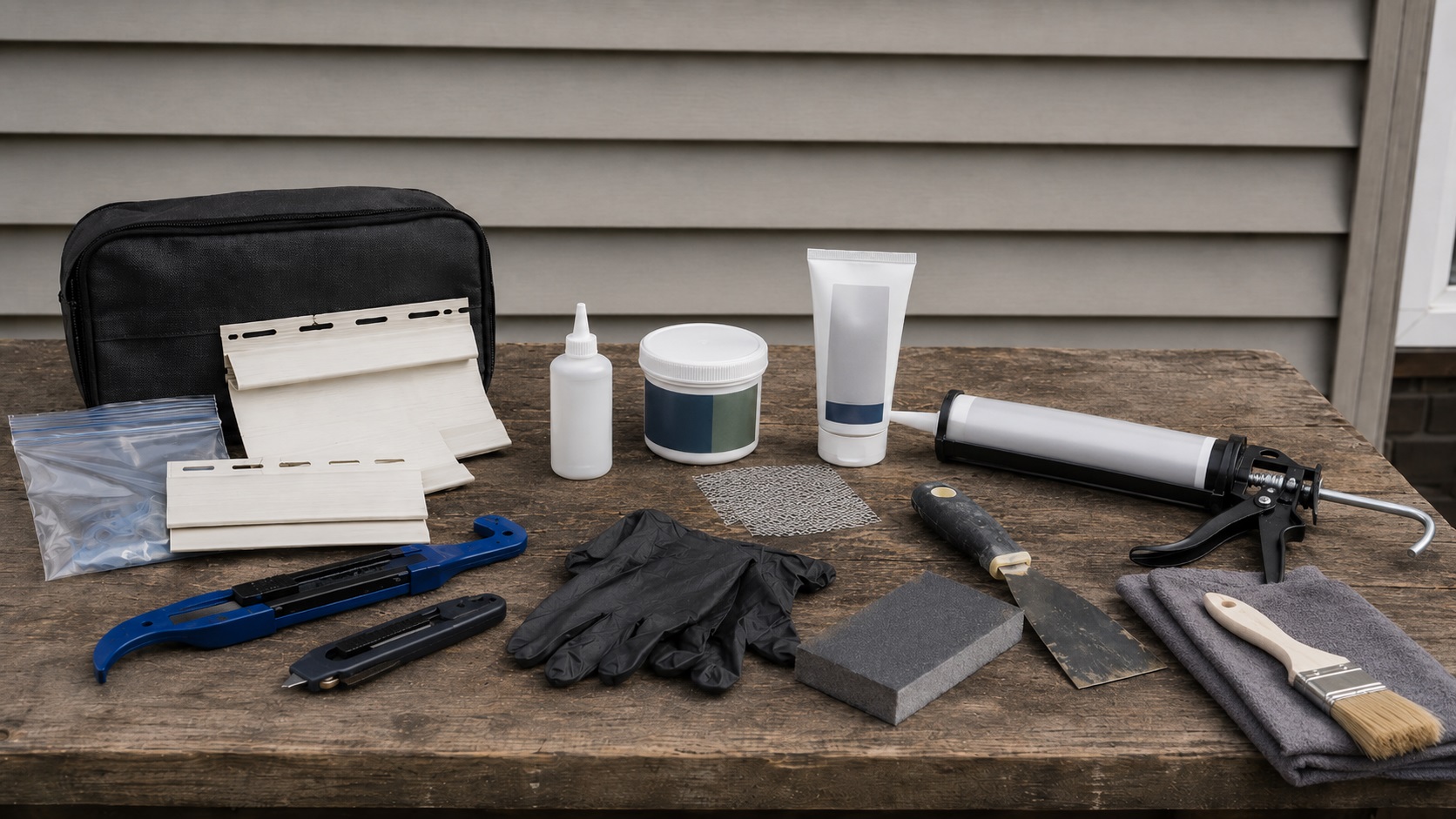
The Malco SRT2 is not a siding repair kit, so it should not be compared directly with patch kits. It is a helpful accessory for homeowners who need to unlock vinyl siding panels for inspection, adjustment, or replacement. If you only need to cover a small hole, you may not need this tool. But if you need to check behind a loose panel, remove a damaged section, or understand whether water has gotten behind the siding, a siding removal tool can be useful.
This tool fits well beside this article because some siding damage should not simply be covered. If the area has repeated staining, indoor musty odor, soft sheathing, or storm-related separation, inspect before patching. The article How to Inspect Siding After a Storm is a better starting point when damage may be more than cosmetic.
Key Features
- Designed for unlocking vinyl siding panels.
- Useful for panel access during inspection or repair.
- One-piece steel tool design.
- Helps separate siding without relying on improvised tools.
- Can be useful when checking whether a damaged panel should be replaced instead of patched.
Pros
- ✔ Helpful for accessing vinyl siding panels without using screwdrivers or pry bars.
- ✔ Useful when patching is not enough and a panel needs inspection.
- ✔ Good accessory from an established tool brand.
- ✔ Helps homeowners avoid damaging siding locks with the wrong tool.
- ✔ Practical for repeated siding maintenance or storm inspections.
Cons
- ✖ Not a patch kit and does not repair holes by itself.
- ✖ Unnecessary if you only need a simple surface patch.
- ✖ Using it carelessly can still crack older brittle siding.
- ✖ More useful for panel access than cosmetic repairs.
Best For
- Homeowners who need to inspect behind vinyl siding before deciding whether to patch or replace.
- DIY users replacing a damaged vinyl siding panel instead of only covering the hole.
- Storm-damage checks where loose siding may be hiding moisture pathways.
Check the Malco SRT2 Siding Removal Tool on Amazon to see current availability.
Vinyl Siding Patch Kit Comparison Table
| Product | Category | Best Use Case | Key Strengths | Main Limitation | Amazon Link |
|---|---|---|---|---|---|
| Guppyhill Vinyl Siding Repair Kit | Best Overall Vinyl Siding Patch Kit | Most small vinyl siding holes, cracks, punctures, and cosmetic blemishes | 12 patches, practical size, paintable PVC patch format, simple installation | Patch edges may remain visible if color and texture are not matched well | View on Amazon |
| Stepsaver Products Vinyl Siding Repair Patch Kit, 12-Pack 4.5″ x 5.5″ | Best USA-Made Patch Kit | Small holes where a compact reinforced patch is preferred | USA-made, reinforcement patch design, paintable surface, compact size | Smaller patch may not cover wider damaged areas | View on Amazon |
| Stepsaver Products Vinyl Siding Repair Patch Kit, 8-Pack 6″ x 6″ | Best Reinforced Patch Kit | Wider small repairs that need more coverage around the damage | Larger square patch, reinforced repair approach, paintable surface | Larger patch can be more noticeable on narrow siding profiles | View on Amazon |
| FAILUN Vinyl Siding Repair Kit 12Pcs | Best Budget Patch Kit | Budget-friendly repairs on small vinyl siding blemishes | 12-piece kit, self-adhesive patches, trim-to-fit design, paintable surface | Less brand confidence than the strongest options | View on Amazon |
| Malco SRT2 Siding Removal Tool | Helpful Accessory Tool | Unlocking vinyl siding panels for inspection, adjustment, or replacement | Useful for panel access, established tool brand, helps avoid improvised prying | Not a repair kit and does not patch holes by itself | View on Amazon |
How to Choose a Vinyl Siding Patch Kit Without Hiding a Moisture Problem
Match the Kit to the Actual Damage
The best siding repair kit depends on what you are trying to fix. A small screw hole, mower ding, or shallow crack can often be covered with a vinyl siding patch. A loose panel, warped section, or crack near a seam may need closer inspection. If the damage is large enough that the panel is no longer shedding water properly, a patch may be the wrong solution.
For small cosmetic damage, the Guppyhill kit is the easiest all-around choice. For a smaller USA-made patch with reinforcement, use the Stepsaver 12-pack. For wider damage that still falls within small-area repair territory, the Stepsaver 6-inch by 6-inch patch kit makes more sense.
Choose the Patch Size Based on Coverage Margin
A patch should extend beyond the damaged area enough to adhere to solid siding around the hole or crack. If the damage nearly reaches the patch edges, the repair may lift or look awkward. Smaller patches are easier to hide, but larger patches provide more margin around the damage.
Use a smaller patch for tiny holes or narrow cracks. Use a larger patch when the siding has a wider puncture or impact mark. Do not use several overlapping patches as a substitute for replacing a badly broken siding panel.
Think About Visibility Before You Patch
Vinyl siding patch kits rarely disappear perfectly by themselves. Most need paint to blend with the surrounding siding. Even then, siding texture, sunlight fading, and panel profile can make a repair visible. On a side wall, shed, garage, or less visible elevation, a simple patch may be acceptable. On a front wall near the entry, replacement may look better.
Do Not Use a Patch Kit for Wood Rot or Fiber Cement Damage
This roundup focuses on vinyl siding repair kits. If the damage is in wood siding, a vinyl patch is usually the wrong product. Wood siding damage often requires scraping, drying, stabilizing, filling, priming, or replacing the damaged board. Fiber cement and engineered wood also have different repair needs. For broader material context, see Types of House Siding Explained.
Inspect for Moisture Before Covering Damage
A patch can hide the entry point, but it can also hide evidence if water is already behind the siding. Before patching, look for staining, soft wall areas, swelling trim, musty indoor odors, or recurring dampness after rain. For serious warning signs, use the sitewide moisture guide, How to Find, Fix, and Prevent Moisture Problems in Homes, to think through the larger moisture pathway.
How to Apply Vinyl Siding Repair Patches So They Bond and Shed Water Properly
Clean and Dry the Siding First
Patch adhesion depends heavily on surface preparation. Wash away dirt, chalky oxidation, mildew, and loose debris. Let the siding dry fully before applying the patch. Applying a self-adhesive patch to damp or dirty siding can lead to lifting edges and a poor seal.
Trim the Patch Before Removing the Backing
Dry-fit the patch first. Hold it over the damage and decide whether it should be trimmed. A patch should be large enough to cover the damage with margin on all sides, but not so oversized that it draws attention. Rounded corners can help reduce edge lifting compared with sharp square corners.
Press the Patch Firmly and Smooth the Edges
After placing the patch, press firmly from the center outward. Smooth the edges carefully so they do not catch water, dust, or wind. Avoid stretching the patch or forcing it over deep contours. If the siding profile prevents full contact, a panel replacement may be cleaner than a patch.
Paint Only After the Patch Is Secure
Paint can help a repair blend in, but it cannot fix poor adhesion. Let the patch bond first, then use exterior paint suitable for vinyl or the patch surface. Match the existing siding as closely as possible, remembering that old siding may be faded compared with the original color.
Use a Siding Removal Tool When You Need to Inspect Behind Panels
If the damage may be more than surface-level, use a siding removal tool like the Malco SRT2 to unlock panels carefully. This is useful when you need to inspect for hidden moisture, replace a panel, or check whether wind has loosened the siding. Do not pry vinyl siding open with a screwdriver unless you are willing to risk cracking the locking edge.
Vinyl Siding Patch Mistakes That Can Hide Water Damage
Patching Over Active Moisture Problems
The biggest mistake is covering a hole without checking whether water has already entered behind the siding. If there are moisture stains, soft backing, indoor mold smells, or recurring damp spots after rain, patching the outside may hide a bigger problem.
Using Vinyl Patch Kits on the Wrong Material
Vinyl patch kits are not wood filler, caulk, flashing tape, or structural repair material. Do not use them to repair rotted wood siding, failed exterior trim, separated flashing, or large cracks in exterior wall systems.
Choosing a Patch That Is Too Small
A patch that barely covers the hole does not leave enough adhesive area around the damage. Choose a patch with enough margin to bond to clean, stable siding.
Ignoring Storm Damage Around the Patch Area
After hail or wind, one hole may not be the only problem. Look for cracked panels, loose siding, broken locks, dents, and moisture entry points. If hail is the suspected cause, compare the damage with Signs of Hail Damage on Siding. If wind loosened the panels, see Signs of Wind Damage on Siding.
Expecting a Patch to Look Like New Siding
A patch can reduce water exposure and improve appearance, but it may not look invisible. Existing siding may be faded, textured, or shaped in a way that makes any patch visible. On highly visible walls, panel replacement may be the better-looking repair.
Painting Without Checking Paint Compatibility
Use paint appropriate for exterior vinyl or the patch surface. Dark paint on vinyl can sometimes create heat-related issues, especially if the original siding was a light color. Follow paint manufacturer guidance before repainting a visible siding area.
FAQ About Vinyl Siding Repair Kits and Patch Repairs
What is the best siding repair kit for small vinyl siding holes?
For most homeowners, the Guppyhill Vinyl Siding Repair Kit is the best overall choice because it includes a practical number of paintable patches in a useful size for small holes, cracks, and punctures. The Stepsaver kits are better if you want a more repair-focused patch with reinforcement.
Can a vinyl siding repair kit stop water leaks?
A patch kit can help cover a small surface opening, but it should not be treated as a guaranteed leak repair. If water is entering behind siding because of failed flashing, bad trim details, loose panels, or damaged housewrap, a surface patch is not enough.
Should I patch vinyl siding or replace the panel?
Patch small cosmetic damage when the panel is flat, stable, and dry behind the damaged spot. Replace the panel when the siding is cracked across a large area, warped, brittle, loose, or visibly failing. If you are unsure, compare the situation with When to Repair vs Replace Vinyl Siding.
Are siding repair patches visible after installation?
They can be. Paint helps, but siding texture, fading, sunlight, and panel shape affect the final appearance. A patch on a less visible side wall may be acceptable, while a front-facing repair may look better with panel replacement.
Can I use these siding patch kits on wood siding?
No, not as a proper wood siding repair. These kits are primarily for vinyl siding. Wood siding damage often needs drying, sanding, filling, priming, painting, or board replacement depending on the severity.
Do I need a siding removal tool to use a patch kit?
Usually no. Simple surface patches do not require removing siding panels. A siding removal tool is helpful when you need to inspect behind vinyl siding, unlock a damaged panel, or decide whether replacement is better than patching.
Can I patch hail damage on vinyl siding?
You can patch small isolated holes or punctures, but hail often causes multiple impact marks or cracks. Inspect the full wall before patching. Multiple cracks, brittle panels, or widespread damage may point toward replacement rather than patching.
How long does a siding patch last?
Longevity depends on surface preparation, weather exposure, siding condition, paint compatibility, and how much movement the siding experiences. A clean, dry, stable panel gives the patch the best chance of lasting. A dirty, chalky, damp, or warped panel can cause early lifting.
Conclusion
The best vinyl siding repair kits are useful when the problem is small, localized, and limited to vinyl siding surface damage. For most homeowners, the Guppyhill Vinyl Siding Repair Kit is the best overall pick because it offers a practical patch size, simple application, and enough patches for multiple small repairs.
Choose the Stepsaver Products 12-Pack 4.5″ x 5.5″ Vinyl Siding Repair Patch Kit if you want a compact USA-made patch kit with reinforcement. Choose the Stepsaver Products 8-Pack 6″ x 6″ Vinyl Siding Repair Patch Kit if the damaged area needs a wider reinforced patch. Choose the FAILUN Vinyl Siding Repair Kit 12Pcs for a basic budget option. Add the Malco SRT2 Siding Removal Tool only if you need to unlock siding panels for inspection or panel replacement.
Most importantly, do not use a patch to cover a larger moisture problem. If siding damage is connected to leaks, loose panels, storm damage, or soft wall areas, inspect first and patch only after you are confident the wall assembly is dry and stable.