
How Much Does Water Damage Restoration Cost?
Water damage restoration usually costs between $1,300 and $6,400 for many homeowner projects, with an average job often landing around a few thousand dollars. Small clean-water problems may cost less than $1,000 if they are caught quickly, while major flooding, contaminated water, structural drying, mold growth, or reconstruction can cost much more.
The final price depends on the amount of water, the type of water, how long materials stayed wet, which materials were affected, how much drying equipment is needed, and whether repairs are included. A small supply-line leak that wets one section of flooring is not priced the same as a sewage backup, basement flood, or multi-room water damage event.
Water damage restoration is priced by scope, not just by the size of the puddle. A professional job may include extraction, moisture inspection, material removal, drying equipment, dehumidification, cleaning, sanitizing, monitoring, documentation, and sometimes repairs. The faster the damage is handled, the better the chance of limiting cost and preventing moisture damage from coming back.
How Much Does Water Damage Restoration Usually Cost?
Most water damage restoration projects fall into a wide price range because the scope can change quickly. A small leak may only require localized drying and cleanup. A larger loss may involve standing water, wet drywall, soaked insulation, damaged flooring, contaminated materials, and several days of drying equipment.
A practical homeowner-facing cost range looks like this:
- Minor clean-water cleanup: often under $1,000 to about $1,500
- Moderate water damage restoration: often around $1,500 to $5,000
- Larger water damage projects: often around $5,000 to $10,000 or more
- Major flooding, sewage, mold, or reconstruction: can exceed $10,000 depending on the damage
These are planning ranges, not fixed prices. A restoration company may price work based on square footage, equipment days, labor, demolition, drying time, disposal, sanitation, repairs, or insurance-estimating software. The same square footage can cost very different amounts depending on whether the water was clean, gray, or contaminated.
| Project type | Common cost range | Typical reason |
|---|---|---|
| Minor clean-water cleanup | Under $1,000 to $1,500 | Small area, fast response, limited drying |
| Moderate restoration | $1,500 to $5,000 | More materials affected, several equipment days |
| Larger water damage | $5,000 to $10,000+ | Multiple rooms, demolition, deeper drying |
| Severe flooding, sewage, mold, or reconstruction | $10,000+ | Contamination, material removal, repairs, or rebuilding |
Cost per square foot
Some restoration estimates use rough square-foot pricing, especially during early planning. Clean-water damage may cost only a few dollars per square foot for basic cleanup and drying. Gray water and black water usually cost more because the materials require more caution, cleaning, removal, disposal, or sanitizing.
Square-foot pricing can be helpful, but it does not tell the whole story. A 100-square-foot area of wet tile may cost far less than a 100-square-foot area with soaked carpet pad, wet drywall, insulation, baseboards, subflooring, and contaminated water. The depth of saturation matters as much as the floor area.
Why emergency water damage pricing varies
Emergency water damage restoration costs vary because the company is not only responding to visible water. They are trying to stop the damage from spreading. That may require quick extraction, removal of wet porous materials, moisture readings, dehumidifiers, air movers, and follow-up monitoring.
After-hours, weekend, or holiday response may increase the cost. However, waiting too long can also increase the cost because wet materials can deteriorate, hidden cavities can stay damp, and mold risk increases when materials are not dried quickly. In many water damage situations, faster response costs money up front but helps prevent a larger repair later.
What Is Included in Water Damage Restoration?
Water damage restoration is a process. The exact scope depends on the source of the water, the amount of damage, the materials involved, and how quickly the problem is discovered. Some restoration companies handle only mitigation and drying, while others also perform reconstruction. Homeowners should ask exactly what is included before approving the work.
A typical restoration project may include:
Before comparing prices, ask whether the estimate includes only mitigation and drying, or whether it also includes repairs. This single distinction can change the apparent price by thousands of dollars.
- Emergency response and initial inspection
- Moisture readings and damage mapping
- Water extraction from floors, carpets, or standing water areas
- Removal of damaged carpet pad, drywall, insulation, trim, or cabinets when needed
- Air movers and dehumidifiers for structural drying
- Cleaning and sanitizing affected surfaces
- Antimicrobial treatment when appropriate
- Moisture monitoring during the drying period
- Documentation for the homeowner or insurance company
- Repair or reconstruction if included in the contract
Inspection and moisture mapping
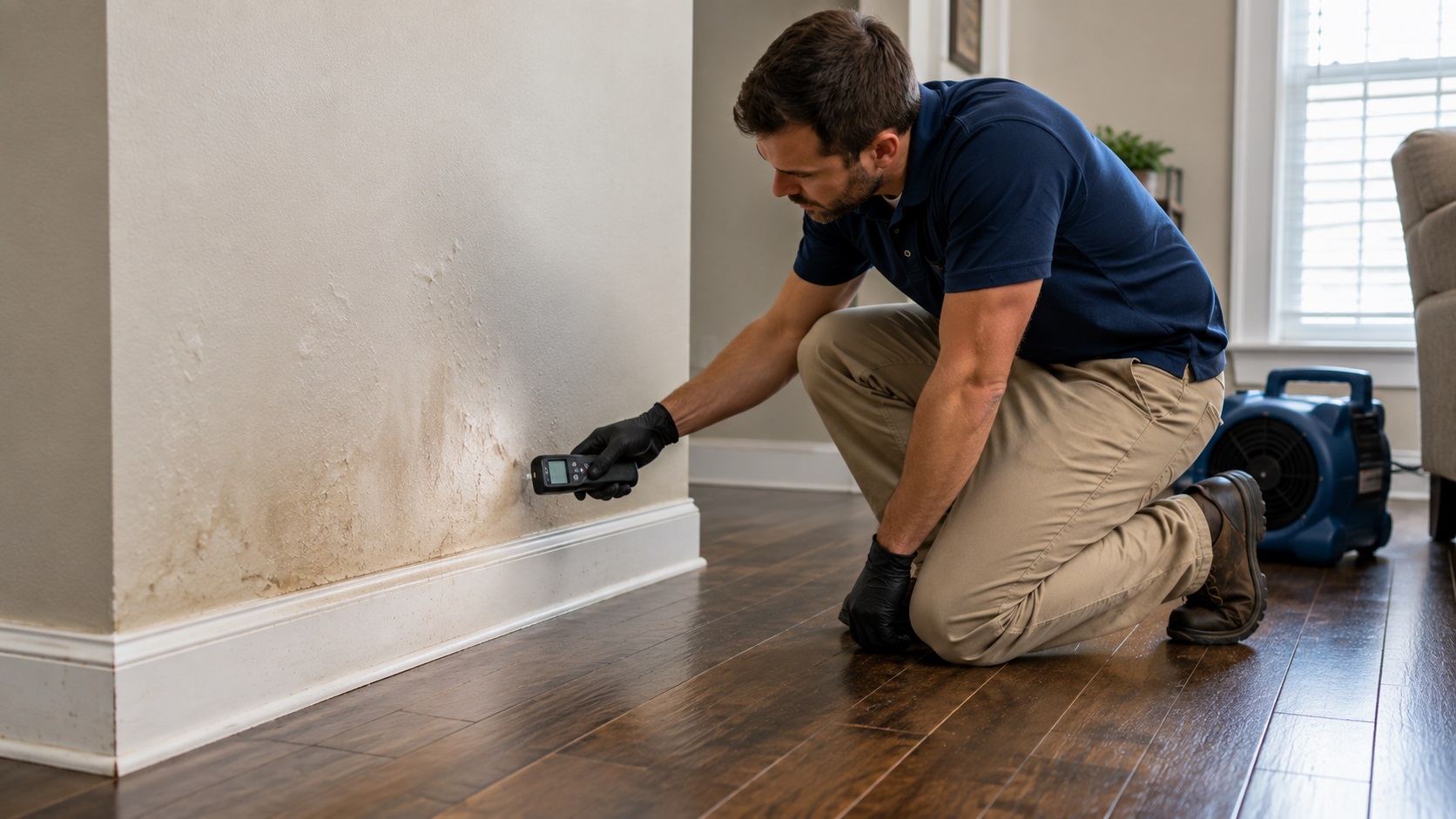
The first step is usually an inspection. The restoration technician looks for the water source, affected rooms, wet materials, safety hazards, and hidden moisture. Moisture meters and thermal imaging may be used to identify damp areas that are not obvious from the surface.
This step matters because water can travel farther than it appears. A leak under a sink may spread under cabinets, behind baseboards, below flooring, or into a wall cavity. A ceiling stain from a roof leak may also involve wet insulation or framing above the ceiling. Surface appearance alone is not enough to determine the restoration scope.
Before restoration can be fully effective, the water source must be stopped or controlled. Otherwise, drying equipment may run for days while new moisture continues entering the area. If you are dealing with a larger moisture pattern rather than a one-time spill, it helps to understand how to find and fix the moisture source instead of only drying the visible damage.
Water extraction
Water extraction removes standing water or excess water from affected areas. This may involve pumps, extraction machines, wet vacuums, or specialized equipment depending on the situation. Extraction is common after basement flooding, appliance leaks, broken pipes, toilet overflows, or storm water intrusion.
Removing liquid water quickly can reduce drying time and limit how deeply materials absorb moisture. It can also help prevent water from spreading into adjacent rooms, subfloors, wall cavities, and lower levels of the home.
Drying equipment and dehumidification
After extraction, restoration companies usually set up air movers and dehumidifiers. Air movers help move moisture from wet materials into the air, while dehumidifiers remove that moisture from the indoor air. This combination is more effective than simply pointing a household fan at a wet area.
Drying may take several days, depending on the amount of water, material type, humidity levels, temperature, and how long the water sat before restoration began. The company may return to take moisture readings and adjust equipment as the materials dry.
Material removal
Some wet materials can dry in place. Others may need to be removed. Carpet pad, insulation, swollen baseboards, damaged drywall, contaminated materials, and delaminated flooring are common examples of materials that may not be salvageable.
Whether materials can be saved depends on water type, drying speed, material condition, and depth of saturation. For example, wet drywall may sometimes be dried if the water was clean and the damage was caught quickly, but it may need removal if it stayed wet, lost strength, grew mold, or was exposed to contaminated water. For a more specific decision guide, see whether wet drywall can be saved.
Water Mitigation vs. Water Damage Restoration vs. Repairs
Water damage pricing can be confusing because companies use several related terms. Water mitigation, water damage restoration, and repairs may be part of the same project, but they are not always the same line item on the bill.
Before approving a quote, ask whether the price includes only emergency mitigation, full drying and cleanup, or actual reconstruction. This matters because one contractor may quote the cost to stop the damage and dry the structure, while another may quote drying plus repairs.
Water mitigation
Water mitigation is the emergency phase. The goal is to stop the damage from getting worse. This may include stopping the water source, extracting standing water, removing wet materials, setting up drying equipment, and protecting unaffected areas.
Mitigation is often the most urgent part of the job. If water keeps spreading or materials stay wet, the final repair cost can increase. Fast mitigation can reduce the chance of damaged drywall, swollen flooring, mold growth, and deeper structural moisture.
Water damage restoration
Water damage restoration usually refers to the broader process of drying, cleaning, stabilizing, and returning the affected area to a usable condition. Depending on the company, restoration may include both mitigation and some repair work, or it may stop after the structure is dry and clean.
This is why homeowners should not assume every restoration quote includes rebuild work. If drywall, flooring, cabinets, trim, or insulation must be replaced, ask whether those repairs are included or whether they will be billed separately.
Repairs and reconstruction
Repairs happen after the damaged area is dry and unsafe or unsalvageable materials have been removed. Repair work may include replacing drywall, painting, installing flooring, replacing trim, repairing cabinets, reinstalling insulation, or rebuilding damaged sections.
Repairs can sometimes cost as much as, or more than, the drying phase. A water damage company may handle reconstruction in-house, subcontract it, or leave the homeowner to hire a separate repair contractor. The quote should make this clear.
When comparing quotes, ask these five questions: Does the price include extraction? How many equipment days are included? Are monitoring visits included? Which materials will be removed? Are drywall, flooring, paint, trim, cabinets, or reconstruction included or separate?
Main Factors That Affect Water Damage Restoration Cost
The cost of water damage restoration depends on how much water entered the home, where it went, what it touched, and how long it stayed there. Two homes with the same visible puddle can have very different costs if one has only surface moisture and the other has water under flooring, behind walls, or inside insulation.
Amount of water
A small supply-line leak caught quickly may only affect one cabinet or a small section of flooring. A burst pipe, failed water heater, basement flood, or storm intrusion may leave standing water across multiple rooms. More water usually means more extraction, more drying equipment, longer drying time, and more labor.
Standing water almost always increases the cost because it must be removed before drying can begin. The longer it sits, the more likely it is to soak into porous materials such as carpet pad, drywall, baseboards, subflooring, and insulation.
Water category
The type of water is one of the biggest cost factors. Clean water is usually less expensive to clean up than contaminated water. Gray water and black water require more caution because they may contain bacteria, waste, chemicals, or other contaminants.
Clean water may come from a broken supply line or an overflowing sink with no contaminants. Gray water may come from appliance discharge or some toilet overflows without solid waste. Black water may come from sewage backups, floodwater, or water that has picked up serious contamination.
The more contaminated the water is, the less likely porous materials can safely remain in place. This is why sewage backups and floodwater cleanup usually cost more than clean-water drying.
Square footage affected
Larger affected areas usually cost more because they require more time, equipment, and monitoring. A small bathroom leak may need limited drying. A basement flood or multi-room plumbing failure may require multiple air movers, dehumidifiers, extraction equipment, demolition, and several follow-up visits.
However, square footage is only part of the story. A small area of contaminated water can cost more than a larger area of clean water. Likewise, a small area with wet wall cavities, cabinets, and subflooring can cost more than a larger area with only surface moisture.
Materials affected
Water damage cost rises when moisture reaches materials that are hard to dry or expensive to replace. Drywall, insulation, carpet pad, engineered flooring, cabinets, trim, subflooring, and ceiling materials can all increase the restoration scope.
Some materials absorb water quickly. Carpet pad, insulation, and unfinished wood can hold moisture even when the surface looks dry. Cabinets may swell at the base. Laminate flooring may buckle or delaminate. Drywall may soften, stain, or lose strength if the moisture remains long enough.
Walls are a common cost driver because water can move behind baseboards and into cavities. If the damage involves wall materials, review drying walls after water damage to understand why surface drying is not always enough.
Depth of saturation
Surface dampness is easier and cheaper to address than deep saturation. A damp floor surface may dry quickly. Moisture trapped under flooring, inside subfloors, behind drywall, or inside insulation takes longer to remove and may require demolition.
This is one reason restoration companies use moisture meters. Materials can feel dry to the touch while hidden layers remain wet. Without moisture readings, a homeowner may stop drying too early and later discover staining, odor, soft flooring, or mold growth.
Subfloors are especially important because they can hold moisture beneath finished flooring. If water has reached the floor system, see drying subfloors after water damage before assuming the visible flooring surface tells the whole story.
Drying time
Drying time affects labor, equipment rental, monitoring visits, and total cost. A small clean-water issue may dry quickly. A soaked basement, wet insulation, saturated subfloor, or humid home may require several days of controlled drying.
The goal is not simply to run fans for a set number of days. The goal is to bring affected materials back to acceptable moisture levels. Professional restoration companies usually monitor readings during the drying process and adjust equipment as needed.
Emergency response timing
Water damage often happens at inconvenient times. After-hours, weekend, holiday, or urgent response may cost more than scheduled service. But delaying response can also raise the final cost if water spreads or materials remain wet too long.
Fast response is especially important when water reaches porous materials or enclosed spaces. Wet drywall, insulation, flooring layers, cabinets, and wall cavities can become harder to dry as time passes.
Contamination and sanitation
Water that contains sewage, floodwater, appliance waste, or long-standing contamination costs more because the job is no longer just drying. It may require protective equipment, removal of porous materials, disposal, cleaning, sanitizing, and more careful containment.
Homeowners should not treat contaminated water like a normal spill. If the water may contain sewage, flood contaminants, or unknown debris, professional restoration is usually safer than DIY cleanup.
Mold growth
If water damage is handled quickly, mold risk may be reduced. If materials stay damp too long, mold may develop and change the scope of the project. At that point, the job may involve both water damage restoration and mold remediation.
This can increase cost because mold-contaminated materials may need containment, removal, cleaning, and verification steps beyond normal drying. The restoration company should clearly explain whether mold remediation is included or separate.
Repair and reconstruction needs
The final cost can rise sharply when drying is not enough. Replacement drywall, new flooring, cabinet repairs, paint, trim, insulation, ceiling repair, or structural work may add a separate repair phase after mitigation.
This is why two homeowners with similar water damage may pay very different amounts. One may only need extraction and drying. The other may need drying, demolition, mold remediation, and rebuilding.
Water Damage Restoration Cost by Scenario
Water damage restoration cost is easier to understand when you compare common household scenarios:
- Small clean-water plumbing leak: often stays lower if the leak is caught quickly and only affects a cabinet base, small flooring area, or limited drywall section.
- Wet drywall or ceiling leak: costs more when water reaches insulation, wall cavities, framing, or ceiling materials above the visible stain.
- Appliance leak: can become expensive when water spreads under laminate, hardwood, vinyl plank, cabinet bases, or subflooring.
- Basement flooding: depends heavily on water depth, contamination, finished materials, stored belongings, sump pump performance, and how long the water sat.
- Sewage backup: usually costs more than clean-water damage because contaminated porous materials often need removal, disposal, cleaning, and sanitizing.
- Multi-room flooding: scales quickly because more rooms usually mean more extraction, equipment, labor, monitoring, demolition, and repair work.
The key cost question is not only what got wet, but how far the water traveled. A small visible leak can become much more expensive when it reaches flooring layers, wall cavities, ceilings, cabinets, or insulation.
Why Contaminated Water Costs More
Contaminated water costs more because the job is not only about drying. It may also require safer handling, removal of porous materials, disposal, cleaning, sanitizing, odor control, and more careful documentation.
Clean water from a broken supply line is usually the least expensive if handled quickly. Gray water from appliance discharge or similar sources usually requires more cleaning and caution. Black water from sewage, floodwater, or heavily contaminated stormwater usually requires professional cleanup and more material removal.
Water can also become more serious if it sits too long or passes through dirty materials. This is why the same room can cost much more when the water source is sewage, floodwater, or an old leak instead of a recent clean-water leak.
Does Restoration Include Mold Removal?
Water damage restoration does not always include mold removal. If the damage is recent and no mold is present, the job may focus on drying, cleaning, and moisture monitoring. If mold is visible, suspected, or caused by delayed drying, the project may need a separate mold remediation scope.
This distinction matters because drying and mold remediation are different line items. Mold-related work may require containment, removal or cleaning of contaminated materials, disposal, dust control, and sometimes verification steps. To compare the separate cleanup side, see typical mold remediation cost.
Ask whether the quote includes mold-related work, whether containment is needed, and whether any remediation or testing will be billed separately.
Does Insurance Cover Water Damage Restoration?
Insurance may cover water damage restoration when the damage comes from a sudden and accidental event, such as a burst pipe, accidental appliance leak, or certain types of interior plumbing failures. However, coverage depends on the policy, the cause of the damage, the timing, exclusions, and whether the insurer considers the problem sudden or gradual.
Insurance often becomes more complicated when the damage comes from long-term leaks, poor maintenance, seepage, groundwater, sump pump failure, flooding, or mold. Some policies exclude certain types of water damage or require separate endorsements for sewer backup, sump overflow, or flood coverage.
Because water damage coverage depends on the specific policy, this article should not be treated as insurance advice. If you are trying to understand coverage, start with whether insurance covers water damage from leaks and contact your insurer before assuming the restoration bill will be paid.
Documentation can affect the claim process
If you plan to file a claim, document the damage before moving or removing materials when it is safe to do so. Take photos and videos of standing water, wet flooring, damaged drywall, affected ceilings, damaged belongings, and the suspected water source. Keep invoices, drying logs, contractor estimates, and communication records.
Many restoration companies can provide moisture readings, photos, equipment logs, and itemized estimates that may help with the claim process. If you need a step-by-step overview, see how to file a water damage insurance claim.
Do not delay emergency mitigation while waiting for approval
In many water damage situations, waiting can make the damage worse. Homeowners should stop the water source if possible, avoid unsafe areas, document the damage, and begin reasonable mitigation steps. If the water involves sewage, electrical hazards, ceiling collapse risk, or major flooding, professional help is usually safer than DIY cleanup.
If insurance may be involved, review what to do immediately after water damage for insurance so you can protect documentation while still reducing further damage.
How to Keep Water Damage Restoration Costs Lower
The best way to keep restoration costs lower is to limit how far the water spreads and how long materials stay wet. Not every cost is avoidable, especially with major flooding or contaminated water, but fast action can reduce secondary damage.
Stop the water source quickly
If it is safe, shut off the water source as soon as possible. This may mean turning off a fixture valve, appliance valve, toilet valve, or the main water supply. If the water is coming from a roof leak, storm intrusion, sewer backup, or groundwater, the source may require professional help.
Stopping new water from entering the home is the first step. Drying equipment cannot solve the problem if fresh water continues leaking into the same area.
Remove standing water when safe
Small amounts of clean water may be removable with towels, mops, or a wet vacuum if there are no electrical hazards and no contamination concerns. However, homeowners should avoid direct contact with sewage, floodwater, or unknown contaminated water.
If water is near outlets, appliances, electrical panels, ceiling fixtures, or sagging ceilings, do not enter the area until it is safe. Do not use a household wet vacuum in standing water if electrical hazards, sewage, floodwater, or unknown contamination may be present. Saving money is not worth an electrical shock, contamination exposure, or structural injury.
Start drying early, but do not rely on fans alone
Early drying can reduce damage, but household fans are not always enough. Fans may dry the surface while moisture remains inside walls, under flooring, or in insulation. In humid conditions, fans alone may also move moist air around without removing enough water from the air.
Professional drying often uses moisture meters, air movers, dehumidifiers, containment, and monitoring. The goal is not simply to make the surface look dry; it is to document that affected materials have returned to acceptable moisture levels.
Do not remove materials before documenting them
If insurance may be involved, document the damage before discarding materials when it is safe to do so. Take photos of wet carpet, damaged baseboards, drywall cuts, soaked belongings, water lines, and the source of the leak.
Emergency removal may still be necessary when materials are contaminated, collapsing, or creating safety hazards. But whenever possible, keep documentation before demolition or disposal.
Use leak prevention tools after the repair
After the water damage is resolved, prevention can reduce the chance of another expensive restoration project. Leak alarms, smart shutoff devices, sump pump alarms, humidity monitors, and routine inspections can help catch problems earlier.
For plumbing and appliance areas, smart leak detectors for homes can be a practical prevention tool because they alert you before a small leak turns into a larger water damage event.
When Professional Restoration Is Worth the Cost
Professional water damage restoration is worth considering when the damage is larger than a small surface spill, when hidden materials may be wet, or when the water may be contaminated. DIY drying is not always enough, especially when water has entered walls, floors, ceilings, cabinets, insulation, or structural materials.
Call a professional restoration company if you are dealing with any of the following:
- Standing water inside the home
- Water affecting more than one room
- Wet drywall, insulation, ceilings, or subfloors
- Water under flooring or behind baseboards
- Sewage backup, floodwater, or gray water
- Musty odors after a leak
- Visible mold after water damage
- Sagging ceilings or soft flooring
- Water near electrical systems
- Repeated leaks or recurring dampness
Professional restoration is also useful when documentation matters. If the project involves insurance, real estate, landlord issues, or a significant repair bill, moisture readings and written records can help clarify what happened and what was done. For a fuller decision guide, see when to call water damage restoration services.
FAQ
What is the average cost of water damage restoration?
Many water damage restoration projects cost about $1,300 to $6,400, with an average job often landing around a few thousand dollars. Small clean-water jobs may cost less, while major flooding, sewage, mold, structural drying, or reconstruction can cost much more.
How much does water damage restoration cost per square foot?
Water damage restoration may cost a few dollars per square foot for clean-water drying and more for gray water or black water. However, square-foot pricing is only a rough estimate. The final cost depends on water type, material saturation, drying time, demolition, sanitation, and repairs.
Is water extraction included in restoration cost?
Water extraction is often part of the restoration or mitigation cost, especially when there is standing water. However, every quote is different. Ask whether extraction, drying equipment, dehumidifiers, monitoring visits, cleaning, and repairs are included.
Does water damage restoration include repairs?
Sometimes. Some companies provide full restoration, including drying and reconstruction. Others only handle mitigation, drying, cleaning, and moisture monitoring. Ask whether the estimate includes drywall replacement, flooring repair, painting, trim, cabinets, or other reconstruction work.
Why does sewage water damage cost more?
Sewage water damage costs more because it involves contamination, not just moisture. Porous materials often need removal, and the job may require protective equipment, containment, disposal, cleaning, sanitizing, and odor control.
Does insurance pay for water damage restoration?
Insurance may pay for water damage restoration when the damage is sudden and accidental, but coverage depends on the policy and cause. Long-term leaks, maintenance problems, groundwater, flooding, sewer backup, sump pump failure, and mold may be limited or excluded unless specific coverage applies.
Can waiting increase the restoration bill?
Yes. Waiting can increase the restoration bill when water spreads into drywall, insulation, cabinets, subfloors, or multiple rooms. Fast extraction and drying can reduce swelling, staining, material breakdown, hidden moisture, and mold risk, especially during the first 24 to 48 hours.
Water Damage Restoration Cost: Quick Summary
- Water damage restoration commonly costs about $1,300 to $6,400, but small jobs may cost less and severe jobs can cost much more.
- The biggest cost factors are water amount, contamination level, square footage, affected materials, drying time, and repair needs.
- Clean-water damage usually costs less than gray water or black water damage.
- Restoration may include extraction, drying, dehumidification, cleaning, monitoring, and sometimes repairs.
- Repairs and reconstruction are not always included in the restoration quote.
- Fast response can reduce secondary damage and mold risk.
- Insurance coverage depends on the cause of the water damage and the policy terms.
Final Cost Check Before You Approve the Work
Before approving the work, make sure the estimate clearly separates mitigation, drying, cleaning, material removal, mold-related work, and reconstruction. A low quote may not be cheaper if it excludes repairs, monitoring visits, disposal, or rebuild work.
The safest way to control cost is to stop the water source, document the damage, begin safe mitigation quickly, and confirm that affected materials are actually dry. Surface appearance is not enough when water may be under flooring, behind baseboards, inside walls, above ceilings, or in insulation.
One Comment
Comments are closed.