
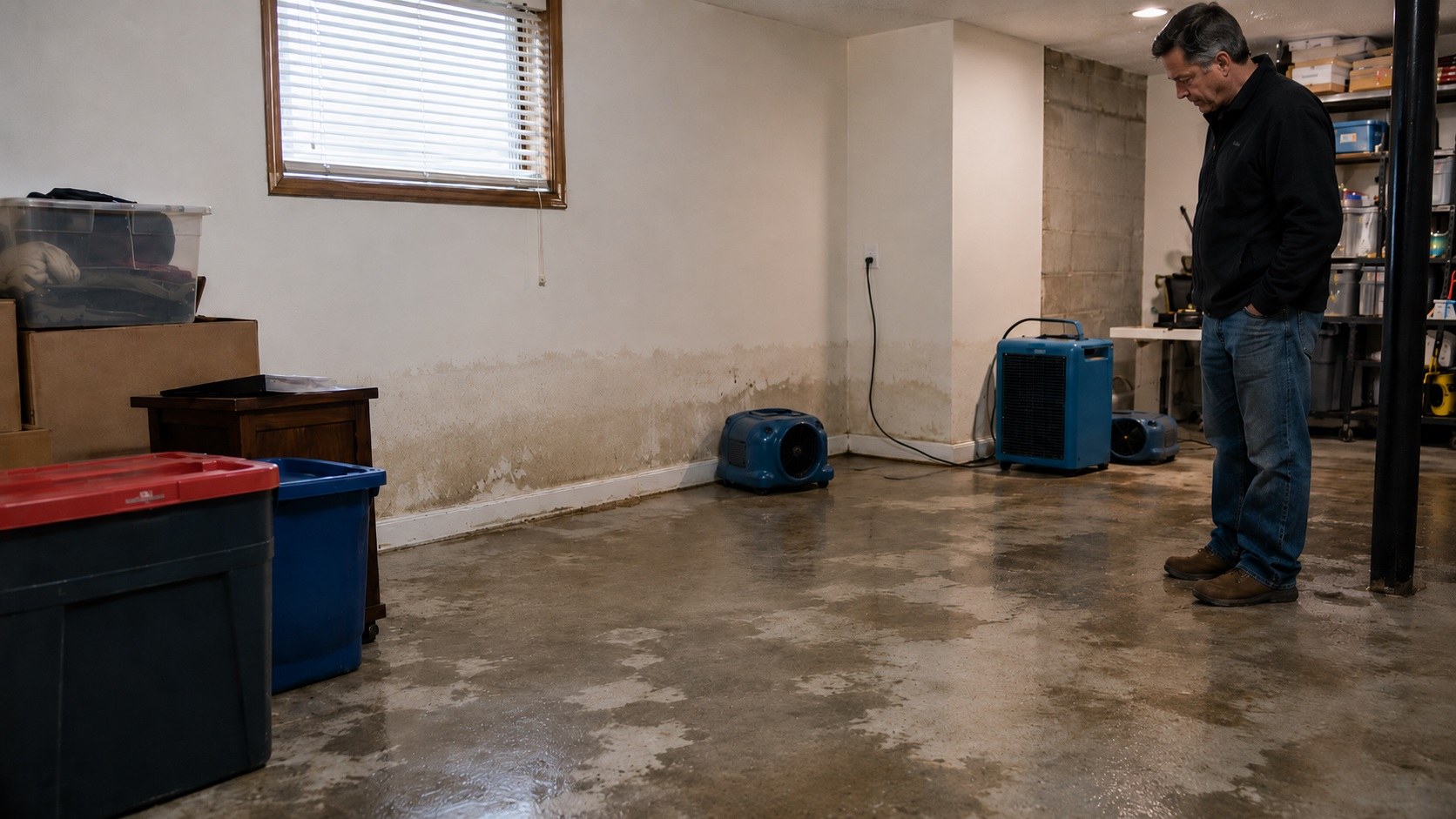
When to Call Water Damage Restoration Services
Call water damage restoration services when water damage is widespread, hidden, contaminated, unsafe, still damp after 24 to 48 hours, or affecting materials that are difficult to dry in place. Not every spill requires a restoration company, but water damage becomes more serious when it reaches drywall, carpet padding, subfloors, insulation, cabinets, ceilings, or electrical areas.
The biggest mistake homeowners make is judging the damage only by what they can see. Standing water may be gone while moisture remains under flooring, behind baseboards, inside wall cavities, beneath cabinets, or above ceilings. That hidden moisture can lead to mold, material damage, odors, and structural problems if it is not dried correctly.
Restoration services are most useful when the situation requires more than towels, fans, and surface cleanup. A professional crew can extract water, locate hidden moisture, dry affected materials, remove unsalvageable materials, and document the damage. If water may have reached framing, subfloors, ceilings, or other structural moisture problems in homes, professional evaluation can help prevent a short-term leak from becoming a long-term repair problem.
When Should You Call Water Damage Restoration Services?
You should call water damage restoration services as soon as you suspect the water damage is beyond a small, clean, surface-level spill. The faster serious water damage is evaluated, the better the chance of drying materials before mold, swelling, odors, and structural deterioration become harder to control.
A simple rule is this: if you cannot clearly see, reach, and dry every affected material, the damage may need professional restoration. Water that disappears from the surface can still remain inside materials. Carpet padding, drywall edges, subfloors, insulation, cabinets, and wall cavities can stay wet after the room looks normal.
Call restoration services quickly when any of these conditions apply:
- Water affected more than a small area.
- Carpet, padding, drywall, insulation, cabinets, or subfloors are wet.
- The leak happened overnight or while you were away.
- The area still feels damp after several hours of drying.
- You smell mustiness after cleanup.
- Water came from a toilet overflow, drain backup, sewage, floodwater, or stormwater.
- Water reached outlets, wiring, appliances, HVAC equipment, or electrical panels.
- Ceilings are sagging, floors feel soft, or walls are swollen.
- You are not sure where the water traveled.
This does not mean every water event is an emergency restoration job. A small clean-water spill on tile or sealed flooring may dry without professional help if it is removed immediately. Once water reaches layered, porous, hidden, or contaminated areas, the decision changes.
The timing matters because mold risk can rise quickly when materials stay damp. For a detailed timeline, see how long water damage takes to cause mold. In practical terms, the longer the affected materials remain wet, the more valuable professional drying becomes.
Signs Water Damage Is Too Serious for DIY Cleanup
DIY cleanup may be reasonable for a small amount of clean water that stays on a hard surface and is dried immediately. But water damage becomes too serious for casual DIY cleanup when moisture reaches materials that cannot be easily dried, inspected, or verified.
The following signs suggest the problem may require water damage restoration services:
- Wet carpet or padding: Carpet may feel dry on top while padding underneath stays saturated.
- Swollen baseboards or trim: Trim often hides moisture at the wall-floor joint.
- Soft or bubbling drywall: Drywall can wick water upward and stay damp behind the painted surface.
- Warped or buckled flooring: Flooring movement can mean moisture reached the subfloor or backing layer.
- Musty odor: A musty smell after cleanup often points to lingering dampness.
- Wet cabinets or toe kicks: Cabinet bases can trap moisture where airflow is limited.
- Ceiling stains or sagging: Water above a ceiling may involve insulation, framing, drywall, or electrical components.
- Repeated dampness in the same area: Recurring moisture often means the source or drying problem was not fully solved.
One of the strongest warning signs is a mismatch between the surface and the situation. For example, if a washing machine overflowed into a hallway, the visible floor may dry while water remains under baseboards. If a dishwasher leaked, the front of the floor may look fine while water remains below the appliance and cabinet edges. If a ceiling leak stopped dripping, wet insulation may still be sitting above the drywall.
Another sign is delayed discovery. If you find water damage hours or days after it happened, you do not know how long the materials have been wet. In that situation, the decision should be based on the worst affected materials, not only the water you can still see.
Large-area damage also changes the equation. A single damp towel area is different from a soaked room, flooded basement, wet carpeted space, or water spreading through multiple rooms. The more area affected, the harder it becomes to dry evenly with household equipment.
If standing water is still present, deal with safety first. Avoid entering water if there may be electrical hazards, sewage contamination, unstable flooring, or structural damage. For removal-specific safety guidance, see how to remove standing water safely before attempting cleanup.
Water damage restoration is not just about removing water from the room. It is about finding where the water went, drying what stayed wet, and preventing hidden moisture from remaining inside the home. For a broader prevention framework, see how to find, fix, and prevent moisture problems throughout your home.
Call Restoration Services When Water May Be Hidden
Hidden moisture is one of the biggest reasons to call water damage restoration services. The visible puddle is only one part of the problem. Water can travel under flooring, behind baseboards, beneath cabinets, inside wall cavities, above ceilings, and into insulation before the surface looks seriously damaged.
This is where DIY cleanup often falls short. A floor may look dry while the wettest material is padding, subflooring, drywall paper, insulation, or a cabinet base you cannot see. That hidden dampness can lead to swelling, odor, staining, mold risk, or structural weakening later.
Call restoration services when water may have reached:
- carpet padding below wet carpet,
- subfloors below vinyl, laminate, hardwood, or tile transitions,
- drywall behind baseboards or trim,
- insulation inside walls or ceilings,
- cabinet bases, toe kicks, and hidden corners,
- floor cavities around plumbing penetrations,
- ceiling cavities below bathrooms, roofs, HVAC systems, or plumbing lines.
Hidden moisture is especially likely when water has enough time to spread. A water heater leak may travel under nearby walls. A dishwasher leak may soak the subfloor before appearing at the front edge. A roof leak may wet insulation before the ceiling stain grows. A flooded basement may leave lower wall materials wet even after the floor has been cleared.
Professional restoration companies use moisture meters, thermal imaging in some cases, drying plans, extraction tools, air movers, and dehumidifiers to find and dry areas that are not obvious from the surface. That matters because restoration is not complete when the room looks better. It is complete when the affected materials are dry enough to stop ongoing damage.
Call Immediately for Contaminated Water
Contaminated water should be treated differently from a clean supply-line leak. If water came from sewage, outdoor flooding, a drain backup, a toilet overflow, or stormwater, call water damage restoration services immediately. In these cases, the concern is not only drying. It is also sanitation, material removal, personal safety, and contamination control.
Contaminated water can carry bacteria, waste, chemicals, soil, pesticides, and other hazards depending on the source. It may soak into porous materials such as carpet, drywall, insulation, wood, and cabinets. Once that happens, drying alone may not make the material safe.
Call professional help right away if the water came from:
- sewage backup,
- toilet overflow involving waste,
- floodwater from outside,
- stormwater entering through doors, windows, crawl spaces, or basements,
- drain backups,
- water that passed through dirty building materials, soil, or crawl spaces.
Do not treat contaminated water like a normal spill. Avoid using fans on sewage, floodwater, drain backups, or unknown water until the situation is evaluated, because airflow can spread odors and may move contaminants. Porous materials may need removal rather than simple drying. Protective equipment and proper disposal may be needed. If you are not sure whether the water is clean, treat the situation as more serious until it is evaluated.
This is one of the clearest situations where professional restoration is not an overreaction. The restoration company can separate salvageable materials from materials that should be removed, reduce exposure risks, and document the scope of the damage.
Call If Materials Stayed Wet Longer Than 24 to 48 Hours
The 24 to 48 hour window is one of the most important thresholds after water damage. If porous materials stayed damp beyond that window, calling a restoration company becomes much more reasonable. The issue is not that mold is guaranteed at a specific hour. The issue is that the longer damp materials stay wet, the more likely they are to support mold, odor, and material damage.
This is especially important when the leak was discovered late. If a pipe leaked while you were gone for the weekend, if a water heater leaked overnight, or if a roof leak soaked insulation during a storm, you may not know how long the materials were wet before cleanup began.
Materials that are especially concerning after 24 to 48 hours include:
- carpet padding,
- drywall,
- insulation,
- wood subfloors,
- baseboards and trim,
- particleboard or MDF cabinets,
- ceiling materials,
- stored boxes, paper, fabrics, and soft goods.
At this stage, a restoration company can help determine whether materials can still be dried in place or whether some materials should be removed. This decision is important because damp hidden materials can keep causing problems after the room appears clean.
Watch for warning signs such as musty odors, stains that spread, soft drywall, swelling trim, buckled flooring, damp carpet edges, or recurring humidity in the damaged area. These signs suggest the water damage may not be fully dry.
Calling restoration services after delayed drying is also useful for documentation. Moisture readings, photos, drying records, and professional notes may help if the damage becomes part of a larger insurance or repair decision. For claim-related preparation, see how to file a water damage insurance claim and how to photograph water damage for insurance claims.
If affected materials are still damp after 24 to 48 hours, do not judge the situation by surface appearance alone. Hidden moisture, mold risk, and material-removal decisions become much more important at that point.
Call When There Are Electrical or Structural Safety Risks
Water damage becomes urgent when it creates electrical or structural safety risks. These situations are not just drying problems. They can involve shock hazards, unstable materials, weakened framing, or ceiling and flooring failures.
Call for qualified help immediately if water reached:
- outlets or switches,
- breaker panels or electrical boxes,
- major appliances,
- HVAC equipment,
- extension cords or power strips,
- ceiling fixtures or recessed lights,
- standing water near electrical equipment.
Do not walk through standing water if there may be electrical contact. Do not reset breakers, unplug wet appliances, open electrical panels, or test outlets yourself if water reached the electrical system. In these cases, the first step is safety, not drying speed.
Structural warning signs are also serious. A sagging ceiling, soft floor, bulging wall, cracked foundation surface, shifted door frame, or bowed framing member can mean water affected materials that support the home. Water damage does not have to destroy a structure immediately to become dangerous. It can weaken drywall, flooring, subfloors, framing, and connections over time.
Call a restoration company, contractor, or structural professional when you notice:
- sagging ceilings after a roof or plumbing leak,
- soft or spongy flooring after flooding,
- flooring that buckles, cups, or separates,
- walls that bulge or feel soft,
- doors or windows that suddenly stick after flooding,
- visible movement, cracking, or deformation in structural areas,
- wet crawl space joists, beams, subfloors, or framing.
If flooding may have affected framing, subfloors, foundation areas, or load-bearing materials, review signs of structural damage after flooding before assuming the issue is only cosmetic. Structural warning signs should not be covered, painted, or dried superficially without understanding what stayed wet.
Electrical risk deserves its own caution. If water damage involved outlets, wiring, appliances, panels, or submerged equipment, see electrical safety after flood damage and avoid the affected area until it has been made safe. Restoration work should not begin in an unsafe electrical environment.
When DIY Drying May Be Enough
Not every water incident requires professional restoration. Some small water events can be handled by a homeowner if the water is clean, the affected area is small, the material is easy to dry, and the cleanup starts immediately.
DIY drying may be enough when all of these are true:
- The water came from a clean source, such as a supply-line drip or small spill.
- The water did not reach carpet padding, drywall, insulation, cabinets, subfloors, or wall cavities.
- The affected surface is hard, nonporous, and easy to inspect.
- The area was dried quickly.
- There is no musty odor after drying.
- No swelling, staining, softness, or recurring dampness appears.
- There are no electrical or structural hazards.
If you choose DIY drying, use more than appearance as your test. Check the area again later the same day and over the next several days for odor, swelling, staining, softness, peeling paint, or moisture returning at edges and seams.
For example, a small amount of clean water on tile that is wiped up immediately may not need a restoration company. A minor leak under a sink that is caught early, cleaned, dried, and monitored may be manageable if the cabinet base and surrounding materials were not soaked. A small appliance drip on a hard floor may be low risk if water did not travel under the appliance, flooring, or trim.
The key is confidence. You should be able to identify the water source, see the affected area, dry the material fully, and monitor it afterward. If any part of the damage is hidden, layered, porous, contaminated, or still damp after drying attempts, the situation no longer fits simple DIY cleanup.
What Water Damage Restoration Companies Do That DIY Cleanup Usually Misses
A water damage restoration company does more than remove visible water. The main value is finding and drying moisture that ordinary household cleanup often misses. That is especially important when water has entered layered materials or hidden spaces.
Professional restoration may include:
- Moisture inspection: Checking walls, floors, ceilings, cabinets, and other materials to locate damp areas.
- Water extraction: Removing water from flooring, carpet, and affected areas more thoroughly than towels or basic vacuums can.
- Moisture mapping: Tracking where water traveled so drying equipment is placed correctly.
- Air movement: Using professional air movers to increase evaporation from affected materials.
- Dehumidification: Removing moisture from the air so affected materials can dry more effectively under a controlled drying plan.
- Material removal decisions: Identifying which materials can be dried and which may need removal.
- Contamination control: Handling sewage, floodwater, drain backups, and other unsafe water sources appropriately.
- Documentation: Recording moisture readings, photos, affected areas, and drying progress for repair or insurance purposes.
This matters because water damage can look smaller than it is. A wet carpet may involve padding and subflooring. A wall stain may involve insulation. A cabinet leak may involve the toe kick, wall base, and flooring below. A professional drying plan helps avoid stopping too early just because the surface has improved.
Restoration companies can also help decide whether the work is mainly drying, cleanup, material removal, or repair preparation. They may not be the same company that performs all final repairs, but their role is to stabilize the moisture problem and reduce the chance of mold or continuing damage. For a broader drying sequence after larger flood events, see how to dry a house after flood damage.
Cost is one reason homeowners hesitate to call. That is understandable, especially after a sudden leak or flood. But cost should be weighed against the risk of hidden moisture, mold growth, flooring damage, wall damage, and structural deterioration. If you are trying to plan financially, see how much water damage restoration costs for a separate cost-focused breakdown.
Questions to Ask Before Hiring a Water Damage Restoration Company
When water damage is serious enough to call a restoration company, the next decision is choosing the right one. The goal is not just to hire the fastest company available. You want a company that can identify the affected materials, explain the drying plan, document the damage, and tell you which materials can be saved.
Ask these questions before hiring:
- Are you trained or certified in water damage restoration? Look for a company that follows recognized drying and restoration practices, not just general handyman cleanup.
- Will you check moisture levels before and after drying? Moisture readings help show whether materials are actually drying, not just looking better.
- What areas do you believe are affected? The company should be able to explain whether water may have reached walls, subfloors, carpet padding, cabinets, ceilings, or insulation.
- What materials can be dried in place? Not everything needs removal, but not everything can safely stay either.
- What materials may need to be removed? Wet padding, contaminated porous materials, damaged insulation, and swollen particleboard may not be salvageable.
- How will you handle contaminated water? Sewage, floodwater, and drain backups require more caution than clean-water leaks.
- Will you provide photos and drying documentation? Documentation can help with repair planning and insurance discussions.
- Do you work with my insurance company, or do I handle the claim separately? Some companies coordinate documentation, but you should still understand what is being billed and approved.
Be cautious with any company that wants to remove large amounts of material without explaining why, refuses to provide moisture readings, pressures you before inspecting the full area, or treats contaminated water like a simple spill. A good restoration company should be able to explain the scope in plain language.
Also ask whether they will give you a written drying plan or at least a clear explanation of which rooms, materials, and cavities they believe are affected.
Before anything is removed, photograph the damage when it is safe to do so. Keep records of the date, the water source, affected rooms, visible damage, and any cleanup steps already taken. If insurance may be involved, this documentation can be helpful before restoration work changes the scene.
FAQ
Is water damage restoration always necessary?
No. Water damage restoration is not always necessary. A small amount of clean water on a hard, nonporous surface may be manageable if it is removed immediately and no hidden materials are affected. Restoration becomes more important when water reaches porous materials, hidden spaces, contaminated areas, electrical systems, or structural components.
How fast should I call after water damage?
Call as soon as you realize the water damage may be widespread, hidden, contaminated, unsafe, or difficult to dry. If the affected area is still damp after 24 to 48 hours, professional evaluation becomes much more reasonable.
Should I call restoration services if the area looks dry?
Maybe. If only a hard surface got wet and it dried quickly, you may not need restoration services. But if water could have moved under flooring, behind trim, into drywall, beneath cabinets, or above a ceiling, the surface appearance may not tell the whole story. Hidden moisture is one of the main reasons to call.
Do I need restoration for a small plumbing leak?
Not always. A small plumbing leak may be manageable if it was caught early, came from clean water, and did not soak surrounding materials. But even a small leak can need restoration if it affected drywall, cabinets, subfloors, flooring layers, insulation, or repeated over time. The size of the puddle is not the only factor.
Should I call a restoration company before insurance?
If there is active water, safety risk, or serious moisture exposure, you may need to call restoration services quickly to prevent further damage. You can also contact your insurance company as soon as possible to understand reporting requirements. For larger events, photos, moisture readings, invoices, and drying records may help support the claim.
Can fans replace professional drying equipment?
Fans can help with small surface-level moisture, but they do not replace professional drying when water has entered hidden or porous materials. Fans move air; they do not verify that subfloors, padding, wall cavities, cabinets, or insulation are dry. Professional drying often combines extraction, air movement, dehumidification, and moisture monitoring.
What water damage should never be handled as DIY cleanup?
Do not treat water damage as simple DIY cleanup if the water came from sewage, floodwater, stormwater, drain backups, or contaminated sources. Also avoid DIY cleanup when water reached electrical systems, sagging ceilings, soft floors, structural framing, wall cavities, wet insulation, or large carpeted areas. These situations carry safety, contamination, mold, or structural risks.
Quick Decision Checklist
- Call water damage restoration services when damage is widespread, hidden, contaminated, unsafe, or still damp after 24 to 48 hours.
- Visible water removal does not mean walls, floors, cabinets, insulation, or subfloors are dry.
- Contaminated water from sewage, flooding, drain backups, or stormwater should be handled professionally.
- Electrical hazards and structural warning signs should override any DIY drying plan.
- Small clean-water spills may be manageable if they are dried immediately and did not reach hidden materials.
- A restoration company can provide moisture mapping, extraction, dehumidification, drying documentation, and material-removal decisions.