
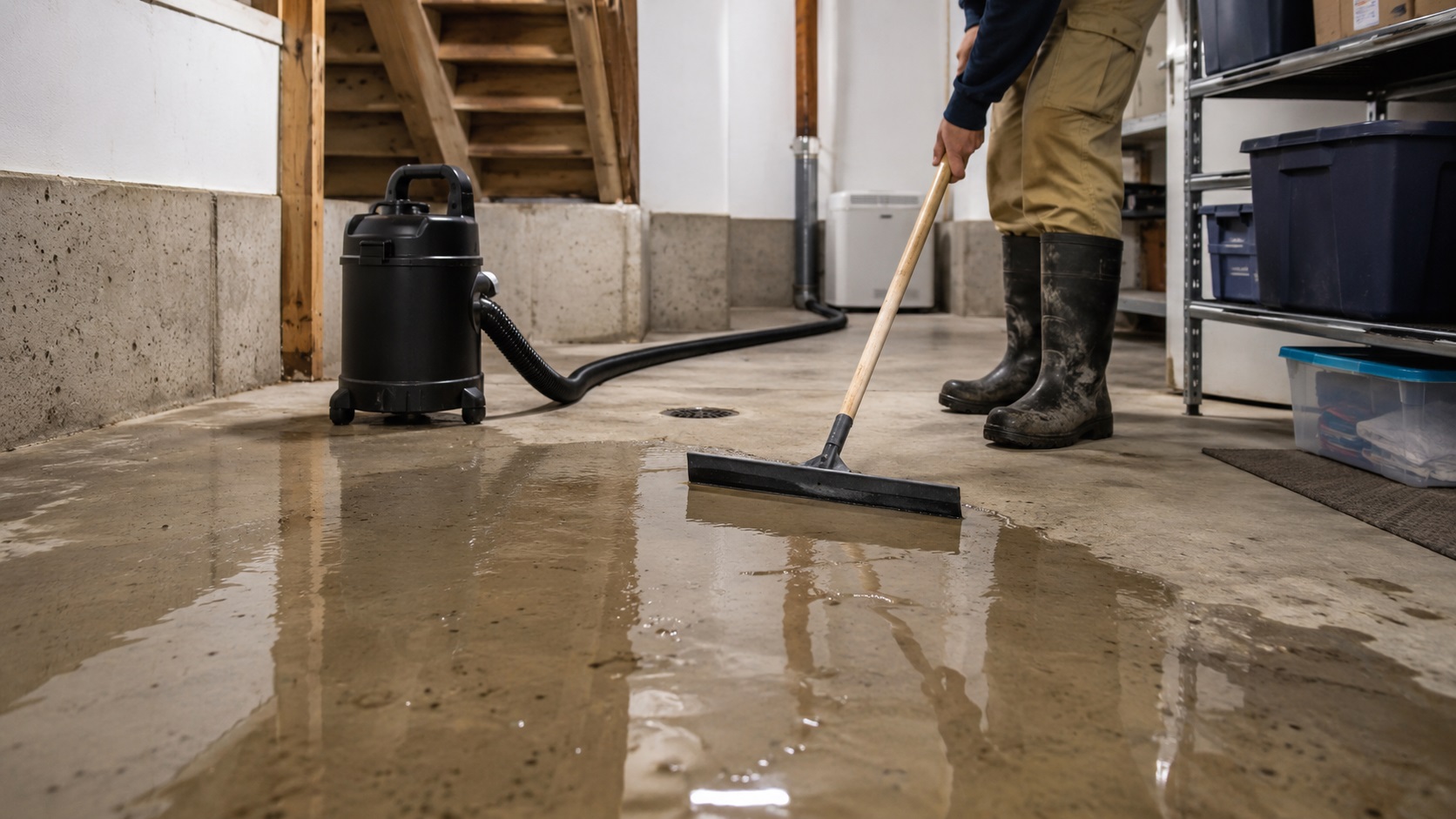
How to Remove Standing Water Safely
Standing water should be removed quickly, but only after the area is safe to enter. Water on a floor can look like a simple cleanup problem, but it may involve electrical hazards, contaminated water, unstable flooring, hidden debris, or structural damage. Before using a pump, wet/dry vacuum, mop, or towels, make sure the water can be approached safely.
The safest way to remove standing water depends on the source, depth, location, and materials affected. A small clean-water spill on tile may be manageable with towels and a wet/dry vacuum. Several inches of water in a basement, floodwater from outside, sewage backup, or water near outlets and appliances is a different situation. In those cases, standing water removal may require professional help.
The goal is not only to remove visible water. Standing water can soak into drywall, carpet padding, cabinets, subfloors, trim, insulation, and wall cavities. After removal, those materials still need drying and monitoring so moisture does not continue beneath the surface. Safe removal is the first step in a larger process to prevent recurring moisture damage.
Before Removing Standing Water, Make Sure the Area Is Safe
Do not enter standing water until you have considered electrical safety, contamination, structural stability, and the water source. Even shallow water can be dangerous if it is touching outlets, cords, appliances, breaker panels, HVAC equipment, or unknown electrical sources.
Stay out of the area and call qualified help if you see:
- standing water near outlets, switches, cords, appliances, or breaker panels;
- water around a washer, dryer, refrigerator, water heater, furnace, sump pump, HVAC unit, or any plugged-in appliance;
- sparks, buzzing, flickering lights, burning smells, or tripped breakers;
- sewage, drain backup, toilet overflow, stormwater, or outdoor floodwater;
- sharp debris, broken glass, chemicals, fuel, mud, or unknown contamination in the water;
- soft floors, sagging ceilings, bowed walls, or foundation cracks;
- standing water in a crawl space or basement with poor visibility;
- any uncertainty about whether the area is safe to enter.
Electrical safety comes first. Do not walk into water to unplug something, flip a breaker, move an appliance, or plug in a pump. If water may be touching electrical equipment or the breaker panel is in a wet area, leave the area alone until the power situation is handled safely. For a deeper safety guide, see electrical safety after flood damage.
If the only shutoff point is inside the wet area, do not enter the water to reach it. Call the utility company, emergency services, or a licensed electrician for help shutting power off safely.
Structural safety also matters. If the floor feels soft, the ceiling is sagging, the walls are bowing, or the foundation shows new movement, do not treat the water as a simple cleanup job. Standing water may be only one part of a larger safety problem. If flooding may have affected the building structure, review signs of structural damage after flooding before entering or working in the area.
Personal protection is also important. Wear waterproof boots, gloves, eye protection, and protective clothing when the water source is uncertain. Avoid direct contact with water that may contain sewage, chemicals, fuel, pesticides, sharp debris, or flood contaminants. If the water looks dirty, smells foul, came from outside, or came from a drain or toilet overflow, do not handle it like a normal household spill.
Identify the Source and Type of Water
Before choosing a removal method, identify where the standing water came from. The source determines whether the cleanup may be manageable or whether professional extraction and contamination control are needed.
For practical homeowner decisions, standing water usually falls into three broad groups:
- Clean water: Water from a clean supply line, small sink overflow, appliance supply hose, or rainwater that has not contacted contaminants. This is the most likely type to be manageable if the area is small and handled immediately.
- Gray water: Water from appliances, tubs, showers, washing machines, dishwashers, or other sources that may contain soap, food particles, dirt, or mild contamination. This needs more caution, especially if it has soaked porous materials.
- Contaminated water: Sewage, toilet overflow with waste, drain backup, floodwater, stormwater, water from outside, or water with chemicals, mud, fuel, pesticides, or unknown contaminants. This should usually be handled by professionals.
Clean water can become more hazardous if it sits too long or travels through dirty materials. For example, a clean supply-line leak may start as low-risk water, but if it runs under cabinets, through insulation, across a dirty crawl space, or into carpet padding, the situation becomes more complicated.
Floodwater should be treated as contaminated unless a qualified professional determines otherwise. It can contain sewage, soil, chemicals, bacteria, sharp objects, insects, fuel residue, and debris. Clear-looking floodwater is not automatically safe.
Also consider how long the water has been standing. A leak discovered within minutes is different from water that sat overnight or for several days. The longer water remains in place, the more likely it is to soak into porous materials and increase mold risk. For the timing side of the problem, see how long water damage takes to cause mold.
If you cannot identify the water source, treat the situation cautiously. Unknown water in a basement, crawl space, garage, or lower-level room may involve sewage, stormwater, groundwater, or electrical hazards. In those cases, it is safer to pause and call a restoration professional than to guess.
Choose the Right Standing Water Removal Method
The right removal method depends on how much water is present, where it is located, and whether the water is clean or contaminated. Do not choose a tool only because it is available. Choose the method that matches the depth, safety conditions, and water source.
As a simple rule, use absorbent cleanup for small shallow water, a wet/dry vacuum for limited clean water on safe hard surfaces, a pump for deeper clean water, and professional extraction for contaminated water, soaked porous materials, or water you cannot safely reach.
Common standing water removal methods include:
- Towels and mops: Best for very small clean-water spills on hard surfaces.
- Squeegees: Helpful for pushing shallow water toward a floor drain, garage opening, or safe collection point.
- Wet/dry vacuums: Useful for shallow clean water when the electrical source is safe and the vacuum is rated for water pickup.
- Utility pumps: Useful for deeper water in basements, garages, or low areas when discharge can be handled safely.
- Submersible pumps: Useful for larger volumes of water, but only when electrical safety and discharge location are controlled.
- Professional extraction: Best for large areas, soaked carpet, contaminated water, hidden water, or water that affects multiple rooms.
A wet/dry vacuum can be helpful, but it must be used safely. Do not plug it into an outlet that may have been flooded. Do not stand in unsafe water while plugging it in, unplugging it, or operating it. Do not use a household vacuum for water. Only use equipment designed for wet pickup and only when the power source is safe.
Pumps are useful for deeper water, but they also require caution. The pump, cord, outlet, and discharge route all matter. Water should be discharged to a safe location where it will not flow back toward the foundation, overwhelm a drain, create erosion, or enter a neighbor’s property. If you are not sure where the water can go, or if the water may be contaminated, professional help is safer.
For soaked carpet, padding, or large interior areas, surface removal may not be enough. Water extraction needs to reach the materials that absorbed moisture. If carpet padding, drywall, cabinets, subfloors, or insulation are wet, the standing water is only the visible part of the problem.
How to Remove Small Amounts of Standing Water
Small amounts of standing water may be manageable if the water is clean, the area is electrically safe, and the affected surface is easy to dry. This might include a small supply-line leak, a minor sink overflow, a water heater drip caught early, or a small amount of water on tile, sealed concrete, or other hard surfaces.
Use this basic sequence for small clean-water events:
- Stop the water source. Shut off the supply valve, stop the appliance, or block the source if it is safe to do so.
- Remove loose items. Move rugs, boxes, fabrics, and stored items away from the wet area.
- Soak up shallow water. Use towels, mops, or a wet/dry vacuum if the electrical source is safe.
- Dry floor edges carefully. Pay attention to baseboards, cabinet bases, thresholds, and flooring seams.
- Check where water may have traveled. Look under appliances, along wall edges, below cabinets, behind toe kicks, around thresholds, and near floor penetrations.
- Start drying immediately. Use airflow and dehumidification after the area is electrically safe.
Small water events become more serious when water reaches porous materials. If water soaked carpet padding, drywall, trim, cabinet bases, insulation, or subflooring, the cleanup may need more than towels and a fan. Those materials can hold moisture after the floor surface looks dry.
After removing the water, check the area again over the next several hours and days. Look for swelling, musty odor, damp edges, soft flooring, peeling paint, or recurring moisture. If the area keeps feeling damp or smells musty, hidden water may still be present.
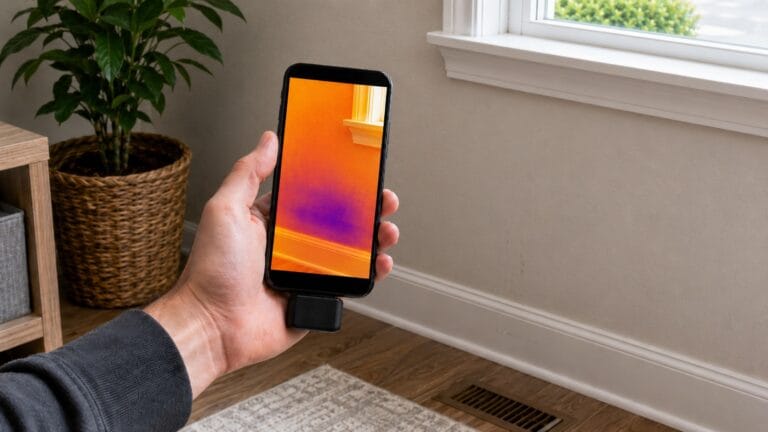
A moisture meter can help check baseboards, lower drywall, cabinet bases, and wood flooring after surface water is gone, but readings should be used as a warning sign—not as proof that every hidden layer is dry.
How to Remove Larger Amounts of Standing Water
Larger amounts of standing water require more caution. Several inches of water, water across multiple rooms, basement flooding, soaked carpet, or water that reached wall systems should not be treated like a normal household spill.
Before removing larger amounts of water, confirm three things:
- The area is electrically safe. Do not enter if power may still be active or electrical equipment is wet.
- The water is not contaminated beyond safe DIY handling. Sewage, drain backups, floodwater, and stormwater usually need professional cleanup.
- The structure appears stable. Stay out if floors are soft, ceilings are sagging, walls are bowing, or supports appear shifted.
If the area is safe and the water is clean, a utility pump or submersible pump may be used for deeper water. Keep cords and connections out of water, use only a safe power source, and discharge the water away from the home. Do not send water into a drain that is backing up, overwhelmed, or connected to the same problem that caused the flooding.
For larger indoor water events, remove water in stages and keep checking the surrounding materials. Water may be hiding under flooring, inside wall cavities, below cabinets, or beneath appliances. Removing the visible water does not mean the affected materials are dry.
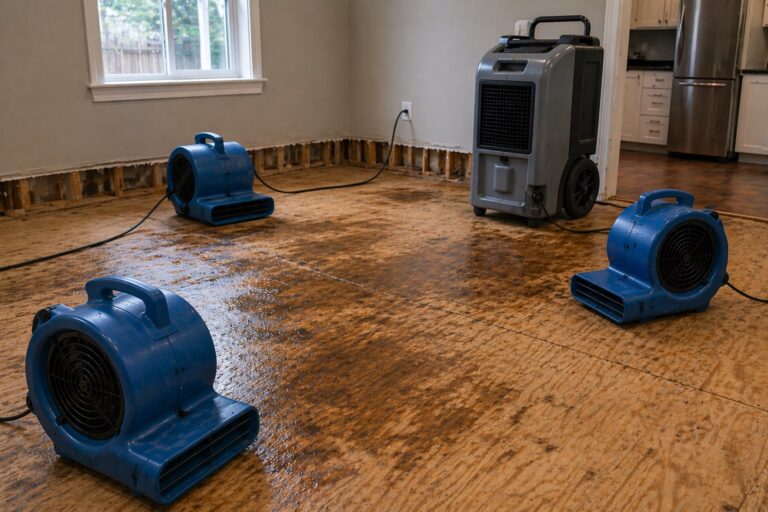
Call professional help if the water affected a large area, entered multiple rooms, soaked carpet padding, reached drywall or insulation, or came from an unsafe source. A restoration company can use extraction equipment, moisture meters, air movers, and dehumidifiers to remove water and dry materials more thoroughly. For escalation guidance, see when to call water damage restoration services.
Large water events should also be documented before major cleanup begins, as long as it is safe. Take photos of water depth, affected rooms, damaged materials, the water source, and visible damage. If the event may involve insurance, early documentation can help support the timeline and scope of damage.
Special Caution for Flooded Basements
Flooded basements need special caution because the water inside the basement may be interacting with saturated soil outside the foundation. In some situations, pumping out a deeply flooded basement too quickly can increase pressure differences against basement walls. That can make existing cracks, bowing, or weak foundation areas more dangerous.
This does not mean basement water should be ignored. It means the removal method should match the conditions. A small amount of clean water on a basement floor may be removed with a wet/dry vacuum, pump, or mop if the area is electrically safe. A deeply flooded basement after heavy rain, stormwater intrusion, or regional flooding may need gradual pumping and professional evaluation.
Use extra caution with basement standing water when:
- the water is several inches deep or deeper;
- water is still entering the basement;
- the surrounding soil is saturated after heavy rain or flooding;
- basement walls show cracks, bowing, bulging, or movement;
- the electrical panel, outlets, appliances, sump pump, or furnace are in the flooded area;
- the water is muddy, contaminated, or from outside flooding;
- you cannot see the floor clearly;
- the basement has structural supports, posts, or walls that may have shifted.
If basement walls are cracked, bowed, or leaking heavily, do not focus only on removing the water. The structure itself may need evaluation. Standing water can be a symptom of a drainage failure, foundation pressure problem, sump pump failure, or exterior water intrusion issue. If you notice movement, sagging, or cracking after a basement flood, pause cleanup and review the broader structural risks before entering further.
Basement water removal should also account for where the water will go. Pumping water directly next to the foundation can send it back toward the basement. Discharging into an overwhelmed drain can cause backup. When possible, water should be directed to a safe drainage area away from the home and away from neighboring properties.
Once basement standing water is removed, the floor and lower wall areas still need drying. Concrete may look dry before moisture has fully evaporated from edges, cracks, wall-floor joints, and porous materials nearby. For basement-specific drying guidance, see how to dry basement floors after water intrusion.
What to Do After Standing Water Is Removed
Removing standing water is only the first step. The next goal is to dry the affected materials, lower humidity, and confirm that water has not remained under flooring, behind trim, inside cabinets, or at the base of walls.
After standing water is removed, take these steps:
- Ventilate and dehumidify. Use airflow and dehumidification when the area is electrically safe.
- Remove wet porous items. Move wet boxes, fabrics, paper, rugs, and soft materials out of the affected area.
- Check wall bases and trim. Water often remains behind baseboards and at the lower edge of drywall.
- Inspect flooring layers. Carpet padding, underlayment, laminate, vinyl plank, and subfloors may still be wet.
- Open cabinets and enclosed spaces. Cabinet bases, toe kicks, and corners can trap moisture.
- Document damage. Take photos before removing damaged materials when insurance may be involved.
- Monitor for odor and dampness. A musty smell or recurring wet area means the drying is not complete.
Drying should focus on the materials that absorbed water, not just the air in the room. Fans may help move air, but dehumidification is often needed to remove moisture from the space. If humidity stays high, wet materials dry more slowly and mold risk increases.
Be especially careful with carpet padding, drywall, insulation, cabinets, and subfloors. These materials can hold moisture after surface water is gone. If they stayed wet for more than a short period, they may need inspection, removal, or professional drying.
This is where standing water removal connects to long-term moisture control. If the source is not fixed or hidden moisture remains, the same area may become damp again. A complete response should include removal, drying, monitoring, and source correction as part of a broader plan to find, fix, and prevent moisture problems throughout the home.
If the water damage may become part of an insurance claim, document the area before major changes are made, as long as it is safe. Photograph the water level, affected rooms, damaged flooring, wet walls, soaked belongings, and the suspected source. For the full claim process, see how to file a water damage insurance claim.
When Standing Water Removal Needs Professional Help
Call water damage restoration services when standing water is too widespread, contaminated, hidden, or risky to remove safely with household tools. Professional help is especially important when porous building materials are wet or when you cannot confirm that hidden areas are dry after removal.
Call a restoration company when:
- standing water covers a large area or multiple rooms;
- water is several inches deep;
- water came from sewage, floodwater, stormwater, or a drain backup;
- carpet padding, drywall, insulation, cabinets, or subfloors are wet;
- water may be hidden under flooring or behind walls;
- the area smells musty after removal;
- materials stayed wet longer than 24 to 48 hours;
- electrical hazards, structural concerns, or unsafe access are present;
- you need moisture readings, drying documentation, or insurance support.
A restoration company can remove water more thoroughly, dry hidden materials, use moisture meters, set up dehumidification, and determine which materials can be saved. This can reduce the risk of stopping cleanup too early while moisture remains under surfaces.
Sewage, floodwater, and stormwater should not be treated like a clean leak. These situations may require protective equipment, contaminated-material removal, and sanitation steps beyond normal household cleanup.
Even when you remove the standing water yourself, consider professional help if the area remains damp, smells musty, or shows swelling, staining, softness, or recurring moisture. The standing water may be gone, but the water damage may not be finished.
FAQ
Can I remove standing water myself?
You may be able to remove standing water yourself if the water is clean, shallow, limited to a small area, and not near electrical equipment. The surface should be stable, the source should be stopped, and you should be able to dry the affected materials quickly. If the water is contaminated, widespread, hidden, near electricity, or affecting porous materials, call professional help.
What is the safest way to remove standing water from a basement?
For small clean-water basement spills, the safest method may be a mop, wet/dry vacuum, or pump only after electrical safety is confirmed. Deep basement flooding, stormwater, contaminated water, or water against cracked or bowed walls may require gradual pumping and professional evaluation.
Can I use a wet/dry vacuum for standing water?
Yes, but only if the vacuum is rated for water pickup and the electrical source is safe. Do not plug a wet/dry vacuum into an outlet that may have been flooded. Do not use it while standing in unsafe water, near electrical hazards, or in contaminated floodwater. A household vacuum should never be used for water removal.
Should I pump out a flooded basement all at once?
Not always. If the basement has deep floodwater and the soil outside the foundation is saturated, rapid pumping can increase pressure differences against basement walls. Small amounts of water may be removed normally, but deeply flooded basements after heavy rain or regional flooding may need gradual pumping and professional guidance.
What should I do if standing water is near outlets?
Stay out of the water and do not touch outlets, switches, cords, appliances, or breaker panels. If you cannot shut off power safely from a dry location, call the utility company, emergency services, or a licensed electrician. Water removal should not begin until electrical hazards are controlled.
Is floodwater safe to clean up myself?
Floodwater should be treated as contaminated unless a qualified professional determines otherwise. It may contain sewage, chemicals, bacteria, fuel, pesticides, sharp debris, mud, and other hazards. If floodwater entered the home, professional cleanup and restoration are usually safer than basic DIY water removal.
What should I do after standing water is gone?
After standing water is removed, dry the affected materials, lower humidity, remove wet porous items, check under flooring and behind trim, document damage, and monitor for musty odors or recurring dampness. Visible water removal does not mean drywall, subfloors, carpet padding, cabinets, or insulation are fully dry.
Key Takeaways
- Remove standing water only after the area is electrically safe, structurally stable, and not dangerously contaminated.
- Do not enter water near outlets, cords, appliances, breaker panels, HVAC equipment, or unknown electrical sources.
- Small clean-water spills may be manageable with towels, mops, squeegees, or a wet/dry vacuum.
- Larger water events may require pumps, extraction equipment, or professional restoration.
- Floodwater, sewage, stormwater, and drain backups should usually be handled as contaminated water.
- Flooded basements may need special caution because rapid pumping can create pressure problems in some conditions.
- Removing visible water is only the first step; drying and moisture monitoring must follow.
2 Comments
Comments are closed.