When to Replace Rubber Gaskets in Plumbing Systems Before They Leak
Rubber gaskets, washers, O-rings, and seals should be replaced when they are cracked, flattened, brittle, swollen, distorted, leaking intermittently, or no longer seal with normal tightening. You do not need to replace every rubber seal on a fixed schedule, but once the rubber loses flexibility or shape, it is no longer a dependable leak barrier.
These small parts seal faucets, sink drains, toilet connections, appliance hoses, water lines, and other fittings where water could otherwise escape. Replacing worn gaskets early helps prevent small drips from wetting cabinet bases, flooring, drywall, subflooring, trim, or framing in homes where plumbing leaks can cause structural damage.
Where Rubber Gaskets Prevent Plumbing Leaks
A rubber gasket works by compressing between two surfaces and filling small gaps that would otherwise let water escape. It can seal reliably for years if it stays flexible, properly shaped, and evenly compressed. Once the rubber becomes too hard, too flat, cracked, swollen, or distorted, water may seep past the connection, sometimes only while the fixture is running or the appliance is under pressure.
Rubber gaskets are commonly found in many plumbing and appliance connections, including:
- Sink drain assemblies
- P-trap and slip-joint connections
- Faucet parts and O-rings
- Toilet tank bolts and fill valve connections
- Washing machine hose washers
- Dishwasher and refrigerator water-line connections
- Water heater supply connections
- Shutoff valve and supply-line fittings
- Outdoor hose bib washers
Because these parts are often hidden under sinks, behind appliances, inside cabinets, or near walls, gasket leaks may not be noticed right away. That is why gasket inspection belongs in a larger whole-home moisture prevention routine. Small rubber seals are inexpensive, but the hidden water damage they prevent may not be.
How Rubber Gaskets Fail Over Time
Rubber gaskets usually fail gradually. They do not have to split apart to become unreliable. Flattening, hardening, swelling, or surface cracking can be enough to let water seep past the seal.
Compression Set
Compression set happens when a gasket stays squeezed in one position for a long time and no longer springs back. Instead of remaining slightly flexible, the rubber becomes permanently flattened. Once that happens, the gasket may not press evenly against the sealing surfaces anymore.
This is common in old washers, supply connections, toilet tank seals, and slip-joint washers that have been compressed for years. Tightening the connection may temporarily slow the leak, but it often does not restore the gasket’s shape. A flattened gasket should usually be replaced rather than repeatedly tightened.
Hardening and Brittleness
Rubber can harden as it ages. Heat, water chemistry, minerals, cleaning chemicals, and repeated wet-dry cycles can all speed up this process. A hardened gasket may feel stiff instead of flexible. It may also crack when moved, removed, or compressed again.
Hard rubber cannot seal as well as flexible rubber. It may allow small leaks around fittings, especially when water pressure changes or the fixture is used repeatedly.
Cracking
Cracks are one of the clearest signs that a gasket should be replaced. Even small surface cracks can allow water to find a path through or around the seal. Cracked rubber is also more likely to break apart when the fitting is loosened or tightened.
If a gasket has visible cracks, do not rely on tightening to fix it. The rubber has already started to deteriorate, and the seal is no longer dependable.
Swelling or Softening
Some rubber gaskets swell, soften, or become distorted after long exposure to water, chemicals, heat, or incompatible cleaners. A swollen gasket may no longer fit the connection correctly. A softened gasket may squeeze out of place when the fitting is tightened.
This type of failure is especially important under sinks and around appliance connections where cleaners, detergents, food residue, or chemical exposure may affect rubber parts over time.
Mineral Buildup Around the Seal
Mineral crust around a gasket or fitting can be a sign that water has been seeping slowly and evaporating. This may appear as white, green, blue-green, or brownish buildup, depending on the water and nearby materials. Even if the connection is dry when you inspect it, mineral deposits can indicate repeated moisture at the seal.
Mineral buildup should not be ignored. It often means the gasket, fitting, or connection has already been leaking intermittently.
Signs a Rubber Gasket Should Be Replaced
A rubber gasket should be replaced when it no longer looks or behaves like a flexible sealing part. The most obvious warning sign is a visible leak, but many gasket failures show smaller clues before water starts dripping steadily.
Replace a rubber gasket if you notice:
- Visible cracks in the rubber
- A flattened shape that does not spring back
- Hard, brittle, or dry texture
- Swelling, bulging, or distortion
- Black residue, smearing, or rubber breakdown
- Mineral crust around the connection
- Water stains under or around the fitting
- Dampness that appears only after water runs
- A drip that returns after tightening
- A musty smell under a sink or behind an appliance
Intermittent dampness is especially easy to overlook. A gasket may leak only when a sink drains, a faucet runs, a dishwasher cycles, a toilet refills, or a washing machine is under pressure. By the time you inspect the area, the surface may look dry again. If stains, mineral deposits, or cabinet odors remain, treat them as early warning signs.
For a quick check, dry the area with a paper towel, run the fixture or appliance through the condition that normally uses water, then press a fresh paper towel around the fitting. Even a small wet spot can reveal a gasket leak that is not visible during a quick glance.
A worn gasket should not be judged only by whether it is actively dripping at the moment. If the rubber is visibly deteriorated, compressed, or distorted, it is no longer a reliable seal. Replacing it before a steady leak develops is usually the safer choice.
Common Places Rubber Gaskets Fail in Home Plumbing
Rubber gaskets can fail anywhere they are used to seal plumbing connections. Some locations are more important than others because leaks stay hidden or reach materials that absorb water. Under-sink cabinets, toilet tanks, appliance connections, and water heater areas deserve regular attention because small leaks there can go unnoticed.
Under Sinks and Drain Assemblies
Under-sink drain connections often use rubber or plastic slip-joint washers to seal the trap, tailpiece, and drain piping. These washers can flatten, deform, or shift out of position over time. A leak may only appear when the sink is draining, which means the area may look dry during a quick inspection.
Common signs of worn under-sink gaskets include stains on the cabinet floor, swelling in the cabinet base, mineral buildup around slip nuts, or dampness after the sink is used. If the issue is under a kitchen sink, compare the symptoms with the signs of leaks under kitchen sinks so you can tell whether the problem is limited to a gasket or part of a larger leak pattern.
Bathroom sink connections can also leak from worn washers, drain gaskets, supply-line seals, or faucet connections. If the cabinet smells musty or dampness appears only after use, review how to detect leaks under bathroom sinks for a broader inspection approach.
If the drain assembly itself is corroded, loose, misaligned, or repeatedly leaking after new washers are installed, review when sink drain assemblies should be replaced instead of treating the problem as a gasket-only issue.
Faucets and Supply Connections
Faucets use several small sealing parts, including O-rings, washers, cartridge seals, and supply connection washers. These parts can wear from repeated use, water pressure changes, mineral buildup, and age. A worn seal may cause dripping near the handle, around the faucet base, under the sink, or at the supply-line connection.
Some faucet leaks are caused by a simple washer or O-ring. Others indicate broader wear in the faucet cartridge, valve body, supply connection, or internal components. If more than one symptom is present, compare the issue with the signs faucet components are wearing out before assuming a single gasket will solve the problem.
Do not keep tightening a faucet connection if the rubber seal is already worn. Overtightening can crush the washer, distort the gasket, damage threads, or crack plastic parts. If the connection only seals when it is tightened excessively, the gasket or fitting may need replacement.
Toilets and Tank Connections
Toilets use rubber seals and washers in several places, including tank bolts, fill valve connections, supply-line fittings, flappers, and tank-to-bowl seals. Some of these leaks show up on the floor. Others happen inside the tank and may only show as running water, refill cycling, or moisture around tank hardware.
Tank bolt washers can harden, crack, or compress until water seeps around the bolts. Fill valve connection washers can also wear, especially if the valve has been removed, loosened, or tightened multiple times. If the toilet refill behavior is changing or the fill valve area looks worn, review when toilet fill valves should be replaced so the gasket issue is not confused with a failing valve assembly.
A small toilet gasket leak should not be ignored because water can reach flooring, subflooring, trim, and the ceiling below if the bathroom is on an upper floor. Replace visibly worn rubber parts before repeated seepage leads to hidden damage.
Washing Machines and Appliance Hoses
Washing machine hoses depend on rubber washers at the hose connections. These washers are small, but they help seal pressurized water at the back of the machine and at the shutoff valves. When the washers flatten, crack, harden, or shift out of position, small leaks can begin at the hose coupling.
Washer hose gasket problems may show up as dampness behind the machine, mineral buildup at the connection, a drip near the valve, or water appearing only when the washer fills. Because the washer may hide the connections, these leaks can continue for a long time before they are noticed.
Rubber washers at hose connections should be replaced when the hose is removed, when the washer looks flattened or cracked, or when the connection leaks after being tightened normally. If the hose itself is old, bulging, kinked, rusted, stiff, or showing other wear, the issue may go beyond the washer. In that case, review signs appliance water hoses are failing or when washing machine hoses should be replaced rather than relying on a new washer alone.
Dishwashers and Refrigerator Water Lines
Dishwashers and refrigerators with water lines can also develop small gasket-related leaks. These leaks may occur at supply-line fittings, filter connections, valves, adapters, or hose connections. Because these appliances often sit inside cabinets or against walls, small leaks may stay hidden until flooring, cabinet bases, or nearby trim begins to show damage.
Replace rubber seals or washers around dishwasher and refrigerator water connections if they show cracking, flattening, swelling, or seepage. Also replace them when a connection has been loosened and reassembled, especially if the old seal no longer looks flexible.
These appliance leaks are easy to underestimate because water may run behind the unit, under flooring, or into cabinet edges before it appears in front. If a gasket has already leaked once, do not assume tightening alone will make it reliable long term.
Water Heater Connections
Water heater areas may include rubber washers or seals in supply connections, flexible connectors, or related fittings. Heat, pressure, mineral buildup, and age can make these seals less reliable. A small seep near a supply connection or fitting may be an early warning sign, especially if the tank itself is dry.
Replace rubber seals or washers near water heater connections when they are brittle, flattened, cracked, or associated with mineral buildup or staining. If the supply line itself is older, corroded, kinked, or showing signs of wear, the problem may not be limited to a small rubber part. Review when water heater supply lines should be replaced if the connector looks questionable.
Water heater leaks deserve extra caution because some problems involve valves, fittings, relief-related components, or the tank rather than a simple gasket. If you see recurring dampness, rust, corrosion, mineral deposits, or staining around multiple parts, compare the symptoms with the signs water heater plumbing components are failing.
How Long Rubber Plumbing Gaskets Usually Last
There is no single lifespan that applies to every rubber plumbing gasket. Some rubber washers and seals last for many years in low-stress locations. Others fail sooner because of heat, pressure, mineral-heavy water, cleaning chemicals, vibration, frequent use, or poor installation.
A gasket under a rarely used fixture may last longer than a washer at a washing machine hose connection. A seal near warm water, water heater connections, or a frequently used faucet may age faster than one in a cooler, lower-pressure location. Gaskets exposed to movement, vibration, or repeated tightening may also fail sooner.
Instead of relying only on age, replace rubber gaskets based on condition and risk. A ten-year-old gasket that is still flexible, clean, and dry may not be urgent in a visible low-risk location. A newer gasket that is cracked, flattened, swollen, or leaking should be replaced immediately.
Use age as a reminder to inspect, not as the only decision point. If a fixture, hose, valve, or appliance connection is already being serviced, replacing the accessible rubber washer or gasket is often a smart preventive step. For broader timing beyond rubber seals, use a general plumbing parts replacement schedule to decide which nearby components also deserve attention.
When to Replace Gaskets Before They Leak
The best time to replace a rubber gasket is often before a visible leak appears. Once a gasket shows physical wear, it may no longer seal reliably. In hidden or high-risk locations, waiting for a drip can allow moisture to damage surrounding materials before the problem is discovered.
Replace rubber gaskets before they leak when:
- The gasket is cracked, flattened, brittle, swollen, or distorted.
- The connection has been opened during maintenance.
- The old gasket no longer fits snugly in place.
- There is mineral buildup around the seal area.
- The area has leaked before.
- The gasket is located behind an appliance or inside a cabinet.
- The fixture or appliance is being replaced or serviced.
- The connection is in an upstairs bathroom, laundry room, or finished area.
- The gasket only seals after excessive tightening.
Preventive replacement is especially useful when the gasket is easy to access during other work. If you remove a supply hose, replace a faucet part, open a drain connection, or service a toilet fill valve, it is usually better to use a fresh gasket than to reinstall a compressed old one.
Rubber gaskets are inexpensive compared with the cost of repairing water-damaged cabinets, flooring, drywall, or framing. Replacing them early is one of the simplest ways to prevent hidden plumbing leaks before they spread into areas you cannot see.
When a Gasket Problem Means a Bigger Component Is Failing
Sometimes a rubber gasket is the only problem. Other times, the gasket leak is a symptom of a larger issue. If a fresh, correctly sized gasket does not stop the leak, the sealing surface, fitting, hose, valve, fixture, or drain assembly may be damaged or worn.
A gasket problem may point to a bigger component failure when:
- The leak continues after the gasket is replaced.
- The fitting is cracked, corroded, warped, or misaligned.
- The threads are damaged or stripped.
- The connection only seals when overtightened.
- The hose coupling is bent, rusted, or distorted.
- The valve body is corroded or leaking from more than one point.
- The drain assembly does not line up correctly.
- The faucet, toilet, appliance, or water heater has other wear symptoms.
This is common under sinks, around older faucets, near toilet tank hardware, and at appliance connections that have been tightened repeatedly over the years. A new gasket cannot always compensate for a damaged fitting or worn component.
For example, a faucet may have a worn O-ring, but it may also have a failing cartridge, loose body, corroded supply connection, or worn internal part. If the gasket is only one of several symptoms, compare the issue with the signs faucet components are wearing out before assuming the rubber seal is the only cause.
The same logic applies near water heaters. If moisture appears around multiple fittings, valves, or supply connections, the problem may be broader than one rubber washer. In those cases, gasket replacement may not be enough to solve the risk.
Common Mistakes That Shorten Rubber Gasket Life
Rubber gaskets can fail early when they are installed incorrectly, reused too many times, exposed to harsh conditions, or placed under stress. Avoiding these mistakes can help small plumbing seals last longer and reduce the chance of recurring leaks.
Overtightening the Connection
Overtightening is one of the most common gasket mistakes. A rubber gasket needs enough compression to seal, but too much pressure can crush the rubber, distort the washer, crack plastic nuts, damage threads, or deform the fitting. If a connection only stops leaking when tightened excessively, the gasket or fitting may already be failing.
Reusing Old Compressed Gaskets
Once a gasket has been compressed for years, removed, and reinstalled, it may not reseal properly. This is especially true for old sink washers, hose washers, and toilet tank seals. If a gasket is exposed during maintenance and looks flattened or stiff, replacing it is usually smarter than reusing it.
Using the Wrong Size Gasket
A gasket that is slightly too small, too large, too thick, or too thin may not seal correctly. It may shift out of place, squeeze unevenly, or leave a gap where water can escape. Always match the gasket to the fitting or fixture rather than guessing by appearance alone.
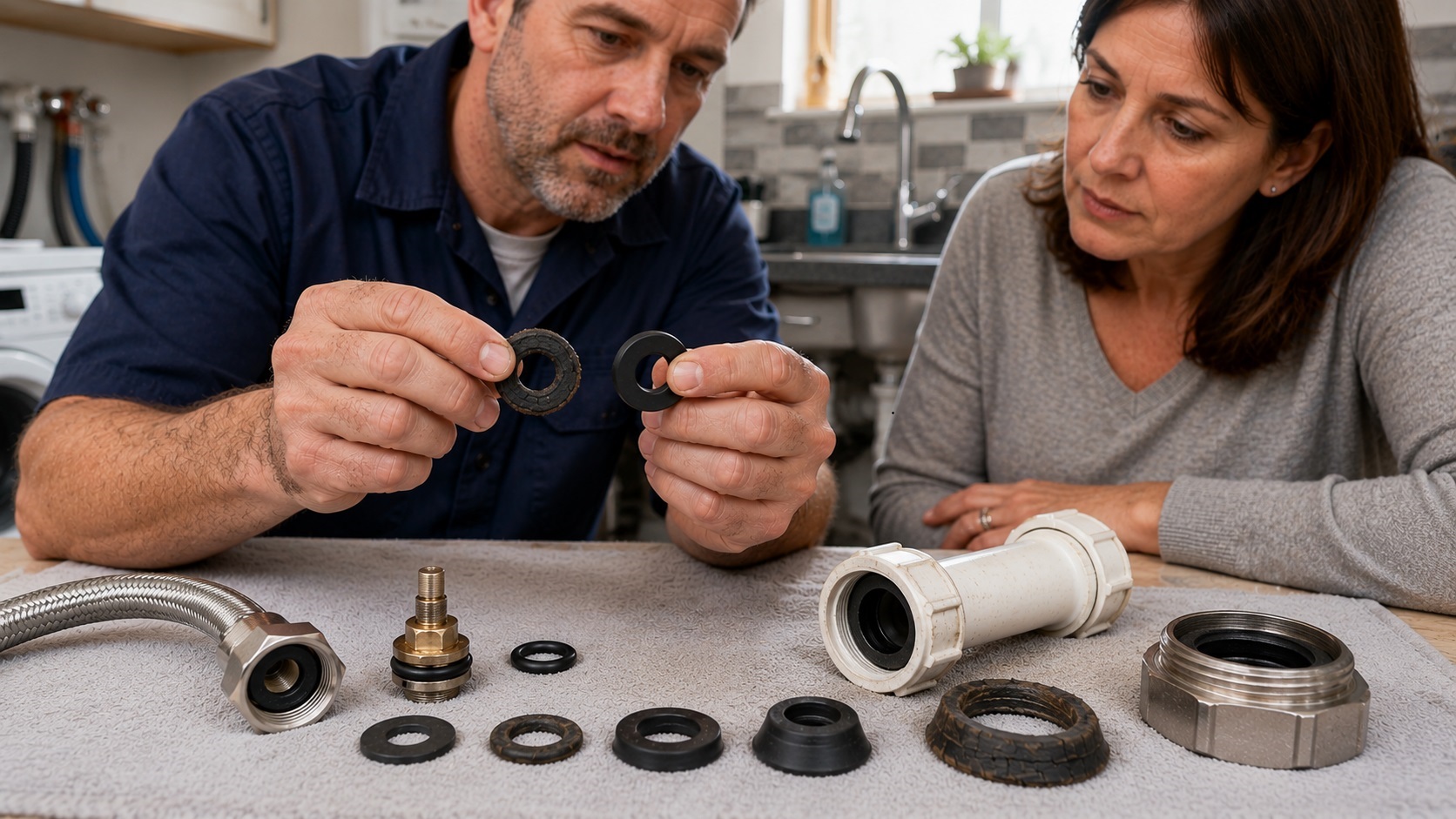
Do not mix gasket shapes casually. Flat washers, cone washers, O-rings, beveled slip-joint washers, and tank seals are not interchangeable even when they look similar.
Installing on Dirty or Damaged Surfaces
Mineral deposits, old rubber residue, corrosion, debris, or rough sealing surfaces can prevent a new gasket from sitting flat. A fresh gasket cannot seal well against a damaged or dirty surface. If the sealing surface is cracked, corroded, or uneven, the larger part may need attention.
Ignoring Movement and Vibration
Appliance connections can move or vibrate during normal use. Washing machines, dishwashers, and refrigerator water lines may put stress on small washers and seals. If hoses are bent sharply, pulled tight, or allowed to vibrate against surrounding surfaces, the gasket connection may fail sooner.
Using Harsh Chemicals Around Rubber Parts
Some cleaners and chemicals can dry, soften, swell, or damage rubber over time. This is especially relevant under sinks, around drains, and near appliances where cleaning products are stored or spilled. Rubber parts should not be exposed to chemicals they were not designed to tolerate.
When to Call a Plumber
Before loosening any pressurized supply connection, shut off the water and verify that the valve actually stops flow. If the shutoff valve is stuck, leaking, or unreliable, do not force the connection apart just to replace a gasket.
Some gasket replacements are simple, but not every gasket leak is a DIY-friendly problem. Call a plumber when the leak continues after a new gasket is installed, the shutoff valve does not close fully, the fitting is corroded, the connection is pressurized and hard to access, or the leak is near a major appliance or water heater connection.
Professional help is also wise when water has already reached hidden materials. If you see swelling, soft flooring, damp drywall, cabinet damage, ceiling staining, or a musty smell that does not go away, the problem may involve more than the gasket. The leak source should be corrected, but the surrounding materials may also need inspection.
Call a plumber if:
- The connection still leaks after a new gasket is installed.
- The fitting, valve, or pipe is corroded.
- The shutoff valve is stuck or leaking.
- The leak is near a water heater or major appliance.
- The drain assembly is misaligned.
- Multiple fittings are leaking at the same time.
- Water has reached flooring, cabinets, drywall, or ceiling materials.
- You are not sure which part is actually failing.
A small gasket leak is easier to handle before it spreads. Once water reaches hidden materials, the repair may involve leak correction, moisture inspection, and damage prevention instead of a simple rubber washer replacement.
Rubber Gasket Replacement Checklist
Use this checklist when inspecting rubber gaskets, washers, and seals around plumbing fixtures and appliance connections.
- Is the rubber cracked?
- Is the gasket flattened or permanently compressed?
- Does the rubber feel hard, dry, or brittle?
- Is the gasket swollen, soft, warped, or distorted?
- Is there black residue or rubber breakdown?
- Is there mineral buildup around the connection?
- Are there water stains near the fitting?
- Does dampness appear only after water runs?
- Does the leak return after normal tightening?
- Was the connection recently opened or serviced?
- Is the gasket hidden under a sink, behind an appliance, or inside a cabinet?
- Does the larger fitting, valve, hose, or fixture also look worn?
If the gasket is hidden behind an appliance or inside a cabinet, check the surrounding surface after the fixture runs, not just while everything is dry. Some gasket leaks only show up during pressure changes, draining, filling, or appliance cycles.
If several answers point to wear, replace the gasket before it becomes a steady leak. If the new gasket does not solve the problem, inspect the larger component rather than continuing to tighten the connection.
Quick Replacement Rules for Rubber Plumbing Gaskets
- Replace rubber gaskets when they are cracked, flattened, brittle, swollen, distorted, leaking, or leaving residue.
- Replace accessible rubber washers and seals during related plumbing or appliance maintenance instead of reusing compressed old parts.
- Do not keep tightening a connection that only seals under excessive pressure; the gasket or fitting may already be damaged.
- If a new gasket does not stop the leak, inspect the larger fitting, hose, valve, drain assembly, or fixture.
Frequently Asked Questions
How do I know if a rubber plumbing gasket is bad?
A rubber plumbing gasket is likely bad if it is cracked, flattened, hard, brittle, swollen, distorted, or leaving black residue. Mineral buildup, water stains, recurring dampness, or a drip that returns after tightening are also signs that the gasket should be replaced.
How long do rubber plumbing gaskets last?
There is no universal lifespan for every rubber gasket. Some last many years, while others fail sooner because of heat, pressure, minerals, chemicals, vibration, or frequent use. Condition matters more than age. Replace a gasket when it no longer looks flexible or seals reliably.
Should I replace a gasket if it is not leaking yet?
Yes, if the gasket is visibly cracked, flattened, brittle, swollen, distorted, or exposed during related maintenance. Replacing a worn gasket before it leaks is usually safer than reusing an old seal in a hidden or high-risk plumbing location.
Can overtightening damage a rubber gasket?
Yes. Overtightening can crush the gasket, distort the seal, crack plastic parts, or damage threads. A gasket should seal with proper compression. If excessive tightening is the only way to stop a drip, the gasket or fitting may need replacement.
What if a new gasket does not stop the leak?
A leak that continues after gasket replacement may be caused by cracked fittings, corroded valves, damaged hoses, worn faucet cartridges, loose connections, failed drain parts, or misaligned assemblies. If replacing the gasket does not stop the leak, the larger component may be the real problem, and more tightening can make the damage worse.
When should I call a plumber for a gasket leak?
Call a plumber if the leak continues after gasket replacement, the shutoff valve does not work, the fitting is corroded, the leak is near a water heater or appliance, or water has reached cabinets, floors, drywall, or hidden materials.
Final Replacement Rule
Replace rubber plumbing gaskets when the rubber no longer looks flexible, clean, and properly shaped. Cracking, flattening, hardening, swelling, mineral buildup, recurring dampness, or seepage are enough reason to replace the seal before it becomes a steady leak. If a new gasket does not stop the problem, stop tightening and inspect the larger fitting, hose, valve, fixture, or drain assembly.