When to Replace Water Heater Supply Lines Before They Leak
Water heater supply lines are small compared with the tank, but they carry a serious leak risk because they connect the home’s pressurized plumbing system to the water heater. If one corrodes, splits, loosens, or fails at a fitting, water can keep flowing until the supply is shut off.
That is why water heater supply lines should not be ignored until they are actively leaking. In many homes, the first warning signs appear as corrosion, mineral crust, rust staining, dampness near fittings, kinks, frayed braided connectors, or old flexible lines that have been bent or strained during previous service.
This article explains when water heater supply lines should be replaced, what warning signs matter most, and when old or questionable connectors should be replaced proactively. It does not cover water heater troubleshooting, heating problems, or step-by-step installation. The focus is prevention: replacing risky supply lines before they become part of a larger water heater plumbing failure.
Why Water Heater Supply Lines Matter
Water heater supply lines matter because they sit on the pressurized side of the plumbing system. A faucet drip may only leak when someone uses the fixture, but a failed supply connector can release water continuously until the valve is closed or the water supply is shut off.
The cold water supply line brings water into the heater. The hot water outlet sends heated water back into the home’s plumbing system. Both connections are important. If either connector is deteriorated, poorly aligned, corroded, or stressed, the water heater area becomes a potential leak point.
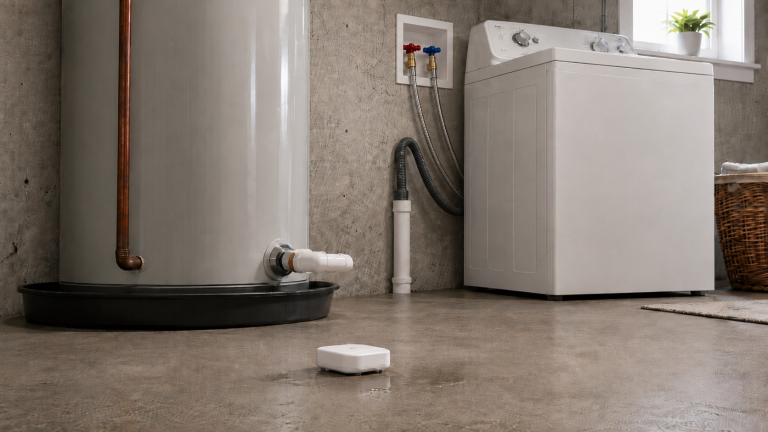
Supply line leaks are especially risky when the water heater is located in a finished basement, laundry room, utility closet, hallway closet, garage with stored items, or upper-level mechanical space. A small leak may damage flooring, drywall, nearby framing, stored belongings, or ceiling materials below before the homeowner notices it.
This is one reason water heater supply lines belong in the larger plumbing leak prevention system. A small connector failure can become part of the broader pattern of how plumbing leaks cause structural damage when water reaches surrounding materials and stays there long enough.
The goal is to separate harmless age from warning signs that justify replacement before a connector leaks.
How Long Water Heater Supply Lines Usually Last
There is no single replacement age that applies to every water heater supply line. Lifespan depends on the connector material, water quality, installation quality, pressure, heat exposure, movement, corrosion, and whether the line has been bent or disturbed during service.
Some supply lines remain in good condition for many years. Others deteriorate faster because of hard water, poor alignment, corrosion at fittings, sharp bends, incompatible connection materials, damp locations, or cramped installations.
Because of that, replacement timing should be based on both age and condition. If the lines are old but clean, straight, dry, and properly supported, they may simply need regular monitoring. If the lines are old and show corrosion, staining, crust, strain, fraying, or seepage, replacement becomes much more urgent.
Unknown age is also important. Many homeowners inherit water heater connectors from a previous owner and have no idea when they were installed. If the water heater itself is older and the supply lines appear to be the same age, it is reasonable to treat those connectors as suspect unless they look clearly newer and are in excellent condition.
Supply lines are often replaced during water heater replacement because the old connectors may be disturbed, flexed, loosened, or exposed during the job. Reusing aged connectors can save a small amount upfront, but it may not be worth the risk if the lines are stiff, corroded, kinked, or already near the end of their useful life.
The safest rule is practical rather than rigid: replace water heater supply lines when their age is unknown and their condition is questionable, when visible wear appears, or when nearby water heater work makes replacement easier and more sensible.
As a simple homeowner test, treat a line as “replace soon” if it is dry but visibly kinked, frayed, crusted, or poorly aligned. Treat it as “inspect now” if there is active dampness, spreading corrosion, bulging, or a shutoff valve that cannot be trusted.
Signs Water Heater Supply Lines Should Be Replaced
Most replacement warning signs are visible if you look closely at the top of the tank, the hot and cold water connections, the flexible connectors, and the fittings where the supply lines attach.
Dampness or Seepage Near the Connector
Dampness is one of the strongest signs that a water heater supply line should be replaced or professionally inspected. A supply connector should be dry. If water is present around the fitting, on the tank top, near the threaded connection, or along the line itself, something needs attention.
Sometimes moisture near a water heater comes from condensation, nearby piping, the relief valve discharge area, or another component. But dampness around a supply line fitting should never be dismissed casually. A small seep at a pressurized connector can worsen and become a continuous leak.
Look for water beads, wet threads, darkened insulation, damp dust, staining on the tank top, or a small trail running down the side of the tank. Even if the area dries between inspections, repeated moisture marks suggest water has been escaping at some point.
Corrosion or Rust Staining
Corrosion around water heater supply line fittings is a major warning sign. Rust-colored staining, greenish buildup, white crust, or deteriorated metal near the connector may indicate long-term moisture, seepage, water chemistry issues, or weakening around the connection.
Corrosion is especially concerning when it appears at the threaded fittings, pipe nipples, union area, or shutoff valve connection. These are the places where a supply line must remain tight and stable under pressure.
A small amount of old discoloration may not prove an active leak, but corrosion that is growing, flaking, spreading, or returning after cleaning should be treated seriously. It may be a sign that the connection has been wet repeatedly.
Mineral Crust Around Fittings
Mineral crust is another clue. White, chalky, greenish, bluish, or orange deposits around a water heater connector can form when small amounts of water seep out and evaporate, leaving minerals behind.
Mineral buildup does not always prove that the line is actively leaking right now. It can also come from previous seepage or water quality. The pattern matters. Crust located directly around a threaded joint, connector end, or shutoff valve is more concerning than general dust or residue nearby.
If mineral buildup keeps returning after the area is cleaned, the supply line or fitting should be inspected closely. Repeated deposits often mean the connection has an ongoing moisture pattern, even if the leak is too small to drip visibly.
Kinks, Twisting, or Sharp Bends
A water heater supply line should not be kinked, sharply bent, twisted, or stretched tight. Flexible connectors are meant to allow a clean connection between the water heater and the plumbing system, but they are not meant to be forced into awkward positions.
A sharp bend can weaken the connector wall or place stress on the fitting. A twisted line can strain the ends where the connector attaches. A line that barely reaches may pull against the fitting over time, especially if the water heater shifts slightly or the connector expands and contracts with temperature changes.
These problems matter even if the line is not leaking yet. Physical stress can weaken a connector before water appears. If a supply line looks strained, kinked, flattened, or twisted, replacement is usually safer than waiting for an obvious leak.
Frayed Braid, Bulging, or Visible Damage
Many modern water heater connectors use a braided outer jacket. The braid helps protect and reinforce the connector, but it should still look intact. Fraying, broken strands, bulging, swelling, splitting, or distortion are signs that the connector may no longer be in good condition.
Bulging is especially concerning because it may indicate pressure, internal weakening, or damage inside the connector. A supply line under pressure should keep a consistent shape. Any section that looks swollen or distorted should be treated as a replacement warning.
Visible damage is also more concerning when the water heater is in a finished or hard-to-monitor space. A questionable connector in a garage may be easier to notice quickly, but the same connector in an interior closet, finished basement, or upstairs utility area can cause more damage before it is discovered.
Strain or Poor Alignment
Even a newer supply line can become risky if it is poorly aligned. A connector should curve naturally between the pipe and the water heater without being stretched, bent sharply, or forced sideways.
Poor alignment often happens when a replacement water heater is slightly taller, shorter, wider, or positioned differently than the old one. If the old supply lines are reused, they may no longer line up correctly. The connector may look like it is pulling at the fitting or bending sharply to make the connection.
That kind of strain can make the supply line more vulnerable over time. If the water heater was recently replaced and the supply lines look forced into place, it is worth having them corrected rather than assuming the connection is acceptable just because it is not leaking today.
When to Replace Supply Lines Even If They Are Not Leaking
Some water heater supply lines should be replaced before obvious seepage appears, especially when replacement can be done during planned service.
One of the best times to replace supply lines is during water heater replacement. The old connectors may be disconnected, moved, bent, or disturbed during installation. If they are already aged or corroded, reusing them can create a weak point on an otherwise new installation.
It also makes sense to replace supply lines when their age is unknown and they show visible wear. A homeowner may know when the water heater was installed but not know whether the connectors were replaced at the same time. If the supply lines look older than the tank, or if they appear stiff, crusted, or discolored, replacement is usually a safer choice.
Nearby plumbing work is another replacement opportunity. If a plumber is already replacing a water heater shutoff valve, pressure-related component, or nearby pipe section, the supply lines should be evaluated at the same time. Old connectors can become the weak link after other parts are updated.
Supply lines should also be replaced proactively when the water heater is located where a leak would be especially damaging. Finished basements, interior closets, utility rooms above finished ceilings, and areas near stored belongings have less tolerance for “wait and see” plumbing decisions.
The same logic applies after a supply line has been bent, twisted, removed, or repositioned. Flexible connectors are not meant to be reused indefinitely after repeated movement. If a connector has been stressed during service, replacement may be wiser than trying to reuse it.
Why Corrosion Around Water Heater Connections Is a Warning Sign
Corrosion near water heater supply connections should always get attention because it often means moisture has been present where the connection needs to stay clean and stable. It may appear as rust, greenish deposits, white crust, flaking metal, or staining on the top of the tank.
The corrosion may come from a slow seep, old water residue, dissimilar metal reactions, hard water deposits, or long-term dampness around the fitting. Whatever the cause, the connection is no longer clean and predictable.
Corrosion is more concerning when it appears with dampness, mineral buildup, or staining that runs downward. Those signs suggest the connection may have been leaking or sweating repeatedly. If corrosion is heavy enough that the fitting shape is hard to see clearly, the connection should not be treated as a normal maintenance item.
Do not try to solve heavy corrosion by simply wiping the area clean and forgetting about it. Cleaning may remove surface deposits, but it does not restore a weakened connector, damaged threads, or deteriorated fitting. If corrosion returns, the underlying moisture source still needs attention.
Corrosion can also be a clue that other parts around the water heater are aging. If the supply lines look deteriorated, it is worth checking the broader system for signs water heater plumbing components are failing, especially around valves, fittings, the drain valve, the relief valve, and nearby piping.
Supply Line Material and Installation Factors That Affect Risk
Water heater supply lines can be made from different materials, but condition and installation quality usually matter more than naming one connector type as always best.
Braided stainless steel connectors are common because they are flexible and easy to route. They should still be inspected for fraying, bulging, corrosion at the ends, or sharp bends. The outer braid can look strong while the inner core, seal, or fitting is still aging.
Flexible copper connectors may be found in some installations. They can be durable when properly installed, but they should not be sharply bent back and forth. Repeated bending can weaken the material or distort the connection.
Rigid or semi-rigid piping near the water heater should also be watched for corrosion, stress, or poor alignment. If the piping does not line up cleanly with the water heater connection, stress may be transferred to fittings or connectors.
Installation quality matters as much as the connector type. A supply line that is too short, sharply bent, twisted, cross-threaded, overtightened, or forced into place may become risky even if it is relatively new. A well-installed line should look natural, stable, and dry.
Water quality also affects supply line condition. Hard water can leave mineral deposits around fittings and moving parts. Aggressive or corrosive water conditions may shorten the life of metal connections. If several plumbing connectors in the home show buildup or corrosion, the water heater supply lines should be included in routine inspection.
What to Check Around the Water Heater at the Same Time
Water heater supply lines should not be inspected in isolation. Nearby valves, fittings, and pressure-related components may be the same age or exposed to the same water conditions. If one part near the water heater is corroded, stiff, leaking, or deteriorated, nearby parts may also deserve a quick visual check.
Check the Cold Water Shutoff Valve
The cold water shutoff valve controls water entering the heater. If a supply line begins leaking, this valve is one of the first parts you may need to close. That makes its condition important.
Look for corrosion, mineral buildup, staining, dampness, or a handle that is difficult to turn. A shutoff valve that will not close fully can make a supply line leak harder to control. If the valve is old, stuck, or visibly deteriorated, review when plumbing shutoff valves should be replaced before assuming the supply line is the only part that matters.
Check the Drain Valve
The drain valve is usually located near the bottom of the water heater. It is not part of the supply line, but it is another common water heater-area component that can age, seize, drip, or become unreliable over time.
If the supply lines are old enough to be replaced, the drain valve may also be worth inspecting. Crust, dampness, or staining around the drain valve can signal separate maintenance concerns. A dedicated guide on when water heater drain valves should be replaced can help keep that issue separate from supply line replacement.
Check the Expansion Tank
If your plumbing system has a water heater expansion tank, it should also be checked when supply lines show signs of age or stress. The expansion tank helps manage pressure changes in the plumbing system, and pressure-related problems can place more stress on water heater-area components.
This does not mean every supply line problem is caused by an expansion tank. But if there are repeated leaks, pressure symptoms, or multiple worn components near the water heater, it is worth understanding how long water heater expansion tanks last and whether the tank is still functioning as expected.
Check the Temperature Pressure Relief Valve Area
The temperature pressure relief valve is a safety component, not a supply line. Still, it is located on or near the water heater and should be visually checked when inspecting the heater area.
Look for discharge pipe staining, corrosion, moisture, or evidence that the valve has released water. Do not confuse relief valve discharge with a leaking supply connector. If there are signs near the relief valve, keep that issue separate and review when temperature pressure relief valves should be replaced.
Check the Floor, Pan, and Nearby Materials
The area around the water heater can reveal leaks that are not obvious at the connection itself. Look for staining, warped flooring, rust marks in the drain pan, damp drywall, musty odor, swollen trim, or moisture trails running down the tank.
If the heater sits in a pan, the pan should be dry under normal conditions. Standing water, rust flakes, or recurring dampness in the pan means water is coming from somewhere and should not be ignored.
These checks should become part of regular plumbing maintenance. Including the water heater area in annual plumbing maintenance checks helps catch supply line wear, valve problems, and early moisture before a connector fails.
When to Call a Plumber
Some water heater supply line concerns are simple observations. Others are signs that professional help is the safer choice. Because water heater supply lines carry pressurized water, heavy corrosion or active seepage should not be treated casually.
Do not loosen, bend, or remove a water heater supply line unless the water supply is fully shut off and pressure has been relieved. If you are not sure how to do that safely, call a plumber.
Call a plumber if you see active dripping, wet fittings, heavy corrosion, bulging connectors, frayed braided lines, rusted pipe nipples, or water staining that keeps returning. These signs suggest the connector or nearby fitting may already be compromised.
You should also call a plumber if the cold water shutoff valve does not work properly. A supply line replacement is much riskier when the valve needed to control the water is stuck, leaking, or unable to close fully.
Professional help is also wise when the water heater is located in a finished area, upstairs closet, tight utility space, or any place where a mistake could quickly damage flooring, walls, ceilings, or stored belongings. The harder the area is to access or monitor, the less margin there is for guesswork.
Multiple aging components are another reason to get help. If the supply lines, shutoff valve, drain valve, relief valve area, and nearby piping all show signs of age, the issue may be broader than one connector. In that situation, compare the water heater area with general signs plumbing parts are near failure.
Replacing questionable lines early is usually safer than waiting for a visible leak to prove the risk, especially when the connector is in a finished, upstairs, or hard-to-monitor area.
FAQ About Replacing Water Heater Supply Lines
How often should water heater supply lines be replaced?
There is no single replacement schedule that fits every home. Water heater supply lines should be replaced when they are old, corroded, kinked, frayed, leaking, under strain, or of unknown age and questionable condition. Inspection matters more than a fixed number of years.
Should supply lines be replaced when installing a new water heater?
In many cases, yes. Water heater replacement is a good time to install new supply lines because old connectors may be bent, loosened, or disturbed during the job. Reusing old corroded or stiff connectors can create a weak point on a new installation.
Are braided stainless water heater connectors safe?
Braided stainless connectors can be safe when they are properly installed, correctly sized, dry, undamaged, and not kinked or strained. They should still be inspected because the inner core, seals, fittings, and connection points can age or fail.
Is corrosion on water heater supply lines serious?
Corrosion can be serious, especially when it appears at fittings, threaded connections, pipe nipples, or the shutoff valve. It may indicate repeated moisture, seepage, weakening metal, or connection problems. Heavy or spreading corrosion should be inspected promptly.
Can a water heater supply line burst?
Yes. A damaged, weakened, corroded, kinked, or poorly installed supply line can fail. Because supply lines carry pressurized water, a failure can release water continuously until the supply is shut off.
Can I reuse old supply lines after replacing a water heater?
Reusing old supply lines is usually not worth the risk if they are stiff, corroded, kinked, crusted, or were bent during removal. A new water heater should not depend on old connectors that already show wear or poor alignment.
Should I replace the shutoff valve at the same time?
The shutoff valve should be evaluated when supply lines are replaced. If it is old, stuck, corroded, leaking, or difficult to close, it may need replacement too. A reliable shutoff valve is important because it controls water entering the heater.
Is dampness near a water heater connector an emergency?
Dampness near a supply connector should be taken seriously. It may not always be an emergency, but it needs prompt inspection. Active dripping, spreading moisture, water near electrical components, or a shutoff valve that will not close should be handled immediately.
Water Heater Supply Line Replacement Checklist
- Water heater supply line failures can keep leaking until the supply is shut off.
- Replace supply lines when they show dampness, corrosion, mineral crust, kinks, twisting, fraying, bulging, or poor alignment.
- Unknown-age supply lines should be inspected closely, especially if they appear old or were reused during water heater replacement.
- Water heater replacement is often a smart time to replace old connectors rather than reuse them.
- Check the shutoff valve, drain valve, expansion tank, relief valve area, floor, and pan at the same time.
- Heavy corrosion, active seepage, a stuck shutoff valve, or multiple aging parts are good reasons to call a plumber.
Final Replacement Timing Advice
Water heater supply lines should be replaced before they become obvious leak points because a small pressurized connector can create major water damage once it fails.
The best replacement timing depends on condition, age, installation quality, and location risk. Dampness, corrosion, mineral crust, kinks, frayed braid, bulging, twisting, poor alignment, and unknown-age connectors are all reasons to replace the line or have it professionally inspected.
Keeping the supply lines, valves, and nearby components in good condition is one practical way to prevent moisture problems throughout the home, especially when the water heater is located near finished floors, walls, ceilings, or stored belongings.