
How to Prevent Water Intrusion Around Doors
Preventing water intrusion around exterior doors means keeping water away from the door, sealing the joints that must stay watertight, and checking the threshold before moisture reaches flooring, framing, or wall cavities. Most door leaks begin with small weaknesses such as worn weatherstripping, cracked caulk, poor drainage, loose trim, or water pooling against the sill.
The best prevention plan starts outside the door. Check whether rainwater drains away from the entry, whether the threshold sheds water outward, whether the sweep seals evenly, and whether the trim and caulk are still intact. These small checks help stop leaks before they become hidden moisture problems.
If staining, damp flooring, swollen trim, or musty odors are already present, start with Signs of Water Leaks Around Exterior Doors. For broader prevention planning, see How to Prevent Recurring Moisture Damage.
Why Prevention Matters for Exterior Doors
Exterior doors are vulnerable because they interrupt the wall system. Rainwater, wind pressure, splashback, and seasonal movement all test the seals around the frame, threshold, trim, and door bottom. When one part weakens, water can reach flooring, framing, insulation, or wall cavities before the surface looks severely damaged.
Most preventable door leaks come from ordinary maintenance failures: cracked caulk, worn weatherstripping, damaged sweeps, poor threshold drainage, clogged gutters, or water collecting near the entry. If you want the cause-side explanation, see Why Exterior Doors Develop Water Leak Problems. If moisture may already be inside the wall, use How to Detect Door Leaks Inside Walls.
Maintain Door Seals and Weatherstripping
Door seals and weatherstripping form the primary barrier that keeps water from entering around exterior doors. These components are designed to create tight contact between the door and frame, blocking both air and moisture infiltration. Maintaining these seals is one of the most effective ways to prevent water intrusion before it begins.
Over time, weatherstripping materials gradually lose flexibility due to compression, temperature changes, and environmental exposure. Without regular inspection, these materials can become stiff, cracked, or detached, allowing small gaps to form. Even narrow openings can admit water during heavy rain or windy conditions.
Inspect Weatherstripping at Least Once Per Year
Regular inspection helps identify early signs of wear before water intrusion occurs. Examine the weatherstripping along all edges of the door, including the top, sides, and bottom. Look for cracks, flattened sections, or areas where the material has pulled away from the frame.
Weatherstripping should touch the door evenly when the door is closed. Check for daylight along the latch side, hinge side, top corner, and bottom corner. If the seal is flattened, brittle, torn, loose, or no longer touching the door, replace it before the next heavy rain season.
Annual inspection is especially important in climates with large seasonal temperature changes, where repeated expansion and contraction accelerate seal deterioration.
Keep Door Sweeps in Good Condition
The door sweep seals the bottom edge of the door, preventing water from entering beneath the threshold. This component is particularly vulnerable to wear because it contacts the threshold during each opening and closing cycle. Dirt buildup, friction, and seasonal movement gradually weaken the sweep material.
Inspect the sweep for tears, separation, stiffness, missing fins, or uneven contact with the threshold. If daylight is visible under the door, or if the sweep drags on one side but leaves a gap on the other, the door bottom may need adjustment or a replacement sweep.
If water has previously entered beneath the door, it may indicate that additional protection is needed at the threshold level. Evaluating nearby structural conditions can help confirm whether the threshold area is contributing to recurring moisture problems.
Ensure Proper Door Alignment
Door alignment affects how well weatherstripping performs. A misaligned door may create uneven pressure against sealing materials, allowing water to enter through small gaps. Alignment problems often develop gradually due to structural movement, hardware wear, or seasonal changes.
Check that the door closes smoothly and evenly without excessive force. If the door rubs against the frame or fails to latch securely, alignment adjustments may be necessary. Maintaining proper alignment ensures consistent seal compression and reduces the risk of water intrusion.
Keep Caulking and Trim Properly Sealed
Caulking and trim create protective barriers that prevent water from entering the joints surrounding exterior doors. These components seal the connections between door frames and surrounding wall materials. Maintaining these seals prevents moisture from traveling behind trim and into hidden structural spaces.
Caulking materials degrade over time due to exposure to sunlight, moisture, and temperature fluctuations. Without periodic maintenance, cracks develop that allow water to enter during rainfall events. Routine inspection helps identify these weaknesses before moisture reaches deeper materials.
Inspect Caulking for Cracks and Separation
Examine the caulking lines around the perimeter of the door frame, paying close attention to corners and transitions between materials. Cracks, gaps, or separation from adjacent surfaces indicate that the joint may no longer be keeping water out.
Even small cracks can allow water intrusion when wind-driven rain increases pressure against exterior surfaces. Remove failed caulk before applying new sealant, and avoid sealing over wet, soft, rotten, or actively leaking materials. Caulk helps maintain a water-resistant joint, but it should not be used to hide a drainage or flashing problem.
If recurring leaks have been suspected, reviewing Why Exterior Doors Develop Water Leak Problems can help identify how sealing failures contribute to repeated water intrusion.
Maintain Trim Integrity Around Door Frames
Trim materials protect structural joints and help direct water away from vulnerable areas. Damaged trim allows moisture to bypass protective layers and enter hidden spaces behind the door assembly.
Inspect trim regularly for signs of cracking, splitting, or loosening. Damaged trim should be repaired or replaced promptly to maintain proper sealing performance. Keeping trim surfaces intact reduces the likelihood of hidden moisture migration.
Protect Painted Surfaces From Moisture Exposure
Paint acts as a protective coating that prevents moisture from penetrating wood surfaces. When paint begins to peel, crack, or wear away, the exposed material becomes more vulnerable to water absorption.
Repaint exposed wood trim before bare wood stays wet after rain. Paint does not stop an active leak, but it helps keep exterior wood from absorbing splashback and wind-driven moisture.
Protect Door Thresholds From Water Entry
Door thresholds are one of the most important components in preventing water intrusion. Because water naturally flows downward, the threshold area often receives the highest concentration of moisture during rain events. Maintaining this area properly reduces the likelihood of water entering beneath the door and spreading into flooring or wall structures.
Threshold problems are a common source of recurring leaks, especially when seals weaken or installation conditions change over time. Keeping this area in good condition helps prevent hidden damage beneath flooring materials.
Confirm That the Threshold Slopes Outward
A properly installed threshold should slope slightly outward to direct water away from the interior. If the slope is incorrect or has shifted over time, water may collect along the base of the door instead of draining away. This increases the likelihood of water entering beneath the door.
Check the threshold during or shortly after rain. Water should move away from the door, not sit against the sill, collect in the corners, or run toward the interior flooring. Repeated pooling at the threshold usually means the slope, seal, sill pan, exterior surface, or nearby drainage needs correction.
Pooling water near the threshold is often one of the earliest indicators of developing moisture risk. If this condition occurs repeatedly, it may also produce warning signs described in Signs of Water Leaks Around Exterior Doors, which explains how visible symptoms develop near door assemblies.
Maintain Sealant Beneath Threshold Components
Sealant beneath the threshold prevents water from reaching subfloor materials. Over time, this hidden sealant may degrade due to aging or movement. If the seal fails, water can travel beneath the threshold without being visible from above.
Inspect the visible edges of the threshold for signs of separation or cracking. Any gaps along the base should be addressed promptly to maintain effective moisture protection.
If water repeatedly appears at the interior side of the threshold even after the sweep and exterior caulk are maintained, the problem may be below the visible threshold. A missing, damaged, or poorly integrated sill pan can allow water to pass under the door assembly and into the subfloor.
Protect Flooring Edges Near Doorways
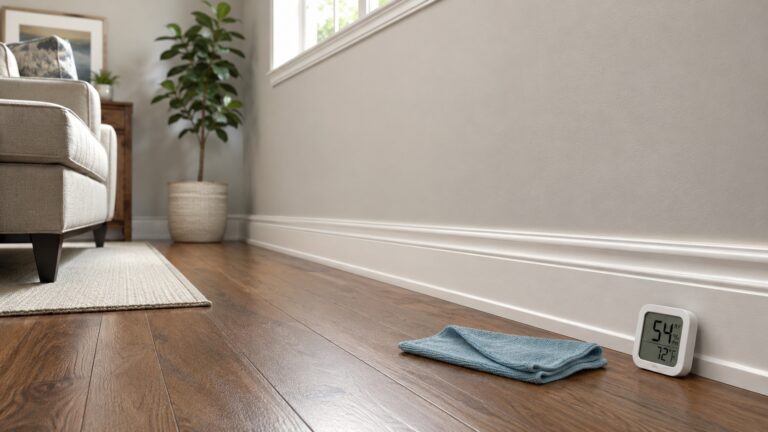
Check the first few inches of flooring inside the door for dark seams, cupping, swelling, soft spots, or finish wear. These early changes often show that water is crossing the threshold before the leak becomes obvious.
For wood, laminate, or engineered flooring near exterior doors, keep the edge sealed and avoid letting rugs trap moisture against the floor after rain. If the flooring edge repeatedly gets wet, fix the threshold or drainage problem instead of only touching up the floor finish.
Improve Exterior Drainage Around Doors
Exterior drainage often determines whether door seals succeed or fail. Even a well-maintained door can leak if roof runoff, patio slope, soil grading, or splashback keeps water against the threshold. The goal is simple: water should move away from the door before it has time to test the seals.
Ensure Proper Ground Slope Away From the Door
Ground surrounding the home should slope away from the structure so that water flows outward rather than toward the door. Improper grading allows rainwater to accumulate near entry points, increasing the risk of water entering through small gaps.
Observe how water behaves during rainfall events. If water consistently flows toward the door or pools near the foundation, grading improvements may be necessary. Redirecting water away from the structure significantly reduces long-term exposure.
Maintain Gutters and Downspouts
Gutters and downspouts direct roof runoff away from the home. When these systems become clogged or damaged, water may overflow and collect near door openings. This concentrated water exposure increases pressure on door seals and thresholds.
Regular cleaning and inspection help maintain proper drainage performance. Ensuring that downspouts extend far enough away from the structure reduces water accumulation near vulnerable areas.
Check Walkways and Patios for Proper Slope
Walkways and patios surrounding exterior doors influence how water flows across the surface. If these structures slope toward the door instead of away from it, water may collect at the threshold and increase the likelihood of intrusion.
If the hard surface cannot be re-sloped easily, a properly placed channel drain, surface drain, or deflection detail may be needed to keep water from backing up against the threshold.
Use Protective Design Features to Reduce Water Exposure
Reducing direct exposure to rainfall is another effective method of preventing water intrusion around doors. Protective design features limit the amount of water that reaches vulnerable components, extending the lifespan of seals and reducing maintenance requirements.
Install Overhangs or Door Shelters
Roof overhangs and door shelters provide protection from direct rainfall. By limiting the amount of water striking the door surface, these features reduce stress on sealing materials and improve long-term performance.
Even small overhangs can significantly reduce exposure during heavy rain events. Homes without protective shelters may experience faster deterioration of weather-resistant materials.
Use Drip Edges and Water Deflection Components
Door caps, Z-flashing above exterior trim, drip edges, and properly detailed head flashing help shed water away from the top of the door assembly. These details are especially important where rain hits the wall directly or where the door has little roof protection.
If water stains appear above the door or behind the top trim, do not rely on surface caulk alone. The upper flashing or trim detail may need correction so water is directed out and away instead of behind the casing.
Limit Direct Splash Exposure
Splashing water from nearby surfaces can increase exposure to moisture around doors. Landscaping features such as gravel beds or splash blocks can reduce the amount of water striking the lower portions of door assemblies.
If mud, mulch, or roof runoff regularly splashes the lower door trim, move that water source away from the entry. Lower trim and threshold corners often fail first because they stay wet longer than the rest of the door assembly.
Seasonal Maintenance That Prevents Door Leaks
A simple seasonal check is usually enough for most exterior doors. The goal is not to inspect every component every week, but to catch seal wear, drainage problems, and threshold movement before storms expose the weakness.
Spring
Look for winter damage, cracked caulk, loose trim, swollen wood, and water stains near the threshold. Spring rain also makes it easier to see whether water is draining away from the entry or collecting near the door.
Summer
Inspect weatherstripping, sweeps, paint, and exposed trim after heat and sunlight have stressed the materials. Warm, dry weather is also a good time to repaint, reseal, or replace worn exterior components.
Fall
Clear gutters, extend downspouts, check the threshold, and confirm that the door closes tightly before heavy rain or winter weather. Fall is the best time to fix small gaps before wind-driven rain finds them.
Winter
Watch for snow, ice, and meltwater collecting against the threshold. Ice buildup can block drainage and force meltwater toward the interior side of the door.
When Preventive Upgrades Are Necessary
Routine maintenance cannot fix every door leak risk. If water repeatedly reaches the threshold, blows against an exposed entry, or appears inside after the seals have been maintained, the home may need a drainage, flashing, overhang, or threshold upgrade rather than another layer of caulk.
Upgrading Sealing Components
Older sealing materials may lose effectiveness even when maintained regularly. Upgrading to modern weather-resistant materials improves sealing performance and extends the life of door assemblies. High-quality seals provide better resistance to temperature changes and environmental exposure.
If leaks continue after the seals are upgraded, the problem is probably not the weatherstripping alone. Check threshold slope, exterior drainage, head flashing, sill-pan protection, and wall conditions before replacing the same seal again.
Installing Additional Drainage Features
Additional drainage components such as channel drains or splash blocks help control water movement near door openings. These features redirect water away from vulnerable areas, reducing the likelihood of moisture accumulation.
Drainage improvements are particularly valuable in areas where water naturally flows toward the door due to landscape design or heavy rainfall patterns.
Adding Structural Protection Features
If a door is exposed to direct wind-driven rain with no roof protection, an overhang, awning, storm door, or corrected head-flashing detail may reduce the amount of water hitting the assembly. This is especially important for doors that leak only during storms from one direction.
When exposure is the real problem, replacing weatherstripping over and over will not solve the leak for long.
Frequently Asked Questions About Preventing Door Leaks
How often should weatherstripping be replaced?
Inspect weatherstripping at least once a year and before heavy rain seasons. Replace it when it becomes brittle, flattened, torn, loose, or no longer touches the door evenly when closed.
Is caulking alone enough to prevent door leaks?
Caulking is an important part of prevention, but it should not be relied on as the only protective measure. Effective prevention requires multiple layers of protection, including proper drainage, intact weatherstripping, and well-maintained thresholds.
Can new doors still leak without maintenance?
Yes, even newly installed doors require routine maintenance. Environmental exposure begins affecting materials immediately after installation. Without ongoing inspection and care, seals and finishes may deteriorate faster than expected.
Do door overhangs really help prevent leaks?
Yes, door overhangs significantly reduce the amount of water striking the door surface. By limiting direct rainfall exposure, overhangs help preserve sealing materials and reduce the likelihood of water intrusion.
What should I do if leaks continue despite preventive steps?
If water intrusion continues after weatherstripping, caulk, drainage, and threshold issues have been checked, stop treating it as a simple maintenance problem. The leak may involve hidden threshold failure, poor sill-pan installation, damaged flashing, wall drainage problems, or moisture inside the framing. Use How to Detect Door Leaks Inside Walls to check whether water has moved beyond the visible door area.
Conclusion: Keep Water Away From the Door Before It Tests the Seals
The most reliable way to prevent water intrusion around doors is to combine good drainage, intact weatherstripping, sound caulk, proper threshold performance, and routine seasonal checks. Do not depend on one barrier to do all the work.
If visible damage is already present, start with Signs of Water Leaks Around Exterior Doors. If the frame, trim, or threshold may already be damaged, use How to Inspect Door Frames for Water Damage before simply resealing the surface.
Key Takeaways
- Prevent door leaks by controlling water outside first, then maintaining the seals around the door.
- Check weatherstripping, door sweeps, caulk, trim, and threshold edges before heavy rain seasons.
- Water should drain away from the door, not collect against the sill or patio edge.
- Do not use caulk to cover wet, rotten, or actively leaking materials.
- Recurring leaks may require drainage, flashing, sill-pan, threshold, or overhang improvements.
One Comment
Comments are closed.