
Signs of Water Leaks Around Exterior Doors
The most common signs of water leaks around exterior doors include damp flooring near the threshold, stains on trim or drywall, swollen door casing, peeling paint, musty odors, soft flooring, rusted hardware, and moisture that returns after wind-driven rain. These symptoms often start small because water may enter only during storms and then dry on the surface before the next rain.
Exterior doors are vulnerable because they interrupt the exterior wall system. The door slab, frame, threshold, weatherstripping, flashing, caulking, and nearby drainage all have to work together. If one part fails, water can move behind trim, under flooring, or into the rough opening before obvious damage appears.
This guide focuses on warning signs, not full repair steps. For the broader explanation of why door and window openings are vulnerable, see How Windows and Doors Cause Hidden Moisture Problems.
Why Exterior Door Leaks Often Go Unnoticed
Exterior door leaks often go unnoticed because they are intermittent. A door may stay dry during light rain but leak during wind-driven rain, melting snow, or storms that push water against the threshold and side jambs. This makes the problem easy to dismiss when the area looks dry the next day.
Water also does not always show up directly below the entry point. It can run behind trim, soak into wood casing, travel beneath flooring, or collect along the subfloor before staining becomes visible. By the time you see swelling, discoloration, or musty odor indoors, the leak may have been active through several rain cycles.
False alarms are also common near entry doors. Wet shoes, damp mats, cleaning water, condensation, and pet traffic can all leave moisture near a doorway. The key difference is pattern: moisture that appears after rain, returns in the same place, or comes with swelling, stains, odor, or soft flooring should be treated as a possible exterior door leak.
Visible Signs of Water Leaks Around Exterior Doors
The most reliable way to identify water leaks around exterior doors is by observing visible changes in materials near the doorway. Many early warning signs develop gradually, becoming more noticeable after repeated exposure to rain or moisture. Paying attention to these changes can help you detect leaks before serious damage occurs.
Water Pooling Near the Door Threshold
One of the most obvious signs of a door leak is water collecting near the threshold. This typically occurs during heavy rain when water is pushed toward the door by wind or poor drainage. If seals or thresholds are damaged, water may pass underneath the door and accumulate on interior flooring.
Pooling water should not be dismissed as normal if it happens more than once or appears after storms. Repeated moisture exposure in this area can damage flooring materials and allow water to seep into subfloor structures, leading to soft spots, mold growth, or weakening beneath the surface.
If water pools at the same spot after storms, note whether it appears at the center of the threshold, one lower corner, or along the side jamb. That pattern can help separate a failed door sweep or threshold seal from water running in around the frame or from poor exterior drainage.
Stains Around the Door Frame
Water stains are among the most common early signs of leaks around exterior doors. These stains often appear as yellow, brown, or darkened areas on paint, trim, or nearby wall surfaces. They may become more visible after rain and fade slightly as the area dries.
Stains typically form when water repeatedly contacts a surface, leaving behind minerals or discoloration. Even small amounts of moisture can produce visible staining if exposure occurs frequently enough. Over time, stains may spread or darken as moisture penetrates deeper into surrounding materials.
If stains appear near multiple areas of the frame—such as along the sides or above the door—it may indicate water is entering through gaps around the frame rather than beneath the threshold.
Peeling Paint or Bubbling Finishes
Paint and surface coatings often react quickly to moisture exposure. When water enters around a door frame, it can become trapped beneath painted surfaces, causing the finish to bubble, blister, or peel away from the underlying material.
This reaction occurs because trapped moisture weakens the bond between paint and the surface beneath it. While peeling paint can result from age or weather exposure, localized bubbling near a door frame—especially after rain—often indicates moisture intrusion.
Swollen or Warped Door Trim
Wood trim around exterior doors is highly sensitive to moisture. When exposed to water repeatedly, trim materials may swell, warp, or separate from the wall. This swelling can cause trim joints to open slightly, creating additional pathways for moisture to enter.
Warped trim may also cause cosmetic changes such as uneven edges or misaligned corners. In more advanced cases, the wood may feel soft or spongy when pressed, indicating deeper moisture absorption and possible early-stage rot.
Repeated swelling at the lower side trim, bottom corners, or casing-to-threshold joint is especially suspicious because these areas often receive the most water during wind-driven rain.
Rust or Corrosion on Door Hardware
Metal components near exterior doors—including hinges, screws, and threshold fasteners—may develop rust or corrosion when exposed to frequent moisture. While minor surface rust can occur naturally over time, concentrated corrosion near specific areas often signals recurring water exposure.
Rusting hardware may also loosen over time as corrosion weakens metal components. This can lead to alignment issues that further compromise the door’s ability to seal properly, increasing the likelihood of continued leaks.
Door Rubbing, Sticking, or Latch Misalignment
A leaking exterior door may begin to rub, stick, or latch poorly as the frame, threshold, or nearby wood absorbs moisture. This symptom is especially important when the door works normally in dry weather but becomes harder to close after rain.
Seasonal movement can also affect doors, so sticking alone does not prove a leak. But sticking combined with damp flooring, swollen trim, stains, or musty odor near the same opening is a stronger warning sign that moisture is affecting the door assembly.
Floor-Level Warning Signs Near Exterior Doors
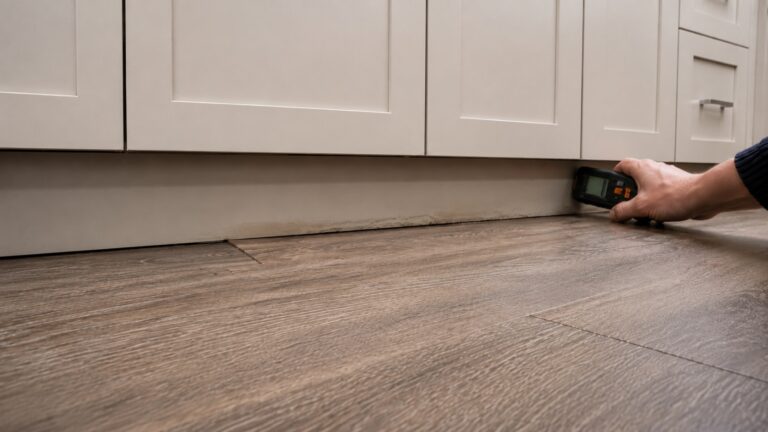
Floor-level symptoms are especially important around exterior doors because water naturally collects near the threshold before moving into flooring, underlayment, or subfloor materials. Damp carpet, warped boards, cracked grout, or soft spots near the entry can indicate that the leak has moved beyond the surface.
Wet Carpet or Flooring Near the Entry
One of the most recognizable signs of a leak is damp carpet or flooring immediately inside the door. This moisture may appear after rainstorms, especially during windy weather that pushes water against the door surface. In some cases, moisture may seem minor at first, drying between storms before returning again.
Repeated dampness in this area is rarely caused by normal household activity alone. If flooring becomes wet without obvious indoor sources, such as spills or cleaning, it strongly suggests that water is entering from outside. Over time, repeated wetting can lead to deeper moisture penetration beneath the visible surface.
When this symptom appears regularly, it is often helpful to compare conditions near doors and nearby windows. Similar patterns can occur in both locations, as described in Signs of Water Leaks Around Windows, which explains how structural openings behave in similar ways during rain events.
Soft or Spongy Flooring Near the Door
Soft or spongy flooring near an exterior door is a serious warning sign because it may mean moisture has reached the underlayment or subfloor. The surface may look dry while the material below remains damp, weakened, or beginning to decay.
This symptom should not be treated as cosmetic. If the floor compresses under foot pressure, feels uneven near the threshold, or worsens after rain, the area needs further investigation before the damage spreads farther into the floor system.
Warped Hardwood Flooring Near Entryways
Hardwood flooring responds quickly to moisture by expanding and changing shape. When exposed to repeated wetting, boards may begin to cup upward along the edges or develop uneven surfaces. This distortion often becomes visible near exterior doors before appearing in other parts of the home.
Warped hardwood flooring rarely returns to its original shape once significant moisture damage has occurred. Early signs of cupping or warping should therefore be considered an important warning of moisture intrusion near the door assembly.
Moisture-related warping is particularly common in homes where exterior door leaks occur during storms but remain unnoticed between events. The repeated cycle of wetting and drying gradually changes the structure of the wood.
Tile Grout Darkening or Cracking
Tile flooring may appear resistant to water, but moisture can still penetrate grout lines and underlying materials. Darkened grout near an exterior door may indicate repeated water absorption beneath the surface. Over time, this moisture weakens the grout and may lead to cracking or separation between tiles.
Cracked grout can come from movement or age, but dark grout that returns after storms, appears only near the door, or stays damp longer than surrounding grout may indicate water entering beneath the tile surface.
Structural Warning Signs Around Door Frames
Structural warning signs around a door usually appear where water repeatedly contacts the frame, trim, caulking, threshold, or rough opening. Cracked caulk, widening gaps, soft wood, mold, and changing door alignment can all suggest that moisture is affecting more than the visible surface.
Cracked or Missing Caulking Around the Frame
Caulking forms an important moisture barrier around exterior doors. When this seal breaks down due to aging, weather exposure, or structural movement, small gaps can develop that allow water to enter. Cracked or missing caulking is therefore one of the most common warning signs of developing leaks.
These cracks may appear as thin lines along the edges of the frame or as visible separations between trim pieces. Even narrow gaps can admit water during heavy rain or wind-driven storms, especially if moisture is forced against the door surface.
If caulking damage appears alongside other symptoms such as stains or swelling, it increases the likelihood that water intrusion is already occurring rather than simply a future risk.
Gaps Between Door Frames and Wall Surfaces
Visible gaps between the door frame and adjacent wall materials often indicate shifting or deterioration caused by moisture exposure. These gaps may allow water to travel deeper into wall cavities, where damage may remain hidden until more severe symptoms develop.
Small separations can expand over time as materials swell and shrink during repeated wetting cycles. If gaps appear larger after rainy weather, it suggests that moisture is affecting the structure around the door opening.
If gaps appear with recurring dampness or stains, the next step is hidden moisture evaluation. For that process, see How to Detect Door Leaks Inside Walls.
Rotting or Soft Wood Trim
Wood rot is one of the most serious structural warning signs associated with exterior door leaks. When wood remains wet for extended periods, microorganisms break down the material, causing it to weaken and lose strength. This often produces soft, crumbly surfaces that can be easily damaged with minimal pressure.
Rotting trim may appear darker than surrounding materials or develop irregular surface textures. In advanced stages, sections of wood may crumble or detach entirely. These conditions require prompt attention because structural support around the door may be compromised.
Rot often begins in hidden areas behind trim, meaning visible damage may represent only a portion of the underlying problem.
Mold Growth Around Door Edges
Mold growth around door edges, trim joints, or the threshold area usually means moisture has been present long enough to support growth. It may appear as dark spotting, fuzzy patches, or recurring discoloration that returns after cleaning.
This article focuses on leak warning signs, not mold diagnosis. If visible mold is one of the main symptoms near the door, see Signs of Mold Growth Around Exterior Doors for the mold-specific warning patterns.
Hidden Signs That Water Is Entering Around Doors
Some exterior door leaks do not leave puddles. Instead, moisture may hide behind trim, inside the wall edge, or beneath flooring. In those cases, smell, recurring dampness, wall discoloration, and drafts combined with moisture may be the first clues.
Musty Odors Near Doorways
One of the earliest hidden signs of water intrusion is a persistent musty odor near an exterior door. This smell often develops when moisture becomes trapped inside building materials such as wood trim, drywall, or subflooring. Even when surfaces appear dry, lingering moisture inside these materials can produce noticeable odors.
Musty smells that appear repeatedly after rain are especially concerning. These odors indicate that moisture may be accumulating in hidden areas rather than evaporating completely. Over time, this trapped moisture creates conditions that allow mold growth to develop, even if visible mold is not yet present.
If a musty smell occurs near an exterior door but no visible damage is found, treat it as a warning sign that moisture may be trapped behind trim, beneath flooring, or inside nearby wall materials.
Recurring Dampness After Rainstorms
Recurring dampness near exterior doors is one of the strongest indicators of water intrusion. This pattern typically occurs when water enters during storms, dries partially afterward, and then returns during the next rainfall event. Because the moisture appears intermittently, it may be mistaken for normal environmental humidity.
Even minor dampness matters when it returns after storms. Repeated wetting can lead to staining, swelling, soft flooring, mold growth, or hidden moisture beneath the visible surface.
If moisture consistently appears after rain, it often suggests that water is entering through small structural gaps. These gaps may not be visible from inside the home, making pattern recognition especially important.
Interior Wall Discoloration Near Doors
Water intrusion around exterior doors may eventually produce discoloration on nearby interior walls. These discolorations often appear as faint yellow, brown, or gray patches that gradually expand with repeated exposure to moisture. In early stages, the affected areas may appear slightly darker than surrounding surfaces.
Discoloration frequently develops along the lower portions of walls near the door frame, where moisture accumulates after entering through gaps or failed seals. If staining spreads upward over time, it may indicate that water is traveling inside wall cavities.
Interior discoloration near doors should always be investigated carefully, as it often signals hidden moisture pathways that may not be visible without inspection.
Safety note: if staining, dampness, or soft drywall appears near an electrical outlet, switch, doorbell wiring, or exterior light wiring, avoid touching wet electrical components and have the area evaluated safely.
Drafts Combined With Dampness
Drafts near exterior doors are often associated with air leakage, but when combined with dampness, they may indicate structural gaps allowing both air and water to enter. These openings can form when seals deteriorate or materials shift due to moisture exposure.
Cold air drafts near damp areas suggest that the door assembly may no longer be fully sealed against environmental conditions. This combination of symptoms often appears in older door installations or structures exposed to harsh weather.
Repeated wetting can also make these gaps wider, allowing more air and water to enter during future storms.
When Exterior Door Leak Signs Become More Serious
Exterior door leak signs become more serious when moisture does not fully dry between storms, damage spreads beyond the immediate doorway, or the door opening begins to lose strength. These symptoms suggest that water may have moved into flooring, wall framing, insulation, or the rough opening.
Warning signs that deserve prompt investigation include soft flooring, expanding stains, persistent musty odor, loose trim, rot, mold growth, or a door that suddenly sticks or falls out of alignment after wet weather. At that point, the issue is no longer just a surface moisture concern.
When to Investigate Further
Further investigation is needed when moisture appears after rain more than once, returns in the same location, spreads beyond the threshold, or appears with swelling, odor, staining, soft flooring, mold, or door alignment changes.
If the visible signs suggest moisture may be moving behind trim or inside the wall, see How to Detect Door Leaks Inside Walls. If the frame itself needs closer evaluation, see How to Inspect Door Frames for Water Damage.
For cause and prevention topics, use the related guides Why Exterior Doors Develop Water Leak Problems and How to Prevent Water Intrusion Around Doors.
Frequently Asked Questions About Exterior Door Water Leaks
Can an exterior door leak without visible water?
Yes. An exterior door can leak without obvious puddles because moisture may soak into trim, drywall, flooring, or the subfloor before it becomes visible.
Early warning signs may include musty odor, faint staining, soft materials, swollen trim, or dampness that returns after rain.
Why does water appear near my door only during heavy rain?
Water that appears only during heavy rain usually points to wind-driven rain, poor drainage, a weak threshold seal, damaged weatherstripping, or small gaps around the door frame.
If the same area becomes damp during storms and dries afterward, the pattern strongly suggests exterior water intrusion.
Is water under a door always a leak?
No. Water near a door can come from wet shoes, damp mats, pets, cleaning, or condensation. But water that appears after rain, returns in the same place, or comes with stains, swelling, odor, or soft flooring should be treated as a possible leak.
How serious is water near an exterior door?
Water near an exterior door is serious when it happens repeatedly, does not dry fully, or begins affecting trim, flooring, drywall, or door alignment. Repeated moisture can lead to rot, mold growth, subfloor damage, and hidden wall moisture.
Can exterior door leaks lead to mold growth?
Yes. Exterior door leaks can lead to mold when moisture remains trapped in wood trim, drywall, insulation, or flooring. Mold may appear around the door first, but hidden growth can also develop behind trim or beneath flooring if the leak continues.
Conclusion: Recognizing Door Leak Signs Early
Exterior door leaks often start with small clues: damp flooring, stains, swollen trim, peeling paint, rusted hardware, musty odor, soft flooring, or moisture that returns after rain. These signs matter because water can move behind trim, under flooring, and into the rough opening before the damage is obvious.
If the same symptoms keep appearing, do not rely on surface drying alone. Use the signs in this guide to decide whether the area needs closer inspection, hidden moisture detection, or prevention work before the leak spreads farther into the home.
Key Takeaways
- Water leaks around exterior doors often begin with subtle symptoms such as stains, damp flooring, or musty odors.
- Recurring moisture near thresholds or door frames is a strong indicator of water intrusion.
- Moisture that appears after storms but disappears during dry weather is still a warning sign when it returns in the same location.
- Floor-level symptoms such as warped flooring or soft spots often signal deeper structural moisture damage.
- Hidden signs like wall discoloration or persistent odors may indicate moisture spreading inside structural components.
- Surface drying does not prove the door area is safe if moisture may have moved behind trim, under flooring, or into the rough opening.
- Further investigation is recommended when moisture appears repeatedly, spreads beyond the threshold, or appears with swelling, odor, stains, mold, or door alignment changes.
5 Comments
Comments are closed.