
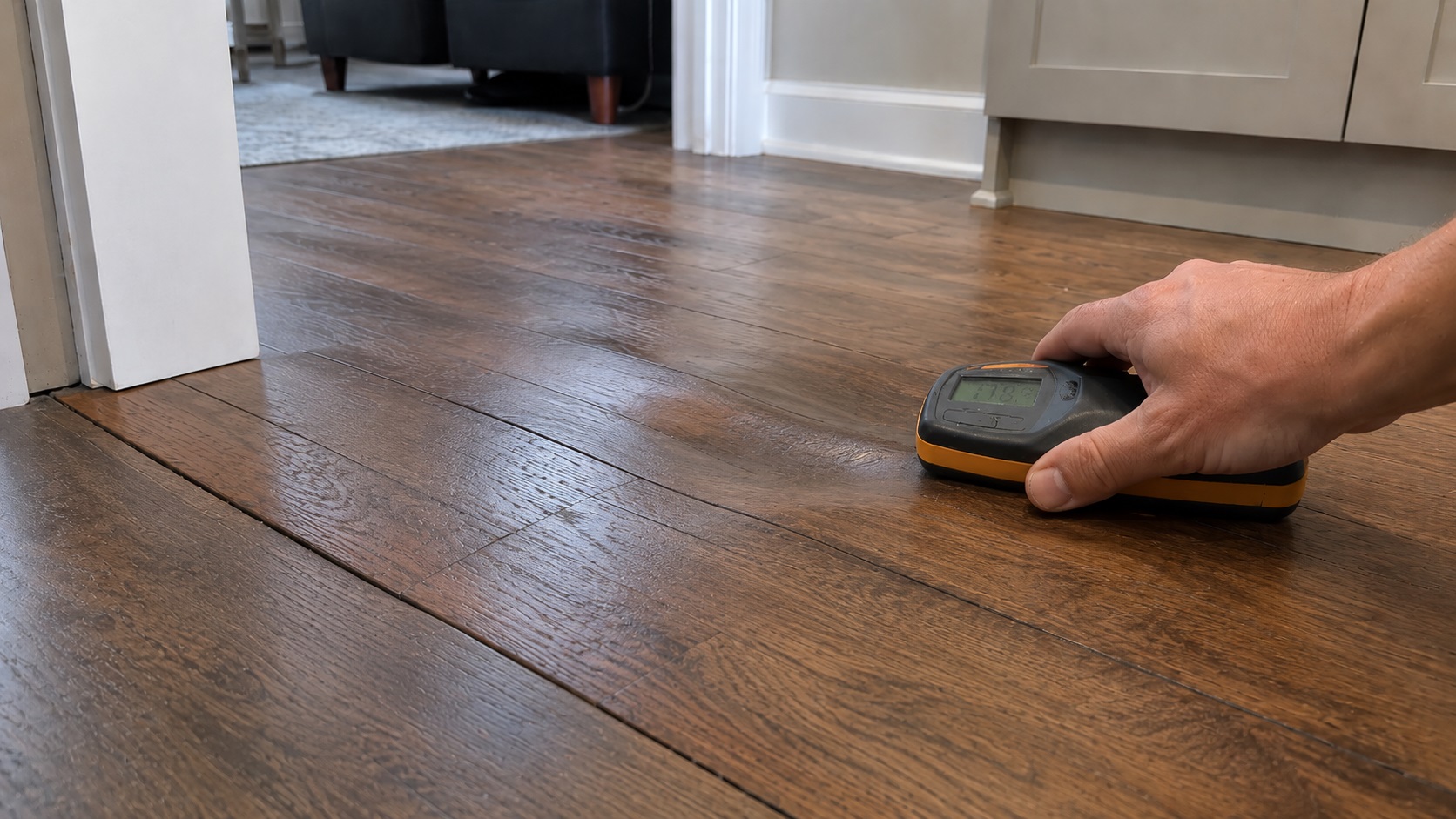
Why Flooring Feels Soft After Water Damage
Flooring feels soft after water damage when moisture weakens the layers beneath the visible surface. The finished flooring may still look intact, but the subfloor, underlayment, adhesive, or wood framing below can absorb water, swell, lose rigidity, and begin flexing under weight.
This soft, spongy, or unstable feeling is a structural warning sign, not just a surface problem. A floor that compresses, shifts, dips, or moves underfoot often means water has reached materials that help support the floor system.
If the softness is spreading, located near walls or supports, or accompanied by sagging, odors, staining, or repeated moisture, the area should be inspected before it is covered, refinished, or treated as dry. For broader structural warning signs, see Structural Moisture Problems in Homes.
Why Flooring Becomes Soft After Water Exposure
Soft flooring develops because water changes the physical structure of materials beneath the visible surface. When moisture enters the flooring system, it begins affecting the materials that provide strength and support.
The softness you feel underfoot is not usually caused by the surface flooring alone. Instead, it results from weakening of the subfloor and supporting layers beneath the visible flooring.
Safety note: Do not keep walking on a soft, sagging, crumbling, or expanding section of floor to “test” it. If the floor moves noticeably under normal body weight, feels unstable near a wall or support, or continues getting worse after drying attempts, limit traffic in that area and have the floor structure evaluated.
Water Moves Beneath Flooring Layers Quickly
Water spreads beneath flooring materials faster than many homeowners expect. Even small leaks can allow moisture to travel outward from the original source.
Moisture movement occurs through several mechanisms:
- Gravity pulling water downward into subfloor layers
- Capillary action allowing water to spread sideways
- Absorption into porous materials
- Migration through seams and joints
This movement allows moisture to spread beneath flooring before visible damage appears on the surface.
Subfloor Materials Absorb Moisture and Lose Strength
The subfloor provides much of the support beneath finished flooring. When moisture reaches this layer, it can soak into the material and weaken the floor from below.
Most residential subfloors are made from materials that absorb water easily, including:
- Plywood
- Oriented strand board (OSB)
- Particleboard
- Wood-based composite panels
When these materials absorb moisture, they expand and soften. The bonding agents that hold wood fibers together weaken, reducing the material’s ability to support weight.
This loss of strength is what causes flooring to feel soft when walked on.
Moisture Weakens Structural Stability Over Time
Soft flooring rarely develops instantly. Instead, it progresses as moisture remains trapped within structural materials.
During the early stages of moisture exposure, the floor may feel normal. As moisture continues to penetrate deeper into structural layers, the materials gradually weaken.
This progression often follows a predictable pattern:
- Moisture enters the flooring system
- Subfloor materials absorb water
- Adhesive bonds begin weakening
- Structural materials lose rigidity
- Floor begins to feel soft or unstable
The longer moisture remains trapped, the more severe the structural weakening becomes.
Surface Materials May Hide Underlying Damage
One of the most dangerous aspects of water damage is that surface materials often hide deeper problems. Flooring may look intact while structural layers beneath it are deteriorating.
This hidden damage allows problems to worsen before they are discovered. Many homeowners do not realize the extent of moisture damage until softness becomes noticeable.
If soft areas develop, performing a structured inspection helps confirm how widespread the problem may be. Detailed inspection guidance is provided in how to inspect flooring for hidden moisture, which explains how to identify moisture beneath flooring layers.
How Water Weakens Subfloor Materials
The subfloor supports the finished flooring and helps distribute weight across the floor system. When water reaches this layer, swelling, fiber separation, adhesive failure, and material breakdown can reduce strength and create the soft or spongy feeling underfoot.
Wood-Based Subfloors Absorb Water Rapidly
Most residential subfloors are made from wood-based materials such as plywood or oriented strand board (OSB). These materials contain fibers that naturally absorb moisture.
When water enters wood-based subfloors:
- Wood fibers swell as they absorb moisture
- Internal bonding agents weaken
- Material density changes
- Structural strength decreases
These changes create flexibility in areas that were previously rigid. As the material loses stiffness, the flooring above begins to feel soft or unstable.
Swelling Reduces Structural Strength
As moisture enters the subfloor, swelling occurs. This expansion creates internal stress within the material, which weakens its ability to support weight.
Swelling may cause:
- Uneven floor surfaces
- Raised sections beneath flooring
- Loss of structural integrity
- Increased movement under pressure
Over time, repeated swelling and drying cycles can permanently weaken subfloor materials, even if moisture levels later decrease.
Different Subfloor Materials React Differently
Not all subfloor materials respond to moisture in the same way. The severity of softness often depends on the type of material installed beneath the flooring.
Common subfloor material responses include:
- Plywood: May swell moderately but sometimes recovers if dried quickly.
- Oriented Strand Board (OSB): Swells significantly and often loses strength permanently.
- Particleboard: Highly vulnerable to moisture and typically deteriorates quickly.
- Concrete: Does not soften but may allow moisture to move upward into surface layers.
Knowing the subfloor type helps explain how quickly softness may develop and how severe damage may become.
Extended Moisture Exposure Causes Progressive Damage
The duration of moisture exposure plays a major role in how severely subfloor materials weaken. Short-term moisture exposure may cause temporary swelling, but long-term exposure leads to permanent structural damage.
Extended moisture exposure may result in:
- Loss of bonding strength between fibers
- Breakdown of structural components
- Permanent softness in affected areas
- Gradual expansion of damaged zones
As moisture remains trapped, the risk of widespread structural weakening increases significantly.
What Happens to Flooring Adhesives After Water Damage
Adhesives play an important role in holding flooring materials securely in place. When water reaches adhesive layers, bonding strength weakens. This loss of adhesion contributes to movement and instability beneath flooring surfaces.
Adhesive failure is often one of the earliest contributors to soft flooring conditions.
Moisture Breaks Down Adhesive Bonds
Many flooring adhesives are designed to withstand normal environmental conditions but can degrade when exposed to prolonged moisture.
When adhesives weaken:
- Flooring materials begin separating from the subfloor
- Movement increases beneath the surface
- Surface layers lose stability
- Softness becomes more noticeable
This breakdown allows flooring to shift slightly under pressure, contributing to the spongy sensation felt underfoot.
Adhesive Failure Often Starts Before Structural Damage Is Visible
In many cases, adhesives begin failing before subfloor materials show visible signs of deterioration. This early weakening allows movement beneath the flooring, which may go unnoticed until softness becomes more pronounced.
Early adhesive failure may produce:
- Slight movement in specific areas
- Loose flooring edges
- Minor separation between materials
- Changes in floor stability
These early changes often signal deeper moisture-related damage developing beneath the surface.
Loose Flooring Increases Stress on Structural Layers
When adhesives fail, flooring materials shift more easily under weight. This increased movement places additional stress on already weakened subfloor materials.
Over time, this added stress may:
- Increase softness in affected areas
- Cause damage to spread outward
- Create uneven pressure across flooring surfaces
- Accelerate structural weakening
Adhesive failure and subfloor weakening often occur together, reinforcing each other as moisture damage progresses.
How Swelling Creates a Spongy Floor
Moisture does not only make wood-based materials wet; it changes their shape. As plywood, OSB, particleboard, or underlayment absorbs water, the material expands. That expansion can push against seams, adhesives, fasteners, and surrounding flooring layers.
Once the floor system has expanded, it may not return to its original strength even after the surface feels dry. Repeated wetting and drying cycles can leave weak spots, raised edges, separated layers, or flexible areas that continue moving under pressure.
When Soft Flooring Becomes Dangerous
Soft flooring becomes more concerning when the affected area grows, sags, moves under normal body weight, or appears near structural supports.
Large Soft Areas Signal Structural Weakening
When softness spreads across large areas of flooring, the structural layers beneath the surface may be significantly weakened. This condition increases the risk of further deterioration and instability.
Large soft areas may cause:
- Unstable walking surfaces
- Uneven floor movement
- Difficulty supporting furniture weight
- Increased risk of collapse in extreme cases
Large affected areas should always be taken seriously, as they often indicate widespread moisture damage.
Increasing Softness Over Time Indicates Ongoing Damage
Soft flooring that worsens over time suggests that moisture remains present beneath the surface. Continued exposure allows structural weakening to spread further.
Signs of increasing damage include:
- Soft spots expanding outward
- Floor movement becoming more noticeable
- Uneven surfaces developing gradually
- Additional areas becoming unstable
Worsening softness is a strong indicator that moisture problems have not been fully resolved.
Visible Sagging Suggests Advanced Structural Damage
Sagging floors are one of the most serious signs of structural weakening. When structural materials lose strength, they may no longer support weight effectively.
Visible sagging may appear as:
- Noticeable dips in flooring
- Uneven walking surfaces
- Furniture leaning slightly
- Floor sections appearing lower than surrounding areas
These signs indicate advanced damage that requires professional evaluation.
Soft Flooring Near Structural Supports Is Especially Concerning
Softness near walls, support beams, or load-bearing areas carries higher risk because these locations play a major role in supporting the structure.
Soft spots in these areas may indicate:
- Subfloor deterioration beneath critical supports
- Moisture damage affecting structural components
- Reduced load-bearing capacity
- Increased risk of structural failure
Immediate evaluation is recommended when softness develops near structural support areas.
Why Soft Spots Often Spread Over Time
Soft flooring rarely stays limited to a single location. In most cases, soft spots gradually expand because moisture spreads beneath flooring layers. Even when the original leak or spill seems contained, hidden moisture often continues moving through structural materials.
Moisture Travels Beyond the Original Wet Area
Water rarely remains confined to the location where it first enters the flooring system. Instead, it spreads through materials by gravity and capillary action, allowing moisture to reach areas that appear dry on the surface.
Moisture movement often occurs through:
- Seams between flooring materials
- Gaps between subfloor panels
- Spaces beneath underlayment layers
- Structural joints and framing components
This movement allows soft spots to develop outside the original wet location, sometimes days or weeks after the initial water exposure.
Subfloor Materials Retain Moisture Longer Than Expected
Subfloor materials can hold moisture even after surface layers feel dry. When trapped moisture remains inside these materials, it continues weakening the structure.
Moisture retention may result in:
- Delayed soft spot development
- Gradual spread of weakened areas
- New areas becoming unstable over time
- Recurring moisture-related damage
This delayed damage often surprises homeowners who believe the original problem was resolved.
Repeated Moisture Exposure Accelerates Spread
Repeated exposure to moisture significantly increases the rate at which soft spots expand. Even minor leaks that occur multiple times can gradually weaken surrounding materials.
Common causes of repeated moisture exposure include:
- Small plumbing leaks
- Condensation from appliances
- Recurring spills in the same area
- Poor ventilation allowing humidity buildup
Over time, repeated exposure weakens larger areas of the flooring system.
What to Check Before Covering a Soft Floor
A soft floor should not be covered with new flooring, paint, sealant, or trim until the moisture source and structural condition are understood. Covering the area too soon can trap moisture, hide worsening damage, and make later repairs more expensive.
- Check whether the soft area is growing, spreading, or appearing in multiple spots.
- Look for sagging, dipping, uneven flooring, or furniture that no longer sits level.
- Smell for musty odors that suggest moisture remains trapped beneath the surface.
- Confirm that the original leak, spill, appliance problem, or flood source has been corrected.
- Avoid reinstalling flooring until hidden moisture and subfloor stability have been checked.
Frequently Asked Questions About Soft Flooring After Water Damage
Is soft flooring after water damage dangerous?
Soft flooring can become dangerous if structural materials lose enough strength to support weight safely. Small soft spots may not present immediate danger, but large or worsening areas increase the risk of instability and potential structural failure.
If softness spreads, sagging develops, or movement becomes noticeable during normal walking, the situation should be evaluated carefully.
Can soft flooring dry and return to normal?
In some cases, flooring may partially recover if moisture exposure is brief and drying occurs quickly. However, prolonged moisture exposure often causes permanent structural weakening that does not fully reverse after drying.
The longer moisture remains trapped beneath flooring, the less likely the structure will return to its original strength.
Does soft flooring always mean mold is present?
Soft flooring does not always mean mold is present. Softness usually indicates structural weakening caused by moisture. Mold growth may develop later if moisture remains trapped, but it is not guaranteed to appear immediately.
Monitoring moisture conditions remains important because prolonged dampness increases mold risk.
How fast can flooring become soft after water exposure?
Softness can begin developing within 24 to 48 hours after water exposure, especially when moisture remains trapped beneath flooring materials. The speed of damage depends on factors such as material type, humidity levels, and temperature.
Higher humidity and warmer temperatures accelerate the weakening process.
Can small leaks cause soft flooring?
Yes, small leaks can cause soft flooring over time. Slow leaks often allow moisture to remain hidden for extended periods, gradually weakening structural materials without producing obvious early warning signs.
Repeated exposure from small leaks is one of the most common causes of widespread flooring damage.
What Soft Flooring After Water Damage Means
Flooring that feels soft after water damage usually means moisture has affected the support layers beneath the visible surface. The problem may involve swollen subfloor panels, weakened adhesives, damaged underlayment, or structural materials that no longer hold weight as firmly as they should.
The most important next step is to treat softness as a diagnostic warning. Find the moisture source, check whether the soft area is spreading, and avoid covering the floor until the hidden layers have been evaluated.
Early identification of soft areas improves the chances of limiting damage and preventing further structural deterioration. Before covering, refinishing, or reinstalling flooring, confirm that the source of moisture has been corrected and that the affected layers are dry enough to remain stable.
If the floor stays soft after drying attempts or moisture keeps returning beneath the same area, the issue has moved beyond basic observation. The next step is covered in how to fix persistent moisture under floors, which explains when deeper repair evaluation may be needed.
Key Takeaways
- Soft flooring usually indicates structural weakening beneath the surface.
- Subfloor materials absorb moisture and lose strength when wet.
- Adhesive breakdown contributes to movement and instability.
- Moisture spreads beyond the original wet area, causing soft spots to expand.
- Large or worsening soft areas may signal serious structural damage.
- Soft flooring does not always mean mold is present, but prolonged moisture increases risk.
- Early inspection helps confirm the moisture source, the spread of damage, and whether the floor is safe to cover or repair.
3 Comments
Comments are closed.