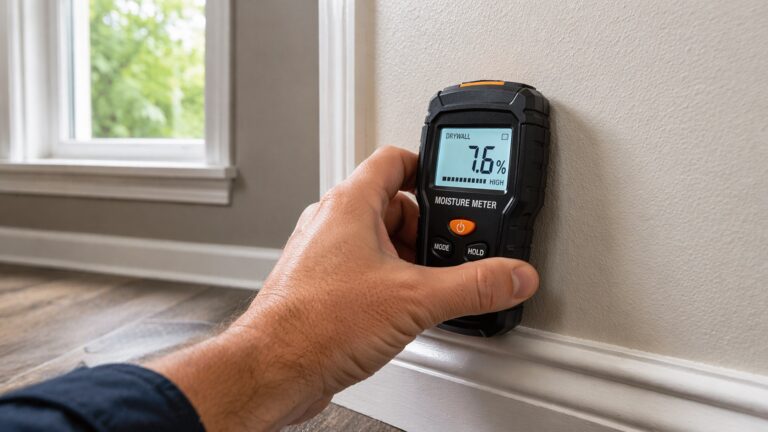
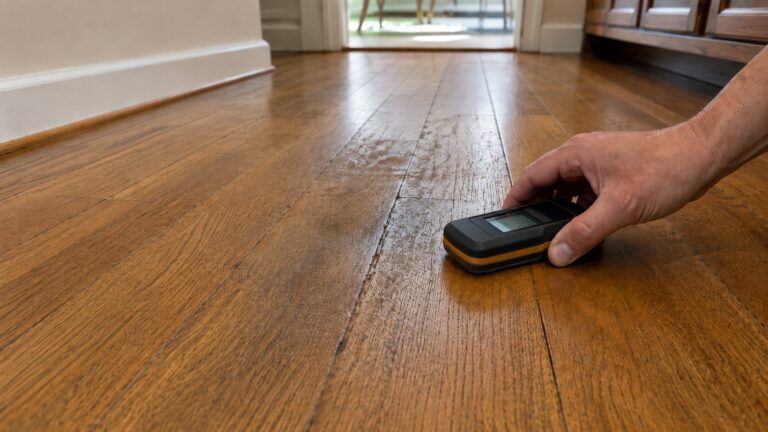
Signs of Slab Plumbing Leaks
Slab plumbing leaks are difficult to spot because the leaking pipe is hidden below or inside the concrete slab beneath the home. Unlike a visible leak under a sink or behind a toilet, a slab leak may not produce obvious water at first. Instead, the first signs may be a warm floor spot, unexplained water use, damp flooring, swollen baseboards, musty odors, running-water sounds, or flooring that begins to lift, crack, or discolor.
A slab leak can come from a hot water line, cold water line, or plumbing line routed beneath the slab. Because the leak is concealed, water may spread under flooring, move along cracks or gaps, dampen lower walls, or increase indoor humidity before the source is confirmed. This is why slab leaks can become serious if they are ignored. For a broader explanation of how hidden plumbing leaks affect building materials, see how plumbing leaks cause structural damage.
The most important pattern is persistence. A one-time spill dries and stays dry. A slab leak usually keeps causing moisture, sound, temperature changes, water use, or flooring damage until the leaking pipe is found and repaired.
What Is a Slab Plumbing Leak?
A slab plumbing leak is a leak in a pipe located below, inside, or passing through a concrete slab foundation. Many homes have plumbing lines routed beneath the slab before they rise into walls, fixtures, bathrooms, kitchens, laundry rooms, or utility areas. When one of those lines fails, water may leak under the concrete before it becomes visible inside the living space.
Slab leaks are usually harder to identify than leaks in exposed plumbing because the pipe is not visible. The concrete, flooring, underlayment, walls, and baseboards can all hide the early symptoms. In many cases, homeowners notice the effects of the leak before they know where the pipe is located.
Hot water lines and cold water lines can both leak
Many people associate slab leaks with warm floor spots, and warm floors can be an important clue. However, not every slab leak involves a hot water line. Cold water lines can also leak below the slab, and those leaks may not create a warm area on the floor.
A hot water slab leak may cause warmth under tile, wood, laminate, vinyl, or carpet. It may also cause the water heater to run more often. A cold water slab leak may show up through water meter movement, damp flooring, lower wall moisture, musty odor, or unexplained water use without the warm floor clue.
Slab leaks are different from ordinary floor spills
A spill usually dries and does not return. A slab leak tends to create recurring or spreading symptoms: damp flooring that comes back after drying, a musty odor near the same area, meter movement when fixtures are off, or a warm floor spot that stays warm when no one has used hot water.
The key difference is persistence. A slab leak keeps feeding moisture into the home until the pipe is found and repaired.
Early Signs of a Slab Plumbing Leak
The earliest signs of a slab plumbing leak are often indirect. You may not see water coming through the floor at first. Instead, you may notice changes in water use, sounds, temperature, flooring behavior, or moisture near the edges of rooms.
Unexplained increase in the water bill
A sudden or steady increase in the water bill can be one of the first signs of a hidden plumbing leak. If household water use has not changed but the bill rises, water may be escaping somewhere in the system. A slab leak is one possible cause, especially when there are no visible leaks at toilets, faucets, appliances, hose bibs, or exposed pipes.
This sign is especially concerning when it appears with other symptoms, such as a warm floor spot, damp flooring, musty odor, water meter movement, or moisture near lower walls. A high water bill alone does not prove a slab leak, but it should not be ignored.
Water meter movement when everything is off
If all faucets, showers, toilets, appliances, irrigation systems, and water-using fixtures are off, the water meter should not continue showing use. Check that toilets are not running and that irrigation is off before relying on the reading. If the meter still moves, it may indicate a pressurized leak somewhere in the plumbing system.
A moving meter does not automatically prove the leak is under the slab, but it is an important warning sign. If the meter moves and you also have floor moisture, warm flooring, baseboard staining, or unexplained dampness over a slab, a slab leak becomes more likely.
Sound of running water when no fixtures are on
Some slab leaks create the sound of running, rushing, hissing, or faint water movement even when no fixtures are being used. The sound may be easier to hear at night when the house is quiet. It may seem to come from the floor, a lower wall, a bathroom, a kitchen, or a utility area.
Plumbing systems can make normal sounds after use, but continuing water sounds when everything is off are more concerning. If the sound is paired with water meter movement or floor moisture, the situation should be checked promptly.
A warm spot on the floor
A warm floor spot is one of the most recognizable signs of a hot water slab leak. First rule out sunlight, heating vents, nearby appliances, radiant floor heat, and normal heat from a recently used shower or bath. If the same area stays warm without those explanations, hot water may be leaking below the slab.
Warm spots are often noticed on tile, concrete, laminate, vinyl, or wood floors. The area may feel slightly warmer than nearby flooring, or it may stay warm for long periods. A warm floor spot does not always prove a slab leak, but when it appears with higher water bills, water heater cycling, or meter movement, it is a strong warning sign.
The water heater runs more often than usual
A hot water slab leak can cause the water heater to work more than normal because heated water is continuously escaping from the line. You may hear the water heater cycling when no one is using hot water, notice reduced hot water availability, or see higher energy use.
This symptom matters most when it appears together with a warm floor area or unexplained water use. A water heater can run more often for other reasons, but a hidden hot water leak below the slab is one possibility that should be ruled out.
Taken together, a warm floor area, frequent water heater cycling, reduced hot water, and higher energy use are stronger clues than any one sign alone. These symptoms point more toward a hot water slab leak than a cold water slab leak.
Flooring and Surface Signs of a Slab Leak
Because slab plumbing leaks happen below the finished floor, flooring changes are often among the first visible symptoms. Tile may crack or loosen, carpet may feel damp, laminate may swell, wood may cup or darken, vinyl may bubble, and bare concrete may show damp spots or discoloration.
Damp carpet or flooring over concrete
Damp flooring with no obvious spill, appliance leak, or surface source can be a warning sign of moisture rising from below the slab or moving under the flooring. Carpet may feel cool, damp, or musty. Laminate or vinyl may feel slightly raised. Wood flooring may feel uneven or show darkened edges.
One damp spot does not automatically prove a slab leak. But if the same area keeps returning after drying, appears in the middle of a room, or occurs near plumbing routes, the moisture should be investigated. Persistent dampness over a concrete slab is different from a one-time spill.
Warped, buckled, or lifting flooring
Moisture from a slab leak can affect flooring materials from underneath. Laminate may swell at seams. Engineered wood or hardwood may cup, crown, separate, or darken. Vinyl planks or sheet vinyl may bubble or release from the slab. Carpet padding may hold moisture and create odor.
Flooring damage is more concerning when it appears without a known spill or cleaning event. If the damage continues spreading, the slab may still be releasing moisture into the floor assembly. For more on moisture-related floor softening and damage behavior, see why flooring feels soft after water damage.
Loose tile, cracked grout, or hollow-sounding areas
Tile installed over a slab can hide moisture for a while. Eventually, moisture movement, adhesive failure, slab movement, or repeated wetting can contribute to loose tile, cracked grout, or hollow-sounding areas. These signs can have other causes, including installation issues or normal movement, but they should not be dismissed when other leak symptoms are present.
Tile symptoms are especially suspicious when they appear with a warm floor spot, musty odor, water meter movement, or damp baseboards nearby. A cracked tile by itself may not mean plumbing is leaking, but cracked tile plus unexplained moisture deserves attention.
Moisture appearing along floor edges
Water from a slab leak may travel under flooring and show up along room edges, expansion gaps, baseboards, door thresholds, or lower wall areas. This can make the leak look like a wall leak, exterior leak, or cleaning issue even though the source is below the slab.
Moisture along floor edges is important because water often moves to low points or gaps where it can escape. If the floor edge stays damp or the baseboard begins to swell, the hidden moisture may already be affecting more than the finished floor.
Musty odor near the floor
A slab leak can create a musty odor when flooring, carpet padding, baseboards, lower drywall, or trapped debris stays damp. The smell may be strongest near the floor, along walls, near closets, or in rooms with poor airflow.
Odor alone does not prove a slab leak, but persistent mustiness over a slab matters when it appears with damp flooring, warm spots, meter movement, or unexplained water use.
Lower Wall and Baseboard Signs of a Slab Leak
Slab leak symptoms do not always stay in the middle of the floor. Water can move toward wall edges, wick upward into baseboards, or dampen the lower part of drywall. This can make a slab leak look like a wall leak, window leak, or humidity problem unless the pattern is carefully checked.
Swollen or stained baseboards
Baseboards can absorb moisture that reaches the floor-wall joint. Wood or MDF trim may swell, separate from the wall, bubble under paint, discolor, or feel soft along the bottom edge. This often happens where water collects at the edge of a room or behind flooring.
Swollen baseboards are more suspicious when they appear on a slab floor with no nearby spill, no visible wall leak, and no clear exterior source. If the baseboard damage keeps spreading or returns after drying, moisture may still be active below or behind the finished surface.
Damp drywall near the floor
Lower drywall can wick moisture upward when water is present at the base of the wall. The first signs may be paint bubbling near the floor, staining above the baseboard, soft drywall at the lower wall, or a musty odor along the wall line.
This symptom can be mistaken for a wall plumbing leak, but the source may be below the slab if moisture is appearing at multiple floor edges or if there is water meter movement with no visible wall leak. The pattern matters more than a single spot.
Mold-like spots near lower walls
Mold-like discoloration near the bottom of walls can appear when slab moisture keeps the floor-wall area damp. Bathrooms, laundry rooms, kitchens, hallways, and closets may show these signs first because they often have plumbing nearby or reduced airflow.
Surface cleaning may remove visible spotting temporarily, but it will not solve the problem if moisture is still coming from below the slab. Recurring growth near the same lower wall area suggests the moisture source has not been controlled.
Damage on both sides of a wall
If baseboards or lower drywall show moisture on both sides of an interior wall, the water may be moving below the wall rather than coming from one painted surface. This can happen when slab moisture spreads under flooring or along the bottom plate area.
This is not automatic proof of a slab leak, but it is a useful clue. Moisture affecting both sides of a wall near the floor should be investigated carefully, especially when there is no obvious roof, window, appliance, or plumbing fixture leak above that wall.
How Slab Leak Signs Differ From Other Moisture Problems
Slab leak symptoms can look like appliance leaks, wall leaks, groundwater seepage, condensation, or surface spills. The pattern matters more than one symptom alone.
Slab leaks vs. appliance leaks
Appliance leaks usually begin near the appliance. A dishwasher, refrigerator water line, washing machine, water heater, or ice maker can wet the floor and mimic a slab problem. Before assuming the pipe below the slab is leaking, check nearby appliances, supply lines, valves, pans, and drain connections.
A slab leak becomes more likely when moisture appears away from appliances, returns after drying, affects the floor from below, or appears with meter movement when appliances are not running.
Slab leaks vs. wall plumbing leaks
A wall plumbing leak often shows symptoms higher on the wall, near plumbing fixtures, or inside a wall cavity. Paint may bubble, drywall may soften, or water may run down behind baseboards. A slab leak often appears at the floor level first, especially as damp flooring, warm floor spots, swollen baseboards, or moisture along the floor-wall joint.
However, the two can overlap. Water from a wall leak can run down to the slab edge, and water from a slab leak can wick upward into lower drywall. If the symptoms are unclear, the next step is professional leak location rather than guessing. For broader under-floor leak evaluation, see how to detect plumbing leaks under floors.
Slab leaks vs. groundwater or basement floor seepage
In basements or below-grade spaces, water coming through a floor may be related to hydrostatic pressure, groundwater, poor drainage, or foundation cracks rather than plumbing. Groundwater seepage often worsens after rain, snowmelt, or saturated soil conditions. A plumbing slab leak may continue regardless of weather and may show water meter movement.
If the moisture appears mostly after rain, the issue may belong more to basement water intrusion than plumbing. For that situation, see signs of water coming through basement floors. If the moisture appears during dry weather, near plumbing routes, with warm floor spots, or with unexplained water use, a slab plumbing leak should be considered.
Slab leaks vs. condensation
Condensation usually forms on cool surfaces when humid air reaches them. It may appear as surface dampness, sweating, or light moisture over broad areas. A slab leak tends to create more persistent, localized, or spreading symptoms from below the surface.
Condensation may improve with ventilation, dehumidification, and humidity control. A slab leak will usually continue until the pipe is repaired. If a damp area returns in the exact same floor location and water use is unexplained, do not assume condensation is the only cause.
When Slab Leak Signs Are Serious
Some slab leak signs require prompt action because the leak may be active and hidden. The most serious patterns involve ongoing water use, spreading floor damage, visible water, electrical risk, mold, or lower wall damage that keeps returning.
The water meter keeps moving
Meter movement while all fixtures and appliances are off is one of the strongest signs of an active pressurized leak. If this happens along with slab-related symptoms, call a plumber. A pressurized leak can continue releasing water until the line is shut off or repaired.
Flooring damage is spreading
If damp flooring, warping, buckling, tile movement, or lower wall moisture keeps spreading, the moisture source may still be active. Do not replace flooring before the source is located. New flooring can trap moisture and hide the same problem until damage returns.
There is visible water with no obvious source
Visible water on a slab floor with no spill, appliance leak, roof leak, or exterior source should be treated seriously. Water may appear near floor edges, cracks, thresholds, or low spots. If the water returns after cleanup, the source is still present.
Musty odor or mold keeps returning
Persistent odor or recurring mold-like spots near lower walls or flooring suggest moisture is staying trapped. Cleaning the surface may help temporarily, but it will not fix a leak beneath the slab. The source must be found first.
What to Do If You Suspect a Slab Leak
If you suspect a slab plumbing leak, avoid breaking the floor or concrete yourself. Slab leaks require careful location because the visible symptom may not be directly above the leaking pipe. Opening the wrong area can create unnecessary damage and still miss the source.
Document the symptoms
Take photos of damp flooring, swollen baseboards, cracks, stains, mold-like spots, and any visible water. Note when the symptoms appear, whether the water meter moves, whether the floor is warm, and whether the water heater runs unexpectedly.
Stop using water if the leak appears active
If there is visible water, meter movement, spreading damage, or a strong suspicion of an active supply leak, shut off water if needed and call a plumber. Keep water away from outlets, cords, and electrical equipment, and avoid walking through wet areas if electrical contact is possible. This can reduce risk while limiting the amount of water entering the slab area before the source is located.
Call a plumber for professional leak location
A plumber can use specialized methods to locate concealed leaks without guessing, such as acoustic listening, pressure testing, thermal clues, or line isolation. If the slab area has already been repaired before or the problem keeps returning, see how to fix persistent plumbing leak locations.
If you are unsure whether the symptoms justify professional help, see when to hire a plumbing professional for leak repairs. Slab leaks are one of the situations where early professional diagnosis can prevent unnecessary demolition and wider moisture damage.
Dry affected materials after the leak is repaired
Fixing the pipe does not automatically dry flooring, baseboards, drywall, carpet padding, or other materials affected by the leak. If moisture has reached finished materials, they may need drying, removal, or professional evaluation. Do not install new flooring or repaint lower walls until the area is confirmed dry.
FAQ: Signs of Slab Plumbing Leaks
How do I know if I have a slab plumbing leak?
You may have a slab plumbing leak if you notice unexplained water meter movement, a higher water bill, a warm floor spot, damp flooring over concrete, swollen baseboards, musty odor near the floor, running-water sounds, or flooring that warps, lifts, or cracks without another clear cause. One sign alone does not prove a slab leak, but several signs together should be checked by a plumber.
Is a warm floor spot always a slab leak?
No. A warm floor spot can come from sunlight, heating ducts, radiant floor heating, appliances, or nearby mechanical equipment. It becomes more suspicious when the warm area stays warm without an obvious heat source, appears over a slab, and occurs with water meter movement, higher water bills, or unusual water heater activity.
Can a slab leak happen without visible water?
Yes. Many slab leaks stay below the concrete or beneath finished flooring at first. Early signs may be unexplained water use, warm flooring, musty odor, damp carpet, lower wall stains, swollen baseboards, or flooring changes.
Why is my water bill high but I see no leak?
A high water bill with no visible leak can mean water is escaping in a hidden area, such as under a slab, inside a wall, below a floor, or in an exterior line. Toilets, irrigation, appliances, and exposed plumbing should be checked first, but if those are not the cause and slab-related symptoms are present, a hidden slab leak is possible.
Should I break the concrete to find a slab leak?
No. Do not break concrete just because you suspect a slab leak. The visible symptom may not be directly above the pipe failure. A plumber should locate the leak first using professional testing methods before any floor or slab access is planned.
When should I call a plumber for slab leak signs?
Call a plumber if the meter moves when everything is off, you hear water running with no fixtures on, a warm floor spot appears with higher water use, flooring stays damp, baseboards swell, or moisture returns after drying. Slab leaks usually require professional leak location.
Key Takeaways
- Slab plumbing leaks happen when pipes below or inside a concrete slab begin leaking.
- Common signs include warm floor spots, high water bills, meter movement, damp flooring, swollen baseboards, musty odors, and running-water sounds.
- Hot water slab leaks may cause warm floors, water heater cycling, reduced hot water, and higher energy use.
- Cold water slab leaks may not create warm spots, so meter movement and recurring moisture symptoms are important clues.
- Slab leaks can resemble appliance leaks, wall leaks, condensation, or groundwater seepage, so look for persistent symptoms that return or spread.
- Do not break concrete or replace flooring before the leak is professionally located.