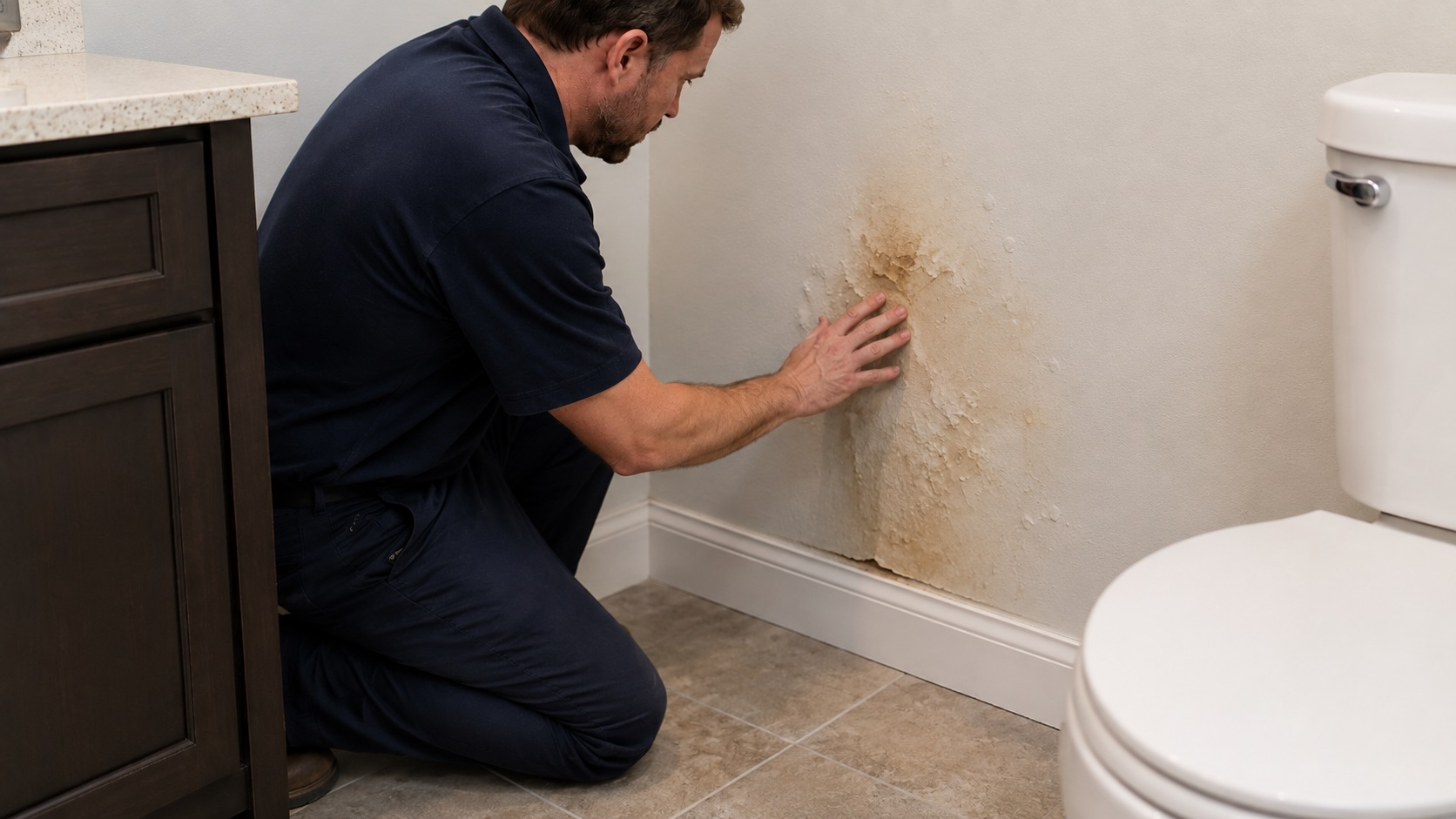
When to Hire a Plumbing Professional for Leak Repairs
Hire a plumbing professional when a leak is active, hidden, recurring, connected to pressurized supply lines, inside a wall or floor, affecting building materials, near electrical components, or difficult to trace confidently. Small visible drips from accessible drain fittings may sometimes be monitored briefly, but leaks that spread, return, or involve concealed plumbing should not be managed with towels, buckets, or repeated tightening.
The main question is not only how much water you see. It is whether the source is exposed, whether the line is under pressure, whether nearby materials are wet, and whether the leak stops completely after a simple correction. Plumbing leaks can become structural moisture problems when water reaches subfloors, framing, drywall, or concealed cavities. For a broader explanation of how plumbing moisture damages homes over time, see How Plumbing Leaks Cause Structural Damage.
Quick Decision Guide: Call a Plumber or Monitor the Leak?
| Leak situation | Best next step | Why it matters |
|---|---|---|
| Water is actively flowing, spreading, or soaking materials | Call a plumber now | Active water can damage floors, ceilings, cabinets, and hidden cavities quickly. |
| The leak is from a pressurized supply line, shutoff valve, water heater, or appliance line | Call a plumber soon | Supply leaks can continue even when fixtures are not being used. |
| The source is inside a wall, under flooring, below a slab, or unclear | Call a plumber | Hidden leaks are easy to misdiagnose and can spread before the full damage is visible. |
| Water has reached drywall, flooring, cabinets, ceilings, baseboards, or subflooring | Call a plumber first, then evaluate drying or restoration | Fixing the pipe does not automatically dry the materials around it. |
| A tiny exposed drain drip stops completely after a simple correction | Monitor briefly | This may be minor if the area stays dry and no materials are damaged. |
| The same leak returns after tightening, patching, or replacing small parts | Call a plumber | Recurring leaks usually mean the underlying cause was not corrected. |
What Counts as a Plumbing Leak That May Need Professional Repair?
A plumbing leak may come from a supply line, drain line, fixture, appliance connection, pipe joint, valve, toilet, shower, tub, water heater, or hidden plumbing run. The type matters because drain leaks often appear only during fixture use, while pressurized supply leaks can continue even when no one is using water.
Supply line leaks
Supply line leaks come from pressurized pipes or flexible lines that deliver water to fixtures and appliances. They may involve shutoff valves, faucet connections, toilet supply lines, refrigerator water lines, dishwasher lines, washing machine hoses, or pipes inside walls and floors.
Because supply lines are under pressure, they can leak even when the fixture is not being used. That is why a steady supply-side drip usually deserves faster attention than a minor drain drip that appears only during fixture use.
Warning signs may include steady dripping, water appearing when fixtures are off, water meter movement, damp drywall, moisture under flooring, pressure changes, corrosion at fittings, or water collecting near appliance lines. If the leak is not clearly isolated and easy to stop, a plumbing professional should evaluate it.
Drain leaks
Drain leaks usually appear when water is being used. A sink drain may leak only when the faucet runs. A shower drain may leak only during bathing. A dishwasher drain line may leak only during a cycle. Because these leaks are not always constant, they can be easy to miss.
Common signs include damp cabinet bottoms, musty odors under sinks, stains below bathrooms, ceiling spots after shower use, wet flooring near tubs, or water under appliances. A drain leak may seem less urgent than a pressurized supply leak, but it can still damage cabinets, subfloors, drywall, and framing over time.
If the leak is visible, minor, and clearly coming from an accessible drain fitting, the situation may be simple. But if moisture appears below floors, behind walls, under a tub, or in a ceiling below the fixture, a plumber should inspect the system before more materials become wet.
Fixture and appliance leaks
Fixtures and appliances are common leak sources because they combine supply lines, drain connections, seals, valves, and moving parts. Toilets, sinks, tubs, showers, dishwashers, refrigerators, washing machines, and water heaters can all leak in different ways.
A toilet may leak around the base, a shower may leak behind the wall or below the pan, a refrigerator line may drip behind the appliance, and a washing machine hose can fail suddenly. Some appliance-related leaks require both plumbing repair and moisture cleanup if water has reached flooring, cabinets, subflooring, or walls.
Hidden wall, floor, and slab leaks
Hidden plumbing leaks are among the most important reasons to hire a plumbing professional. They may not show as visible dripping; they may show up as damaged materials, unexplained water use, running-water sounds, or moisture that appears away from the actual pipe.
Leaks inside walls, under floors, or beneath slabs are difficult to evaluate without proper tools and experience. Opening the wrong area can create unnecessary damage, while waiting too long can allow moisture to spread through hidden materials.
If you suspect a wall leak, under-floor leak, or slab leak, it is usually better to call a plumbing professional than to keep guessing. For more specific guidance on wall-related symptoms, see How to Detect Plumbing Leaks Inside Walls.
Signs You Should Hire a Plumbing Professional
The signs below mean the leak has moved beyond simple observation and should be evaluated by a plumbing professional.
The leak is active or getting worse
An active leak that keeps dripping, spreads, or soaks nearby materials should not be managed indefinitely with a bucket or towel. This is especially true when the leak comes from a pressurized supply line, shutoff valve, water heater, appliance connection, or pipe inside a wall.
A leak that grows, returns more often, or starts dripping faster may indicate a failing fitting, corroded pipe, worn seal, pressure problem, or damaged connection. Waiting can increase both the plumbing repair and the water damage repair.
The source is hidden or unclear
If you cannot clearly identify where the water is coming from, a plumber should inspect the problem. Hidden leaks can travel along pipes, framing, cabinet bases, flooring, and wall cavities before appearing in a visible location.
For example, water under a cabinet may come from a drain fitting, supply valve, faucet connection, garbage disposal, dishwasher line, or water running from the back of the cabinet. A ceiling stain below a bathroom may come from a toilet seal, tub drain, shower valve, supply pipe, or overflow connection. If the moisture source is uncertain, professional diagnosis is usually more effective than trial-and-error patching.
Water has reached cabinets, flooring, drywall, or ceilings
Once a plumbing leak reaches building materials, the decision changes. A leak that wets a cabinet floor, baseboard, subfloor, drywall, ceiling, or finished flooring can leave moisture behind even after the visible water is wiped away.
Watch for swollen cabinet bottoms, warped flooring, bubbling paint, soft drywall, stains below bathrooms, damp baseboards, musty odors, or flooring that feels soft near plumbing fixtures. These signs suggest that the leak may have been active long enough to affect materials around it.
If water has reached these materials, a plumber should correct the source before cosmetic repairs begin. Otherwise, new drywall, flooring, or cabinet repairs may be damaged again.
The leak keeps coming back
A recurring leak is a strong sign that the original problem was not fully corrected. If the same fitting, valve, drain, pipe, toilet, or fixture keeps leaking after tightening, patching, or replacing small parts, it is time to involve a plumbing professional.
Recurring leaks may be caused by worn fittings, pipe movement, corrosion, poor alignment, pressure problems, damaged seals, failing valves, incompatible materials, or an issue farther downstream. Repeated tightening can also damage threads, seals, or connections.
If a leak returns after a repair attempt, the goal should shift from stopping the drip temporarily to identifying why that location keeps failing. For help understanding why the same area keeps failing, see How to Fix Persistent Plumbing Leak Locations.
Pipes show corrosion, movement, or repeated failure
Visible pipe corrosion, mineral buildup, rust stains, green or white deposits, loose supports, pipe movement, or repeated leaks in the same area can indicate a deeper plumbing issue. A single worn washer or loose connection is one thing. A pipe system showing repeated deterioration is another.
Corrosion can weaken pipe walls, fittings, valves, and connections. Movement can stress joints and cause small leaks to return. Poor support can allow pipes to shift when water pressure changes or fixtures are used.
When the pipe material itself appears compromised, a plumbing professional should evaluate whether the problem is isolated or part of a larger pipe condition. A quick patch may not be enough if the surrounding pipe is also deteriorating.
The leak is connected to a wall, floor, or slab
Leaks inside walls, under floors, or below slabs should be treated as professional-level problems. These areas are difficult to access, and the visible symptom may be far from the actual leak source.
Warning signs may include damp flooring, warm spots on floors, water sounds when fixtures are off, unexplained water bills, stains below bathrooms, wet baseboards, or water meter movement when no water is being used. If these symptoms appear, the leak may be hidden in a plumbing run rather than at a visible fixture.
Suspected slab leaks are especially important because they can continue unnoticed and affect flooring, concrete, soil moisture, and nearby building materials. For slab-specific warning signs, see Signs of Slab Plumbing Leaks.
When Plumbing Leaks Are Beyond DIY
Plumbing leaks move beyond DIY when the source is hidden, the system is pressurized, the repair requires opening walls or floors, or water has already spread into building materials.
The repair requires opening walls or floors
If finding or fixing the leak requires cutting into drywall, removing flooring, opening a ceiling, or accessing concealed pipes, it is usually time to call a plumbing professional. Opening the wrong area can create unnecessary damage, and hidden plumbing leaks can be difficult to trace without the right tools.
A plumber can help determine the most likely leak location before materials are removed. This can reduce unnecessary demolition and help separate plumbing repair from water damage repair.
If moisture is under flooring rather than at a visible fixture, How to Detect Plumbing Leaks Under Floors can help explain the warning signs, but professional diagnosis is usually the safer next step when the leak source is not exposed.
Shutoff valves do not stop the problem
A working shutoff valve can limit damage during a minor fixture leak. But if a valve does not close fully, leaks from the valve body, or fails during an active leak, the situation becomes more urgent.
Do not force a stuck or corroded valve aggressively. A damaged valve can worsen the leak or break. If the local shutoff does not stop the water, you may need to shut off water to a larger area of the home and call a plumber. A plumbing professional can replace or repair the valve and address the original leak source.
Multiple fixtures are affected
If more than one fixture shows symptoms, the problem may not be isolated to a single loose fitting. Multiple slow drains, repeated leaks in different locations, pressure changes, water backing up, or moisture appearing across several areas may indicate a larger plumbing issue.
This can happen with drain restrictions, pressure problems, aging pipe systems, improper installation, or supply-line issues. A plumber should evaluate the pattern instead of treating each symptom as a separate small repair.
Multiple affected fixtures are especially important when leaks appear on different floors, below bathrooms, or near shared plumbing walls. The actual issue may be inside a common wall, floor system, or drain line.
The leak involves supply pressure, drains, or sewer lines
Leaks involving pressurized supply lines, drain systems, or sewer-related water should be handled carefully. Supply leaks can continue releasing water even when the fixture is off. Drain leaks can contaminate cabinets, floors, and ceilings depending on the source. Sewer or wastewater leaks can involve health and sanitation concerns.
If the leak involves wastewater, sewage odor, backed-up drains, or contaminated water, do not treat it as a simple household drip. Call a qualified professional and avoid spreading contaminated water into clean areas.
When to Call a Plumbing Professional Immediately
Call quickly when the leak creates a high risk of water damage, contamination, or safety hazards.
A pipe bursts or water is flowing actively
A burst pipe or active water flow is an immediate plumbing problem. Shut off the water if you can do so safely, move belongings away from the area, and contact a plumbing professional. Do not rely on towels or buckets for an active plumbing release, especially if water has spread into floors, ceilings, or walls.
Water is near electrical components
Water near outlets, switches, ceiling fixtures, electrical panels, wiring, or appliances should be treated as a safety concern. Avoid touching wet electrical components or standing in water near electrical sources.
In this situation, the leak source still needs plumbing repair, but electrical safety may need to be addressed first. Depending on the severity, an electrician and water damage professional may be needed along with the plumber.
Ceiling, wall, or floor materials are saturated
Saturated drywall, bulging ceilings, wet baseboards, soaked flooring, or soft subflooring suggest that water has already moved beyond the plumbing fixture. Even after the leak is stopped, those materials may remain wet and continue causing damage.
A plumber should stop the source. Then the affected materials may need drying, removal, or repair. Do not paint over stains, replace flooring, or close walls until the source is fixed and the area is confirmed dry.
Sewage or contaminated water is involved
Leaks involving sewage, wastewater, drain backups, toilet overflows, or contaminated water should be treated as urgent. These situations are different from a clean-water drip under a sink because they can affect sanitation, indoor air quality, flooring, drywall, cabinets, and personal belongings.
Do not spread contaminated water while trying to clean around the leak. Avoid using affected fixtures until the source is identified. A plumbing professional should correct the plumbing issue, and a restoration company may be needed if contaminated water has reached building materials.
Slab leak symptoms are present
Suspected slab leaks should be evaluated quickly. Warning signs may include warm spots on the floor, unexplained water bills, the sound of running water when fixtures are off, damp flooring, low water pressure, or water meter movement when no water is being used.
Slab leaks can be difficult to locate without specialized equipment, and the visible moisture may not appear directly above the leaking pipe. Waiting can allow water to spread under flooring, into baseboards, or through surrounding materials.
A water heater is leaking from the tank
A water heater leak should be taken seriously, especially if water appears to be coming from the tank itself rather than a visible fitting or drain valve. A leaking tank usually cannot be repaired the same way a loose connection can.
If water is pooling around the water heater, shut off water or power only if you know how to do so safely and can reach the controls without standing in water. Then contact a plumbing professional. If surrounding flooring, walls, or nearby rooms are wet, additional drying may be needed.
When You May Not Need a Plumber Yet
You may be able to monitor briefly when the source is obvious, accessible, corrected safely, and not affecting building materials. The area should stay dry afterward.
A small accessible drip has an obvious source
A tiny drip from an exposed under-sink drain connection may not require immediate professional help if the source is obvious, the connection is accessible, the surrounding materials are dry, and the drip stops completely after a simple correction.
However, do not keep retightening the same fitting over and over. If the drip returns, the seal, alignment, fitting, valve, or pipe may need proper repair. A small recurring leak can still damage cabinet bases and flooring over time.
A loose connection was corrected and stays dry
If a loose, visible connection was corrected and the area stays dry through repeated fixture use, you may be able to monitor the area instead of calling a plumber immediately. This is most reasonable when there is no swelling, staining, odor, or hidden moisture nearby.
Continue checking the area for several days, especially after normal use. If moisture returns, the leak should be treated as unresolved rather than a one-time issue.
Condensation is mistaken for a leak
Sometimes water on a pipe is condensation rather than a plumbing leak. This can happen when humid indoor air contacts cold water lines, especially in damp cabinets, basements, crawl spaces, or poorly ventilated areas.
Condensation may still indicate a humidity problem, but it is not the same as a leaking pipe. If the pipe only sweats under certain humidity conditions and no fitting, valve, or pipe joint is dripping, monitoring and moisture control may be appropriate. If you are unsure, or if nearby materials are getting wet, have the area evaluated.
The area is dry after a known one-time spill
A one-time spill near a sink, appliance, toilet, or laundry area may look like a leak at first. If the source is clearly a spill, the area dries fully, and no moisture returns during normal fixture use, a plumber may not be needed.
Still, be careful with water that reaches flooring seams, cabinet bases, or baseboards. If odor, swelling, staining, or softness develops later, the moisture may have traveled farther than expected.
Who to Call for Different Leak Situations
A plumber stops the water source, but other professionals may be needed if the leak has already damaged materials, created mold concerns, or affected electrical systems.
Call a plumbing professional for the leak source
A plumbing professional is the right call when the issue involves active pipe leaks, leaking shutoff valves, supply line leaks, drain leaks, fixture leaks, slab leak symptoms, hidden wall leaks, under-floor plumbing, water heater leaks, or recurring leaks that do not stay fixed.
The plumber’s role is to identify and repair the source. This may include valves, fittings, pipes, drains, fixture connections, appliance lines, or hidden plumbing runs. Once the source is corrected, the remaining question is whether surrounding materials also need drying or repair.
Call a water damage restoration company for saturated materials
If water has soaked drywall, insulation, flooring, cabinets, ceilings, or subflooring, a water damage restoration company may be needed after or alongside plumbing repair. The plumber stops new water from entering. The restoration company dries, documents, and evaluates affected materials.
Fixing the pipe does not automatically dry the wall cavity, cabinet base, or flooring. If materials stay wet, moisture problems can continue even after the leak is repaired.
Call a mold remediation professional for mold growth or long-term odor
If the leak has caused visible mold growth, persistent musty odor, contaminated insulation, or moldy cabinet or drywall materials, a mold remediation professional may be needed. This is more likely when the leak has been hidden or recurring for a long time.
Mold cleanup should not happen before the leak source is fixed. Otherwise, the same conditions may return. The order is usually source repair first, then drying, then material repair or remediation if needed.
Call a flooring, drywall, or structural repair contractor after the leak is fixed
Flooring, drywall, cabinets, baseboards, and subflooring may need repair after the plumbing leak is corrected and the affected area is dry. These repairs should not be rushed while moisture is still present.
If floors feel soft, subflooring is swollen, drywall crumbles, or cabinets have lost strength, the damage may be more than cosmetic. In those cases, repair contractors may need to evaluate the material condition after the plumbing source is resolved.
Call an electrician if water reaches electrical systems
If water reaches outlets, switches, ceiling fixtures, wiring, appliances, or electrical panels, electrical safety should be addressed by a qualified electrician. Do not treat this as a normal plumbing cleanup issue.
A plumber can repair the water source, but electrical components affected by moisture may need separate evaluation before the area is used normally again.
How to Prepare Before Contacting a Plumber
Before the plumber arrives, focus on safe damage control and clear documentation. You do not need to take apart plumbing or open walls. The goal is to reduce immediate damage, preserve useful clues, and describe the leak pattern accurately.
When you call, describe whether the leak is active or intermittent, whether it appears when fixtures are off, whether the water meter moves with all fixtures closed, which materials are wet, and whether any shutoff valve stopped the water. These details help the plumber judge urgency and bring the right tools or parts.
Shut off water if needed and safe
If water is actively leaking and you can safely reach a working shutoff valve, turn off the water to the affected fixture or area. If the local valve does not stop the leak, you may need to shut off the home’s main water supply.
Do not force a stuck, corroded, or leaking valve. If the valve feels like it may break or water is near electrical components, step back and call for help. Safety matters more than trying to stop the leak yourself.
Document the leak pattern
Take photos or videos of visible water, stains, damaged materials, dripping, swollen cabinets, warped flooring, or damp walls. Note whether the leak is steady, intermittent, or only appears when a fixture runs.
This information can help the plumber narrow the source. It also helps if you later need restoration, insurance documentation, or material repairs.
Note which fixtures are affected
Pay attention to whether the leak appears when you use a sink, shower, tub, toilet, dishwasher, washing machine, refrigerator water dispenser, or water heater. Also note whether the leak appears when no fixture is running.
Leaks that appear only during fixture use may involve drains or fixture connections. Leaks that appear continuously may involve pressurized supply lines, valves, or hidden pipes.
If you suspect a hidden supply leak, check whether the water meter moves when all fixtures are off. Meter movement does not identify the exact location, but it is useful information to give the plumber.
Avoid covering damage before inspection
Do not paint over stains, replace flooring, seal cabinet bottoms, or close wall openings before the source has been fixed and the materials are dry. Covering damage too early can trap moisture and make future diagnosis harder.
Temporary containment is fine if needed, but permanent cosmetic repairs should wait until the leak source and moisture conditions are resolved.
What a Good Plumbing Leak Evaluation Should Include
A good plumbing leak evaluation should identify the likely source, determine whether the leak is supply-side or drain-side, check whether surrounding materials have been affected, and explain what the repair will and will not include.
Source identification
The first goal is to identify where the water is escaping. The plumber may inspect visible fittings, valves, drains, fixture connections, appliance lines, wall areas, floor areas, meter behavior, or symptoms below the leak location.
If the leak is hidden, the plumber may need to use moisture readings, pressure testing, acoustic clues, fixture testing, or other diagnostic methods. The important point is that the repair should be based on evidence, not guessing.
Supply-side versus drain-side diagnosis
A good evaluation should determine whether the leak is coming from a pressurized supply line, a drain line, a fixture seal, an appliance connection, or another source. This matters because the repair approach and urgency are different.
Supply leaks can continue even when fixtures are not being used. Drain leaks may appear only when water flows through the fixture. Toilet, shower, tub, dishwasher, and refrigerator leaks may involve multiple possible paths, so the plumber should explain which one is most likely.
Moisture impact review
The plumber should also note whether water has reached cabinets, flooring, drywall, ceilings, baseboards, or subflooring. They may not perform full water damage restoration, but they should help you understand whether the leak appears isolated or whether other materials may need drying or repair.
If the leak has affected structural or finish materials, the plumbing repair should happen before cosmetic repairs. Once the source is fixed, the affected area should be dried and evaluated before rebuilding or covering it.
Repair scope and exclusions
Before work begins, ask what the repair includes. Will the plumber replace a valve, fitting, trap, supply line, drain section, pipe segment, toilet seal, appliance connection, or hidden pipe? Will walls, floors, or ceilings need to be opened? Are drywall, flooring, cabinet, or restoration repairs excluded?
A clear scope helps prevent confusion. Plumbing repair often stops the source of the leak, but it may not include repairing the damage caused by the leak. That distinction should be clear before you approve the work.
Follow-up monitoring advice
After the repair, ask how to monitor the area. Some leaks can be checked immediately by running the fixture. Others need follow-up observation after normal use, water pressure changes, appliance cycles, or rainfall if exterior plumbing or drainage is involved.
The plumber should tell you what signs would indicate the repair did not fully solve the problem. Watch for renewed dampness, odor, staining, meter movement, cabinet swelling, soft flooring, or water appearing during fixture use.
FAQ: Hiring a Plumbing Professional for Leak Repairs
Should I call a plumber for a small leak?
You should call a plumber if the small leak is recurring, hidden, connected to a supply line, affecting cabinets or flooring, or difficult to identify. A tiny visible drip from an accessible fitting may be monitored briefly if it stops completely after a simple correction and the area stays dry. But a small leak that keeps returning should not be ignored.
When is a plumbing leak urgent?
A plumbing leak is urgent when water is flowing actively, a pipe has burst, water is near electrical components, ceiling or wall materials are saturated, sewage or contaminated water is involved, a slab leak is suspected, or a shutoff valve will not stop the water.
Should I call a plumber or a water damage company first?
Call a plumber to stop the leak source. If water has already soaked drywall, flooring, ceilings, insulation, cabinets, or subflooring, you may also need a water damage restoration company. In active leaks, the plumber and restoration company may both be needed, but the source must be stopped before drying and repairs can fully succeed.
Can I fix a plumbing leak myself?
Some minor visible leaks may be simple to correct, especially when the source is obvious, accessible, and not affecting building materials. But leaks inside walls, under floors, below slabs, near electrical systems, involving pressurized lines, or returning after previous repair attempts should be handled by a plumbing professional.
How do I know if a leak is hidden inside a wall or floor?
Possible signs include damp drywall, bubbling paint, musty odor, stains below bathrooms, soft flooring, warped flooring, wet baseboards, dripping sounds, water meter movement, or moisture that appears without an obvious surface source. These signs do not prove the exact leak location, but they are strong reasons to have the plumbing inspected.
What should I do before the plumber arrives?
If you can safely do so, shut off water to the affected fixture or home, move belongings away from the wet area, take photos, note when the leak appears, and avoid covering damaged materials. Do not force stuck valves, touch wet electrical components, or open walls and floors unless a professional tells you it is safe and necessary.
Conclusion
Hire a plumbing professional when the leak is active, hidden, recurring, difficult to trace, connected to pressurized lines, inside a wall or floor, near electrical components, or already affecting cabinets, drywall, flooring, ceilings, or subflooring. Stop the source first, then evaluate the affected materials before covering stains, replacing flooring, or closing damaged areas.
Key Takeaways
- Call a plumber now for active flow, burst pipes, failed shutoff valves, sewage, electrical risk, or saturated ceilings, walls, or floors.
- Call a plumber soon for hidden, recurring, pressurized, wall, floor, slab, water heater, or appliance-line leaks.
- Monitor only when a tiny exposed leak has an obvious source, stops completely, and has not affected building materials.
- Fix the plumbing source before paying for drywall, flooring, cabinet, mold, or cosmetic repairs.
- Do not cover stains, replace flooring, or close walls until the source is fixed and the area is confirmed dry.