How to Choose a Roofing Contractor for Leak Repairs
Choosing a roofing contractor for leak repairs is not just about finding someone who can come quickly. A roof leak may look simple from inside the home, but the actual source can be several feet away from the ceiling stain. Water can travel along rafters, roof decking, underlayment, insulation, pipes, valleys, flashing, or ceiling framing before it becomes visible indoors.
A good roofing contractor should do more than patch the nearest visible defect. They should inspect the roof system, compare exterior conditions with attic and interior evidence, explain the likely leak path, and provide a clear written repair scope. Without that level of diagnosis, a leak can return after the next storm, or a temporary patch can be mistaken for a long-term repair.
This guide is for homeowners who already know or strongly suspect they need roof leak repair and now need to compare contractors. If you are still deciding whether the problem is serious enough to call a roofer, start with When to Hire a Roofing Contractor for Moisture Problems. If you are ready to hire, look for a contractor who can identify the likely source, show evidence, explain the repair scope, document exclusions, and stand behind the work. For broader roof-system context, see Most Common Roofing Material Failures.
The best contractor is usually not the one who gives the fastest answer. It is the one who can show what they inspected, explain why that area is likely leaking, describe exactly what will be repaired, and put the limits of the job in writing.
Why the Right Roofing Contractor Matters for Leak Repairs
A small ceiling stain does not prove the leak is small or directly above the stain. The wrong repair can leave the real source untouched, especially around flashing, valleys, chimneys, skylights, vents, or roof edges.
Roof leaks are often not directly above the stain
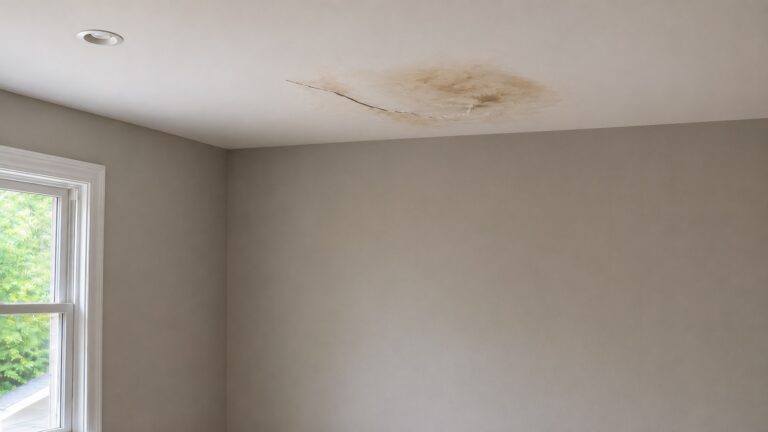
One of the most common mistakes in roof leak repair is assuming the visible stain marks the exact leak location. Water does not always move straight down. It can enter at one point, follow framing, run along the underside of roof decking, soak insulation, then appear at a ceiling joint or light fixture far from the opening.
If a contractor’s explanation is hard to evaluate, it helps to understand how roof leak sources are traced before mold forms.
Temporary patches can hide deeper problems
Roof cement, caulk, and sealant may have limited uses in some repairs, but they should not be treated as a universal solution. A surface patch may slow water for a short time without correcting the failed flashing, cracked vent boot, lifted shingle, damaged valley, or deteriorated underlayment that allowed water in.
A leak may stop during light rain but return during heavy rain, snow melt, or wind-driven storms if the failed component was never corrected.
When a contractor recommends a patch, ask whether it is temporary or intended as a permanent repair. A trustworthy contractor should explain the difference clearly. If the repair is only meant to buy time until a more complete repair can be done, that should be stated in the quote.
Poor diagnosis leads to repeat leaks
Repeat leaks often happen when the original source was never fully identified. This is common around roof penetrations and transitions because water can enter through small gaps that are not obvious from the ground. Chimney flashing, step flashing, skylight flashing, plumbing vent boots, valleys, dormers, and wall-to-roof intersections all require careful inspection.
For example, a roofer may replace shingles near a stain while the actual leak is at a flashing joint higher up the roof. Another may seal a vent boot without noticing that water is entering under adjacent shingles.
If you have already had a roof leak repaired and the problem came back, choose a contractor who treats it as a diagnostic problem, not just another patch job. For more detail on recurring leak behavior, see How to Fix Persistent Roof Leak Problems.
Start With the Contractor’s Leak Inspection Process
The inspection process is one of the strongest clues about whether a roofing contractor is likely to fix the leak correctly. A quick quote without a meaningful inspection may be convenient, but it may also be based on assumptions. Roof leak repair should begin with evidence.
They should inspect exterior roofing materials
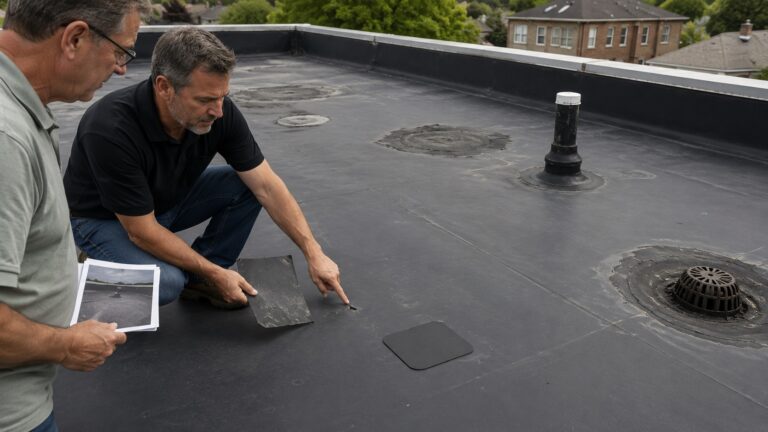
The contractor should inspect the roof surface in the area where the leak is likely to originate. That may include shingles, ridge caps, valleys, roof edges, underlayment clues, exposed fasteners, nail pops, damaged seal strips, missing material, lifted edges, cracked roofing, and storm-related damage.
The inspection should also consider the age and condition of the roof. A newer roof with one localized defect may need a targeted repair. An older roof with brittle shingles, multiple weak points, or widespread deterioration may need a different conversation. The contractor should explain whether the leak appears isolated or part of a larger roof material problem.
Be cautious if the contractor gives a final repair recommendation without looking at the likely roof area. A roof leak repair quote should be tied to actual roof conditions, and the contractor should be willing to show photos of the suspected leak source when safe access allows.
They should inspect flashing and penetrations
Flashing and roof penetrations deserve special attention because many leaks begin where the roof is interrupted. Chimneys, plumbing vents, skylights, roof vents, dormers, sidewalls, valleys, satellite mounts, solar mounts, and mechanical penetrations can all create weak points if flashing or seals fail.
A good roofing contractor should explain whether the suspected leak involves shingles, flashing, a vent boot, a valley, a chimney, a skylight, or another transition. This helps you understand what kind of repair is being recommended and whether the contractor is addressing the right part of the roof system.
If the leak appears near a chimney, skylight, wall intersection, or roof penetration, ask specifically how the flashing will be handled. Surface sealant alone may not be enough if the underlying flashing detail has failed. For background on this issue, see Why Roof Flashing Failures Cause Leaks.
They should check attic and interior evidence when possible
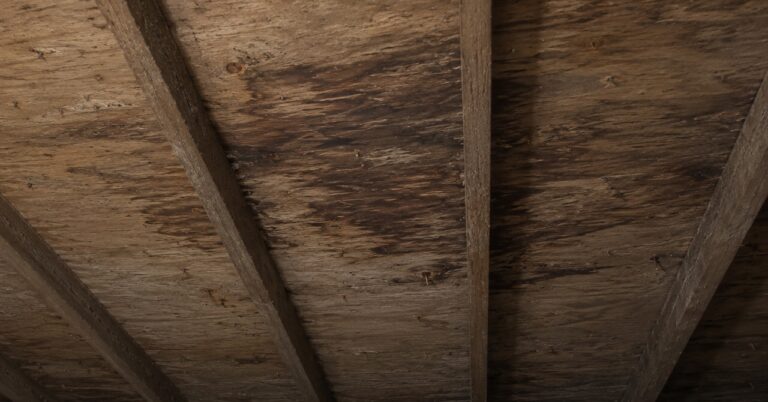
An attic inspection is not always possible, but it can be very useful when the leak source is unclear, recurring, or hidden. The attic can show water trails, damp insulation, dark roof sheathing, stained rafters, rusted nails, or condensation patterns that are not visible from outside.
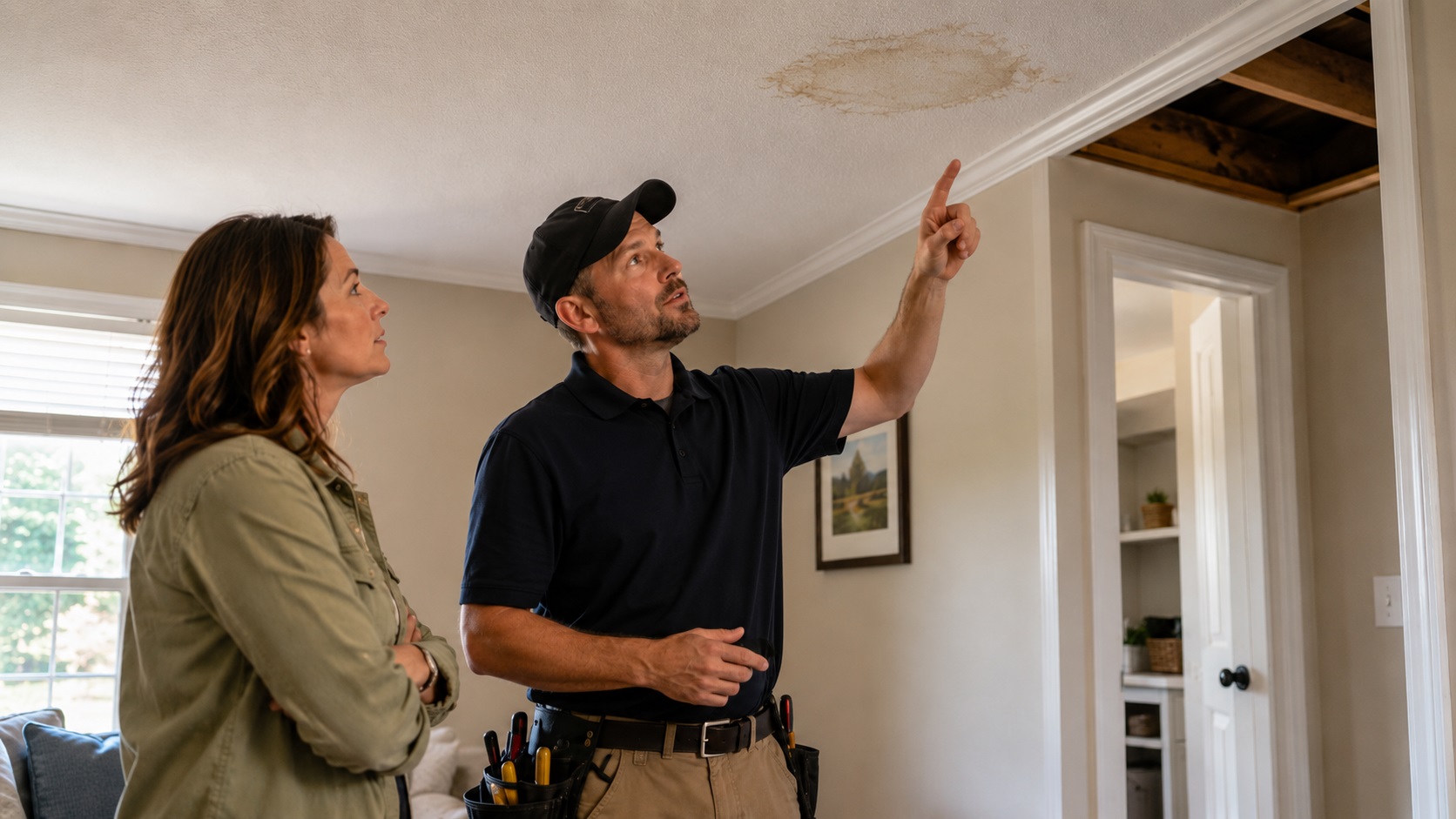
The contractor should also consider the interior evidence. A ceiling stain, wall stain, drip location, or damp area can help narrow the inspection zone, especially when paired with attic clues. Interior evidence alone is not enough to identify the roof source, but it is part of the pattern.
Ask whether attic inspection is included when the leak source is uncertain and the attic can be accessed safely. If the contractor refuses to consider attic or interior clues on a recurring leak, they may be missing important evidence.
If water is dripping near a ceiling light, fan, outlet, or electrical panel, avoid touching the fixture and treat the situation as urgent. Roof repair may stop the water source, but electrical safety may need separate evaluation.
They should explain the likely leak path
A good roofing contractor should be able to explain how water is likely entering and why the proposed repair matches that path. The explanation does not need to be complicated, but it should be specific enough to make sense.
For example, the contractor might explain that water is entering around a cracked plumbing vent boot, traveling along the underside of the roof deck, and dripping onto insulation above the ceiling stain. Or they may explain that chimney flashing is loose on the uphill side, allowing wind-driven rain to reach the roof deck below.
If the contractor cannot explain the likely water path, the repair may be based on guesswork.
Ask What the Repair Scope Includes
Before hiring a roofing contractor, make sure the quote explains what work will actually be performed. A vague quote that says “repair roof leak” does not give you enough information to compare contractors or understand what will be fixed.
Shingles, underlayment, flashing, or vent boots
The repair scope should identify the roof components involved. Will the contractor replace damaged shingles? Remove and reinstall flashing? Replace a cracked vent boot? Repair a roof valley? Address exposed fasteners? Lift surrounding shingles to check underlayment?
These details matter because different leak sources require different repairs. Replacing shingles may not fix failed flashing. Sealing a vent boot may not fix damaged surrounding roofing. Reworking flashing may require removing nearby shingles to do the repair properly.
Ask the contractor to name the components being repaired or replaced. The clearer the scope, the easier it is to compare the quote with other recommendations.
Decking or sheathing concerns
If the leak has been active for a while, the roof decking or sheathing may need evaluation. Soft, dark, delaminated, rotted, or moisture-damaged decking can affect how well new roofing materials attach and perform.
Not every roof leak requires decking replacement, but the quote should explain whether decking damage is suspected, included, excluded, or only evaluated after materials are removed. This is especially important when stains have returned repeatedly, attic sheathing looks dark, or the roof surface feels soft.
If the contractor says decking repair may be needed but cannot confirm until the roof is opened, ask how change orders will be handled, how photos will be provided, and how additional work will be approved before the project begins.
Temporary versus permanent repairs
Some roof leak work is temporary by design. A temporary tarp, emergency seal, or short-term patch may be appropriate during active storms, before materials are available, or while waiting for a larger repair. But temporary work should be labeled honestly.
Ask directly: “Is this a temporary repair or a permanent repair?” If the answer is unclear, get clarification in writing. This prevents a short-term patch from being mistaken for a long-term roof solution.
Interior damage exclusions
Most roofing contractors repair the roof source, not the interior water damage caused by the leak. Ceiling drywall, paint, insulation, flooring, mold cleanup, and water damage restoration may be excluded from the roofing quote.
That is not necessarily a problem, but it should be clear. If the leak has saturated insulation or damaged drywall, you may need a separate restoration, insulation, or interior repair professional after the roof leak is corrected.
Ask what the roofing contractor is responsible for and what is outside their scope. This helps you avoid assuming that roof repair automatically includes interior drying or cosmetic repairs.
Cleanup and warranty details
A roof leak repair quote should explain cleanup, photo documentation, and warranty terms. Will old materials be removed? Will debris be cleaned from gutters or the work area? Will before-and-after photos be provided? Will the repaired area be covered by a workmanship warranty? What happens if the leak returns in the same location?
Warranty language should be specific. A contractor may warranty the repaired area but not unrelated leaks elsewhere on the roof. They may exclude leaks caused by future storm damage, unrelated roof deterioration, ice dams, or other conditions outside the repair scope.
A clear warranty does not guarantee that no future leaks will ever occur, but it does help define what the contractor stands behind.
How to Compare Roof Leak Repair Quotes
When roof leak repair quotes differ, compare the diagnosis, scope, materials, exclusions, warranty terms, and reasoning before comparing price alone.
A strong quote should answer four basic questions: where the contractor believes the leak starts, what evidence supports that conclusion, which roof components will be repaired or replaced, and what is not included in the price.
Compare the diagnosis, not just the price
The best quote is not automatically the cheapest or the most expensive. A low quote may be fine for a small, obvious repair. But it may be risky if the contractor did not identify the leak source, inspect related areas, or explain what materials will be replaced.
A higher quote may be reasonable if the repair includes flashing reconstruction, valley repair, decking work, multiple leak areas, or more complex roof-system work. But the contractor should explain why that additional scope is needed.
Look for specific repair locations and materials
A useful quote should identify the area being repaired and the materials involved. For example, it should be more specific than “fix leak near chimney.” A better scope might describe chimney flashing, step flashing, counterflashing, surrounding shingles, sealant details, or affected roof planes.
Specificity helps you compare contractors and reduces misunderstanding. If the quote only uses broad language, ask for clarification before hiring.
This is especially important for leaks near roof penetrations and transitions because those repairs often depend on details that are not visible in a finished photo.
Ask what is excluded
Every quote has boundaries. A roofing contractor may exclude interior drywall repair, insulation replacement, mold remediation, electrical work, structural repair, gutter correction, or unrelated roof areas.
Exclusions are not automatically bad. The problem is when they are not stated clearly. If a leak has caused interior damage, you need to know whether the roofer is only stopping the water entry or also handling related damage.
Ask the contractor to list exclusions in writing. A clear exclusion is better than a surprise after the work is complete.
Understand repair versus replacement recommendations
Sometimes a roof leak can be repaired. Other times, replacement may be a better recommendation because the roof is old, brittle, widely deteriorated, poorly installed, or leaking in multiple areas.
If a contractor recommends replacement instead of repair, ask why. Good reasons may include widespread material failure, multiple leak paths, failing flashing in several areas, damaged decking, repeated leaks, or roofing materials that are too brittle to repair reliably.
If one contractor recommends replacement and another recommends a small repair, compare the evidence behind each recommendation.
Red Flags When Hiring a Roofing Contractor for Leak Repairs
A roof leak can feel urgent, but urgency should not force you into accepting a vague repair plan. Be cautious when the contractor cannot explain the source, cannot describe the repair, avoids written details, or pressures you to approve work before you understand the scope.
They quote the repair without inspecting the likely leak source
A contractor may be able to give a rough idea of possible repairs based on photos or a description, but a final recommendation should be based on inspection. Roof leaks often involve hidden paths, flashing details, attic clues, or weather-specific conditions that cannot be confirmed from a quick phone call.
If a contractor gives a firm repair scope without inspecting the roof area, attic evidence, or interior stain pattern, they may be guessing. That does not mean every leak requires a long investigation, but the repair should still be tied to visible evidence.
They rely only on caulk, roof cement, or surface sealant
Sealants have limited uses in roofing, but they should not be presented as the automatic fix for every leak. Leaks around flashing, vents, valleys, chimneys, skylights, and roof edges often require correcting the failed detail, not only adding more material on top.
If the contractor says they will “just seal it,” ask whether that is temporary or permanent. Also ask what roof component failed and why sealant is enough in that situation. If the answer is vague, the repair may not address the real leak source.
They ignore attic or interior evidence on a recurring leak
Not every leak requires a full attic investigation, especially if the source is obvious from the roof surface. But recurring leaks, hidden leaks, and stains that do not line up with visible roof damage often need attic or interior evidence to confirm the water path.
If the same leak has returned after previous repairs, a contractor should be especially interested in the attic pattern. Water trails, stained sheathing, damp insulation, rusted nails, or mold-like spotting can help separate the real source from the visible symptom.
They recommend full replacement without explaining why
Roof replacement may be the right recommendation in some cases. An old roof with brittle shingles, widespread deterioration, multiple leak areas, failing flashing, or damaged decking may not be a good candidate for a small patch. But the contractor should explain the evidence behind that recommendation.
Be cautious if the contractor jumps straight to replacement without discussing whether the leak is localized, whether repair is possible, what areas are failing, or why a smaller repair is unlikely to hold. A replacement recommendation should be based on roof condition, not just sales pressure.
They pressure you to sign immediately
Some roof leaks need quick action, especially during active water intrusion or after storm damage. But fast scheduling is different from high-pressure selling. A contractor can explain urgency without using fear, limited-time pressure, or vague warnings to rush your decision.
If the roof is actively leaking, you may need temporary protection quickly. Even then, ask what is temporary, what is permanent, and what the next step will be. You should not have to approve a major repair or replacement without understanding the scope.
The quote lacks location, materials, or warranty details
A vague quote makes it difficult to compare contractors or hold anyone accountable. “Fix leak” or “seal roof area” does not explain what will be repaired, what materials will be used, what area is included, or what happens if the leak returns.
Before hiring, ask for the repair location, material details, warranty terms, and exclusions in writing. A contractor who understands the problem should be willing to describe the repair clearly.
Questions to Ask Before Hiring a Roofing Contractor for Leak Repairs
Use these questions to test whether the contractor has a real diagnosis, a clear scope, and a plan if the leak returns.
What is the most likely leak source?
Ask the contractor to identify the suspected source as specifically as possible. Is the leak coming from shingles, flashing, a vent boot, chimney flashing, skylight flashing, a valley, roof edge, ridge detail, or another penetration?
If the contractor cannot name the likely source, ask what additional inspection is needed. Sometimes the answer may be uncertain until materials are removed, but the contractor should still explain the most likely possibilities.
What evidence supports that diagnosis?
Ask what the contractor saw that supports the recommendation. Did they find damaged flashing, cracked roofing material, water trails in the attic, wet insulation, dark sheathing, lifted shingles, a failed vent boot, or staining that matches the interior leak?
This question is useful because it moves the conversation from opinion to evidence. A strong contractor should be able to connect the repair recommendation to real observations.
Can you show photos of the suspected leak source?
Photos are not always possible in every situation, but a contractor should usually be able to show the damaged flashing, cracked vent boot, lifted shingle, exposed fastener, valley problem, stained decking, or other evidence behind the recommendation.
Did you inspect the attic or interior stain pattern?
If the leak is recurring, hidden, or hard to locate, attic and interior clues may be important. Ask whether the contractor inspected the attic or at least considered the stain pattern inside the home.
If attic access is not possible, ask how the contractor will compensate for that limitation. They may need to inspect more carefully from the roof surface or explain that some uncertainty remains until repair work begins.
Is this repair temporary or permanent?
This is one of the most important questions. Temporary protection may be appropriate during an active leak, after storm damage, or while waiting for materials. But you should know when a repair is meant only to stop water short term.
A permanent repair should address the failed roof component. Ask whether the work is expected to solve the leak long term or simply reduce water entry until a larger repair can be scheduled.
What materials will be removed or replaced?
Ask whether the contractor will replace shingles, flashing, vent boots, underlayment, fasteners, valley materials, ridge components, or damaged decking. Also ask whether surrounding materials must be lifted or removed to complete the repair properly.
This helps you understand whether the contractor is repairing the source or only covering the surface. It also helps you compare quotes that may use very different methods.
What happens if the leak returns?
Ask whether the repaired area is covered by a workmanship warranty or callback policy. Also ask what the warranty excludes. The contractor may cover the exact repair area but not unrelated leaks elsewhere on the roof.
This question is especially important for recurring leaks. A contractor who is confident in the diagnosis should be willing to explain what they will do if water returns in the same location.
What is excluded from the quote?
Ask whether interior drywall, insulation, mold remediation, decking replacement, electrical work, gutter correction, or additional roof areas are excluded. A roof leak repair quote often covers the roof source only.
Clear exclusions help you plan the full repair. They also prevent confusion if you later need a restoration company, insulation contractor, or additional roofing work.
How to Choose Between Multiple Roof Leak Contractors
When two or three contractors give different recommendations, compare more than the total price. Look at how carefully each contractor inspected the problem, how clearly they explained the leak path, how specific the scope is, and whether the recommendation fits the evidence.
Choose the clearest diagnosis
The best contractor is often the one who can explain the problem most clearly. They should be able to say what they believe is leaking, why they believe it, what materials are involved, and how the repair addresses the water path.
A clear diagnosis does not mean the contractor can guarantee every hidden condition before opening the roof. But it does mean their recommendation is based on observed evidence rather than a guess.
Choose the most complete scope for the actual problem
A complete scope does not always mean the largest project. It means the proposed repair addresses the actual leak source. For a simple cracked vent boot, the complete scope may be small. For a chimney flashing failure, the complete scope may require removing nearby shingles and rebuilding flashing details.
Be careful with quotes that appear cheaper only because they leave out critical work. Also be careful with expensive recommendations that do not explain why the extra work is necessary. The right scope should match the roof condition and leak evidence.
Be cautious with very cheap or vague expensive quotes
A very cheap quote may be acceptable for a minor, obvious repair. But it may be risky if it does not identify the leak source, specify materials, address flashing, or explain what happens if the leak returns.
A high quote may also be reasonable if the repair is complex, but the contractor should justify it. Expensive work should come with a clear explanation, not just a broad warning that the roof is “bad.”
Confirm documentation, insurance, and leak-repair experience
Before hiring, confirm that the contractor provides written documentation, carries appropriate insurance, meets local licensing requirements where applicable, and has experience with the type of leak you are dealing with. A contractor who mainly installs new roofs may not always be the best choice for difficult leak tracing unless they also have strong repair experience.
Ask for photos of similar repairs when appropriate, especially for flashing, skylight, chimney, or valley leaks. A good contractor should be comfortable explaining previous work and how they approach leak diagnosis.
Who Is the Best Fit for a Roof Leak Repair?
For a simple, obvious leak, the best fit may be a responsive local roofer who can document the failed component and repair it clearly. For a recurring, hidden, chimney, skylight, valley, or wall-intersection leak, choose a contractor with stronger diagnostic experience, not just the lowest patch price.
FAQ: Choosing a Roofing Contractor for Leak Repairs
Should a roof leak repair quote include attic inspection?
It should include attic inspection when the attic is safely accessible and the leak source is unclear, recurring, or not directly connected to obvious roof damage. Attic evidence can show water trails, wet insulation, stained sheathing, rusted nails, or condensation patterns that help confirm whether the proposed repair fits the actual problem.
Should I trust a contractor who only recommends roof caulk?
Not automatically. Sometimes sealant may be used as part of a repair or as a short-term emergency measure, but it should not be treated as a universal fix. Many roof leaks require correcting the failed component, such as flashing, vent boots, shingles, valleys, underlayment, or roof penetrations. If a contractor recommends caulk or roof cement, ask whether the repair is temporary or permanent and what failed component is being corrected.
How do I know if a roofer found the real leak source?
The roofer should be able to explain what they found, why they believe that area is leaking, how the water is likely traveling, and how the repair addresses the failure. A strong explanation usually connects exterior roof conditions with attic evidence, interior stains, timing, and weather patterns.
What should I do if a roof leak returns after repair?
Contact the contractor and refer to the written scope and warranty or callback policy. A recurring leak may mean the original source was misidentified, the repair failed, or a second leak path exists. If the same leak has returned more than once, it may need a deeper roof and attic inspection rather than another surface patch.
Key Takeaways
- Choose a roofing contractor who diagnoses the leak source before recommending repairs.
- A good roof leak inspection should consider exterior roof conditions, flashing, penetrations, attic evidence, and interior stain patterns.
- Be cautious with quotes that only say “fix leak” or “seal roof” without explaining materials, location, scope, or warranty.
- Temporary patches should be clearly described as temporary, not presented as complete long-term repairs.
- Compare roof leak repair contractors by diagnosis and scope, not price alone.
Conclusion
Choose the roofing contractor who gives the clearest diagnosis, the most specific repair scope, and the most honest explanation of what is included, excluded, temporary, permanent, and warrantied. The right contractor should help you understand the leak before asking you to trust the repair.