When to Hire a Roofing Contractor for Moisture Problems
A small ceiling stain, damp attic insulation, or musty smell near the roofline can be easy to dismiss. But roof-related moisture problems often hide before they become obvious. Water can enter through shingles, flashing, vents, valleys, skylights, chimneys, or roof edges, then travel along framing or insulation before it appears inside the home.
Not every moisture mark means you need emergency roof repair. Some stains are old and inactive. Some attic moisture comes from condensation rather than an exterior roof leak. Some minor issues can be monitored safely for a short time. The challenge is knowing when a roof moisture problem has crossed the line from observation into professional repair.
You should hire a roofing contractor when moisture appears during or after rain, stains grow or return, attic insulation gets wet, roof sheathing looks damp or dark, flashing is damaged, shingles are missing or deteriorated, or a previous repair did not solve the problem. Roof moisture can eventually affect ceilings, insulation, rafters, sheathing, and indoor air quality, so it helps to understand how roofing material failures fit into the larger roof system. For that broader context, see Most Common Roofing Material Failures.
Quick Decision Guide: Call Now, Schedule Soon, or Monitor?
Use the pattern of the moisture problem to decide whether to call immediately, schedule an inspection soon, or monitor briefly.
| What You See | What It Usually Means | What to Do |
|---|---|---|
| Water dripping indoors during rain | Active water entry | Call a roofing contractor quickly and protect the interior safely |
| Ceiling stain grows, darkens, or returns after storms | Likely active or recurring leak path | Schedule a roof inspection soon |
| Wet attic insulation, dark sheathing, or damp rafters | Moisture has reached building materials | Hire a roofing contractor; drying or restoration may also be needed |
| Moisture near chimney, skylight, vent, valley, or flashing | Possible flashing or penetration leak | Have the transition inspected professionally |
| One old stain that does not change after rain | Possibly inactive past damage | Monitor with dated photos and check again after storms |
| Widespread attic dampness during cold weather | Possible condensation or ventilation issue | Ask for roof and attic ventilation evaluation |
The Simple Rule: Rain-Linked, Repeating, or Material-Affecting Moisture Needs a Roofer
A roof moisture problem usually deserves a contractor when it appears during or after rain, comes back after drying or previous repair, or reaches attic or interior materials. A stable old stain may be monitored, but active, recurring, or material-affecting moisture should not be treated as cosmetic.
What Counts as a Roof-Related Moisture Problem?
A roof-related moisture problem is any moisture issue that begins at the roof system, attic, roof penetrations, ventilation path, or upper building envelope. It may show up as stained drywall, damp attic insulation, dark roof decking, wet rafters, mold-like attic growth, condensation on nails or sheathing, or attic odors after wet or cold weather.
Active roof leaks
An active roof leak is the most obvious reason to call a roofing contractor. If water drips during rain, appears after snow melt, or runs down a ceiling or wall, the roof system needs professional attention. Even if the leak stops when the storm ends, the opening that allowed water in may still be present.
One common mistake is assuming the roof leak is directly above the interior stain or drip. Water can travel along rafters, roof decking, insulation, pipes, wiring, or ceiling framing before it becomes visible indoors. That means the entry point may be several feet away from the stain.
If the leak is active, limit interior damage safely, but do not climb onto a wet roof or cut into a sagging ceiling. A roofing contractor can trace the exterior source, while a water damage professional may be needed if interior materials are already saturated.
Flashing and roof penetration leaks
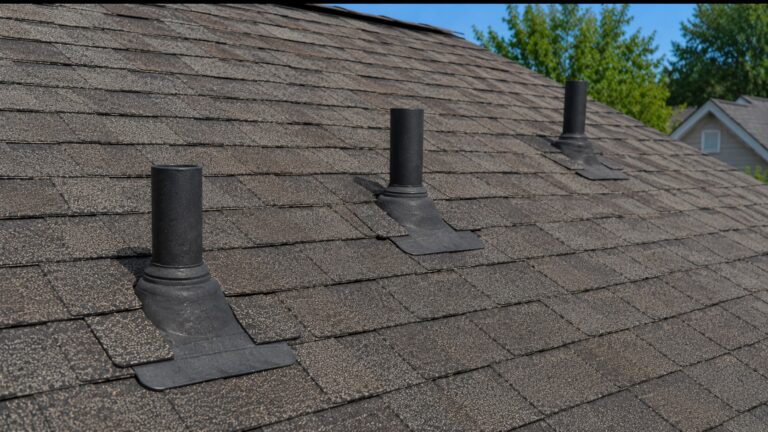
Many roof leaks begin at transitions rather than in the middle of a roof surface. Flashing, vent boots, chimneys, skylights, valleys, dormers, wall intersections, and plumbing vents are common moisture-entry points because they interrupt the normal flow of water down the roof.
These areas are often difficult to evaluate from the ground. A cracked boot, lifted flashing edge, failed seal, or deteriorated transition can allow water in during wind-driven rain. Inside the home, the visible symptom may be a ceiling stain, damp insulation, or water mark near an attic penetration.
If moisture appears near a chimney, skylight, roof vent, valley, or wall-to-roof intersection, a roofing contractor should inspect the area. For a more focused explanation of this failure pattern, see Why Roof Flashing Failures Cause Leaks.
Attic condensation and ventilation-related moisture
Not all roof moisture comes from rain entering through the roof covering. Attic condensation can form when warm, humid indoor air reaches cold roof sheathing, especially when air sealing, insulation, ventilation, or indoor humidity control is poor.
Condensation can be mistaken for a roof leak because it may dampen roof sheathing, insulation, nail tips, rafters, or attic surfaces. The pattern often gives clues. Rain-linked moisture that appears near one penetration may suggest leakage. Widespread moisture on cold sheathing during winter may suggest condensation or ventilation problems.
This distinction matters because roof leak repair and condensation control are not the same repair. A roofing contractor with attic ventilation experience can help determine whether the problem is a leak, a ventilation issue, an insulation problem, or a combination. If condensation seems likely, compare the symptoms with Signs of Roof Condensation in Attics.
Wet insulation, sheathing, rafters, or decking
Once moisture reaches attic insulation, roof sheathing, rafters, or ceiling materials, the problem deserves attention. Insulation can hold water and hide leaks. Roof sheathing can stain, darken, soften, delaminate, or support mold-like growth if it stays damp. Rafters and framing may show long-term moisture exposure before the homeowner notices interior damage.
A small ceiling stain may be only the visible end of a larger hidden problem above the drywall. If attic insulation feels wet, roof decking looks dark, or the underside of the roof has moisture marks, the issue should be evaluated before it spreads.
Moisture affecting attic materials can lead to insulation failure, mold concerns, wood deterioration, and repeated interior damage. A contractor can inspect the roof surface and attic together to determine whether the moisture is entering from outside or forming inside the attic.
Signs You Should Hire a Roofing Contractor
The following signs suggest that the roof system should be inspected by a professional rather than watched indefinitely.
Water stains appear after rain
A ceiling stain that appears after rain, grows after storms, darkens over time, or returns after drying is one of the strongest signs that a roofing contractor should inspect the home. The stain may be small, but it can indicate wet insulation, damp framing, or a leak path above the ceiling.
Pay attention to timing. A stain that changes after rain is more concerning than an old stain that has stayed the same for months. If the spot expands, changes color, feels soft, or appears near a ceiling fixture, it should not be ignored.
Water stains are symptoms, not sources. The stain tells you water reached the finished surface, but it does not tell you where the roof is leaking. For more detail on interior leak clues, see Signs of Roof Leaks Inside the House.
Water is dripping or actively entering the home
Active dripping is a clear reason to call a roofing contractor quickly. Even a slow drip can saturate insulation, damage drywall, stain framing, and create a hidden moisture problem above the ceiling.
If water is actively entering the home, protect the interior only if you can do so safely. Move belongings, place a container under dripping water, and avoid electrical fixtures or sagging drywall. Do not climb onto the roof during rain, wind, lightning, snow, or poor visibility.
Temporary leak control may reduce damage, but it should not replace proper roof inspection and repair.
Shingles, flashing, or roof edges look damaged
Visible roof damage is another strong reason to hire a roofing contractor, especially when moisture symptoms are also present. Missing, curled, cracked, or lifted shingles, exposed fasteners, damaged flashing, loose ridge caps, deteriorated vent boots, and storm-damaged roof sections can all create water-entry paths.
Homeowners can often see obvious damage from the ground with binoculars or from a safe window view. But ground-level inspection has limits. You may see a missing shingle without seeing damaged underlayment, lifted flashing, nail pops, or water paths beneath the surface.
If visible roof damage lines up with interior stains, attic moisture, or repeated leaks, professional inspection is appropriate. The contractor should evaluate the damaged surface material and whether moisture has entered the roof assembly.
Attic insulation is wet or compressed
Wet, compressed, stained, dripping, or musty attic insulation is a strong sign that the problem has moved beyond a surface roof concern. Insulation can hold moisture, hide the leak path, keep nearby materials damp, and make it harder to tell whether the source is a roof leak, condensation, plumbing, or another issue.
A roofing contractor should inspect the roof surface and attic together. If the insulation is saturated or interior materials need drying, a water damage restoration company may also be needed to prevent lingering moisture after the roof problem is corrected.
Roof sheathing or rafters look dark, damp, or stained
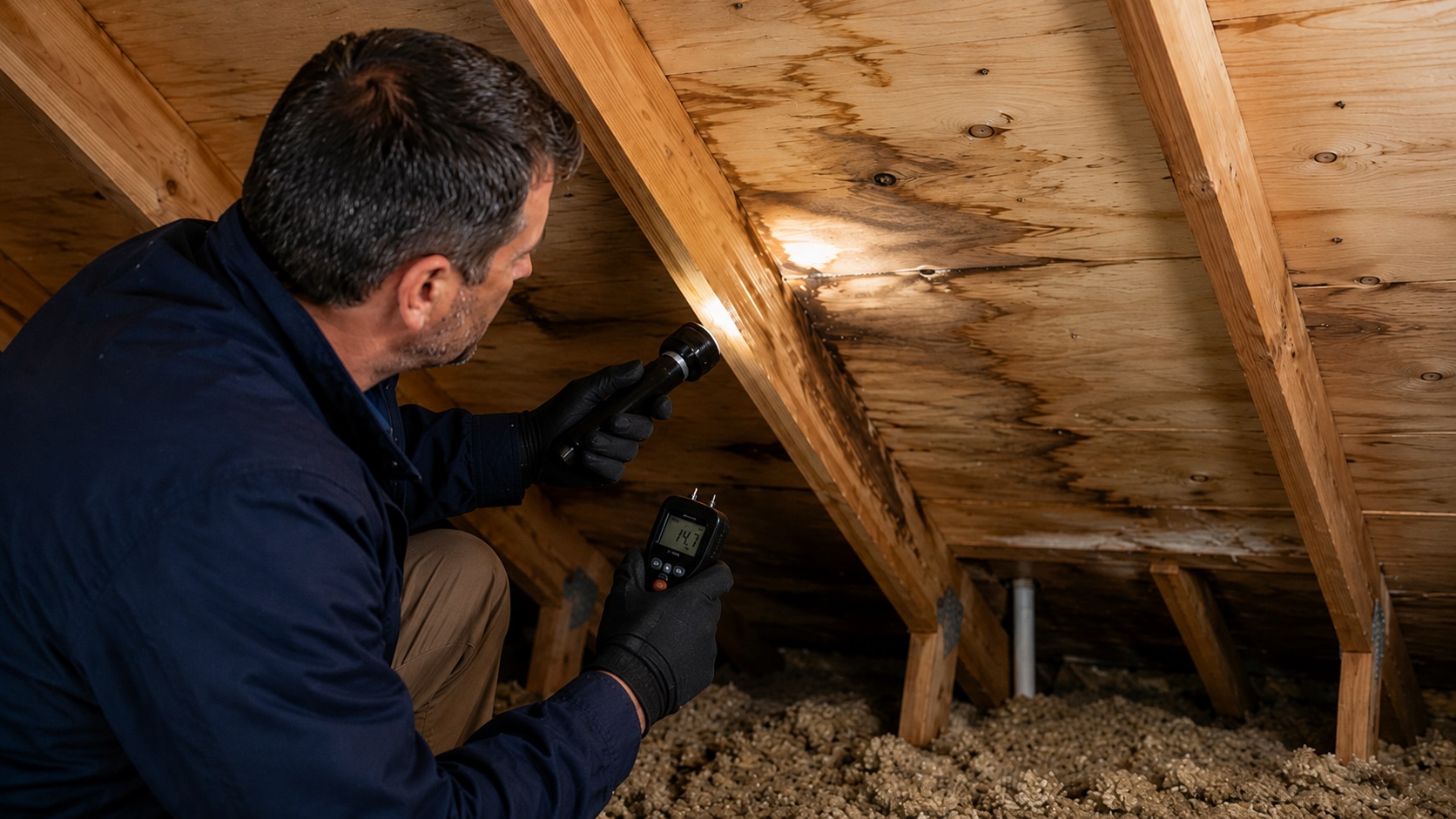
The underside of the roof can reveal moisture problems before they become obvious indoors. Dark roof sheathing, damp decking, stained rafters, rusted nails, mold-like spotting, or softened wood can all suggest that the roof or attic has been dealing with moisture over time.
The pattern matters. Localized staining near a vent, chimney, skylight, or valley may point toward leakage. Widespread dampness across cold sheathing may point toward condensation or poor attic ventilation. Either way, moisture on structural roof materials should be evaluated.
Long-term roof moisture can affect the durability of sheathing, fasteners, framing, and insulation. If you see repeated staining or dampness in attic materials, a roofing contractor should determine whether the moisture is coming from outside leakage, attic condensation, ventilation failure, or multiple causes.
Leaks return after previous roof repairs
A leak that returns after repair should not be treated as a simple inconvenience. It may mean the original source was misidentified, the repair was incomplete, multiple leak paths exist, or a different problem such as condensation was mistaken for a roof leak.
Recurring leaks are especially common around flashing, valleys, chimneys, skylights, roof edges, and penetrations. Repeated patching may reduce symptoms temporarily without correcting the full failure.
If moisture keeps coming back after repairs, the roof needs a more complete evaluation. The article How to Fix Persistent Roof Leak Problems is a useful follow-up for understanding why repeated roof moisture often needs deeper diagnosis.
When Roof Moisture Is Beyond DIY
A homeowner may be able to document stains, look into the attic from a safe access point, or inspect the roof from the ground. But roof repair usually becomes professional work when the source is hidden, the roof is unsafe to access, or moisture has reached building materials.
The source is not visible from the ground
Most roof leaks are not easy to confirm from the ground. The problem may be under lifted shingles, behind flashing, around a vent boot, under a ridge cap, beneath a valley, or at a wall-to-roof transition. These areas often require close inspection by someone trained to work safely on roofs.
Do not assume that a roof looks fine just because no damage is visible from the yard. Many leak sources are small, hidden, or only active during wind-driven rain. A roofing contractor can inspect the areas where water is most likely to enter and compare exterior findings with attic and interior moisture patterns.
If the issue is unclear but symptoms suggest the roof, get a professional inspection rather than guessing. For a deeper look at hidden leak patterns, see How to Detect Hidden Roof Leaks.
Moisture involves attic materials or ceiling drywall
Once roof moisture reaches insulation, ceiling drywall, sheathing, rafters, or framing, the problem is no longer limited to the roof covering. Water may be spreading into materials that can hold moisture, stain, soften, grow mold-like material, or lose performance over time.
A homeowner may see only the finished ceiling stain, but the attic may show the larger problem: wet insulation, stained sheathing, damp rafters, or roof decking that has been exposed repeatedly.
If moisture has reached interior or attic materials, a roofer should evaluate the roof source, and additional drying or restoration may be needed depending on how wet the materials are.
Flashing, vents, valleys, or penetrations are involved
Moisture near chimneys, skylights, plumbing vents, roof vents, valleys, dormers, sidewalls, or roof edges should usually be inspected by a roofing contractor. These areas require proper flashing and water-shedding details. Temporary surface sealant is often not enough for long-term repair.
Caulk or roof cement may slow a minor leak in some cases, but it does not necessarily correct the underlying flashing, shingle, or transition problem. Surface sealant can also hide damage until the leak returns later.
If the suspected leak is at a roof transition, the repair should be based on the actual flashing condition, not just the visible stain inside the home.
The roof is steep, high, old, or storm-damaged
Roof inspection can be dangerous. Steep roofs, high roofs, brittle roofing materials, wet surfaces, loose granules, storm damage, and weak decking increase the risk of injury. If the roof is not safe to access, do not climb it to look for a leak.
Storm damage also changes the urgency. Hail, wind, falling branches, or lifted roofing materials can open water paths that are not obvious from below. If moisture symptoms appear after a storm, a roofing contractor should inspect the roof surface, flashing, penetrations, and attic for related damage.
Safe observation from the ground is reasonable, but roof climbing, temporary patching, and exterior repair work should be left to qualified professionals when access conditions are risky.
When to Call a Roofing Contractor Immediately
Some roof moisture problems should be handled quickly because waiting for the next storm can allow more water to enter and increase safety, interior, or structural risks.
Water is actively dripping indoors
Active dripping means water has already passed through the roof system or another upper moisture path and reached the interior. Even if the drip seems slow, the hidden materials above the ceiling may be much wetter than they look.
Call a roofing contractor to locate and repair the exterior source. If water is spreading inside the home, you may also need emergency drying help. The roof repair stops new water from entering, but wet insulation, drywall, or framing may still need attention after the leak is controlled.
Ceiling drywall is sagging, bulging, or soft
Sagging or bulging ceiling drywall can indicate trapped water above the surface. This can become dangerous because saturated drywall may release suddenly. Do not stand under a sagging area, poke it casually, or cut into it without understanding the risk.
This is an urgent situation because it involves both the roof source and interior water damage. A roofing contractor should address the leak source, while a restoration or repair professional may be needed for saturated ceiling materials.
Water is near electrical fixtures or wiring
Water near ceiling lights, fans, electrical boxes, attic wiring, or outlets should be treated as a safety concern. Avoid touching wet fixtures, switches, or nearby wiring. If active water is near electrical components, shut off power to the affected area if you can do so safely and contact the appropriate professional before repair work continues.
In this situation, the roof source still needs to be corrected, but the immediate priority is avoiding electrical hazards. Depending on the severity, you may need a roofer, electrician, and water damage professional.
Storm damage has opened the roof
If wind, hail, fallen limbs, or flying debris has damaged roofing materials, do not wait for interior stains to appear before taking action. Missing shingles, torn flashing, punctures, damaged ridge caps, or exposed underlayment can allow water into the roof assembly during the next rain.
A roofing contractor should inspect storm damage promptly. Temporary protection may be needed before permanent repairs can be completed, especially if the roof covering has been opened or displaced.
Structural roof materials appear wet or rotted
Wet or rotted roof sheathing, rafters, or framing should not be treated as a minor leak symptom. These materials help support the roof and hold roofing materials in place. If they are soft, dark, delaminated, mold-stained, or deteriorating, the problem may be long-term.
A roofing contractor can evaluate the roof system, but serious structural deterioration may require additional structural repair expertise. Moisture control and material repair must work together; replacing shingles alone may not be enough if the decking or framing has been compromised.
When You May Not Need a Roofing Contractor Yet
Some roof-related moisture concerns can be monitored briefly before hiring a contractor, especially when the symptom is old, stable, isolated, and not connected to active water entry. The key is knowing the difference between a condition that is inactive and one that is quietly getting worse.
One old stain that does not change
An old ceiling stain may not require immediate roofing work if it has not changed through multiple rain events, the attic above it is dry, and the original source was already repaired. In that case, the stain may simply be leftover cosmetic damage.
However, do not assume a stain is inactive without checking the pattern. Mark the edge lightly with painter’s tape or take dated photos, then compare it after rain. If it grows, darkens, softens, or reappears, it should be treated as an active moisture issue.
Minor condensation with no leak pattern
Light attic condensation does not always mean the roof covering is leaking. It may be related to indoor humidity, air leaks into the attic, poor insulation balance, blocked soffit vents, inadequate roof ventilation, or cold-weather conditions.
That said, condensation should not be dismissed if it is recurring, widespread, or affecting roof sheathing and insulation. If moisture appears mainly during cold weather rather than after rain, compare it with ventilation-related warning signs such as those covered in Signs of Poor Attic Ventilation.
Small gutter-related moisture issues outside the living space
Some moisture near roof edges comes from clogged gutters, overflowing downspouts, or water spilling along fascia and siding rather than a roof leak through the main roof surface. If the issue is clearly exterior and has not affected the attic, ceiling, or wall cavities, cleaning or correcting gutters may solve it.
However, roof-edge moisture should be watched carefully. Overflowing gutters can damage fascia, soffits, siding, and roof edges over time. If stains, rot, or attic moisture appear near the eaves, a roofing contractor may still be needed.
A known leak was repaired and the area stays dry
If a known roof leak was repaired properly and the ceiling or attic remains dry through later storms, you may not need another roofing contractor immediately. Continue monitoring the area, especially during heavy rain or wind-driven storms.
The warning sign is recurrence. If the same stain returns, a nearby area becomes damp, or attic insulation shows new moisture, the previous repair may not have addressed the full source.
Who to Call for Different Roof Moisture Problems
A roofing contractor is often the starting point when moisture appears to come from roofing materials, flashing, or penetrations. If moisture has spread into the home, other professionals may also be needed.
Call a roofing contractor for roof leaks and exterior roof failures
A roofing contractor is the right call when moisture appears after rain, shingles are missing or damaged, flashing is suspect, vent boots are cracked, valleys leak, skylights leak, chimneys show water entry, or previous roof repairs did not hold.
The roofer’s job is to inspect the roof system and identify the entry point. That may include roofing materials, underlayment, flashing, roof edges, penetrations, valleys, and attic leak evidence.
Call a roofer with attic ventilation experience for condensation concerns
If the moisture appears during cold weather, is widespread across roof sheathing, or seems connected to attic airflow, you may need a roofer who understands attic ventilation as well as roof coverings.
Ventilation-related moisture may involve blocked soffit vents, inadequate exhaust venting, poor air sealing, insulation gaps, or warm indoor air reaching cold roof surfaces. A standard shingle repair may not solve this type of moisture problem.
Call a water damage restoration company for active interior damage
If water has saturated ceiling drywall, insulation, flooring, walls, or contents, a water damage restoration company may be needed after or alongside roofing repair. The roofer stops new water from entering, but wet materials inside the home may still need drying.
This is especially important when drywall is sagging, insulation is soaked, or water has spread beyond the original stain.
Call a mold remediation professional for widespread mold growth
If roof moisture has led to widespread mold growth on attic sheathing, insulation, rafters, or ceiling materials, a mold remediation professional may be needed. A roofer can correct the leak source, but remediation may be required for affected materials.
Do not treat mold cleanup as a substitute for roof repair. If the roof continues to leak or the attic continues to condense, mold-like growth may return after cleaning.
Call a structural contractor or engineer for severe wood deterioration
If rafters, roof decking, trusses, or other structural components appear rotted, soft, sagging, or compromised, the project may need structural evaluation. A roofer may identify the damage, but structural repair may require additional expertise.
This is most likely when the moisture problem has been present for a long time, the roof surface is sagging, decking feels soft, or framing shows visible deterioration.
How to Prepare Before Contacting a Roofing Contractor
Before you contact a roofing contractor, gather enough information to describe the problem clearly. You do not need to diagnose the roof yourself or climb onto unsafe roof surfaces, but careful notes and photos can help the contractor understand the pattern.
What to say when you call
When you contact the contractor, describe the moisture pattern instead of guessing at the repair. For example: “A ceiling stain appeared after last night’s rain near an upstairs bathroom vent,” or “The attic insulation is wet below the roof valley, but I do not see dripping indoors.” This helps the contractor decide whether to focus first on shingles, flashing, penetrations, valleys, condensation, or interior damage.
Document stains, leaks, and timing
Take photos of ceiling stains, wall stains, attic moisture, wet insulation, dark sheathing, or visible roof damage. Note when the symptom appeared and whether it followed rain, wind, snow melt, high humidity, or cold weather.
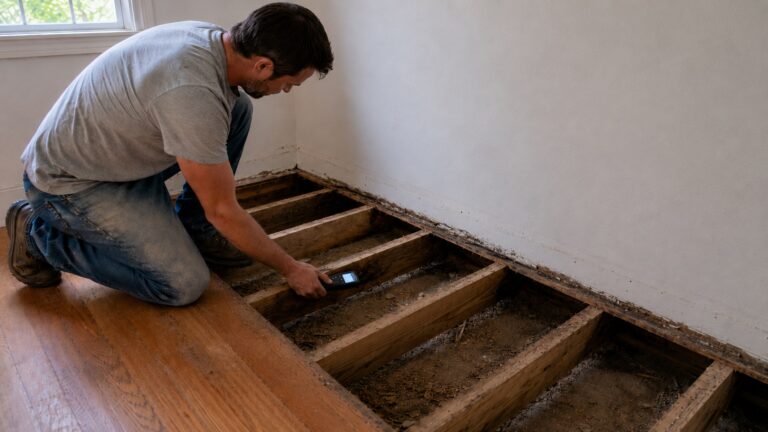
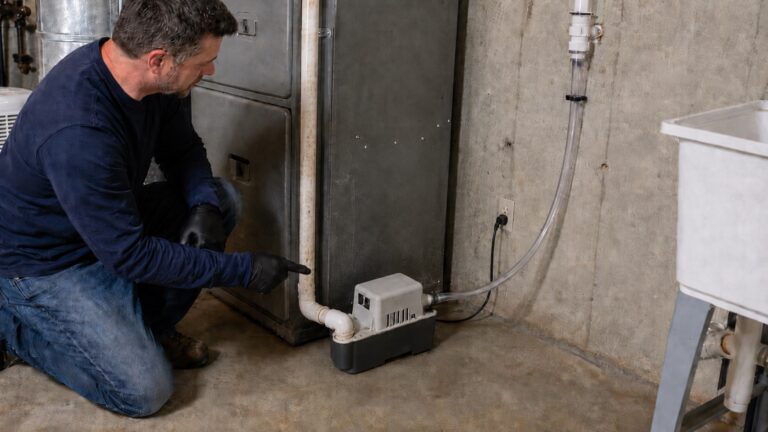
Timing is one of the most useful clues. Moisture that appears after rain points toward leakage. Moisture that appears during cold weather may suggest condensation. Moisture that appears near plumbing or HVAC equipment may involve another system.
Check the attic only if it is safe and accessible
If you can safely access the attic, look for damp insulation, water trails, dark sheathing, rusted nails, stains on rafters, daylight around penetrations, or moisture near vents and chimneys. Do not step off safe framing, disturb wet insulation unnecessarily, or enter an attic with electrical hazards, strong mold odor, or unsafe footing.
If the attic is not safely accessible, do not force the inspection. A roofing contractor can evaluate the roof and attic conditions with proper safety practices.
Note whether symptoms follow rain, humidity, or temperature changes
Tell the contractor when the moisture appears. Does it happen only during rain? After wind-driven storms? During snow melt? In winter mornings? During humid summer weather? When the HVAC system runs?
This information helps separate roof leakage from condensation, ventilation problems, plumbing leaks, or mechanical moisture. The more specific you are, the easier it is for the contractor to focus the inspection.
Ask for source diagnosis before repair recommendations
Before approving repairs, ask the contractor to explain the likely source. Is the moisture coming from shingles, flashing, a vent boot, a chimney, a skylight, a valley, roof-edge damage, condensation, or another issue?
A good recommendation should connect the repair to the evidence. If the contractor cannot explain why a specific repair is needed, ask for more detail before authorizing the work. For the next step, see How to Choose a Roofing Contractor for Leak Repairs.
What a Good Roofing Moisture Inspection Should Include
A good roofing moisture inspection should connect the interior symptoms, attic evidence, and exterior roof condition. The goal is not only to find the obvious stain but to understand how water or moisture is reaching the home and what materials have been affected.
Exterior roof inspection
The contractor should inspect the roofing materials, roof edges, valleys, ridge areas, penetrations, and any locations that match the interior leak pattern. They should look for missing shingles, cracked shingles, lifted edges, damaged underlayment clues, loose ridge caps, punctures, exposed fasteners, deteriorated sealants, and storm damage.
The inspection should also consider roof age and material condition. A small leak on a newer roof may involve a localized defect. Repeated moisture on an older roof may point to broader material failure or multiple weak points.
Flashing and penetration review
Because many roof leaks begin at transitions, the contractor should inspect flashing carefully. This includes chimney flashing, step flashing, skylight flashing, vent boots, roof vents, dormers, valleys, wall intersections, and any roof-mounted equipment or penetrations.
Ask the contractor whether the leak source appears to be a roofing material failure, a flashing failure, a penetration issue, or a combination. A proper repair should address the actual water-entry point, not only cover the area with temporary sealant.
Attic inspection
When accessible, the attic inspection can reveal what the roof surface does not show. A contractor should look for wet insulation, dark roof sheathing, water trails, rusted nails, stained rafters, mold-like spotting, damp decking, blocked ventilation paths, and evidence of condensation.
The attic can also help distinguish a roof leak from condensation. A localized water path near a penetration may suggest leakage. Widespread dampness on cold sheathing may suggest ventilation, air sealing, insulation, or indoor humidity issues.
Interior stain pattern review
The contractor should look at where the stain appears inside the home and compare it with attic and roof conditions. A stain near a chimney, skylight, bathroom vent, or exterior wall can help narrow the likely moisture path.
Interior stains should not be used alone to identify the leak source. Water often travels before becoming visible. Still, stain timing, location, size, and recurrence can help the contractor decide where to inspect first.
Written repair scope
Before repairs begin, ask for a written scope of work. It should describe the suspected source, the proposed repair, the affected roof area, any attic or interior concerns, and what is excluded.
This matters because “fix roof leak” can mean many different things. It may involve shingles, flashing, vent boots, valleys, chimney details, roof decking, ventilation, or temporary protection before permanent repair. A written scope helps you understand what will be fixed and what still may need attention.
FAQ: Hiring a Roofing Contractor for Moisture Problems
Should I call a roofer for a small ceiling stain?
You should call a roofer if the stain is new, growing, darkening, soft, or appears after rain. A small stain can represent a larger hidden moisture problem above the ceiling. If the stain is old, stable, and the attic above it is dry, you may monitor it, but any change after rain should be investigated.
How do I know if attic moisture is from a roof leak or condensation?
Timing and pattern help. Moisture that appears after rain, especially near a chimney, vent, skylight, valley, or flashing area, often suggests leakage. Widespread dampness on cold roof sheathing during winter may suggest condensation or poor attic ventilation. A roofing contractor with attic ventilation experience can help separate the causes.
Can I wait to repair a small roof leak?
Waiting is risky if the leak is active, recurring, or affecting insulation, drywall, sheathing, or rafters. If the leak appears after rain or has returned more than once, a roofing contractor should inspect it.
Should I call a roofer or a mold professional first?
If the moisture source appears to be an active roof leak, call a roofing contractor first or at least at the same time. Mold cleanup will not last if the roof continues to leak. If there is widespread mold growth in the attic or contaminated insulation, a mold remediation professional may also be needed after the moisture source is corrected.
Do roofing contractors check attic moisture?
Many roofing contractors will inspect attic moisture when it helps diagnose a roof leak or ventilation issue. This is especially important when ceiling stains, wet insulation, dark sheathing, or condensation are present. Ask whether attic inspection is included before the contractor gives a final repair recommendation.
When is roof moisture an emergency?
Roof moisture is urgent when water is actively dripping, ceiling drywall is sagging, water is near electrical fixtures, storm damage has opened the roof, or structural roof materials appear wet, soft, or rotted. These situations can involve safety risks and hidden damage, so they should not be watched casually.
Conclusion
You should hire a roofing contractor when moisture appears after rain, stains grow or return, water is actively entering the home, attic insulation is wet, roof sheathing looks damp or stained, flashing is suspect, or roof damage is visible. Not every attic moisture issue is an exterior roof leak, and not every old ceiling stain is an emergency, but active or recurring roof-area moisture should be evaluated before it spreads. If the source is unclear, document the timing, check the attic only if it is safe, and ask the contractor to connect the repair recommendation to visible evidence.
Key Takeaways
- Hire a roofing contractor when ceiling stains, attic moisture, or leaks appear during or after rain.
- Active dripping, sagging drywall, water near electrical fixtures, and storm-opened roofing are urgent warning signs.
- Moisture near chimneys, vents, skylights, valleys, and flashing usually needs professional roof inspection.
- Not all attic moisture is a roof leak; condensation and ventilation problems can also dampen roof sheathing and insulation.
- A good roofing inspection should include exterior roof conditions, flashing, attic evidence, interior stain patterns, and a written repair scope.