
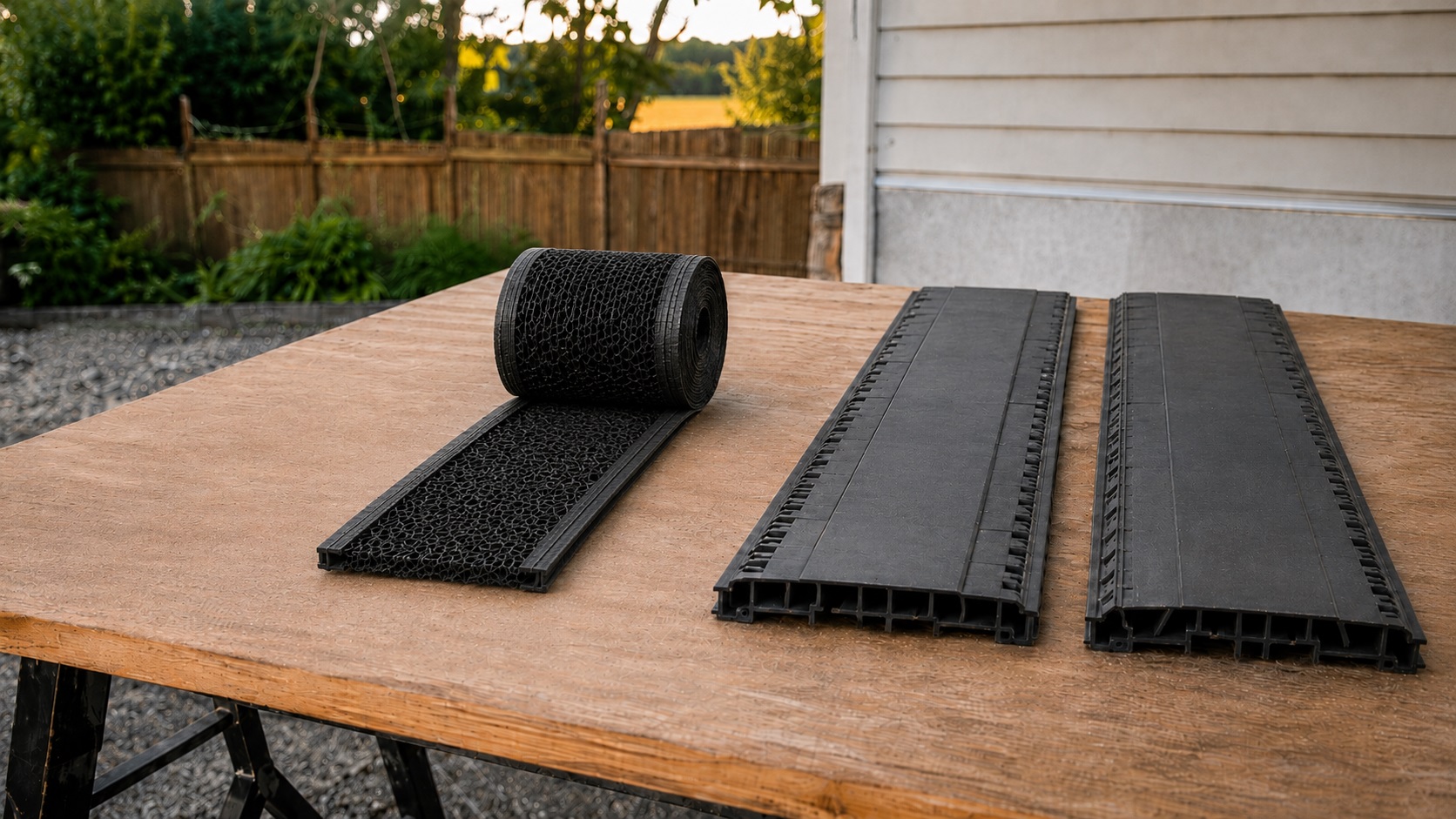
Mesh vs Rigid Ridge Vents: Which Works Better?
Rigid ridge vents usually work better than mesh ridge vents for long-term attic ventilation because they hold a more consistent airflow path, resist compression better, and often include baffles that help manage wind. Mesh ridge vents can still work on some roofs, but they are more sensitive to installation quality, clogging, crushing, and poor intake ventilation.
The most important point is that ridge vent type is only one part of the attic ventilation system. A ridge vent is an exhaust vent. It allows warm, moist attic air to leave near the peak of the roof, but it cannot work properly unless fresh intake air enters from lower vents, usually at the soffits. A high-quality rigid ridge vent will still underperform if the soffit vents are blocked, missing, painted over, or covered by insulation.
For homeowners comparing mesh and rigid ridge vents during a roof replacement, the better question is not only “Which vent is better?” It is “Which vent will keep an open, reliable exhaust path on this roof over time?” That depends on vent design, net free area, baffles, ridge slot cutting, intake balance, roof exposure, and installation quality. Ridge vents are one part of the larger roof moisture-control system covered in Most Common Roofing Material Failures.
What Mesh and Rigid Ridge Vents Are Designed to Do
Both mesh and rigid ridge vents are designed to let attic air escape through a continuous opening near the roof peak. In a balanced system, cooler outside air enters through lower intake vents, moves along the underside of the roof deck, and exits through the ridge vent. That airflow helps reduce heat buildup, moisture accumulation, condensation risk, and long-term stress on roof materials.
The basic goal is the same for both vent types:
- Let warm attic air escape near the highest point of the roof
- Help remove moisture-laden air before it condenses on roof sheathing
- Support more even attic ventilation across the roof structure
- Reduce heat buildup that can contribute to roof material stress
- Work with soffit or other lower intake vents to create balanced airflow
Ridge Vents Are Exhaust Vents, Not Complete Ventilation Systems
A common mistake is assuming that installing a ridge vent automatically fixes attic ventilation. It does not. A ridge vent can only exhaust air that has a way to enter the attic first. If soffit vents are blocked, missing, painted over, or covered by insulation, even a premium rigid vent may not solve condensation, mold, or heat buildup.
This matters because a better exhaust vent cannot overcome a poorly designed airflow path. If the attic has blocked intake, missing baffles, or warm indoor air leaking from the living space, the ridge vent type may not be the main problem.
Why Ridge Vent Choice Matters for Moisture Control
Ridge vent type matters because attic moisture problems often develop slowly. If attic air does not move well, moisture from indoor air leaks, outdoor humidity, or roof leaks may condense on cold roof sheathing, nails, rafters, or insulation.
A ridge vent that keeps a clear exhaust path can help reduce that risk. A vent that is crushed, clogged, blocked, or poorly installed may allow less air movement than expected. Over time, poor exhaust can contribute to damp attic air, musty odors, condensation on roof sheathing, mold-prone surfaces, and premature roof material aging.
This does not mean every attic moisture problem is caused by the ridge vent. Poor roof ventilation is often a system issue involving intake, exhaust, insulation, air sealing, roof geometry, and indoor moisture sources. If you are trying to understand the broader moisture consequences, see Why Poor Roof Ventilation Causes Moisture Problems.
The Comparison Comes Down to Real-World Performance
On paper, a mesh ridge vent and a rigid ridge vent may both be rated to provide attic exhaust. In real homes, the difference often comes down to how well the vent maintains that airflow after installation and years of exposure.
Mesh ridge vents are flexible and low profile, but that flexibility can also make them more vulnerable to compression under ridge cap shingles. If the material flattens, clogs, or is installed over a poorly cut slot, airflow can drop. Rigid ridge vents are shaped to hold a more defined air channel. Many also use baffles that help wind move air out of the attic while reducing the chance of wind-driven rain entering the vent.
That is why rigid ridge vents are often the better choice when attic moisture control and long-term airflow matter. Mesh vents may still be acceptable in some situations, but they leave less room for compression, clogging, and marginal installation.
The Main Difference Between Mesh and Rigid Ridge Vents
The main difference between mesh and rigid ridge vents is how they create and maintain the exhaust opening under the ridge cap shingles. Mesh ridge vents use a flexible, porous material to allow attic air to pass through. Rigid ridge vents use a molded or structured body that holds a more defined air channel along the roof ridge.
That difference affects more than appearance. It can influence airflow consistency, resistance to compression, weather performance, clogging risk, and long-term reliability. Both types can be installed under ridge cap shingles, and both can be part of a working attic ventilation system. But they do not respond to age, debris, pressure, and installation mistakes the same way.
What Is a Mesh Ridge Vent?
A mesh ridge vent is usually a flexible roll of vent material installed over the ridge slot and covered with ridge cap shingles. The mesh material allows air to move through small openings while helping block insects, debris, and wind-driven rain. Because it comes in rolls and sits low under the ridge cap, it can be fast and economical to install.
The advantage of mesh is simplicity. It can be lightweight, low profile, and easy for a roofing crew to roll out along the ridge. On a simple roof with adequate soffit intake, a properly installed mesh ridge vent may provide acceptable exhaust ventilation.
The weakness is that mesh vents are more sensitive to real-world conditions. If the material is compressed by ridge cap shingles, clogged with dust or debris, installed over a poorly cut slot, or used on a roof with weak intake airflow, the vent may not move air as well as expected. Mesh vents can also be harder for homeowners to evaluate from the ground because poor airflow may not be obvious visually.
What Is a Rigid Ridge Vent?
A rigid ridge vent uses a firmer molded body, usually made from plastic or a similar weather-resistant material. Instead of relying on a soft mesh layer alone, it creates a shaped vent channel beneath the ridge cap shingles. Many rigid ridge vents also include baffles that help improve airflow and reduce wind-driven rain entry.
The main advantage of rigid vents is that they are better at holding their shape. They are less likely to flatten under ridge cap shingles and usually provide a more predictable exhaust path when installed correctly. This can make them a stronger choice for long-term attic moisture control, especially on roofs where ventilation performance matters.
Rigid vents are not automatically perfect. They still need the correct ridge slot, proper fasteners, compatible ridge caps, and adequate intake ventilation. A rigid ridge vent installed over a blocked slot or paired with clogged soffits will not perform well. But when the rest of the system is correct, rigid vents usually offer a more reliable design than flexible mesh vents.
Airflow: Which Ridge Vent Usually Performs Better?
Rigid ridge vents usually perform better for airflow because they maintain a more stable opening under the ridge cap. The airflow path is less likely to collapse, compress, or become restricted by installation pressure. Many rigid vents are also designed with baffles that use wind movement over the roof to help draw air out of the attic.
Mesh ridge vents may have a rated airflow capacity, but real-world performance can drop if the mesh becomes compressed or clogged. Even a small reduction in the open area can matter because ridge vents rely on continuous exhaust along the roof peak. If sections of the vent are flattened or blocked, the attic may not ventilate evenly.
Net Free Area Matters, But It Is Not the Whole Story
Net free area is the amount of open space a vent provides for air movement. A ridge vent with more usable open area can generally move more air, assuming the intake side of the system can supply that air. Product specifications often list net free area in square inches per linear foot.
However, net free area should not be the only factor in the comparison. A vent may have a good rating on paper, but airflow can still be limited by poor installation, blocked intake vents, crushed vent material, debris, or an uneven ridge slot. The listed number matters most when the vent remains open and the entire attic ventilation system is balanced.
This is where rigid vents often have an advantage. Their structure helps preserve the air channel that the net free area rating depends on. Mesh vents can work, but they are more dependent on staying clean, open, and uncompressed.
Baffles Can Improve Ridge Vent Performance
Many rigid ridge vents include external or internal baffles. A baffle is a shaped feature that helps control how wind interacts with the vent. Instead of allowing wind to blow directly into the opening, a baffled design can help create a pressure difference that encourages attic air to exhaust through the ridge.
Baffles can also help reduce the risk of wind-driven rain or snow entering the attic, depending on the product design and installation. This is one reason rigid baffled ridge vents are often preferred on roofs exposed to stronger wind or heavy weather.
Mesh ridge vents may not manage wind as effectively, especially if they lack a defined baffle system. Some mesh designs include weather-resistant features, but the comparison still depends on how well the vent holds shape and directs airflow over time.
Intake Ventilation Controls How Well Either Type Works
Even the best ridge vent cannot exhaust air that cannot enter the attic. If soffit vents are blocked by insulation, painted over, missing, or undersized, both mesh and rigid ridge vents will underperform. In that situation, changing the ridge vent may help less than correcting the intake problem.
This is why contractors should evaluate the full ventilation path before recommending a ridge vent upgrade. The question is not simply whether the roof has a ridge vent. The question is whether the attic has a continuous path for intake air to move from the eaves to the ridge.
If the attic already shows warning signs such as heat buildup, condensation, musty odor, or mold-prone roof sheathing, it may help to compare the symptoms with Signs of Poor Attic Ventilation. Those symptoms can point to airflow problems beyond the ridge vent itself.
Rigid Vents Are Usually More Forgiving Over Time
From a homeowner’s perspective, the biggest advantage of rigid ridge vents is that they are usually more forgiving over time. They are less likely to lose their shape under ridge cap shingles and better suited to maintaining a consistent exhaust path for many years.
Mesh vents are less forgiving because their performance depends more heavily on remaining open and uncompressed. If they flatten, collect debris, or become partially blocked, attic airflow can decline without an obvious exterior warning sign.
That does not mean every mesh vent should be replaced immediately. It means mesh vents deserve closer attention when attic moisture, condensation, heat buildup, or poor airflow symptoms appear. During a roof replacement, many homeowners and contractors prefer rigid ridge vents because they reduce some of the long-term performance uncertainty.
Clogging, Compression, and Long-Term Performance
Long-term performance is one of the biggest differences between mesh and rigid ridge vents. A ridge vent may work well when it is new, but the real test is whether it can keep an open exhaust path after years of heat, wind, debris, roofing dust, and pressure from ridge cap shingles.
Rigid vents usually have the advantage because they are designed to hold their shape. Mesh vents can still perform well, but they are more vulnerable to airflow loss if the material becomes clogged, flattened, or poorly supported.
Why Mesh Ridge Vents Can Clog
Mesh ridge vents rely on many small openings for airflow. Those openings can become restricted by dust, pollen, roofing debris, shingle granules, insulation fibers, insect activity, or wind-blown particles. If debris was trapped during installation or the attic has dust movement from air leaks, the mesh can become more restricted over time.
This does not mean every mesh vent clogs. It means mesh vents are more dependent on staying clean and open. On homes with attic moisture problems, a mesh ridge vent should be evaluated as one possible restriction point rather than assumed to be working just because it exists.
Why Compression Is a Problem for Mesh Vents
Compression is another major concern. Mesh vents are flexible, which makes them easy to install, but that flexibility can work against them if ridge cap shingles press the material down too tightly. If the vent flattens, the air channel beneath the cap can shrink.
A compressed mesh vent may still provide some exhaust, but it may not provide the airflow the attic needs. Compression problems are more likely when ridge caps are fastened too tightly, the ridge slot is not cut correctly, the vent material is low quality, or the roof structure does not support the vent evenly.
Why Rigid Ridge Vents Usually Hold Up Better
Rigid ridge vents are designed to maintain a defined space for airflow. Their molded structure helps prevent the vent from collapsing under ridge cap shingles. This makes them more predictable over time, especially when they are installed according to the manufacturer’s instructions.
Rigid vents can still fail or underperform. They can be installed over a blocked ridge slot, damaged during installation, covered by improper ridge caps, or paired with inadequate intake ventilation. But compared with mesh vents, they are usually less likely to lose airflow simply because the vent body has flattened.
This is why rigid vents are often recommended when a roof is being replaced and the homeowner wants a more durable ventilation upgrade. If you are comparing actual vent options, the follow-up buyer guide Best Ridge Vents for Proper Attic Ventilation can help connect this comparison to product-level choices.
How to Tell If a Ridge Vent May Be Blocked
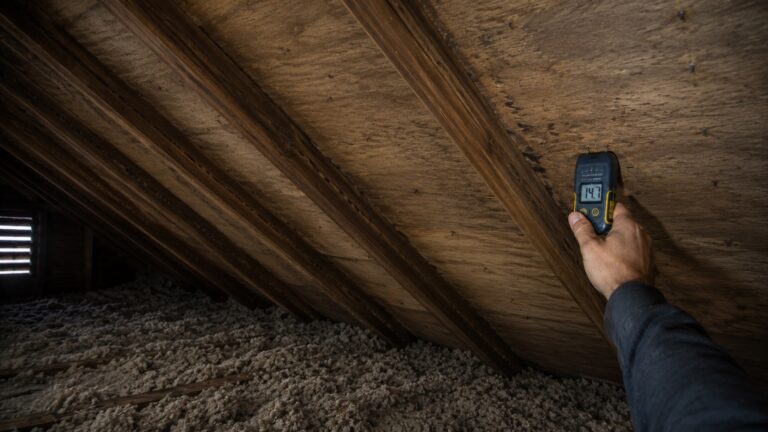
A blocked or restricted ridge vent may not be obvious from the outside. The roof may still have ridge cap shingles and a visible vent line, but attic airflow may be poor. Homeowners may notice signs such as a hot attic, musty attic smell, condensation on roof sheathing, damp insulation near the ridge, mold-prone roof decking, or uneven ventilation across attic bays.
These signs do not prove the ridge vent is the only problem. Blocked soffits, missing baffles, insulation packed into eaves, bathroom fans venting into the attic, or indoor air leaks can create similar symptoms. Still, if the ridge vent is mesh, old, crushed, or debris-covered, it deserves closer attention.
For a more inspection-focused process, use How to Inspect Roof Vents for Blockages as the separate guide. This comparison article explains why blockage matters; the inspection guide should walk through how to evaluate vent restrictions more directly.
Wind-Driven Rain, Snow, and Weather Resistance
Ridge vents sit at one of the most exposed parts of the roof. They must allow air to escape while resisting wind-driven rain, snow, insects, and debris. The challenge is keeping the vent open enough for airflow while protected enough to keep weather out of the attic.
Rigid ridge vents often perform better in exposed weather because many are designed with baffles. Baffles help control how wind moves over the vent. Instead of letting wind push directly into the opening, the vent shape can help create a pressure effect that pulls attic air outward while limiting direct water entry.
Why Baffles Matter in Wind
Wind can either help or hurt ridge vent performance. A well-designed baffled vent can use wind movement to improve exhaust. As wind passes over the ridge, the baffle helps create suction that draws attic air out. This can improve ventilation when intake air is available from the soffits.
Without effective baffles, wind may not interact with the vent as predictably. In some conditions, wind can push rain, snow, or debris toward the vent opening. Mesh vents may resist some of this through their material, but they usually do not create the same shaped airflow channel as a rigid baffled vent.
This is one reason rigid baffled ridge vents are often preferred on exposed roofs, steep roofs with strong wind patterns, homes in storm-prone areas, or roofs where attic moisture has already been a concern.
Weather Resistance Still Depends on Installation
No ridge vent is weather-resistant if it is installed poorly. A rigid vent can leak if the ridge slot is cut too wide, the end plugs are missing, the ridge caps are fastened incorrectly, or the vent is not compatible with the roof pitch. A mesh vent can also allow problems if it is wrinkled, crushed, misaligned, or poorly covered by ridge caps.
Weather resistance also depends on roof design. Short ridges, intersecting rooflines, nearby walls, valleys, dormers, and complex roof shapes can change wind and water behavior. On some roofs, ridge vent performance is less about the material alone and more about whether the roof has the right ventilation design for its shape.
This is why ridge vent upgrades should not be treated as a simple swap in every case. If the attic has recurring moisture problems, the contractor should evaluate intake ventilation, roof geometry, exhaust layout, insulation, and possible indoor air leakage before blaming only the ridge vent.
Do Ridge Vents Cause Leaks?
A properly installed ridge vent should not cause leaks. However, a poorly installed, damaged, weather-exposed, or incompatible ridge vent can allow wind-driven rain or snow into the attic. The risk is higher when the ridge slot is cut incorrectly, the vent is missing weather protection, ridge cap shingles are installed poorly, or the vent has been damaged over time.
It is also important to separate roof leaks from condensation. Moisture near the ridge does not always mean rain is entering through the vent. Warm indoor air leaking into a cold attic can condense on roof sheathing, nails, or ridge-area surfaces. That moisture may look like a leak even when the ridge vent is not the direct water entry point.
When moisture appears near the roof peak, the source should be diagnosed carefully. The problem may be wind-driven rain through a damaged vent, condensation from poor attic ventilation, blocked intake airflow, or indoor air leakage. The solution depends on the actual source.
Avoid climbing onto a roof or removing ridge caps unless you have proper fall protection and roofing experience. Many ridge vent problems can be narrowed down from the attic first, and roof-level inspection is safer for a qualified roofing contractor.
Installation Quality Matters More Than the Vent Type Alone
Rigid ridge vents usually have the performance advantage, but installation quality can make either type work well or fail early. A good rigid vent installed over a poorly cut ridge slot may underperform, while a mesh vent installed carefully on a simple roof with strong intake airflow may work acceptably.
The ridge slot must be cut to the correct width for the vent being used. If the slot is too narrow, air cannot escape well. If it is too wide, the vent may not be supported correctly and weather resistance may be reduced. The slot also needs to remain open. Underlayment, debris, framing errors, or leftover roofing material can block the airflow path before the vent is even installed.
Fastening also matters. Ridge cap shingles should be secured according to the vent and shingle manufacturer’s instructions. If fasteners are too short, the cap may not hold correctly. If they are driven incorrectly, they can deform the vent, damage the cap, or create future leak risk. Mesh vents are especially sensitive to compression, but rigid vents can also be damaged by poor fastening.
Intake Ventilation Must Be Checked First
Before choosing between mesh and rigid ridge vents, the intake side of the attic should be checked. Ridge vents exhaust air near the roof peak, but soffit vents or other lower intake vents supply the air that replaces it.
Blocked intake is common. Insulation may be packed into the eaves, soffit vents may be painted over, and older homes may not have enough intake area. Bathroom fans, recessed lights, ceiling penetrations, or attic hatches can also leak warm indoor air into the attic and add moisture faster than the vent system can remove it.
If intake airflow is poor, upgrading from mesh to rigid may improve only part of the problem. The better solution may involve soffit vent correction, attic baffles, air sealing, insulation adjustment, and a properly matched exhaust system.
Avoid Mixing Exhaust Vents Incorrectly
Another installation mistake is mixing ridge vents with other exhaust vents in a way that short-circuits airflow. If a ridge vent is used with gable vents, box vents, or powered exhaust fans without proper design, air may enter through one exhaust opening and leave through another instead of drawing fresh air from the soffits.
This can leave lower attic areas poorly ventilated. The homeowner may have plenty of vent openings but still have moisture and heat problems because the airflow path is wrong. A balanced attic system should move air from low intake points to high exhaust points, not from one high vent to another high vent.
If the attic already has confusing vent combinations, hot areas, or moisture symptoms, the solution may require more than choosing a better ridge vent. In those cases, How to Improve Airflow in Attic Spaces is the better follow-up topic because it looks at airflow improvement more broadly.
When Mesh Ridge Vents May Be Acceptable
Mesh ridge vents may be acceptable when the roof design is simple, the attic has adequate intake ventilation, the vent is a quality product, and the installation is clean. Not every mesh vent is automatically a problem. In some homes, especially where weather exposure is moderate and moisture symptoms are absent, a properly installed mesh vent may provide enough exhaust ventilation.
Mesh may be reasonable when:
- The roof has a straight, simple ridge with a correctly cut slot
- The soffit intake is open and properly balanced with the exhaust
- The attic does not show signs of condensation, mold, or heat buildup
- The vent material is not crushed under the ridge caps
- The home is not in an especially wind-exposed or debris-heavy location
- The product has adequate net free area for the attic design
- The contractor installs it according to manufacturer instructions
The concern with mesh is not that it can never work. The concern is that it has less tolerance for compression, clogging, and marginal installation. If the attic already has moisture problems or if the roof is being replaced anyway, many homeowners prefer to upgrade to a rigid baffled ridge vent for better long-term confidence.
When Rigid Ridge Vents Are Usually the Better Choice
Rigid ridge vents are usually the better choice when airflow reliability matters most. They are especially useful during roof replacement, when the ridge is already exposed and the contractor can cut or correct the ridge slot properly. This is the ideal time to upgrade the exhaust system if the existing vent is old, crushed, clogged, or poorly performing.
Rigid vents are often the stronger choice when:
- The attic has had condensation, damp sheathing, or musty odors
- The existing mesh vent appears compressed, dirty, or ineffective
- The roof is exposed to strong wind or frequent storms
- The homeowner wants a more durable ventilation detail during roof replacement
- The roof has long ridge runs that can support continuous exhaust
- The contractor can also verify intake ventilation and attic baffles
- The roof system needs a more predictable exhaust path
A rigid baffled ridge vent is not a cure-all, but it is often the better default choice for moisture-prone attics and long-term roof performance. If the existing vent is visibly damaged, crushed, loose, or no longer moving air well, compare those warning signs with Signs Your Ridge Vent Needs Replacement. If you are ready to compare actual options, Best Ridge Vents for Proper Attic Ventilation is the natural next step.
How to Decide Which Ridge Vent Your Roof Needs
The best ridge vent choice depends on the roof, not just the product label. Consider the current attic condition, intake ventilation, roof exposure, roof shape, and whether the vent will be installed during a full roof replacement or a smaller repair.
Before choosing, ask these practical questions during the estimate or roof inspection:
- Does the attic have open intake ventilation at the soffits or lower roof edges?
- Is the existing ridge slot cut correctly and free of blockage?
- Does the attic show signs of heat buildup, condensation, mold, or musty odors?
- Is the current ridge vent crushed, clogged, cracked, loose, or poorly installed?
- Can the contractor show the ridge slot, intake path, and vent type before the ridge caps are installed?
- Will the new vent include baffles for better wind performance?
- Is the roof exposed to heavy wind, rain, snow, shade, or debris?
- Will the vent be compatible with the ridge cap shingles and roof warranty requirements?
If the attic has active moisture symptoms, the ridge vent should not be evaluated alone. The issue may involve blocked soffits, missing attic baffles, poor air sealing, bathroom fans venting into the attic, insulation problems, roof leaks, or a combination of issues. Broader ventilation warning signs may fit better under Signs That Roof Ventilation Needs Repair.
For most roof replacements, a rigid baffled ridge vent is usually the better long-term choice if the roof design supports ridge ventilation and the intake system is adequate. Mesh may be acceptable in simpler situations, but rigid vents usually provide a more dependable airflow path with fewer concerns about compression over time.
Frequently Asked Questions About Mesh vs. Rigid Ridge Vents
Are rigid ridge vents better than mesh ridge vents?
Rigid ridge vents are usually better for long-term airflow because they hold their shape, resist compression, and often include baffles. Mesh ridge vents can still work when installed correctly, but they are more sensitive to clogging, crushing, and poor intake ventilation.
Do mesh ridge vents clog?
Mesh ridge vents can clog or become restricted by dust, pollen, roofing debris, shingle granules, insulation fibers, or compression under ridge cap shingles. They do not always clog, but they are more vulnerable to airflow reduction than many rigid ridge vent designs.
Can a ridge vent work without soffit vents?
A ridge vent will not work effectively without adequate intake ventilation. It needs lower vents, usually soffit vents, to supply replacement air. Without intake, the ridge vent may exhaust very little air or pull air from other roof vents instead of ventilating the attic properly.
Should I replace a mesh ridge vent with a rigid ridge vent?
Replacement may make sense during a roof replacement, especially if the mesh vent is crushed, clogged, old, poorly installed, or connected to attic moisture problems. If the mesh vent is performing well and the attic has balanced intake and exhaust, immediate replacement may not be necessary.
Can the wrong ridge vent cause attic moisture?
The wrong ridge vent can contribute to attic moisture if it restricts exhaust airflow, lacks weather protection, or is installed incorrectly. However, attic moisture usually involves the whole system, including intake vents, insulation, air leaks, indoor humidity sources, roof leaks, and ventilation balance.
Final Verdict: Mesh vs Rigid Ridge Vents
Rigid ridge vents usually work better than mesh ridge vents because they maintain a more stable airflow path, resist compression, and often use baffles to improve wind performance. Mesh ridge vents can still be acceptable on some roofs, but they are more dependent on clean airflow, careful installation, and long-term resistance to clogging.
The best choice is not only about the ridge vent itself. A ridge vent must be matched with adequate intake ventilation, a correct ridge slot, compatible ridge cap shingles, and a roof design that supports continuous exhaust. If those basics are wrong, neither mesh nor rigid vents will perform as expected.
For homeowners focused on long-term moisture prevention, a rigid baffled ridge vent is usually the safer choice during roof replacement or ventilation upgrades. It provides a more dependable exhaust path and reduces some of the uncertainty that comes with flexible mesh systems. Ridge ventilation is only one part of roof-related moisture control, so it should fit into the broader strategy explained in How to Find, Fix, and Prevent Moisture Problems in Homes.

One Comment
Comments are closed.