How Roof Age Affects Leak Risk
Roof age affects leak risk because every roofing system becomes less forgiving over time. An older roof may still look acceptable from the ground, but the materials, fasteners, flashing, sealants, underlayment, and roof penetrations may no longer resist water as well as they once did. Age does not automatically mean a roof is leaking, but it does increase the chance that small weaknesses will turn into moisture entry.
This is especially important because many roof leaks do not begin as large, obvious failures. They often start around aging details: a cracked pipe boot, lifted flashing, worn sealant, loose fasteners, brittle shingles, clogged valleys, or roof edges that stay wet after storms. As the roof gets older, those details have less margin for movement, weather exposure, and repeated wet-dry cycles.
The key is to think of roof age as a risk factor, not a diagnosis. A 12-year-old roof with poor installation or neglected flashing can leak sooner than a 20-year-old roof that has been well maintained. At the same time, even a well-built roof eventually reaches an age where inspections matter more because the materials are no longer performing like new. For a broader look at how roof systems fail over time, see Most Common Roofing Material Failures.
Why Roof Age Increases Leak Risk Over Time
A roof is exposed to sun, rain, wind, temperature swings, debris, foot traffic, and seasonal expansion and contraction. Over the years, those forces slowly weaken the parts of the roof that keep water out. The change is usually gradual. A roof may not fail all at once, but it can lose enough protective capacity that normal storms begin finding weak points.
On an aging roof, leak risk rises because the system becomes more vulnerable in several ways:
- Surface materials wear down. Shingles can lose granules, shakes can split, metal coatings can wear, and membranes can become brittle or damaged.
- Sealed areas weaken. Old sealant around flashing, vents, skylights, and roof penetrations can crack, shrink, or separate.
- Fasteners and attachments loosen. Wind uplift, thermal movement, and repeated expansion can make nails, screws, or clips less secure.
- Flashing details become more vulnerable. Metal flashing can corrode, pull away, or lose support from surrounding materials.
- Drainage paths become less forgiving. Valleys, gutters, roof edges, and low-slope areas can hold debris or water longer as the roof ages.
- Older underlayment may provide less backup protection. If the outer roofing layer allows water beneath it, the secondary water barrier may not perform as well as it did when new.
This is why an older roof can remain dry during light rain but leak during wind-driven rain, heavy storms, ice events, or repeated wet weather. The roof may still shed most water, but it may no longer protect well at vulnerable seams, joints, and transitions.
Age Reduces the Roof’s Margin for Error
When a roof is new and properly installed, it has more margin for normal weather exposure. Shingles are flexible, seal strips are stronger, flashing is tighter, pipe boots are less cracked, and fasteners are more secure. Small amounts of movement or short-term debris may not immediately cause a leak.
As the roof ages, that margin gets smaller. A slightly lifted shingle, a minor gap at flashing, or an old rubber boot may be enough for wind-driven rain to enter. The roof may still look mostly intact, but the weak points have become less tolerant of water pressure, movement, and repeated exposure.
This is one reason homeowners sometimes say a roof “suddenly started leaking” even though the underlying weakness developed over years. The final leak may appear after one storm, but the aging process that made the leak possible often started much earlier.
Older Roofs Often Leak at Details First
Many homeowners assume an aging roof will first leak through the middle of the roof surface. That can happen, especially with widespread material wear, but the first leak point is often a detail rather than the main roof field. Roof penetrations, chimneys, vents, valleys, skylights, and wall intersections all interrupt the water-shedding surface.
These areas depend on correct flashing, sealing, slope, and drainage. Over time, the roofing material around them moves, shrinks, cracks, or pulls away. When that happens, water can enter through a small opening even if most of the roof still looks serviceable.
For example, an asphalt shingle roof may still have acceptable shingles across most of the roof, but a cracked plumbing vent boot can allow water into the attic. A metal roof may still have strong panels, but aging fasteners or worn washers can create localized water entry. A tile or slate roof may have durable surface materials, but older flashing or underlayment can become the weak link.
Roof Age Matters More When Maintenance Has Been Neglected
Age and maintenance work together. A roof that is aging but regularly inspected, cleaned, and repaired usually has a lower leak risk than a roof that has been ignored for years. Debris in valleys, clogged gutters, moss growth, damaged flashing, exposed fasteners, and cracked sealant all become more serious as the roof gets older.
Maintenance does not make an old roof new again, but it can slow the progression from normal aging to active water intrusion. Small repairs are often most valuable before moisture reaches the roof deck, attic insulation, ceiling drywall, or framing. That is why older roofs should be checked more carefully after storms, seasonal changes, and long periods of wet weather.
However, maintenance has limits. If the roof materials are brittle, badly worn, repeatedly leaking, or past their realistic service life, patching isolated areas may only delay a larger decision. In that stage, age becomes more than a background factor. It becomes part of the reason leaks keep returning or new weak points keep appearing.
How Different Roofing Materials Age Differently
Roof age does not mean the same thing for every material. A 20-year-old asphalt shingle roof may be near the end of its useful service life, while a 20-year-old metal, tile, or slate roof may still have many years left if it was installed and maintained properly. That is why leak risk should be judged by material condition, not age alone.
The important question is not only “How old is the roof?” It is “Which parts of this roof usually become leak-prone as this material ages?” Some roofs fail at the surface, some at seams, some at fasteners, and some at the hidden underlayment or flashing details.
Asphalt Shingle Roofs
Asphalt shingles are strongly affected by age, heat, sun exposure, ventilation, and storm damage. As they age, they can lose granules, become brittle, curl at the edges, crack, or lose their ability to seal tightly. Once that happens, wind-driven rain can more easily get beneath shingle edges.
Leak risk on older asphalt roofs often increases around valleys, roof edges, flashing, pipe boots, and lifted or curled shingles. The roof may not leak across the entire surface, but localized weak spots can allow water to reach the underlayment or roof deck.
Metal Roofs
Metal roofing can last much longer than asphalt shingles, but age still affects leak risk. On older metal roofs, the main concerns are usually seams, fasteners, washers, coatings, penetrations, corrosion, and movement. Metal expands and contracts with temperature changes, so attachment points and seams must remain secure over time.
Exposed-fastener metal roofs need special attention as they age because rubber washers can dry out, crack, compress, or loosen. Even small gaps around fasteners can allow water to enter. Standing seam metal roofs avoid many exposed-fastener issues, but they still depend on properly formed seams, flashing, transitions, and penetrations.
Rust, coating failure, worn washers, loose fasteners, and aging penetration details can create leak risk long before the metal panels themselves reach the end of their service life.
Tile Roofs
Tile roofs often have durable surface materials, but they still depend on underlayment, flashing, valleys, and drainage details. Concrete and clay tiles can crack, shift, or break, but older underlayment is often the hidden layer that determines whether water reaches the roof deck.
This is why older tile roofs can leak even when many tiles still look solid from the ground. The visible tile surface may outlast the hidden water-control layers beneath it.
Slate Roofs
Slate is one of the longest-lasting roofing materials, but slate roofs can still develop leaks as they age. In many cases, the slate itself may outlast the metal flashing, nails, fasteners, underlayment, valleys, and other roof details. This makes age-related leak risk different from asphalt or wood roofing.
On an aging slate roof, the problem may be slipped slates, cracked individual pieces, failing flashing, deteriorated fasteners, or worn details around chimneys and valleys. Long material life does not eliminate leak risk; it shifts attention toward attachment systems, flashing, and roof details.
Cedar Shake Roofs
Cedar shake roofs age in a very moisture-sensitive way. Wood naturally absorbs and releases moisture, so cedar shakes are affected by drying cycles, shade, moss, algae, ventilation, and debris. As cedar ages, it can split, cup, curl, soften, decay, or hold moisture longer than it should.
Older cedar roofs are more likely to leak when shakes split deeply, fasteners loosen, gaps open, or moss and debris keep the surface damp. Areas under tree cover, near valleys, or on shaded roof slopes often age faster because they dry more slowly after rain.
A cedar roof can become leak-prone before every shake looks damaged because localized rot, hidden splitting, or poor drainage can open weak areas beneath the roof covering.
Low-Slope and Rubber Roofs
Low-slope roofs age differently from steep-slope roofs because they rely less on rapid water shedding and more on seams, membranes, drainage, and watertight detailing. Rubber and membrane roofs can develop leaks from seam separation, punctures, shrinkage, ponding water, flashing failure, or deterioration around roof edges and penetrations.
Age becomes more serious when water remains on the roof after storms. Ponding water adds stress to seams, edges, punctures, drains, and weak flashing details. Even a small blocked drain or sagging area can increase moisture exposure on an older membrane.
Why Material Age Should Be Judged by Condition
General lifespan ranges are useful, but they should not be treated as exact leak predictions. Two roofs of the same age can have very different risk levels. Climate, installation quality, attic ventilation, roof slope, tree cover, storm exposure, maintenance, and previous repairs all affect how quickly a roof becomes vulnerable.
For example, a roof in a hot, sunny climate may age faster than the same material in a milder climate. A shaded roof may have more moss and moisture retention. A poorly ventilated attic may overheat the roof deck and accelerate shingle aging. A roof with clogged gutters may experience more edge deterioration and ice-related stress in colder regions.
If you are comparing different roof types or trying to understand how materials behave before they fail, Types of Roofing Materials Explained can help place roof age in the larger context of material performance, durability, and moisture behavior.
The safest way to think about roof age is simple: age tells you when to pay closer attention, but condition tells you how serious the leak risk may be. An older roof with intact materials, sound flashing, clear drainage, and no interior moisture signs may still be serviceable. An older roof with brittle materials, damaged details, and repeated repairs deserves much closer evaluation.
The First Leak Points on Older Roofs Are Often the Weakest Details
On older roofs, the highest-risk leak points are usually interruptions in the roof surface: chimneys, vents, skylights, valleys, wall intersections, roof edges, and penetrations. These areas depend on flashing, sealants, fasteners, overlaps, slope, and drainage, so they can fail before the main roof field looks worn out.
Flashing Around Chimneys, Walls, and Roof Edges
Flashing is one of the most important leak-control details on a roof. It directs water away from joints where the roof meets vertical surfaces, penetrations, edges, and transitions. As a roof ages, flashing can separate, corrode, lift, loosen, or lose its seal at the edges.
Older flashing becomes especially risky around chimneys, sidewalls, dormers, skylights, valleys, and roof-to-wall intersections. These areas handle concentrated water flow, so even a small opening can let water behind the roofing material. If you are seeing rust, gaps, lifted metal, missing sealant, or staining near these areas, compare those symptoms with Signs Roof Flashing Is Failing.
Flashing failures become more likely with age because roofing, walls, chimneys, sealants, and fasteners all move and wear at different rates. Once the flashing can no longer bridge those transitions correctly, water can slip behind the roof covering. For a deeper explanation, see Why Roof Flashing Failures Cause Leaks.
Pipe Boots and Roof Penetrations
Plumbing vents, exhaust vents, electrical masts, and other roof penetrations are common leak points on aging roofs. They create holes through the roof system, so they rely on boots, collars, flashing, and sealants to keep water out.
Rubber pipe boots are especially vulnerable because they can crack, split, shrink, or pull away from the pipe as they age. From the ground, the roof may look normal, but the boot around a plumbing vent may have a small gap that allows rainwater to follow the pipe into the attic or ceiling cavity.
Metal flashing around penetrations can also loosen or corrode. On older roofs, even a small opening around a vent can become a leak during wind-driven rain. Because these leaks often follow framing, pipes, or insulation before showing indoors, the ceiling stain may appear several feet away from the actual roof opening.
Valleys and Areas That Handle Heavy Water Flow
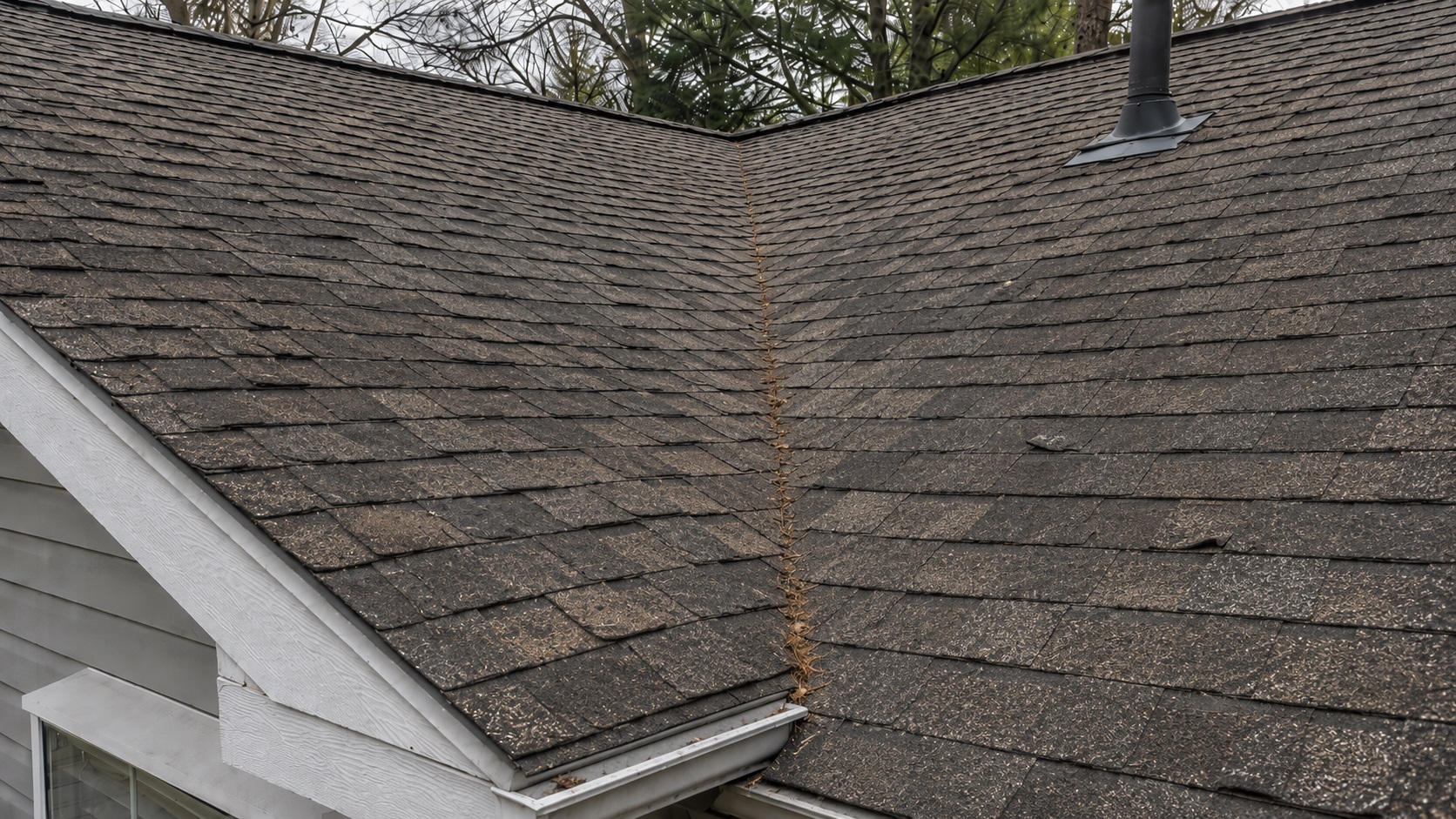
Roof valleys collect water from two roof slopes and direct it downward. That makes them one of the highest-flow areas on the roof. As a roof ages, valleys become more vulnerable to debris buildup, granule loss, worn shingles, damaged metal, and underlayment deterioration.
If leaves, pine needles, moss, or roofing debris collect in a valley, water may slow down, spread sideways, or sit against older materials longer than intended. On a newer roof, this may not immediately cause a leak. On an older roof with brittle shingles or weakened underlayment, the same debris problem can become a moisture pathway.
Valleys should shed water cleanly. If water is being trapped, diverted, or forced under roof edges, age-related leak risk increases quickly.
Skylights, Ridge Caps, and Roof Vents
Skylights are another common age-related leak point because they interrupt the roof surface and depend on both flashing and seal integrity. An older skylight may leak because of failed flashing, worn gaskets, cracked sealant, frame movement, or condensation that is being mistaken for a roof leak.
Ridge caps and roof vents can also become vulnerable as the roof ages. Ridge shingles may crack, loosen, or lose granules. Vent flashing may separate. Plastic vents can become brittle. Metal vents can corrode or loosen at fasteners. These details are exposed to wind, sun, and rain, so aging often shows there before it becomes obvious elsewhere.
This is also why roof age and attic ventilation can be confused. A damaged or poorly functioning vent system may allow outside water entry, while poor attic airflow can cause condensation from inside the home. The source matters because the repair approach is different.
How Maintenance Changes Leak Risk as a Roof Gets Older
Maintenance becomes more important as a roof ages because older materials have less room for neglect. A small problem that might be harmless for a short time on a newer roof can become a leak risk on a roof that is already brittle, worn, or near the later part of its service life.
Good maintenance does not stop aging, but it can reduce the chances that normal aging turns into water damage. It also helps homeowners catch weak points before moisture reaches the attic, roof decking, insulation, ceiling drywall, or framing.
Clean Drainage Helps Older Roofs Shed Water
One of the simplest ways to reduce leak risk on an older roof is to keep water moving off the roof as intended. Clogged gutters, blocked downspouts, debris-filled valleys, and leaf buildup near roof edges can hold moisture against aging materials.
When drainage is blocked, water may back up under shingles, spill behind fascia, overflow at roof edges, or remain in valleys longer than it should. On an older roof, prolonged wetting can worsen granule loss, wood decay, metal corrosion, underlayment deterioration, and ice-related damage in colder climates.
Clear drainage does not fix worn roofing materials, but it reduces unnecessary moisture stress. That matters more every year the roof gets older.
Small Repairs Matter More on Aging Roofs
Small roof defects should not be ignored just because there is no interior stain yet. A lifted shingle, cracked boot, loose fastener, damaged ridge cap, missing sealant, or minor flashing gap can become a leak faster on an aging roof than on a newer one.
Older materials may not reseal, flex, or recover the way newer materials do. If wind lifts an older shingle, it may crack instead of bending. If sealant separates from flashing, it may not bond well again without proper repair. If a fastener hole enlarges, water may follow the opening into the roof assembly.
For this reason, maintenance on an older roof should focus on weak points instead of only obvious damage. The goal is not just to make the roof look better. The goal is to stop small openings from becoming moisture pathways.
Moss, Algae, and Debris Can Speed Up Moisture Problems
Moss, algae, leaves, branches, and packed debris can increase moisture exposure on older roofs. Moss can hold water against shingles or shakes. Leaves can block valleys and gutters. Branches can scrape surfaces or lift materials during wind. Shade can slow drying after rain.
These problems are especially important on cedar, asphalt, and older low-slope roof sections. Materials that stay damp longer tend to deteriorate faster. Trapped moisture can also hide early warning signs until the damage is more advanced.
Homeowners should be careful with cleaning methods. Aggressive pressure washing can damage shingles, shakes, coatings, and older roof surfaces. When growth or debris is significant, it is safer to use roof-appropriate cleaning methods or hire a qualified professional rather than stripping away protective material.
Maintenance Cannot Reverse Material Aging
Maintenance can lower leak risk, but it cannot make an old roof new again. A roof with widespread brittleness, repeated leaks, failing flashing, deteriorated underlayment, or extensive surface wear may continue developing new weak points even after small repairs.
This is where homeowners need to separate maintenance from life extension. Cleaning gutters, replacing a pipe boot, sealing a small flashing gap, or repairing a few damaged shingles may be reasonable if the rest of the roof is sound. But if age-related wear is widespread, repeated patching may only delay a larger roof decision. For that decision point, see when a roof must be replaced instead of repaired.
A practical maintenance routine should focus on the tasks that actually reduce water-entry risk. For more examples of overlooked items that affect moisture protection, see Most Overlooked Roofing Maintenance Tasks.
When Roof Age Becomes a Moisture Warning Sign
Roof age becomes more important when it is combined with visible wear, repeated repairs, storm exposure, or signs of moisture inside the home. Age alone does not prove the roof is leaking, but it should change how closely the roof is monitored. The older the roof gets, the less you should ignore small changes.
A useful rule is to pair age with evidence: roof age tells you when to inspect more carefully, while stains, damp insulation, lifted materials, brittle surfaces, or repeated repairs tell you whether the risk may already be active.
A newer roof that leaks may point to installation defects, storm damage, flashing mistakes, or a failed roof penetration. A middle-aged roof may leak because maintenance issues have gone unresolved. A roof near or beyond its expected service life may leak because multiple parts of the system are wearing out at the same time.
Early Roof Life: Leaks Usually Point to Defects or Damage
If a relatively new roof leaks, age is usually not the main explanation. The more likely causes are installation errors, damaged flashing, poorly sealed penetrations, storm damage, defective materials, or ventilation-related condensation being mistaken for a leak.
This matters because a homeowner should not assume a leak is normal just because the roof has been through a few storms. A young roof should generally perform well if it was installed correctly and has not been damaged. When a newer roof leaks, the source should be investigated rather than dismissed as ordinary aging.
Middle Roof Life: Maintenance Starts to Matter More
As a roof moves through the middle of its service life, small maintenance issues become more important. Flashing may begin to loosen. Sealant may crack. Gutters may overflow. Shingles may lose granules. Vents and pipe boots may begin to show wear. Tree debris may hold moisture in valleys or along roof edges.
This is the stage where prevention can make a meaningful difference. Addressing a few weak points early can reduce the chance of water reaching the roof deck, attic insulation, ceiling drywall, or structural framing. Ignoring those details can allow minor aging to become active water intrusion.
Late Roof Life: Widespread Wear Raises the Risk
In the later part of a roof’s service life, leak risk rises because more than one part of the system may be aging at once. The surface material may be worn. Flashing may be less secure. Sealants may be brittle. Fasteners may have moved. Underlayment may be weaker. Gutters and roof edges may show years of water exposure.
This does not mean every old roof must be replaced immediately. It means visible wear should be taken more seriously. A missing shingle on a newer roof may be a localized repair. Missing shingles on an older, brittle roof may indicate a larger pattern of deterioration. A small flashing gap on a newer roof may be easy to correct. A flashing gap on an old roof with repeated leaks may point to a more widespread moisture-control problem.
If you are already seeing stains, damp attic insulation, musty odors, or recurring ceiling marks, move from age-based awareness to actual leak investigation. How to Detect Hidden Roof Leaks can help separate roof-origin moisture from other possible sources.
How to Lower Leak Risk on an Older Roof
The best way to lower leak risk on an older roof is to reduce avoidable moisture stress and catch weak points before they become interior damage. Homeowners do not need to climb onto a dangerous roof to do this. Many early warning signs can be noticed from the ground, from the attic, or during routine professional inspections.
Watch the Roof After Heavy Weather
Older roofs deserve extra attention after wind, hail, heavy rain, snow, ice, or long wet periods. Storms expose weak details that may have been marginal for years. A roof that stayed dry during ordinary rain may leak during wind-driven rain because water is pushed under lifted edges, loose flashing, cracked boots, or aging ridge details.
After severe weather, look for missing shingles, lifted roof edges, displaced ridge caps, loose metal, debris in valleys, damaged gutters, or new stains on ceilings and attic surfaces. Inspect from the ground, through windows, or from the attic when possible. If the roof is steep, high, wet, icy, storm-damaged, or difficult to access, call a professional instead of walking the roof.
Weather exposure also affects how quickly roofing materials age. For more detail on climate-related roof wear, see How Weather Affects Roof Lifespan.
Monitor the Attic and Ceiling Areas
Interior leak signs often appear after water has already entered the roof assembly. That is why attic checks are useful on older roofs. Look for damp insulation, darkened roof sheathing, water trails on rafters, rusty nail tips, staining near vents, or musty odors after rain.
Inside the living space, watch for ceiling stains, peeling paint, bubbling drywall, damp spots near exterior walls, or discoloration that appears after storms. These symptoms do not always prove the roof is the source, but on an older roof, they should not be ignored. If interior symptoms are already visible, compare them with Signs of Roof Leaks Inside the House.
Keep Water Moving Off the Roof
Water should not sit against roofing materials longer than necessary. Clear gutters, open valleys, functioning downspouts, and clean roof edges reduce avoidable moisture exposure. This matters more as the roof ages because older materials are less tolerant of prolonged wetting.
Pay special attention to areas where leaves, pine needles, seed pods, moss, or branches collect. Debris may look harmless, but it can slow drying, redirect water, and conceal damaged areas. On an older roof, trapped debris can turn a small weakness into a leak pathway.
Repair Weak Details Before They Become Interior Damage
Older roofs often benefit from targeted repairs when the rest of the system is still serviceable. Replacing a cracked pipe boot, repairing separated flashing, securing a loose ridge cap, clearing a blocked valley, or correcting a small damaged area may prevent a much larger moisture problem.
The important distinction is whether the issue is isolated or widespread. Isolated defects can often be repaired. Widespread brittleness, repeated leaks, failing underlayment, or large areas of surface wear may require a broader roof evaluation. Repeated patching on a roof that is aging everywhere can become more expensive than making a larger repair decision.
When an Older Roof Needs Professional Inspection
An older roof should be professionally inspected when there are signs that water may already be entering, or when the roof has enough wear that the source of risk is not obvious. Professional inspection is especially important if the roof is steep, high, fragile, storm-damaged, or made from materials that can be damaged by improper walking, such as slate, tile, or aging cedar shakes.
Call for an inspection if you notice any of the following:
- New or expanding ceiling stains after rain
- Damp attic insulation or wet roof sheathing
- Musty attic odors after storms
- Repeated leaks in the same general area
- Missing, cracked, curled, or brittle shingles
- Heavy granule loss in gutters or near downspouts
- Separated, rusted, bent, or loose flashing
- Cracked pipe boots or damaged roof vent flashing
- Soft, sagging, or uneven roof decking
- Storm damage on a roof that was already aging
- Multiple previous repairs that no longer stop moisture
Professional inspection is not only about deciding whether the roof should be replaced. It can also identify whether the leak risk is coming from flashing, ventilation, roof penetrations, drainage, material wear, storm damage, or condensation. That distinction matters because an age-related roof problem, a ventilation problem, and an active leak can require different repairs.
If the concern is part of a larger home moisture pattern, it may also help to think beyond the roof itself. A roof leak can affect attic insulation, ceiling drywall, framing, wall cavities, and indoor humidity. For a broader moisture-control framework, see How to Find, Fix, and Prevent Moisture Problems in Homes.
Frequently Asked Questions
Does an old roof always leak?
No. An old roof does not always leak. Age increases the chance of leaks, but material type, installation quality, maintenance, ventilation, weather exposure, and flashing condition all matter. Some older roofs remain serviceable for years, while some newer roofs leak early because of poor installation or storm damage.
At what roof age should leak risk be checked more closely?
There is no single age when every roof becomes likely to leak. Asphalt shingles often need closer monitoring as they approach the later part of their expected lifespan, while metal, tile, and slate roofs may last longer. Leak risk depends on roof condition, not just the number of years since installation.
Can a newer roof leak more than an older roof?
Yes. A newer roof can leak if it was installed poorly, damaged by storms, flashed incorrectly, or built with weak penetration details. Age is only one risk factor. A well-installed older roof may perform better than a newer roof with serious installation defects.
Where do older roofs usually start leaking first?
Older roofs often start leaking around flashing, pipe boots, skylights, valleys, chimneys, roof vents, ridge caps, fasteners, and old sealant. These details interrupt the roof surface and must handle movement, drainage, and concentrated water flow, so they often fail before the main roof field does.
Should I replace a roof just because it is old?
Not automatically. Roof age should trigger closer inspection, not an automatic replacement decision. Replacement becomes more likely when age is combined with widespread wear, repeated leaks, brittle materials, failing flashing, damaged underlayment, or moisture reaching the attic or interior.
What Roof Age Means for Leak Prevention
Roof age affects leak risk by reducing the roof system’s ability to tolerate weather, movement, debris, and small defects. The older the roof gets, the more important weak details become. Flashing, vents, valleys, pipe boots, skylights, fasteners, underlayment, and drainage paths often determine whether age turns into actual water entry.
The most useful way to think about roof age is not as a deadline, but as a warning factor. A roof that is getting older should be inspected more carefully, maintained more consistently, and watched more closely after storms. If signs of moisture appear indoors, age should be treated as one clue in a larger leak investigation.