Most Overlooked Roofing Maintenance Tasks
Most roof leaks do not begin as dramatic failures. They often start as small neglected details: a lifted flashing edge, a clogged valley, a cracked pipe boot, a loose vent cap, a gutter overflow, or a damp spot in the attic that no one noticed. By the time water stains appear on the ceiling, the roof system may have been allowing moisture in for weeks, months, or even longer.
Roof maintenance is not only about cleaning gutters or looking for missing shingles. It is about keeping water moving off the roof and catching weak points before moisture reaches decking, insulation, ceilings, or wall cavities. The most overlooked roofing maintenance tasks usually involve the parts of the roof where water changes direction, concentrates, or tries to move behind the roof covering.
Use the maintenance points below to check the roof details homeowners most often miss, understand why they matter, and decide when a small observation should become a professional inspection. For a broader look at the roof components that commonly break down, see common roofing material failures.
Why Small Roof Maintenance Tasks Prevent Big Moisture Problems
A roof is designed to shed water in layers. Shingles or other roof coverings move most of the water downward. Flashing protects transitions. Valleys collect and direct runoff. Gutters carry water away from roof edges. Penetrations need boots, caps, and flashing to keep rain out. Attic ventilation helps roof materials dry and reduces trapped moisture.
When one of these details is neglected, water can begin finding a path inward. The problem may start small. A few leaves hold moisture in a valley. A rubber pipe boot begins to crack. Sealant around a flashing edge dries out. A gutter overflows against the fascia. A shingle tab lifts after a windstorm. None of these issues may look serious at first, but each one can become a water-entry point if ignored.
Preventive roof maintenance matters because water damage usually becomes more expensive after it moves beyond the roof surface. Once moisture reaches roof decking, attic insulation, rafters, ceiling drywall, or wall cavities, the problem is no longer just an exterior maintenance issue. It becomes part of the larger challenge of how to prevent recurring moisture damage.
Weather and age make small maintenance tasks more important. Heat can dry out sealants and pipe boots. Wind can lift shingles and loosen edges. Heavy rain can expose weak flashing. Humidity can slow drying. Snow and ice can force water backward under roof edges. The longer a roof has been exposed to these conditions, the more important regular checks become. That is why roof maintenance should be adjusted to how weather affects roof lifespan.
The goal is not to turn every homeowner into a roofer. Many roof areas should only be inspected from the ground, from a safe ladder position, through windows, or from inside the attic. Steep, high, wet, icy, or damaged roofs should be left to professionals. The homeowner’s job is to notice early warning signs, document changes, and avoid letting small roof problems become hidden moisture problems.
Checking Flashing Before It Becomes a Leak
Flashing is one of the most overlooked parts of roof maintenance because it is less obvious than shingles. Homeowners often look for missing shingles first, but flashing protects some of the most leak-prone areas on the roof. Chimneys, skylights, dormers, sidewalls, vent openings, and roof-to-wall transitions all depend on flashing to direct water away from vulnerable joints.
Small flashing problems can become serious because they often let water enter behind the visible roof surface. A lifted edge, rusted section, loose piece, cracked sealant line, or old tar patch may not cause an immediate indoor drip. Instead, water may wet sheathing, framing, or insulation slowly over time.
From the ground or a safe viewing point, look for flashing that appears bent, separated, rusted, displaced, or heavily coated with old sealant. Also watch for stains below chimneys, skylights, or wall intersections. If the same area has been patched repeatedly, the flashing may need more than another surface seal. The reason this area matters so much is explained in more detail in roof flashing failures.
Flashing maintenance is not usually about homeowners repairing the metal themselves or smearing more sealant over a moving joint. It is about noticing movement or deterioration early enough to prevent hidden leaks. If flashing looks loose, damaged, repeatedly patched, or poorly sealed, it should be inspected before heavy rain exposes the weakness.
Clearing Roof Valleys and Drainage Paths
Roof valleys are easy to overlook because they may look like ordinary shingle areas from the ground. In reality, valleys carry a large amount of water because two roof slopes drain into the same channel. When a valley is clear and properly built, water moves down and off the roof. When it is clogged or damaged, water can slow down, spread sideways, or move under roof materials.
Leaves, pine needles, branches, loose granules, moss, and other debris often collect in valleys. That debris can hold moisture against shingles and flashing. It can also divert water toward edges and laps that were not designed to handle standing or sideways-moving water. Over time, a neglected valley can become one of the first places a roof leaks.
Valley maintenance is especially important after storms and during seasons when trees drop leaves or needles. Homeowners should look for debris buildup, dark damp streaks, damaged shingles along the valley, exposed metal, loose granules, or signs that water is not draining smoothly. If the valley repeatedly collects debris or shows staining and wear, compare the area with signs roof valleys are failing.
Drainage paths also include gutters, roof edges, and areas where upper roofs drain onto lower roofs. Water should not be allowed to dump repeatedly onto one weak area without control. If runoff is cutting across shingles, overflowing at a gutter, splashing behind fascia, or wearing one lower-roof section faster than the surrounding shingles, the roof may develop moisture damage even when the main roof covering is still in decent condition.
Inspecting Pipe Boots, Vent Caps, and Roof Penetrations
Roof penetrations are another common maintenance blind spot. Any place where something passes through the roof is a potential leak point. Plumbing vent pipes, exhaust vents, roof caps, skylights, attic vents, furnace vents, and other openings all need properly sealed and flashed details.
Pipe boots are especially important. The rubber collar around a plumbing vent pipe can crack, shrink, split, or pull away from the pipe as it ages. This small failure can allow water to run down the pipe and into the attic or ceiling. From the ground, a cracked pipe boot may be difficult to see, but staining below the penetration, lifted shingles nearby, or repeated leaks in the same area can provide clues.
Vent caps and roof caps should also be watched. A loose cap, rusted cover, cracked plastic housing, missing fastener, or poorly sealed edge can allow wind-driven rain into the roof system. Exhaust vents are especially important because they must shed rain from the outside while also allowing air to leave the home.
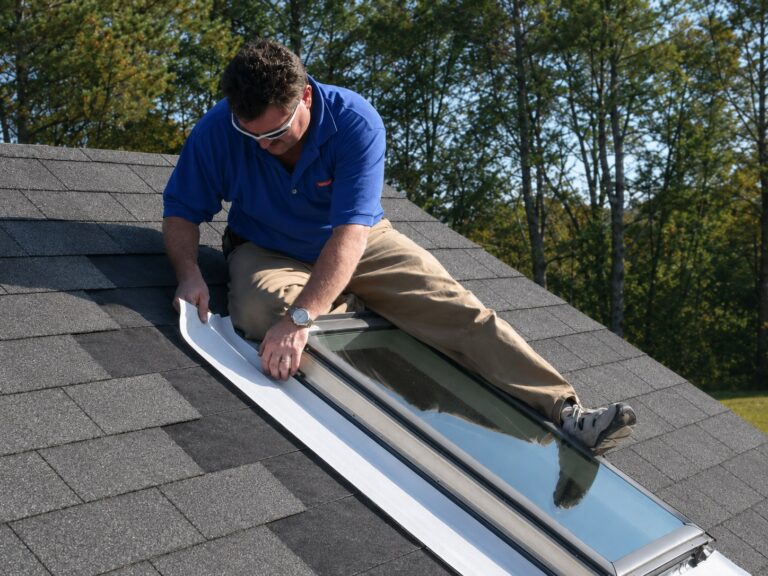
Skylights deserve close attention because homeowners often assume the glass is the problem when the leak may actually come from flashing around the opening. Water can enter above a skylight, move around the curb, and appear at the interior frame. If staining, bubbling paint, or damp drywall appears near a skylight, the roof detail around it should be inspected.
The main maintenance task is to identify penetrations that look cracked, loose, rusted, lifted, or repeatedly patched. If the warning signs are present, compare the area with signs roof penetrations are leaking before assuming the problem is minor.
Looking Inside the Attic for Early Moisture Clues
One of the most overlooked roof maintenance tasks happens inside the attic. Many homeowners only inspect the outside of the roof, but the attic can reveal leaks and condensation before water stains appear on finished ceilings. The underside of the roof often shows where moisture is entering, traveling, or collecting.
Look for dark staining on roof sheathing, damp or compressed insulation, rusty nail tips, musty odors, water trails on rafters, or daylight around roof penetrations. These signs do not always prove there is an active roof leak, but they do show that the area deserves attention. Moisture may be entering from rain, forming from condensation, or remaining from an older leak that was never fully dried.
Attic checks are especially useful after heavy rain, wind-driven storms, snow melt, or long humid periods. A roof may not leak enough to drip through the ceiling, but it may still wet insulation or sheathing. Catching that early can prevent mold, wood damage, and recurring moisture problems.
Pay close attention to areas below chimneys, valleys, skylights, roof vents, pipe boots, and roof-to-wall intersections. If dampness appears below one of these details, the exterior roof area above it should be inspected. If moisture is spread broadly across the underside of the roof deck, attic ventilation or indoor humidity may also be involved.
Do not overlook intake ventilation during roof maintenance. Blocked soffit vents can reduce attic airflow, slow drying, and contribute to condensation on roof sheathing. From a safe position, look for painted-over vents, insulation pushed into soffit bays, debris, bird nesting, or vents that appear covered. For a more focused checklist, see how to inspect soffit vents for blockages.
Watching Shingles After Wind, Heat, and Storms
Shingles are easy to overlook until one is missing, but smaller changes can warn of future roof problems. Wind, heat, hail, foot traffic, and aging can all weaken shingles before a leak appears. Regular observation helps homeowners catch these changes while the damage is still limited.
After windstorms, look for lifted tabs, missing shingles, loose ridge caps, exposed nail heads, creased shingles, shingle pieces on the ground, or shingles that no longer lie flat in the same pattern as the surrounding roof. A shingle does not have to blow off completely to become a leak risk. If wind breaks the seal strip or lifts the edge repeatedly, wind-driven rain may be able to move underneath it.
Heat and sun exposure create different warning signs. Shingles may curl, crack, blister, or become brittle. Granules may collect in gutters or at downspout outlets. Some granule loss is normal as shingles age, but heavy or sudden granule loss can reduce the roof’s surface protection. When shingles lose protection, the material underneath ages faster.
Storm debris should also be taken seriously. Branches, hail, and windblown objects can damage shingles, vents, flashing, and gutters. Sometimes the damage is obvious from the ground, but other times it appears as small dents, scuffs, lifted edges, or debris lodged in valleys. If the roof is older, even minor storm damage can become more serious because the surrounding materials are less flexible.
The key is not to climb onto unsafe roofs after every storm. Instead, use safe observation points, attic checks, photos, and professional inspections when damage is suspected. Waiting until water appears indoors allows exterior damage to become an interior moisture problem.
Managing Moss, Algae, Leaves, and Tree Debris
Moss, algae, leaves, and tree debris are often treated as appearance problems, but they can also affect roof moisture. Anything that holds water against the roof surface slows drying. Over time, slow drying can increase surface wear and make vulnerable areas more likely to leak.
Leaves and pine needles commonly collect in valleys, behind chimneys, around skylights, near roof edges, and in gutters. These materials trap moisture and can redirect water under shingle edges. Wet debris can also hide damaged shingles or flashing until the problem becomes more advanced.
Moss is especially important because it can hold moisture against shingles and grow under edges. As moss thickens, it may lift shingle tabs and create places where water can sit. Algae staining is usually less structurally aggressive than moss, but it can indicate that a roof slope stays damp or shaded for long periods.
Tree branches can contribute to the same problem. Overhanging limbs drop leaves, scrape shingles, shade roof surfaces, and increase debris buildup. Branches that touch the roof can abrade shingles during wind. Branches above the roof can also fall during storms and damage roof coverings, vents, or gutters.
Cleaning should be done carefully. Aggressive pressure washing can damage asphalt shingles by removing protective granules. Harsh scraping can also harm the roof surface. Avoid walking on steep, wet, mossy, icy, brittle, or damaged roofing. The maintenance goal is to reduce moisture-holding debris without damaging the roof materials. If growth is heavy or the roof is steep, fragile, or high, the safer choice is professional cleaning or inspection.
Checking Gutters, Downspouts, Drip Edges, and Roof Edges
Gutters and downspouts are often treated as separate from roof maintenance, but they are part of the roof drainage system. A roof can shed water correctly across the shingles and still develop moisture problems if gutters overflow, downspouts clog, or roof edges stay wet.
Clogged gutters can cause water to back up near the roof edge, spill behind the gutter, soak fascia boards, or overflow near walls and foundations. In cold climates, clogged gutters can also contribute to ice buildup near eaves. In heavy rain, gutter overflow may send water where the roof and exterior wall were not designed to handle it.
Homeowners should look for sagging gutters, loose fasteners, separated joints, overflowing sections, stained fascia, rotted trim, or downspouts that discharge too close to the foundation. Granules collecting in gutters can also signal shingle wear, especially if the roof is older or recently went through a storm.
Roof edges deserve attention because they are exposed to wind, runoff, gutter movement, and moisture. If the drip edge is missing, damaged, or poorly aligned, water can cling to the edge and reach fascia or sheathing. If gutters pull away from the house, water may run behind them instead of into them. These edge problems often stay hidden until trim softens, paint peels, or interior moisture appears.
Keeping a Roof Maintenance Record
One of the simplest overlooked maintenance tasks is keeping a roof record. Homeowners often notice small changes but forget when they happened. A few photos and notes can make it much easier to tell whether a roof issue is new, worsening, or recurring.
A useful roof record can include photos of roof slopes, valleys, flashing areas, gutters, attic sheathing, roof penetrations, and past repair locations. It should also include dates of major storms, hail events, wind damage, roof repairs, gutter cleaning, tree trimming, and professional inspections.
This record becomes especially useful after repairs. If a leak was repaired around a chimney, vent, valley, or skylight, take photos of the attic and interior ceiling area afterward. Check the same area after future storms. A simple record helps you monitor roof areas after repairs instead of guessing whether a stain is old or active.
Roof age should also be tracked. Older roofs need closer attention because materials lose flexibility, sealants dry out, flashing ages, and shingles become more vulnerable to storm damage. A roof that has reached the second half of its expected life should be inspected more carefully after harsh weather. The connection between aging and moisture risk is explained in how roof age affects leak risk.
When Overlooked Maintenance Should Become a Professional Inspection
Some roof maintenance findings are simple observations. Others are warnings that the roof needs professional inspection. Homeowners should not ignore repeated stains, damp attic insulation, soft decking, active dripping, missing shingles, loose flashing, damaged roof vents, or repeated granule loss.
A professional inspection is especially important when the roof is steep, high, wet, icy, or difficult to access safely. It is also important when the source of moisture is unclear. Water can enter through one roof detail and appear somewhere else inside the home, so guessing from the ceiling stain alone can lead to the wrong repair.
Call for help when the same area shows moisture more than once, when flashing has moved, when shingles lift repeatedly, when attic sheathing stays damp, or when mold-like staining appears near roof framing. These signs suggest the issue may already be beyond routine maintenance.
Older roofs also deserve professional attention after severe weather. Hail, high winds, heavy snow, and long rainy periods can expose weak details. If the roof already has brittle shingles, old sealant, worn flashing, or previous repairs, storm damage can push it closer to active leaking.
Roof maintenance is most effective when small findings are handled before water spreads. If the issue involves hidden moisture, recurring staining, roof-access safety, or uncertainty about the source, it may be time to hire a roofing contractor for moisture problems.
FAQs About Overlooked Roofing Maintenance Tasks
What roof maintenance do homeowners forget most often?
Homeowners often forget to check flashing, valleys, roof penetrations, attic moisture signs, roof edges, gutters, and post-storm shingle damage. Many people only look for missing shingles, but leaks often start at smaller details where water concentrates or changes direction.
How often should roof maintenance be done?
Most roofs should be checked at least twice a year and after major storms. Homes in windy, wet, snowy, heavily shaded, or storm-prone climates may need more frequent checks. Older roofs should also be watched more closely because materials become less flexible with age.
Should I inspect my roof after every storm?
You do not need to climb onto the roof after every storm, but you should observe it from safe locations after strong wind, hail, falling branches, heavy rain, or snow and ice events. Look for missing shingles, lifted edges, damaged vents, debris, gutter overflow, and attic moisture signs.
Is gutter cleaning part of roof maintenance?
Yes. Gutters and downspouts are part of the roof drainage system. If they clog or overflow, water can back up near roof edges, soak fascia, spill against walls, or contribute to moisture problems near the foundation. Gutter maintenance helps keep roof runoff moving away from the home.
Which overlooked roof areas should I photograph each year?
Photograph flashing, valleys, pipe boots, vent caps, gutters, roof edges, attic sheathing, and old repair areas. Year-to-year photos make it easier to see whether rust, separation, staining, debris buildup, or shingle movement is getting worse.
Which overlooked roof maintenance task helps prevent attic mold?
Attic moisture checks are one of the most important overlooked tasks. Stained sheathing, damp insulation, rusty nail tips, and musty odors can reveal roof leaks or condensation before moisture reaches finished ceilings.
When should roof maintenance be done by a professional?
Professional inspection is best when the roof is steep, high, unsafe, older, storm-damaged, or showing signs of hidden moisture. A professional should also inspect recurring leaks, loose flashing, soft decking, damp attic insulation, mold-like staining near roof framing, repeated shingle loss, or roof areas that have been patched more than once.
The Maintenance Pattern That Prevents Hidden Roof Moisture
The best roof maintenance pattern is simple: keep water paths clear, check the weak points where water changes direction, look inside the attic for early moisture clues, and document changes after storms or repairs. You do not need to repair every roof detail yourself, but you do need to notice when a small change could become a hidden moisture problem.
If flashing moves, valleys clog repeatedly, penetrations crack, attic sheathing stains, shingles lift, or gutters overflow, treat the finding as an early warning instead of waiting for ceiling stains. Small roof maintenance habits are most valuable when they catch moisture before it reaches decking, insulation, rafters, ceilings, or wall cavities.
Key Takeaways
- Overlooked roof maintenance usually involves vulnerable details, not just the main roof surface.
- Flashing, valleys, roof penetrations, gutters, attic clues, and roof edges deserve regular attention.
- Weather and roof age make routine maintenance more important.
- Attic checks can reveal hidden moisture before ceiling stains appear.
- Blocked soffit vents and poor attic airflow are easy to miss but can slow drying and contribute to roof sheathing moisture.
- Photos and maintenance records help identify recurring roof problems.
- Professional inspection is appropriate when signs point to hidden moisture, recurring leaks, storm damage, or unsafe roof access.