Best Exterior Wood Repair Fillers for Rot, Trim Damage, and Siding Repairs
Introduction
Exterior wood damage often starts small: a soft window sill corner, a gouge in painted trim, a cracked fascia board, or a weathered spot on wood siding that holds moisture after rain. If the damage is ignored, those small defects can let water soak deeper into the wood, making peeling paint, recurring soft spots, and mold-prone exterior areas more likely.
The right exterior wood repair filler can help homeowners rebuild damaged trim, fill cracks, shape missing corners, and prepare repaired wood for primer and paint. But not every filler is meant for the same job. A small latex filler may work well for nail holes and shallow gouges, while rotted trim, missing wood, or deeper exterior defects often need a stronger two-part epoxy filler.
This guide compares the best exterior wood repair fillers for common residential repairs, including rotted trim, siding damage, window frames, door frames, fascia boards, and painted exterior wood. For broader moisture repair planning, see our guide to how to find, fix, and prevent moisture problems in homes.
As an Amazon Associate, this site earns from qualifying purchases. This does not affect the price you pay. Our recommendations are based on research, product reliability, and real-world usability in moisture-prone environments.
Quick Picks Summary
- Best Overall Exterior Wood Filler: 3M Bondo Wood Filler 30 oz
- Best Structural Epoxy for Rotted Wood: PC Products PC-Woody Wood Repair Epoxy Paste, Two-Part 12 oz
- Best Premium Restoration Filler: Abatron WoodEpox Kit, 2 Pint
- Best Easy DIY Filler for Painted Trim: Gorilla All Purpose Wood Filler, 16 oz
- Best Budget Filler for Small Exterior Repairs: DAP Plastic Wood-X All Purpose Wood Filler with DryDex Dry Time Indicator, 5.5 oz
Product Reviews
3M Bondo Wood Filler 30 oz — Best Overall Exterior Wood Filler
3M Bondo Wood Filler is the best all-around pick for homeowners who need more than a light cosmetic patch. It is a two-part filler, which makes it a better fit for exterior repairs where ordinary putty may not be durable enough. It works well for damaged exterior trim, fascia edges, wood siding gouges, door frames, window trim, and other painted wood repairs that need to be sanded and shaped after curing.
This is a practical choice when the damage is visible but still localized. If a board is badly decayed or structurally weak, replacement may be safer. But for firm wood with cracks, missing corners, chips, or shallow rot that has been cleaned back to sound material, Bondo gives homeowners a repair compound that can be shaped before painting.
Key Features
- Two-part wood filler for stronger repairs than basic premixed putty
- Useful for interior and exterior wood surfaces
- Can be sanded and painted after it cures
- Good size for multiple trim, fascia, and siding repairs
- Works well when the damaged area needs shaping, not just filling
Pros
- ✔ Strong overall balance of durability, availability, and homeowner usefulness
- ✔ Better for larger exterior defects than small squeeze-tube fillers
- ✔ Good choice for painted repairs where the final appearance matters
- ✔ Useful around trim, siding, fascia, windows, and doors
Cons
- ✖ Requires mixing, so it is less convenient than premixed filler
- ✖ Working time is limited once the hardener is mixed in
- ✖ Not a substitute for replacing severely rotted boards
Best For
- Homeowners repairing painted exterior trim, fascia, siding gouges, window trim, and door frame damage
Check the 3M Bondo Wood Filler 30 oz on Amazon to see current availability.
PC Products PC-Woody Wood Repair Epoxy Paste, Two-Part 12 oz — Best Structural Epoxy for Rotted Wood
PC-Woody is the best fit in this lineup when the repair involves rot damage, missing wood, or deeper exterior voids. It is a two-part epoxy paste rather than a lightweight surface filler, so it is better suited for rebuilding sections of damaged wood after the weak, punky material has been removed.
This product is especially relevant for moisture-related exterior repairs. Rotted window sills, soft trim corners, damaged porch rails, door frame edges, and exterior wood details often fail because water keeps entering the same area. PC-Woody can help restore the shape of the wood after the source of the moisture has been corrected. It should be used on firm, prepared wood, not smeared over active rot.
For homeowners who are also dealing with gaps between siding and trim, pair this decision with the right sealing approach. Wood filler repairs solid wood defects; exterior caulk handles flexible joints. For joint-sealing products, see our guide to best exterior caulks for siding repairs.
Key Features
- Two-part epoxy paste for damaged or missing wood sections
- Well suited for exterior wood repairs where strength matters
- Thicker paste consistency helps with shaping and vertical repairs
- Useful for rot-damaged trim, sills, rails, frames, and posts
- Can be sanded and painted after curing
Pros
- ✔ Strong choice for rotted wood repairs after damaged material is removed
- ✔ Better for deep defects than premixed latex fillers
- ✔ Good for shaping missing corners and rebuilding worn areas
- ✔ Useful for exterior repairs exposed to weather after painting
Cons
- ✖ More involved than a basic one-part filler
- ✖ May be more product than needed for tiny nail holes
- ✖ Surface preparation matters; it should not be used over loose rot
Best For
- Rotted exterior trim, damaged window sills, door frame repairs, porch rails, and deeper missing wood sections
Check the PC Products PC-Woody Wood Repair Epoxy Paste on Amazon to see current availability.
Abatron WoodEpox Kit, 2 Pint — Best Premium Restoration Filler
Abatron WoodEpox is the premium pick for homeowners working on more serious restoration-style repairs. It is especially useful when the goal is not just filling a crack, but rebuilding a missing section of exterior wood and shaping it to match the original profile. This makes it a strong choice for older homes, decorative exterior trim, columns, porch details, window sills, and other wood elements where replacement may be more difficult or expensive.
WoodEpox makes the most sense when the damaged area has been cleaned, dried, and prepared carefully. If the moisture source is still active, the repair may fail no matter how good the filler is. Before filling exterior wood, check for water entry points, failing paint, open seams, bad flashing, or drainage problems. If the damage is connected to siding leaks, our guide to best flashing tape for siding repairs can help separate filler repairs from water-shedding repairs behind the surface.
Key Features
- Two-part epoxy filler designed for rebuilding missing wood
- Good option for larger restoration repairs
- Moldable consistency for shaping trim details and missing sections
- Can be sanded and painted after curing
- Useful for older exterior wood elements where appearance matters
Pros
- ✔ Best fit for premium restoration work and larger missing sections
- ✔ Good for shaping decorative trim, sills, posts, and columns
- ✔ More repair-oriented than basic cosmetic fillers
- ✔ Strong choice for older homes with localized rot damage
Cons
- ✖ More expensive and involved than small repair fillers
- ✖ Not necessary for simple nail holes or small paint-prep defects
- ✖ Requires careful preparation for best results
Best For
- Premium exterior wood restoration, historic trim, window sills, columns, porch details, and larger missing wood repairs
Check the Abatron WoodEpox Kit, 2 Pint on Amazon to see current availability.
Gorilla All Purpose Wood Filler, 16 oz — Best Easy DIY Filler for Painted Trim
Gorilla All Purpose Wood Filler is the easiest recommendation for homeowners who want a simple, premixed filler for smaller exterior repairs. It is not the same kind of structural repair product as PC-Woody or Abatron WoodEpox, but that is also its advantage. For small cracks, nail holes, shallow gouges, chipped painted trim, and pre-paint touch-ups, many homeowners do not want to mix a two-part epoxy.
This product is best used on firm wood where the problem is surface damage rather than deep decay. It fits well for routine exterior maintenance because small defects in painted trim can hold water, break the paint film, and lead to recurring peeling. Filling those defects before priming and painting can help create a smoother, more protective finish.
Key Features
- Premixed wood filler for easier application
- Useful for indoor and outdoor wood repairs
- Good size for multiple small trim repairs
- Can be sanded and painted after drying
- Practical for routine homeowner maintenance before repainting
Pros
- ✔ Easier to use than two-part epoxy fillers
- ✔ Good for small and medium painted trim defects
- ✔ Strong mainstream homeowner option
- ✔ Useful for routine exterior maintenance projects
Cons
- ✖ Not the best choice for deep rot or missing structural wood
- ✖ May require multiple applications for deeper defects
- ✖ Needs proper priming and painting for exterior exposure
Best For
- Painted exterior trim touch-ups, small gouges, nail holes, shallow cracks, and routine maintenance before repainting
Check the Gorilla All Purpose Wood Filler, 16 oz on Amazon to see current availability.
DAP Plastic Wood-X All Purpose Wood Filler with DryDex Dry Time Indicator, 5.5 oz — Best Budget Filler for Small Exterior Repairs
DAP Plastic Wood-X is the best budget-friendly pick for small exterior wood repairs. It is especially useful when a homeowner only needs to fill nail holes, shallow gouges, small cracks, scratches, or minor trim imperfections before painting. The dry-time indicator is helpful because one common mistake with wood filler is sanding or painting too soon.
This is not the product to choose for major rot rebuilding. Its role in the lineup is simple: small repairs, low waste, easy application, and paint-prep convenience. If your exterior wood damage is shallow and the surrounding wood is still solid, this is a practical option. If the damage feels soft, crumbly, or deep, move up to an epoxy filler instead.
Key Features
- Small-size filler for minor exterior wood repairs
- Dry-time indicator helps users know when it is ready for sanding
- Good for nail holes, cracks, gouges, and surface imperfections
- Can be sanded and painted after drying
- Convenient size for small repair jobs with less leftover material
Pros
- ✔ Best fit for small, inexpensive exterior repairs
- ✔ Dry-time indicator helps reduce sanding and painting mistakes
- ✔ Easy choice for minor painted trim prep
- ✔ More practical than a large tub for one-off repairs
Cons
- ✖ Too small for large exterior repair projects
- ✖ Not ideal for deep rot or missing wood sections
- ✖ May not be durable enough for high-movement joints or flexible gaps
Best For
- Small exterior cracks, nail holes, shallow gouges, painted trim touch-ups, and budget-conscious repairs
Check the DAP Plastic Wood-X All Purpose Wood Filler on Amazon to see current availability.
Product Comparison Table
| Product | Best Category | Best Use Case | Key Strengths | Main Limitation | Amazon Link |
|---|---|---|---|---|---|
| 3M Bondo Wood Filler 30 oz | Best Overall Exterior Wood Filler | Exterior trim, fascia, siding gouges, window trim, and door frame repairs | Strong two-part formula, good repair size, sandable and paintable | Requires mixing and has limited working time | View on Amazon |
| PC Products PC-Woody Wood Repair Epoxy Paste, Two-Part 12 oz | Best Structural Epoxy for Rotted Wood | Rotted trim, window sills, rails, frames, posts, and deeper missing wood | Epoxy paste consistency, good for rebuilding and shaping damaged areas | More involved than premixed filler | View on Amazon |
| Abatron WoodEpox Kit, 2 Pint | Best Premium Restoration Filler | Older homes, decorative trim, columns, porch details, and larger missing sections | Premium restoration-grade repair, moldable, good for detailed shaping | Overkill for tiny holes and simple cosmetic defects | View on Amazon |
| Gorilla All Purpose Wood Filler, 16 oz | Best Easy DIY Filler for Painted Trim | Small and medium painted trim repairs before priming and painting | Premixed, easy to apply, useful for routine homeowner maintenance | Not ideal for major rot rebuilding | View on Amazon |
| DAP Plastic Wood-X All Purpose Wood Filler with DryDex Dry Time Indicator, 5.5 oz | Best Budget Filler for Small Exterior Repairs | Nail holes, shallow cracks, small gouges, and minor trim imperfections | Dry-time indicator, convenient small size, easy paint-prep use | Too limited for deep rot or larger missing wood repairs | View on Amazon |
Buying Guide: How to Choose the Right Exterior Wood Repair Filler
Match the Filler to the Depth of the Damage
The most important decision is whether you are dealing with surface damage or actual wood loss. For nail holes, shallow scratches, small cracks, and minor gouges, a premixed filler such as Gorilla All Purpose Wood Filler or DAP Plastic Wood-X is usually easier to use. These products are practical when the repair is mostly cosmetic and the wood around the defect is still firm.
For rotted trim, missing corners, deep cracks, or damaged window sills, choose a two-part product such as 3M Bondo Wood Filler, PC-Woody, or Abatron WoodEpox. These fillers are more appropriate when the damaged area needs to be rebuilt, shaped, and sanded before painting.
Do Not Use Wood Filler Where Caulk Belongs
Wood filler is for defects inside the wood itself. It is not the right product for joints that move, gaps between siding and trim, or seams where two materials meet. Those areas usually need an exterior caulk or sealant that can flex with temperature and moisture changes. If you are sealing a gap rather than rebuilding damaged wood, see our guide to best exterior gap fillers for siding.
Choose a Filler That Can Be Sanded Smooth Before Exterior Paint
Most exterior wood filler repairs should be primed and painted after sanding. Paint helps protect the repair from weather exposure and helps the patched area blend into the surrounding trim or siding. If the repair will remain visible, choose a filler that can be shaped and sanded smoothly. For painted exterior wood, 3M Bondo, PC-Woody, Abatron WoodEpox, Gorilla, and DAP can all fit different repair sizes.
Use Epoxy for Rot-Prone Areas
Areas around windows, door frames, porch rails, lower trim, and fascia boards often get damaged because water repeatedly sits against the same surface. If the wood has already softened, a light filler is usually not enough. Remove all loose material first, let the area dry, and use an epoxy-style filler if there is missing wood to rebuild.
Know When Replacement Is Smarter
Exterior wood filler is useful, but it has limits. If a board is soft through most of its thickness, crumbling along a long section, pulling away from fasteners, or part of a structural assembly, filler may hide the problem instead of solving it. In those cases, replacement or a more complete repair is usually better than patching.
Setup and Usage Advice for Exterior Wood Repair Fillers
Fix the Moisture Source First
Before applying any exterior wood repair filler, ask why the wood failed. Common causes include open seams, missing caulk, poor drainage, splashback, peeling paint, clogged gutters, bad flashing, or repeated wetting from sprinklers. If water keeps entering the same area, the filler may loosen, crack, or fail prematurely.
Remove Loose or Rotten Wood
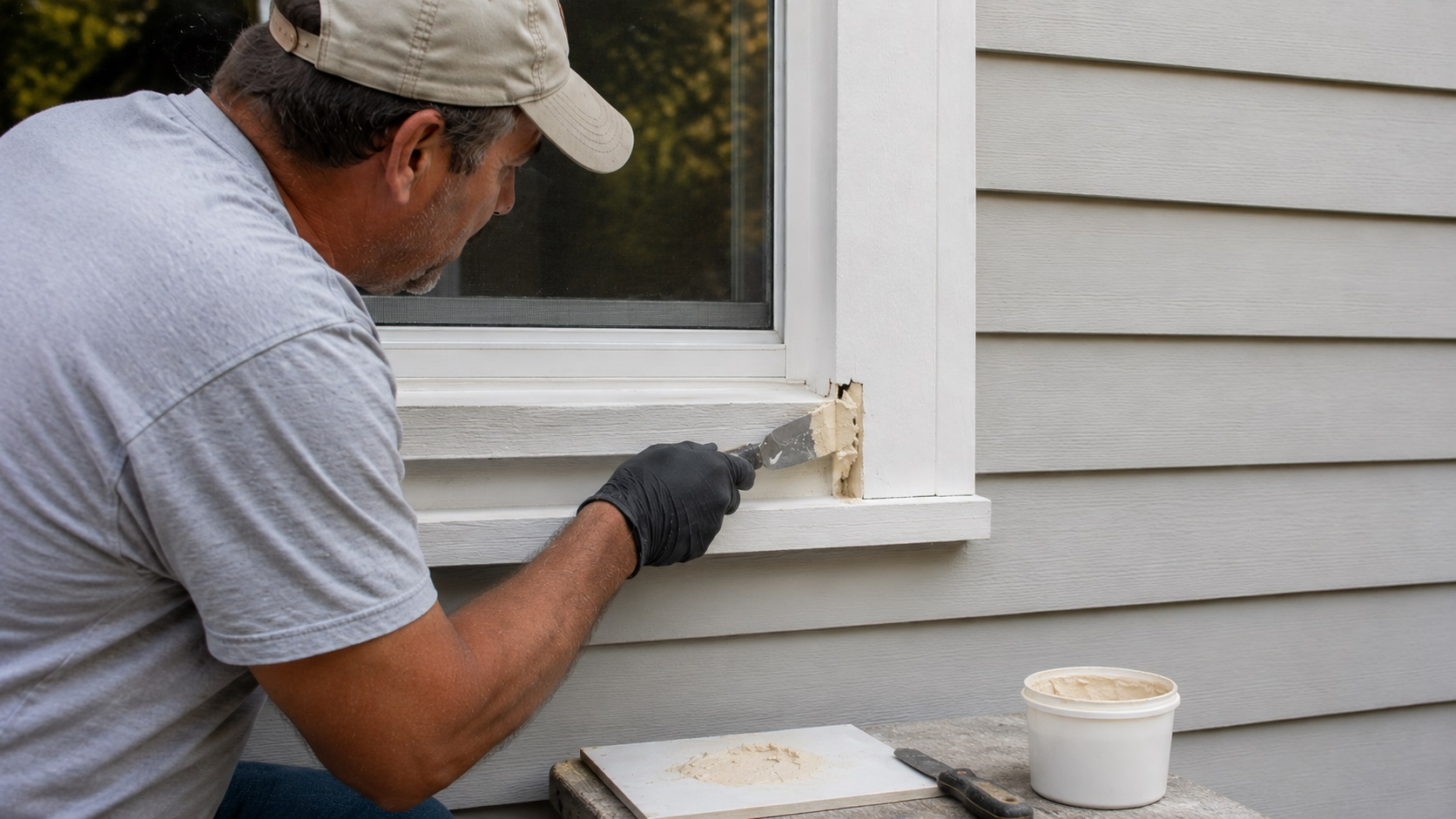
Do not spread filler over soft, crumbly, or loose wood. Scrape, chisel, sand, or cut away damaged material until you reach firm wood. For rot repairs, this step matters more than the brand of filler. A strong epoxy cannot bond well to weak material that is already breaking apart.
Let the Repair Area Dry
Exterior wood should be dry before filling. If the wood is still damp inside, the repair can trap moisture. That trapped moisture may contribute to peeling paint, hidden decay, or recurring soft spots. If you are unsure whether the area is dry, give it more time, improve airflow, and inspect for any active water entry.
Mix Two-Part Fillers Carefully
Two-part fillers work because the filler and hardener react together. Mix only what you can apply during the working time. Use a disposable mixing surface, follow the product directions, and avoid guessing at the ratio. Too much or too little hardener can affect cure time and repair quality.
Build Deep Repairs in Layers When Needed
For larger voids, it may be easier to build up the repair in stages instead of trying to pack in too much filler at once. This can help with shaping and reduce sagging. Follow the product directions for maximum fill depth, cure time, sanding time, and recoating.
Sand the Patch Flush, Then Prime and Paint the Exterior Wood
Once the filler has cured or dried fully, sand it flush with the surrounding wood. Prime the repaired area before painting, especially on exterior trim and siding. A good paint system helps protect both the filler and the surrounding wood from future moisture exposure.
Common Mistakes to Avoid
Filling Over Active Rot
The biggest mistake is treating rot like a surface blemish. If the wood is soft, punky, or crumbly, remove the damaged material first. Filling over rot can create a smooth surface while the decay continues underneath.
Using Latex Filler for Deep Missing Wood
Small premixed fillers are convenient, but they are not the best choice for deep exterior voids, missing corners, or major trim rebuilding. Use an epoxy-style filler for deeper repairs.
Using Wood Filler Instead of Caulk
Do not use wood filler in moving seams, siding joints, or gaps between different materials. Filler dries hard; caulk and sealant are designed to flex. Using the wrong product can lead to cracking and water entry.
Ignoring Peeling Paint Around the Repair
If the surrounding paint is peeling, bubbling, or loose, scrape and sand beyond the damaged spot. Filling only the hole while leaving failing paint around it can lead to a repair that looks finished but fails after weather exposure.
Sanding or Painting Too Soon
Exterior repairs need enough drying or curing time. Sanding too early can tear the filler. Painting too early can trap moisture or interfere with the final finish. Products with dry-time indicators can help, but the product directions should still guide the process.
Expecting Filler to Replace Bad Flashing or Drainage
Wood filler repairs the damaged wood surface. It does not correct water management problems behind siding, around windows, or at roof-to-wall intersections. If the same area keeps getting wet, inspect the flashing, caulk joints, gutters, and drainage path.
Repairing Boards That Should Be Replaced
If the wood is damaged across a long span, weakened around fasteners, or part of a load-bearing area, filler is not the right first solution. Replace the damaged wood or get a qualified repair assessment.
FAQ About Exterior Wood Repair Fillers
What is the best exterior wood repair filler for rotted trim?
For rotted trim where the damaged material has been removed, PC Products PC-Woody is the best choice in this lineup. It is an epoxy paste that works better for deeper voids and missing wood than a light premixed filler.
Can I use exterior wood filler on wood siding?
Yes, exterior wood filler can be used on wood siding for small gouges, cracks, chips, and localized damaged spots. It should not be used as a substitute for replacing badly deteriorated siding boards or fixing water entry behind the siding.
Is epoxy wood filler better than regular wood filler?
Epoxy wood filler is usually better for deeper repairs, rotted areas, missing corners, and exterior damage that needs rebuilding. Regular premixed wood filler is easier for small nail holes, shallow cracks, and cosmetic trim touch-ups.
Do I need to paint over exterior wood filler?
In most exterior repairs, yes. Primer and paint help protect the repair and the surrounding wood from weather exposure. Always follow the filler manufacturer’s directions for sanding, priming, and painting.
Can wood filler stop a leak?
No. Wood filler is not a leak-stopping product. It can repair damaged wood after the water source has been corrected, but leaks usually require flashing, caulk, sealant, roofing repair, plumbing repair, or drainage correction depending on the source.
What is the easiest exterior wood filler for beginners?
Gorilla All Purpose Wood Filler is the easiest pick in this lineup for basic homeowner repairs because it is premixed and practical for small to medium painted trim defects. DAP Plastic Wood-X is also easy for very small repairs.
When should I replace exterior wood instead of filling it?
Replace the wood if the damage is widespread, deep, structural, or connected to fastener failure. Filler is best for localized defects where the surrounding wood is still solid.
Can I use wood hardener instead of wood filler?
No. Wood hardener and wood filler serve different roles. A hardener can help stabilize some soft wood after preparation, but it does not rebuild missing material by itself. Many rot repairs require both stabilization and filling, depending on the damage.
Conclusion
The best exterior wood repair fillers are not all meant for the same type of damage. For the strongest all-around homeowner choice, 3M Bondo Wood Filler 30 oz is the best starting point because it can handle more substantial exterior trim and siding defects than small premixed fillers.
For rotted wood and deeper missing sections, PC Products PC-Woody Wood Repair Epoxy Paste is the better structural-style repair choice. For larger restoration work on older exterior trim, columns, porch details, and window sills, Abatron WoodEpox Kit, 2 Pint is the premium option.
For simpler painted trim repairs, Gorilla All Purpose Wood Filler, 16 oz is the easiest DIY pick. For small budget repairs such as nail holes, shallow gouges, and minor cracks, DAP Plastic Wood-X is the most practical small-container choice.
Whichever product you choose, do not treat filler as a shortcut for moisture control. Remove loose rot, dry the area, fix the source of water, sand the repair properly, and protect the finished surface with primer and paint.