Best Flashing Tape for Siding Repairs
Water behind siding is one of the easiest exterior moisture problems to underestimate. A cracked siding panel, loose trim board, poorly flashed window, or open wall penetration may look minor from the outside, but water can move behind the siding, wet the sheathing, soak the housewrap, and eventually lead to hidden mold or rot inside the wall. The best flashing tape for siding repairs helps restore the drainage layer behind the siding instead of only covering the visible gap.
This guide focuses on flashing tapes for exterior wall repairs, siding work, housewrap integration, window and door flanges, sheathing seams, sill corners, and wall penetrations. It does not focus on roof patch tape, roofing tar, or exposed roof flashing repair products. For more background on how siding and exterior wall assemblies let water into homes, see How Exterior Walls Allow Moisture Into Homes. For the broader sitewide guide, see How to Find, Fix, and Prevent Moisture Problems in Homes.
As an Amazon Associate, this site earns from qualifying purchases. This does not affect the price you pay. Our recommendations are based on research, product reliability, and real-world usability in moisture-prone environments.
Quick Picks Summary
- Best Overall for Siding Repairs: ZIP System Flashing Tape
- Best Premium Narrow Flashing Tape for Seams and Wall Penetrations: 3M All Weather Flashing Tape 8067
- Best for DIY Window and Door Flashing: FrogTape Pro Grade Flashing Tape for Windows & Doors
- Best for Corners, Sills, and Curves: ZIP System Stretch Tape
- Best for Housewrap and Weather-Barrier Integration: DuPont Tyvek Flashing Tape
- Best Wide Variant for Window and Door Flanges: 3M All Weather Flashing Tape 8067, 6-inch or 9-inch option
- Backup Option for Professional Wall Flashing: Grace Vycor Plus Self-Adhered Flashing
Flashing Tape Reviews for Siding, Housewrap, and Wall Openings
Best Overall for Siding Repairs: ZIP System Flashing Tape
ZIP System Flashing Tape is the strongest overall choice for homeowners who need a reliable flashing tape for siding repairs, sheathing seams, window and door rough openings, and exterior wall transitions. It is a true building-envelope tape rather than a general-purpose waterproof patch tape, which makes it a better fit when you are repairing the moisture-control layer behind siding.
This is the product I would choose first when the goal is to reseal exposed sheathing seams, tape around a repaired siding opening, or restore part of the exterior wall drainage plane before reinstalling siding. It is especially useful when the repair involves a section of sheathing, housewrap, trim, or a window/door perimeter rather than a simple surface crack.
Key Features
- Acrylic adhesive designed for exterior wall and rough-opening applications
- Useful for sheathing seams, window openings, door openings, and siding repair areas
- Works well as part of a layered drainage-plane repair when siding is removed
- Better suited to concealed wall flashing than exposed emergency patching
- Good choice when you want one tape that can handle several common siding repair situations
Pros
- ✔ Strong all-around fit for siding and exterior wall repairs
- ✔ Appropriate for sheathing seams and rough openings
- ✔ Easier to justify as a main article pick than roof-focused repair tapes
- ✔ Comes from a well-known building-envelope product line
Cons
- ✖ Not the best shape for stretching around tight corners or sill pan curves
- ✖ Surface preparation still matters; dirty or wet sheathing can reduce adhesion
- ✖ Works best when siding is removed and the tape can be properly integrated
Best For
- Homeowners repairing siding where sheathing seams, wall openings, or housewrap edges are exposed
- DIY siding repairs around windows, doors, trim transitions, and panel replacement areas
- Projects where the goal is to rebuild the drainage layer behind siding, not just cover a visible gap
Check the ZIP System Flashing Tape on Amazon to see current availability.
Best Premium Narrow Flashing Tape for Seams and Wall Penetrations: 3M All Weather Flashing Tape 8067
3M All Weather Flashing Tape 8067 is a premium option for homeowners who want a serious flashing tape for exterior wall details, narrow seams, and smaller penetrations. It is especially useful where siding repairs involve hose bibs, exterior vents, small wall openings, narrow trim transitions, or tight areas where a wider tape would be harder to place cleanly.
The main reason this is not the top overall pick is size. The linked option is commonly associated with a narrower roll, which can be excellent for seams and small details but may be too narrow for broader window flanges or larger siding repairs. For homeowners dealing with moisture behind siding, the tape width should match the repair area. A narrow tape can be a great detail tape, but it should not be forced into a job that needs wider flashing coverage.
Key Features
- Premium all-weather flashing tape for exterior wall openings and penetrations
- Good fit for narrow seams, small flashing details, and compact repair areas
- Useful around exterior vents, hose bibs, trim edges, and small siding-related transitions
- Thin profile helps it fit under siding and trim more easily than bulky patch tapes
- Strong choice when detail work matters more than maximum width
Pros
- ✔ Excellent premium tape for small wall flashing details
- ✔ Strong choice for penetrations and narrow repair zones
- ✔ Better suited to siding-related flashing than generic rubber repair tape
- ✔ Useful for detailed repairs where bulky tape would interfere with siding reinstallation
Cons
- ✖ Narrow versions may not provide enough coverage for wide window or door flanges
- ✖ More technical than some DIY-friendly tapes
- ✖ Not the best choice for large open wall sections unless you select a wider variant
Best For
- Narrow seams behind siding
- Small wall penetrations such as vents, cable entries, and hose bib areas
- Homeowners who want a premium tape for detailed flashing work instead of broad patching
Check the 3M All Weather Flashing Tape 8067 on Amazon to see current availability.
Best for DIY Window and Door Flashing: FrogTape Pro Grade Flashing Tape for Windows & Doors
FrogTape Pro Grade Flashing Tape for Windows & Doors is a strong homeowner-friendly option for siding repairs around windows and exterior doors. Many siding moisture problems start at window trim, door trim, flanges, and rough openings because water is not redirected properly after a repair. This tape fits that use case better than exposed roof patch products because it is aimed at window and door flashing, not emergency roof sealing.
This is a practical choice for DIY users who need to tape a window or door perimeter after removing siding, replacing trim, or correcting a small flashing failure. If you are troubleshooting repeated moisture around a window, it may also help to read How Water Enters Around Exterior Windows and How Window Flashing Is Supposed to Work before deciding whether the repair is simple enough for DIY work.
Key Features
- Designed for window and door flashing applications
- Good fit for DIY siding repairs around rough openings
- Useful when siding is removed near exterior trim, flanges, or wall openings
- Practical roll size for common homeowner repair projects
- More siding-relevant than generic waterproof repair tapes
Pros
- ✔ Good match for window and door siding repairs
- ✔ Easier to explain to homeowners than highly specialized pro-only tapes
- ✔ Useful for common leak-prone areas around exterior openings
- ✔ Good option when the repair is not large enough to require a full wall-system rebuild
Cons
- ✖ Not the most specialized tape for stretch corners or sill pan shaping
- ✖ May not be ideal for every housewrap or sheathing system
- ✖ Like all flashing tapes, it must be layered correctly to shed water
Best For
- DIY window and door flashing repairs behind siding
- Exterior trim repairs where water has been getting behind the siding
- Homeowners replacing siding panels around wall openings
Best for Corners, Sills, and Curves: ZIP System Stretch Tape
ZIP System Stretch Tape is the product to consider when regular flat flashing tape is too stiff for the detail you are repairing. Siding repairs around windows and doors often involve corners, sill areas, curved transitions, and awkward shapes where a straight tape can wrinkle, bridge, or fail to lie flat. Stretch tape is made for those details.
This is not a replacement for regular flashing tape across every seam. Instead, it is a specialty product for areas where water is most likely to collect or turn a corner. In siding repairs, that often means lower window corners, sill pans, curved penetrations, or places where a flat strip of tape would need to be cut and overlapped several times. Used correctly, stretch tape can make a difficult detail cleaner and less leak-prone.
Key Features
- Stretchable flashing tape for corners, curves, and irregular shapes
- Useful around window sills, door sills, curved wall penetrations, and corner transitions
- Helps reduce the need for multiple small cuts in difficult flashing areas
- Works as a companion to regular ZIP System Flashing Tape
- Best used where flat tape would wrinkle or fail to conform
Pros
- ✔ Excellent for sill corners and curved shapes
- ✔ Helps create cleaner flashing details in awkward repair areas
- ✔ Strong companion product for ZIP System regular flashing tape
- ✔ Useful for window and door areas where leaks often begin
Cons
- ✖ More specialized than regular flashing tape
- ✖ Not the first choice for long, straight sheathing seams
- ✖ Can be wasted if used where standard tape would work just as well
Best For
- Window sill corners
- Door sill transitions
- Curved or awkward exterior wall penetrations
- Siding repairs where flat tape would wrinkle or bridge over the surface
Check the ZIP System Stretch Tape on Amazon to see current availability.
Best for Housewrap and Weather-Barrier Integration: DuPont Tyvek Flashing Tape
DuPont Tyvek Flashing Tape is a logical choice when the siding repair involves housewrap or a Tyvek-style weather-resistive barrier. The key advantage is not that it magically fixes siding leaks by itself. The advantage is system compatibility: when you are repairing exterior wall water protection, the tape needs to work with the drainage layer behind the siding.
This pick is best for homeowners who are not merely patching a visible exterior crack, but exposing part of the wall assembly and tying the repair back into the weather barrier. If water has already reached the sheathing or wall cavity, inspect the area carefully before closing it back up. You may also want to review Signs of Water Damage Behind Siding and How to Detect Moisture Behind Exterior Siding.
Key Features
- Designed for flashing details connected to DuPont Tyvek-style weather barriers
- Useful for tying repaired openings back into the housewrap layer
- Good option when siding has been removed and the weather-resistive barrier is exposed
- Better for concealed wall flashing than exposed surface patching
- Appropriate for window, door, and exterior wall repair situations where housewrap continuity matters
Pros
- ✔ Strong brand fit for housewrap integration
- ✔ Good choice when the repair involves the weather-resistive barrier
- ✔ More appropriate for siding repairs than roof-only tapes
- ✔ Helps reinforce the drainage plane when layered correctly
Cons
- ✖ Best suited to compatible wall systems, not every random surface
- ✖ Not a substitute for replacing damaged siding, sheathing, or trim
- ✖ Product listings and available roll sizes should be checked before purchasing
Best For
- Housewrap repairs behind siding
- Window and door openings where Tyvek-style integration matters
- Siding repairs where the weather-resistive barrier has been cut, torn, or exposed
Check the DuPont Tyvek Flashing Tape on Amazon to see current availability.
Best Wide Variant for Window and Door Flanges: 3M All Weather Flashing Tape 8067, 6-Inch or 9-Inch Option
The wider versions of 3M All Weather Flashing Tape 8067 are better suited to window and door flange work than the narrow version. If you are repairing siding around a window or exterior door, a wider tape often gives you more overlap, more margin for drainage-plane integration, and better coverage around the flange area. That extra width can matter when the repair area is not perfectly clean or square.
This is the version to consider when the repair involves broader window or door flashing, not just a narrow wall penetration. Before buying, confirm that the selected Amazon variation is actually the 6-inch or 9-inch size. Product pages can default to a narrower option, and using a narrow tape where a wide tape is needed is one of the most common ways to end up with a weak repair.
Key Features
- Wider flashing tape option for window and door flange areas
- Better coverage than narrow tape for larger siding repair details
- Useful when more overlap is needed around rough openings
- Premium tape option for exterior wall water protection
- Better suited to large window and door repairs than the narrow version
Pros
- ✔ Better width for many window and door flange repairs
- ✔ More useful than narrow tape when the wall opening needs wider coverage
- ✔ Strong premium option for detailed siding repair work
- ✔ Good choice where a narrow seam tape would not provide enough overlap
Cons
- ✖ You must confirm the selected Amazon variation before ordering
- ✖ Wider tape can be harder to place neatly in tight areas
- ✖ Not necessary for every small siding repair
Best For
- Window flange flashing behind siding
- Exterior door rough openings
- Repairs where wide overlap is more important than tight detail work
Check the 3M All Weather Flashing Tape 8067 wide variants on Amazon to see current availability.
Backup Option for Professional Wall Flashing: Grace Vycor Plus Self-Adhered Flashing
Grace Vycor Plus Self-Adhered Flashing is a strong professional-style backup option for wall flashing, windows, doors, and non-roof exterior details. It is relevant to siding repair work because it is meant for building-envelope flashing, not exposed emergency patching. However, because Amazon availability and listing strength can vary, it is better treated as a backup pick rather than one of the main recommendations.
This is the product to consider if the main picks are unavailable or if you specifically want a recognized self-adhered flashing membrane for non-roof exterior wall details. It can fit window and door repair situations, but the product should be chosen carefully based on width, surface compatibility, and the exact wall assembly you are repairing.
Key Features
- Self-adhered flashing membrane for non-roof exterior details
- Useful around windows, doors, and wall openings
- Professional-style option for siding-related water protection
- Better suited to concealed flashing than visible surface patching
- Good backup if preferred products are unavailable
Pros
- ✔ Good product type for exterior wall flashing
- ✔ Relevant for window and door openings behind siding
- ✔ Stronger fit for this article than generic waterproof repair tape
- ✔ Useful backup for professional-style wall repairs
Cons
- ✖ Availability may be less consistent than the main picks
- ✖ May have lower Amazon review strength depending on the listing
- ✖ Not the best first choice for casual DIY users who want a simpler product path
Best For
- Backup use when ZIP, 3M, FrogTape, or DuPont options are unavailable
- Professional-style window and door flashing repairs
- Homeowners who want a self-adhered flashing membrane for concealed exterior wall work
Check the Grace Vycor Plus Self-Adhered Flashing on Amazon to see current availability.
Side-by-Side Comparison of Siding Flashing Tapes
| Product | Category | Best Use Case | Key Strengths | Main Limitation | Amazon Link |
|---|---|---|---|---|---|
| ZIP System Flashing Tape | Best Overall for Siding Repairs | Sheathing seams, siding repairs, window and door rough openings | Strong all-around fit for concealed exterior wall flashing | Not ideal for stretch corners or curved sill details | View on Amazon |
| 3M All Weather Flashing Tape 8067 | Best Premium Narrow Flashing Tape for Seams and Wall Penetrations | Narrow seams, vents, hose bibs, and compact wall details | Premium detail tape for small exterior wall flashing areas | Narrow versions may be too small for window flanges | View on Amazon |
| FrogTape Pro Grade Flashing Tape for Windows & Doors | Best for DIY Window and Door Flashing | Window and door repairs behind siding | Homeowner-friendly option for common rough-opening repairs | Less specialized for stretch corners | View on Amazon |
| ZIP System Stretch Tape | Best for Corners, Sills, and Curves | Window sill corners, curved penetrations, irregular transitions | Conforms to shapes where flat tape can wrinkle | Not the best use of money for long straight seams | View on Amazon |
| DuPont Tyvek Flashing Tape | Best for Housewrap and Weather-Barrier Integration | Repairs involving Tyvek-style weather barriers | Logical fit for housewrap continuity behind siding | Best when used with compatible wall systems | View on Amazon |
| 3M All Weather Flashing Tape 8067 Wide Variant | Best Wide Variant for Window and Door Flanges | Window flanges, door flanges, and broader wall openings | More overlap for larger flashing areas | Amazon variation must be checked before ordering | View on Amazon |
| Grace Vycor Plus Self-Adhered Flashing | Backup Option for Professional Wall Flashing | Professional-style window, door, and wall flashing | Strong product type for non-roof exterior wall details | Amazon availability may vary | View on Amazon |
How to Match Flashing Tape to the Siding Repair Detail
The right flashing tape depends on what part of the siding system you are repairing. A siding repair is not always just a siding repair. Sometimes you are replacing a cracked vinyl panel. Sometimes you are exposing torn housewrap. Sometimes you are opening a wall around a leaking window. Those are different jobs, and they may need different tape widths and shapes.
For general siding repairs, start with a true wall flashing tape
If you are not sure where to start, choose a true exterior wall flashing tape such as ZIP System Flashing Tape. It is the cleanest fit for sheathing seams, rough openings, and general wall repairs. Avoid choosing roof patch tape just because it says “waterproof.” Roof tapes are often made for exposed surfaces, while siding flashing tape usually needs to work behind cladding as part of the wall drainage system.
For window and door repairs, think about width
Window and door openings are among the most common moisture entry points behind siding. If the repair involves a flange, rough opening, or trim removal, make sure the tape is wide enough to create proper overlap. Narrow tape can be useful for small seams, but wider flashing tape is usually better for window and door flanges. If you are dealing with repeated window moisture, the issue may be larger than tape alone. See Why Window Flashing Failures Cause Leaks for more context.
For corners and sill pans, use stretch tape
Flat tape can wrinkle around corners. Wrinkles, fish mouths, and lifted edges create weak spots where water can get behind the repair. For window sill corners, door sill transitions, and curved penetrations, ZIP System Stretch Tape is usually a better choice than forcing regular tape into an awkward shape.
For housewrap repairs, choose a compatible tape
If the siding repair exposes housewrap, the tape needs to restore continuity in the weather-resistive barrier. DuPont Tyvek Flashing Tape is the most logical pick when the wall uses a Tyvek-style barrier. The goal is not just to stick tape over a tear. The goal is to layer the repair so water drains outward instead of being trapped behind the siding.
For wall penetrations, use detail tape carefully
Exterior vents, hose bibs, cable lines, and other wall penetrations are common leak points. A premium narrow flashing tape such as 3M 8067 can be useful in these areas, but tape should not be the only defense if the penetration is loose, poorly sloped, or missing a proper exterior trim block. For more on this problem, see Signs Water Is Entering Through Wall Penetrations.
How to Apply Siding Flashing Tape Without Trapping Moisture
Flashing tape works best when it is part of a layered system. It should direct water back out, not trap water behind the siding. Before applying tape, inspect the area for rot, mold, soft sheathing, loose fasteners, and damaged housewrap. If the wall is already wet, do not close it up until you understand where the water came from and whether the materials can dry safely.
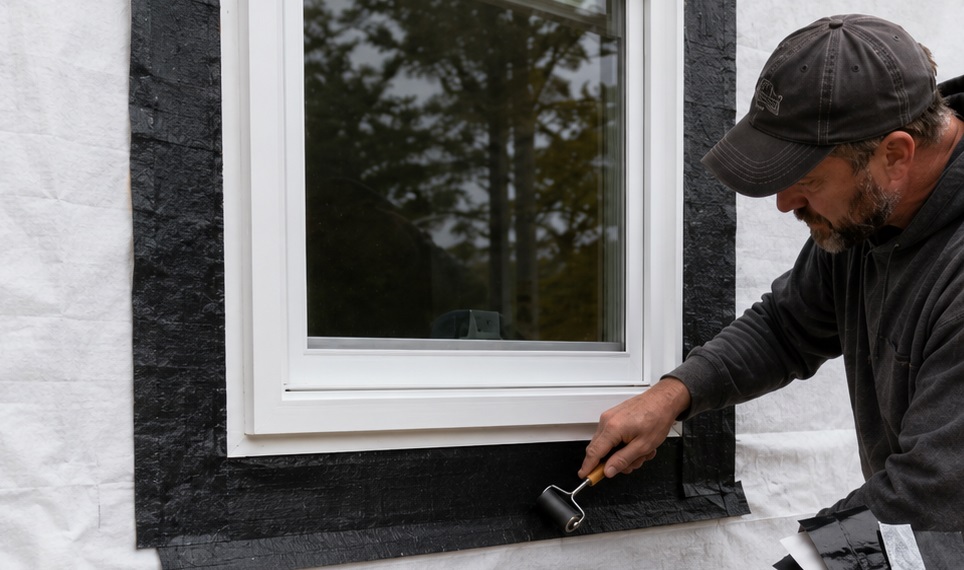
Clean the surface before applying tape. Dust, old caulk, loose paint, wet sheathing, and dirty housewrap can all interfere with adhesion. Press the tape firmly across the entire surface, especially at edges and overlaps. A small roller can help, but even firm hand pressure is better than simply laying the tape in place and assuming it bonded.
Layer the tape in the direction water flows. Lower pieces should generally be installed before upper pieces so water sheds over the face of the lower layer rather than behind it. This is especially important around window and door openings. Do not create reverse laps that guide water into the wall.
Use the right width for the repair. A narrow tape may work for a small seam or penetration, but window and door flanges often need wider tape. Corners and sill pans may need stretch tape. If you are repairing a larger area of siding and sheathing, one roll of narrow tape may not be enough to create a reliable drainage-plane repair.
After the repair, monitor the area. Look for new stains, musty odors, soft trim, swollen siding, peeling paint, or recurring dampness. A flashing tape repair should not be treated as a guarantee that the wall is permanently safe from moisture. If symptoms return, see Signs of Moisture Returning After Repairs.
Flashing Tape Mistakes That Can Let Water Behind Siding
Using roof patch tape behind siding
Some waterproof tapes are excellent for roofs, RVs, gutters, and exposed repairs, but that does not make them the best flashing tape for siding repairs. Siding repairs usually need a tape that works behind cladding, integrates with sheathing or housewrap, and allows the wall to drain correctly.
Choosing tape that is too narrow
A 2-inch tape may be useful for detail work, but it can be too narrow for window flanges, door openings, and wider housewrap repairs. When in doubt, choose enough width to create solid overlap without stretching the tape beyond its intended use.
Taping over wet or damaged materials
Flashing tape should not be used to hide rot, mold, or saturated sheathing. If the siding repair reveals soft wood, black staining, swollen sheathing, or persistent dampness, identify the source before taping everything closed.
Ignoring the shingle-lap principle
Flashing tape must be layered so water drains out and down. If upper layers are tucked behind lower layers incorrectly, the tape can create a path for water to enter the wall.
Using flat tape where stretch tape is needed
Flat tape can bridge, wrinkle, or lift around corners. For sill corners, curved penetrations, and irregular shapes, stretch tape is usually safer and cleaner.
Depending on tape when the siding detail is wrong
Flashing tape can help restore the drainage plane, but it cannot fix every installation mistake. Missing J-channel, improper trim clearance, reverse-lapped housewrap, and poor window installation may require a more complete repair.
Flashing Tape for Siding Repairs: FAQ
What is the best flashing tape for siding repairs?
For most siding repairs, ZIP System Flashing Tape is the best overall pick because it is a true exterior wall flashing tape and works well for sheathing seams, rough openings, and general siding repair areas. For corners and sill pans, ZIP System Stretch Tape is better. For window and door flange work, a wider tape may be more appropriate.
Can I use roof flashing tape for siding repairs?
Sometimes, but it is usually not the best first choice. Roof flashing repair tape is often designed for exposed roof surfaces, metal flashing, or emergency leak patching. Siding repairs usually need tape that can integrate with housewrap, sheathing, and wall openings behind the siding.
Is flashing tape enough to stop water behind siding?
Not always. Flashing tape can help restore the water-control layer, but it will not fix rotten sheathing, improper window installation, missing trim details, or siding that is installed incorrectly. If moisture keeps returning, the underlying drainage path may still be wrong.
Should I use regular flashing tape or stretch tape?
Use regular flashing tape for straight seams, sheathing joints, and flat wall details. Use stretch tape for corners, sill pans, curved penetrations, and awkward transitions where flat tape would wrinkle or lift.
What width flashing tape is best for window and door flanges?
Wider tape is usually better for window and door flanges because it provides more overlap and more margin for proper layering. Narrow tape can work for small details, but it may not cover enough surface for larger rough openings.
Can flashing tape trap moisture?
Yes, if it is used incorrectly. Tape can trap moisture if it is installed over wet materials, layered backward, or used to cover a wall cavity that has not dried. The goal is to direct water out, not seal moisture inside the wall.
Do I need to remove siding to use flashing tape correctly?
For most proper siding flashing repairs, yes. Flashing tape usually needs to be installed behind the siding, tied into the housewrap or sheathing, and layered correctly. Surface taping over the outside of siding is usually a temporary patch, not a proper wall flashing repair.
How do I know if water already damaged the wall behind siding?
Look for soft sheathing, mold odor, staining, swollen trim, loose siding, peeling paint, or damp insulation near the repair area. If you suspect hidden moisture, read How to Detect Moisture Behind Exterior Siding before closing the wall.
Choosing the Right Siding Flashing Tape for Your Repair
The best flashing tape for siding repairs depends on the repair detail. For most homeowners, ZIP System Flashing Tape is the best overall choice because it fits the broadest range of siding, sheathing, and exterior wall repair situations.
Choose 3M All Weather Flashing Tape 8067 for premium narrow detail work around seams and wall penetrations. Choose FrogTape Pro Grade Flashing Tape for Windows & Doors for DIY window and door flashing. Choose ZIP System Stretch Tape for sill corners, curves, and awkward transitions. Choose DuPont Tyvek Flashing Tape when housewrap integration is the priority.
Whatever tape you choose, use it as part of a proper exterior wall drainage repair. The goal is not simply to cover a gap. The goal is to keep water moving outward so siding, sheathing, framing, and interior wall materials stay dry.