
When to Replace Temperature Pressure Relief Valves on Water Heaters
A temperature pressure relief valve should be replaced when it leaks, corrodes, becomes mineral-crusted, fails to reseat, is physically damaged, has been altered, or is too old to trust. Because this valve is a safety device, the question is not only whether it is dripping today. The real question is whether it can still open freely and discharge safely when temperature or pressure inside the water heater becomes unsafe.
A T&P valve is not there to fix ordinary leaks, improve efficiency, or make the water heater easier to maintain. Its job is to give hot water and pressure a controlled path out of the system when conditions become unsafe. If that path is blocked, unreliable, or repeatedly discharging, the valve and the surrounding water heater plumbing need attention.
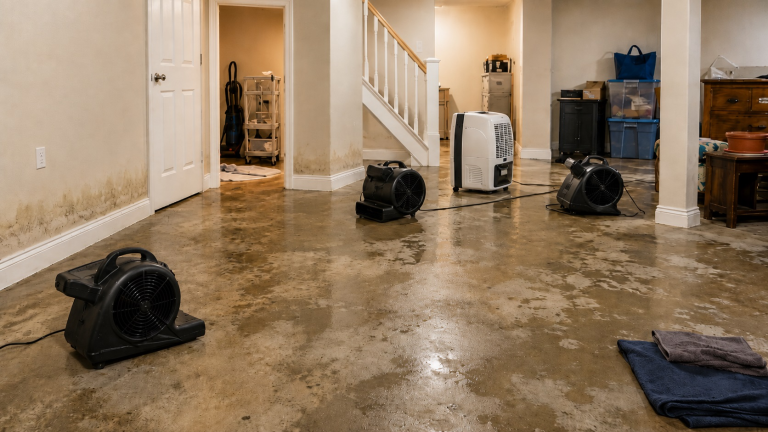
If moisture is already appearing near the water heater, it is also worth thinking beyond the valve itself. Small plumbing leaks can spread into floors, walls, framing, and nearby finished materials if they are ignored. That is why water heater components should be viewed as part of the larger system of how plumbing leaks can lead to structural damage.
What a Temperature Pressure Relief Valve Does
A temperature pressure relief valve, often called a T&P valve or TPR valve, is designed to protect a water heater from unsafe internal conditions. If the temperature inside the tank becomes too high, or if pressure rises beyond the valve’s rated limit, the valve opens and releases water through the discharge pipe.
This release is not a defect when the valve is responding to a real unsafe condition. It is the valve doing the job it was installed to do. The problem begins when the valve cannot open, cannot close, leaks constantly, becomes blocked by mineral deposits, or shows signs that it may not respond correctly under pressure.
Most residential water heaters have the T&P valve mounted near the top or upper side of the tank. A discharge pipe usually runs downward from the valve outlet toward the floor or another approved discharge location. That pipe should remain open, unobstructed, and able to release hot water safely if the valve opens.
Relief discharge piping is commonly required to remain full-size, drain by gravity, terminate safely, and avoid valves, caps, plugs, or hidden restrictions. Local code and the water heater manufacturer’s instructions should control the final installation details.
Because the valve connects directly to safety, homeowners should never cap it, plug it, remove the discharge pipe, install a shutoff valve on the discharge line, or ignore repeated discharge. A dripping pipe may be annoying, but blocking the pipe is not a safe solution. The correct response is to find out whether the valve is failing, whether system pressure is too high, or whether another water heater plumbing problem is forcing the valve to open.
Why Replacement Timing Matters
A T&P valve may sit quietly for years, which can make it easy to forget. That does not mean it is maintenance-free forever. Over time, the valve can be affected by heat, pressure, mineral buildup, corrosion, sediment, hard water, and age. Internal parts can become stiff. The seat may stop sealing properly. The waterways can become restricted. Exterior corrosion can make the valve unreliable or difficult to trust.
Replacement timing should be based on condition, symptoms, age, and maintenance history, not visible leaking alone. Dripping, heavy mineral deposits, poor reseating, corrosion, or unknown service history on an older water heater are all reasons to take the valve seriously.
Replacement timing also matters because T&P valve issues can be misleading. A valve may drip because the valve itself is worn out. But it may also drip because the home has excessive water pressure, thermal expansion, a failing expansion tank, overheating, or another pressure-related issue. In that case, simply replacing the valve may stop the symptom temporarily without correcting the real cause.
Treat relief valve problems as both a component issue and a system warning sign. The valve may need replacement, but it may also be showing that pressure, expansion, temperature control, or another water heater component needs attention.
When Should You Replace a Temperature Pressure Relief Valve?
A temperature pressure relief valve should be replaced when there is reason to believe it can no longer open freely, close properly, or remain reliable under pressure. Some signs are obvious, such as active leaking from the valve outlet. Others are more subtle, such as corrosion, crusting, age, or a history of repeated discharge.
The most important replacement triggers are visible leakage, corrosion, mineral buildup, poor reseating, physical damage, old age, unknown maintenance history, or any condition that suggests the valve may be blocked, weakened, or unreliable. Because the valve protects against unsafe temperature and pressure, it is usually better to treat questionable signs seriously instead of waiting for a more dramatic failure.
Replace It If It Leaks or Drips From the Outlet
A T&P valve that drips from the outlet or discharge pipe may need replacement, especially if the dripping continues after the valve has had a chance to reseat. A small drip can be easy to dismiss, but it usually means one of two things: the valve is no longer sealing correctly, or the water heater system is creating enough pressure to make the valve open. Check whether the water is coming from the valve outlet or the end of the discharge pipe, not from a nearby supply connection, tank seam, drain valve, or condensation on cold piping.
If the valve itself is worn, mineral deposits may prevent the internal seat from sealing tightly. The result may be a slow drip at the end of the discharge pipe, a damp spot near the water heater, or mineral staining below the pipe. In that case, the valve may need to be replaced before the small discharge becomes a recurring moisture problem.
If the valve is opening because pressure is too high, the valve may not be the root problem. Replacing the valve without addressing the pressure source can lead to the same symptom returning. Repeated discharge should be treated as a reason to inspect the broader water heater plumbing system, not just the visible valve.
Replace It If It Is Corroded, Rusted, or Crusted With Mineral Deposits
Corrosion and mineral buildup are warning signs that the valve may no longer be reliable. Rust around the valve body, lever, threads, or outlet can indicate long-term moisture exposure or material deterioration. White, green, or chalky mineral buildup can suggest hard-water deposits left behind by repeated seepage or discharge.
Mineral buildup matters because a relief valve must be able to move and discharge freely. If scale forms around the outlet or internal waterways, the valve may not open properly when it should. If buildup forms on the seat, the valve may open but fail to close completely afterward.
Light surface discoloration does not always mean immediate replacement is required, but heavy corrosion, crusting, or visible deterioration should not be ignored. A valve that looks neglected is especially concerning when the water heater is older or the homeowner does not know when the valve was last inspected or replaced.
Replace It If the Valve Does Not Reseat Properly
A temperature pressure relief valve must be able to open when needed and then close again after pressure or temperature returns to a safer range. If the valve continues dripping after it has been operated, inspected, or disturbed, the internal seat may no longer be sealing correctly.
This often happens when mineral particles, corrosion, or worn sealing surfaces prevent the valve from closing cleanly. In some cases, a valve that seemed fine before testing begins to drip afterward because deposits were loosened or the old seal no longer reseated tightly. That does not always mean the test caused the failure. It often means the valve was already near the end of its reliable service life.
A valve that does not reseat should not be ignored or forced closed. If it continues to discharge, it should be evaluated and usually replaced. The bigger concern is whether the drip is only a bad valve or whether pressure in the system is still pushing the valve open.
Replace It If the Valve Is Physically Damaged
Any visible physical damage to the valve should be taken seriously. A bent lever, damaged outlet, cracked fitting, distorted discharge connection, or signs of tampering can make the valve unreliable. Even if the water heater appears to be working normally, a damaged safety valve should not be trusted.
Physical damage is especially concerning when the discharge pipe has been altered. A T&P valve must be able to discharge freely. If the discharge pipe is capped, plugged, reduced, crushed, routed uphill, blocked, or fitted with a shutoff valve, the problem is no longer just valve replacement. The discharge arrangement itself may be unsafe and should be corrected by a qualified plumber.
Homeowners sometimes focus only on stopping visible water. With a T&P valve, that is the wrong priority. The goal is not to silence the valve. The goal is to make sure the water heater has a safe, open, reliable relief path.
Replace It If the Valve Is Old or Has an Unknown History
Age matters because relief valves operate in a harsh environment. They are exposed to hot water, pressure changes, minerals, and corrosion over many years. Even if the valve is not visibly leaking, an older valve with unknown maintenance history may not be as reliable as it looks from the outside.
This is common when homeowners move into an older home and inherit a water heater that has been serviced inconsistently. The valve may have never been inspected. The discharge pipe may have been altered. The water heater may have hard-water scale. The valve may be original to the tank or older than the homeowner realizes.
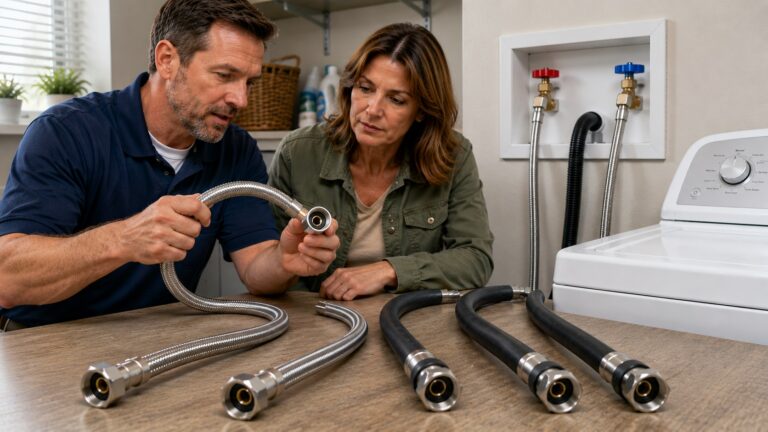
There is no single replacement age that applies perfectly to every home because water quality, pressure, installation quality, maintenance history, and manufacturer guidance all affect valve condition. However, an old valve should be evaluated more carefully, especially if the water heater is also showing signs of age or if other nearby components are being replaced. When reviewing the full water heater area, it is also helpful to understand when to replace water heater supply lines, since aging supply connections can create their own leak risks.
Why a Leaking T&P Valve Is Not Always Just a Bad Valve
A leaking temperature pressure relief valve often gets blamed on the valve itself. Sometimes that is correct. A worn, crusted, or corroded valve can leak because it no longer seals properly. But a T&P valve can also leak because it is responding to a real pressure problem inside the system.
This distinction matters because replacing the valve may not fix the underlying cause. If excessive pressure or thermal expansion is forcing the valve open, a new valve may begin discharging too. The leak may appear to be solved for a short time, then return when the same pressure condition happens again.
High Water Pressure Can Force the Valve to Discharge
If incoming water pressure is too high, the water heater and plumbing system may experience more stress than they were designed to handle. The T&P valve may discharge when pressure rises enough to reach its relief point. This can show up as intermittent dripping from the discharge pipe, especially after periods of water heating or low water use.
In that situation, the valve may be doing exactly what it is supposed to do. Replacing it without checking system pressure can miss the real problem. High pressure can also strain supply lines, shutoff valves, appliance connections, and other plumbing parts throughout the home.
Thermal Expansion Can Make a Relief Valve Open Repeatedly
Water expands when it is heated. In some homes, that expanded water has nowhere to go because the plumbing system is closed by a pressure-reducing valve, backflow preventer, check valve, or similar device. When expansion has no safe cushion, pressure can rise inside the water heater system and force the T&P valve to discharge.
This is where an expansion tank may become relevant. An expansion tank gives heated water a place to expand without pushing pressure high enough to open the relief valve. If a home already has an expansion tank, repeated T&P discharge may suggest the tank has failed, lost charge, been undersized, or become waterlogged. For the related lifecycle topic, see how long water heater expansion tanks last.
If the pressure issue points toward a failed or missing expansion tank, handle that as a separate pressure-control problem rather than assuming the relief valve is the only part involved.
Overheating Can Also Trigger the Relief Valve
A T&P valve may also open if the water heater overheats. This is less common than simple valve wear or thermal expansion, but it is important because it involves the safety function of the valve. If water is excessively hot, if steam is present, or if the relief valve releases very hot water, the issue should not be treated as a simple drip.
Overheating concerns should be handled by a qualified professional. The valve may need replacement, but the thermostat, controls, installation, or tank condition may also need evaluation. The homeowner’s role is to recognize that repeated or forceful discharge is not normal and should not be ignored.
How Hard Water and Mineral Buildup Affect Relief Valves
Hard water can shorten the reliable service life of a temperature pressure relief valve. When water contains high levels of minerals, repeated heating and small amounts of seepage can leave deposits around the valve outlet, seat, and internal waterways. Over time, those deposits can affect how freely the valve opens and how cleanly it closes.
Mineral buildup can make an old valve unreliable even if it has not been leaking heavily. Deposits may interfere with movement, restrict discharge, or keep the valve from sealing again after it opens. That can turn a safety-device problem into a recurring moisture problem near the water heater.
Moisture around the water heater should always be traced carefully. A damp area near the tank may come from the T&P valve, but it can also come from supply lines, drain valves, fittings, condensation, or nearby plumbing. If several symptoms appear together, it may be time to review the broader signs water heater plumbing components are failing.
Should You Replace the Relief Valve During Other Water Heater Maintenance?
A temperature pressure relief valve should be checked whenever other water heater plumbing parts are being inspected or replaced. The valve may not need replacement every time another component is serviced, but it should never be overlooked simply because it is not actively leaking.
Water heaters often age as a system. Supply lines stiffen or corrode. Shutoff valves become hard to turn. Expansion tanks lose their air charge or become waterlogged. Drain valves clog or seep. If the drain valve is also stiff, crusted, or leaking, review when to replace water heater drain valves while checking the rest of the water heater area. The T&P valve may also become less reliable over time, especially in homes with hard water, high pressure, or inconsistent maintenance.
That is why relief valve replacement should be considered during broader water heater maintenance, especially if the valve is old, corroded, crusted, leaking, or original to an aging tank. A homeowner who is already reviewing water heater connections should also think about how often plumbing parts should be replaced across the home, not just at one fixture.
During Water Heater Replacement
When a water heater is replaced, the T&P valve should be new, properly rated for the water heater, and installed with a safe discharge pipe. An old relief valve should not be casually reused on a new tank. Even if the old valve still looks serviceable, its age, internal condition, and reliability may be unknown.
This is especially important if the previous water heater had pressure problems, repeated discharge, overheating symptoms, or mineral buildup. A new water heater does not automatically solve every plumbing-system issue. If high pressure or thermal expansion caused the old valve to discharge, the same condition can affect the new installation unless the underlying cause is corrected.
During Expansion Tank Service
The relief valve and expansion tank are different parts, but they are closely related in homes with closed plumbing systems. If an expansion tank fails, heated water may have no cushion for expansion, and that extra pressure can force the T&P valve to open repeatedly. When expansion tank service is being done, the relief valve should also be checked for mineral damage, repeated-discharge staining, or poor reseating.
During Leak Investigation Around the Water Heater
If there is moisture near the water heater, the T&P valve is only one possible source. The leak may also come from the cold-water inlet, hot-water outlet, supply lines, shutoff valve, drain valve, tank seam, fittings, or nearby plumbing. A careful inspection should identify the actual source before assuming the relief valve is the only problem.
Still, the discharge pipe should always be checked. Water staining below the pipe, mineral residue at the pipe end, or dampness directly under the discharge outlet can suggest the valve has been releasing water. If the valve has discharged repeatedly, the cause should be identified before the surrounding area develops recurring moisture damage.
Warning Signs That Need a Plumber
Some T&P valve issues are not good candidates for guesswork. Call a plumber when symptoms suggest repeated discharge, high pressure, overheating, unsafe discharge piping, or unreliable valve operation. The goal is not only to stop dripping. The goal is to confirm that the water heater can relieve unsafe conditions safely.
Call a Plumber If the Valve Discharges Repeatedly
Repeated discharge is one of the clearest signs that the issue may be bigger than a worn valve. If water appears at the discharge pipe again and again, the valve may be responding to recurring pressure or temperature conditions. Replacing the valve without checking the system can leave the real problem unresolved.
This is especially true if discharge happens after the water heater runs, after hot water use, overnight, or during periods when no fixtures are open. Those patterns can point toward thermal expansion or pressure fluctuations. A qualified plumber can determine whether the valve is bad, whether the expansion tank is failing, or whether pressure regulation is needed.
Call a Plumber If the Valve or Pipe Has Been Altered
A T&P discharge pipe should not be capped, plugged, reduced, crushed, blocked, or fitted with a shutoff valve. It should not be routed in a way that traps water or prevents discharge. If someone has altered the pipe to stop dripping or redirect water casually, the water heater may no longer have a safe relief path.
This type of issue should be corrected professionally. The visible problem may look simple, but the safety function depends on proper discharge. A blocked or restricted relief path can make the water heater more dangerous than a normal leaking fitting.
Call a Plumber If There Are Signs of Heat, Steam, or Forceful Discharge
Steam, very hot discharge, spurting water, or forceful release from the T&P pipe should be treated as urgent. These symptoms may indicate unsafe temperature or pressure conditions, not just a worn seal. Avoid the discharge area, do not test the valve by hand during the event, and have the water heater evaluated promptly by a qualified professional.
Homeowners should also be careful around the discharge pipe because released water may be hot enough to cause burns. Do not place your hand under the pipe to “check” the leak. Look for evidence from a safe distance, such as wet flooring, staining, mineral deposits, or recent discharge into a pan or drain area.
Call a Plumber If Water Damage Is Spreading
If water from the relief valve has already reached flooring, baseboards, drywall, framing, or nearby storage, the problem should be addressed before it spreads. Even small repeated discharges can create moisture problems if they continue over time.
This is especially important when the water heater is in a finished basement, laundry room, closet, garage wall cavity, or utility area with absorbent materials nearby. If moisture has already spread beyond the water heater area, use the situation as a reminder to prevent moisture problems before they spread into larger areas of the home.
When the leak source is uncertain or the repair is beyond simple observation, it may be time to review when to hire a plumbing professional for leak repairs. A T&P valve problem is not the place to rely on temporary fixes or guesswork if pressure, heat, or safety is involved.
Common Mistakes to Avoid With T&P Relief Valves
Relief valve problems become more dangerous when the response is to stop the symptom instead of finding the cause.
Do Not Cap or Plug the Discharge Pipe
The most important mistake to avoid is capping, plugging, or blocking the discharge pipe. The pipe is there so the valve can release water when necessary. Blocking that path defeats the purpose of the safety valve.
If the discharge pipe is dripping, the solution is not to seal it shut. The solution is to find out why water is coming out. The valve may need replacement, or the system may have pressure, expansion, or temperature problems that need correction.
Do Not Ignore a Slow Drip
A slow drip may look harmless, but it can signal valve wear, mineral buildup, high pressure, thermal expansion, or overheating. It can also keep the surrounding area damp long enough to damage flooring, trim, drywall, or nearby stored belongings.
Slow leaks are especially easy to miss when the water heater is in a garage, closet, basement, or utility room that is not checked often.
Do Not Assume a Quiet Valve Is Automatically Safe
A valve that never leaks is not automatically reliable. It may be perfectly fine, or it may be stuck, scaled, blocked, or untested. The absence of water at the discharge pipe does not prove that the valve would open correctly during an unsafe pressure or temperature condition.
This is why visual condition, maintenance history, and professional inspection matter. A silent but heavily corroded valve should not be trusted just because it is dry.
Do Not Replace the Valve Without Considering the Cause
Replacing a dripping relief valve may be necessary, but it should not be done blindly when repeated discharge is involved. If the real cause is high pressure, thermal expansion, or overheating, a new valve may begin leaking again.
In other words, the valve can be both a failing part and a warning signal. The best repair decision considers the valve condition and the system conditions that may be forcing it to open.
FAQ About Replacing Temperature Pressure Relief Valves
How often should a temperature pressure relief valve be replaced?
There is no single replacement age that fits every home. A temperature pressure relief valve should be replaced when it leaks, corrodes, becomes mineral-crusted, fails to reseat, shows damage, or has an unknown maintenance history on an older water heater. Water quality, pressure, heat, and maintenance history all affect how long the valve remains reliable.
Should a dripping T&P valve be replaced?
A dripping T&P valve may need replacement, but the cause should be checked first. The valve may be worn or scaled, but it may also be opening because of high water pressure, thermal expansion, or overheating. If dripping repeats after the valve is replaced, the plumbing system likely has another issue that needs correction.
Can a T&P valve fail without leaking?
Yes. A relief valve can fail silently if corrosion, mineral scale, or internal sticking prevents it from opening freely. A dry valve is not always proof that the valve is safe. This is why old, corroded, or heavily crusted valves should be taken seriously even if no water is currently coming from the discharge pipe.
Can an expansion tank problem make a relief valve discharge?
Yes. In a closed plumbing system, heated water expands. If the expansion tank is missing, failed, waterlogged, or improperly charged, pressure can rise enough to make the relief valve discharge. In that case, the valve may not be the only problem. The expansion tank and system pressure should be evaluated too.
Is mineral buildup enough reason to replace a T&P valve?
Heavy crusting, scale around the outlet, or mineral staining from repeated seepage can be enough reason to have the valve evaluated and often replaced. The concern is not only the visible buildup. Scale can interfere with the valve opening freely or reseating properly after discharge.
Is it safe to cap a leaking relief valve discharge pipe?
No. A temperature pressure relief valve discharge pipe should never be capped, plugged, valved off, or blocked. The pipe is the safe discharge path for hot water and pressure. If water is coming out, the correct response is to find the cause, not to seal the outlet shut.
Should a plumber replace a water heater relief valve?
In many cases, yes. Professional replacement is the safer choice if the valve is corroded, leaking repeatedly, connected to questionable discharge piping, stuck, difficult to access, or associated with high pressure, thermal expansion, steam, or overheating symptoms.
Quick Replacement Checklist
- A temperature pressure relief valve is a safety device, not just a normal plumbing fitting.
- Replacement may be needed when the valve leaks, corrodes, crusts over, fails to reseat, shows damage, or has an unknown history.
- A dripping valve may mean the valve is bad, but it can also point to high pressure, thermal expansion, or overheating.
- Never cap, plug, block, or valve off the discharge pipe to stop a drip.
- Repeated discharge should be treated as a system warning, not just a nuisance leak.
- Old water heater components should be reviewed together because supply lines, expansion tanks, drain valves, and relief valves often age as a system.
Bottom Line on Replacing a T&P Valve
A temperature pressure relief valve should be replaced when there is any real doubt about its ability to open freely, close properly, and relieve unsafe pressure or temperature conditions. Visible leaking, mineral buildup, corrosion, physical damage, poor reseating, old age, and unknown maintenance history are all reasons to take the valve seriously.
At the same time, homeowners should remember that a leaking relief valve is not always just a bad valve. It may be warning you about excessive pressure, thermal expansion, overheating, or another water heater plumbing issue. Replacing the valve may be necessary, but the cause of repeated discharge should also be understood.
The safest approach is to treat the T&P valve as part of the broader water heater safety system. If the valve is questionable, the discharge pipe has been altered, or water repeatedly appears near the heater, have the system evaluated before the issue becomes water damage, pressure stress, or a more serious safety concern.
One Comment
Comments are closed.