
How Often Should Plumbing Parts Be Replaced? A Homeowner’s Lifecycle Guide
Plumbing parts should be replaced before they become leak points, not only after water is already visible. Many homeowners think of plumbing replacement as something that applies only to pipes, but some of the most common water damage problems start with smaller parts: supply lines, appliance hoses, shutoff valves, toilet tank parts, faucet cartridges, drain fittings, and water heater connections.
These parts may look minor compared with the main plumbing system, but many of them are under pressure every day. A cracked washing machine hose, brittle refrigerator water line, seized shutoff valve, or aging toilet fill valve can allow water to escape long before a homeowner notices serious damage. That is why replacement timing matters as part of how plumbing leaks cause structural damage.
As a general rule, inspect plumbing parts at least once a year and replace high-risk parts before they reach the point of visible failure. Appliance hoses, toilet tank parts, small supply lines, and shutoff valves usually deserve attention sooner than long-life pipes hidden inside the wall. Pipes may last for decades, but the smaller parts attached to fixtures and appliances often age much faster.
Use the timing ranges below as a planning guide, not a fixed expiration date. This article covers replacement timing and prevention, not step-by-step repair. If a part is already leaking, corroded, swollen, cracked, stiff, or unreliable, it should usually be replaced or professionally evaluated sooner than the general ranges below.
Why Plumbing Parts Should Be Replaced Before They Leak
Plumbing replacement is not only about fixing a broken part. In many homes, the better goal is preventing hidden water damage before it starts. A plumbing part can still “work” while it is already becoming a risk. A shutoff valve may still hold water but refuse to turn when needed. A braided hose may look acceptable from the front but have stress at the fitting. A toilet fill valve may still refill the tank but begin running intermittently. A refrigerator water line may continue feeding the ice maker while becoming brittle behind the appliance.
Small plumbing parts are easy to ignore because they are usually hidden under sinks, behind appliances, behind toilets, in laundry rooms, or near water heaters. That is exactly what makes them risky. A slow drip under a cabinet can damage particleboard, flooring, drywall, baseboards, and subfloor materials before the homeowner sees standing water. A pressurized hose failure can release water quickly and affect flooring, wall cavities, and nearby rooms.
Preventive replacement does not mean every plumbing part must be replaced on a rigid schedule. It means homeowners should know which parts have shorter lifespans, which parts stay under pressure, and which parts become risky when they are old, corroded, stiff, or hidden from view.
Plumbing replacement timing is especially important in areas where water can spread without being noticed:
- Behind washing machines
- Under kitchen and bathroom sinks
- Behind refrigerators with ice makers or water dispensers
- Under dishwashers
- Around toilets
- Near water heaters
- Inside vanity cabinets
- Near shutoff valves that are rarely used
For broader moisture prevention planning, this kind of plumbing lifecycle awareness fits into the larger goal of finding, fixing, and preventing moisture problems across the home. Replacing a weak hose or unreliable valve is often much cheaper than repairing soaked cabinets, swollen flooring, wet drywall, or hidden mold growth later.
Plumbing Lifespan Is a Range, Not a Fixed Expiration Date
There is no single replacement schedule that applies perfectly to every home. Plumbing parts age at different speeds depending on water quality, water pressure, material type, installation quality, usage, temperature changes, and whether the part is exposed to vibration or movement.
A supply line in a low-use guest bathroom may last longer than one connected to a frequently used toilet. A washing machine hose that sits straight with no tension may last longer than one kinked tightly behind an appliance. A shutoff valve in a dry, accessible cabinet may age better than one exposed to condensation, chemical cleaners, or mineral-heavy water. A plastic refrigerator line may become brittle sooner than a properly installed braided line.
That is why replacement timelines should be treated as planning ranges. A part is not automatically safe because it is younger than the suggested range, and it is not automatically failing because it is older. The condition of the part matters. The consequences of failure also matter. A hidden pressurized line behind an appliance deserves more caution than an exposed drain fitting that is easy to inspect.
Several factors can shorten the life of plumbing parts:
- High water pressure: Extra pressure stresses hoses, valves, fittings, seals, and appliance connections.
- Hard water: Mineral buildup can make valves stiff, clog fixture parts, and wear internal seals.
- Corrosion: Rust, green staining, white crust, or mineral deposits often mean fittings should be watched closely.
- Poor installation: Cross-threaded fittings, overtightened connections, sharp bends, and unsupported lines can shorten lifespan.
- Vibration: Washing machines, dishwashers, and refrigerators can stress hoses and connections over time.
- Freezing risk: Exterior hose bibs, unconditioned spaces, and poorly insulated lines can fail sooner in cold climates.
- Hidden placement: Parts behind appliances or cabinets may go unnoticed until damage has already spread.
The most practical approach is to combine age, condition, risk, and accessibility. A visible part in good condition may only need annual inspection. An old pressurized part hidden behind an appliance may deserve proactive replacement even if it has not leaked yet.
Quick Replacement Timeline for Common Plumbing Parts
The table below gives general replacement and review windows for common plumbing parts. These are not guarantees. They are practical homeowner planning ranges. Replace any part sooner if it is leaking, corroded, cracked, swollen, kinked, brittle, difficult to operate, or connected to an appliance or fixture that has already shown moisture problems.
If you do not know the age of a hose, valve, or supply line, treat unknown age as a reason for closer inspection, especially behind appliances, under sinks, near toilets, and around water heaters.
| Plumbing Part | General Replacement or Review Window | Why It Matters |
|---|---|---|
| Washing machine hoses | About every 5 years, sooner if rubber, cracked, bulging, kinked, or corroded | They are pressurized and can release a large amount of water quickly if they fail. |
| Dishwasher supply lines | Review around 5–10 years or during appliance replacement | Leaks are often hidden under or behind the dishwasher. |
| Refrigerator water lines | Review around 5–10 years, sooner for brittle plastic tubing | Leaks can damage flooring and walls behind the refrigerator before being noticed. |
| Sink and toilet supply lines | Inspect yearly; consider replacement around 5–10 years or when replacing fixtures | Small pressurized lines can drip into cabinets, vanities, and flooring. |
| Fixture shutoff valves | Inspect and test yearly; replace when stiff, corroded, leaking, or unreliable | A failed valve may not stop water during a leak or repair. |
| Main water shutoff valve | Test periodically; replace if it does not close fully or is hard to operate | The main shutoff is critical during emergencies. |
| Toilet fill valves | Often around 5–7 years, sooner if noisy, slow, running, or inconsistent | A failing fill valve can waste water and contribute to overflow risk. |
| Toilet flappers and seals | Often around 3–5 years depending on water quality and use | Worn seals can cause running toilets and repeated tank refilling. |
| Faucet cartridges and sprayer hoses | Often around 10–20 years depending on use and water quality | Wear can lead to dripping, handle stiffness, weak control, or leaks under the sink. |
| Sink drain assemblies | Inspect during leaks, corrosion, gasket failure, or cabinet moisture | Drain leaks are usually slower but can damage cabinet bases over time. |
| Shower valves | Long-lived, but replace when leaking, hard to control, or failing internally | Hidden shower leaks can affect wall cavities and adjacent rooms. |
| Water heater supply lines | Inspect yearly; replace if corroded, kinked, leaking, or during water heater work | Water heater connections are high-consequence leak points. |
| Water heater expansion tanks | Often reviewed around 5–10 years depending on pressure and condition | A failed expansion tank can contribute to pressure stress on the plumbing system. |
| Copper, PEX, and PVC piping | Usually measured in decades, but condition and material matter | Pipes often last longer than hoses, valves, seals, and fixture components. |
This table should be used as a starting point, not a substitute for inspection. If you want a more organized calendar-style approach, use a preventive plumbing replacement schedule to separate annual checks, five-year replacement items, and longer-term plumbing reviews.
Plumbing Parts That Usually Need Replacement First
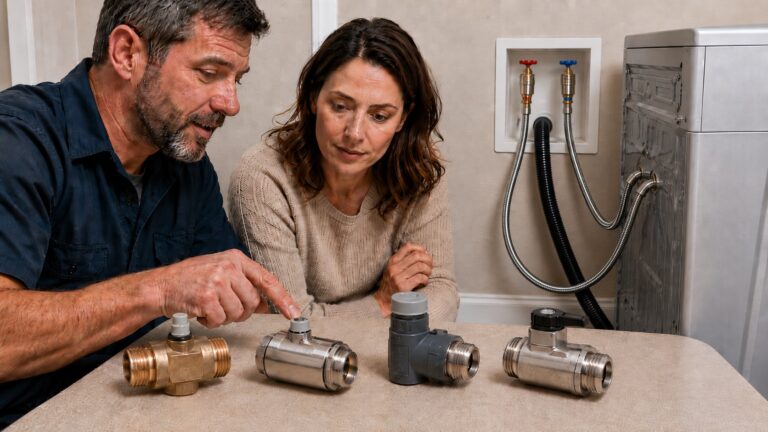
The plumbing parts most likely to need replacement first are usually not the main pipes. They are the smaller parts that move, bend, seal, shut off water, or connect appliances to the plumbing system. In most homes, the earliest attention should go to appliance hoses, flexible supply lines, shutoff valves, toilet tank parts, faucet components, drain seals, and water heater connections.
Instead of asking only “how old is this part?” ask, “If this part fails, how much water could escape before I notice?” A washing machine hose, refrigerator water line, toilet supply line, or seized valve may create more damage than an older exposed drain part that is easy to see and access.
For a more detailed risk ranking, see the guide to plumbing parts most likely to fail first. This article stays focused on replacement timing, but the highest-priority parts are usually the ones that combine age, pressure, movement, and poor visibility.
Pressurized Parts Should Get Priority
Any plumbing part that holds back pressurized water deserves more attention than a part that only carries water while a fixture is being used. Pressurized parts can leak even when no one is actively using the appliance or fixture. That includes washing machine hoses, dishwasher supply lines, refrigerator water lines, sink supply lines, toilet supply lines, shutoff valves, and water heater connections.
A small drip from one of these parts can slowly soak cabinet floors, subfloors, baseboards, drywall, and nearby framing. A sudden rupture can release water quickly enough to affect multiple rooms. Because of that, pressurized parts should be inspected regularly and replaced before they look severely deteriorated.
Moving Parts Wear Out Faster Than Static Parts
Parts with internal moving pieces tend to wear out faster than pipe sections. Toilet fill valves, shutoff valves, faucet cartridges, shower valves, and some pressure-related components all depend on seals, washers, stems, diaphragms, cartridges, or internal mechanisms. These parts can become stiff, noisy, slow, loose, or unreliable before they leak visibly.
This is especially important for shutoff valves. A shutoff valve may not leak, but if it will not close fully during an emergency, it has already failed its most important job. That is why valve function matters as much as appearance.
Hidden Parts Deserve Earlier Review
Plumbing parts behind appliances, under cabinets, or close to finished flooring should be reviewed more cautiously than parts in open utility areas. A small leak behind a refrigerator, dishwasher, vanity, or washing machine may not be visible until flooring swells, trim stains, drywall softens, or mold odor appears.
If a part is difficult to inspect, old, pressurized, and connected to an appliance, it should usually be treated as higher risk. Preventive replacement is often easier than discovering hidden moisture after the leak has already spread.
Appliance Hoses and Water Supply Lines
Appliance hoses and small water supply lines are among the most important plumbing parts to replace proactively. They are often under pressure, located behind appliances, and forgotten until something goes wrong. Unlike long-life pipes, these smaller lines are exposed to movement, vibration, bending, heat, and connection stress.
As a general rule, appliance water hoses should be inspected at least once a year. Many should be replaced in the 5–10 year range depending on the appliance, material, and condition. Rubber hoses, brittle plastic tubing, kinked lines, corroded fittings, and old unknown-age connections should be replaced sooner. For a broader comparison, see how long appliance water hoses last.
Washing Machine Hoses
Washing machine hoses are one of the highest-priority plumbing parts to replace before failure. They are under pressure, commonly hidden behind the washer, and exposed to vibration every time the machine runs. A hose that cracks, bulges, bursts, or leaks at the fitting can release water quickly.
Many homeowners replace washing machine hoses about every five years, especially if they are older rubber hoses. Replace them sooner if you see bulging, cracking, corrosion at the connection, rust on the valve, kinks, tight bends, or any dampness behind the machine. For a focused guide, see when to replace washing machine hoses.
Braided stainless steel hoses are often a better choice than plain rubber hoses, but they are not permanent. The outer braid does not make the inner liner, fittings, and connection points immune to age or stress. If the hose is old, bent sharply, strained, or connected to corroded valves, replacement is still worth considering.
Dishwasher Supply Lines
Dishwasher supply lines should usually be reviewed whenever the dishwasher is replaced, serviced, moved, or inspected for leaks. Because the supply line and drain connections are often hidden beneath or behind the appliance, small leaks can damage flooring and cabinet edges before they are obvious.
A dishwasher supply line may need replacement around the 5–10 year range, but condition matters more than the number alone. Replace it sooner if it is kinked, crushed, corroded, leaking, or made from older materials that look brittle or worn. If the dishwasher has been moved for flooring work or repair, the line should be checked carefully before the appliance is pushed back into place.
Refrigerator and Ice Maker Water Lines
Refrigerator water lines and ice maker lines are easy to overlook because they are usually hidden behind the refrigerator. A slow drip can spread under flooring, behind baseboards, or into nearby wall areas before the homeowner sees water at the front of the appliance.
Plastic tubing that has become brittle, discolored, sharply bent, or poorly connected should be replaced. Many homeowners should review refrigerator water lines around the 5–10 year range, especially when replacing the refrigerator, moving it for cleaning, or noticing moisture behind the appliance. For deeper guidance, use the article on when to replace refrigerator water lines.
Sink and Toilet Supply Lines
Sink and toilet supply lines are small, but they are constantly under pressure. They should be inspected yearly and replaced when they show corrosion, dampness, kinks, fraying, stiffness, cracking, or mineral buildup at the fittings. Many homeowners also replace them proactively during faucet, toilet, vanity, or shutoff valve work.
Aging supply lines under sinks can damage cabinet floors and lower wall areas. Toilet supply lines can wet flooring around the toilet and contribute to hidden subfloor damage if leaks go unnoticed. If the line is old and the shutoff valve is also stiff or corroded, both parts should be evaluated together.
Shutoff Valves and Angle Stops
Shutoff valves are not just convenience parts. They are emergency control points. A working shutoff valve can limit water damage when a hose leaks, a toilet overflows, a faucet fails, or a fixture needs repair. A valve that is frozen, leaking, corroded, or unable to close fully may allow a small problem to become a much larger one.
Fixture shutoff valves, also called angle stops in many sink and toilet locations, should be inspected and gently tested on a regular basis. They do not always need replacement on a strict calendar, but they should be replaced when they are unreliable. For a dedicated guide, see when to replace plumbing shutoff valves.
When Shutoff Valves Should Be Replaced
A shutoff valve should be considered for replacement if it is difficult to turn, leaks around the stem, has visible corrosion, does not stop water fully, feels loose, or has not been operated in many years. Multi-turn valves can become stiff or fail internally over time. Quarter-turn valves are often easier to operate, but they still need to be installed correctly and kept in working condition.
If you are replacing a faucet, toilet, appliance hose, or supply line, it is often wise to evaluate the nearby shutoff valve at the same time. Replacing a weak supply line while leaving a seized valve in place may leave the home vulnerable during the next leak or repair.
Main Water Shutoff Valves Need Special Attention
The main water shutoff valve is one of the most important plumbing parts in the home. It may not be used often, but when it is needed, it needs to work immediately. If the main shutoff is stuck, corroded, leaking, inaccessible, or unable to stop water completely, a plumber should evaluate it.
Homeowners should know where the main shutoff valve is and confirm that it can be operated safely. If you are unsure whether the valve will close, do not force it aggressively. An old valve can break, leak, or fail when handled roughly, and a failed main shutoff can make a small leak much harder to control. In that case, professional replacement is safer than waiting for an emergency.
Toilet, Faucet, Drain, and Shower Components
Fixture parts often wear out faster than the pipes that serve them. Toilets, faucets, sink drains, and shower valves all rely on seals, cartridges, gaskets, washers, moving parts, and small water passages. These parts may continue working for a long time, but they gradually become less reliable as rubber hardens, mineral deposits build up, and internal mechanisms wear down.
These components do not always create sudden flooding, but they can create repeated moisture problems, wasted water, hidden cabinet damage, or slow leaks that are easy to underestimate. A running toilet, dripping faucet, leaking drain gasket, or worn shower valve may seem minor at first, but repeated moisture exposure can damage nearby materials over time.
Toilet Fill Valves
Toilet fill valves are common replacement parts because they operate every time the toilet refills. A fill valve controls water entering the tank after each flush. Over time, mineral buildup, worn seals, internal wear, or pressure changes can make the valve noisy, slow, inconsistent, or unable to shut off properly.
Many toilet fill valves last several years, but they are not lifetime parts. A practical review window is around 5–7 years, with earlier replacement if the toilet runs, hisses, fills slowly, refills randomly, or becomes difficult to adjust. If the toilet is wasting water or behaving unpredictably, see the dedicated guide on when to replace toilet fill valves.
Toilet tank problems should not be ignored just because water is contained inside the fixture. A faulty fill valve can contribute to repeated tank refilling, overflow risk if other parts fail, and higher water bills. If the toilet also has an aging supply line or stiff shutoff valve, the entire toilet connection area should be reviewed together.
Toilet Flappers and Tank Seals
Toilet flappers and tank seals often wear out sooner than many other toilet parts. Chlorine, mineral-heavy water, age, and repeated movement can cause rubber parts to warp, harden, or fail to seal properly. When that happens, water may slowly leak from the tank into the bowl, causing the toilet to refill repeatedly.
Many toilet flappers need replacement in the 3–5 year range, although water quality can shorten or extend that window. A toilet that runs between flushes, refills without being used, or requires handle jiggling may have a worn flapper, chain issue, or related tank component problem.
A worn flapper is usually not the same structural water damage risk as a burst hose, but it can mask other toilet problems and place more wear on the fill valve. If the toilet shutoff valve is old or unreliable, even a simple toilet repair can become harder than expected.
Faucet Cartridges and Sprayer Hoses
Faucet cartridges, stems, washers, and sprayer hoses often last many years, but they eventually wear out from daily use. A faucet that drips, squeaks, becomes hard to control, leaks around the handle, or has weak flow may have internal wear or mineral buildup.
Kitchen faucets deserve special attention because leaks may occur above or below the counter. A worn pull-down sprayer hose, loose connection, or failing cartridge can allow water to drip into the sink cabinet. Bathroom faucets can create similar problems inside vanities, especially when small leaks go unnoticed around the base of the fixture.
Faucet parts do not need to be replaced on the same short timeline as appliance hoses, but they should be inspected when symptoms appear or when other plumbing work is being done. If a faucet is old, frequently used, and beginning to drip or resist smooth operation, replacement may be more practical than repeated small repairs.
Sink Drain Assemblies
Sink drain assemblies are usually not under constant water pressure, but they can still cause water damage through slow leaks. Drain baskets, tailpieces, slip-joint washers, traps, pop-up assemblies, and gaskets can loosen, crack, corrode, or lose their seal over time.
Because drain leaks often happen only when water is running, they may not be noticed during a quick glance under the sink. The homeowner may first see a damp cabinet floor, swollen shelf material, musty odor, staining, or soft cabinet base. These symptoms are especially common in kitchens and bathroom vanities where stored items hide early moisture.
Sink drain parts should be checked during annual maintenance and whenever the sink is used heavily, remodeled, or disturbed. Replacement is usually based on condition rather than a fixed age. Corroded metal, cracked plastic, loose slip joints, or recurring dampness under the sink are good reasons to address the drain assembly.
Shower Valves and Tub/Shower Controls
Shower valves usually last longer than many small fixture parts, but they can become serious moisture risks when they fail behind the wall. A worn cartridge, damaged valve body, failed seal, or loose connection can allow water to escape into wall cavities or nearby rooms.
Homeowners may notice a dripping showerhead, poor temperature control, handle stiffness, water stains on the wall or ceiling below, or moisture on the opposite side of the shower wall. Because some shower valve leaks are hidden, they should be taken seriously when symptoms appear.
Shower valve replacement timing depends heavily on condition, use, water quality, and accessibility. A shower valve that still operates smoothly and shows no signs of leakage may last many years. A valve that drips, sticks, fails to control temperature, or is associated with wall moisture should be evaluated sooner.
Water Heater Plumbing Components
Water heaters connect to several plumbing parts that deserve regular inspection. These parts may include cold and hot water supply lines, shutoff valves, drain valves, temperature and pressure relief valves, expansion tanks, and nearby fittings. Some of these parts are safety-related, and some are high-consequence leak points because they are connected to a large water source.
Water heater areas should be checked at least once a year. Look for corrosion, dampness, mineral deposits, rust staining, dripping, valve discharge, kinked connectors, and signs that the surrounding floor or wall has been wet. If the water heater is being replaced, it is often wise to evaluate the connected plumbing parts at the same time.
Water Heater Supply Lines
Water heater supply lines should be inspected regularly because they carry pressurized water and are exposed to heat, movement, and connection stress. Flexible connectors can kink, corrode at fittings, or deteriorate over time. Rigid connections can also develop corrosion or stress at joints.
Replace water heater supply lines if they show corrosion, leaking, mineral buildup, cracking, kinking, or damaged fittings. They should also be considered during water heater replacement, especially if the existing connectors are old or incompatible with the new installation. For a more focused guide, see when to replace water heater supply lines.
Water Heater Drain Valves
The drain valve near the bottom of a water heater is used for draining or flushing the tank. Over time, sediment, mineral buildup, corrosion, or low-quality valve materials can make it difficult to operate or cause it to drip after use.
A drain valve does not always need replacement on a fixed schedule, but it should be inspected for leaks, corrosion, and reliability. If a drain valve is leaking or will not close properly after being used, it should be repaired or replaced before the leak damages the water heater area. Because water heaters involve hot water and pressure, homeowners should be cautious about DIY work if they are not comfortable with the system.
Temperature and Pressure Relief Valves
The temperature and pressure relief valve, often called a T&P valve, is a safety-related part. It is designed to discharge water if pressure or temperature rises too high inside the water heater. Because it has a safety function, it should not be ignored, capped, blocked, or treated like an ordinary nuisance drip.
If a T&P valve is leaking, repeatedly discharging, corroded, or connected to an improper discharge pipe, the water heater should be evaluated. Sometimes the valve itself is failing. In other cases, the valve may be responding to excessive pressure, thermal expansion, overheating, or another system condition.
This is one area where homeowners should avoid guessing. A problem with the T&P valve can involve pressure, temperature, and safety concerns. Do not cap, plug, or block the discharge pipe to stop dripping. If the valve is leaking or discharging repeatedly, professional evaluation is usually the safest path.
Water Heater Expansion Tanks
Expansion tanks help absorb pressure changes caused by thermal expansion in closed plumbing systems. They are not present in every home, but where they are installed, they should be inspected periodically. A failed expansion tank may not always leak externally, but it can stop absorbing pressure properly and contribute to stress on valves, fittings, water heater parts, or supply lines.
A practical review window for many expansion tanks is around 5–10 years, depending on water pressure, installation, tank quality, and system conditions. Replacement may be needed sooner if the tank is waterlogged, leaking, corroded, improperly supported, or associated with pressure-related symptoms.
Because expansion tanks relate to system pressure, replacement should be handled carefully. If the tank has failed, the home may also need pressure testing or pressure-reducing valve evaluation.
Pipes Usually Last Longer Than the Parts Around Them
Many homeowners ask how often plumbing parts should be replaced because they are worried about old pipes. Pipes do matter, but the replacement logic is different. Main water lines, branch lines, and drain pipes are usually measured in decades, while hoses, valves, seals, and fixture parts often need attention much sooner.
Copper, PEX, PVC, and other common plumbing materials can last a long time when installed correctly and used under appropriate conditions. However, pipe lifespan still depends on water chemistry, pressure, installation quality, movement, corrosion risk, freezing exposure, and material type. Galvanized steel, older cast iron drains, polybutylene, and other problem-prone legacy materials may require more careful evaluation than newer systems.
The key distinction is this: long-life piping is usually replaced based on material condition, repeated leaks, corrosion, water quality problems, renovation plans, or known failure risk. Small plumbing parts are often replaced based on shorter service life, pressure exposure, wear, and preventive maintenance planning.
That means a home can have pipes that still have many years of service life while also having hoses, valves, toilet parts, and appliance lines that should be replaced now. Do not assume the entire plumbing system is safe just because the pipes are not leaking. Also do not assume all pipes must be replaced just because a small supply line or valve has failed.
If there are repeated leaks from the same material, visible corrosion, discolored water, low pressure from buildup, or several aging pipe failures in different areas, the issue may be larger than normal part replacement. In that case, the homeowner may need a pipe-specific repair-or-replace evaluation rather than a simple plumbing parts schedule.
What Makes Plumbing Parts Wear Out Faster
Replacement timing depends on more than age. Two homes built in the same year can have very different plumbing risks because parts may be installed differently, used differently, exposed to different water quality, or placed in different environments. A lightly used guest bathroom supply line may age differently than a laundry hose under pressure behind a frequently used washing machine.
High Water Pressure
High water pressure places extra stress on hoses, valves, seals, fittings, water heater parts, and appliance connections. A plumbing part may be rated for normal household pressure but still wear faster if pressure is consistently too high or if the system experiences pressure spikes.
High pressure can make small weaknesses worse. It can stress washing machine hoses, push harder against toilet fill valves, strain supply line fittings, and increase wear on shutoff valves. If plumbing parts fail repeatedly in different areas of the home, water pressure should be checked instead of only replacing the same type of part again and again.
Hard Water and Mineral Buildup
Hard water can shorten the useful life of many plumbing parts. Minerals can build up inside faucet cartridges, toilet fill valves, shower valves, shutoff valves, and small fixture passages. This can cause stiffness, weak flow, noisy operation, incomplete sealing, or unreliable shutoff performance.
Mineral buildup can also appear around fittings as white crust or staining. Some buildup is minor, but heavy deposits near a valve, supply line, or fixture connection may suggest slow seepage or aging seals. If mineral buildup keeps returning after cleaning, the part may need closer inspection or replacement.
Corrosion and Moisture Exposure
Corrosion is one of the clearest signs that a plumbing part may be nearing the end of its useful life. Rust, green staining, white crust, flaking metal, pitted fittings, and discolored valve bodies should not be ignored. Corrosion can weaken connections and make valves harder to operate.
Moisture exposure also matters. A shutoff valve under a sink may corrode faster if the cabinet has poor ventilation, repeated condensation, cleaning chemical exposure, or small drain leaks. A water heater connector may age faster if it sits in a damp utility room. A refrigerator water line may be affected by dust, heat, movement, or hidden condensation behind the appliance.
Poor Installation
Even a newer plumbing part can fail early if it was installed poorly. Cross-threaded fittings, overtightened connections, sharp bends, unsupported tubing, strained hoses, mismatched materials, and poorly aligned connections can shorten the life of the part.
A hose or supply line should not be stretched tight, sharply kinked, twisted, crushed behind an appliance, or forced into a bend it was not designed to hold. When a part is installed under stress, normal pressure and vibration can gradually turn that stress into a leak.
Movement and Vibration
Appliances create movement that ordinary pipe sections do not. Washing machines vibrate during spin cycles. Dishwashers may move slightly when loaded, unloaded, or serviced. Refrigerators are pulled forward for cleaning or replacement. Each movement can stress nearby hoses, water lines, and fittings.
That is why appliance connections should be checked after the appliance is moved. A refrigerator line that was safe before cleaning may become kinked when the appliance is pushed back. A dishwasher supply line may be disturbed during flooring work. A washing machine hose may be strained if the machine is pushed too close to the wall.
When to Replace a Plumbing Part Sooner Than Scheduled
Replacement timelines are useful, but visible condition should override the calendar. If a plumbing part is showing signs of failure, do not wait for the recommended replacement window. A part that is leaking, corroded, cracked, swollen, kinked, brittle, loose, noisy, stiff, or unreliable should be evaluated sooner.
Use the general schedule as a planning tool, but use real-world warning signs as the deciding factor. If you are seeing multiple symptoms, compare them with the guide to warning signs that plumbing parts are near failure.
Replace or professionally evaluate a plumbing part sooner if you notice:
- Dripping at a fitting, valve, hose, or fixture connection
- Corrosion, rust, green staining, or heavy mineral buildup
- Bulging, cracking, fraying, or swelling on a hose
- A shutoff valve that will not turn smoothly
- A valve that does not fully stop water
- A toilet that runs, refills randomly, or fills slowly
- A faucet that drips or leaks below the counter
- A refrigerator or dishwasher line that is kinked or brittle
- Moisture, staining, odor, or swollen material near a plumbing connection
- Repeated leaks from the same fixture or appliance area
Do not assume a part is safe just because the leak is small. Slow leaks can be more damaging than they appear because they keep nearby materials damp for long periods. Cabinet floors, subfloors, drywall, baseboards, and wall cavities can absorb moisture gradually before the problem looks serious from the outside.
When to Replace Parts During Other Plumbing Work
Some of the best times to replace aging plumbing parts are when related work is already happening. If a fixture, appliance, or water heater is being replaced, the connected hoses, valves, supply lines, and fittings should be reviewed at the same time. This prevents old weak parts from being reconnected to new equipment.
Consider replacing nearby aging parts during:
- Washing machine replacement
- Dishwasher replacement
- Refrigerator replacement
- Water heater replacement
- Toilet replacement
- Faucet replacement
- Vanity or sink cabinet work
- Flooring replacement near plumbing fixtures
- Bathroom or kitchen remodeling
- Repairs after a previous leak
This approach is practical because access is already available. For example, when a washing machine is pulled out, the hoses and valves are easy to inspect. When a toilet is removed, the supply line and shutoff valve can be reviewed. When a dishwasher is replaced, the supply line and drain connection can be checked before the appliance is hidden again.
Before reconnecting old parts to new equipment, check whether the part is already near the end of its expected service window. Reusing an old hose or valve can save a small amount upfront but leave the new appliance or fixture connected to the weakest part of the system.
This also reduces the chance of mixing old weak parts with newer fixtures. A new faucet connected to an old corroded shutoff valve may still leave the sink area vulnerable. A new refrigerator connected to brittle old tubing may still create a hidden leak risk. A new water heater connected to aging supply lines may not solve the full problem.
How Annual Plumbing Maintenance Fits In
Annual plumbing maintenance does not mean replacing every part every year. It means reviewing the parts that can fail, confirming that important valves still work, and deciding which items should be replaced before the next year. This is where replacement timing becomes easier to manage.
During an annual plumbing review, homeowners should look under sinks, behind toilets, around the water heater, behind appliances when safely accessible, and near visible valves. The goal is to find early signs of wear before a part leaks into finished materials.
A basic yearly review should include:
- Checking supply lines for kinks, corrosion, dampness, or cracking
- Looking for swollen cabinet floors or staining under sinks
- Testing accessible shutoff valves gently
- Inspecting washing machine hoses and laundry valves
- Looking behind refrigerators and dishwashers when practical
- Checking toilets for running, slow filling, or moisture at the supply connection
- Inspecting water heater connections for corrosion or leaks
- Reviewing older parts that are approaching their replacement window
For a dedicated checklist approach, use the guide to annual plumbing maintenance tasks. That checklist should support the replacement decisions covered here without turning every inspection into a repair project.
When to Call a Plumber Instead of Waiting
Some plumbing parts are reasonable for experienced homeowners to replace, but others deserve professional attention. The line depends on the part, the location, the condition of the existing plumbing, and the potential consequences if something goes wrong.
Call a plumber if a valve is severely corroded, the main shutoff does not work, a water heater safety valve is leaking, a supply line is connected to damaged piping, a fixture connection is hidden inside a wall, or a part breaks while being handled. Professional help is also wise when multiple parts are failing across the home, because the issue may involve pressure, water quality, aging materials, or outdated plumbing rather than one isolated component.
A plumber should also evaluate plumbing parts when there are signs of hidden moisture nearby. Stained flooring, damp drywall, soft cabinet bases, musty odor, mold growth, or repeated dampness can mean the problem has already moved beyond simple replacement. If you suspect a slow leak, use how to detect slow plumbing leaks to understand the inspection path before damage spreads further.
Do not force old valves or fittings aggressively. A stuck valve can break, leak, or fail inside the wall. If a part feels fragile, corroded, or unstable, forcing it can turn preventive maintenance into an emergency repair.
FAQ: How Often Plumbing Parts Should Be Replaced
Should plumbing parts be replaced before they leak?
Yes, some plumbing parts should be replaced before they leak, especially pressurized hoses, old supply lines, unreliable shutoff valves, toilet tank parts, and appliance water connections. Preventive replacement is most important when the part is old, hidden, under pressure, or likely to cause damage before you notice water.
What plumbing parts need replacement most often?
Appliance hoses, toilet flappers, toilet fill valves, small supply lines, faucet cartridges, sprayer hoses, and aging shutoff valves often need attention sooner than long-life pipes. These parts contain seals, moving pieces, flexible materials, or pressure connections that wear out faster than stable pipe runs.
How often should washing machine hoses be replaced?
Many homeowners replace washing machine hoses about every five years, sooner if the hoses are rubber, cracked, bulging, kinked, corroded, or difficult to inspect. Because washing machine hoses are pressurized and hidden behind the appliance, they are one of the most important parts to replace proactively.
Do shutoff valves need to be replaced on a schedule?
Shutoff valves do not always need replacement on a fixed schedule, but they should be inspected and tested. Replace a shutoff valve if it is stiff, leaking, corroded, loose, or unable to stop water fully. A valve that does not close during an emergency has already become a risk.
Do old pipes always need to be replaced?
No. Many pipes last for decades, depending on material, installation, water quality, pressure, and condition. Old pipes should be evaluated if there are repeated leaks, corrosion, discolored water, pressure problems, or known outdated materials. Small plumbing parts often need replacement much sooner than the pipes themselves.
What is the best yearly routine for preventing plumbing part failures?
The best approach is annual inspection combined with proactive replacement of high-risk parts. Check hoses, valves, supply lines, toilet parts, faucet connections, and water heater connections. Replace old or deteriorated parts before they leak, especially when they are hidden behind appliances or cabinets.
Plumbing Part Replacement Checklist
- Most plumbing parts should be inspected yearly, but not all need replacement on the same schedule.
- Small parts such as hoses, supply lines, shutoff valves, and toilet components often fail before long-life pipes.
- Pressurized parts deserve more attention because they can leak even when no fixture is being used.
- Hidden parts behind appliances and cabinets should be reviewed sooner because leaks may go unnoticed.
- Age is only one factor. Corrosion, stiffness, cracking, swelling, mineral buildup, and leakage matter more than the calendar alone.
- Replacing aging parts during appliance, toilet, faucet, or water heater work can prevent future leaks.
- Call a plumber when valves are seized, connections are corroded, safety-related water heater parts are involved, or hidden moisture is already present.
Build a Replacement Plan Before the Next Leak
Plumbing parts should be replaced often enough to prevent predictable failures, but not so mechanically that every part is treated the same. Start with the parts most likely to cause unnoticed damage: pressurized hoses, hidden appliance lines, aging shutoff valves, toilet connections, faucet components, drain seals, and water heater connections.
The safest approach is to inspect plumbing parts every year, replace high-risk parts before they fail, and act quickly when corrosion, stiffness, cracking, swelling, leakage, or moisture staining appears near a connection.
Use this guide as the broad lifecycle starting point. Then build a more specific plan with a preventive plumbing replacement schedule so each hose, valve, fixture part, and water heater connection is checked or replaced at the right time.
4 Comments
Comments are closed.