
How Long Do Appliance Water Hoses Last Before They Should Be Replaced?
Most appliance water hoses and supply lines should be inspected at least once a year and replaced before they leak. Washing machine hoses often need replacement every 3 to 5 years, dishwasher supply lines are commonly treated as 5-year preventive replacement parts, and refrigerator or ice maker water lines often fall in the 5 to 10 year range depending on material, routing, and condition.
There is no single lifespan that applies to every appliance water hose. A rubber washing machine hose behind a vibrating washer does not age the same way as a braided dishwasher supply line under a sink or a small plastic ice maker tube behind a refrigerator. Material, water pressure, movement, heat, kinks, corrosion, and hidden routing all affect how long the line can be trusted.
The safest approach is to treat appliance water hoses as scheduled maintenance parts, not permanent plumbing. If a hose is old, damaged, kinked, damp, corroded, brittle, frayed, or old enough that you cannot confirm its age, replacement is usually safer than waiting for a visible leak. Hidden appliance water line leaks can damage floors, cabinets, walls, and subfloor materials, especially when they go unnoticed behind appliances. For the bigger risk picture, see this guide on how plumbing leaks cause structural damage.
How Long Do Appliance Water Hoses Usually Last?
As a general rule, appliance water hoses should be checked yearly and replaced on a schedule based on the appliance and hose material. The table below gives practical replacement ranges for common household appliance water connections.
| Appliance connection | Typical preventive replacement range | Replace sooner if |
|---|---|---|
| Washing machine hoses | 3 to 5 years | The hose is rubber, bulging, cracked, kinked, corroded, damp, or unknown age |
| Dishwasher supply line | About 5 years | The line was reused, kinked, corroded, damp at fittings, frayed, or unknown age |
| Refrigerator water line | 5 to 10 years | The line is plastic, brittle, kinked, corroded, connected to an old valve, or unknown age |
| Ice maker tubing | 5 to 10 years | The tubing is plastic, cloudy, brittle, cracked, kinked, damp, or connected to an old saddle valve |
| Appliance drain hoses | Condition-based | The hose is cracked, loose, clogged, poorly routed, leaking, or no longer secured correctly |
These ranges are not guarantees. A hose can fail sooner if it is installed poorly, pushed tight against a wall, exposed to vibration, connected to corroded fittings, or reused after an appliance replacement. A hose may also look normal from a distance while the inner tubing, rubber washer, fitting, or valve connection is weakening.
The most important distinction is between pressurized supply lines and drain hoses. Supply lines bring water into an appliance. If the shutoff valve is open, they may remain under pressure even when the appliance is not actively running. Drain hoses carry used water away and usually fail in a different way, often through cracking, clogging, loose connections, or poor routing during drain cycles.
Because supply hoses can leak while hidden behind or under appliances, age matters. An appliance water line can quietly dampen flooring, drywall, baseboards, cabinets, or subfloor material before the homeowner notices a puddle. Replacing hoses before they fail is a simple part of whole-home moisture prevention, especially in kitchens, laundry rooms, and finished utility areas.
Appliance Water Hose Lifespan by Type
Each appliance water connection has its own stress pattern. Some hoses deal with vibration, some are hidden inside cabinets, and others are small lines that may leak slowly behind a refrigerator. Understanding the difference helps you decide which hose should be replaced first.
Washing machine hoses
Washing machine hoses are usually the highest-priority appliance hoses because they are connected to hot and cold water supply valves and often remain pressurized. They also sit behind a washer that vibrates during spin cycles and may be pushed close to the wall.
Most washing machine hoses should be replaced every 3 to 5 years. Rubber hoses should usually be replaced sooner than reinforced braided hoses, especially if they are cracked, swollen, stiff, or old enough that you do not know when they were installed. For the full washer-specific guide, see when to replace washing machine hoses.
Dishwasher supply lines
Dishwasher supply lines are usually hidden between the sink cabinet and the dishwasher cavity. Because they often run behind the toe kick or through a cabinet wall, a small leak may not show up immediately. Water may affect the sink base cabinet, dishwasher bay, flooring edge, or subfloor before the homeowner notices.
Dishwasher supply lines are commonly replaced about every 5 years, and they should usually be replaced when installing a new dishwasher. Reused, kinked, corroded, frayed, or unknown-age dishwasher lines should be treated as replacement candidates. For more detail, see when to replace dishwasher supply lines.
Refrigerator water lines
Refrigerator water lines feed ice makers and water dispensers. They may be plastic, copper, or braided stainless, and they are often hidden behind the refrigerator or routed through cabinets, floors, or walls. Even a small refrigerator line can cause damage if it leaks slowly where no one can see it.
Many refrigerator water lines fall in the 5 to 10 year replacement range, depending on material and condition. Plastic tubing, old saddle valves, sharp bends, corroded fittings, and unknown age all justify earlier replacement. For refrigerator-specific guidance, see when to replace refrigerator water lines.
Ice maker tubing
Ice maker tubing is usually a small-diameter water line, but small does not mean harmless. If the supply valve is open, the tubing may stay under pressure even when the ice maker is not actively making ice. A slow leak can wet flooring, trim, drywall, or cabinet materials behind the refrigerator.
Ice maker tubing often falls in the 5 to 10 year range, but older plastic tubing should be replaced sooner if it is yellowed, cloudy, brittle, cracked, kinked, or unknown age. Copper tubing can also become unreliable if it has been sharply bent or moved repeatedly. For the narrow ice-maker-focused guide, see when to replace ice maker water lines.
Appliance drain hoses
Drain hoses are different from pressurized supply lines. A washing machine or dishwasher drain hose usually carries water away during a drainage cycle instead of holding constant supply pressure. That does not mean drain hoses can be ignored, but their failure pattern is different.
Drain hoses should be replaced when they are cracked, loose, clogged, brittle, leaking, poorly routed, or no longer secured correctly. A loose drain hose can release water quickly during a drain cycle, while a clogged or damaged hose may cause backup or overflow. This article focuses mainly on water supply hoses, so drain hoses should be handled as condition-based inspection items rather than fixed-lifespan parts.
Why Some Appliance Hoses Fail Sooner Than Others
A hose in a visible, low-stress location may last longer than one hidden behind a vibrating appliance or crushed inside a tight cabinet opening. The replacement schedule matters, but the actual condition of the hose matters more.
The most common reasons appliance hoses fail sooner include age, pressure, movement, heat, poor routing, corrosion, and material deterioration. A hose that is technically within its expected lifespan can still become unsafe if it is kinked, stretched, crushed, or connected to a failing valve.
- Water pressure: Supply hoses may stay pressurized when the appliance is not running.
- Movement: Washers and refrigerators can stress hoses when they vibrate or get moved.
- Heat: Hot water lines may age faster than cold water lines.
- Kinks and bends: Sharp bends can weaken tubing and restrict flow.
- Hidden routing: Lines behind appliances may leak before anyone notices.
- Corroded fittings: A good hose can still fail at a rusty or seeping connection.
- Reused lines: Old hoses may not reseal reliably after appliance replacement.
Because of these factors, appliance hoses should be part of an annual plumbing maintenance checklist. A quick yearly check can catch cracked rubber, brittle plastic, damp fittings, frayed braid, and corroded valves before they turn into water damage.
Rubber, Braided Stainless, Plastic, and Copper Lines Compared
The material of an appliance water hose affects how it ages, but no material lasts forever. Braided stainless steel may be stronger than plain rubber, and copper may be more durable than thin plastic in some installations, but each material can fail if it is old, kinked, poorly routed, or connected to bad fittings. Material matters, but routing and fittings often decide whether a hose lasts safely.
Rubber hoses
Rubber hoses are common behind washing machines, especially in older laundry rooms. They are flexible and inexpensive, but they can crack, harden, swell, or bulge with age. Rubber hoses should usually be replaced on the shorter end of the appliance hose lifespan range.
A bulging rubber hose is an immediate replacement sign. It means the hose wall is no longer holding pressure evenly. Cracks, stiffness, damp fittings, and unknown age are also strong reasons to replace rubber appliance hoses.
Braided stainless hoses
Braided stainless hoses are often used as a stronger replacement for rubber washing machine hoses, dishwasher supply lines, and some refrigerator water connections. The outer braid helps protect the hose from expansion and abrasion, but it does not make the hose permanent.
The inner tube can still age, the washers can compress, the fittings can corrode, and the braid can fray or rust. Replace braided hoses if they are kinked, damp at the ends, corroded, frayed, or old enough that their age is uncertain.
Plastic tubing
Plastic tubing is common on older refrigerator and ice maker water lines. It can work when properly rated and in good condition, but old plastic tubing is more vulnerable to brittleness, cracking, cloudiness, yellowing, kinking, and crushing.
Plastic tubing behind a refrigerator should be replaced sooner if it looks aged or if the appliance has been moved repeatedly. A small plastic line can leak slowly for a long time behind the refrigerator before the homeowner sees water.
Copper tubing
Copper tubing can be durable when installed correctly, but it is not automatically safer in every situation. Copper can kink when bent sharply, especially behind refrigerators. It can also stress compression fittings when the appliance is pulled out or pushed back repeatedly.
Replace or professionally evaluate copper appliance tubing if it has sharp bends, crushed sections, corrosion at fittings, or a history of repeated movement. Copper works best when it has a smooth route, enough clearance, and reliable connections.
When Age Matters More Than Appearance
Appliance water hoses can look normal shortly before they fail. A hose can look acceptable from the front while the inside is aging, the washer is compressed, the fitting is corroded, or the tubing is weakened where it bends behind the appliance.
This is why unknown-age hoses should be treated carefully. If you bought a home and do not know when the washer hoses, dishwasher supply line, refrigerator water line, or ice maker tubing were installed, replacement is often safer than guessing. Appliance hoses are inexpensive compared with the damage caused by hidden water leaks.
Age matters even more when a hose is hidden, pressurized, or difficult to inspect. A washing machine hose may remain under pressure while the washer is idle. A dishwasher supply line may leak behind the toe kick. A refrigerator or ice maker line may seep behind the appliance for days or weeks before anyone notices.
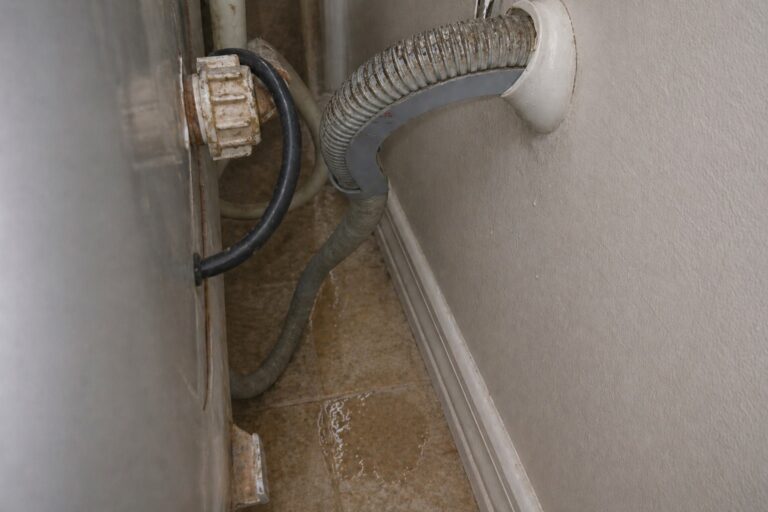
If you already see cracking, bulging, corrosion, dampness, mineral buildup, frayed braid, brittle plastic, or swollen flooring near an appliance, the issue may no longer be just age-based replacement. In that case, the guide on signs appliance water hoses are failing can help separate normal replacement timing from visible deterioration.
Which Appliance Water Hoses Should You Replace First?
If you cannot replace every appliance hose at once, start with the connections most likely to fail or cause hidden damage. Prioritize age, material, pressure, and location. Any hose with visible damage should move to the top of the list, regardless of appliance type.
Replace appliance water hoses in this priority order:
- Any hose that is leaking, damp, cracked, bulging, kinked, corroded, frayed, brittle, or unknown age.
- Rubber washing machine hoses older than 3 to 5 years.
- Dishwasher supply lines that were reused from an older appliance.
- Plastic refrigerator or ice maker tubing of unknown age.
- Any line connected to an old saddle valve, stuck shutoff, or corroded fitting.
- Any supply line behind an appliance that has just been moved, replaced, or reinstalled, especially if the old washers or compression fittings were reused.
Washing machine hoses often deserve first attention because they are pressurized, exposed to vibration, and capable of releasing water quickly if they fail. Refrigerator and ice maker lines may release less water at once, but they can leak quietly in hidden areas. Dishwasher supply lines are often hidden between cabinets and the appliance, so a small leak may damage the kitchen before it is noticed.
This is also why appliance hoses belong in the larger list of plumbing parts most likely to fail first. They are not always the most expensive plumbing parts, but they are common, easy to overlook, and often located near materials that absorb water.
How to Build a Simple Appliance Hose Replacement Schedule
A simple replacement schedule helps prevent appliance hoses from being forgotten. You do not need a complicated system. The main goal is to know the age of each hose or line, inspect it yearly, and replace it before age or visible deterioration creates a leak risk.
Start by writing down the appliance, line type, installation date, and any known concerns. If you replace a washer hose, dishwasher line, refrigerator line, or ice maker tube, mark the date somewhere you can find later. Some homeowners keep a home maintenance note on their phone; others write the date on a tag near the valve.
A practical schedule can look like this:
- Every year: Check visible appliance hoses, fittings, valves, and floor areas for damage or dampness.
- Every 3 to 5 years: Replace washing machine hoses, especially rubber hoses.
- About every 5 years: Review dishwasher supply lines and replace questionable or reused lines.
- Every 5 to 10 years: Review refrigerator water lines and ice maker tubing based on material and condition.
- Any time an appliance is replaced: Consider replacing the old supply line instead of reusing it.
If a hose age is unknown, do not wait until the next scheduled interval. Inspect it closely and usually replace it if it is rubber, plastic, reused, hidden, or connected to an older valve.
The best schedule is preventive, not reactive. It should help you catch old hoses before they leak, but it should also guide you toward faster action when a hose is visibly damaged, connected to a failing valve, or hidden behind an appliance where a leak would be hard to see.
When to Call a Plumber Instead of Replacing a Hose Yourself
Some appliance water hoses are simple to replace, but others are connected to old valves, corroded fittings, or hidden plumbing routes that should not be forced. A hose replacement becomes riskier when the shutoff valve does not work properly or the connection has not been touched in many years.
Call a plumber if the valve is stuck, leaking, corroded, or unable to shut off the water completely. Do not force a stuck valve or seized fitting, because the valve, pipe, or wall connection may break before the hose comes loose. You should also get help if the fitting is seized, the line disappears into a wall or floor, the appliance is difficult to move safely, or there is already swelling, staining, soft flooring, or damp drywall near the appliance.
A plumber may also be needed if an old refrigerator or ice maker line uses a saddle valve. These older valves can be difficult to shut off reliably and may need replacement with a better shutoff connection. For dishwashers and washing machines, professional help is wise when old valves, laundry boxes, or compression fittings show corrosion or seepage.
The goal is to know when the weak point is no longer just the hose. If the valve, fitting, wall connection, or surrounding material is already damaged, replacing the hose alone may not solve the problem.
FAQ
Do appliance water hoses need to be replaced if they are not leaking?
Yes. Appliance water hoses should be replaced based on age, material, condition, and risk level, not only visible leaking. Rubber washer hoses, reused dishwasher lines, old plastic refrigerator tubing, and unknown-age ice maker lines are common examples of hoses worth replacing before they show visible water.
Which appliance water hoses fail most often?
Washing machine hoses are often a high-priority concern because they are pressurized, hidden behind the washer, and exposed to vibration. However, dishwasher, refrigerator, and ice maker lines can also fail quietly and cause hidden water damage if they are old, kinked, corroded, or poorly routed.
Do braided stainless appliance hoses last forever?
No. Braided stainless hoses are usually stronger than plain rubber or plastic tubing, but they are not permanent. The inner hose, washers, fittings, and connections can still age or fail. Replace braided hoses if they are kinked, frayed, corroded, damp, or old enough that their age is uncertain.
Are plastic refrigerator and ice maker lines safe to keep?
Plastic refrigerator and ice maker lines can work when they are approved for the connection and still in good condition. Replace them if they are old, yellowed, cloudy, brittle, cracked, kinked, crushed, or unknown age. Old plastic tubing should not be trusted just because it has not leaked yet.
Should appliance hoses be replaced when installing a new appliance?
Usually, yes. Installing a new appliance is one of the best times to replace old supply hoses or lines. Reusing an old line can carry old wear, hidden kinks, weak fittings, or valve problems into a new appliance setup.
Final Replacement Rule for Appliance Water Hoses
Appliance water hoses do not all last the same amount of time. Washing machine hoses often need replacement every 3 to 5 years, dishwasher supply lines are commonly treated as 5-year preventive replacement parts, and refrigerator or ice maker lines often fall in the 5 to 10 year range depending on material and condition.
The most important rule is to replace hoses before they fail. Any appliance water hose or line should be replaced sooner if it is cracked, bulging, kinked, corroded, damp, brittle, frayed, connected to an old valve, or old enough that you cannot confirm its age. A simple yearly check and a basic replacement schedule can prevent hidden leaks from spreading into floors, cabinets, walls, and subfloor materials.
One Comment
Comments are closed.