Signs Appliance Water Hoses Are Failing Before They Leak
Appliance water hoses often show warning signs before they leak, burst, or damage nearby materials. Bulges, cracks, kinks, corrosion, damp fittings, frayed braid, brittle plastic tubing, and swollen flooring near an appliance are all signs that a water hose or supply line may no longer be reliable.
The most important rule is simple: if a pressurized hose already looks damaged, do not wait for water to appear at the front of the appliance. Many appliance water lines are hidden behind washers, dishwashers, refrigerators, cabinets, or toe-kick panels, so deterioration can stay out of sight until nearby materials are already wet.
This article focuses on warning signs that appliance water hoses are failing. It does not cover active leak diagnosis, appliance repair, or step-by-step hose replacement. If you are trying to understand typical replacement timing by appliance type, see this guide on how long appliance water hoses usually last.
The Most Important Signs an Appliance Water Hose Is Failing
The clearest warning signs are visible damage, moisture at the connection, and changes in the shape or texture of the hose. Some signs mean the hose should be replaced soon. Others mean the hose should be replaced immediately or checked by a plumber before the appliance is used again.
An appliance water hose may be failing if you see:
- Bulges, blisters, or swollen spots in a rubber hose.
- Cracks, splits, brittleness, or stiffness in the hose material.
- Kinks, crushed sections, sharp bends, or flattened tubing.
- Frayed, broken, rusted, or damaged stainless braided covering.
- Yellowed, cloudy, brittle, or cracked plastic tubing.
- Rust, green corrosion, or white mineral buildup around fittings.
- Dampness at the hose ends, shutoff valve, or appliance connection.
- A fitting that looks seized, loose, distorted, or heavily corroded.
- An old saddle valve or shutoff valve that does not turn easily.
- Swollen cabinets, soft flooring, water stains, or musty odor near the appliance.
These warning signs matter because appliance hose leaks can damage floors, cabinets, and walls when water stays hidden. A small drip behind a dishwasher or refrigerator can soak materials slowly, while a pressurized washing machine hose can fail much more suddenly. For a broader explanation of what happens after water reaches building materials, see this guide on how appliance hose leaks can damage floors, cabinets, and walls.
Not every warning sign means the same level of urgency. A hose with unknown age may need scheduled replacement. A bulging rubber hose, damp fitting, cracked tube, or corroded valve should be treated more seriously. If there is active dripping, spreading water, soft flooring, or swollen cabinet material, the problem may already be beyond a simple warning sign.
A good way to think about appliance hose warnings is to divide them into three levels:
- Monitor and schedule replacement: unknown age, older hose material, minor early wear, or poor access.
- Replace soon: stiffness, early cracking, light corrosion, frayed braid, old plastic tubing, or poor routing.
- Replace immediately or call a plumber: bulging, damp fittings, active seepage, heavy corrosion, stuck valves, cracked tubing, crushed lines, or visible moisture damage nearby.
Appliance hose checks should be part of routine maintenance, not something homeowners do only after water appears. A quick yearly look behind the washer, under the sink, near the dishwasher, and behind the refrigerator can catch problems before moisture spreads. This kind of inspection fits naturally into an annual plumbing maintenance checklist.
Warning Signs on the Hose or Tubing Body
The hose or tubing body is the first place to look for visible deterioration. This includes the flexible part of a washing machine hose, the braided section of a dishwasher supply line, the tubing behind a refrigerator, or the small line feeding an ice maker. If the hose body is changing shape, cracking, stiffening, or wearing through, the connection is no longer dependable.
Bulges or blisters
A bulge or blister in a rubber appliance hose is one of the most serious warning signs. It usually means the hose wall has weakened and water pressure is pushing outward unevenly. This is especially concerning on washing machine hoses because they are often pressurized and hidden behind the appliance.
Do not tape, clamp, or monitor a bulging hose as a long-term solution. A hose that has changed shape should be replaced before the appliance is used again if possible. If the shutoff valve is stuck or the fitting is corroded, call a plumber instead of forcing the connection loose.
Cracks, stiffness, or brittleness
Cracks, splits, stiffness, or brittleness mean the hose material is aging. Rubber can harden and split. Plastic tubing can become brittle or cloudy. Older lines may feel stiff instead of flexible, especially near bends or fittings.
A cracked or brittle hose should not be trusted just because it is dry at the moment. The material may already be too weak for normal movement, pressure, or vibration. If the hose cracks when flexed or looks split near the end, replace it.
Frayed braided covering
Braided stainless hoses are stronger than plain rubber or plastic in many situations, but the braid can still become damaged. Frayed wires, broken strands, rust, worn spots, or sharp edges in the braid are warning signs that the hose should be replaced.
The braid is not the water barrier by itself. It protects and reinforces the inner hose. If the outer braid is damaged, the inner tubing may be exposed to abrasion, stress, or hidden deterioration. Dampness near the ends of a braided hose is also a serious warning sign because fittings and washers can still fail.
Kinks, crushed sections, or sharp bends
A hose that is kinked, crushed, flattened, or sharply bent may be weakened even if water still flows through it. Kinks create stress points. Crushed sections can damage inner tubing. Sharp bends near fittings can pull on the connection every time the appliance moves.
This often happens when a washing machine or refrigerator is pushed too close to the wall, or when a dishwasher supply line is trapped behind the appliance. If the hose has a deep kink or flattened area, replacement is safer than simply straightening it and hoping it holds.
Yellowed or cloudy plastic tubing
Plastic refrigerator and ice maker tubing should be replaced if it looks yellowed, cloudy, cracked, brittle, flattened, or stiff. These changes can indicate age-related deterioration. Small plastic tubing can leak slowly behind a refrigerator, especially if it has been bent or pinched when the appliance was moved.
Old plastic tubing is easy to overlook because it may be small and partly hidden. If the tubing age is unknown and it no longer looks clear, flexible, and properly routed, replacement is usually the safer choice. For refrigerator-specific timing, see when to replace refrigerator water lines. For the narrower ice maker version, see when to replace ice maker water lines.
Fitting and Valve Warning Signs
The hose body is only one part of the connection. Many appliance hose failures begin at the fittings, washers, shutoff valves, or compression connections. A hose may look acceptable while the connection at one end is already corroded, damp, loose, or difficult to shut off.
Rust, corrosion, or mineral buildup
Rust, greenish corrosion, white mineral crust, or staining near a hose fitting should not be ignored. These signs may indicate old seepage, mineral deposits from slow moisture, deteriorating metal, or a connection that may not reseal reliably if disturbed.
Light surface discoloration is not always an emergency, but corrosion near a pressurized appliance supply line should move the hose higher on your replacement list. Heavy corrosion, seized fittings, or a valve that looks deteriorated should be handled carefully because forcing the connection loose can create a bigger leak.
Dampness at hose ends
Dampness at the hose end is one of the clearest warning signs that the connection needs attention. The problem may be a worn washer, loose fitting, failing valve, cracked tubing, or stressed hose end. The exact cause may vary, but repeated dampness means the connection should not be trusted.
Dry the area and watch whether moisture returns, but do not keep using a hose that repeatedly gets damp at the fitting. If the fitting or valve is corroded, stuck, or still wet after the hose is replaced, call a plumber.
Stuck shutoff valves or old saddle valves
A stuck shutoff valve is a warning sign because you may not be able to stop the water quickly if the hose fails. This matters behind washing machines, under sinks, behind dishwashers, and behind refrigerators. If a valve does not turn, turns only partway, or leaks when touched, the problem is no longer just the hose.
Old saddle valves are another concern, especially on refrigerator and ice maker lines. These small piercing-style valves can become clogged, corroded, difficult to shut off, or prone to seepage. If an appliance line is connected to an old saddle valve, have the valve evaluated before trusting the line long term.
Routing and Placement Problems That Damage Hoses
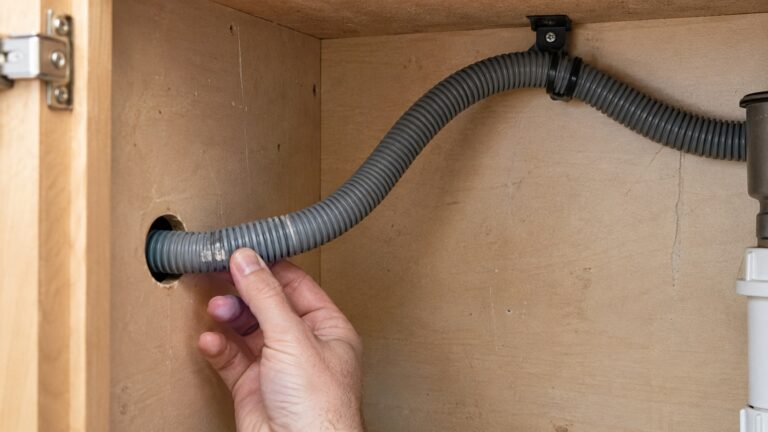
Some appliance hoses fail early because of where and how they are routed. A good hose can become unreliable if it is crushed behind an appliance, bent sharply near a fitting, rubbed against a cabinet edge, or stretched too tightly between the valve and appliance.
Routing problems are common because appliances are often pushed back into tight spaces after installation, cleaning, flooring work, or repair. The hose may look fine before the appliance is moved, but become kinked or stressed when the appliance is pushed back into position.
Before pushing a washer, dishwasher, or refrigerator back into place, check that the hose forms a smooth curve, is not trapped under a cabinet edge, and does not pull tight at the fitting.
Watch for these placement problems:
- Washer hoses flattened between the washing machine and wall.
- Dishwasher supply lines rubbing against a rough cabinet opening.
- Refrigerator water lines pinched behind the appliance.
- Ice maker tubing kinked where the refrigerator was pushed back.
- Hoses stretched tight with no slack for appliance movement.
- Lines routed through sharp holes without protection.
- Flexible hoses twisted to make them reach a connection.
When a hose has been kinked or crushed, replacement is usually safer than simply straightening it. The damaged area may remain weaker, especially if the hose is rubber, plastic, or thin copper tubing. Appliance hoses should curve naturally and have enough space to move slightly without pulling on the fittings.
Routing issues are one reason appliance hoses belong among the plumbing parts most likely to fail first. They are often inexpensive parts, but they sit in high-risk locations where pressure, vibration, movement, and poor visibility can all work against them.
Appliance-Specific Warning Signs to Watch For
The same basic warning signs can appear on many appliance water hoses, but each appliance has its own risk pattern. Washing machines are exposed to pressure and vibration. Dishwashers hide supply lines inside cabinets and appliance cavities. Refrigerators and ice makers often use small lines that can leak quietly behind the appliance.
Washing machine hoses
Washing machine hoses should be taken seriously if they are bulging, cracked, stiff, damp at the fittings, kinked behind the washer, or made from old rubber. These hoses often remain under pressure when the water valves are open, even when the washer is not running.
A bulging washer hose is especially urgent. It should be replaced instead of patched or monitored. If you are trying to decide whether the hoses are too old even without visible damage, see when to replace washing machine hoses.
Dishwasher supply lines
Dishwasher supply lines often run from the sink cabinet to the dishwasher inlet. Warning signs include kinks, corrosion under the sink, dampness near the shutoff valve, frayed braided covering, mineral buildup, or a line that has been reused after an old dishwasher was removed.
Because dishwasher supply lines are partly hidden, a failing line may affect the cabinet base, toe-kick area, flooring, or subfloor before water is obvious. If you are replacing the appliance or deciding whether the old line can stay, see when to replace dishwasher supply lines.
Refrigerator water lines
Refrigerator water lines may be plastic, copper, or braided. Warning signs include brittle plastic tubing, sharp copper bends, corroded fittings, dampness behind the refrigerator, old saddle valves, or tubing that gets pinched when the refrigerator is pushed back.
A refrigerator line can leak slowly without immediately showing water at the front of the appliance. If the concern is the broader refrigerator supply line that feeds water and ice features, see when to replace refrigerator water lines.
Ice maker tubing
Ice maker tubing is small, but it should not be ignored. Warning signs include yellowed or cloudy plastic tubing, cracks, brittleness, kinks, flattened sections, damp fittings, or tubing connected to an old saddle valve.
Small-diameter tubing can still stay under pressure if the supply valve is open. If it leaks behind the refrigerator, water may affect flooring, trim, cabinets, or drywall before the source is obvious. Ice-maker-specific replacement guidance is covered in when to replace ice maker water lines.
How to Tell Whether to Monitor, Replace, or Call a Plumber
Not every appliance hose warning sign requires the same response. Some issues mean you should schedule replacement soon. Others mean the hose should be replaced immediately. Valve problems, seized fittings, and visible moisture damage may require a plumber.
Monitor and schedule replacement
Monitor and schedule replacement when the hose is old, the age is unknown, the appliance was recently moved, or the hose is routed in a way that makes inspection difficult. These conditions may not mean the hose is failing today, but they do mean you should not ignore it indefinitely.
This category includes older rubber hoses, reused dishwasher supply lines, old plastic refrigerator tubing, and appliance lines hidden behind finished cabinets or flooring. If the hose is in a high-risk location and you cannot confirm its age, use the appliance-specific replacement guides linked below instead of relying on appearance alone.
Replace soon
Replace soon when you see early cracking, stiffness, light corrosion, frayed braid, cloudy plastic tubing, minor kinks, or fittings that look worn but are not actively dripping. These signs suggest the hose is deteriorating and should not be trusted for another long service period.
Do not delay replacement just because the area is still dry. Early hose damage is the window to act before moisture reaches surrounding materials.
Replace immediately or call a plumber
Replace immediately if the hose is bulging, cracked, split, crushed, sharply kinked, damp at the fitting, or visibly leaking. If water is actively leaking, shut off the appliance supply valve if it turns safely. Call a plumber if the shutoff valve is stuck, the fitting is seized, the valve is corroded, the line connects to an old saddle valve, or the connection cannot be accessed safely.
You should also call a plumber if there is already moisture damage near the appliance. Swollen cabinet bases, soft flooring, stains, musty odor, or damp drywall may mean the problem is no longer limited to the hose. In that case, the connection and nearby materials may both need attention.
When Warning Signs Mean There May Already Be Moisture Damage
Sometimes a failing appliance water hose shows up as damage around the appliance before the hose itself is obvious. This is common when the line is hidden behind a washer, under a dishwasher, behind a refrigerator, or inside a cabinet opening.
Watch for warning signs in the materials around the appliance, not just on the hose. Swollen cabinet bottoms, soft flooring, staining, peeling finish, damp trim, musty odor, or discoloration near the appliance can mean water has already been present. At that point, the issue may be more than a hose that needs replacement.
Surrounding material warning signs include:
- Soft flooring near a washing machine, dishwasher, or refrigerator.
- Swollen cabinet bases under a sink or beside a dishwasher.
- Water stains near appliance shutoff valves.
- Musty odor behind or under an appliance.
- Warped baseboards or trim near a water-connected appliance.
- Dark staining, bubbling finish, or peeling material near hose connections.
- Repeated dampness after the area has already been wiped dry.
If these signs are present, do not focus only on the hose. The hose or fitting may be the source, but the nearby materials may also need to be checked for trapped moisture. This is where early action matters. A small hose warning sign can become a larger moisture problem if water reaches cabinets, flooring, drywall, or subfloor materials and stays there.
The safest response is to stop using the questionable connection if possible, shut off the water supply only if the valve turns normally, replace the failing hose or line, and evaluate the surrounding materials. If the valve is stuck, corroded, or leaking, call a plumber instead of forcing it. If moisture has already spread into building materials, the issue may require more than a simple hose replacement.
For long-term prevention, appliance hose checks should be part of a broader preventive plumbing replacement schedule. The goal is not only to replace a weak hose, but also to prevent hidden moisture from reaching cabinets, flooring, drywall, or subfloor materials before anyone notices.
FAQ
Is a bulging appliance hose dangerous?
Yes. A bulging appliance hose is a serious warning sign because the hose wall has weakened and is no longer holding pressure evenly. Do not tape or clamp it as a repair. Replace the hose before using the appliance again if possible.
Should I replace a hose if only the fitting is damp?
Yes, repeated dampness at a fitting should not be ignored. It may come from a worn washer, loose fitting, failing valve, or damaged hose end. If the fitting or valve is corroded, stuck, or still damp after replacement, call a plumber.
Is corrosion on an appliance hose fitting a serious warning sign?
Corrosion can be serious, especially around pressurized water connections. Rust, green corrosion, or white mineral buildup may indicate slow seepage or aging metal parts. Heavy corrosion or seized fittings should be handled carefully because forcing them can create a larger leak.
Can a braided stainless hose fail?
Yes. Braided stainless hoses can still fail. The outer braid reinforces the hose, but the inner tubing, washers, fittings, and valve connections can still age, corrode, kink, or leak. Replace braided hoses if they are frayed, damp, kinked, corroded, or old enough that you cannot verify their service history.
Does a kinked appliance water line need to be replaced?
Often, yes. A deep kink, crushed section, or sharp bend can weaken the hose or tubing even if water still flows. This is especially important for plastic tubing, copper lines, and hoses hidden behind appliances. Replacement is safer than trusting a damaged line.
What to Do When an Appliance Hose Looks Unsafe
Appliance water hoses often show warning signs before they fail. Bulges, cracks, stiffness, kinks, corrosion, damp fittings, frayed braid, brittle plastic tubing, old saddle valves, and moisture-damaged nearby materials all mean the connection should be inspected, replaced, or handled by a plumber depending on severity.
Schedule replacement for older or mildly worn hoses, but treat bulging, cracking, dampness, heavy corrosion, crushed tubing, stuck valves, and visible moisture damage as urgent. When the valve, fitting, or surrounding material is already compromised, call a plumber instead of forcing the connection loose.