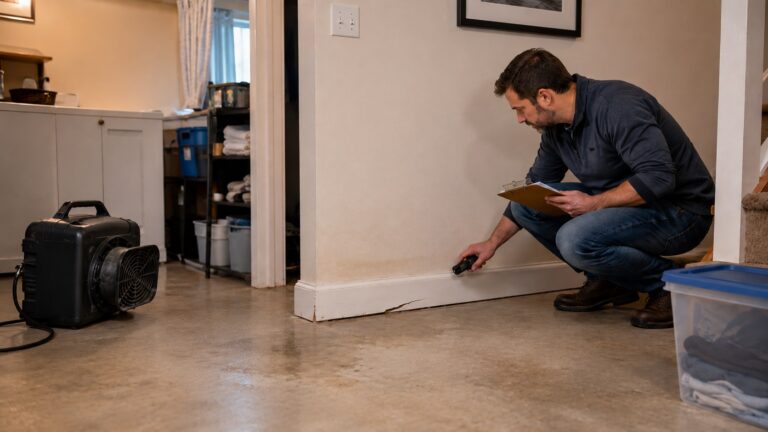
Annual Plumbing Maintenance Tasks for Homeowners: Yearly Checklist to Prevent Leaks
Annual plumbing maintenance helps homeowners catch small problems before they become leaks, water damage, mold-supporting moisture, or emergency repairs. Most plumbing failures do not begin with a dramatic burst pipe. Many start with a damp cabinet floor, a stiff shutoff valve, a corroded supply line, a cracked appliance hose, a running toilet, or a slow drip that only appears when water is running.
The goal of yearly plumbing maintenance is not to become a plumber or repair every part yourself. The goal is to look at the common leak points, notice early warning signs, track aging parts, and know when a problem needs replacement planning or professional help. A simple annual routine can reduce the kind of hidden moisture problems explained in how plumbing leaks cause structural damage.
This yearly checklist focuses on safe homeowner maintenance: check under sinks, listen to toilets, inspect appliance hoses, review shutoff valves, look around water heater connections, run water through drains, inspect exposed pipes and hose bibs, and record anything that needs follow-up. It does not include professional repair procedures or step-by-step replacement instructions.
What Annual Plumbing Maintenance Helps You Catch
Plumbing parts often fail quietly before they fail completely. A valve can stiffen, a supply line can corrode at the fitting, a toilet can refill randomly, a sink drain can drip only during use, and a refrigerator water line can leak behind the appliance before anyone sees a puddle.
Annual maintenance gives homeowners a chance to find those problems while they are still small. It also helps prevent unknown-age parts from being forgotten. Many homes have hoses, valves, supply lines, and fixture parts that were installed years earlier with no written record. Without a yearly review, those parts can stay in place until they fail.
A yearly plumbing check is especially important if:
- You recently bought the home and do not know the age of the plumbing parts.
- Appliances have been replaced without replacing hoses or valves.
- Shutoff valves have not been used in years.
- The home has hard water or visible mineral buildup.
- There has been a previous leak under a sink, near a toilet, behind an appliance, or around the water heater.
- Some plumbing parts are hidden behind stored items, cabinets, appliances, or finished materials.
Annual maintenance works best when it feeds into a plan. If you find old, worn, corroded, or unknown-age parts, add them to a preventive plumbing replacement schedule instead of waiting for failure.
How to Use This Yearly Plumbing Checklist
Use this checklist as a once-a-year walkthrough. Choose a time you can repeat each year, such as the beginning of spring, the start of fall, or the same month you change smoke detector batteries. Walk through the home with a flashlight, a towel, a notepad or phone, and enough time to look inside cabinets and behind appliances where safe.
Before you start, make sure you know where the main water shutoff is. If you find an active leak during the checklist, stopping water quickly matters more than finishing the inspection.
You are looking for signs of plumbing risk, not trying to disassemble the system. Most annual tasks are simple observations:
- Look for dampness, stains, swelling, or soft materials.
- Check hoses and supply lines for kinks, cracks, bulges, and corrosion.
- Listen for running toilets, dripping, hissing, or unusual water sounds.
- Look at shutoff valves without forcing old or corroded parts.
- Run water while checking drain fittings under sinks.
- Inspect water heater connections for corrosion, dampness, or discharge.
- Write down parts that need rechecking, replacement planning, or professional evaluation.
If you are short on time, start with the highest-risk plumbing areas. These are usually pressurized, hidden, flexible, or frequently used parts. The guide to plumbing parts most likely to fail first can help you decide where to focus first.
Start With the Highest-Risk Plumbing Areas
The best annual plumbing maintenance routine starts where leaks are most likely to go unnoticed or cause damage quickly. In many homes, that means appliance hoses, supply lines, shutoff valves, toilets, under-sink cabinets, and water heater connections.
Start with parts that meet one or more of these conditions:
- They are under constant water pressure.
- They are hidden behind appliances or inside cabinets.
- They are flexible hoses or small supply lines.
- They are connected to toilets, sinks, dishwashers, refrigerators, washing machines, or water heaters.
- They have unknown age.
- They already show corrosion, dampness, stiffness, cracking, swelling, or mineral buildup.
This approach prevents the checklist from becoming overwhelming. You do not need to inspect every inch of pipe with the same urgency. A hidden pressurized hose behind a washer usually deserves more attention than a dry, visible pipe in good condition.
Check Under Every Sink
Kitchen and bathroom sink cabinets are some of the most important places to check each year. They often contain several leak points in a small area: hot and cold supply lines, shutoff valves, faucet connections, sprayer hoses, drain traps, garbage disposal connections, and dishwasher drain connections.
Remove stored items before inspecting. Cleaning bottles, trash bags, towels, and organizers can hide early moisture. Once the cabinet is empty, look at the cabinet floor, back wall, side panels, supply connections, and drain fittings.
Look at Supply Lines and Shutoff Valves
Check the hot and cold supply lines for dampness, kinks, corrosion, fraying, cracking, or mineral buildup at the fittings. Supply lines are pressurized, so even a small weakness can eventually leak when the sink is not being used.
Look at the shutoff valves below the sink. They should not be severely corroded, damp, loose, or crusted with mineral deposits. If a valve looks old, stiff, or unreliable, do not force it aggressively. Add it to your replacement list or have it evaluated.
Run Water While Checking Drain Fittings
Drain leaks may only appear when water is running. Turn on the faucet and watch the trap, tailpiece, slip-joint connections, pop-up assembly, garbage disposal connection, and dishwasher drain connection if present. Look for drips, sweating, dark stains, or water trails.
A dry drain during a quick glance does not always mean the drain is leak-free. Some leaks only appear when the sink is full, when water drains quickly, or when the trap is slightly bumped. If you find dampness but cannot identify the source, move from routine maintenance to a slow-leak inspection process.
Check Cabinet Floors for Moisture Damage
The cabinet floor often reveals problems before the plumbing part does. Look for swelling, warping, peeling laminate, staining, soft spots, musty odor, or dark marks below fittings. These signs can mean the cabinet has been wet repeatedly.
If the cabinet base is damp or swollen, do not assume the problem is only from spills. Supply lines, drain fittings, faucet connections, sprayer hoses, and disposal connections should all be checked. If you find moisture but the source is not obvious, use how to detect slow plumbing leaks before the damage spreads farther.
Inspect Toilets and Nearby Connections
Toilets should be part of every annual plumbing maintenance routine because they combine several common failure points in one area. The tank has moving parts and seals. The supply line is under pressure. The shutoff valve may sit unused for years. The floor connection can hide moisture if the toilet rocks, leaks, or has a failing seal.
Start by listening. A toilet that runs after flushing, hisses, refills randomly, fills slowly, or makes new sounds may have a worn fill valve, flapper, float, or internal seal. These symptoms may begin as water-waste problems, but they also show that the toilet parts are no longer working as they should.
Check the Supply Line and Shutoff Valve
Look at the toilet supply line from the wall or floor to the tank. Check for kinks, corrosion, dampness, mineral buildup, fraying, or a connection that looks strained. If the line is old or unknown in age, write it down for replacement planning.
Look at the shutoff valve near the toilet. It should be dry, accessible, and not heavily corroded. If it looks fragile, leaks around the stem, or appears stuck, do not force it. A toilet shutoff valve that will not work during a leak can make a small toilet problem harder to control.
Look Around the Toilet Base and Flooring
Check the floor around the toilet base for moisture, staining, soft flooring, discoloration, or musty odor. Gently notice whether the toilet rocks when used. A loose toilet can damage the wax ring or seal below the fixture, which may allow water to reach the floor system.
Moisture around the toilet base should not be ignored. It may come from condensation, a supply connection, a tank leak, an overflow, or a floor seal problem. If the floor is soft, stained, or repeatedly damp, the issue should be investigated before damage spreads into the subfloor.
Inspect Washing Machine Hoses and Laundry Valves
Washing machine connections are among the most important annual plumbing checks because the hoses are pressurized, hidden behind the appliance, and exposed to vibration. A washing machine hose can weaken at the fitting, bulge in the hose body, kink behind the machine, or corrode where it connects to the valve.
Once a year, look behind the washer if it is safe and practical. If the machine cannot be moved safely, inspect what you can see and consider having the hoses reviewed during service or replacement. Do not pull the washer aggressively if the hoses are short, stiff, or old.
Look for:
- Bulging or swollen hoses
- Cracks in rubber hoses
- Kinks or sharp bends
- Rust or corrosion at the fittings
- Moisture behind the washer
- Hoses pressed tightly against the wall
- Valves that look corroded or difficult to operate
- Unknown hose age
If the hoses are old, rubber, damaged, or unknown in age, review when to replace washing machine hoses. Annual maintenance should not only confirm that the washer works. It should confirm that the water connections behind it are still safe enough to keep using.
Check Dishwasher and Refrigerator Water Lines
Dishwasher and refrigerator water lines are easy to forget because they are usually hidden behind or below appliances. Annual maintenance should include a visual review of these areas when safe access is available. These connections are important because leaks can spread under flooring before visible water appears.
For dishwashers, look near the toe-kick, under the sink if the dishwasher line connects there, and around any visible supply or drain connections. Warning signs include damp cabinet edges, stains near the dishwasher, soft flooring, musty odor, or water appearing after a wash cycle. If the line is old, kinked, corroded, or unknown in age, review when to replace dishwasher supply lines.
For refrigerators with ice makers or water dispensers, inspect the water line if the appliance can be moved safely. Look for brittle plastic tubing, kinks, sharp bends, corrosion at fittings, dampness, or signs that the line was pinched when the refrigerator was pushed back. If the line is plastic, damaged, or unknown in age, review when to replace refrigerator water lines.
Appliance lines should also be checked after cleaning, flooring work, appliance replacement, or service. A line can be disturbed during movement and become more vulnerable afterward. Before pushing an appliance back into place, make sure the hose or line is not crushed, stretched, or sharply bent.
Do not move a heavy appliance if the water line is short, brittle, stuck, or hard to see. Pulling the appliance too far can turn a weak line into an active leak.
Review Shutoff Valves Safely
Shutoff valves are part of the home’s plumbing defense system. They allow water to be stopped at a fixture, appliance, or main supply point when something leaks. A valve that is stuck, corroded, leaking, or unable to close fully can make a plumbing problem much harder to control.
During annual maintenance, locate the main water shutoff valve and the fixture shutoff valves under sinks, behind toilets, near appliances, and around the water heater. Make sure they are accessible and not blocked by stored items, furniture, boxes, or appliances.
Look for:
- Corrosion on the valve body or handle
- White mineral buildup around the stem or fittings
- Leaks or dampness around the valve
- Loose handles
- Valves that look fragile or severely aged
- Valves hidden behind stored items or difficult to reach
Accessible valves can be reviewed gently, but old or corroded valves should not be forced. If a valve feels stuck, brittle, or unstable, stop and add it to your replacement list. For more detail, review when to replace plumbing shutoff valves.
The main shutoff valve deserves special attention. Every homeowner should know where it is and whether it is accessible. If the main valve is seized, leaking, buried behind storage, or impossible to operate safely, a plumber should evaluate it before an emergency happens.
Inspect Water Heater Plumbing Connections
Water heater plumbing connections should be checked every year because they involve pressurized water, heat, valves, and safety-related parts. A water heater area may look normal from a distance while fittings, supply lines, valves, or nearby components are beginning to show corrosion or seepage.
Start by looking around the cold water inlet, hot water outlet, supply connectors, shutoff valve, drain valve, temperature and pressure relief valve, discharge pipe, expansion tank if present, and the floor around the heater. You are not trying to repair the water heater during annual maintenance. You are looking for early signs that something needs attention.
Look for:
- Rust or corrosion on fittings
- White mineral buildup near connections
- Green staining on copper or brass parts
- Dampness around supply lines
- Dripping from the drain valve
- Water from the relief valve discharge pipe
- Wet flooring near the heater
- Kinked or strained flexible connectors
- Expansion tank corrosion, leaking, or poor support
If you see corrosion, relief valve discharge, repeated dripping, or pressure-related symptoms, do not ignore them or cap, plug, or block any discharge pipe. Water heater components may involve pressure, heat, and safety functions. For more specific warning signs, see signs water heater plumbing components are failing.
Check Drains, Traps, and Slow-Leak Areas
Drain leaks can be harder to catch during annual maintenance because they may only happen when water runs. A sink trap may look dry until the sink is filled and drained. A tub drain may leak only during bathing. A dishwasher drain connection may leak only during a cycle. Because these leaks are intermittent, they can damage cabinets or floors slowly.
During annual maintenance, run water while watching accessible drain parts. Under sinks, check the trap, tailpiece, slip-joint nuts, basket strainer, pop-up assembly, disposal connection, and dishwasher drain connection if present. Look for drips, water trails, staining, dampness, loose connections, or swollen cabinet materials.
Pay attention to areas where water appears but the source is unclear. Damp cabinet floors, musty odors, recurring stains, soft flooring, or water marks below plumbing parts may indicate a slow leak that needs more careful investigation. If annual maintenance reveals moisture but no obvious source, use how to detect slow plumbing leaks rather than simply drying the area and moving on.
Inspect Exposed Pipes and Outdoor Hose Bibs
Longer pipe runs are not usually the first plumbing parts to fail, but exposed plumbing should still be checked once a year. Basements, garages, utility rooms, crawl spaces, unfinished areas, and under-cabinet spaces can reveal early signs of corrosion, condensation, poor support, or old leak activity.
Look for rust, green staining, white crust, water marks, loose pipe supports, dripping, condensation, or damp materials near exposed plumbing. A single dry stain may be old, but recurring moisture or growing discoloration should be investigated.
Outdoor hose bibs should also be checked during annual maintenance. Look for dripping after shutoff, loose mounting, cracks, freeze damage, water stains on the exterior wall, or dampness inside the wall or basement near the hose bib location. A hose bib that leaks inside the wall can create hidden moisture around framing and sheathing.
If the home is in a freeze-prone climate, outdoor plumbing should be checked before cold weather. Hoses should be disconnected where appropriate, frost-prone fixtures should be reviewed, and any prior freeze damage should be repaired before the next season.
Track Replacement Dates and Problem Areas
Annual maintenance becomes much more useful when you keep records. Many plumbing parts become risky because no one remembers when they were installed. A hose may be “probably fine” for years simply because its age is unknown. A shutoff valve may sit untouched until it fails. A refrigerator line may remain behind the appliance through several cleaning cycles and appliance changes.
Keep a simple plumbing maintenance log. It can be a phone note, spreadsheet, printed checklist, folder with receipts, or home maintenance binder. The goal is not to create a repair manual; it is to remember what was checked, what changed, and what needs follow-up.
Track these details:
- Washing machine hose replacement date
- Refrigerator or ice maker water line replacement date
- Dishwasher supply and drain line notes
- Sink and toilet supply line replacement dates
- Shutoff valve service or replacement dates
- Toilet fill valve and flapper replacement dates
- Water heater supply line or expansion tank dates
- Areas where dampness, staining, or odor was found
- Parts to recheck in 3–6 months
- Parts that should be added to a future replacement plan
When you find a problem, take a quick photo of the part and note the room, fixture, date, and visible symptom. That makes it easier to compare changes later or explain the issue clearly if you call a plumber.
If annual maintenance reveals old parts but no immediate leak, compare your notes with how often plumbing parts should be replaced. This helps you decide whether a part can be monitored or should be moved into a replacement plan.
When Annual Maintenance Should Lead to a Plumber Call
Annual plumbing maintenance does not mean every small issue requires a plumber, but certain findings are beyond routine homeowner inspection and should not be ignored.
Call a plumber if you find:
- A main shutoff valve that is seized, leaking, hidden, or unreliable
- A fixture shutoff valve that is badly corroded or leaks when touched
- Active dripping from a pressurized supply line
- A bulging or damaged appliance hose you cannot safely shut off
- Relief valve discharge or repeated water heater dripping
- Severe corrosion around water heater connections
- Wet drywall, soft flooring, or swollen cabinet materials
- Repeated leaks in the same area
- Several corroded or failing parts throughout the home
- Any plumbing part that feels unsafe to handle
Do not force stuck valves, loosen severely corroded fittings, or ignore active moisture because the leak seems small. If water has already reached cabinets, flooring, drywall, or hidden spaces, the problem may be larger than one part. Professional inspection can help confirm the source before damage spreads.
FAQ: Annual Plumbing Maintenance Tasks for Homeowners
What should be on a yearly plumbing maintenance checklist?
Homeowners should check under sinks, inspect toilets, review appliance hoses, look at shutoff valves, inspect water heater connections, check drains while water runs, inspect exposed pipes, look at outdoor hose bibs, and record replacement dates or problem areas. The goal is to catch leaks and weak parts early.
Should I check under sinks every year?
Yes. Sink cabinets hide several common leak points, including supply lines, shutoff valves, faucet connections, sprayer hoses, drain traps, disposal connections, and dishwasher drain connections. Remove stored items and look for dampness, stains, swelling, odor, corrosion, and mineral buildup.
Should shutoff valves be tested during annual plumbing maintenance?
Accessible shutoff valves should be reviewed, but old, corroded, or fragile valves should not be forced. If a valve is stiff, leaking, stuck, or unable to stop water, it should be evaluated. A shutoff valve needs to work before an emergency, not after a leak starts.
How often should I inspect washing machine hoses?
Inspect washing machine hoses at least once a year and whenever the washer is moved. Look for bulging, cracking, kinks, corrosion at fittings, dampness, hoses pressed tightly against the wall, or unknown hose age. These hoses are pressurized and hidden, so they deserve regular attention.
What should I check around the water heater once a year?
Check the hot and cold water connections, supply lines, shutoff valve, drain valve, temperature and pressure relief valve discharge pipe, expansion tank if present, and the floor around the heater. Look for corrosion, dampness, mineral buildup, dripping, wet flooring, or pressure-related warning signs.
When should annual plumbing maintenance lead to calling a plumber?
Call a plumber if the checklist reveals active leaks, seized shutoff valves, severe corrosion, relief valve discharge, soft flooring, swollen cabinets, repeated leaks, or any part that feels unsafe to handle. Those findings are no longer just maintenance notes.
Key Takeaways
- Annual plumbing maintenance helps catch small leaks and weak parts before water damage spreads.
- Under-sink cabinets, toilets, appliance hoses, shutoff valves, drains, and water heater connections are the most important yearly checks.
- Run water while checking drain fittings because some leaks only appear during use.
- Do not force old, stuck, corroded, or fragile shutoff valves.
- Washing machine hoses, refrigerator lines, dishwasher connections, and supply lines deserve extra attention because they are often hidden and pressurized.
- Water heater plumbing warning signs should be handled carefully because they may involve pressure, heat, or safety components.
- Keeping a plumbing maintenance log helps prevent unknown-age parts from being forgotten.
- Active moisture, hidden damage, severe corrosion, or unreliable shutoff valves should lead to professional evaluation.
Final Annual Plumbing Maintenance Step
After the walkthrough, separate your notes into three groups: parts that are dry and stable, parts to recheck in a few months, and parts that need replacement planning or professional evaluation. Annual plumbing maintenance is most useful when it creates a clear follow-up plan instead of ending with a vague reminder to “keep an eye on it.”
If you find corrosion, dampness, stiffness, swelling, cracking, mineral buildup, active moisture, or unreliable shutoff valves, do not ignore the finding. Add it to your maintenance log, compare it with the proper replacement guidance, or call a plumber when the issue is unsafe or beyond routine homeowner inspection.