
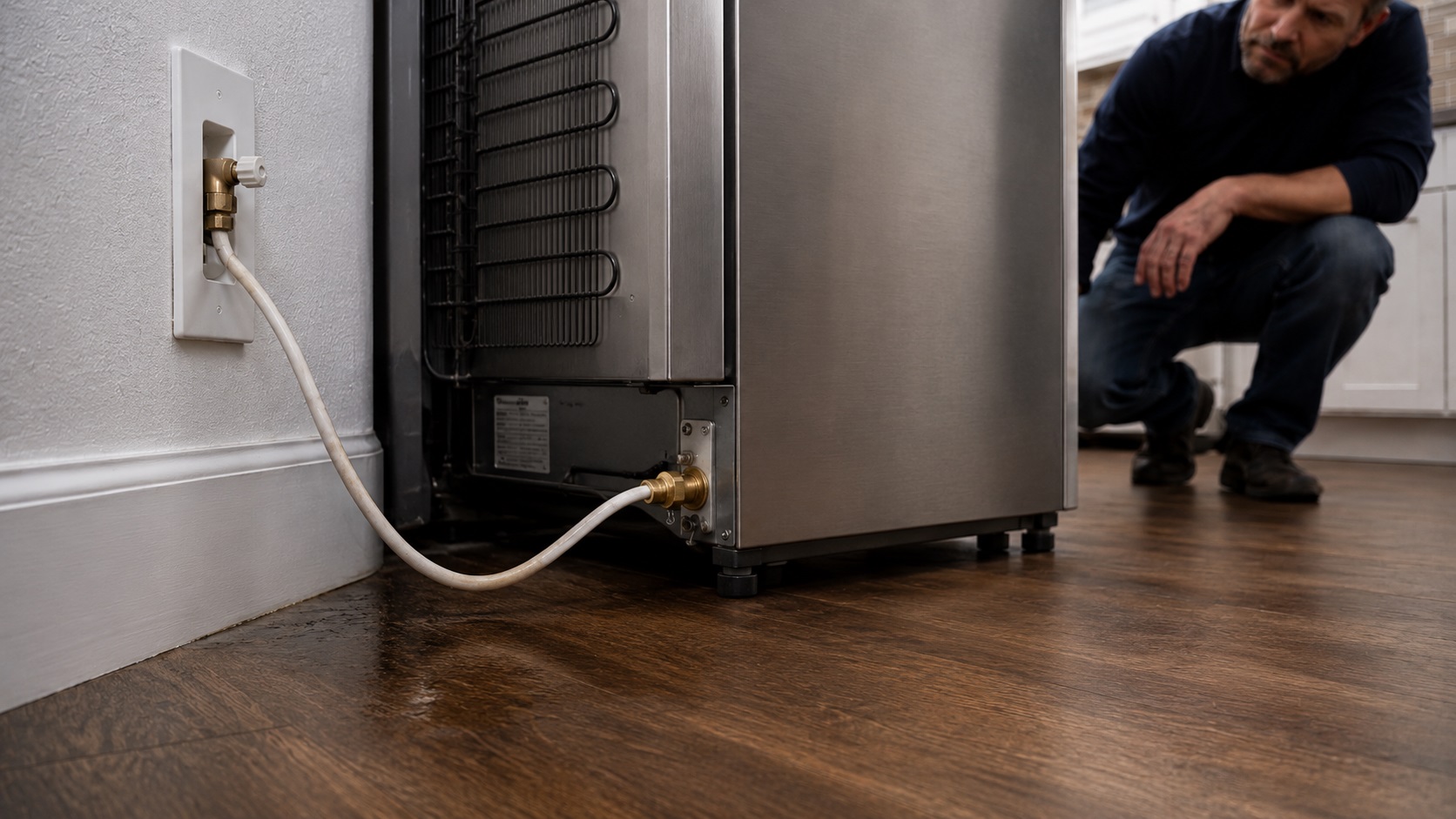
When to Replace Refrigerator Water Lines Before They Leak
Refrigerator water lines should usually be replaced every 5 to 10 years, depending on the line material, condition, installation quality, and how often the refrigerator has been moved. Replace the line sooner if it is plastic, kinked, brittle, corroded, damp at the fittings, poorly routed, connected to an old saddle valve, or old enough that you cannot confirm its age.
A refrigerator water line may be small, but it can still cause hidden water damage. If the supply valve is open, the line can stay under pressure even when you are not using the ice maker or water dispenser. A slow leak behind the refrigerator can wet flooring, baseboards, drywall, cabinets, or subfloor materials before the problem becomes obvious.
This article focuses on when to replace the refrigerator water supply line that feeds the ice maker or water dispenser. It does not cover every possible refrigerator leak source, such as clogged defrost drains, drain pans, condensation, water filter leaks, or internal appliance problems. If the concern is specifically the supply line behind the appliance, replacement timing matters because refrigerator water line leaks can damage floors and walls when they go unnoticed.
How Often Should Refrigerator Water Lines Be Replaced?
A practical replacement range for refrigerator water lines is every 5 to 10 years. Lines in excellent condition, routed correctly, and made from durable material may last longer than older plastic tubing or lines that have been bent repeatedly. However, age is not the only factor. Movement, kinks, valve condition, and hidden moisture risk matter just as much.
If the refrigerator water line age is unknown, replacement is usually the safer choice. Unknown-age lines are common in older kitchens, recently purchased homes, rental properties, and homes where several refrigerators have been connected to the same line over the years. You may not know whether the line was kinked, stretched, pinched, or installed correctly.
You should replace a refrigerator water line sooner if any of the following are true:
- The line is more than 10 years old.
- The line age is unknown.
- The line is old plastic tubing.
- The tubing is yellowed, brittle, cloudy, cracked, or stiff.
- The line is kinked, crushed, sharply bent, or pinched behind the refrigerator.
- The fittings show corrosion, rust, mineral buildup, or dampness.
- The refrigerator has been pulled out, moved, or replaced.
- The line is connected to an old saddle valve or questionable shutoff valve.
- There is staining, swelling, musty odor, or moisture near the refrigerator area.
Do not judge a refrigerator water line only by whether it is leaking today. A line can weaken slowly, especially if it has been pushed against the wall, bent behind the appliance, or routed through a cabinet or floor opening. The best time to replace it is before the refrigerator is pushed back into place and the line becomes difficult to see again.
For a broader comparison of washer hoses, dishwasher lines, refrigerator lines, and ice maker tubing, see this guide on how long appliance water hoses usually last. This article stays focused on the refrigerator water line because that small hidden connection can quietly damage kitchen materials if it fails.
Refrigerator water lines also deserve attention during broader whole-home moisture prevention because they sit near finished flooring, trim, cabinets, and wall materials that can hold moisture after a slow leak.
Why Refrigerator Water Lines Can Leak Without Being Noticed
Refrigerator water lines often leak quietly because they are hidden behind a large appliance. The line may connect to a wall valve, pass through a cabinet or floor opening, and attach to the refrigerator inlet where the homeowner rarely looks. A small drip in that area may not reach the front of the refrigerator right away.
This is what makes refrigerator water line leaks different from obvious spills. Water can seep under flooring, soak dust and debris behind the appliance, wick into baseboards, or dampen the subfloor before anyone notices a visible puddle. If the leak is slow, the first signs may be staining, swelling, odor, or soft flooring rather than active running water.
Refrigerator water line leaks are more likely to stay hidden when:
- The refrigerator fits tightly into an alcove or cabinet opening.
- The water line is routed behind base cabinets or through the floor.
- The refrigerator is rarely pulled forward for cleaning or inspection.
- The line is pinched between the appliance and wall.
- The shutoff valve is hidden behind the refrigerator or under a cabinet.
- Finished flooring extends under or around the refrigerator.
If you already see staining, swollen flooring, musty odor, or water near the appliance, the issue may have moved beyond preventive replacement. In that case, the guide to signs of water leaks behind refrigerators is the better next step because visible damage means there may already be active moisture behind or below the appliance.
Refrigerators can also create moisture problems from sources other than the water supply line. Water filters, drain pans, defrost drains, condensation, and internal appliance parts can all create leaks or dampness. That is why this article stays focused on replacement timing for the supply line itself, while the broader guide on why refrigerators cause hidden moisture problems can help explain other moisture sources.
Replace the Water Line When Installing or Moving a Refrigerator
A new refrigerator should not automatically be connected to an old water line. If the existing line is old, plastic, kinked, corroded, brittle, connected to an old valve, or of unknown age, replace it before the refrigerator is pushed into place. This is one of the easiest times to prevent a hidden leak because the connection is already accessible.
Moving a refrigerator can also stress the water line. Pulling the appliance forward, turning it, cleaning behind it, replacing flooring, or sliding it back into the wall opening can kink tubing or strain fittings. A line that worked before the refrigerator was moved may not sit the same way afterward.
Replace the refrigerator water line during any of these situations:
- Installing a new refrigerator with an ice maker or water dispenser.
- Moving the refrigerator for cleaning or repair after many years in place.
- Replacing kitchen flooring near or under the refrigerator.
- Remodeling cabinets around the refrigerator opening.
- Finding an old plastic or copper line behind the appliance.
- Discovering that the line has been crushed, kinked, or stretched.
- Finding an old saddle valve or corroded shutoff connection.
Refrigerator water lines need enough slack to let the appliance move without pulling on the connection, but not so much extra tubing that the line coils, kinks, or gets crushed. The line should have a smooth path from the shutoff valve to the refrigerator inlet. If the old line cannot be routed cleanly, replacement is safer than forcing it back into the same position.
Do not reuse a questionable line after moving the refrigerator
Old refrigerator water lines are often damaged during movement. Plastic tubing can become brittle and crack. Copper tubing can kink if bent too sharply. Braided lines can fray, twist, or stress the fitting if they are pulled at an awkward angle.
If the line looked questionable before the refrigerator moved, it should not be trusted afterward. Replace it before reconnecting the appliance, especially if the refrigerator will be pushed back into a tight opening where future inspection will be difficult.
Replace the line during flooring work
Kitchen flooring work is a smart time to replace the refrigerator water line. The refrigerator is already being moved, and the floor is vulnerable if a hidden leak develops later. A small supply line leak can affect flooring layers, underlayment, subfloor edges, and baseboards near the appliance.
If old water damage is found during flooring work, replacement timing is no longer the only issue. You may need to evaluate whether moisture has already moved under the flooring system. In that case, a separate recovery guide on how to dry flooring after refrigerator leaks is more appropriate than a preventive replacement checklist.
Signs a Refrigerator Water Line Should Be Replaced Immediately
A refrigerator water line should be replaced immediately when its age, condition, or connection no longer looks reliable. The line does not need to be spraying water to justify replacement. Because it is usually hidden behind the refrigerator, even a small weakness can become a long-term moisture problem before the homeowner notices.
Check the visible sections of the line when the refrigerator is pulled forward safely. Shut off the refrigerator water supply first if you are disconnecting the line, moving the appliance far enough to strain the tubing, or touching questionable fittings. Look at the tubing, the wall valve, the fitting at the refrigerator, and any place where the line passes through a cabinet, wall, or floor opening. If the line is hard to access or connected to an old valve, do not force it.
Brittle, yellowed, or cracked plastic tubing
Older plastic refrigerator water tubing should be replaced if it looks yellowed, cloudy, brittle, cracked, flattened, or stiff. Plastic tubing can weaken with age and movement, especially when the refrigerator has been pushed back tightly against the wall or pulled forward several times.
Do not assume old plastic tubing is safe just because it has not leaked yet. If the material looks aged or the line history is unknown, replacement is the safer preventive choice.
Kinks, pinches, or crushed sections
A refrigerator water line should not be kinked, sharply bent, pinched, or crushed behind the appliance. Kinks can restrict water flow and create a weak point in the tubing. This is common when the refrigerator is pushed back without guiding the line into a smooth curve.
If the line has a sharp bend or flattened section, replace it. Straightening an old kinked line may not restore its strength, especially if the tubing is plastic or copper that has already been stressed.
Corrosion or mineral buildup at fittings
Rust, greenish corrosion, white mineral crust, or staining near the fitting can mean the connection has been damp or slowly seeping. This can happen at the wall valve, refrigerator inlet, compression fitting, or older saddle valve connection.
Corroded fittings may also be difficult to remove cleanly. If the fitting looks seized or the shutoff valve is old, a plumber may be safer than trying to force the connection loose.
Dampness behind or under the refrigerator
Any dampness near the refrigerator water line should be treated as a warning. The cause may be a loose fitting, cracked tubing, worn valve, old connection, or another refrigerator moisture source. Since this article is focused on replacement timing, the practical rule is simple: do not keep using a questionable line once moisture appears.
If you need a more detailed connection-focused check, the article on how to inspect refrigerator water connections is the better guide. For this article, dampness at or near the supply line is enough reason to replace the line and evaluate the valve.
Old saddle valves or questionable shutoff connections
Many older refrigerator water lines were connected with saddle valves. These small piercing-style valves are common in older installations, but they can become clogged, corroded, difficult to shut off, or prone to seepage. If your refrigerator line is connected to an old saddle valve, replacement may involve more than changing the tubing.
A proper shutoff valve is usually a better long-term connection. If the existing valve is old, stuck, leaking, or mounted in a hard-to-reach place, call a plumber before replacing the line.
For a broader warning-sign overview across multiple appliance water connections, see this guide to the signs appliance water hoses are failing.
How Line Material Affects Replacement Timing
Refrigerator water lines can be plastic, copper, or braided stainless steel. Each material can work when installed correctly, but each has different replacement concerns. The safest choice depends on the line condition, the valve setup, the refrigerator location, and whether the appliance has been moved recently.
Plastic refrigerator water lines
Plastic tubing is common in older refrigerator and ice maker connections. It is flexible and inexpensive, but it is more vulnerable to brittleness, kinking, crushing, and age-related damage. If the plastic line is old, discolored, stiff, or unknown age, replacement is usually the safest choice.
Plastic lines should also be replaced if they pass through a rough hole, rub against cabinet edges, or sit where the refrigerator can pinch them. A small damaged section behind the appliance can create a slow leak that remains hidden for a long time.
Copper refrigerator water lines
Copper tubing can be durable, but it is less forgiving when the refrigerator is moved. A copper line can kink if bent too sharply, and old compression fittings may not reseal well after being disturbed. Copper also needs enough room behind the refrigerator so it does not bend sharply when the appliance is pushed back.
If an older copper line has sharp bends, crushed areas, corrosion, or a history of being moved repeatedly, replacement may be safer than trying to reuse it. A plumber can help decide whether the existing copper line and shutoff valve are still reliable.
Braided stainless refrigerator water lines
Braided stainless refrigerator water lines are often easier to route than copper and more resistant to external abrasion than plain plastic tubing. They are a common upgrade when replacing an old refrigerator line, especially in kitchens where the appliance needs to move for cleaning or service.
However, braided lines are not permanent. The inner tubing, washers, fittings, and outer braid can still wear out. Replace a braided refrigerator line if it is frayed, kinked, corroded at the fittings, damp at the ends, or old enough that its condition is uncertain.
If you are choosing a replacement line, keep the buying decision separate from the timing decision. This article explains when replacement makes sense, while a separate guide to refrigerator water line options can help compare plastic, copper, and braided materials.
When to Call a Plumber Instead of Replacing the Line Yourself
Some refrigerator water lines are simple to replace, but others are connected to old valves, tight spaces, or plumbing parts that should not be forced. The line itself may be small, but the connection can still create a larger water damage problem if the shutoff valve fails or a corroded fitting breaks loose.
Call a plumber if the refrigerator water line is connected to an old saddle valve, a stuck shutoff valve, or a valve that does not close completely. You should also get help if the fitting is heavily corroded, the line runs through a wall or floor, or the refrigerator connection is difficult to access safely.
Do not force a stuck valve, seized fitting, or corroded connection. Breaking a small supply connection can quickly turn a preventive replacement into an active leak.
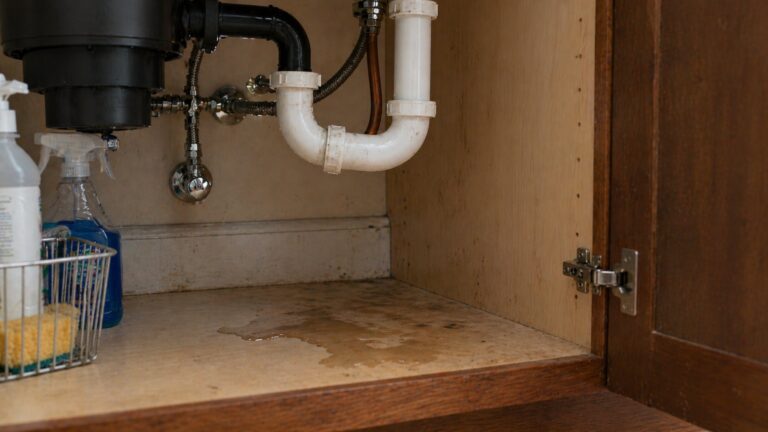
Professional help is also wise if you already see moisture damage near the refrigerator. Soft flooring, swollen baseboards, staining, musty odor, or damp drywall may mean the water line has already leaked or another refrigerator moisture source is active. In that situation, replacing the line is only part of the solution. The surrounding materials may also need to be checked for hidden moisture.
If the refrigerator is located in a tight cabinet opening, a plumber or experienced installer can also help route the new line correctly. The line needs enough slack for the refrigerator to move, but it should not coil, kink, rub against sharp edges, or get crushed when the appliance is pushed back.
Refrigerator Water Line Replacement FAQs
Should I replace the water line when installing a new refrigerator?
Yes, if the existing line is old, plastic, kinked, corroded, brittle, connected to an old valve, or of unknown age. A new refrigerator installation is one of the best times to replace the line because the appliance is already pulled out and the connection is accessible.
How long does a refrigerator water line last?
Many refrigerator water lines should be replaced within 5 to 10 years, depending on material, condition, movement, and installation quality. Replace sooner if the line is plastic, kinked, crushed, corroded, damp, poorly routed, or old enough that you do not know its age.
Can I reuse an old refrigerator water line?
You can sometimes reuse a line that is newer, undamaged, properly rated, and routed correctly, but old or unknown-age lines should usually be replaced. Reusing a brittle plastic line, kinked copper line, or corroded connection can create hidden leak risk behind the refrigerator.
Are plastic refrigerator water lines safe to keep?
Plastic refrigerator water lines can work when they are approved for the connection and still in good condition. However, older plastic tubing should be replaced if it is yellowed, cloudy, brittle, stiff, cracked, kinked, or pinched behind the appliance.
Can a refrigerator water line leak if I do not use the ice maker often?
Yes. If the supply valve is open, the refrigerator water line may remain under pressure even when the ice maker or water dispenser is rarely used. A weak fitting, old valve, or damaged line can still leak behind the refrigerator.
Replace Questionable Refrigerator Water Lines Before They Are Hidden Again
Refrigerator water lines should usually be replaced every 5 to 10 years, and sooner if age, material, routing, valve condition, or fitting condition creates doubt. The easiest time to replace one is when the refrigerator is already being installed, moved, repaired, or pulled out for flooring work.
A small refrigerator line can still damage flooring, trim, cabinets, drywall, and subfloor materials if it leaks slowly behind the appliance. Replacing questionable lines before the refrigerator is pushed back into place is one of the simplest ways to prevent hidden kitchen water damage.
One Comment
Comments are closed.