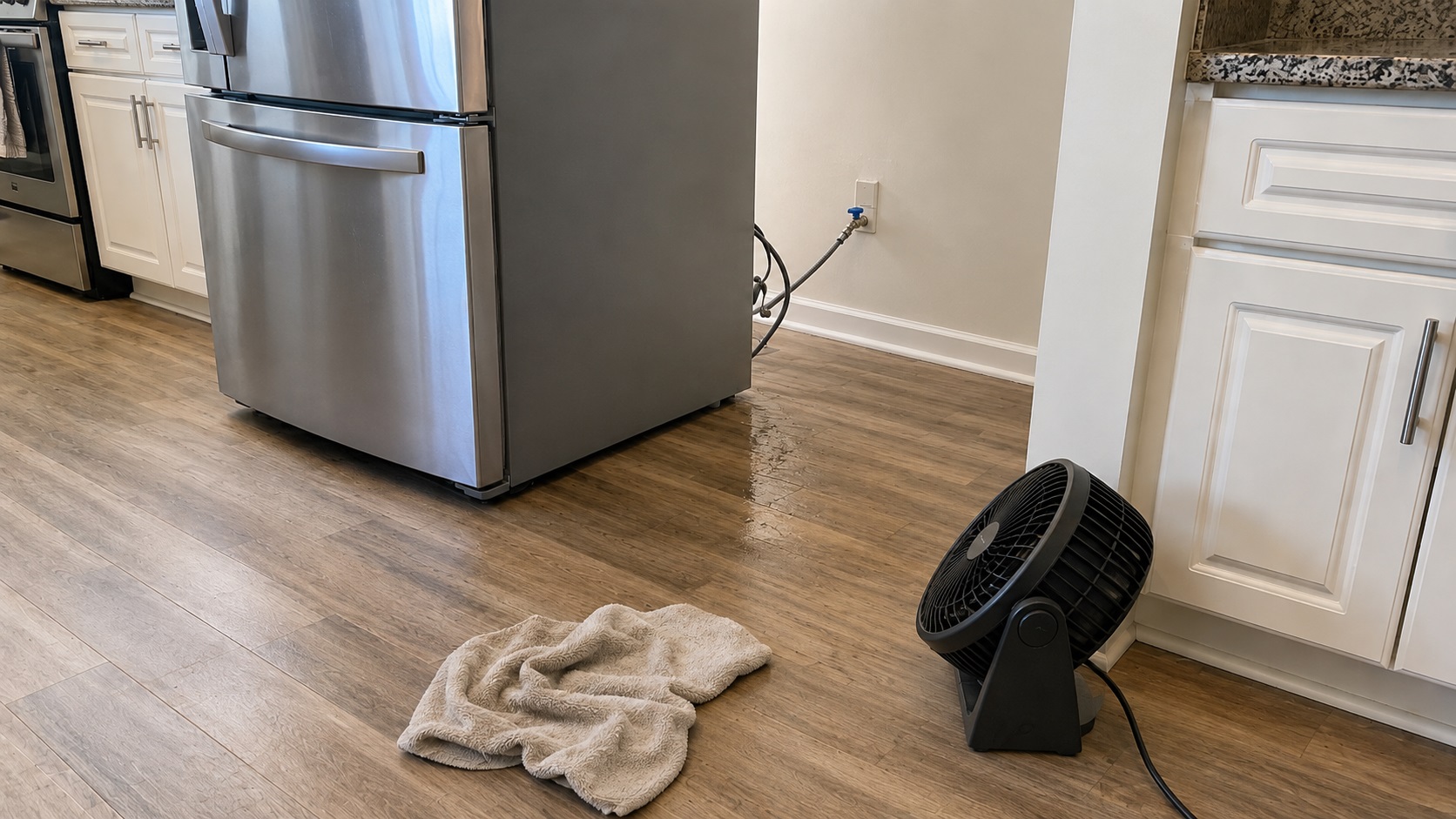
How to Dry Flooring After Refrigerator Leaks
After a refrigerator leak, dry the floor by stopping the water source, moving the appliance, removing standing water, opening the affected area to airflow, and checking seams, trim edges, and subfloor materials before putting the refrigerator back. The surface may look dry long before moisture beneath laminate, vinyl, wood, or tile has evaporated.
The goal is not only to wipe up visible water. Refrigerator leaks often spread under the appliance, along flooring seams, and into the edges of nearby trim or cabinets, where moisture dries much more slowly.
Understanding why refrigerators cause hidden moisture problems helps explain how leaks develop and why moisture spreads beneath appliances. Recognizing this behavior allows faster response and more effective drying.
This guide explains how to dry flooring safely after refrigerator leaks, including how to remove surface moisture, improve airflow, monitor hidden dampness, and avoid putting the appliance back too soon. For broader prevention after leaks, see how to prevent recurring moisture damage.
Why Fast Drying Is Critical After Refrigerator Leaks
Time plays a major role in determining how much damage occurs after a refrigerator leak. Moisture spreads quickly through seams and gaps, especially in flooring materials designed with interlocking edges. Once water enters these spaces, evaporation becomes slower and less predictable.
Within the first few hours after exposure, water remains mostly on the surface. At this stage, removal is relatively simple and damage risk remains limited. However, as time passes, moisture begins to penetrate deeper into flooring materials.
Delayed drying allows moisture to enter subfloor layers beneath visible surfaces. Subfloors absorb water and retain moisture longer than surface materials. This creates long-term damp conditions that support mold growth and weaken structural components.
Fast drying also reduces mold risk. If moisture remains trapped for a day or two, mold growth becomes more likely and cleanup becomes more complicated.
If moisture exposure has already occurred, it is important to watch for developing symptoms. Reviewing signs of mold under refrigerators can help identify early warning indicators during the drying process.
Immediate Steps to Take After Discovering Water
The first response to a refrigerator leak often determines the overall outcome. Taking immediate action reduces water penetration and improves the chances of successful drying.
Begin by identifying and stopping the water source. This may involve shutting off the water supply valve connected to the refrigerator. If water is near an outlet, cord, or power strip, avoid touching electrical components until the area is safe.
After the source is controlled, move the refrigerator carefully away from the wall. Slow, steady movement helps avoid stressing water lines and prevents further damage. If tubing appears strained or damaged, additional inspection may be necessary. Reviewing how to inspect refrigerator water connections can help identify potential leak sources.
Once the appliance has been moved, examine the surrounding area for visible water. Moisture often spreads beyond the original leak location, especially along flooring seams and trim edges. Identifying the full affected area helps ensure that drying efforts cover all exposed surfaces.
Immediate response actions typically include:
- Shut off the refrigerator water supply if the appliance uses an ice maker or water dispenser.
- Disconnect electrical power only if you can do so without stepping in water or touching a wet outlet.
- Pull the refrigerator straight out slowly so the water line is not kinked, stretched, or torn.
- Remove rugs, mats, boxes, toe-kick panels, or nearby stored items that can trap moisture.
- Mark the farthest visible edge of the wet area so you can tell whether moisture is spreading.
Quick action significantly reduces long-term damage risk. Even short delays allow water to move deeper into flooring materials, making drying more difficult and increasing the likelihood of hidden moisture problems.
Removing Standing Water Safely
Removing standing water is the most important first step in drying flooring after a refrigerator leak. Surface water spreads quickly across flooring and can enter seams, edges, and joints within minutes. The faster water is removed, the less likely it is to penetrate deeper layers.
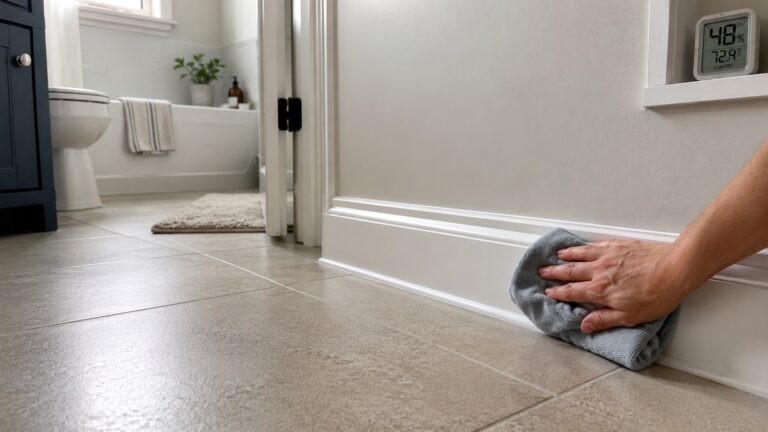
Start by absorbing visible water using clean towels or absorbent cloths. Press the material firmly against the surface rather than wiping quickly across the floor. Pressing helps lift moisture from seams and textured surfaces where water collects.
If large amounts of water are present, additional tools may be necessary. Wet vacuums designed for liquid removal are particularly useful because they extract water from surface gaps and low areas. These devices help remove moisture more effectively than towels alone.
Use only equipment rated for wet pickup. Do not use a regular household vacuum on water, and do not run extension cords through wet areas.
Water often collects in hidden locations, especially beneath refrigerator feet or along flooring seams. Pay close attention to these areas, as trapped moisture can remain unnoticed even after visible water is removed.
Removing water completely requires patience and thoroughness. Even small pools left behind can spread moisture into deeper flooring layers over time.
- Blot water rather than spreading it across surfaces
- Focus on seams and edges where water collects
- Check behind and beneath nearby trim
- Repeat water removal until surfaces feel dry
- Inspect surrounding areas beyond the visible wet zone
After removing standing water, continue monitoring the area for moisture returning to the surface. If water reappears repeatedly, it may indicate ongoing leakage. In such cases, reviewing signs of water leaks behind refrigerators can help determine whether additional moisture sources are present.
Drying Surface Flooring Materials
Once standing water has been removed, attention should shift to drying exposed flooring surfaces. Surface drying prevents remaining moisture from soaking into deeper layers and encourages evaporation from seams and joints.
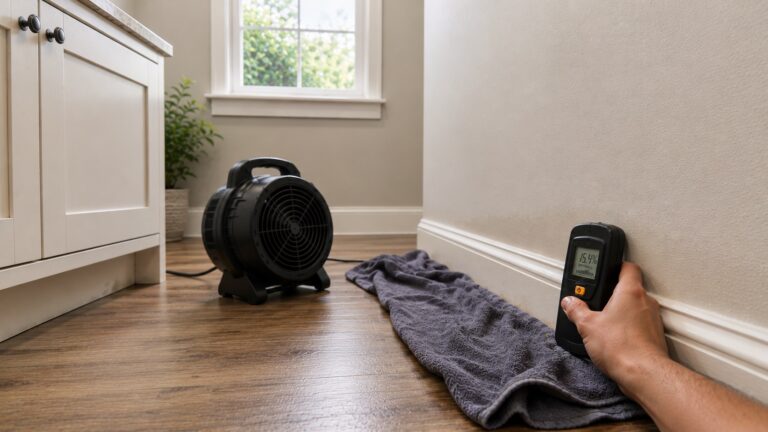
Air movement plays a major role in this stage. Moving air across wet surfaces increases evaporation and reduces drying time. Positioning airflow sources so that air moves across the wet area rather than directly downward helps remove moisture more effectively.
Open surrounding doors and windows when weather conditions allow. Increased ventilation reduces humidity and improves evaporation efficiency. When indoor air becomes stagnant, moisture lingers longer and drying slows.
Drying surface materials typically involves:
- Allowing air to circulate across wet areas
- Keeping flooring exposed to open air
- Removing rugs or coverings from damp surfaces
- Checking flooring edges for lingering moisture
- Monitoring humidity levels within the room
Surface drying should continue until flooring no longer feels damp to the touch. However, dry surfaces do not always indicate that moisture beneath the flooring has been eliminated. Additional steps are often required to address hidden moisture conditions.
How Each Flooring Type Responds to Refrigerator Leaks
Flooring type affects both drying time and salvageability. Use the material as a guide, but do not assume the floor is safe just because the surface looks dry.
Laminate flooring is particularly vulnerable to moisture damage. Water often enters through seams and becomes trapped beneath the surface. Once moisture reaches the underside of laminate boards, swelling and edge lifting may occur.
Vinyl flooring resists surface moisture better than laminate, but water can still travel beneath panels. When moisture becomes trapped below vinyl flooring, it may remain undetected for extended periods.
Hardwood flooring absorbs water readily and may expand as moisture enters the material. This expansion can lead to warping or cupping along board edges. The drying process for hardwood flooring often takes longer due to the material’s natural absorbency.
Tile flooring generally resists surface water more effectively than other materials. However, moisture may enter through grout lines and spread beneath tiles. Even when tile surfaces appear dry, hidden moisture may remain below.
As a quick rule, laminate and engineered wood are the most likely to swell at seams, hardwood is more likely to cup or crown as it absorbs moisture, vinyl may hide trapped water underneath, and tile may appear unaffected while moisture remains below grout lines or edges.
Understanding how flooring materials behave after water exposure helps determine whether additional drying steps are necessary. Swelling, cupping, lifting seams, or recurring odor usually means the problem has moved beyond simple surface drying.
Drying Moisture Beneath Flooring
Moisture trapped beneath flooring presents one of the greatest challenges after a refrigerator leak. Even when the surface appears dry, water may remain hidden below seams, beneath panels, or within subfloor materials. This concealed moisture can persist for days or weeks if not addressed properly.
If the leak reached the subfloor itself, the problem may extend beyond refrigerator-specific drying. For deeper material drying, see how to dry subfloors after water damage.
Flooring seams often act as entry points for water. Once moisture enters these seams, it spreads along the underside of panels and into adjacent areas. Because airflow is limited beneath flooring materials, evaporation slows significantly in these locations.
Drying beneath flooring begins with increasing access to trapped moisture. This often involves allowing air to circulate freely across the affected area. Keeping the refrigerator pulled away from the wall during the drying period helps prevent moisture from remaining trapped beneath the appliance.
Pay close attention to flooring edges and transitions. These locations frequently allow moisture to enter beneath the surface. Inspect areas along cabinet bases, trim edges, and seams where flooring sections connect.
Signs that moisture may remain beneath flooring include:
- Recurring damp spots after surface drying
- Musty odors returning over time
- Raised seams that do not flatten
- Persistent cool or damp surface sensations
- Discoloration that spreads slowly
If these conditions appear during drying, continued airflow and monitoring become essential. Moisture beneath flooring must be removed before reinstalling appliances or sealing the area.
How to Set Up Airflow and Dehumidification
Airflow works best when it moves across the wet floor and along seams instead of blowing straight down at one spot. Keep the refrigerator pulled out, leave the affected area uncovered, and direct fans so moving air carries moisture away from the floor surface.
Effective airflow strategies include:
- Leaving space open around the affected area
- Keeping doors open to allow air movement
- Maintaining consistent airflow across flooring surfaces
- Avoiding covering damp flooring during drying
- Allowing extended drying time when necessary
Drying time depends on the leak size, flooring type, room humidity, and whether water reached the subfloor. If the room feels humid or drying stalls, use a dehumidifier along with airflow instead of relying on open windows alone.
Monitoring Moisture During Drying
Monitoring moisture conditions throughout the drying process helps confirm whether drying efforts are working effectively. Without consistent monitoring, hidden moisture may remain undetected until symptoms appear later.
Routine inspection should continue throughout the drying period. Check flooring surfaces daily for signs of lingering dampness or returning moisture. Even small changes in appearance or texture may indicate incomplete drying.
Important monitoring practices include:
- Feeling flooring surfaces for cool or damp spots
- Checking seams and edges for moisture buildup
- Observing changes in flooring shape or alignment
- Watching for new discoloration during drying
- Noting persistent or returning odors
If moisture symptoms persist after steady airflow and dehumidification, water may have reached the underlayment or subfloor. At that point, the next step is not more surface wiping; it is checking whether trapped materials need access, removal, or professional drying.
In situations where mold symptoms begin appearing during drying, reviewing signs of mold under refrigerators can help identify developing mold growth early.
Signs Flooring Is Not Fully Dry
Flooring is not fully dry just because the top surface feels normal. Watch for warning signs that moisture is still trapped below the finished floor or along the edges.
- Musty odors that return after initial drying
- Cool or damp sensations when touching the surface
- Raised seams that remain swollen
- Discoloration that continues spreading
- Moisture reappearing in previously dried areas
Persistent symptoms suggest that moisture remains trapped beneath the surface. In these situations, drying should continue until conditions stabilize. Ignoring early warning signs increases the likelihood of hidden mold growth developing over time.
Preventing Mold During the Drying Process
Preventing mold growth during drying requires consistent attention to airflow and moisture control. Mold spores naturally exist in indoor environments and begin growing when moisture remains present for extended periods. Rapid and thorough drying is the best defense against mold formation.
Maintaining consistent airflow helps remove moisture from both visible surfaces and hidden layers. Allowing damp materials to remain undisturbed slows evaporation and increases mold risk.
Key mold prevention strategies during drying include:
- Maintaining continuous airflow around affected areas
- Avoiding placing rugs or coverings over damp flooring
- Keeping the refrigerator away from the drying area until moisture is gone
- Inspecting the area daily for signs of mold development
- Addressing recurring moisture immediately
If discoloration, musty odor, or surface residue appears after drying has started, stop treating the problem as simple water cleanup and inspect for possible mold activity. For a symptom-focused guide, review signs of mold under refrigerators.
When Flooring May Need Replacement
In some situations, drying alone may not restore flooring materials completely. When moisture exposure is severe or prolonged, structural damage may occur that prevents full recovery.
Certain warning signs indicate that replacement may be necessary:
- Severe warping that does not return to normal shape
- Soft or spongy areas that remain after drying
- Large sections of visible mold growth
- Persistent structural instability in flooring
- Damage spreading beyond the original leak area
These conditions often indicate that moisture has penetrated deeply into subfloor materials. When structural integrity is compromised, drying alone may not prevent future problems.
If severe damage has occurred, identifying the original moisture source remains essential. Understanding why refrigerators cause hidden moisture problems helps reduce the risk of repeated leaks after repairs.
Final Drying Checklist Before Moving the Refrigerator Back
- No water is reappearing along seams, trim, or refrigerator feet.
- The floor no longer feels cool, damp, soft, or swollen.
- Musty odors are not returning after airflow stops.
- Laminate, wood, or vinyl seams are not lifting, cupping, or spreading.
- The refrigerator water connection has been checked before the appliance is pushed back.
- The area behind and beneath the refrigerator remains accessible for follow-up inspection.
FAQ About How To Dry Flooring After a Refrigerator Leak
How long does it take to dry flooring after a refrigerator leak?
Surface drying may take several hours, but moisture beneath flooring can take several days or longer depending on flooring type, room humidity, and whether water reached the underlayment or subfloor.
Can flooring look dry but still contain moisture?
Yes. Moisture often remains beneath the surface even when flooring appears dry. This hidden moisture can lead to mold growth if drying is stopped too early.
Should the refrigerator remain moved during drying?
Yes. Keeping the refrigerator pulled away from the affected area allows airflow to reach trapped moisture and improves drying effectiveness.
What happens if flooring is not dried completely?
Incomplete drying increases the likelihood of mold growth and structural damage. Moisture trapped beneath flooring may cause long-term deterioration if not addressed.
Can mold grow after the leak is cleaned?
Yes. Mold can develop if hidden moisture remains beneath the surface. Monitoring for symptoms and maintaining airflow helps reduce this risk.