
Signs of Mold Under Refrigerators
The most common signs of mold under refrigerators are a musty smell near the appliance, dark staining along flooring seams, sticky residue, warped or soft flooring, and visible spotting around baseboards, toe-kicks, or the rear refrigerator footprint. Because refrigerators are rarely moved, these symptoms often appear before the mold itself is easy to see.
Mold in this area usually points to repeated moisture from condensation, defrost drainage, poor airflow, or a slow refrigerator water line leak. This guide focuses on the warning signs that suggest mold may already be growing under or near the refrigerator, while why refrigerators cause hidden moisture problems explains the causes in more detail.
Why Mold Commonly Develops Under Refrigerators
Mold commonly develops under refrigerators because the space is dark, warm, dusty, and hard to inspect. When small amounts of moisture from condensation, defrost drainage, or a slow water line leak keep returning, the dust and debris beneath the appliance can stay damp long enough to support mold growth.
The warning signs usually appear along the rear appliance footprint, flooring seams, baseboard edges, cabinet toe-kicks, or nearby tubing paths where moisture and debris collect first.
If the mold signs appear together with appliance leak damage, the broader guide to how plumbing leaks cause structural damage explains why small appliance leaks can affect flooring and nearby building materials.
Musty Odors Coming From the Refrigerator Area
A persistent musty odor is often one of the earliest signs of mold under refrigerators. Mold releases microscopic particles known as microbial volatile organic compounds (MVOCs), which produce characteristic earthy smells. These odors are frequently described as damp, stale, or similar to wet cardboard.
Musty odors may appear intermittently at first. For example, the smell may become noticeable after cleaning, during humid weather, or when the refrigerator door is opened frequently. Over time, the odor may become stronger and more persistent.
In many cases, odors become more noticeable when the refrigerator is moved. Disturbing the area allows trapped air beneath the appliance to circulate into the surrounding space. This sudden release often makes mold odors easier to detect.
Odor-based symptoms are particularly important because mold may exist beneath flooring materials even when no visible growth appears. Laminate and vinyl flooring can trap moisture beneath surface layers, allowing mold to grow out of sight.
If musty odors return repeatedly after cleaning or ventilation, the likelihood of hidden mold increases. Recurring odors often indicate that moisture remains trapped beneath the appliance rather than only on the visible floor surface.
Dark Staining or Discoloration on Flooring
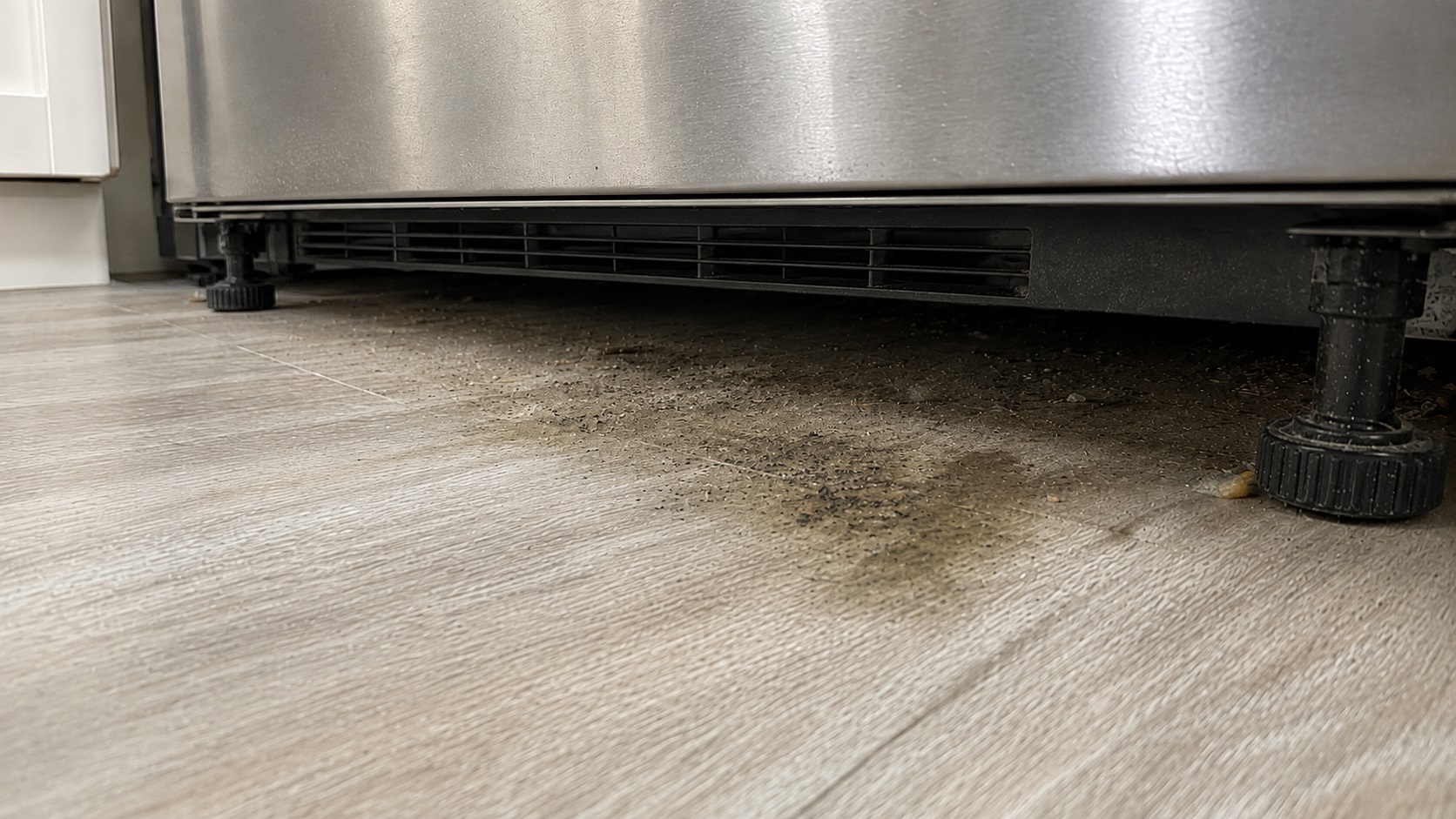
Dark staining on flooring beneath or behind the refrigerator is one of the most recognizable signs of mold development. These stains often appear as irregular patches of brown, gray, or black discoloration. While not every stain indicates mold, persistent or spreading discoloration should always be taken seriously.
Staining patterns often develop along edges where moisture collects first. Common locations include the rear edge of the refrigerator footprint, flooring seams, and corners where airflow is limited. Moisture trapped in these areas allows mold colonies to form gradually beneath the surface.
Some stains may initially appear faint or uneven. Over time, the affected area may darken or expand, especially if moisture exposure continues. Repeated dampness allows mold to grow deeper into flooring materials, making the stain more noticeable and harder to remove.
It is also important to distinguish mold-related staining from simple dirt buildup. Dirt typically wipes away easily and does not return after cleaning. Mold-related staining, however, often reappears even after surface cleaning, especially if moisture conditions remain unchanged.
Recurring stains may indicate hidden moisture beneath the appliance. If staining keeps developing near the rear of the refrigerator or along the tubing route, checking for a hidden refrigerator water line leak can help determine whether an active water source is feeding the discoloration.
Soft or Warped Flooring Beneath the Appliance
Changes in flooring texture are another strong indicator of mold-related moisture exposure. Prolonged dampness weakens flooring materials and causes structural changes that become noticeable over time.
Warped flooring typically develops when moisture penetrates beneath the surface and causes expansion. Materials such as laminate, vinyl plank, and engineered wood are especially vulnerable to moisture-related deformation. Once swelling begins, boards may lift, curl, or separate from adjacent sections.
Soft flooring is another warning sign that moisture has been present for an extended period. When flooring becomes saturated, its internal structure weakens. This results in surfaces that feel spongy or unstable when pressure is applied.
Early signs of flooring damage may include:
- Raised seams between flooring panels
- Curved or lifted board edges
- Cracking or splitting along joints
- Unusual movement when stepped on
- Floor surfaces that feel soft under pressure
Warped or soft flooring should never be ignored. These conditions often indicate that moisture has penetrated deeper into structural layers. If damage appears to be spreading, reviewing how to dry flooring after refrigerator leaks can help determine appropriate recovery steps after moisture exposure.
Visible Mold Growth Along Edges or Seams
Visible mold growth along flooring edges or seams is a clear sign that moisture conditions have supported mold development. Mold often appears first in areas where moisture remains trapped and airflow is limited.
These growth patterns frequently develop along:
- Flooring seams beneath the refrigerator
- Baseboard edges behind the appliance
- Cabinet toe-kicks near the refrigerator base
- Corners where flooring meets walls
- Areas surrounding tubing pathways
Visible mold may appear as clusters of small spots or irregular patches. Colors vary depending on the type of mold present, but common appearances include black dots, green patches, or white fuzzy growth. Texture differences often make mold distinguishable from simple staining.
In early stages, mold growth may appear only as scattered spotting. As moisture continues, these spots may expand and merge into larger areas of discoloration. Once growth becomes visible, mold colonies are usually well established.
Avoid scraping, sweeping, or vacuuming suspected mold with a regular household vacuum, especially if the growth covers more than a small surface area. Disturbing mold can spread particles into nearby air and dust.
Visible mold often signals that moisture has persisted long enough to support sustained growth. If the spotting appears along seams, trim, or toe-kicks, check whether the area is still damp before treating it as a simple surface stain.
Sticky Residue or Surface Film
Sticky residue or an unusual surface film beneath the refrigerator can indicate early mold-related moisture problems. This symptom is often overlooked because it may resemble grease or normal kitchen residue. However, persistent stickiness that returns after cleaning may signal ongoing moisture exposure beneath the appliance.
Moisture mixed with dust and organic particles can create a thin film that clings to flooring surfaces. If the film returns soon after cleaning, it may point to continuing moisture beneath the appliance rather than ordinary kitchen grime.
This symptom often appears in locations where airflow is restricted. These include tight corners beneath the refrigerator, areas along baseboards, and surfaces directly beneath tubing routes. Because these spaces remain shaded and poorly ventilated, moisture evaporates slowly and residue accumulates more easily.
Sticky residue typically has the following characteristics:
- Surfaces feel tacky when touched
- Dust sticks more easily than usual
- Residue returns quickly after cleaning
- Surface appears dull or cloudy
- Film spreads gradually across affected areas
If residue persists despite repeated cleaning, treat it as a moisture clue rather than ordinary dirt, especially when it appears with odor, staining, or damp dust.
Recurring Moisture Beneath the Refrigerator
Repeated moisture beneath the refrigerator is a strong indicator that mold-friendly conditions exist. Moisture that returns after cleaning or drying suggests that water sources remain active or that environmental conditions support ongoing condensation.
Recurring moisture may appear as damp patches, water droplets, or small puddles. In many cases, these moisture patterns follow consistent locations, such as along tubing routes or beneath defrost drainage areas.
Common moisture-related symptoms include:
- Damp flooring that returns after drying
- Water spots that appear repeatedly in the same area
- Moisture that worsens during humid weather
- Condensation forming near cold surfaces
- Water pooling after refrigerator use cycles
The concern is not one small spill; it is moisture that returns in the same place after cleaning or drying.
If recurring moisture is detected, evaluating plumbing connections may help identify hidden sources. Learning how to inspect refrigerator water connections can help determine whether tubing or fittings are contributing to ongoing moisture problems.
New Mold Signs After a Previous Refrigerator Leak
Mold signs can appear days or weeks after a refrigerator leak because water may remain trapped beneath vinyl, laminate, engineered wood, or subfloor layers after the surface looks dry.
Signs that mold may be developing after a leak include:
- Musty odors returning after drying efforts
- New staining appearing after previous water exposure
- Changes in flooring texture after leak events
- Persistent dampness near former leak locations
- Discoloration that spreads outward over time
Even minor leaks can produce long-term moisture effects. When water spreads beneath flooring layers, evaporation becomes slow and uneven. This prolonged dampness allows mold to grow in hidden areas where airflow is limited.
If previous leak damage has occurred, reviewing how to dry flooring after refrigerator leaks can help ensure moisture has been fully removed before mold symptoms worsen.
Hidden Mold Indicators Without Visible Growth
Mold under refrigerators may stay hidden beneath flooring materials before it appears as visible spotting. In those cases, odor, texture changes, and recurring dampness often become the first clues.
One of the most important hidden indicators is persistent odor without obvious staining. When musty smells return repeatedly despite cleaning efforts, moisture and mold may be present beneath the flooring layers. Laminate and vinyl flooring are particularly prone to trapping moisture below the surface.
Another hidden indicator involves changes in dust patterns beneath the refrigerator. Moisture causes dust to clump together rather than remain loose and powdery. These clumps often appear darker and may feel slightly damp when touched.
If hidden mold indicators appear without visible growth, check whether the odor, damp dust, or flooring change is strongest near the rear appliance footprint, tubing route, or flooring seams. Those locations usually reveal where moisture has been lingering longest.
Signs That Mold May Be Spreading
Mold growth beneath refrigerators can expand beyond the original moisture source if conditions remain favorable. As mold spreads, symptoms often become more noticeable in surrounding areas.
Spreading mold typically produces the following warning signs:
- Discoloration extending beyond the original location
- Musty odors spreading into nearby cabinets
- Visible spotting along baseboards or trim
- Moisture appearing in adjacent floor areas
- Increasing intensity of mold-related odors
Spreading symptoms usually mean the moisture source is still active or the area never dried fully. Check the rear refrigerator footprint, water line route, baseboard edge, and nearby cabinet toe-kick before assuming the problem is only surface mold.
When to Stop Cleaning and Inspect Further
Some refrigerator-area mold signs should not be treated as a simple surface-cleaning problem. Stop cleaning and inspect further when any of the following occur:
- Strong, persistent musty odors that worsen over time
- Large areas of visible mold growth
- Soft or unstable flooring beneath the refrigerator
- Repeated moisture exposure that does not resolve
- Moisture near the refrigerator outlet, cord, or water supply connection
- Discoloration that spreads rapidly across surfaces
At that point, the issue is no longer just whether mold is present. The bigger question is whether moisture has reached flooring layers, trim, cabinets, or the subfloor beneath the refrigerator.
If mold signs appear with active dampness, soft flooring, or moisture near electrical components, identify the water source before cleaning the area. Surface cleaning alone will not solve mold that is being fed by a hidden leak or trapped moisture.
Quick Checklist: Signs of Mold Under a Refrigerator
- Musty smell strongest near the refrigerator base or rear wall
- Dark spots or stains along flooring seams, baseboards, or toe-kicks
- Sticky film or damp dust that returns after cleaning
- Raised, curled, soft, or spongy flooring near the appliance
- Visible black, green, gray, or white spotting around edges or seams
- Moisture returning in the same place after drying
- Odor or discoloration spreading into nearby cabinets or trim
FAQ About Signs of Mold Under Refrigerators
What does mold under a refrigerator smell like?
Mold typically produces a musty, earthy odor that resembles damp cardboard or wet wood. This smell often becomes stronger when the refrigerator is moved or when humidity levels increase.
Can mold grow under refrigerators without visible leaks?
Yes. Mold can develop from condensation, trapped moisture, defrost drainage issues, or damp debris even when the refrigerator water line is not visibly leaking. High humidity and poor airflow can make the problem worse.
Is discoloration always caused by mold?
Not always. Some stains result from water exposure or dirt buildup. However, discoloration that spreads, returns after cleaning, or appears alongside odors should be treated as a potential mold indicator.
Can mold exist beneath flooring without visible surface growth?
Yes. Mold frequently grows beneath laminate or vinyl flooring where moisture becomes trapped. Odors and flooring changes often provide the first warning signs.
What should I do if I suspect mold under my refrigerator?
If mold symptoms appear, first check whether moisture is still active near the rear appliance footprint, water line route, flooring seams, or nearby outlet. If the floor is damp or soft, how to dry flooring after refrigerator leaks can help guide the next recovery steps.
2 Comments
Comments are closed.