
Signs of Water Damage Behind Kitchen Cabinets (Hidden Moisture Warning Signs to Watch For)
Water damage behind kitchen cabinets is one of the most common hidden moisture problems in homes. Because cabinets block visibility and restrict airflow, small leaks can remain unnoticed for weeks or even months. By the time visible symptoms appear, moisture may already be affecting cabinet materials, flooring, or wall structures.
Many homeowners first notice subtle warning signs rather than obvious leaks. These might include a faint musty smell, swelling cabinet bases, or flooring changes near cabinet edges. Understanding what these signs mean—and why they occur—can help you identify hidden problems early before damage spreads further into walls or subfloors.
Quick answer: Common signs of water damage behind kitchen cabinets include musty odors, swelling or bulging cabinet bases, stains along toe-kicks, damp flooring near cabinet edges, soft cabinet bottoms, recurring moisture inside sink cabinets, and odors that return after cleaning. If several of these signs appear together, moisture may already be trapped behind the cabinet, wall, or floor surface.
If you’ve noticed unusual odors, cabinet distortion, or moisture near your kitchen cabinetry, compare those symptoms with other location-specific warning signs in How to Find Hidden Moisture in Different Areas of Your Home. Cabinet damage often follows the same pattern as hidden wall, floor, and trim moisture: visible signs usually appear only after water has already been trapped behind finished surfaces.
This article focuses strictly on recognizing realistic warning signs of water damage behind kitchen cabinets. It does not cover repair or drying procedures. Instead, it helps you interpret what you’re seeing so you can decide whether further inspection or professional help may be necessary.
Why Water Damage Often Starts Behind Kitchen Cabinets
Kitchen cabinets are among the most common locations for hidden water damage because they sit directly in front of plumbing systems and moisture-prone appliances. Unlike open wall areas, cabinet interiors and back panels restrict airflow, allowing moisture to linger longer than it normally would in exposed spaces.
Common sources include sink connections, dishwasher lines, refrigerator water tubing, shutoff valves, and exterior wall leaks behind cabinets. These are covered in more detail later, but the important point is that cabinet moisture often begins where water lines or wall openings are hidden from everyday view.
Most water damage behind cabinets does not begin with dramatic flooding. Instead, it usually starts with small, slow leaks. These leaks may drip intermittently or produce only minor dampness during appliance operation. Because cabinet bases and wall cavities remain enclosed, moisture has fewer opportunities to dry naturally.
Over time, trapped moisture begins to affect surrounding materials. Cabinet bases—especially those made from particleboard or medium-density fiberboard—absorb water easily. Once moisture enters these materials, swelling and distortion often follow.
Water may also spread horizontally beneath cabinets, reaching nearby flooring or wall framing. In some cases, the first visible symptom appears several feet away from the actual leak source. This spreading behavior makes hidden cabinet moisture particularly difficult to recognize without understanding the early warning signs.
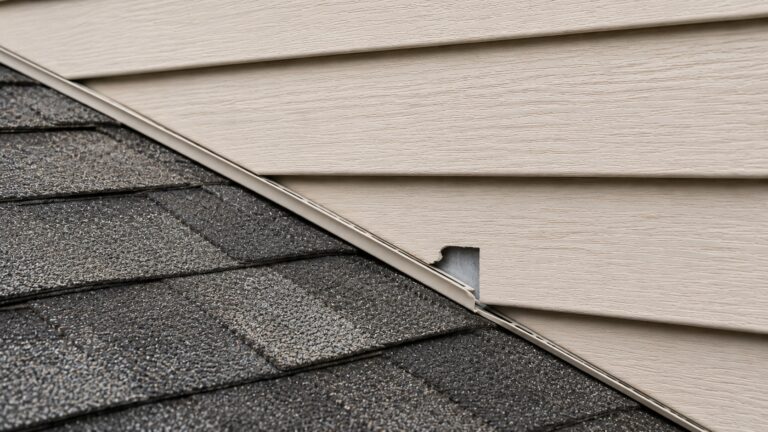
Kitchens located along exterior walls face additional risks. Small failures in exterior sealing, flashing, or siding can allow moisture to enter wall cavities from outside. When cabinets are installed against those walls, trapped moisture can accumulate behind them, sometimes without any obvious interior leak.
If moisture continues unchecked, damage can gradually expand beyond cabinet materials into subflooring and wall framing. Broader structural moisture patterns are covered in Structural Moisture Problems in Homes: Causes, Risks, and Repair Guide, but this article stays focused on the cabinet-area warning signs that appear before major damage is obvious.
Early Signs of Water Damage Behind Kitchen Cabinets
Early signs of water damage behind kitchen cabinets are often subtle because moisture becomes trapped where airflow is limited. Even small amounts of water from slow leaks, appliance moisture, or exterior wall intrusion can gradually affect cabinet materials, flooring edges, and nearby trim before a visible leak appears.
Normal Spill vs Hidden Cabinet Water Damage
| What You Notice | More Likely a Surface Spill | More Likely Hidden Water Damage |
|---|---|---|
| Odor | Goes away after cleaning and drying | Returns after cleaning or worsens when the cabinet is closed |
| Staining | Appears only where water was spilled | Returns in the same area or spreads along seams and toe-kicks |
| Cabinet material | Feels firm after drying | Feels swollen, soft, crumbly, or uneven |
| Flooring | Dries without edge changes | Shows lifting, swelling, dark edges, or soft spots near cabinets |
| Pattern | One-time event with no recurrence | Repeated symptoms after sink, dishwasher, or refrigerator water-line use |
Musty or Damp Odors Near Cabinets
One of the earliest and most reliable warning signs of hidden water damage is a musty or damp odor near kitchen cabinets. This smell often develops when moisture remains trapped behind cabinet panels or inside enclosed spaces where airflow is limited.
Many homeowners first notice the smell when:
- Opening cabinet doors
- Standing near the sink area
- Using the dishwasher
- Entering the kitchen after the home has been closed for several hours
Musty odors usually develop before visible mold appears. The smell comes from microbial activity that begins when organic materials—such as wood fibers, dust, or cabinet backing—remain damp for extended periods. Even when mold is not yet visible, persistent odors indicate that moisture conditions are present.
If musty smells appear near cabinet areas, especially under sinks, it’s important to investigate further. Similar odor-based warning patterns are explained in mold smell with no visible mold, which helps clarify how odor often signals hidden moisture.
Small Discoloration Along Cabinet Bases
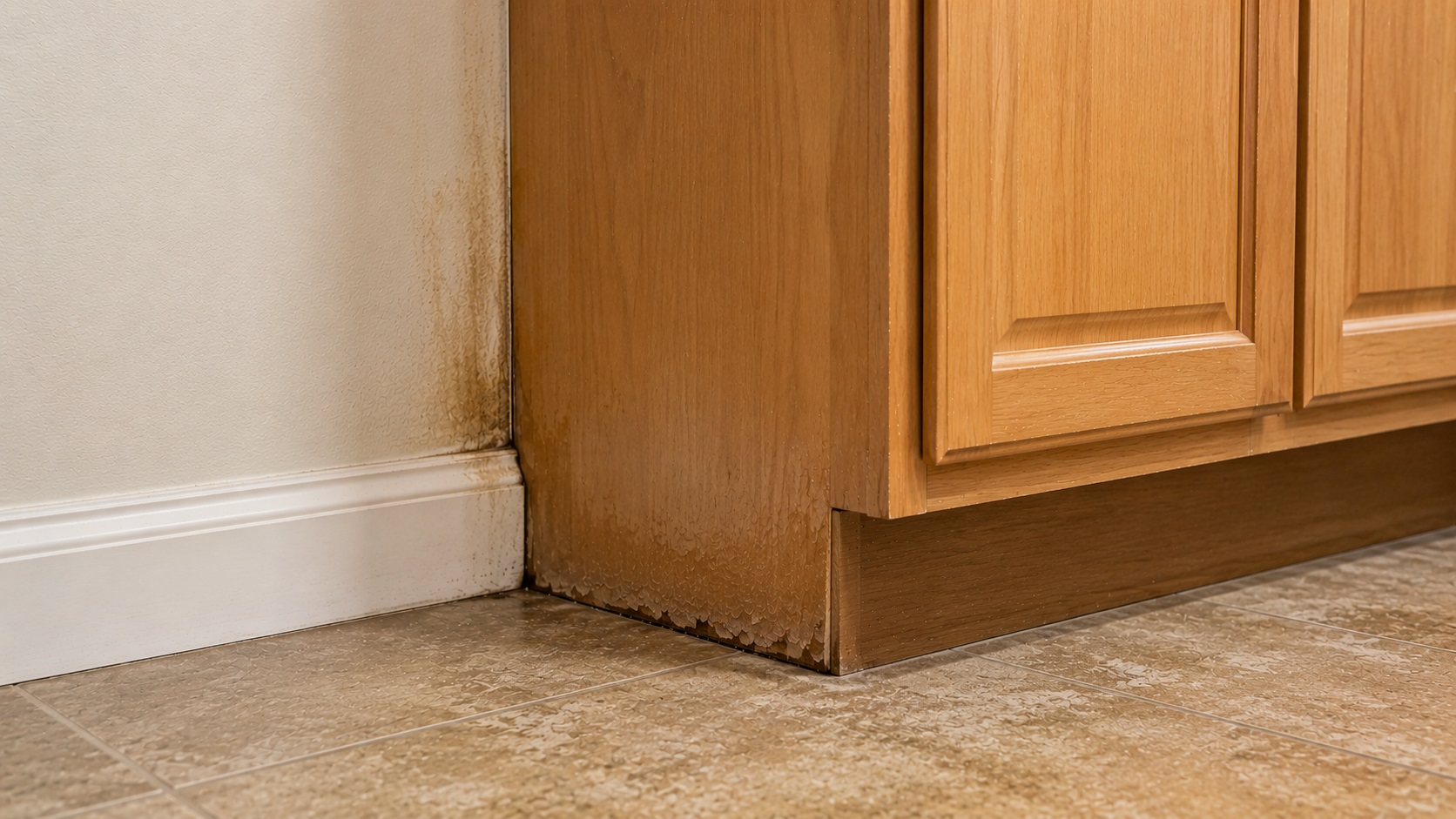
Discoloration along the base of cabinets is another early-stage sign of hidden water exposure. These stains often appear as faint darkening, yellowing, or uneven coloration along the bottom edges of cabinet panels or toe-kicks.
Early discoloration typically occurs when small amounts of moisture repeatedly contact cabinet surfaces. This may happen due to:
- Minor plumbing drips
- Dishwasher leaks during operation
- Condensation buildup near pipes
- Occasional water spills that seep into seams
In particleboard or MDF cabinets, discoloration may appear before noticeable swelling begins. The material absorbs moisture internally, causing subtle visual changes before structural distortion becomes obvious.
Some stains may dry temporarily and appear lighter, which can mislead homeowners into thinking the problem has resolved. However, recurring discoloration usually indicates repeated moisture exposure that deserves closer attention.
Slight Warping or Swelling at Cabinet Bottoms
Cabinet bases are particularly vulnerable to early water damage because they sit directly on the floor, where moisture tends to collect. Slight swelling or warping at the bottom edges of cabinets often signals early moisture absorption.
This swelling may appear as:
- Bulging at the base of cabinet sides
- Edges that feel uneven or raised
- Minor separation between cabinet seams
- Toe-kicks that no longer sit flush
Particleboard cabinet bases are especially prone to swelling. Once water enters these materials, the wood fibers expand. Even small amounts of moisture can produce visible distortion if exposure continues over time.
Warping does not always occur immediately after a leak begins. In many cases, swelling develops gradually, making it easy to overlook until the distortion becomes more obvious.
Damp Flooring Near Cabinet Edges
Moisture behind cabinets frequently spreads beneath adjacent flooring. Because water travels along surfaces and seams, flooring near cabinet edges often shows early signs of exposure.
Common flooring symptoms include:
- Slight softening near cabinet bases
- Minor lifting along laminate seams
- Localized dampness after appliance use
- Darkening or shadow-like marks along edges
Laminate and engineered wood flooring are especially sensitive to moisture at their seams. Small amounts of trapped water can cause edges to swell or lift, sometimes before cabinet materials show visible changes.
If flooring changes appear near cabinet bases, they may indicate hidden moisture behind the cabinetry rather than surface-level spills. Similar early flooring-related warning patterns are described in signs of moisture under hardwood floors, which explains how hidden water spreads under finished surfaces.
Recurring Dampness Inside Sink Cabinets
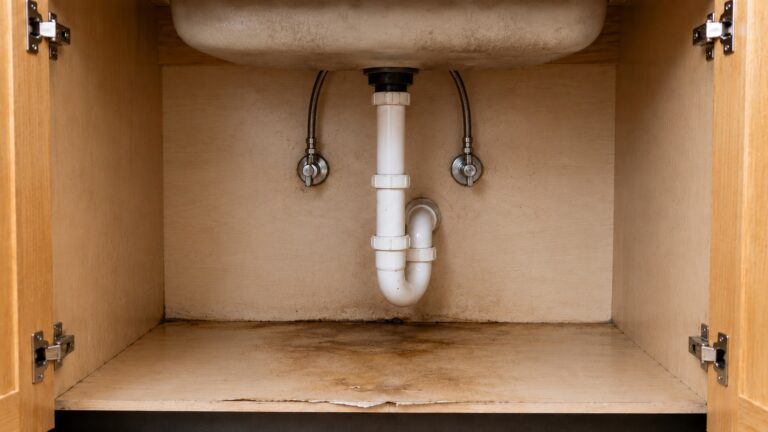
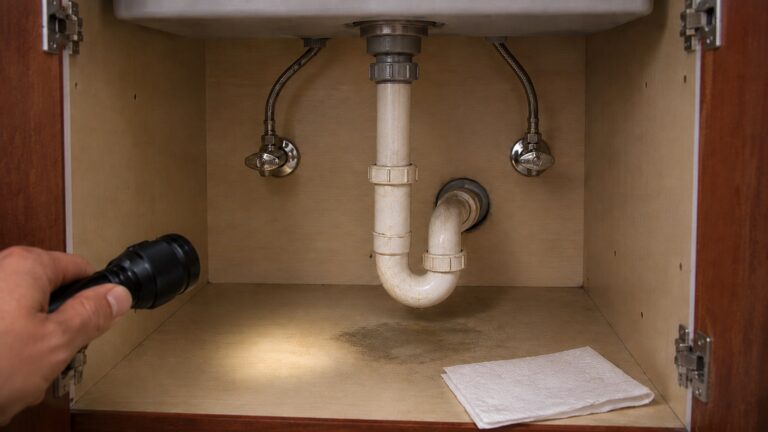
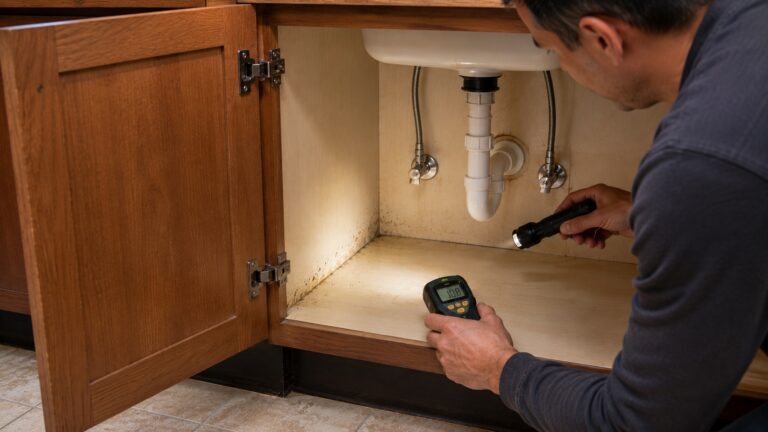
Sink cabinets are among the most common starting points for hidden water damage. Recurring dampness inside these cabinets often signals slow leaks or condensation problems that continue unnoticed behind the cabinet structure.
Signs of recurring dampness may include:
- Moist surfaces inside cabinet floors
- Condensation around plumbing connections
- Wet items stored under the sink
- Water spots that repeatedly return after drying
Even if dampness appears limited to the inside of the cabinet, moisture may already be affecting hidden areas behind the cabinet back panel. Water can move along pipe penetrations and seams, reaching areas that are not immediately visible.
When recurring dampness appears, the area should be checked again after sink, dishwasher, or refrigerator water-line use. Repeated dampness in the same spot is a stronger warning sign than a single wet surface.
Cabinet and Flooring Signs That Hidden Damage Is Developing
When moisture remains behind kitchen cabinets for extended periods, early warning signs often progress into more noticeable structural changes. At this stage, materials have absorbed enough moisture to begin changing shape, weakening, or separating. Moderate damage signs are easier to detect than early symptoms, but they also indicate that moisture has likely been present for some time.
These symptoms typically develop after repeated exposure to damp conditions from slow leaks, appliance moisture, or unnoticed plumbing issues.
Cabinet Bases Expanding or Bulging
One of the most recognizable moderate-stage signs of hidden water damage is visible expansion at the base of cabinets. This occurs when wood-based materials absorb moisture and begin to swell beyond their original dimensions.
Common signs of expansion include:
- Cabinet bases that appear thicker or puffed outward
- Bulging panels along lower cabinet sections
- Edges that press tightly against nearby flooring
- Toe-kicks that begin separating from cabinet frames
Particleboard and medium-density fiberboard are particularly vulnerable to this type of swelling. These materials contain compressed wood fibers that expand rapidly when exposed to water. Once swelling begins, the material rarely returns to its original shape even if moisture later dries.
Expansion at cabinet bases often indicates repeated moisture exposure rather than a single leak event. If swelling continues to worsen, underlying structural materials may also be affected.
Loose or Separating Trim and Panels
Moisture exposure weakens adhesives and fasteners that hold cabinet components together. As materials expand and contract due to changing moisture levels, trim pieces and panels may begin to loosen.
Signs of separation may include:
- Trim pieces pulling away from cabinet surfaces
- Visible gaps forming along seams
- Cabinet panels shifting slightly when pressed
- Decorative molding detaching from cabinet edges
These changes often occur gradually. At first, gaps may be small and barely noticeable. Over time, repeated moisture exposure can widen these separations, allowing more moisture to enter internal cabinet structures.
Loose trim near cabinets can also indicate moisture spreading into adjacent wall areas. In some homes, similar separation patterns occur when moisture develops inside nearby walls, as described in signs of water damage behind baseboards, which explains how moisture affects trim and lower wall materials.
Recurring Floor Moisture or Soft Spots Near Cabinets
As moisture spreads beneath cabinets, it often reaches subflooring and finished flooring materials. Moderate-stage damage frequently produces soft spots or persistent damp areas near cabinet bases.
These symptoms may include:
- Flooring that feels slightly spongy underfoot
- Areas that remain damp longer than surrounding surfaces
- Laminate seams that feel raised or uneven
- Subtle depressions forming near cabinet edges
Soft flooring indicates that moisture has moved beyond cabinet materials into underlying structural layers. Subfloors made from plywood or oriented strand board absorb moisture and weaken when repeatedly exposed to water.
If flooring changes continue to worsen, moisture may also be affecting adjacent rooms or nearby wall structures. Early recognition of spreading moisture patterns is critical for preventing broader structural damage.
Cabinet Back Panel Staining or Warping
While cabinet backs are usually hidden from view, signs of moisture may still appear along exposed edges or interior surfaces. Staining or distortion at cabinet backs often indicates that moisture is entering from behind the cabinet rather than from the front.
Possible signs include:
- Dark stains appearing along rear cabinet surfaces
- Warped or bowed back panels
- Soft spots along interior cabinet walls
- Discoloration near pipe entry points
Back panel distortion often occurs when moisture travels along wall surfaces or plumbing penetrations. In kitchens located along exterior walls, this may indicate moisture entering from outside rather than from interior plumbing leaks.
When staining appears near pipe penetrations, it may suggest leaks occurring within wall cavities. In such cases, moisture can spread unseen into insulation or structural framing before becoming visible inside the cabinet.
Persistent Odors That Do Not Improve With Cleaning
As moisture damage progresses, odors often become stronger and more persistent. Unlike early-stage smells that may come and go, moderate-stage odors typically remain noticeable even after cleaning cabinet interiors.
Persistent odor symptoms may include:
- Musty smells that return quickly after cleaning
- Odors that intensify during humid weather
- Smells strongest near lower cabinet sections
- Lingering damp odor despite dry surfaces
Persistent odors indicate that moisture is likely trapped behind cabinet structures or inside wall cavities. Even if visible surfaces appear dry, internal materials may still hold moisture.
Odor persistence is an important indicator that moisture conditions have continued long enough to support microbial activity. This does not always mean visible mold is present, but it strongly suggests that moisture remains active somewhere behind the cabinetry.
Structural Signs That Damage May Be Worsening
Structural warning signs indicate that moisture exposure has persisted long enough to weaken important materials. At this stage, damage is no longer limited to surface changes. Instead, the internal strength of cabinet bases, flooring, or surrounding structures may be affected.
These symptoms often develop after weeks or months of unnoticed moisture exposure. If multiple structural signs appear together, it usually means that the moisture source has remained active for an extended period.
Soft Cabinet Floors or Bottom Panels
Cabinet floors that feel soft or spongy are a strong indication of structural water damage. This condition occurs when cabinet base materials absorb enough moisture to weaken their internal structure.
Common signs of soft cabinet floors include:
- Cabinet bottoms flexing under pressure
- Stored items tilting or sinking slightly
- Surface material breaking apart when pressed
- Visible deterioration around pipe entry areas
Once cabinet floors soften, the material rarely regains strength. Continued use of weakened cabinet bases may lead to further structural distortion or failure.
Sagging Cabinet Bottoms or Shelves
Sagging occurs when moisture weakens load-bearing cabinet materials. Over time, the combined weight of stored items and absorbed moisture can cause cabinet floors or shelves to bend downward.
Typical sagging symptoms include:
- Cabinet bottoms that dip in the center
- Shelves that no longer remain level
- Gaps forming between cabinet parts
- Doors becoming misaligned due to shifting structure
Sagging often signals long-term moisture exposure rather than recent leaks. If sagging becomes noticeable, moisture may have affected both cabinet materials and underlying support structures.
Cabinet Separation From Walls
Separation between cabinets and walls may occur when moisture damages the wall surface behind cabinetry. This can weaken anchors or allow cabinet frames to shift slightly over time.
Signs of separation may include:
- Visible gaps between cabinet backs and wall surfaces
- Movement when cabinets are lightly pushed
- Cracking or distortion along cabinet edges
- Fasteners loosening or pulling away
This type of movement can indicate moisture spreading into wall cavities. Hidden moisture behind cabinets may also affect insulation and structural framing, particularly if the cabinet sits along an exterior wall.
Common Sources Behind Kitchen Cabinet Water Damage
Understanding where water damage commonly begins helps explain why symptoms develop in specific patterns. In many kitchens, leaks originate from predictable locations tied to plumbing or appliance connections.
The most common starting points include:
- Sink supply lines, shutoff valves, and drain fittings
- Dishwasher supply hoses, drain hoses, and door-seal leaks
- Refrigerator ice maker or water dispenser tubing near cabinet runs
- Gaps around pipe penetrations through the cabinet back or wall
- Exterior wall leaks behind cabinets installed on outside walls
Leaks from these areas often begin slowly. Instead of producing visible pooling water, small drips may soak into cabinet materials and spread beneath surfaces. Over time, this hidden moisture can travel outward into surrounding areas.
A one-time surface spill usually dries without repeated odor, swelling, or staining. Recurring signs in the same cabinet area are more concerning because they suggest moisture is returning from a hidden source rather than from normal kitchen use.
In some homes, water damage originates from outside the structure rather than inside plumbing systems. Moisture entering through exterior wall gaps may become trapped behind cabinets, especially in kitchens located along outer walls.
If moisture enters from multiple sources, symptoms may appear in several locations at once. This can create confusing damage patterns that seem unrelated until the moisture pathway is fully understood.
Signs That Damage May Extend Into Walls or Flooring
Hidden water damage behind cabinets rarely remains isolated. As moisture continues to spread, it often moves into nearby walls or flooring systems. Recognizing signs of expansion beyond cabinet materials is important for preventing widespread structural damage.
Signs that moisture may be spreading include:
- Floor swelling extending away from cabinet edges
- Discoloration appearing on nearby walls
- Baseboards becoming loose or stained
- Wall surfaces developing soft spots
Moisture that spreads into wall cavities can create additional structural risks. Wall materials such as drywall and insulation absorb water easily, allowing damage to continue even when cabinet interiors appear dry.
Similar patterns of moisture movement are often seen in nearby trim and wall structures. For example, signs of water damage behind baseboards can appear when cabinet-area moisture spreads along wall-floor junctions instead of staying directly behind the cabinets.
Recognizing spreading damage early can help prevent larger-scale repairs later. If symptoms extend beyond cabinet areas, a more thorough inspection may be necessary.
How Serious Are the Signs?
Not every cabinet moisture sign means the same thing. The seriousness depends on whether the symptom is isolated, recurring, or affecting the strength of cabinet, wall, or flooring materials.
- Low concern: a one-time damp spot that dries quickly and does not leave odor, staining, swelling, or repeated moisture.
- Moderate concern: recurring odor, stains, dampness, or flooring changes near the same cabinet area.
- High concern: soft cabinet floors, sagging shelves, spreading floor damage, persistent musty odor, cabinet separation, or signs extending into walls or baseboards.
When Signs Suggest Professional Inspection May Be Needed
Not all water damage requires immediate professional intervention. However, certain signs strongly suggest that moisture problems have progressed beyond simple surface issues.
Professional inspection may be appropriate when:
- Cabinet materials feel soft or unstable
- Multiple cabinets show swelling or distortion
- Flooring damage spreads beyond cabinet edges
- Strong odors persist despite cleaning
- The moisture source cannot be identified after checking visible plumbing, appliance lines, and nearby cabinet seams
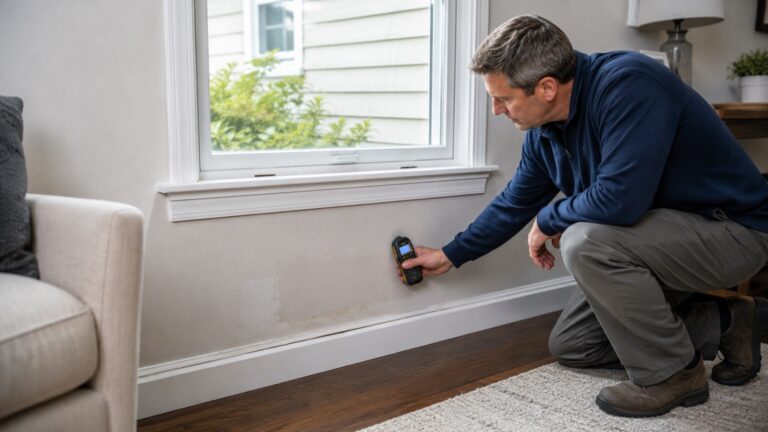
These conditions often indicate that moisture has affected structural materials beneath visible surfaces. Professional inspection tools can help locate hidden moisture that may not be detectable through visual observation alone.
Ignoring advanced symptoms increases the likelihood of continued structural deterioration. Early evaluation can prevent long-term complications and reduce the extent of future repairs.
What To Do If You Notice These Signs
If you observe warning signs of water damage behind kitchen cabinets, taking early action can help limit further damage. While this article focuses on recognition rather than repair, several practical steps can help you respond responsibly.
- Check the area after running the sink, dishwasher, and refrigerator water dispenser or ice maker, if present.
- Look at the cabinet floor, back panel, toe-kick, nearby flooring seams, and wall-floor joint for repeated staining or dampness.
- Remove stored items from damp or soft cabinet areas so weight does not worsen weakened materials.
- Take photos of stains, swelling, flooring changes, and odors you notice after appliance use.
- Use the pattern of recurring symptoms to decide whether further moisture inspection is needed.
Important: Do not paint over stains, seal cabinet panels, or reinstall stored items until the moisture source is identified. If cabinet floors feel soft, crumbly, or unstable, stop using that area for storage and consider professional inspection before adding weight back onto weakened materials.
If signs continue to worsen, the next step is to identify whether moisture is coming from plumbing, appliances, exterior walls, or trapped cabinet materials. For inspection methods rather than symptoms, use How to Detect Moisture Behind Kitchen Cabinets.
If the main issue is repeated moisture that keeps coming back after drying, compare the pattern with How to Fix Persistent Moisture Behind Kitchen Cabinets.
Frequently Asked Questions
What are the first warning signs of water damage behind kitchen cabinets?
The first warning signs are usually musty odors, faint staining along cabinet bases or toe-kicks, slight swelling at cabinet bottoms, dampness near flooring edges, and moisture that returns after sink, dishwasher, or refrigerator water-line use.
Can water damage exist behind cabinets without visible leaks?
Yes. Many cabinet moisture problems develop from slow leaks or condensation that remains hidden behind surfaces. Because cabinets block airflow and visibility, small leaks may continue unnoticed for extended periods before visible symptoms appear.
Why do cabinets swell even when leaks seem small?
Cabinet materials such as particleboard and MDF absorb water easily. Even small amounts of repeated moisture exposure can cause internal expansion, leading to visible swelling or distortion over time.
Is a musty smell behind cabinets always mold?
Not always. Musty odors often develop when materials remain damp long enough for microbial activity to begin. While visible mold may not yet be present, persistent odors usually indicate moisture conditions that require attention.
How fast does cabinet water damage develop?
The timeline varies depending on leak size and environmental conditions. Some slow leaks may take weeks to produce visible symptoms, while others can cause noticeable damage within days if moisture exposure remains constant.
Should cabinets be removed if water damage is suspected?
Cabinet removal is not always the first step. In many cases, visible inspection and moisture assessment can show whether the problem is limited to cabinet materials or may extend into the wall, floor, or subfloor.
Key Takeaways
- Water damage behind kitchen cabinets usually begins with slow, hidden leaks.
- Musty odors are often one of the earliest warning signs of trapped moisture.
- Cabinet swelling and flooring changes indicate ongoing moisture exposure.
- Persistent structural symptoms suggest damage may be spreading.
- Early recognition helps you investigate the moisture source before cabinet, flooring, or wall damage spreads.
3 Comments
Comments are closed.