
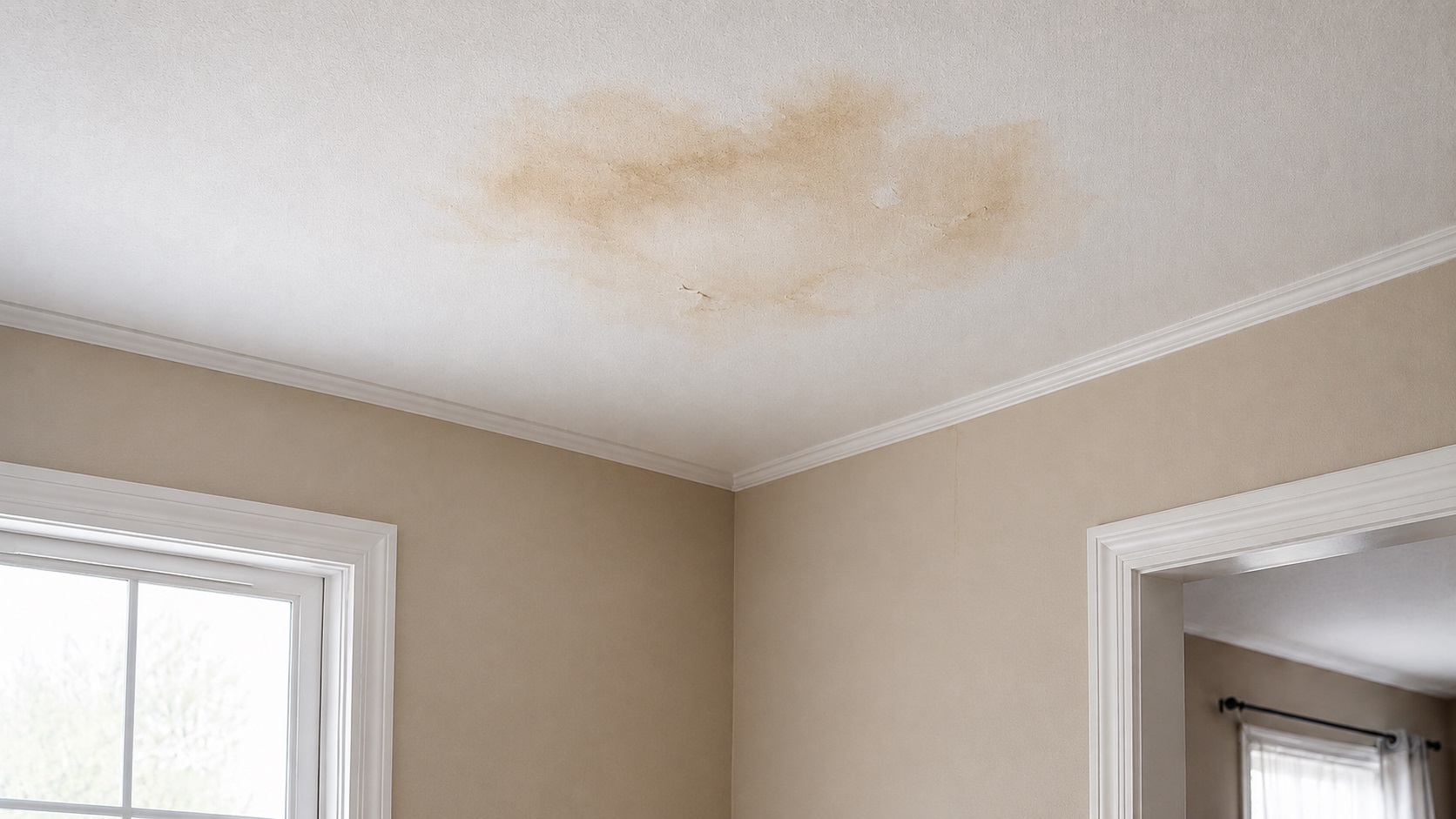
Signs of Water Damage from Roof Leaks
Signs of water damage from roof leaks often appear as brown ceiling stains, peeling paint, sagging drywall, musty attic odors, wet insulation, or dark staining on rafters and roof decking. Once moisture enters through damaged roofing materials, it can spread into ceilings, walls, insulation, and structural components before the full extent of the damage is visible.
Many homeowners first notice small ceiling stains or peeling paint, but by the time visible damage appears, moisture has often already spread into surrounding materials. If you suspect a leak but are unsure what to look for, reviewing signs of roof leaks inside the house can help confirm whether roof-related moisture is likely responsible.
Why Roof Leak Damage Often Appears Below the Leak Source
Roof leak damage happens in stages. Water does not simply drip through a ceiling and stop. It can run along rafters, decking, insulation, wiring, or drywall seams before appearing indoors, which is why the visible stain may not sit directly below the roof opening.
Because roof leaks often begin with aging, damaged, or failed roofing materials, it also helps to understand the most common roofing material failures that allow water to enter in the first place.
Early roof leak damage often stays hidden because drywall, wood, and insulation can absorb moisture before surface changes appear. Once enough water accumulates, the first visible signs usually show up as stains, softened drywall, loose paint, sagging areas, or darkened attic materials.
Most Common Signs of Ceiling Water Damage
Ceilings are often the first location where roof leak damage becomes visible. Because ceilings sit directly below roof systems, moisture eventually collects there before spreading into walls and framing.
Brown or Yellow Ceiling Stains
One of the most recognizable signs of roof leak damage is the appearance of brown or yellow stains on ceiling surfaces. These stains often form circular or irregular patterns.
Stains develop when water carries dust, wood particles, and other debris through ceiling materials. As the moisture dries, these contaminants remain behind, leaving visible discoloration.
If ceiling stains continue to grow or reappear after drying, the leak may still be active.
A stain that darkens after rain, spreads along a ceiling seam, or appears near a chimney, vent pipe, valley, or exterior wall is more likely to be connected to roof water entry.
Bubbling or Peeling Ceiling Paint
Moisture trapped behind painted surfaces causes paint to lose adhesion. This results in bubbling, peeling, or cracking paint layers.
Paint failure usually indicates that water has penetrated beyond the surface and is affecting the drywall beneath.
Sagging Ceiling Sections
Sagging ceilings are a serious sign of advanced water damage. This occurs when drywall absorbs large amounts of moisture and becomes heavy.
Sagging areas may appear as bulges or dips in the ceiling surface. These sections can collapse if the water weight becomes excessive.
If sagging develops, keep people and belongings away from the area until repairs can be completed.
If water is near light fixtures, ceiling fans, outlets, or electrical wiring, avoid touching the area and shut off power to that circuit if it can be done safely.
Soft or Spongy Ceiling Areas
Soft ceiling surfaces indicate moisture saturation inside the drywall. This condition weakens the material and increases the risk of structural failure.
Pressing on soft areas should be avoided. Even minor pressure may cause damaged drywall to break open.
Signs of Wall Damage from Roof Leaks
After reaching ceiling materials, roof leak water may travel downward into wall cavities, corners, and trim lines. Wall damage often appears later than ceiling damage because the water has already moved through hidden materials first.
Vertical Water Stains on Walls
Vertical stains running down walls often indicate moisture movement from above. These stains may appear directly below ceiling leak locations or along wall corners.
Water flowing downward along framing members creates elongated stain patterns that follow gravity.
Peeling Paint or Wallpaper
Paint and wallpaper may separate from wall surfaces when moisture becomes trapped behind them. This separation often begins at seams or edges.
Wallpaper adhesive weakens quickly when exposed to moisture, causing edges to lift or bubble.
Warped or Swollen Wall Surfaces
Walls exposed to repeated moisture may begin swelling or warping. This occurs when drywall absorbs water and expands.
Warped surfaces indicate prolonged exposure to moisture and suggest that hidden damage may be spreading behind visible materials.
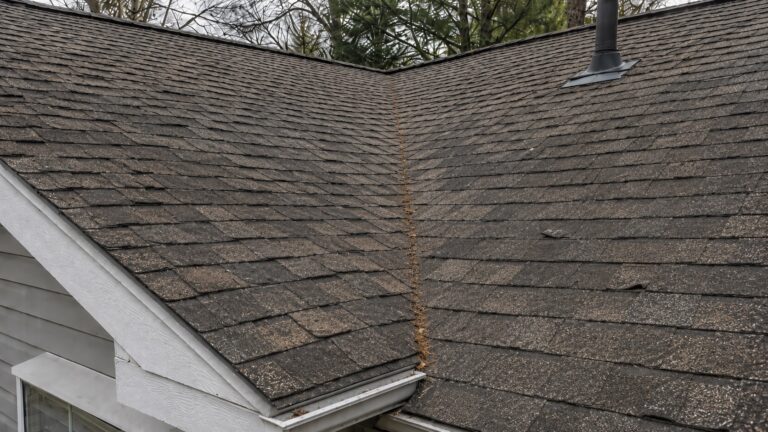
If wall damage continues to worsen, inspecting exterior roof components using how to inspect roof areas for leak damage can help determine whether roofing materials remain compromised.
Signs of Insulation Damage from Roof Leaks
Insulation damage is one of the most common and most overlooked results of roof leaks. Because insulation sits directly beneath roof decking, it may absorb water long before stains appear in the living space. By the time ceiling damage is visible, insulation above that area may already be wet, compressed, or contaminated.
Wet insulation slows drying and can hold moisture against drywall, rafters, and roof decking. It also increases mold risk, which is why understanding why roof leaks cause mold growth is useful when roof leak damage has affected attic materials.
Flattened or Compressed Insulation
One of the earliest signs of insulation damage is flattening. Dry insulation normally appears fluffy or evenly expanded. When it becomes wet, it collapses under its own weight.
Flattened insulation often indicates that water has soaked deeply into the material. Even after surface drying occurs, moisture may remain trapped inside.
This condition reduces the insulation’s ability to resist heat transfer and can keep nearby attic materials damp longer.
Damp or Musty Odors Coming from Above
Musty smells are often associated with wet insulation. These odors may become stronger during humid weather or after rainfall.
Odors develop when moisture remains trapped inside insulation and begins interacting with dust, wood particles, or microbial growth. Even if visible mold has not yet formed, damp insulation can produce noticeable smells.
If musty odors appear repeatedly, additional inspection using how to detect hidden roof leaks may help identify the moisture source feeding the problem.
Uneven Insulation Color or Texture
Wet insulation often appears darker than surrounding dry areas. Differences in color, density, or texture may indicate moisture exposure.
Look for:
- Darkened patches
- Clumped fibers
- Uneven surface appearance
- Areas that feel heavier than surrounding insulation
Uneven insulation patterns usually suggest repeated moisture exposure rather than a single leak event.
Signs of Structural Wood Damage from Roof Leaks
Structural wood components play a critical role in supporting roof systems. When these materials become wet, their strength gradually decreases. Recognizing early wood damage signs helps prevent long-term structural problems.
Wood damage is often hidden inside attic spaces or beneath roof coverings. By the time visible deterioration occurs, the leak may have existed for a long period.
Dark Staining on Rafters or Decking
Dark stains on wood surfaces usually indicate repeated moisture exposure. These stains form when water carries contaminants across wood grain and leaves residue behind.
Although staining alone does not always indicate severe damage, it shows that moisture has been present long enough to affect structural materials.
Soft or Crumbling Wood Surfaces
Soft wood is a serious warning sign. Wood fibers lose strength when exposed to moisture for extended periods.
Signs of weakening wood include:
- Spongy texture
- Surface flaking
- Crumbling edges
- Difficulty holding nails or fasteners
Structural wood damage should not be treated as a surface stain issue. If rafters, decking, or framing members feel soft, crumble, or no longer hold fasteners well, the roof structure may need professional evaluation.
Warped or Twisted Framing Members
Warping occurs when wood absorbs uneven moisture. As materials expand and contract, framing components may shift out of alignment.
Warped rafters or joists may create uneven roof surfaces, leading to additional stress on roofing materials.
If structural distortion is visible, the roof system may require professional evaluation.
How Roof Leak Water Damage Gets Worse Over Time
Roof leak damage usually moves from surface signs to material weakness. A small stain may be the first visible warning, but repeated moisture can lead to soft drywall, saturated insulation, darkened wood, mold growth, and eventually structural weakening.
Early damage is often limited to staining, small paint bubbles, or minor dampness. Moderate damage may involve soft drywall, wet insulation, or swelling wall surfaces. Advanced damage includes sagging ceilings, softened wood, widespread staining, or visible mold growth.
When Roof Leak Water Damage Needs Immediate Attention
Some water damage signs indicate urgent conditions that should be addressed immediately. Ignoring these warning signs increases the risk of structural failure or costly repairs.
Rapidly Expanding Damage Areas
If stains or damage areas grow quickly after rainfall, the leak remains active. Rapid expansion often indicates that water is spreading into surrounding materials.
This condition requires prompt inspection and repair.
Sagging or Bulging Ceilings
Bulging ceilings often contain trapped water and may collapse without warning. This condition should be treated as an emergency.
Keep people and valuable items away from affected areas until repairs are completed.
Multiple Areas Showing Damage
Damage appearing in several rooms usually indicates widespread moisture spread. This condition suggests that the leak has existed for an extended period.
Multiple affected areas often require comprehensive repair rather than localized patching.
Frequently Asked Questions About Water Damage from Roof Leaks
How fast does water damage from a roof leak appear?
Water damage can begin within hours of a roof leak, but visible signs often take longer to appear. In many cases, moisture enters insulation and framing first, then slowly spreads into ceiling and wall materials. Visible staining or paint damage may appear within a few days, depending on how much water enters and how quickly materials dry.
Can water damage remain hidden after a roof leak?
Yes. Hidden water damage is common after roof leaks. Moisture often becomes trapped inside insulation, behind drywall, or within framing cavities. Even when surfaces appear dry, internal moisture may remain for extended periods. This hidden moisture can lead to mold growth and structural weakening if not addressed.
Does ceiling damage always mean the roof is leaking?
No. Ceiling damage can also result from plumbing leaks, condensation problems, or HVAC system issues. However, if damage appears after rain or worsens during storms, the roof is often the likely source.
How serious is sagging drywall caused by water damage?
Sagging drywall should always be treated as a serious warning sign. It indicates that the material has absorbed significant moisture and may collapse unexpectedly. If sagging occurs, keep people away from the affected area and arrange for inspection and repair as soon as possible.
Can water damage fix itself once the leak stops?
No. A stain may stop growing after the leak is repaired, but damaged drywall, wet insulation, softened wood, or trapped moisture will not restore itself. The affected materials still need to be dried, evaluated, repaired, or replaced as needed.
What materials are usually damaged first by roof leaks?
Insulation and ceiling drywall are usually affected first because they sit directly beneath the roof structure. Wood framing may become damaged later if moisture continues spreading over time.
Conclusion
Signs of water damage from roof leaks often start with small ceiling stains, peeling paint, damp insulation, musty odors, or darkened attic wood. These signs should not be treated as cosmetic problems until the leak source and hidden moisture have been checked.
If stains grow after rain, drywall begins sagging, insulation is wet, or wood framing feels soft, the damage needs prompt attention. Repairing the roof leak, drying affected materials, and replacing weakened materials when necessary helps prevent mold growth, structural weakening, and repeat damage.
One Comment
Comments are closed.