
Signs of Water Damage Around Doors (How to Spot Hidden Moisture Early)
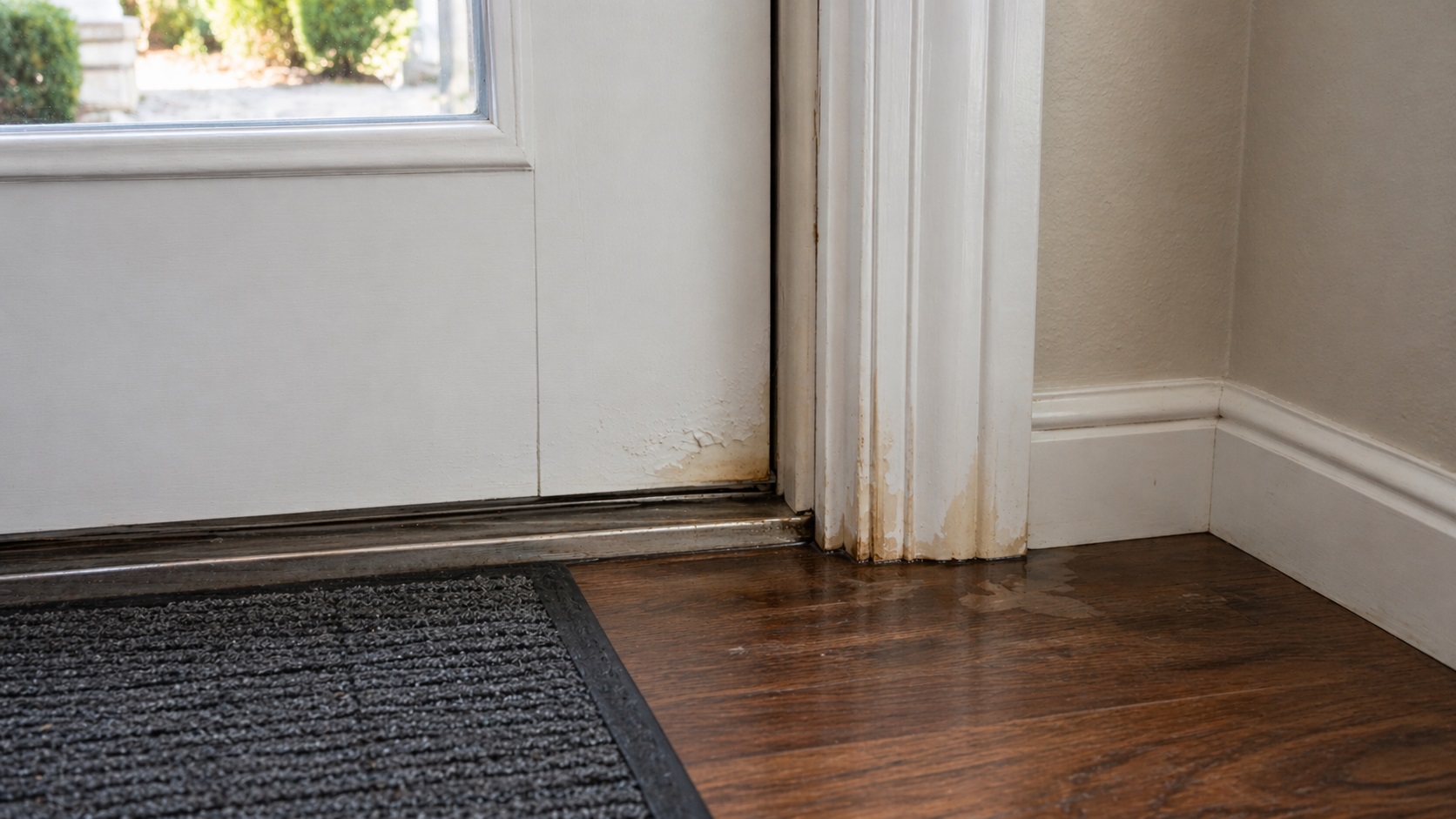
Signs of water damage around doors include peeling paint, stains near the threshold, swollen trim, soft wood, musty odors, damp flooring, and doors that suddenly stick after rain. These symptoms often mean water is entering around the frame, threshold, weather stripping, or nearby wall opening.
Because exterior doors sit low on the wall and face wind-driven rain, splashback, runoff, and repeated foot traffic, small seal failures can slowly push moisture into the frame, subfloor, trim, or surrounding drywall. The earlier these symptoms are noticed, the easier it is to stop damage before rot or mold develops.
This article focuses on door-area symptoms and early warning signs. For a broader explanation of how windows and doors allow moisture into nearby walls, see how windows and doors cause hidden moisture problems.
Why Water Damage Around Doors Is So Common
Doors create large openings in exterior walls, and every part of that opening must stay sealed against rain, runoff, humidity, and temperature movement. Over time, weather stripping, caulking, thresholds, flashing, and frame materials can wear down or shift.
Because doors sit lower than windows, they are more exposed to splashback, standing water, wet shoes, door mats, and ground-level moisture. Similar perimeter symptoms can also appear around windows, as explained in signs of water damage around windows.
How Moisture Enters Around Door Frames
Water intrusion around doors usually occurs when protective seals fail or surrounding materials deteriorate. Even small gaps can allow water to seep inside during storms or periods of heavy rainfall.
Common moisture entry points include:
- Damaged weather stripping — Worn seals allow water to pass around door edges.
- Cracked caulking — Gaps around frames permit moisture intrusion.
- Improper threshold installation — Poor sealing allows water to enter beneath doors.
- Exterior drainage problems — Water pooling near entryways increases exposure risk.
- Door alignment issues — Misaligned doors create openings that allow moisture inside.
These problems often develop slowly, allowing moisture to accumulate unnoticed until visible damage appears.
Why Door Thresholds Are Especially Vulnerable
Door thresholds experience frequent exposure to moisture because they sit at floor level. Water from rain, melting snow, or outdoor runoff often collects at the base of door openings.
Threshold vulnerabilities include:
- Direct exposure to rainwater
- Standing water near entryways
- Repeated wetting and drying cycles
- Foot traffic that wears down protective materials
- Exposure to temperature changes
Because thresholds experience repeated moisture exposure, damage often begins at the bottom of door frames before spreading upward.
Environmental Conditions That Increase Door Moisture Risk
Several environmental factors increase the likelihood of water damage around doors. Homes located in areas with frequent rainfall or poor drainage conditions face higher risk.
Risk-increasing conditions include:
- Heavy or wind-driven rain
- Poor grading near entryways
- Clogged gutters directing water toward doors
- Snow or ice buildup near thresholds
- High indoor humidity levels
- Older door installations
Indoor humidity can also contribute to moisture buildup near doors, especially when condensation forms on cool surfaces. If your home has frequent condensation, musty air, or damp surfaces, compare those patterns with signs of high humidity in a house.
Early Signs of Water Damage Around Doors
Early door water damage often looks like normal wear at first. The difference is that moisture-related symptoms usually return after cleaning, worsen after rain, or appear near the same frame edge, lower corner, or threshold area.
Peeling or Bubbling Paint Around Door Frames
Paint damage around doors is one of the earliest visible indicators of moisture exposure. When moisture becomes trapped beneath painted surfaces, it weakens adhesion and causes paint to separate.
Common paint-related warning signs include:
- Paint bubbling along door frame edges
- Peeling paint near the base of the door
- Cracking paint along trim joints
- Flaking paint around threshold areas
- Repeated paint failure after repainting
Paint failure is more suspicious when it appears near the lower frame, returns after repainting, or worsens after storms instead of staying consistent like normal aging paint.
Water Stains Near Door Frames or Thresholds
Water stains provide strong evidence of moisture exposure around doors. These stains typically appear as discoloration that spreads gradually over time.
Typical stain patterns include:
- Yellow or brown discoloration near the bottom of door frames
- Dark stains forming along threshold edges
- Irregular shapes that expand slowly
- Stains appearing after heavy rainfall
- Recurring stains in the same location
Recurring stains strongly suggest that moisture continues entering around the door assembly.
Soft or Swollen Wood Around Door Frames
Wood materials around door frames are highly vulnerable to water absorption. Repeated moisture exposure causes wood fibers to swell and weaken.
Early wood-related warning signs include:
- Soft wood that compresses under pressure
- Swollen or distorted frame edges
- Visible warping of trim pieces
- Cracking paint along wood grain
- Rough or uneven wood surfaces
Swollen wood often indicates long-term moisture exposure that requires immediate attention.
Visible Damage Around Door Frames
Once door-frame damage becomes visible, water has often been entering the assembly repeatedly. Look especially at the lower corners, side jambs, trim joints, threshold edges, and the wall or flooring directly beside the door.
Cracked or Missing Caulking Around Door Frames
Caulking provides a protective seal between door frames and surrounding wall materials. Over time, exposure to weather and temperature changes can cause caulking to shrink, crack, or separate.
Common caulking-related warning signs include:
- Cracks forming along caulk lines
- Gaps between door frames and wall surfaces
- Brittle or hardened sealant
- Missing sections of caulking
- Water collecting along frame edges
Damaged caulking allows moisture to enter hidden spaces behind the door frame, increasing the risk of structural damage.
Discoloration Along Door Edges
Discoloration around door frames often appears as staining patterns that develop gradually over time. These stains frequently form along edges where moisture collects.
Typical discoloration patterns include:
- Dark staining near lower corners
- Yellow or brown marks along frame edges
- Uneven coloration spreading outward
- Water streaks running downward
- Recurring stains after rainfall
Staining patterns that return after cleaning often indicate continuing moisture intrusion.
Damage to Door Trim and Molding
Trim materials surrounding doorways provide both decorative and structural protection. When exposed to moisture, trim may deteriorate or separate from adjacent surfaces.
Trim-related warning signs include:
- Loose trim sections
- Cracked molding joints
- Gaps forming between trim pieces
- Warped or uneven trim surfaces
- Visible deterioration of wood materials
Damaged trim allows additional moisture to enter concealed areas behind the door assembly.
Threshold and Floor-Level Moisture Signs
The threshold area beneath doors is especially vulnerable to moisture damage because it collects water that flows downward. Damage in this area often develops earlier than in upper sections of the door frame.
Recognizing threshold-related symptoms helps detect problems before they spread into flooring or adjacent wall structures.
Water Pooling Near Door Thresholds
Water pooling near door thresholds often signals drainage problems or failed door seals. Even small amounts of standing water can gradually soak into surrounding materials.
Common pooling-related warning signs include:
- Water collecting near the base of the door
- Damp flooring near entryways
- Moisture forming after rainfall
- Wet areas appearing beneath door mats
- Repeated dampness despite cleaning
Standing water near door thresholds increases the risk of long-term structural damage.
Flooring Damage Near Doorways
Moisture entering through door thresholds often spreads into nearby flooring materials. Over time, flooring may show visible signs of deterioration.
Common flooring-related warning signs include:
- Warped floorboards near doors
- Soft spots in flooring materials
- Discoloration spreading outward from the door
- Loose or shifting flooring panels
- Persistent dampness near entry points
Flooring damage often indicates that moisture has remained present for an extended period.
If flooring near the doorway feels soft, looks swollen, or stays damp after the surface is wiped dry, moisture may have reached lower flooring layers beneath the visible surface.
Carpet or Rug Dampness Near Entry Doors
Carpeted areas near doorways often absorb moisture from repeated exposure to water. Because carpets retain moisture internally, dampness may persist even after surfaces appear dry.
Warning signs include:
- Damp carpet fibers near entry doors
- Musty odors developing in entry areas
- Persistent moisture beneath rugs
- Discoloration spreading through carpet fibers
- Carpet padding remaining damp
Damp carpets may also create conditions that support mold growth if moisture is not removed quickly.
Structural Changes Around Doorways
As moisture exposure continues, structural components surrounding doors may begin to weaken. These changes often affect how doors function and may create noticeable alignment issues.
Recognizing structural warning signs helps prevent long-term deterioration and costly repairs.
Doors That Stick or Become Difficult to Close
Swelling materials around door frames can cause doors to become misaligned. This change often occurs when wood absorbs moisture and expands.
Common alignment-related warning signs include:
- Doors sticking during operation
- Increased resistance when closing doors
- Uneven gaps between door and frame
- Door edges rubbing against frame surfaces
- Changes in door alignment during humid weather
Misalignment often indicates moisture-related expansion of structural materials.
Cracks Forming in Nearby Wall Surfaces
Moisture entering through door assemblies may spread into surrounding wall materials. Over time, these materials weaken and develop cracks.
Wall-related structural warning signs include:
- Cracks forming near door frames
- Separation between wall surfaces and trim
- Uneven wall surfaces near doorways
- Bulging drywall areas
- Powdery or flaking wall materials
If staining, bulging, or soft drywall appears beside the door, compare those symptoms with how to tell if drywall has water damage before repainting or covering the area.
Rotting or Crumbling Door Frame Materials
Wood rot develops when moisture remains trapped in door frame materials for extended periods. Once rot begins, structural strength may decline rapidly.
Rot-related warning signs include:
- Wood that crumbles when pressed
- Deep cracks forming in frame materials
- Soft areas that break easily
- Hollow-sounding wood surfaces
- Strong musty odors near affected areas
Rotting materials often require replacement to restore structural integrity.
Mold and Odor Warning Signs Near Doors
Moisture around door frames creates conditions that support mold growth, especially in areas where airflow is limited. Because doors often connect to exterior environments, repeated exposure to moisture increases the likelihood of mold development.
Recognizing mold-related symptoms near doorways helps prevent contamination from spreading into surrounding structural materials.
Persistent Musty Odors Near Entry Doors
Musty smells near doors often indicate hidden moisture trapped inside door frames or nearby materials. These odors typically develop when moisture remains present for extended periods.
Common odor warning patterns include:
- Musty smells strongest near specific doors
- Odors increasing after rainfall
- Smells returning after cleaning
- Persistent damp smells near threshold areas
- Odors intensifying during humid weather
If musty odors persist, mold growth may already be developing behind visible surfaces.
Visible Mold Growth Along Door Edges
In some cases, mold growth becomes visible along door frames, trim, or threshold areas. Visible mold usually indicates long-term moisture exposure.
Typical mold growth indicators include:
- Black or green spots along frame edges
- Mold appearing on door trim
- Discoloration spreading near threshold corners
- Recurring mold growth after cleaning
- Clusters forming in damp areas
If mold appears, do not just paint or caulk over it. Fix the moisture source first, then follow safe cleanup guidance such as how to remove mold permanently.
Odors That Intensify After Rainfall
Odor changes that occur after rainstorms often indicate moisture entering through door seals or thresholds. When water infiltrates materials, it activates mold growth and increases odor production.
Warning patterns include:
- Stronger odors following storms
- Musty smells appearing suddenly after rainfall
- Persistent odors during wet weather
- Smells strongest near lower door areas
- Odors fading during dry weather periods
This pattern often indicates moisture entering the door assembly during weather exposure.
Risk Conditions That Lead to Door Water Damage
Certain household conditions significantly increase the likelihood of water damage around doors. Recognizing these risk factors helps homeowners identify problems before severe damage occurs.
Worn or Damaged Weather Stripping
Weather stripping forms the primary barrier between exterior conditions and interior spaces. Over time, this material can wear down, allowing moisture to pass through small gaps.
Weather stripping-related risks include:
- Cracked or brittle seal materials
- Missing weather stripping sections
- Loose seals around door edges
- Reduced flexibility due to aging
- Visible gaps between door and frame
Damaged weather stripping allows moisture to enter during storms or heavy rainfall.
Poor Drainage Near Entryways
Drainage problems near doorways often lead to water pooling around thresholds. Over time, standing water increases moisture exposure and structural damage risk.
Drainage-related risks include:
- Improper grading directing water toward doors
- Clogged gutters causing overflow
- Blocked exterior drainage systems
- Downspouts directing water toward entry areas
- Landscape features trapping water near doors
Improving drainage conditions reduces long-term moisture exposure.
Improper Door Installation
Doors that were installed incorrectly may allow water to enter through gaps or misaligned components. Even small installation flaws can create moisture pathways.
Installation-related risk factors include:
- Improper flashing placement
- Incorrect threshold installation
- Misaligned door frames
- Inadequate sealing materials
- Poor structural support
These issues may allow moisture to accumulate gradually inside structural materials.
High Indoor Humidity Levels
Indoor humidity contributes to condensation around door surfaces, especially in cooler environments. Repeated condensation cycles increase moisture exposure.
Humidity-related risk factors include:
- Poor ventilation in living spaces
- Indoor drying of laundry
- Excessive indoor moisture production
- Lack of humidity monitoring
- Persistent condensation near entryways
If condensation appears on or near doors during humid weather, review signs of high humidity in a house to see whether the doorway problem is part of a broader indoor humidity issue.
When Door Water Damage Becomes Serious
While minor moisture exposure may be manageable, certain warning signs indicate severe damage that requires immediate attention. Ignoring these symptoms may lead to structural failure or widespread mold growth.
Repeated Damage Despite Maintenance
Damage that continues appearing even after repairs often indicates deeper moisture problems.
Serious warning signs include:
- Recurring stains near door frames
- Repeated peeling paint after repairs
- Moisture returning after cleaning
- Multiple areas showing damage simultaneously
- Increasing structural deterioration
Recurring damage patterns often signal hidden moisture inside structural materials.
Severe Rot or Frame Deterioration
Advanced wood rot weakens structural components and increases safety risks.
Severe deterioration indicators include:
- Wood collapsing under light pressure
- Large sections of missing material
- Deep structural cracks
- Frames separating from surrounding materials
- Strong persistent odors near affected areas
Severe deterioration usually requires professional repair or replacement.
Widespread Mold Development Near Doors
Extensive mold growth near doorways often indicates prolonged moisture exposure. Mold spreading beyond small localized areas signals serious contamination risk.
Serious mold warning signs include:
- Mold spreading across large areas
- Recurring mold despite cleaning
- Strong musty odors affecting nearby rooms
- Visible mold inside wall cavities
- Health symptoms associated with indoor air quality problems
If widespread mold develops, safe remediation procedures should be followed using established guidance such as How to Remove Mold Permanently.
Frequently Asked Questions About Water Damage Around Doors
How do I know if my door frame is leaking?
Common signs of a leaking door frame include peeling paint, water stains near the bottom of the frame, soft wood surfaces, and musty odors near entryways. If these symptoms appear after rainfall or storms, moisture intrusion is likely occurring around the door assembly.
Why does my door stick when it rains?
Doors often stick during rainy weather because moisture causes wood materials to swell. Swelling changes the alignment of the door and frame, making the door harder to open or close.
Can water damage around doors spread into walls?
Yes, moisture entering through door frames can spread into nearby wall materials. If wall symptoms develop, homeowners may need to investigate further using guidance from How to Find Hidden Water Leaks Inside Walls.
What causes water pooling near door thresholds?
Water pooling near door thresholds is often caused by poor exterior drainage, worn seals, or improper installation. Standing water increases the risk of moisture entering the door assembly.
Is mold near door frames dangerous?
Mold near door frames can affect indoor air quality and often indicates ongoing moisture around the frame, threshold, or nearby wall materials. Do not paint over mold or seal the area until the moisture source is corrected and safe cleanup steps are followed.
How quickly can door water damage become serious?
Damage severity depends on moisture exposure duration. Repeated wetting cycles over weeks or months can cause structural deterioration and mold growth if left untreated.
What to Do Next if You See Water Damage Around a Door
If you notice peeling paint, stains, soft trim, damp flooring, sticking doors, or musty odors near a doorway, start by checking when the symptoms appear. Damage that worsens after rain, returns after cleaning, or stays concentrated near the lower frame usually points to ongoing moisture intrusion.
Do not repaint, recaulk, or cover stained materials until the source is corrected. Check the weather stripping, threshold, exterior caulking, drainage near the entryway, and flooring beside the door. If wood feels soft, crumbles under pressure, or mold is spreading beyond a small surface area, stop cosmetic repairs and get the damaged materials evaluated.
Key Signs of Water Damage Around Doors
- Peeling paint around doors often signals trapped moisture.
- Water stains near thresholds indicate repeated water exposure.
- Soft or swollen door frames suggest long-term moisture absorption.
- Water pooling near entryways increases structural damage risk.
- Doors that stick during wet weather may indicate swelling materials.
- Persistent musty odors often signal hidden mold growth.
- Early detection prevents moisture from spreading into surrounding walls.