How to Prevent Moisture Build-Up in Attics
To prevent moisture build-up in attics, stop warm humid air from leaking up from the living space, keep intake and exhaust ventilation clear, route bathroom and dryer exhaust outdoors, and control indoor humidity. Attic moisture usually develops slowly when air leaks, blocked airflow, or temperature differences allow condensation to form repeatedly on insulation, framing, or roof decking.
Many attic moisture problems start with small issues such as air leaks, blocked ventilation, or excess indoor humidity. If you have already noticed warning signs like damp insulation or musty odors, reviewing signs of moisture in attic insulation can help confirm whether moisture is already affecting attic materials.
This guide focuses on practical steps that stop moisture before it becomes a serious problem: sealing attic air leaks, keeping ventilation balanced, routing exhaust outdoors, controlling indoor humidity, and maintaining the roof system. These steps support long-term moisture prevention rather than temporary fixes.
What Attic Moisture Prevention Protects
Attic moisture prevention protects three vulnerable parts of the home: insulation, roof framing, and indoor air quality. When attic materials stay damp, insulation can lose performance, wood framing can begin to deteriorate, and musty odors or mold concerns may spread beyond the attic.
If moisture has already appeared in attic insulation, review signs of moisture in attic insulation before treating the issue as prevention only. Existing dampness usually needs evaluation before long-term moisture control can work reliably.
Seal Air Leaks Between Living Spaces and the Attic
Air sealing is one of the most important prevention steps because it stops humid indoor air from entering attic spaces. Even small openings allow significant moisture movement over time.
Reducing air leakage lowers the amount of moisture available for condensation, making attic conditions more stable.
Seal Ceiling Penetrations
Ceiling penetrations allow wiring, plumbing, and ductwork to pass through ceiling surfaces. These openings frequently create pathways for warm air to enter attic spaces.
High-risk penetration locations include:
- Electrical boxes
- Pipe openings
- HVAC duct penetrations
- Cable entry points
- Ceiling fan mounts
Seal these openings with materials appropriate for the surface, such as fire-rated caulk around small gaps, spray foam where allowed, and rigid blocking for larger bypasses. Do not seal around heat-producing fixtures, flues, chimneys, or electrical components unless the material and clearance are approved for that use.
Improve Attic Access Door Sealing
Attic access panels often create large gaps between living spaces and attic environments. Poorly sealed access doors allow warm air to escape into attic spaces continuously.
Common improvements include:
- Installing weatherstripping around access panels
- Adding insulation to attic hatch covers
- Ensuring tight closure around framing edges
- Reducing visible air gaps
Improved sealing around attic access doors significantly reduces humidity movement.
Address Gaps Around Lighting Fixtures
Lighting fixtures frequently allow warm air to escape into attic spaces. Older recessed lights are especially prone to air leakage.
Moisture problems near lighting fixtures often develop because warm indoor air leaks around the fixture housing. Recessed lights should only be sealed or covered when they are rated for insulation contact and airtight installation; older fixtures may require approved covers or professional evaluation.
If lighting-related air leakage is suspected, confirming moisture presence may require detection methods explained in how to detect hidden moisture in attics, which helps identify hidden airflow pathways.
Improve Attic Ventilation to Remove Moisture
Ventilation plays a critical role in preventing moisture accumulation. When airflow moves properly through attic spaces, excess humidity exits before condensation can occur.
Balanced airflow requires both intake and exhaust ventilation working together.
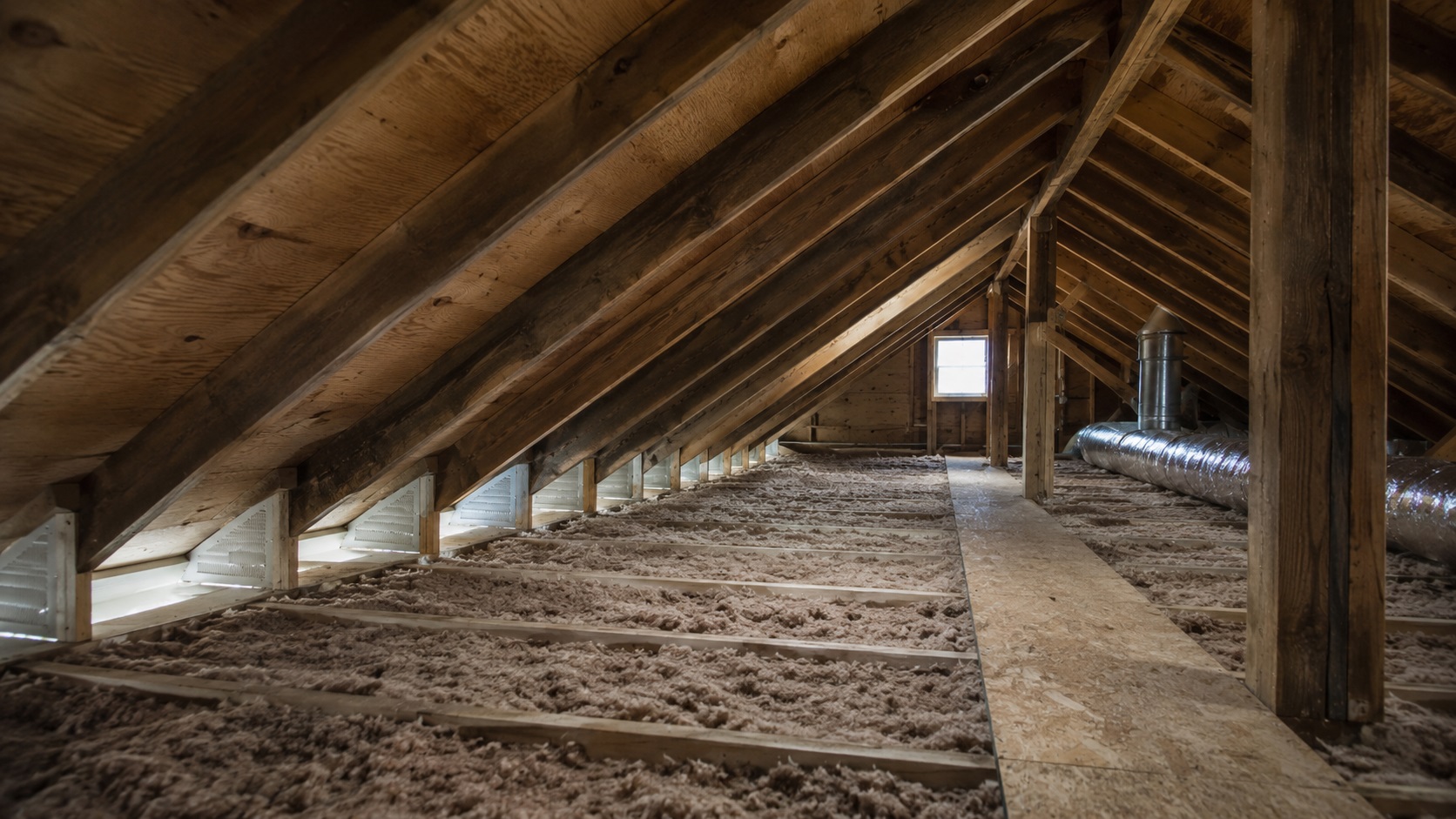
Before making major ventilation changes, confirm that the attic has both clear intake airflow near the eaves and clear exhaust airflow near the roof peak.
Keep Soffit Vents Clear and Functional
Soffit vents allow fresh outdoor air to enter the attic. If these vents become blocked, airflow decreases and moisture remains trapped inside.
Common causes of soffit blockage include:
- Insulation covering vent openings
- Dust accumulation
- Debris buildup
- Pest nesting materials
Maintaining clear soffit vents allows air to circulate freely and reduces condensation risk. In insulated attics, baffles near the eaves help preserve an open air channel between the soffit vents and the roof deck.
Maintain Ridge Vent Airflow
Ridge vents allow moist air to exit the attic. When ridge vents function properly, humidity levels decrease and condensation risk declines.
Over time, ridge vents may accumulate debris that reduces airflow efficiency. In some cases, mesh-style ridge vents become clogged more easily than rigid ridge vent designs, leading to reduced ventilation performance.
Maintaining ridge vent airflow helps humid attic air escape before it condenses on cold roof decking or framing.
Balance Intake and Exhaust Ventilation
Ventilation systems must maintain proper airflow balance. When intake airflow is insufficient or exhaust airflow is restricted, moisture removal becomes less effective.
Balanced attic ventilation helps produce:
- Consistent airflow movement
- Reduced humidity buildup
- More stable attic temperatures
- Lower condensation risk
If airflow problems are suspected, reviewing the inspection steps described in how to inspect attic areas for moisture damage helps identify ventilation weaknesses.
Ensure Exhaust Systems Vent Outdoors Properly
One of the fastest ways moisture builds up in attics is when exhaust systems release humid air into attic spaces instead of outdoors. Bathrooms, kitchens, and laundry areas generate large amounts of moisture during daily use. If that moisture enters the attic, condensation becomes almost unavoidable.
Correct exhaust routing prevents moisture from accumulating where insulation and structural materials are vulnerable.
Route Bathroom Exhaust Fans to Exterior Vents
Bathroom exhaust fans produce heavy moisture loads, especially during hot showers. When these fans vent into the attic rather than outside, moisture spreads quickly into surrounding insulation and framing.
To prevent this condition:
- Ensure bathroom exhaust ducts terminate outdoors through a roof, wall, or soffit termination designed for exhaust discharge
- Use properly sealed duct connections
- Check for disconnected or loose ducts
- Insulate ducts in cold climates to reduce condensation
Proper vent routing prevents humid air from collecting inside attic spaces.
Verify Kitchen Exhaust Vent Performance
Kitchen exhaust systems remove moisture generated during cooking. If these systems malfunction or vent incorrectly, humidity levels may increase throughout the home and eventually affect attic conditions.
Prevention strategies include:
- Confirming kitchen vents discharge outdoors
- Inspecting duct connections for leaks
- Cleaning grease buildup that restricts airflow
- Ensuring airflow remains unobstructed
Maintaining kitchen exhaust systems helps reduce humidity loads entering attic areas.
Inspect Dryer Vent Routing and Airflow
Dryer vents release warm, humid air during operation. Improper routing of dryer exhaust can introduce significant moisture into attic spaces.
To prevent moisture buildup:
- Route dryer vents directly outdoors through a dedicated dryer vent termination
- Avoid terminating dryer ducts inside attic areas
- Clean lint buildup regularly
- Inspect duct connections for leaks
Proper dryer vent maintenance reduces humidity accumulation, lowers condensation risk, and helps prevent lint-related airflow restrictions.
Control Indoor Humidity to Reduce Moisture Load
Indoor humidity levels strongly influence attic moisture formation. Even with proper ventilation, excessive humidity inside living spaces increases the amount of moisture that reaches attic surfaces.
Reducing indoor humidity lowers the likelihood of condensation forming in attic environments.
Use Exhaust Fans During Moisture-Producing Activities
Running exhaust fans during moisture-producing activities helps remove humidity before it spreads into attic spaces.
Recommended situations include:
- During showers or baths
- While cooking meals
- When using dishwashers
- During laundry operations
Using exhaust fans consistently helps prevent humidity buildup inside the home.
Monitor Indoor Humidity Levels
Tracking humidity levels helps identify conditions that increase moisture risk. Monitoring tools allow homeowners to maintain humidity within recommended ranges.
Common indoor humidity targets are:
- 30–40% relative humidity during winter
- 40–50% relative humidity during warmer months
If humidity remains elevated despite ventilation, hidden moisture conditions may exist. Detection methods described in how to detect hidden moisture in attics help confirm whether moisture is accumulating beyond visible areas.
Reduce Indoor Moisture Sources When Possible
Reducing moisture sources inside the home lowers overall humidity levels and reduces attic condensation risk.
Effective strategies include:
- Limiting indoor drying of clothes
- Covering pots during cooking
- Fixing appliance, drain, or plumbing leaks promptly
- Using dehumidifiers in high-humidity conditions
Lower indoor humidity levels reduce the amount of moisture available to enter attic spaces.
Install Insulation Correctly Without Blocking Airflow
Proper insulation installation plays a major role in preventing moisture buildup. Insulation should regulate temperature differences without interfering with ventilation airflow.
Incorrect installation often leads to moisture problems even when ventilation systems function properly.
Avoid Blocking Soffit Airflow Paths
Insulation placed too close to soffit vents can block airflow entering attic spaces. Without incoming air, ventilation systems lose effectiveness and moisture becomes trapped.
Prevention steps include:
- Installing insulation baffles near soffits
- Maintaining clear airflow channels
- Ensuring insulation remains below vent openings
- Inspecting soffit areas regularly
Maintaining airflow pathways helps prevent condensation accumulation.
Maintain Proper Insulation Depth
Insufficient insulation depth allows heat to escape into attic spaces, increasing condensation potential. Adequate insulation reduces temperature differences that contribute to moisture formation.
Proper insulation depth helps:
- Stabilize attic temperatures
- Reduce cold surface formation
- Lower condensation risk
- Improve energy efficiency
Consistent insulation coverage prevents uneven temperature patterns that encourage moisture development.
Prevent Insulation Compression
Compressed insulation reduces airflow and thermal performance. When insulation becomes compacted, air pockets shrink and moisture retention increases.
Prevent compression by:
- Avoiding heavy storage on insulation
- Maintaining consistent material thickness
- Correcting areas where insulation has settled unevenly
- Replacing damaged insulation when necessary
Maintaining proper insulation structure improves both airflow and temperature control.
Maintain Roof and Exterior Components to Prevent Water Entry
Even the best ventilation and humidity control cannot prevent moisture problems if water is entering directly through the roof. Routine maintenance of roof components plays a major role in preventing hidden moisture buildup inside attic spaces.
Avoid sealing, coating, or covering roof leaks from inside the attic as a permanent fix. Interior patching may hide active water entry while roof decking, insulation, or framing continues to get wet.
Many attic moisture problems begin with small exterior failures that allow water to enter slowly. Over time, repeated exposure creates damp insulation, mold growth, and structural damage. Understanding how these problems start is explained in why attics develop hidden moisture problems, which connects prevention strategies to underlying causes.
Inspect Flashing Around Roof Penetrations
Flashing protects vulnerable roof areas where materials meet or change direction. When flashing deteriorates, shifts, or cracks, water can enter the attic unnoticed.
Key flashing locations to monitor include:
- Chimneys
- Skylights
- Vent pipes
- Roof valleys
- Roof-to-wall transitions
Routine inspection of flashing helps prevent slow leaks that lead to hidden moisture buildup.
Replace Damaged or Worn Roofing Materials
Roofing materials wear down over time due to weather exposure. Missing or damaged shingles allow water to penetrate beneath roof coverings.
Preventive roofing maintenance includes:
- Replacing cracked or missing shingles
- Repairing lifted shingles
- Monitoring granule loss on shingles
- Repairing small roof leaks before insulation or roof decking stays wet
Prompt repair of small roof problems prevents long-term moisture accumulation.
Keep Gutters and Drainage Systems Functional
Gutters help direct water away from roofing systems. When gutters clog, water backs up and increases the risk of leaks along roof edges.
Preventive gutter maintenance includes:
- Removing debris buildup
- Clearing downspouts
- Checking for proper drainage direction
- Repairing damaged gutter sections
Proper drainage reduces the likelihood of water intrusion near attic edges.
Use a Simple Attic Moisture Prevention Checklist
A simple attic moisture checklist helps homeowners keep the main prevention points visible: airflow, exhaust routing, roof entry points, insulation condition, and indoor humidity. These checks do not need to become a full attic inspection every time, but they should be repeated often enough to catch blocked vents, disconnected ducts, or roof leaks before moisture spreads.
Check the Attic at Seasonal Risk Points
Attic moisture risk changes with the season. Cold weather can reveal frost or condensation, spring storms can expose roof leaks, and humid months can show whether ventilation is removing moisture effectively.
Useful seasonal checkpoints include:
- Winter: Check for frost formation and condensation
- Spring: Inspect after heavy rain or snow melt
- Summer: Monitor humidity levels
- Fall: Prepare attic before cold weather begins
Routine seasonal checks help detect moisture before damage spreads.
Clean and Maintain Ventilation Components
Ventilation components gradually accumulate dust, debris, and insulation particles that reduce airflow. Regular cleaning helps maintain effective ventilation.
Important ventilation maintenance tasks include:
- Clearing debris from soffit vents
- Inspecting ridge vents for blockage
- Removing insect nests when present
- Verifying airflow pathways remain open
In many homes, mesh-style ridge vents are more likely to accumulate debris and restrict airflow over time. If ridge vent airflow becomes limited, upgrading to a rigid ridge vent system may improve long-term airflow reliability.
Monitor Attic Conditions After Major Weather Events
Storms and rapid temperature changes often expose weaknesses in attic systems. Checking attic conditions after severe weather helps identify developing problems early.
Weather-related inspection triggers include:
- Heavy rainfall
- Strong wind events
- Rapid snow melting
- Sudden temperature changes
Checking the attic after these events reduces the risk of slow leaks, blocked vents, or new damp areas going unnoticed.
When Prevention Requires Professional Assistance
Some attic moisture prevention tasks require specialized knowledge or equipment. Professional evaluation may be necessary when ventilation systems require upgrades or structural changes are needed.
Large Ventilation Improvements
Improving ventilation often requires balancing airflow between intake and exhaust vents. Large ventilation upgrades may include installing additional vents or replacing outdated systems.
Professional assistance may be required when:
- Ventilation systems are severely restricted
- Airflow remains uneven despite maintenance
- Large attic areas require redesign
- Vent installation requires structural modification
Proper ventilation design improves moisture prevention effectiveness.
Air Sealing Complex Attic Systems
Large air leakage problems may involve multiple hidden pathways. Professional sealing methods help identify and correct these conditions.
Professional air sealing may be necessary when:
- Multiple air leaks exist
- Moisture persists after basic sealing
- Energy efficiency problems continue
- Airflow patterns remain unpredictable
Complex sealing work often improves both moisture control and indoor comfort.
Replacing Outdated Ventilation Systems
Older ventilation systems may no longer function effectively. Replacing outdated systems improves airflow and reduces moisture accumulation risk.
Replacement considerations include:
- Upgrading clogged ridge vents
- Installing improved airflow systems
- Replacing damaged vent materials
- Improving intake and exhaust balance
When moisture problems persist despite routine maintenance, equipment upgrades may be required.
How Prevention Strategies Work Together
Attic moisture prevention works best when air sealing, ventilation, exhaust routing, humidity control, insulation clearance, and roof maintenance support each other. Ventilation cannot compensate for a bathroom fan dumping humid air into the attic, and insulation cannot solve moisture problems if soffit airflow is blocked.
When these systems work together, the attic is less likely to trap humid air long enough for condensation to form.
FAQ — How to Prevent Moisture Build-Up in Attics
What is the first step to prevent attic moisture?
Start by looking for warm indoor air leaks into the attic, especially around the attic hatch, ceiling penetrations, recessed lights, and exhaust duct openings. Ventilation and humidity control work better after those air leaks are reduced.
Does ventilation alone prevent attic moisture?
No. Ventilation helps remove moisture, but air leaks and high indoor humidity must also be controlled to prevent moisture formation.
When should attic vents be checked for blockage?
Check attic vents before cold weather, after heavy storms, and whenever insulation work has been done near the eaves. Soffit vents and ridge vents should also be checked if attic condensation, frost, or musty odors appear.
Can adding more insulation prevent attic moisture?
Adding insulation may help reduce temperature differences, but it will not prevent attic moisture if it blocks soffit airflow or covers existing air leaks. Air sealing and ventilation clearance should be addressed before adding more insulation.
What attic areas should be checked first to prevent moisture build-up?
Check the attic hatch, ceiling penetrations, bathroom exhaust duct, soffit vents, ridge vent, and insulation near the eaves first. These areas often reveal the air leaks, blocked airflow, or exhaust problems that allow attic moisture to build up.
Conclusion
Preventing attic moisture build-up depends on controlling the systems that allow damp air or water to reach attic materials. Seal air leaks, keep intake and exhaust ventilation clear, route exhaust outdoors, control indoor humidity, and maintain the roof exterior before small moisture conditions become recurring damage.
If damp insulation, frost, musty odors, or roof-deck staining are already present, reviewing how to detect hidden moisture in attics can help confirm whether the issue is still active.
Key Takeaways
- Air sealing is one of the most important steps in preventing attic moisture.
- Balanced ventilation helps remove humidity before condensation forms.
- Exhaust systems must vent outdoors to prevent moisture buildup.
- Indoor humidity control significantly reduces attic moisture risk.
- Routine maintenance helps identify small problems before they become serious.
- Combining multiple prevention methods provides the most reliable long-term protection.