
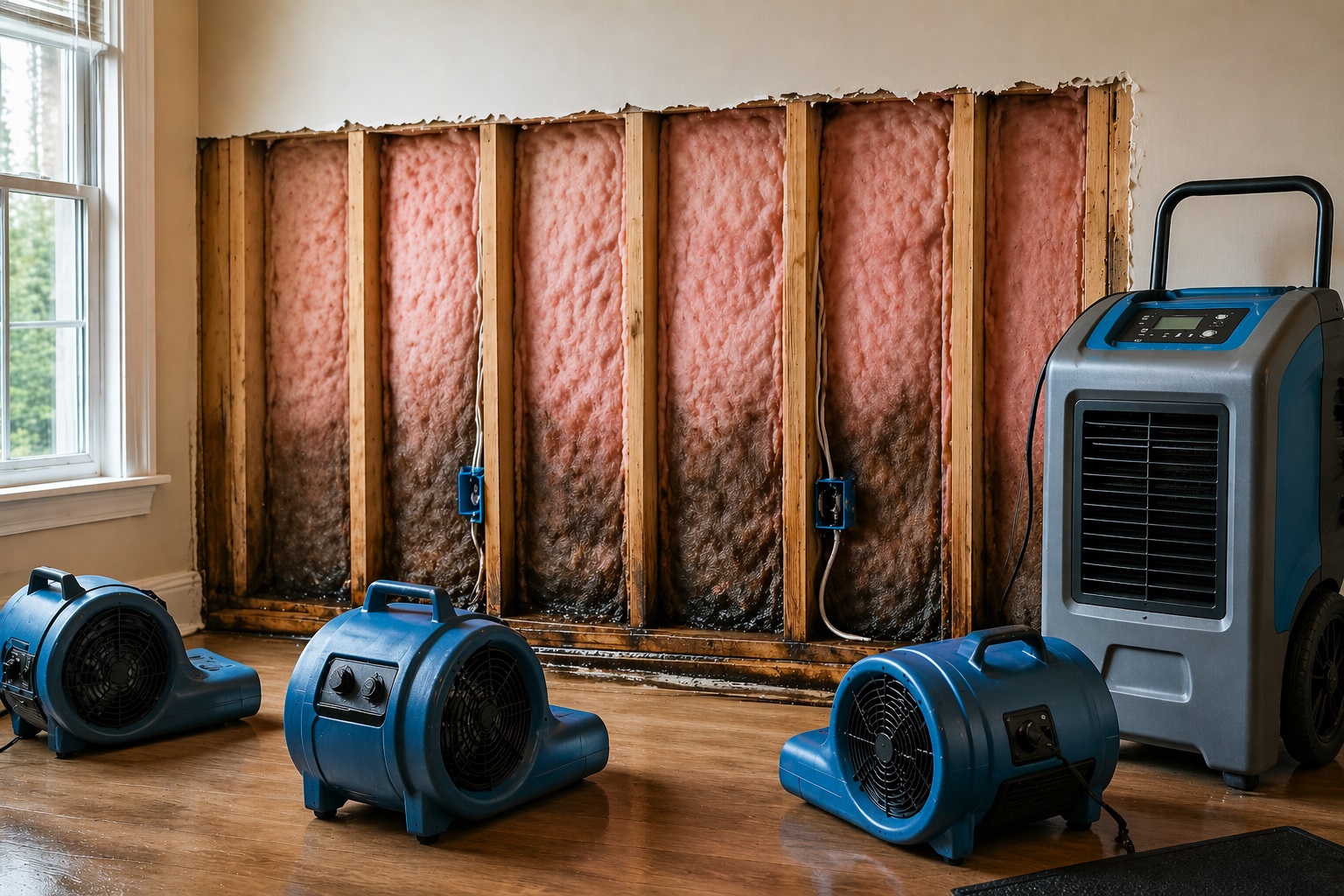
How to Dry Insulation After Water Damage: Safe Recovery Methods for Wet Insulation
Wet insulation can sometimes be dried after water damage, but only when the water was clean, exposure was brief, and airflow reaches the insulation quickly. Fiberglass and mineral wool are more likely to be salvageable, while saturated cellulose, contaminated insulation, or insulation that stayed wet for more than 48 hours usually needs replacement.
Before closing any wall, ceiling, or floor cavity, the insulation and surrounding materials must be fully dry. Otherwise, trapped moisture can lead to mold growth, odors, reduced insulation performance, and hidden structural damage.
Safety note: Do not handle wet insulation near electrical wiring until power is shut off and the area is safe. If the insulation was exposed to floodwater, sewage, or other contaminated water, remove and replace it instead of trying to dry it.
This guide supports our How to Prevent Recurring Moisture Damage hub by focusing specifically on when wet insulation can be dried and when replacement is safer.
Why Wet Insulation Is a Serious Problem
Insulation is designed to trap air and regulate temperature, but when it becomes wet, it loses its insulating ability and holds moisture against surrounding materials. This trapped moisture creates ideal conditions for mold growth and structural decay.
Wet insulation often remains hidden behind drywall, making it difficult to detect until damage becomes severe.
Problems Caused by Wet Insulation
- Mold growth inside wall cavities
- Reduced insulation effectiveness
- Persistent musty odors
- Damage to surrounding drywall
- Increased risk of structural rot
- Higher energy costs due to reduced insulation value
If the surrounding drywall is also wet, use how to dry walls after water damage for the wall-drying process while keeping this article focused on insulation recovery.
How Insulation Absorbs and Holds Moisture
Different insulation materials respond differently to moisture exposure. Some types dry relatively well, while others absorb water deeply and require replacement.
Common Insulation Types and Moisture Behavior
| Insulation Type | Water Absorption Risk | Drying Difficulty |
|---|---|---|
| Fiberglass batts | Moderate | Moderate |
| Blown-in cellulose | High | Very High |
| Spray foam | Low to Moderate | Variable |
| Mineral wool | Low | Moderate |
Material type matters most when deciding whether to dry or replace wet insulation.
How Long Can Insulation Stay Wet Before Mold Begins?
Time is one of the most critical factors affecting insulation recovery. Moisture trapped inside insulation creates ideal conditions for mold development.
You can better understand mold timing risks by reviewing how long mold takes to grow after water damage.
Insulation Risk Timeline
| Time Wet | Risk Level | Typical Outcome |
|---|---|---|
| Less than 24 hours | Low | Often salvageable |
| 24–48 hours | Moderate | Mold risk begins |
| 48–72 hours | High | Material degradation likely |
| More than 72 hours | Severe | Replacement often required |
If insulation remains wet beyond safe time limits, surrounding materials such as drywall may also become damaged. You can assess nearby materials using our guide on how to tell if drywall has water damage.
How to Dry Fiberglass Insulation After Water Damage
Fiberglass insulation is one of the most common insulation types used in residential construction. In many cases, fiberglass insulation can be dried and saved if water exposure is brief and drying begins quickly.
Unlike cellulose insulation, fiberglass does not absorb water into its fibers as deeply. However, trapped moisture inside wall cavities can still create mold risks if drying is delayed.
Steps to Dry Fiberglass Insulation
- Stop the water source immediately
- Remove any soaked drywall covering the insulation
- Allow direct airflow to reach the insulation
- Use fans to circulate air across wet areas
- Run dehumidifiers to remove airborne moisture
- Check the insulation, drywall edges, sheathing, and framing with a moisture meter before closing the cavity
Use verified drying thresholds from moisture levels that indicate water damage to confirm materials are fully dry.
If surrounding drywall has also been affected, follow structured drying guidance in our article on how to dry walls after water damage.
How to Dry Cellulose Insulation After Water Damage
Cellulose insulation absorbs water quickly and holds moisture deep inside its structure. Because of its high absorption rate, wet cellulose insulation often becomes difficult to dry completely.
In many situations, cellulose insulation must be replaced rather than dried.
Why Cellulose Insulation Is Difficult to Save
- Absorbs large amounts of moisture
- Retains water deep inside fibers
- Promotes mold growth when wet
- Settles and compresses after water exposure
When Cellulose Insulation May Be Salvageable
- Exposure lasted less than 24 hours
- Moisture levels remain low
- No visible mold is present
- Drying begins immediately
If cellulose insulation remains saturated for extended periods, replacement typically becomes necessary.
How to Dry Spray Foam Insulation After Water Damage
Spray foam insulation behaves differently from fiberglass and cellulose because it resists water absorption more effectively. Closed-cell spray foam, in particular, repels moisture and dries faster than most other insulation types.
However, open-cell spray foam absorbs more moisture and may require extended drying time.
Spray Foam Drying Guidelines
- Inspect foam surfaces for trapped moisture
- Allow air circulation around affected areas
- Use dehumidifiers to remove excess humidity
- Check surrounding materials for moisture damage
- Monitor moisture levels until dry
Because spray foam often protects structural surfaces, surrounding materials such as drywall or framing should also be inspected carefully.
Save vs Replace: Insulation Recovery Decision Table
Determining whether insulation can be saved depends on several factors, including insulation type, water exposure time, and contamination level.
Insulation Save vs Replace Decision Table
| Condition | Can It Be Saved? | Recommended Action |
|---|---|---|
| Fiberglass wet less than 24 hours | Often Yes | Dry immediately |
| Fiberglass wet more than 48 hours | Sometimes | Inspect carefully |
| Cellulose wet for any extended time | Often No | Replace insulation |
| Spray foam lightly exposed | Usually Yes | Dry and monitor |
| Contaminated water exposure | No | Remove insulation |
When the decision is unclear, replacement is usually safer than closing damp or questionable insulation back inside a wall, ceiling, or floor cavity.
After the insulation is dry or replaced, use how to prevent mold behind walls for long-term wall-cavity prevention steps.
How to Improve Airflow for Faster Insulation Drying
Airflow plays a critical role in removing moisture trapped inside insulation materials. Without proper airflow, insulation may remain damp for extended periods.
Airflow Strategies That Improve Drying
- Position fans so air moves across the exposed insulation and out of the cavity instead of simply blowing moisture deeper into enclosed spaces
- Open wall cavities to increase ventilation
- Use multiple fans in larger areas
- Keep airflow consistent during drying
- Remove barriers that restrict airflow
Maintaining consistent airflow significantly improves drying efficiency and reduces moisture retention.
How to Tell When Insulation Is Fully Dry
Before closing walls or reinstalling materials, insulation must be completely dry. Trapped moisture inside insulation can lead to mold growth and structural damage even after surface drying appears complete.
Drying insulation properly requires both visual inspection and moisture testing whenever possible.
Advanced detection methods described in how to detect moisture without opening walls can help confirm hidden moisture removal.
Signs That Insulation Is Fully Dry
- No visible damp areas remain
- No musty or damp odors are present
- Insulation feels light and fluffy rather than heavy
- Moisture readings return to safe levels
- Surrounding materials remain dry
If surrounding drywall or structural materials still show moisture signs, additional drying may be necessary. You can verify drywall conditions using our guide on how to tell if drywall has water damage.
When Insulation Must Be Replaced Instead of Dried
Not all insulation can be saved after water damage. Certain conditions make replacement the safest option to prevent mold growth and structural deterioration.
Situations That Require Insulation Replacement
| Condition | Recommended Action |
|---|---|
| Insulation remained wet longer than 48 hours | Replace affected sections |
| Visible mold growth is present | Remove contaminated insulation |
| Insulation exposed to contaminated water | Replace immediately |
| Material shows compression or damage | Replace damaged insulation |
| Persistent odors remain after drying | Inspect and replace if necessary |
Replacing insulation when necessary helps prevent long-term structural problems and improves indoor air quality. Do not reinstall drywall, flooring, or ceiling materials until the cavity, framing, and insulation area test dry.
How to Remove Wet Insulation Safely
If insulation cannot be saved, remove it carefully instead of leaving damp material inside the cavity. Wet insulation can tear, release dust, and spread contamination if it was exposed to dirty water.
Basic Wet Insulation Removal Steps
- Shut off power to the affected area if wiring is nearby
- Wear gloves, eye protection, long sleeves, and a suitable mask or respirator
- Remove damaged drywall or access panels only as needed to expose the wet insulation
- Bag wet insulation immediately instead of carrying loose material through the home
- Inspect the cavity for damp framing, sheathing, mold, or lingering odors
- Dry and verify the cavity before installing new insulation
If the insulation was affected by floodwater, sewage, or widespread mold, avoid disturbing it without professional help. Contaminated insulation should be removed safely, not dried and reused.
Common Mistakes When Drying Insulation
Improper drying methods often leave hidden moisture inside insulation materials. Avoiding these mistakes helps reduce the risk of mold development and structural damage.
Insulation Drying Mistakes to Avoid
| Mistake | Why It Causes Problems |
|---|---|
| Closing walls before insulation dries | Traps moisture inside wall cavities |
| Using insufficient airflow | Slows evaporation and increases mold risk |
| Ignoring surrounding materials | Moisture spreads unnoticed |
| Assuming insulation dries automatically | Hidden moisture remains inside fibers |
| Delaying drying efforts | Increases damage severity |
Consistent airflow and moisture monitoring greatly improve drying success.
When to Call a Professional for Wet Insulation
Some insulation drying situations require specialized equipment or advanced moisture detection. Professional assistance may be necessary to prevent long-term damage.
Situations That Require Professional Drying
- Large areas of insulation are affected
- Moisture remains after several days of drying
- Water exposure lasted longer than 48 hours
- Mold growth appears inside wall cavities
- Structural framing shows signs of damage
- Insulation contamination from floodwater
A professional can open hidden cavities, test framing and sheathing, remove contaminated insulation, and confirm that the area is dry before repairs begin.
Frequently Asked Questions About Drying Insulation After Water Damage
Can wet insulation be saved?
Fiberglass insulation can often be saved if drying begins quickly. Cellulose insulation usually requires replacement if it becomes saturated.
How long does insulation take to dry?
Drying time varies depending on material type, humidity, and airflow. Minor moisture may dry within one to two days, while heavy saturation may take several days or longer.
Does insulation dry on its own?
Insulation rarely dries completely without airflow and humidity control. Active drying methods improve recovery success.
Should insulation always be replaced after water damage?
Not always. Some insulation types, such as fiberglass, may be salvaged if exposure time is short and drying begins quickly.
What insulation types are hardest to dry?
Cellulose insulation is typically the most difficult to dry due to its high moisture absorption and retention.
What to Do Before Closing Wet Insulation Back Up
Drying insulation after water damage requires careful attention to airflow, humidity control, and inspection. Acting quickly improves the chances of saving materials and preventing mold growth.
For broader prevention steps after the insulation is dry or replaced, review how to prevent recurring moisture damage.
One Comment
Comments are closed.