How to Prevent Recurring Moisture Under Kitchen Flooring
Recurring moisture under kitchen flooring usually means the original problem was not fully controlled. The floor may have been dried, cleaned, or repaired, but if the moisture source remains active or the area cannot dry properly, dampness can return. Over time, repeated moisture beneath kitchen flooring can damage underlayment, weaken subfloor materials, and increase the risk of hidden mold growth.
The goal is to create a prevention routine: stop water from entering the floor, keep hidden areas able to dry, and check the same high-risk spots before damage spreads.
If moisture is currently present, worsening, or causing visible damage, repairs may be required before prevention steps will be effective. In that situation, review how to fix persistent moisture under kitchen floors before continuing with prevention planning.
For the broader pattern behind repeat dampness, see why moisture problems keep returning. Kitchen floors are especially vulnerable because they combine plumbing, appliances, cabinets, seams, and frequent cleaning in one high-risk area.
Why Moisture Returns After Repairs
Moisture usually returns under kitchen flooring for one of three reasons: the water source was not fully fixed, the affected materials were not fully dried, or the surrounding conditions still allow moisture to accumulate. A floor can look normal on the surface while hidden layers remain vulnerable underneath.
Prevention works best when those issues are checked together instead of treated as separate one-time fixes.
The Original Moisture Source May Still Be Active
Small leaks are easy to miss. A dishwasher hose, refrigerator water line, sink drain, or loose plumbing connection may release only a small amount of water at a time. That water may not form a visible puddle, but it can still move beneath flooring seams and cabinet bases.
Common missed sources include:
- Slow dishwasher supply line leaks
- Refrigerator ice maker or water dispenser line leaks
- Loose sink drain fittings
- Moisture under cabinet toe-kicks
- Water trapped beneath appliance edges
If moisture keeps returning after cleanup, the issue may need more than drying. Review this guide on fixing persistent moisture under kitchen floors if the floor is already damp, soft, stained, or musty.
The Floor May Not Have Fully Dried
Kitchen flooring can appear dry on top while moisture remains trapped below. Vinyl, laminate, tile, and hardwood all have different moisture risks, but each can hide dampness in seams, underlayment, or subfloor materials.
Recurring moisture often develops when the visible surface dries but hidden layers do not. Once humidity rises, appliances run, or temperature changes, that trapped moisture may become noticeable again through odors, stains, or damp areas.
If the floor recently experienced a leak, proper drying is essential. The steps in drying kitchen flooring after leaks can help prevent moisture from staying trapped beneath the surface.
Do not reinstall trim, seal seams, or cover the area again until the same spots remain dry across repeated checks, not just immediately after wiping the surface.
Airflow May Still Be Too Limited
Moisture prevention depends on airflow. Cabinet bases, appliances, tight corners, and flooring transitions often restrict air movement. When damp areas cannot breathe, moisture remains longer than it should.
Low-airflow areas under kitchen flooring include:
- Under dishwashers
- Behind refrigerators
- Inside sink cabinets
- Along cabinet toe-kicks
- Near wall-floor junctions
These areas should be monitored after leaks, cleaning, plumbing work, or appliance movement.
Risk Factors to Control Before Moisture Returns
Most recurring kitchen floor moisture comes from one of a few unresolved risk factors. Focus first on the places where water can enter unnoticed, stay trapped, or dry too slowly.
Missed Leak Sources
After repairs, look for small leak sources that release water slowly enough to avoid puddles but often enough to keep flooring layers damp.
Missed leak sources commonly include:
- Loose fittings beneath sinks
- Hairline cracks in drain lines
- Water line connections behind refrigerators
- Dishwasher supply or discharge hose leaks
- Hidden leaks inside cabinet walls
These slow leaks may not produce standing water but can still keep flooring materials damp beneath the surface.
Poor Airflow Restoration After Repairs
After moisture repairs, airflow conditions may not be fully restored. Cabinets, appliances, and flooring materials often block air movement, preventing moisture from drying naturally.
Airflow problems commonly occur when:
- Appliances are installed tightly against walls
- Cabinet bases restrict air movement
- Floor coverings trap moisture beneath them
- Ventilation fans are not used regularly
Hidden Trapped Moisture
Moisture can remain beneath flooring after the surface looks dry, especially in underlayment, seams, cabinet bases, and subfloor materials.
Hidden trapped moisture often occurs when:
- Underlayment absorbs water
- Moisture enters flooring seams
- Cabinet bases block evaporation
- Subfloor materials retain moisture
If moisture continues returning to the same area, deeper inspection may be required. Methods described in inspecting kitchen flooring for hidden moisture can help identify these concealed conditions.
Humidity and Environmental Factors
Kitchen humidity usually becomes a recurrence problem when it slows drying in places that were already exposed to water, such as seams, cabinet bases, toe-kicks, or appliance edges.
Environmental contributors include:
- Frequent cooking with boiling liquids
- Dishwasher steam release
- Seasonal humidity increases
- Limited ventilation systems
- Closed kitchen layouts with restricted airflow
Incomplete Repairs
Recurring moisture often results from repairs that addressed symptoms but not root causes. For example, replacing damaged flooring without correcting the moisture source allows the same problem to return.
Incomplete repairs may involve:
- Fixing visible damage but ignoring hidden moisture
- Replacing flooring without correcting plumbing leaks
- Drying surfaces without drying subfloor materials
- Sealing moisture without improving airflow
If recurring moisture follows previous repair work, it may be necessary to revisit the repair strategy and correct remaining weaknesses.
If the moisture came from sewage, floodwater, or a long-hidden leak with suspected mold, avoid covering the area again until contaminated or damaged materials have been evaluated safely.
Preventive Maintenance for Appliances
Appliances are among the most common sources of recurring moisture beneath kitchen floors. Routine inspection of appliance connections helps identify problems before moisture spreads into hidden areas.
The most useful checks are the ones that catch small drips before they reach flooring seams or cabinet bases.
Inspect Dishwasher Connections Regularly
Dishwashers use both supply and drain lines that operate under pressure. Over time, connections may loosen or develop small leaks.
Routine dishwasher inspection should include:
- Checking supply hoses for wear or cracks
- Inspecting drain hoses for loose fittings
- Monitoring cabinet bases for dampness
- Listening for unusual sounds during operation
Early detection of small leaks prevents moisture from spreading beneath flooring.
Monitor Refrigerator Water Lines
Refrigerators with water dispensers or ice makers rely on supply lines that may become damaged or loose. Because these lines are often hidden behind appliances, leaks may remain unnoticed for long periods.
Preventive checks should include:
- Inspecting visible tubing connections
- Checking behind the refrigerator for moisture
- Looking for condensation near water lines
- Monitoring floor areas beneath the appliance
Moisture detected early in these areas is much easier to control than moisture discovered after damage develops.
Protecting Cabinet and Hidden Floor Areas
Cabinet areas are among the most common places where moisture returns under kitchen flooring. These spaces contain plumbing connections, limited airflow, and hidden surfaces that can trap moisture without obvious warning signs.
Preventing recurring moisture requires consistent monitoring of these hidden areas, especially after leaks, appliance movement, or plumbing work.
Monitor Sink Cabinet Bases
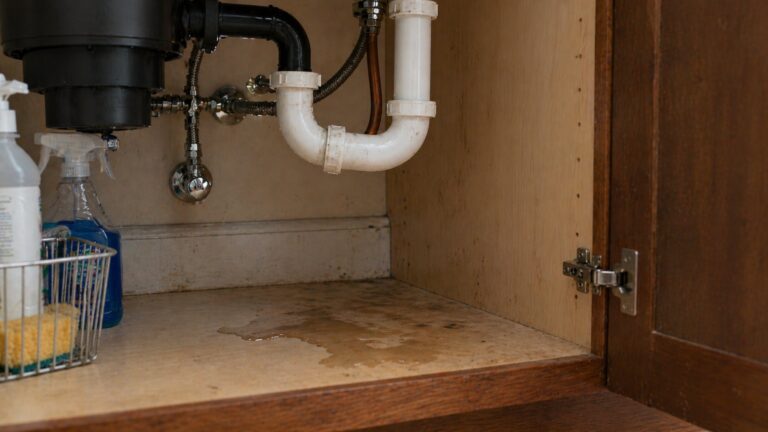
Sink cabinets contain multiple plumbing connections that create long-term moisture risk. Even small leaks can spread beneath cabinet bases and into flooring seams.
Preventive monitoring should include:
- Checking cabinet floors for dampness or stains
- Inspecting pipe connections for slow leaks
- Watching for musty odors inside cabinets
- Looking for swelling or soft cabinet materials
If signs of moisture appear, early inspection methods described in detecting moisture under kitchen floors can help identify hidden dampness before damage spreads.
Protect Cabinet Toe-Kick Areas
Toe-kick spaces along cabinet bases often trap moisture because airflow is restricted. Water entering these areas can remain hidden for long periods.
Preventive actions include:
- Inspecting toe-kick areas after plumbing repairs
- Checking for staining along base edges
- Monitoring for recurring damp spots
- Ensuring cabinet bases remain dry
Routine checks in these areas help reduce long-term moisture accumulation.
Improving Ventilation and Airflow
Airflow matters most in the hidden areas where kitchen moisture lingers: beneath dishwasher edges, behind refrigerators, inside sink cabinets, and along toe-kicks. When those spaces stay closed off, small amounts of water can remain long enough to affect seams, underlayment, or cabinet bases.
Maintain Open Airflow Paths
Airflow paths beneath cabinets and appliances should remain unobstructed whenever possible. Tight spaces restrict air movement and extend drying time.
Preventive airflow improvements include:
- Leaving appliances close enough to fit properly but not so tight that damp air is trapped behind them
- Keeping stored items from blocking airflow under sink cabinets
- Checking toe-kick and appliance-edge areas after leaks or heavy cleaning
- Allowing previously wet areas to stay accessible until they remain dry
Use Ventilation Systems Effectively
Kitchen ventilation systems remove humidity generated during cooking and cleaning. Using these systems regularly reduces airborne moisture that may settle beneath flooring.
Recommended practices include:
- Using the range hood or exhaust fan while boiling water, steaming food, or running long cooking sessions
- Running ventilation briefly after wet mopping or heavy cleaning
- Keeping range hood filters clean enough for air to move freely
- Avoiding long periods of closed-up, humid kitchen conditions after moisture exposure
Consistent ventilation reduces humidity buildup and helps maintain dry flooring conditions.
Controlling Humidity to Reduce Risk
Humidity is usually not the main cause of recurring moisture under kitchen flooring, but it can make small leaks, wet seams, and damp cabinet areas dry more slowly. That matters most after cleaning, appliance leaks, dishwasher steam release, or seasonal humidity spikes.
Recognize High-Humidity Conditions
Humidity increases when kitchens generate steam, especially during cooking and cleaning. Identifying these conditions allows preventive action before moisture accumulates.
Common high-humidity situations include:
- Cooking with uncovered boiling liquids
- Frequent dishwasher operation
- Limited airflow during cleaning
- Seasonal humidity increases
These conditions should be monitored carefully.
Maintain Stable Indoor Moisture Levels
The goal is not to make the kitchen unusually dry. The goal is to prevent humid conditions from keeping damp seams, mats, cabinet bases, or appliance edges wet longer than necessary.
Humidity management strategies include:
- Using ventilation during cooking, dishwashing, and wet cleaning
- Giving recently cleaned or previously wet floor edges time to dry before covering them with mats
- Checking the same damp-prone spots during humid weather instead of assuming the problem is solved
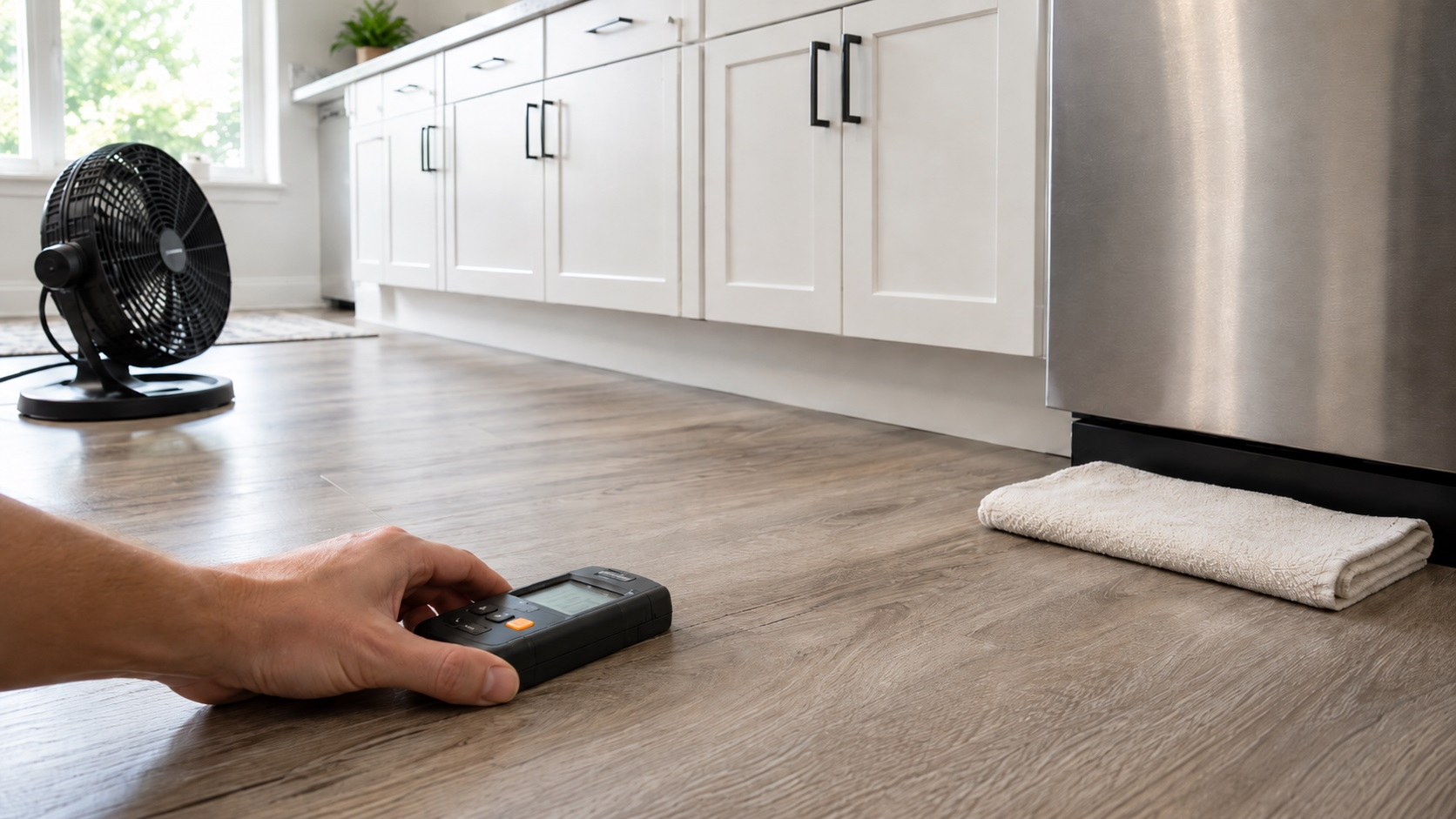
- Using a hygrometer if the kitchen or nearby rooms often feel humid
Create a Kitchen Floor Moisture Check Schedule
A kitchen floor moisture check schedule works best when it focuses on the same repeat-risk areas each time: appliance connections, sink cabinets, flooring seams, toe-kicks, and previously wet spots.
Daily Awareness Checks
Daily awareness helps detect early warning signs before damage becomes severe. These checks require only a few moments and focus on visible changes.
Daily checks include:
- Watching for damp spots near the sink, dishwasher, refrigerator, and cabinet bases
- Noticing musty odors that return after cleaning
- Checking visible plumbing connections for beads of water or fresh staining
- Noting whether moisture returns in the same spot after use, cleaning, or humid weather
Monthly Maintenance Tasks
Monthly inspections provide a deeper level of prevention and help identify developing moisture problems.
Monthly maintenance tasks include:
- Looking under the sink for fresh staining, swelling, or damp cabinet flooring
- Checking dishwasher and refrigerator water-line areas for new dampness
- Examining flooring seams, transitions, and edges for darkening or lifting
- Comparing previously wet areas with nearby dry flooring so subtle changes are easier to spot
Seasonal Moisture Inspections
Seasonal checks are most useful before and during humid months, after heavy appliance use, or after any plumbing repair that may have disturbed supply or drain connections.
Seasonal checks should include:
- Rechecking cabinet bases and toe-kicks before humid weather sets in
- Watching for floor dampness that returns during seasonal humidity changes
- Confirming appliances still have enough airflow around hidden edges
- Inspecting any area that was previously wet before placing mats, storage, or appliances back tightly against it
Early Warning Signs Moisture May Return
Recognizing early warning signs allows preventive action before damage spreads beneath kitchen flooring. Many recurring moisture problems begin with subtle indicators.
Common early warning signs include:
- Recurring musty odors
- Slight floor discoloration
- Dampness along cabinet bases
- Moisture appearing after cleaning
- Changes in flooring texture
If musty odors, discoloration, or soft flooring continue after leak control and drying, review signs of mold under kitchen floors before assuming the issue is only surface moisture.
When Preventive Measures Should Be Re-Evaluated
Even strong prevention strategies require adjustment when conditions change. New appliances, plumbing repairs, seasonal humidity shifts, and structural changes can introduce new moisture risks.
Preventive measures should be re-evaluated when:
- Moisture reappears in previously dry areas
- Kitchen appliances are replaced or relocated
- Flooring materials are modified
- Humidity levels increase unexpectedly
- Structural repairs affect airflow
If the same area becomes damp again after these checks, treat it as an unresolved source problem rather than a normal maintenance issue.
Frequently Asked Questions About Preventing Recurring Moisture Under Kitchen Flooring
How Do You Stop Moisture From Returning Under Kitchen Floors?
Stop recurring moisture by fixing the leak source, confirming the floor and hidden edges have dried, keeping cabinet and appliance areas ventilated, and checking the same high-risk spots regularly.
How Often Should Kitchen Flooring Be Inspected?
Check high-risk kitchen floor areas briefly during normal use, then inspect under sinks, around dishwashers, near refrigerator water lines, and along toe-kicks about once a month. Recheck after appliance work, leaks, heavy cleaning, or seasonal humidity changes.
Can Humidity Cause Recurring Moisture Under Floors?
Yes, especially when humidity combines with poor airflow under cabinets, appliances, or flooring edges. Humidity alone may not be the original leak source, but it can keep small amounts of trapped moisture from drying quickly.
What Areas Should Be Monitored Most Closely?
Sink cabinets, dishwasher connections, refrigerator water lines, flooring seams, and toe-kick areas should receive regular attention because they are common moisture entry points.
Does Preventing Moisture Require Professional Help?
Basic monitoring, ventilation, and visible leak checks can usually be handled by homeowners. Professional inspection is more appropriate when moisture keeps returning to the same floor area, flooring feels soft, odors persist, or the source cannot be confirmed.