
How Poor Drying Causes Mold Recurrence
Poor drying is one of the most common reasons mold comes back after water damage. A leak may be repaired, standing water may be removed, and the surface may look dry, but moisture can still remain inside drywall, trim, flooring, cabinets, insulation, subfloors, or hidden cavities. When those materials stay damp long enough, mold can return days or weeks after the area seemed fixed.
This is why mold recurrence often appears after a homeowner thought the problem was over. The wall no longer feels wet. The floor looks normal. The cabinet was wiped out. The room was aired out. But then a musty smell returns, paint bubbles, baseboards swell, flooring edges lift, or mold appears around the same damp area.
The problem is not always failed cleaning or a brand-new leak. In many cases, mold returns because the water-damaged materials were never dried deeply enough. The broader recurrence pattern is covered in Why Moisture Problems Keep Returning, while this article focuses specifically on how incomplete drying after water damage causes mold to come back.
Why Poor Drying Makes Mold Come Back
Mold does not need standing water to return. It only needs damp material, available organic matter, and enough time. After a leak, flood, roof drip, appliance leak, basement seepage, or HVAC overflow, moisture can remain inside the materials mold grows on or near.
A surface may look dry while deeper layers are still wet. This is the drying mistake that causes many recurring mold problems. The visible face of drywall, flooring, cabinets, or trim may dry first, but the backside, core, underlayment, insulation, or cavity may still hold moisture.
When that hidden dampness remains, the area can support mold even after visible water is gone. Mold may return as dark spots, musty odor, staining, bubbling paint, swollen trim, soft drywall, or edge growth along seams and baseboards.
Poor drying also creates a false sense of completion. If a damp area is repainted, covered with trim, closed inside a cabinet, or buried under new flooring too soon, moisture has less chance to escape and can feed mold behind the finished surface.
This is why water damage prevention is not only about stopping the leak. It is also about confirming that affected materials are dry enough to stay stable. For broader long-term planning, see How to Prevent Recurring Moisture Damage.
Why Surfaces Can Look Dry While Hidden Materials Stay Damp
One of the biggest causes of mold recurrence is uneven drying. The part of the material you can see may dry much faster than the part you cannot see. This happens because visible surfaces have more airflow, while hidden layers are often trapped behind paint, flooring, trim, insulation, cabinets, or wall cavities.
This uneven drying is common because water rarely stays only on the surface. It can wick into edges, soak paper layers, run behind trim, collect under flooring, reach insulation, or settle inside cabinet bases. When the visible surface dries first, the hidden moisture is easy to miss.
Drywall faces can dry before the backside
Drywall can be misleading after water damage. The painted face may feel dry while the backside, paper layer, lower edge, or wall cavity remains damp. This is especially common when water entered from behind the wall, leaked down inside the cavity, or soaked the lower edge near the floor.
When drywall is not dried thoroughly, mold may return around seams, baseboards, corners, or previous stain areas. The wall may also develop bubbling paint, soft spots, crumbling texture, staining, or a musty smell. These signs suggest that moisture may still be inside the wall assembly, not just on the surface.
Drywall drying depends on how wet the material became, how long it stayed wet, whether insulation was affected, and whether air can reach the damp areas. A fan blowing across the painted face may help surface drying, but it may not dry the backside or inside of the wall if moisture is trapped there.
For a dedicated wall recovery guide, see How to Dry Walls After Water Damage.
Flooring can dry on top while moisture stays below
Flooring often hides moisture better than walls. Carpet can feel dry on top while the padding remains wet underneath. Vinyl, laminate, and engineered flooring can look normal while moisture sits in seams, underlayment, adhesive layers, or subflooring. Hardwood may dry on the surface while moisture remains below or between boards.
This is why mold recurrence after floor water damage may first show up as odor rather than visible mold. The room may smell musty, the baseboards may darken, flooring edges may lift, or soft spots may appear. Mold may grow where the floor meets the wall because moisture is moving toward an edge or seam.
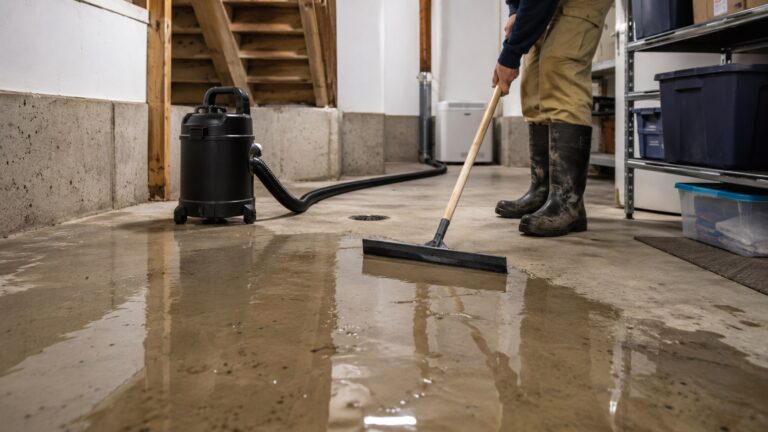
Subfloor moisture is especially important because it is not always visible from above. A dishwasher leak, refrigerator water line leak, toilet leak, door leak, basement seepage, or minor flood can wet the layers below the finished floor. If those layers are not dried properly, mold may return even after the walking surface looks clean.
Cabinets, trim, and insulation can stay damp inside
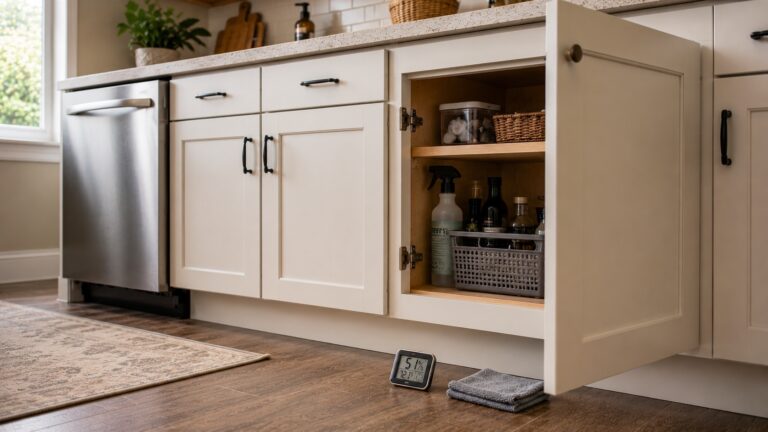
Cabinets and trim often dry slowly because they have unfinished edges, tight seams, and limited airflow. Under-sink cabinets, bathroom vanities, dishwasher spaces, refrigerator areas, and base cabinets can absorb water into the bottom panels, toe kicks, back panels, and side edges. The visible shelf may be wiped dry while the lower material remains damp.
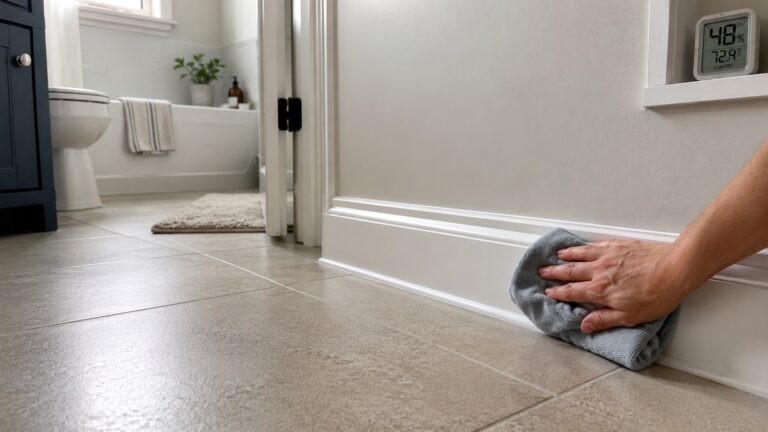
Baseboards and trim can also hide poor drying. After a leak or minor flood, moisture may remain at the wall-floor joint. If baseboards are reinstalled too soon, they can trap damp drywall edges, wet flooring edges, or moisture behind the trim. Later, the trim may swell, darken, smell musty, or grow mold again.
Insulation can create an even bigger drying problem. Wet insulation inside a wall, ceiling, attic, crawl space, or basement finish can hold moisture against nearby drywall, framing, or sheathing. The room-side surface may look dry while the insulation continues to keep hidden materials damp.
Materials Most Likely to Cause Mold Recurrence After Poor Drying
Mold recurrence is more likely when water reaches porous, layered, absorbent, or enclosed materials. These materials do not dry the same way as tile, glass, metal, or other hard nonporous surfaces.
Drywall, baseboards, cabinets, flooring, insulation, and structural wood
Drywall is vulnerable because of its paper facing, gypsum core, cut edges, and backside. If water reaches the lower edge of drywall or enters from behind, the surface may dry while deeper areas stay damp. Mold may return near seams, corners, baseboards, or old stain patterns.
Baseboards and trim are vulnerable because they sit directly against walls and floors. MDF trim, in particular, can swell and hold water along the bottom edge. If mold returns along the same trim line after water damage, the joint may not have dried fully.
Cabinets are vulnerable because their bases and backs often have unfinished or semi-porous material. A small under-sink leak can soak the cabinet floor, wall behind the cabinet, and toe-kick area. If the cabinet is closed before drying is complete, odor and mold can return.
Flooring systems are vulnerable because water can move into padding, underlayment, subfloors, adhesive layers, and seams. Even if the top layer looks dry, moisture underneath can continue causing musty odor, soft spots, lifted edges, and mold at floor-wall joints. For subfloor-specific recovery, see How to Dry Subfloors After Water Damage.
Insulation is vulnerable because it can hold moisture inside hidden spaces. Wet insulation may keep adjacent materials damp and may be difficult to assess without opening the assembly. Structural wood can also stay damp in crawl spaces, wall cavities, roof framing, or basement areas, especially where airflow is limited.
Why Airflow Problems Make Drying Incomplete
Drying requires more than time. Damp materials need a way to release moisture into the air, and that air needs to be dry enough and moving enough to carry moisture away. When air cannot reach the wet material, drying may stop at the surface while deeper layers remain damp.
Poor airflow is common inside wall cavities, under flooring, behind cabinets, behind baseboards, inside closets, under appliances, and in finished basement walls. These areas dry slowly because damp material is enclosed, airflow is limited, and evaporation has fewer escape paths.
Fans can help when they move air across exposed damp surfaces, but fans do not automatically dry hidden layers. A fan in the room may dry the visible wall face while the backside of drywall, wet insulation, subfloor, or cabinet base remains damp. Drying also depends on indoor humidity. If the air is already humid, it cannot pull moisture out of materials as effectively.
Dehumidifiers can support drying by lowering the moisture level in the air, but they are not proof that hidden materials are dry. A dehumidifier may improve room conditions while moisture remains under flooring, inside wall cavities, or inside wet insulation. That is why poor drying should be judged by material condition, odor, staining, and recurrence patterns, not only by how the room feels.
How Premature Repairs Trap Moisture
Premature repair is one of the clearest ways poor drying turns into mold recurrence. When a damp area is painted, sealed, covered, rebuilt, or closed before the moisture has escaped, the repair can trap dampness inside the material.
This often happens because the visible surface looks ready. The stain is dry to the touch, the floor no longer feels wet, or the cabinet looks clean. But hidden layers may still be damp. Once the area is covered, evaporation slows down, and mold has more time to develop behind the repaired surface.
Painting too soon
Painting too soon after water damage can hide moisture instead of solving it. A wall or ceiling may seem dry on the surface, but moisture can remain in drywall paper, joint compound, texture, insulation, or the cavity behind the surface. When paint is applied before those materials are dry, trapped moisture can later cause bubbling, peeling, staining, odor, or mold recurrence.
This is especially common when old stains are primed or painted before the source and drying condition are confirmed. The new finish may look clean for a short time, then the same area may discolor again. Stains that bleed through paint are often a sign that the problem is deeper than the visible surface.
Reinstalling trim or flooring too soon
Trim and flooring can trap moisture when they are reinstalled before the wall, floor edge, subfloor, or cavity is dry. Baseboards may cover damp drywall edges. New flooring may cover wet underlayment or subflooring. Cabinet panels may be replaced while the wall or toe-kick area behind them remains damp.
When this happens, mold may return at the edges first. You may see dark spots along baseboards, musty odor near floor seams, lifted flooring edges, swollen trim, or mold where the floor meets the wall. The new material is not necessarily the cause. It may simply be covering moisture that was never fully removed.
If flooring was affected by a leak or minor flood, the recovery process may need more than surface drying. For floor-specific drying guidance, see How to Dry Flooring After Minor Flooding.
Closing cavities before drying is verified
Wall, ceiling, floor, and cabinet cavities can hold moisture after the visible water is gone. If those areas are closed before drying is verified, moisture may remain trapped inside. This can lead to hidden mold, recurring odor, and new staining after the repair appears complete.
This is common after roof leaks, plumbing leaks, shower leaks, basement seepage, appliance leaks, and HVAC condensate overflows. The visible repair may look good, but if wet insulation, damp framing, wet drywall backs, or subfloor moisture remains, mold can return behind the finished surface.
Hidden moisture caused by incomplete drying is closely related to recurring mold behind surfaces. For more on that mechanism, see How Hidden Moisture Causes Recurring Mold.
Signs Mold Recurrence Is Caused by Poor Drying
Mold recurrence from poor drying usually appears after a known water event. The water may have come from a pipe leak, roof leak, basement seepage, appliance leak, overflowing fixture, minor flood, HVAC drain backup, or condensation problem. If mold appears after one of these events, drying failure should be considered.
Common signs include a musty smell after the area seemed dry, mold returning along seams or trim, bubbling paint, soft drywall, swollen baseboards, warped cabinet panels, lifted flooring, or stains that return after repainting. These signs suggest that moisture remained inside the material or behind the surface.
Timing is also important. Mold that appears days or weeks after water damage often means materials stayed damp long enough to support growth. If the affected area was closed, painted, or rebuilt quickly after the water event, poor drying becomes even more likely.
Same-area mold after a water event can also indicate drying failure. If mold returns at the same baseboard, cabinet seam, floor edge, ceiling stain, or wall patch, the location may have held moisture longer than surrounding areas. The location pattern is covered more broadly in Why Mold Returns in the Same Locations.
Poor drying is especially likely when the area smells musty but does not show obvious new water. That odor may come from damp porous material, wet insulation, carpet padding, subflooring, or enclosed cabinet material. In those cases, the problem may be old water that never fully dried, not a brand-new leak.
Poor Drying vs. Active Leak: How to Tell the Difference
Poor drying and active leaks can look similar because both can cause dampness, stains, odor, and mold. The difference is whether the material is still wet from the original event or is being re-wetted by a continuing source.
Poor drying is more likely when mold appears after a known water event, the same materials were already wet, the area was repaired or covered quickly, and there is no clear repeating trigger. The mold is usually connected to materials that never fully dried.
An active leak is more likely when moisture returns after rain, plumbing use, appliance cycles, HVAC operation, or another repeated trigger. If the area becomes wet again after it had already dried, or if new stains appear beyond the original damaged area, the source may still be active.
A simple way to compare the two is to watch the trigger pattern: poor drying usually follows one past water event, while an active leak usually follows a repeatable event such as rain, running a fixture, using an appliance, or operating the HVAC system.
Sometimes both problems exist at once. A pipe may be repaired, but the cabinet and wall behind it remain damp. A roof leak may be patched, but ceiling insulation stays wet. A basement seepage problem may slow down but still re-wet the lower wall during heavy rain. In these cases, drying and source correction both matter.
For broader recurrence diagnosis beyond drying, see Why Moisture Problems Come Back. Poor drying is one major cause, but recurring moisture can also involve active leaks, humidity, condensation, drainage, or airflow problems.
What to Do If Poor Drying May Be the Cause
If you suspect mold recurrence is caused by poor drying, do not start by covering the area again. A second repair may hide the symptom while leaving damp material in place. The better first step is to confirm whether the affected materials are actually dry, stable, and no longer being re-wetted.
If the water came from sewage, floodwater, a contaminated source, or an area with electrical hazards, do not treat the problem as a normal drying project. Avoid contact with unsafe materials and get professional help before disturbing affected surfaces.
- Review the water event. Note what happened, how long the area was wet, which materials were affected, and how quickly drying began.
- Check for material changes. Look for soft drywall, swollen trim, warped cabinets, lifted flooring, musty odor, bubbling paint, or stains that returned after repair.
- Compare affected and unaffected areas. A damp, cool, soft, or musty surface compared with nearby materials may still be holding moisture.
- Improve safe airflow. Open accessible spaces, move stored items, increase ventilation, and avoid trapping damp materials behind furniture, boxes, or closed cabinet doors.
- Use dehumidification as support. Lowering indoor humidity can help drying, but it should not be treated as proof that hidden materials are dry.
- Do not paint or reinstall finishes too soon. Wait until the source is corrected and the material condition is understood.
- Consider moisture checks. Moisture readings can help compare suspect materials with dry reference areas, especially when the surface looks normal but odor or staining returns. For a more focused post-leak inspection process, see How to Detect Moisture After Small Leaks.
- Remove or replace materials when drying is not realistic. Some porous, contaminated, or deteriorated materials may not be worth saving after prolonged moisture exposure.
- Escalate when hidden materials are involved. Wet insulation, subfloors, wall cavities, structural wood, and recurring mold often require deeper evaluation.
If the area involved walls, floors, cabinets, or hidden cavities, the next step should match the material. Wall drying is different from subfloor drying, and cabinet drying is different from open-room drying. If mold has already returned, also compare the situation with Signs Mold Was Not Fully Removed to decide whether the issue is cleanup failure, drying failure, or both.
Professional help becomes more important when mold returns after a significant water event, when affected materials are hidden, when insulation may be wet, when structural wood is involved, or when the same area keeps smelling musty after drying attempts. In those cases, the problem may need moisture mapping, controlled drying, material removal, or remediation planning. For mold-specific escalation, see When to Hire a Mold Remediation Professional.
FAQ
Can mold come back if an area was not dried properly?
Yes. Mold can come back when drywall, insulation, trim, cabinets, carpet padding, subfloors, or other materials remain damp after water damage. The surface may look dry while deeper materials still hold enough moisture to support mold growth.
How long does water damage need to dry before mold is a risk?
There is no single drying time for every material or situation. Mold risk depends on how wet the material became, how long it stayed damp, the material type, airflow, humidity, temperature, and whether hidden layers were affected. For the fuller timing issue, see How Long Water Damage Takes to Cause Mold.
Can drywall look dry but still cause mold?
Yes. Drywall can look dry on the painted face while the backside, paper layer, lower edge, insulation, or wall cavity remains damp. Mold may return later as odor, staining, soft spots, bubbling paint, or growth near seams and baseboards.
Can carpet or flooring stay wet underneath?
Yes. Carpet can dry on top while padding remains wet below. Vinyl, laminate, hardwood, and engineered flooring can also hide moisture in seams, underlayment, adhesive layers, or subfloors. Musty odor, soft spots, lifted edges, or mold near baseboards can point to hidden floor moisture.
Does a dehumidifier fix poor drying?
A dehumidifier can support drying by lowering indoor humidity, but it does not automatically dry sealed cavities, wet insulation, trapped subfloor moisture, soaked cabinet bases, or active leaks. Use it as support, not as proof that hidden materials are dry.
How do I know if mold is from poor drying or a new leak?
Poor drying is more likely when mold appears after a known water event in materials that were already wet. A new or active leak is more likely when moisture returns after rain, plumbing use, appliance cycles, or HVAC operation. Sometimes both are present: the source was partly fixed, but wet materials never dried fully.
Is musty odor after drying a warning sign?
Yes. A musty odor after an area seemed dry can mean moisture remains inside porous materials, under flooring, behind trim, inside cabinets, or in wall or ceiling cavities. Odor alone does not identify the exact source, but it is a reason to inspect more carefully.
When should I call a professional after poor drying?
Call a professional when mold returns after water damage, the area involves hidden cavities, insulation, subfloors, structural wood, HVAC equipment, widespread odor, or materials that are soft, swollen, warped, or repeatedly damp. Professional drying or remediation may be needed when surface drying is not enough.
Key Takeaways
- Poor drying causes mold recurrence when water-damaged materials stay damp after the surface appears dry.
- Mold can return without standing water if drywall, flooring, trim, cabinets, insulation, or subfloors remain damp.
- Surface drying is not the same as deep drying inside hidden layers and enclosed spaces.
- Porous and layered materials are more likely to hold moisture after leaks, seepage, floods, or appliance failures.
- Poor airflow slows drying behind walls, under flooring, inside cabinets, behind baseboards, and in finished basement areas.
- Painting, reinstalling trim, replacing flooring, or closing cavities too soon can trap moisture and lead to mold recurrence.
- Mold that appears days or weeks after a known water event often points to incomplete drying, especially if the area was painted, covered, or rebuilt quickly.
- Poor drying and active leaks can overlap, so both the original wet materials and any repeating moisture trigger should be checked.
Conclusion
Poor drying causes mold recurrence because the visible surface can recover before the deeper materials are actually dry. A wall, floor, cabinet, ceiling, or trim area may look normal while moisture remains inside drywall, insulation, subflooring, carpet padding, wood, or enclosed cavities.
When those materials stay damp, mold can return through odor, staining, soft surfaces, bubbling paint, swollen trim, lifted flooring, or visible growth. The problem may not be that the area was never cleaned. It may be that the water-damaged materials were closed, covered, or ignored before drying was complete.
The lasting solution is to treat drying as part of moisture control. Stop the water source, confirm that affected materials can actually dry, avoid premature repairs, and investigate deeper when mold returns after a water event. Once the hidden moisture is gone, mold recurrence becomes much less likely.
One Comment
Comments are closed.