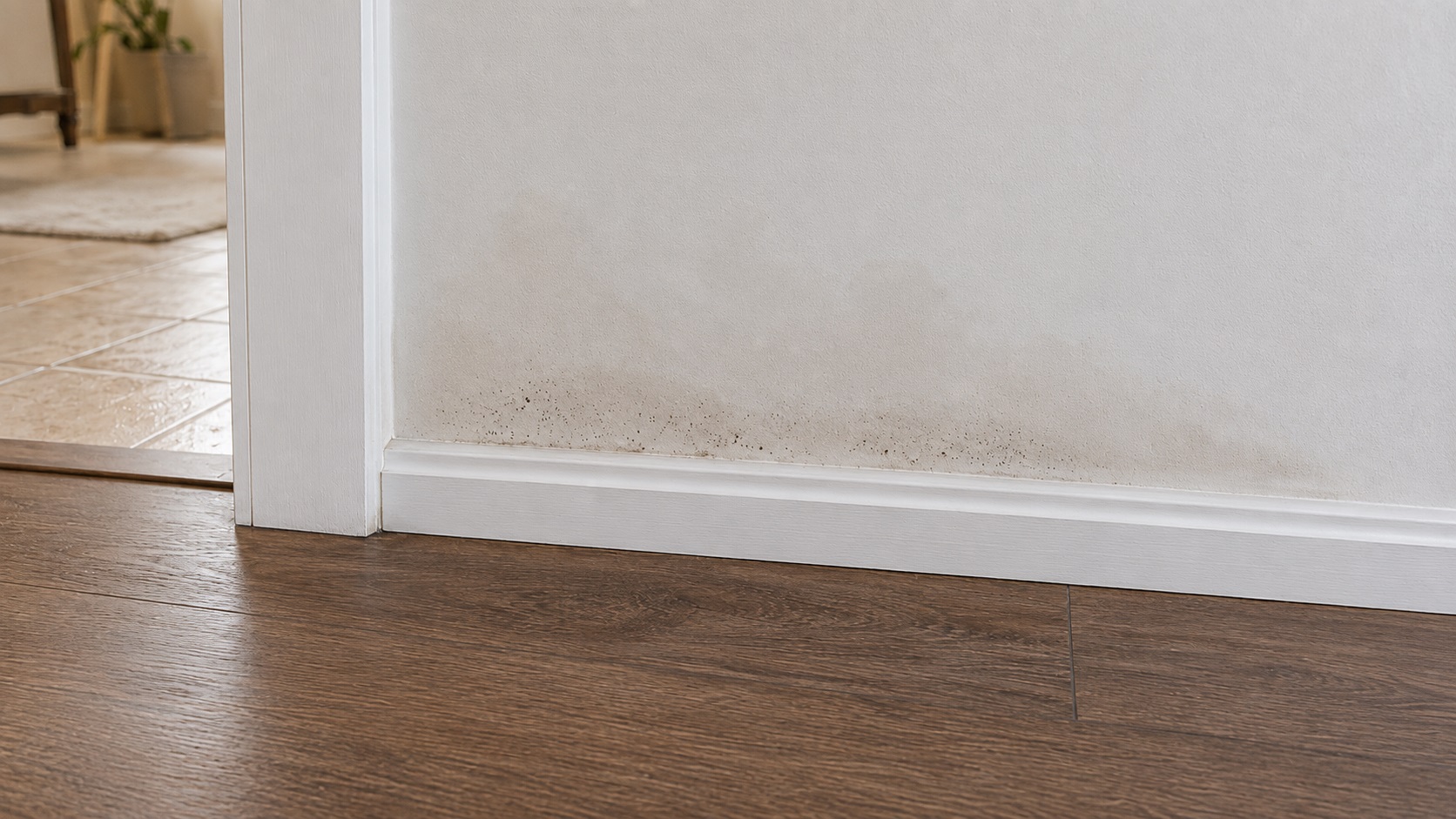
How Long Water Damage Takes to Cause Mold
Water damage does not always cause mold, but the risk can rise quickly when wet materials are not dried completely. In many home situations, the first 24 to 48 hours after water damage are the most important window for preventing mold growth. If drywall, carpet padding, wood, cabinets, insulation, or subfloors stay damp beyond that period, the chance of mold developing becomes much higher.
The exact timeline depends on the material, the amount of water, airflow, humidity, temperature, and whether moisture is trapped behind surfaces. A small leak on a hard floor that is cleaned and dried quickly is very different from water that soaks into carpet padding, wall cavities, cabinet bases, or subfloor seams. Mold risk is not based only on when the leak started. It is based on how long moisture remains inside the materials.
That is why water damage needs more than surface cleanup. A floor may look dry while padding underneath is still wet. A wall may feel normal on the painted side while the drywall paper backing is damp. A cabinet may appear dry on the outside while the toe kick or particleboard base is holding moisture. To prevent recurring moisture damage, the goal is not just to remove visible water. The goal is to dry the affected materials before trapped moisture has time to support mold growth.
How Quickly Can Mold Start After Water Damage?
Mold can begin becoming a concern within 24 to 48 hours after water damage if materials remain damp. That does not mean visible mold will always appear overnight. It means the conditions that support mold can develop quickly once moisture sits on porous or semi-porous materials.
Most homes already contain mold spores in normal indoor dust and air. Spores alone do not create a visible mold problem. They need moisture, a food source, and enough time. Water damage supplies the missing ingredient: sustained dampness. Materials such as drywall paper, carpet backing, wood, cardboard, insulation facing, and cabinet bases can provide surfaces where mold may grow if they stay wet long enough.
The timeline usually looks something like this:
Use this as a risk guide, not a guarantee. Mold risk rises when materials stay wet; visible mold may appear later than the moisture conditions that allowed it to start.
- Within the first few hours: Visible water begins soaking into porous materials. Carpet padding, drywall edges, trim, and cabinet bases can absorb moisture quickly.
- Within 24 hours: Mold risk increases if materials remain wet, especially in warm or humid conditions.
- Between 24 and 48 hours: This becomes the critical drying window for many common household materials.
- After 48 hours: If porous materials are still damp, hidden mold risk becomes more serious, especially behind walls, under flooring, and inside cavities.
- After several days: Musty odors, staining, swelling, and hidden microbial growth become more likely if moisture was not fully removed.
The key distinction is that mold risk can begin before mold is easy to see. If moisture remains behind baseboards, under flooring, inside drywall, beneath carpet padding, or around subfloor seams, the timeline continues even after the visible water is gone.
For a deeper explanation of mold growth timing itself, see how long mold takes to grow after water damage. This article focuses more specifically on how long water damage can remain wet before it becomes a mold-risk problem and what homeowners should do during that window.
Why the First 24 Hours Matter So Much
The first 24 hours after water damage are the best chance to stop a moisture problem before it turns into a mold problem. At this stage, the goal is to remove liquid water, expose damp materials to airflow, lower indoor humidity, and check areas where water may have traveled out of sight.
Fast action matters because water spreads into building materials by absorption and gravity. A leak under a sink may start in one cabinet but travel beneath the cabinet base. A washing machine overflow may wet the floor surface but also reach under baseboards. A roof leak may appear as a ceiling stain while the insulation above it stays damp. The longer the water sits, the deeper it can move into materials that are harder to dry.
During the first day, homeowners should focus on four priorities:
- Stop the water source. Shut off the leaking supply line, stop the appliance, patch the temporary entry point, or prevent more water from entering if it is safe to do so.
- Remove standing water. Use towels, a wet/dry vacuum, a pump, or extraction equipment depending on the amount of water and safety conditions.
- Start controlled drying. Use airflow and dehumidification to move moisture out of affected materials and indoor air.
- Check hidden areas. Look near trim, cabinets, wall bases, flooring edges, insulation, and subfloor transitions where water can remain trapped.
It is a mistake to assume that wiping up the puddle resets the clock. Visible water may disappear quickly while absorbent materials remain damp. Drywall can wick water upward from the bottom edge. Carpet can feel only slightly damp on top while the padding below is saturated. Wood subfloors can hold moisture at seams, fastener points, and edges. Cabinet bases made from particleboard or MDF can swell and retain moisture even after the surrounding floor appears dry.
If walls were affected, the next step is usually to evaluate whether the drying is only surface-level or whether moisture entered the wall assembly. For wall-specific drying guidance, see how to dry walls after water damage. Wall cavities, baseboards, insulation, and drywall edges often need more attention than the painted surface suggests.
Humidity also affects the first 24 hours. If indoor humidity is high, wet materials dry more slowly. Running fans without controlling humidity can move air around without removing enough moisture from the room. In many cases, dehumidification is what allows moisture to leave wet materials and stay out of the air. This is especially important in basements, laundry rooms, bathrooms, kitchens, crawl space-adjacent rooms, and other areas that already tend to hold moisture.
The first day is also when homeowners should decide whether the water damage is simple enough to manage or whether it may require professional drying. Small, clean-water spills on hard surfaces are often manageable when handled immediately. Water that reaches drywall, carpet padding, insulation, subfloors, or hidden cavities is more serious. The first 24 hours should be treated as an inspection and drying window, not just a cleanup window.
What Happens Between 24 and 48 Hours?
Between 24 and 48 hours after water damage, the risk picture changes. This is the window where damp materials that were not fully dried can begin shifting from a temporary moisture problem into a mold-risk problem. The area may still look manageable, but moisture may already be sitting inside materials that dry slowly.
This does not mean every wet surface will show mold after one or two days. It means porous building materials that are still wet during this window deserve closer inspection, faster drying, or professional evaluation.
The 24 to 48 hour period is especially important when water has reached:
- carpet padding or carpet backing,
- drywall edges or wall cavities,
- baseboards and floor trim,
- wood subfloors,
- particleboard cabinets or toe kicks,
- insulation,
- ceiling cavities,
- stored boxes, fabrics, or paper materials.
At this stage, the best check is not just whether the surface feels dry. Look for moisture at edges, seams, underside layers, and enclosed spaces where air has not been moving.
These materials can keep moisture in contact with surfaces after visible water is gone. A kitchen floor may look dry while water remains below the dishwasher, under cabinet edges, or beneath floating flooring. A ceiling stain may stop dripping while wet insulation above the drywall continues holding moisture.
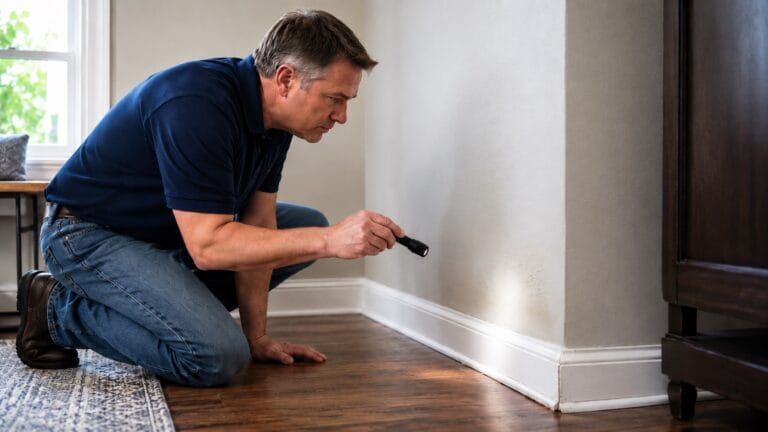
During this stage, homeowners should not rely only on appearance. Touch can help, but it is not enough. A surface may feel dry while deeper layers remain damp. A moisture meter, careful inspection, or professional drying assessment may be needed when water reached layered materials. If the leak was small but you are not sure whether the area is still wet, the next step is often to detect moisture after small leaks rather than assuming the problem is finished.
The most important question during this window is not, “Do I see mold yet?” It is, “Are the affected materials actually dry?” Mold prevention depends on removing the conditions that allow growth. If dampness is still present at the 24 to 48 hour mark, the area deserves closer attention.
What Happens If Water Damage Stays Wet Longer Than 48 Hours?
After 48 hours, water damage becomes more concerning when materials are still damp. At this point, the issue is no longer just cleanup. It may involve hidden moisture, material deterioration, and possible mold growth in areas that are difficult to see.
The longer materials stay wet, the more likely you are to notice secondary signs such as:
- musty odors,
- new staining or discoloration,
- swollen trim or baseboards,
- soft spots in flooring,
- paint bubbling or peeling,
- warped cabinet panels,
- damp insulation,
- recurring condensation near the damaged area.
These signs do not always prove that mold is present, but they do show that moisture may still be active. A musty smell is especially important because it can appear before mold is obvious on the surface. If the odor returns after cleaning or airing out the room, moisture may be trapped in a hidden area.
After 48 hours, some materials become much harder to save. Carpet padding that stayed wet may need removal. Wet insulation often loses performance and can hold moisture against wood or drywall. Particleboard cabinets may swell and break down. Drywall that stayed wet at the base can remain damp inside even when the painted face looks normal. Wood framing and subfloors may still be salvageable in some cases, but they need proper drying and moisture verification.
This is where homeowners often underestimate the problem. They may run a fan for a day, stop when the surface looks better, and then discover staining or odor later. Drying has to move moisture out of the material, into the air, and out of the room through dehumidification, ventilation, or mechanical drying. If humid air is not controlled, wet materials can stay damp long enough to support mold.
Subfloors deserve special attention after the 48 hour mark. Water can collect beneath finished flooring, at seams, around fasteners, and near wall edges. If flooring feels soft, cupped, spongy, or uneven after water damage, the problem may be below the visible surface. For floor assemblies, see how to dry subfloors after water damage before assuming the top layer tells the whole story.
Water damage that remains damp beyond 48 hours is also more likely to need professional evaluation when the affected area is large, hidden, contaminated, or connected to structural materials. This does not mean every delayed cleanup becomes a disaster. It means the margin for casual DIY drying becomes smaller. If water entered wall cavities, insulation, subfloor layers, crawl space framing, or electrical areas, professional drying and inspection may be the safer path.
The main rule is simple: the mold-risk clock keeps running as long as the material stays damp. If the leak happened three days ago but the area was fully dried within the first day, the risk is much lower. If the leak happened one day ago but the carpet padding, drywall, or cabinet base is still wet, the risk is still active. Time matters, but moisture persistence matters more.
Which Materials Grow Mold Fastest After Water Damage?
Not every wet material has the same mold risk. Some surfaces can be cleaned and dried quickly. Others absorb water, trap it, and keep organic material damp long enough for mold to develop. The fastest mold-risk materials are usually porous, layered, paper-faced, wood-based, or hidden from airflow.
A small amount of water on tile that is removed right away may cause little long-term risk. The same amount of water under carpet padding, inside drywall, or beneath cabinets can remain wet much longer and create a higher mold risk.
Carpet and Carpet Padding
Carpet padding is one of the highest-risk materials after water damage because it acts like a sponge. The carpet surface may feel only slightly damp while the padding underneath is saturated. If that padding stays wet, it can hold moisture against the carpet backing, subfloor, tack strips, and baseboards.
This is especially common after appliance overflows, basement seepage, toilet leaks, and minor flooding. A homeowner may extract water from the top of the carpet and assume the problem is solved, but the padding can continue feeding moisture into the surrounding materials. When carpet has been wet for more than a short period, drying needs to reach below the surface. In some cases, padding may need to be lifted, dried separately, or removed.
Carpet is also more concerning when the water source is not clean. Clean water from a supply line is different from floodwater, sewage, or water that passed through dirty building materials. If contamination is possible, the decision is no longer just about mold timing. It becomes a safety and sanitation issue.
Drywall and Wall Cavities
Drywall is vulnerable because the paper facing can support mold when it stays damp. The gypsum core itself is not the main food source, but the paper layers, dust, paint films, and nearby wood or insulation can hold enough organic material for growth. Drywall also wicks water upward from the bottom edge, so a small amount of water on the floor can affect the lower wall.
One of the biggest problems with drywall is that the painted surface may not show the full moisture pattern. Water can move behind baseboards, soak the back side of drywall, or enter wall cavities through gaps at the floor line. If insulation inside the wall becomes wet, drying becomes slower and mold risk increases.
Warning signs include bubbling paint, soft drywall, stains near the base of the wall, a musty odor, swollen trim, or recurring dampness after fans have been used. If wall materials stayed wet past the critical window, surface drying may not be enough.
Subfloors and Wood Framing
Wood does not usually fail instantly after getting wet, but it can hold moisture long enough to create mold and structural concerns if drying is incomplete. Plywood, OSB, and dimensional lumber can absorb water through edges, seams, fastener holes, and exposed surfaces. Subfloors are especially vulnerable because finished flooring above them can slow evaporation.
A subfloor may remain damp under vinyl, laminate, engineered wood, carpet, or cabinets even after the visible room surface looks normal. If moisture stays trapped, the floor may begin to feel soft, uneven, swollen, cupped, or spongy. Mold may develop on the underside of the subfloor, along seams, or near wall edges where airflow is limited.
Wood framing and subfloors need time and airflow to dry properly. In some cases, they can be saved if drying begins quickly and moisture levels are verified. In other cases, persistent wetting, hidden cavities, or repeated leaks can lead to more serious deterioration.
Cabinets, Trim, and Baseboards
Cabinets, trim, and baseboards are common mold-risk areas because they sit at the edges of water damage. Water often runs under cabinets, behind toe kicks, along baseboards, and into small gaps at the wall-floor junction. These areas may receive less airflow than open floor surfaces, so they dry more slowly.
Many cabinet boxes are made from particleboard, MDF, plywood, or laminated wood products. Once these materials absorb water, they may swell, delaminate, soften, or hold moisture behind finished surfaces. A cabinet may look acceptable from the front while the bottom panel or toe kick is still damp.
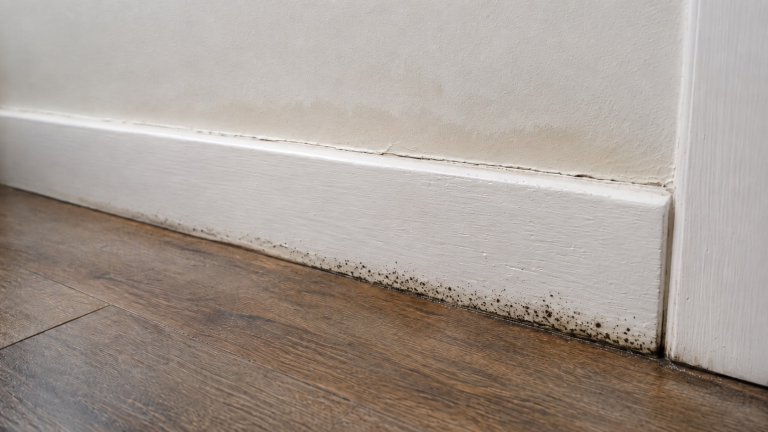
Baseboards can also hide water damage. Moisture can sit behind trim, soak the lower drywall edge, or remain trapped where caulk, paint, and flooring meet. If trim is swollen, separated from the wall, stained, or musty, the area behind it may need closer inspection.
Insulation and Ceiling Cavities
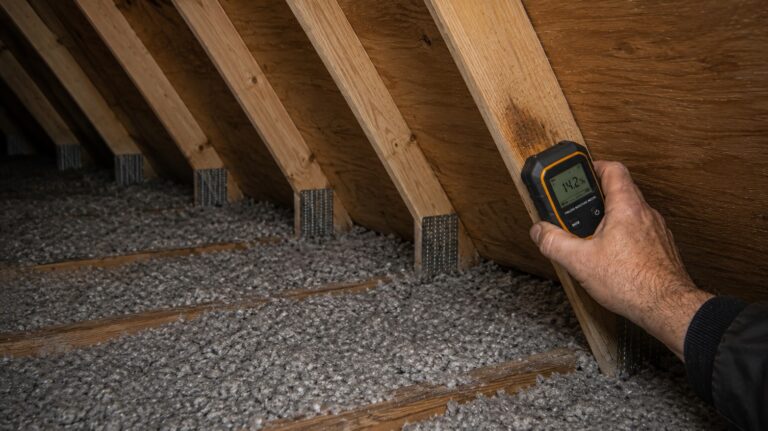
Insulation is a major concern after roof leaks, plumbing leaks above ceilings, wall leaks, and flooding that reaches wall cavities. Wet insulation can hold moisture against framing, drywall, and sheathing. It can also slow drying because air may not move freely through the cavity.
Some insulation loses effectiveness after wetting, especially if it compresses or stays damp. Even when the visible ceiling stain dries, insulation above the drywall may still be holding moisture. This can keep the mold-risk timeline active after the leak appears to have stopped, so wet insulation should be evaluated carefully before assuming the ceiling assembly is dry.
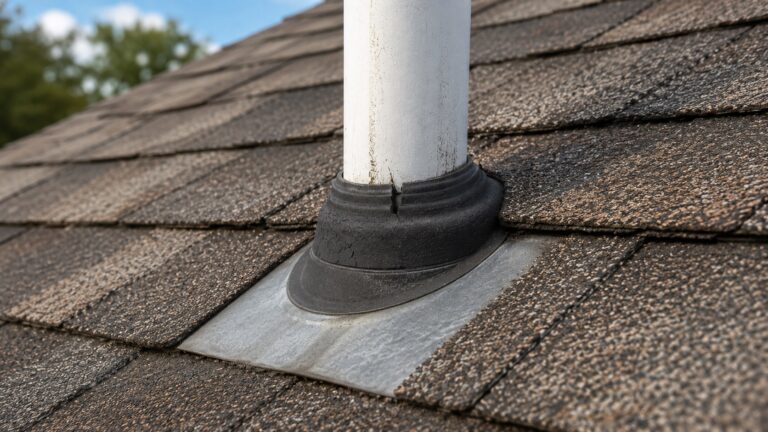
Ceiling cavities are especially easy to underestimate. A small stain may be the visible end of a larger wet area above. If the leak came from a roof, bathroom, plumbing line, HVAC unit, or attic condensation, the cavity should be evaluated carefully before assuming the ceiling is dry.
The overall pattern is simple: materials that absorb water and receive little airflow create the fastest mold risk. Hard, nonporous surfaces are usually easier to dry, but they can still hide moisture underneath or behind them.
Why Mold Can Develop Even After the Surface Looks Dry
Visible drying does not always mean complete drying. Mold risk depends on the moisture that remains inside materials, not just the moisture you can see on the surface.
This is common after water damage because building materials are layered. Finished flooring may cover damp subflooring. Baseboards may hide wet drywall edges. Cabinets may conceal water trapped under toe kicks. Paint may cover damp drywall paper. Carpet may feel dry on top while padding underneath remains wet.
Moisture can also move after the original leak stops. Water may wick upward through drywall, spread sideways under flooring, collect at wall-floor junctions, or settle into low spots under cabinets and appliances. If those areas do not get enough airflow, they can stay damp after the visible puddle is gone.
That is why a musty smell after water damage should not be ignored. A musty odor does not always prove there is a large visible mold problem, but it often means moisture remained long enough for hidden microbial activity, damp dust, or wet building materials to create odor. If the smell returns after cleaning, the issue may be behind surfaces rather than on them.
Homeowners should be especially cautious when water damage affected covered or enclosed areas, including:
- under floating floors, laminate, vinyl plank, or carpet;
- behind baseboards and lower wall trim;
- inside cabinets and toe-kick spaces;
- below appliances such as dishwashers, refrigerators, and washing machines;
- inside wall cavities;
- above ceilings after roof or plumbing leaks;
- inside insulation or around framing.
If the affected area keeps smelling damp, feels cool to the touch, shows new staining, or develops swelling after the surface was cleaned, the water damage may not be dry. In that case, it is better to verify the moisture than to wait for visible mold. Articles such as signs of moisture returning after repairs can help you recognize when the problem is continuing after the first cleanup attempt.
How to Reduce Mold Risk After Water Damage
The best way to reduce mold risk after water damage is to dry the affected materials quickly and completely. Mold prevention is not about spraying the surface, painting over stains, or sealing damp materials and hoping the problem goes away. It is about removing the moisture conditions that allow mold to grow.
Start by stopping the water source. If a pipe, appliance, roof leak, toilet, water heater, or drain is still adding moisture, drying will not work. The leak or intrusion source must be controlled first. After that, remove standing water as quickly and safely as possible.
For small clean-water events, towels, a wet/dry vacuum, fans, and a dehumidifier may be enough if the water did not enter hidden areas. For larger events, covered materials, or wet wall and floor assemblies, more careful drying may be needed. The key is to dry the material, not just the room air.
Use these steps to lower the risk:
- Remove visible water quickly. Standing water gives materials more time to absorb moisture.
- Move air across damp surfaces. Airflow helps evaporation, especially along walls, floors, and cabinet bases.
- Lower indoor humidity. A dehumidifier helps pull moisture out of materials and keeps damp air from slowing the drying process.
- Lift or expose trapped materials when appropriate. Carpet edges, baseboards, cabinet toe kicks, or wet padding may need inspection if water traveled underneath.
- Remove unsalvageable porous items. Wet cardboard, soaked padding, damaged insulation, and swollen particleboard may not dry safely or completely.
- Check moisture after the surface looks dry. Use observation, touch, odor, humidity tracking, or moisture readings when hidden dampness is possible.
If you use a moisture meter, compare the affected material with a similar dry area nearby rather than relying on one isolated reading. A suspiciously higher reading near the leak path is often more useful than a single number taken out of context.
If the water damage came from a minor clean-water leak, see how to prevent mold after minor water leaks for a more focused prevention workflow. Small leaks are often manageable when handled early, but they still need follow-up checks because moisture can hide under trim, flooring, and cabinet edges.
Drying should continue until affected materials are actually dry, not just until the room feels better. In some cases, that may take more than a day. In other cases, materials may need removal because they cannot dry properly in place. The more absorbent and enclosed the material is, the more carefully it should be evaluated.
After the area appears dry, continue monitoring it. Look for odors, stains, swelling, peeling paint, soft flooring, or recurring dampness. If you repaired a leak or dried an area recently, monitoring areas after leak repairs can help catch moisture that returns before it turns into a larger mold or structural problem.
When Water Damage Is No Longer a Simple DIY Drying Job
Some water damage can be handled by a homeowner when the water is clean, the area is small, and drying starts immediately. But other situations move beyond simple DIY cleanup. The risk increases when water reaches hidden materials, remains damp beyond the 24 to 48 hour window, or involves safety hazards.
Consider professional help, and avoid disturbing contaminated or moldy materials without proper protection, when any of these conditions apply:
- water affected multiple rooms or a large floor area;
- carpet padding, insulation, or wall cavities are wet;
- water came from flooding, sewage, toilet overflow, or a contaminated source;
- the area still smells musty after drying attempts;
- drywall, cabinets, or flooring are swollen, soft, or deteriorating;
- water entered electrical areas, outlets, appliances, or mechanical systems;
- you cannot confirm whether hidden materials are dry;
- the same area has had repeated water damage.
Professional restoration is not only about removing water. A qualified restoration company can use moisture meters, extraction equipment, drying systems, containment methods, and material-removal decisions to reduce the chance that damp areas remain hidden. This becomes especially important after flooding, major plumbing leaks, roof leaks, and water damage that sat for more than two days.
If you are unsure whether the situation has crossed that line, see when to call water damage restoration services. That decision should be based on the source of water, the amount of affected material, the time materials stayed wet, and whether the moisture is visible or hidden.
Do not take risks with electrical systems after water damage. If water reached outlets, wiring, panels, appliances, HVAC equipment, or standing water near electrical sources, avoid touching the area until it has been made safe. Mold prevention matters, but electrical safety comes first.
FAQ
Can mold grow after only 24 hours of water damage?
Mold can become a concern after about 24 hours if materials remain damp, especially on porous surfaces such as drywall paper, carpet padding, wood, insulation, and cabinets. That does not mean visible mold will always appear after one day. It means the conditions that allow mold to develop may already be present if drying has not started or if hidden materials are still wet.
Does water damage always cause mold?
No. Water damage does not always cause mold. If the water source is stopped quickly, visible water is removed, and affected materials are dried completely within the critical window, mold may never develop. The risk rises when moisture remains trapped in porous materials, wall cavities, flooring layers, insulation, or enclosed spaces.
Is drywall safe if it feels dry on the surface?
Not always. Drywall can feel dry on the painted face while the lower edge, back side, or wall cavity remains damp. This is especially common when water reached the base of a wall, soaked behind trim, or entered insulation. If the drywall is soft, stained, swollen, musty, or was wet for more than a short period, it should be checked more carefully.
How long can carpet stay wet before mold becomes a concern?
Carpet and padding can become a mold concern within the 24 to 48 hour window if they stay damp. Padding is often the bigger problem because it holds water underneath the carpet where airflow is limited. If carpet was wet from contaminated water, sewage, floodwater, or a toilet overflow, the issue is also a sanitation concern, not just a mold timeline concern.
What if I cleaned up the water but smell mustiness?
A musty smell after water damage often means moisture may still be present somewhere. It could be under flooring, behind baseboards, inside cabinets, in carpet padding, or inside a wall or ceiling cavity. Cleaning the surface may not remove the odor if damp materials remain hidden. The area should be inspected for lingering moisture before assuming it is safe.
Are fans enough to prevent mold after water damage?
Fans can help, but they are not always enough by themselves. Air movement helps moisture evaporate from surfaces, but the moisture still needs to leave the room. In many cases, dehumidification is needed so damp air does not slow the drying process. Fans also may not dry hidden areas under flooring, behind walls, inside insulation, or beneath cabinets unless those areas are exposed or professionally dried.
When should I stop DIY drying?
Stop relying on DIY drying if the affected area is large, the water source was contaminated, materials stayed wet longer than 24 to 48 hours, you smell mustiness, or moisture reached wall cavities, insulation, subfloors, electrical areas, or multiple rooms. Those situations often need professional inspection or restoration because hidden moisture can remain active after surface drying.
Quick Mold-Risk Timeline After Water Damage
- Mold risk can begin within 24 to 48 hours after water damage if materials remain damp.
- Visible mold may not appear immediately, even when mold-friendly conditions are already present.
- The most important factor is how long materials stay wet, not just when the leak happened.
- Carpet padding, drywall, insulation, cabinets, trim, and subfloors are higher-risk materials.
- Surface drying is not enough if moisture remains under flooring, behind walls, or inside cavities.
- Professional restoration may be needed when water damage is widespread, hidden, contaminated, or still damp after the critical drying window.
The Clock Stops When the Materials Are Dry
Water damage can begin creating mold risk quickly when porous materials stay damp for more than 24 to 48 hours. Mold is not automatic, but fast action, complete drying, humidity control, and careful inspection greatly reduce the risk.
The safest way to think about the timeline is this: the clock does not stop when the puddle is gone. It stops when the affected materials are actually dry. If moisture remains inside drywall, carpet padding, subfloors, cabinets, insulation, or hidden cavities, mold risk can continue even after the surface looks normal.
For long-term protection, treat every water damage event as both a cleanup issue and a moisture-control issue: stop the source, dry the materials, check hidden areas, and monitor the space afterward.