
Why HVAC Units Leak Water Indoors (Common Causes and What It Means)
If your HVAC unit is leaking water inside your home, the system is producing or collecting condensation faster than it can drain it away. Air conditioners naturally remove moisture from indoor air, but that water should move into a drain pan, pass through a condensate line, and exit the home safely.
Indoor HVAC leaks are usually caused by a clogged condensate drain line, an overflowing or damaged drain pan, a frozen evaporator coil, condensate pump failure, poor airflow, high indoor humidity, or loose drain components. The location and timing of the leak often reveal which problem is most likely.
If water is actively dripping, shut the system off if it is safe to do so, keep water away from electrical components, and start looking for the source before drying surrounding materials. Understanding why HVAC drain lines overflow can help explain one of the most common causes, while how to dry areas affected by HVAC condensation covers the cleanup side after the leak is controlled.
How HVAC Systems Produce and Manage Water
Air conditioning systems remove humidity from indoor air during the cooling process. Indoor leaks happen when the water produced during that process cannot drain away correctly.
The Role of Condensation in Cooling
As warm air passes over cold evaporator coils, moisture in the air condenses into water. This is a normal and expected part of how air conditioners operate.
The condensation forms on the coils and drips into a drain pan located beneath them. From there, it flows through a drain line and exits the home safely.
What Prevents Water from Leaking Indoors
Several components work together to ensure that condensation is properly managed:
- The drain pan collects water from the coils
- The condensate drain line carries water out of the system
- Proper slope ensures water flows away from the unit
- Airflow helps prevent excess condensation buildup
- Insulation reduces unwanted condensation on external surfaces
If any part of this system fails or becomes restricted, water can begin to accumulate. Over time, this buildup leads to leaks inside the home.
Why Leaks Are a Warning Sign
Water leaking from an HVAC system is not normal and should never be ignored. Even small leaks indicate that moisture is not being handled properly.
In many cases, leaks develop gradually. Homeowners may first notice minor dripping or dampness before more obvious water damage appears. These early signs often overlap with broader condensation issues. Reviewing signs of HVAC condensation problems can help identify whether the system is already struggling to manage moisture.
The goal is to identify whether the water is backing up, overflowing, forming on cold surfaces, or being released after ice melts. That distinction usually points to the next inspection step.
Most Common Causes of Indoor HVAC Water Leaks
When an HVAC unit leaks water indoors, the problem almost always traces back to a failure in how condensation is handled. While several different issues can cause leaks, most fall into a few key categories related to drainage, system operation, or component failure.
Clogged Condensate Drain Line
The most common cause of indoor HVAC water leaks is a clogged drain line. Over time, algae, dust, and debris can build up inside the pipe, restricting water flow.
- Water backs up into the drain pan
- The pan fills beyond capacity
- Overflow spills into surrounding areas
This type of leak usually develops gradually and worsens over time. If you suspect the drain line is restricted, how to inspect HVAC drain lines for blockages covers the inspection process in more detail.
Overflowing or Damaged Drain Pan
The drain pan is designed to collect condensation and direct it into the drain line. If the pan becomes damaged or overwhelmed, it can allow water to escape.
- Cracks or corrosion allow water to leak through
- Misalignment prevents proper drainage
- Excess water fills the pan faster than it can drain
Leaks caused by the drain pan often appear directly beneath the HVAC unit.
Frozen Evaporator Coil Melting
Evaporator coils can freeze when airflow is restricted or refrigerant levels are low. When the system shuts off, the ice melts and releases a large amount of water at once.
- Sudden heavy dripping after the system cycles off
- Intermittent leaking patterns
- Water appearing unexpectedly
This type of leak may seem unpredictable, but it is often linked to airflow or system performance issues.
Do not keep running the system if the coil is frozen. Continued operation can worsen icing, increase water release when the ice melts, and point to a problem that needs airflow, filter, blower, or refrigerant evaluation.
Condensate Pump Failure
Some HVAC systems rely on a condensate pump to move water out of the system. If the pump fails, water cannot be removed effectively.
- Water collects in the drain pan
- Overflow occurs quickly once capacity is reached
- Leaks may appear suddenly
Pump failures are more common in systems located in basements or areas where gravity drainage is not possible.
Loose or Disconnected Drain Components
Connections between drain lines and components can loosen over time due to vibration or wear. When this happens, water may leak before it exits the system.
- Dripping from pipe connections
- Moisture appearing inside walls or ceilings
- Leaks that do not follow a consistent pattern
These leaks are often slow and can go unnoticed until damage becomes visible.
If water exposure has already affected surrounding materials, reviewing how to dry areas affected by HVAC condensation can help prevent further damage and reduce the risk of mold development.
Less Obvious Causes Homeowners Often Overlook
Some HVAC leaks happen even when the system still cools the home. In those cases, airflow, humidity, insulation, or installation problems may be increasing condensation or sending water where it should not go.
Poor Airflow Across the System
Airflow plays a major role in how condensation forms and drains. When airflow is restricted, the evaporator coil can become colder than intended, increasing the amount of moisture produced.
- Dirty air filters reduce airflow through the system
- Blocked ducts limit circulation
- Fan or blower issues prevent proper air movement
This increased condensation can overwhelm the drain system, especially if it is already partially restricted. Over time, this leads to leaks even without a full blockage.
High Indoor Humidity Levels
Homes with elevated humidity place additional strain on HVAC systems. The system must remove more moisture from the air, which increases the amount of water entering the drain system.
- Longer cooling cycles produce more condensation
- Drain lines must handle increased water flow
- Small drainage issues become more severe
High humidity can make a partly clogged drain line, weak airflow problem, or poorly insulated duct leak more often. Understanding why moisture problems keep returning can help explain why leaks may continue even after temporary fixes.
Insulation Problems Causing Surface Condensation
When ducts or HVAC components are not properly insulated, condensation can form on surfaces outside the system.
- Cold metal surfaces attract moisture from warm air
- Water forms on ducts, pipes, or fittings
- Condensation drips into surrounding areas
This type of leak is often mistaken for internal system failure, but it is actually caused by environmental conditions around the equipment.
Improper Installation or System Design
Some HVAC leaks are caused by installation issues that prevent proper drainage or airflow.
- Drain lines installed without proper slope
- Components positioned incorrectly
- Systems sized improperly for the space
These issues can lead to persistent leaks that are difficult to resolve without correcting the underlying setup.
How Leak Location Helps Identify the Cause
Start by noting where the water appears, when it appears, and whether it happens during cooling, after the system shuts off, or only during humid weather. Those details often narrow the cause before any parts are removed.
Leaks from Ceilings or Upper Floors
Leaks appearing in ceilings are commonly linked to attic-mounted HVAC systems.
- Drain pan overflow can allow water to drip onto ceiling drywall
- Clogged drain lines cause water to back up and spill
- Frozen coils may release water when ice melts
If the leak appears near a vent, condensation at the duct connection may also be involved.
Water Pooling Near the HVAC Unit
Leaks near the base of the system are often caused by drainage issues.
- Clogged drain lines prevent water from exiting
- Drain pan overflow releases water directly below the unit
- Condensate pump failure causes rapid buildup
This is one of the most common leak patterns in indoor HVAC systems.
Water Dripping from Vents
Water coming from vents is usually related to condensation forming on ductwork.
- Cold air inside ducts creates temperature differences
- Warm, humid air condenses on duct surfaces
- Water drips through vent openings
This type of issue is often linked to insulation problems or high humidity levels.
Leaks Appearing in Walls
Water appearing inside walls can indicate hidden drainage problems.
- Drain lines running inside walls may be leaking
- Connections may be loose or damaged
- Water may be traveling from the HVAC system to another location
These leaks can be more difficult to diagnose because the source is not immediately visible.
Warning Signs Before Leaks Become Severe
Most HVAC leaks develop gradually, with early warning signs appearing before major water damage occurs. Recognizing these signs can help prevent more serious problems.
Intermittent Dripping or Dampness
- Small amounts of water appear occasionally
- Damp spots form and then dry
- Leaks seem inconsistent at first
This often indicates a developing drainage issue that has not yet reached full overflow.
Musty Odors Near the System
- Odor is strongest near the HVAC unit
- Smell increases when the system runs
- Indicates moisture is present even if not visible
Musty smells often signal stagnant water or early mold development.
Visible Condensation on Components
- Water forming on pipes or ducts
- Condensation appearing during cooling cycles
- Surfaces remaining damp longer than expected
These signs suggest that moisture is not being managed effectively and may lead to leaks.
Recurring Stains or Discoloration
- Ceiling or wall stains that reappear
- Areas that darken over time
- Signs of repeated moisture exposure
Recurring stains indicate that moisture is continuing to affect the same area and may eventually lead to visible leaks or damage.
What Indoor HVAC Leaks Can Lead To
Even a small HVAC leak can damage nearby materials if it repeats or stays hidden long enough. The main risks are mold growth, material deterioration, and moisture spreading beyond the visible leak area.
Mold Growth in Damp Areas
Moisture from HVAC leaks creates ideal conditions for mold to develop. This is especially true in areas where airflow is limited and materials remain damp.
- Mold can form on drywall, wood, and insulation
- Musty odors may spread through the HVAC system
- Hidden mold may develop behind walls or ceilings
If mold signs are already present, reviewing signs of mold growth from HVAC condensation can help you determine how far the problem has progressed.
Structural Damage to Building Materials
Water weakens many common building materials over time. Even repeated minor leaks can cause long-term deterioration.
- Drywall may soften, swell, or crumble
- Wood framing can warp or weaken
- Flooring materials may buckle or separate
Structural damage often develops gradually and may not be immediately visible.
Hidden Moisture Problems
One of the biggest risks of HVAC leaks is moisture spreading into areas that are difficult to access.
- Water can travel inside walls and ceilings
- Moisture may remain trapped behind surfaces
- Damage can continue even after visible leaks stop
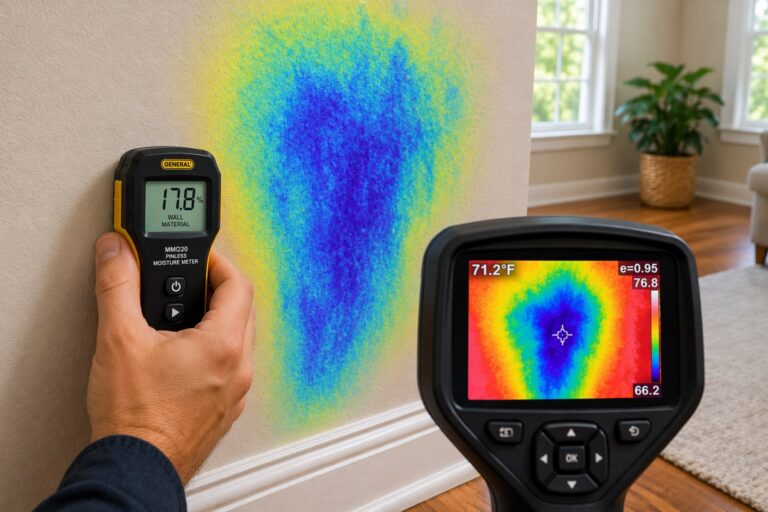
Hidden moisture is often the reason problems return later. Learning how to find hidden moisture in different areas of your home can help identify areas that need further inspection.
When to Call a Professional
While some minor issues can be monitored, certain conditions require professional evaluation to prevent ongoing damage and system failure.
Leaks That Continue or Get Worse
- Water continues to appear after initial cleanup
- Leaks happen repeatedly during normal operation
- Moisture spreads to new areas
Persistent leaks usually indicate that the root cause has not been resolved.
Ceiling or Structural Damage
- Stains appear on ceilings or walls
- Materials feel soft or weakened
- Damage extends beyond the immediate HVAC area
These signs suggest that moisture has been present long enough to affect structural components.
Unclear Source of the Leak
- Water appears without an obvious cause
- Leak location does not match visible components
- Multiple possible causes exist
In these cases, professional inspection may be needed to accurately identify the source.
For ongoing issues, reviewing how to fix persistent HVAC condensation issues can help you understand what long-term solutions may be required.
Frequently Asked Questions About Why HVAC Units Leak Water Indoors
Why is my HVAC leaking water inside my house?
Most indoor HVAC leaks happen because condensation cannot drain away properly. Common causes include a clogged condensate drain line, an overflowing or cracked drain pan, a frozen evaporator coil melting, a failed condensate pump, or poor airflow causing excess condensation.
Is it normal for an HVAC unit to produce water?
Yes. Condensation is a normal part of cooling, but it should be drained away safely. Water inside the home indicates a problem.
Can a clogged drain line cause indoor leaks?
Yes. When the drain line is blocked, water backs up into the system and eventually overflows into surrounding areas.
Why does water drip from my ceiling vent?
This is often caused by condensation forming on ductwork due to high humidity or insulation issues, though it can also result from drainage problems above the ceiling.
Should I turn off my HVAC if it is leaking water?
Yes, if water is actively leaking, pooling near electrical components, or dripping from a ceiling, turn the system off if it is safe to do so. Then identify the source before restarting the unit.
Conclusion
HVAC units leak water indoors when condensation forms normally but cannot drain, collect, or evaporate the way it should. The most common causes are clogged drain lines, drain pan problems, frozen coils, condensate pump failure, poor airflow, high humidity, insulation gaps, or loose drainage components.
The best next step is to match the leak pattern to the likely cause: pooling near the unit often points to drainage failure, dripping after shutdown may suggest a frozen coil, water from vents often points to duct condensation, and ceiling stains may indicate an attic unit or hidden drain problem.
Once the source is controlled, dry affected materials and monitor the area so the leak does not turn into mold growth, hidden moisture, or repeat damage.
Key Takeaways
- HVAC leaks indoors when condensation is not drained or managed properly
- The most common causes include clogged drain lines and overflowing drain pans
- Airflow issues and high humidity can increase the risk of leaks
- Leak location helps identify the underlying cause
- Stop active leaks first, then dry nearby materials and monitor for returning moisture
One Comment
Comments are closed.