
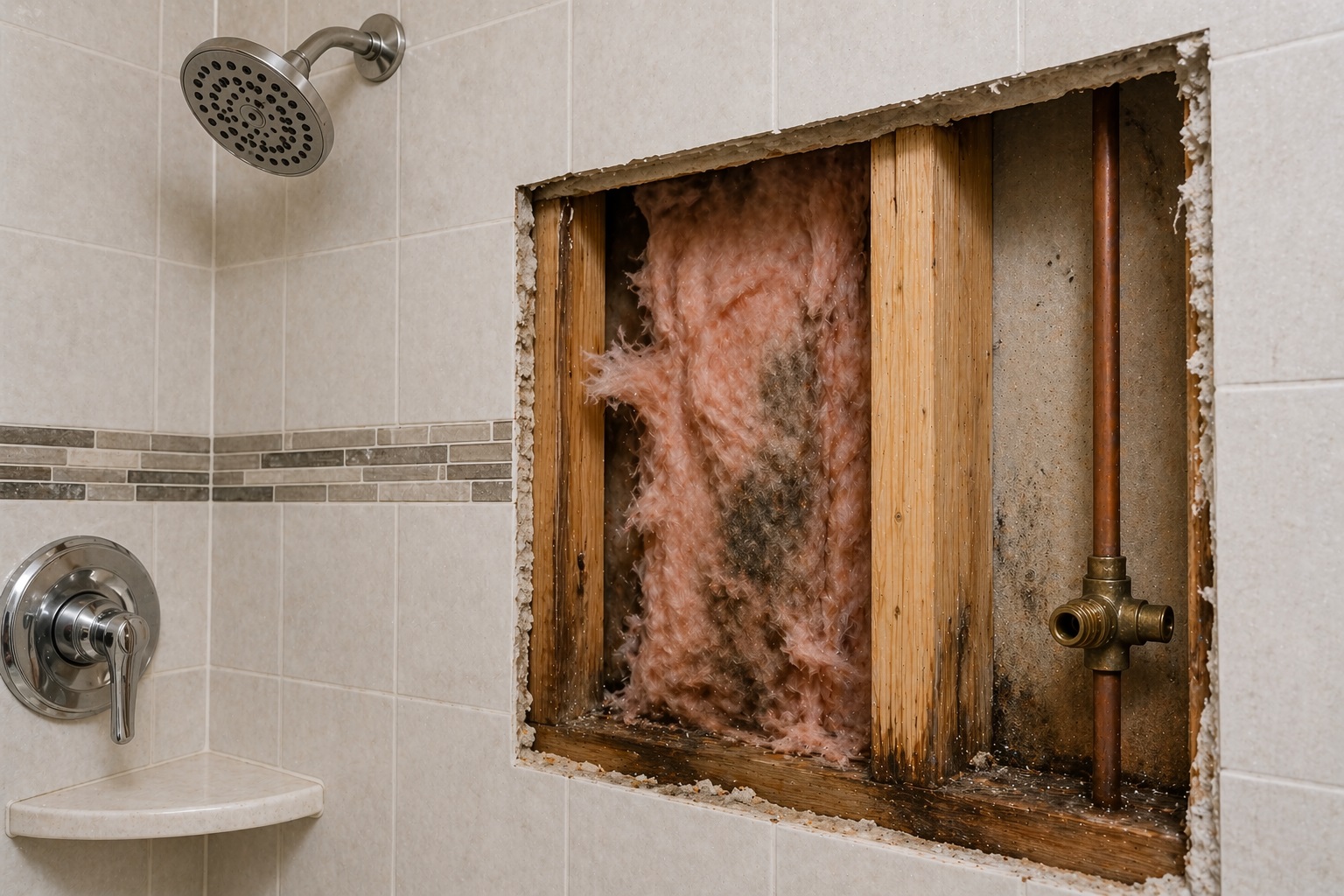
Signs of Water Damage Behind Shower Walls: Early Warning Indicators Every Homeowner Should Know
Water damage behind shower walls often shows up first as musty odors after shower use, cracked or recurring grout failure, loose tile, soft drywall near the shower, stains outside the enclosure, swollen baseboards, or moisture readings that are higher than nearby dry areas.
These warning signs matter because water can sit behind tile, wall panels, cement board, drywall, or framing before an obvious leak appears. This article focuses on the symptoms of hidden shower wall water damage so you can decide when a closer inspection is needed.
For a broader room-by-room moisture inspection framework, see our guide on how to find hidden moisture in different areas of your home.
Why Shower Wall Water Damage Can Stay Hidden
Shower walls are designed to resist water exposure, but they are not completely waterproof on their own. Most shower systems rely on waterproof membranes and properly sealed joints to prevent water from reaching structural materials.
When these protective layers fail, water can enter the wall cavity and remain trapped behind tile or wall panels.
Common Causes of Shower Wall Water Damage
- Cracked or deteriorated grout lines
- Failed caulking around joints
- Damaged waterproof membranes
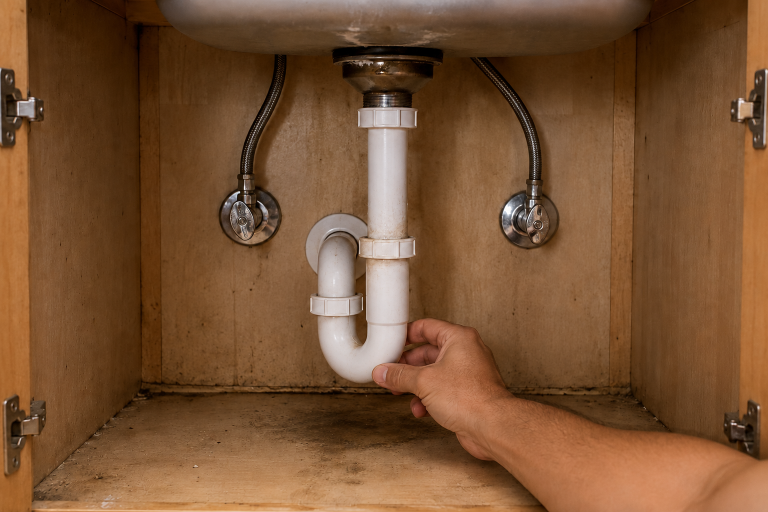
- Leaking plumbing connections
- Improper shower installation
- Aging seal materials
When these failures go unnoticed, the first clues are often changes around the shower rather than visible dripping: odor, staining, loose tile, soft wall areas, or repeated grout and caulk failure.
Early Signs of Water Damage Behind Shower Walls
Small symptoms often appear before a shower leak becomes obvious. Watch for changes that return after cleaning, caulking, or normal drying time.
Subtle Warning Signs to Watch For
| Sign | What It May Indicate |
|---|---|
| Musty odors near the shower | Hidden moisture buildup |
| Persistent damp smell | Possible mold development |
| Loose or cracked grout | Water infiltration risk |
| Peeling paint outside the shower | Moisture migrating into adjacent walls |
| Slight wall discoloration | Early water intrusion |
If these symptoms appear alongside other moisture-related issues, hidden wall damage may already be present. You can compare these warning signs to broader indicators listed in our guide on signs of hidden moisture in walls.
Moderate Signs That Water Damage Is Developing
As water exposure continues, symptoms typically become more noticeable. Moderate signs often indicate ongoing moisture intrusion that requires prompt investigation.
Moderate Warning Signs
- Soft or spongy drywall near the shower
- Warping of nearby wall surfaces
- Cracking tile or shifting wall panels
- Recurring grout deterioration
- Water stains appearing outside shower areas
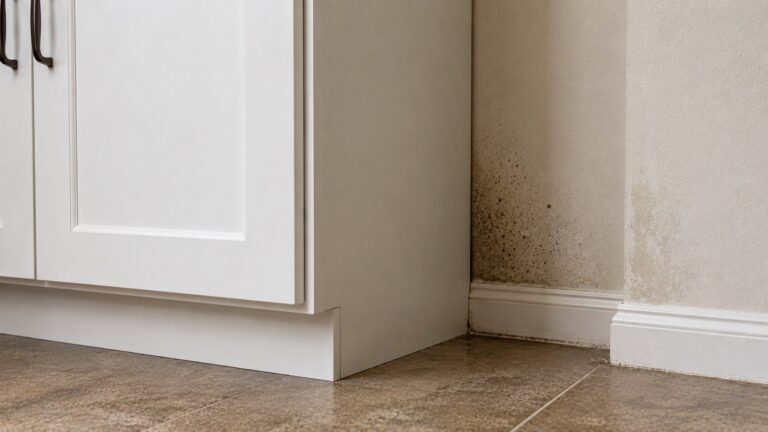
- Unusual swelling near baseboards
At this stage, water damage may already be affecting materials behind the shower. If these symptoms appear together or keep returning after surface repairs, the next step is to confirm whether moisture is active and then trace the source. For source-location steps, use our guide on how to find hidden water leaks inside walls.
Severe Signs of Water Damage Behind Shower Walls
Severe warning signs usually indicate that water has been leaking behind shower walls for an extended period. At this stage, damage often extends beyond surface materials and may affect structural framing, insulation, and nearby flooring.
Recognizing these advanced symptoms early helps prevent more extensive repairs and reduces the risk of mold spreading to other areas of the home.
Severe Warning Signs That Require Immediate Attention
| Sign | What It Typically Means | Recommended Action |
|---|---|---|
| Bulging drywall near the shower | Water accumulation behind wall surfaces | Investigate immediately |
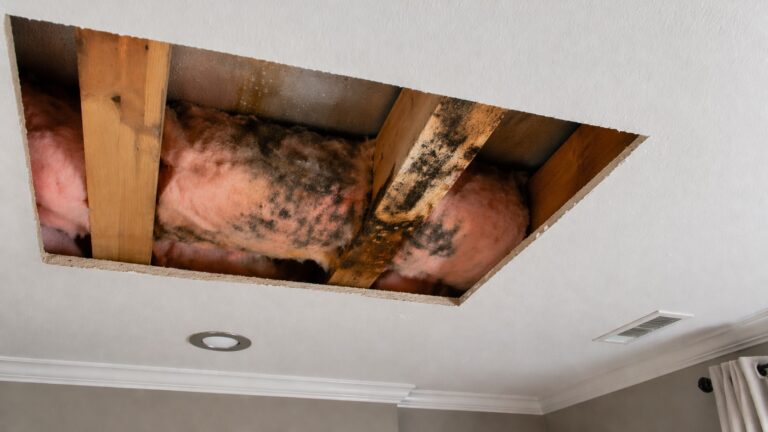
| Visible mold growth | Long-term moisture presence | Begin mold assessment |
| Large water stains spreading outward | Active leak or hidden water flow | Locate leak source quickly |
| Wall sections becoming soft | Structural weakening of materials | Inspect wall cavity |
| Strong persistent musty odors | Likely mold contamination | Perform detailed inspection |
If severe symptoms appear, additional moisture damage may exist inside surrounding structures. If drywall outside the shower has already softened, stained, or broken down, review the repair decision points in our guide on how to fix water-damaged drywall.
Signs of Mold Behind Shower Walls
Mold is one possible result of long-term shower wall moisture, but this article should not replace a full hidden mold diagnosis. Around showers, mold-related clues often include musty odors after shower use, dark spotting near seams, recurring staining, or irritation that seems worse in the bathroom.
Common Mold Indicators Behind Shower Walls
- Musty smells that worsen after shower use
- Visible mold along grout lines
- Dark spots appearing near seams or edges
- Persistent moisture odors despite cleaning
- Allergic reactions or respiratory irritation indoors
If mold symptoms are suspected, follow proper identification steps in our guide on signs of mold behind walls.
Signs of Waterproofing Failure Behind Shower Walls
Shower walls rely on hidden waterproofing systems to prevent moisture from entering the wall cavity. When waterproofing fails, water intrusion often occurs without visible leaks on the surface.
Understanding waterproofing failure symptoms helps homeowners identify hidden structural risks early.
Waterproofing Failure Indicators
| Indicator | What It Suggests |
|---|---|
| Recurring grout cracks | Movement or water intrusion behind tile |
| Loose or shifting tiles | Moisture weakening tile adhesive |
| Persistent dampness after shower use | Water trapped behind surface layers |
| Stains spreading beyond shower boundaries | Water migration inside wall cavity |
| Repeated caulking failure | Underlying moisture problem |
If these signs keep returning after grout or caulk repairs, the problem may be behind the surface rather than only in the visible joint.
Structural Damage Indicators From Long-Term Shower Leaks
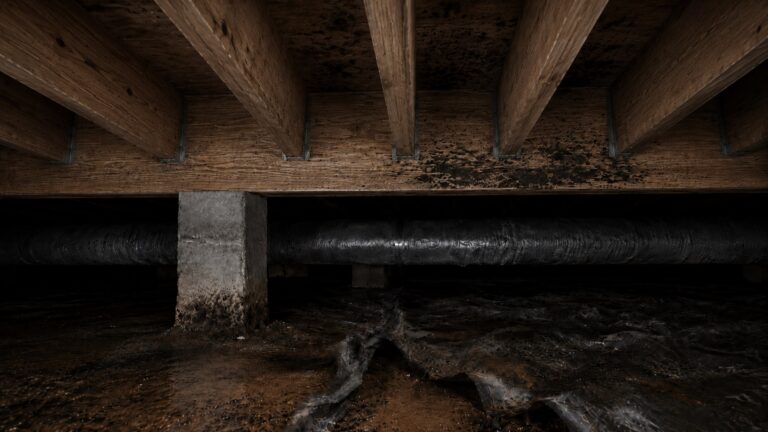
Extended water exposure can weaken structural materials behind shower walls. Over time, wood framing and subfloor materials may begin to deteriorate.
Structural damage often develops slowly and becomes visible only after significant moisture accumulation.
Signs of Structural Damage Behind Shower Walls
- Warped wall framing
- Loose baseboards near the shower
- Flooring damage outside the shower area
- Visible sagging or uneven wall surfaces
- Recurring tile movement
Structural damage can spread beyond the shower area, especially into nearby flooring, baseboards, and lower wall sections. If the main warning signs are coming from the floor rather than the shower wall, compare them with our guide on signs of mold under flooring.
How to Confirm Water Damage Behind Shower Walls
One symptom by itself does not always prove hidden shower wall damage. A stronger warning pattern is several symptoms appearing together, worsening after shower use, returning after caulking or grout repairs, or showing up on the wall or floor outside the shower.
The goal is to confirm moisture before opening walls whenever possible, while still taking soft materials, spreading stains, or strong musty odors seriously.
Steps to Confirm Hidden Shower Wall Damage
- Inspect grout lines for cracks or separation
- Check caulking around corners and seams
- Look for moisture spreading outside the shower area
- Press gently on nearby walls to detect softness
- Use a moisture meter to compare readings across surfaces
Safety note: Do not cut into walls, remove tile, or disturb moldy materials until you understand the moisture source and the risk level. Stop and call a qualified professional if materials are soft, crumbling, visibly moldy, sewage-contaminated, electrically unsafe, or spread across a large area.
Moisture meters are especially useful for identifying hidden damp areas. Comparing readings from suspected wet areas to known dry areas provides reliable confirmation of moisture problems. Learn more about measurement thresholds in our guide on moisture levels that indicate water damage.
When to Investigate Further Behind Shower Walls
Minor symptoms may not always require immediate demolition, but certain warning signs indicate that deeper inspection is necessary.
Situations That Require Further Investigation
- Recurring musty odors near the shower
- Repeated grout or caulking failure
- Water stains expanding over time
- Soft drywall outside shower boundaries
- Persistent moisture readings above safe levels
If hidden leaks are suspected, structured detection methods can help identify the source. Follow the step-by-step approach described in our guide on how to find hidden water leaks inside walls.
Common Problems Mistaken for Shower Wall Water Damage
Not all moisture-related symptoms indicate water damage behind shower walls. Some conditions appear similar but originate from unrelated causes.
Correct diagnosis prevents unnecessary repairs and helps focus attention on the true source of moisture.
Conditions Often Misdiagnosed as Shower Leaks
| Condition | Why It Looks Similar | How to Distinguish It |
|---|---|---|
| Condensation buildup | Creates moisture on surfaces | Occurs mainly during humid conditions |
| Exterior wall leaks | Causes wall stains near showers | May worsen during rainfall |
| Plumbing leaks in nearby fixtures | Produces similar moisture patterns | Not limited to shower usage |
| High indoor humidity | Causes damp surfaces | Humidity readings remain elevated |
Monitoring humidity helps differentiate condensation from leaks. If dampness appears during humid conditions rather than after shower use, compare the pattern with our guide on how to test indoor humidity levels.
When to Call a Professional to Inspect Shower Wall Damage
Professional inspection is most important when signs keep returning after surface repairs, stains expand, walls soften, odors persist, or damage appears outside the shower area. At that point, the problem may be deeper than failed caulk or grout.
Signs Professional Inspection Is Needed
- Large or expanding water stains
- Visible mold growth spreading outward
- Persistent musty odors that do not improve
- Structural movement or wall sagging
- Water damage affecting multiple rooms
- Repeated shower wall failures
Professionals often use advanced detection equipment, such as infrared cameras and moisture mapping tools, to locate hidden moisture sources without unnecessary demolition.
Frequently Asked Questions About Water Damage Behind Shower Walls
How do I know if my shower wall is leaking?
Common indicators include musty odors, cracked grout, soft drywall near the shower, and spreading water stains. Multiple symptoms usually indicate hidden moisture behind the wall.
Can water damage happen without visible leaks?
Yes. Small leaks behind tile or wall panels can remain hidden for long periods before visible symptoms appear.
What does hidden shower wall damage smell like?
Hidden water damage often produces a musty or damp odor. This smell typically becomes stronger after shower use when moisture levels increase.
Is cracked grout always a sign of water damage?
Not always, but cracked grout increases the risk of water infiltration. Repeated cracking or deterioration may indicate underlying moisture problems.
Should I open the wall to inspect behind the shower?
Wall removal should only occur after confirming strong evidence of hidden moisture. Using moisture meters and visual inspections can help determine whether opening the wall is necessary.
What to Do When Shower Wall Water Damage Signs Appear
When shower wall water damage signs appear, start by comparing symptoms before and after shower use, checking whether stains or odors return, and looking for changes outside the shower enclosure.
If multiple signs appear together, do not cover stains, recaulk repeatedly, or paint over damage until the moisture source is understood. Confirm the problem first, then decide whether the wall needs professional inspection.
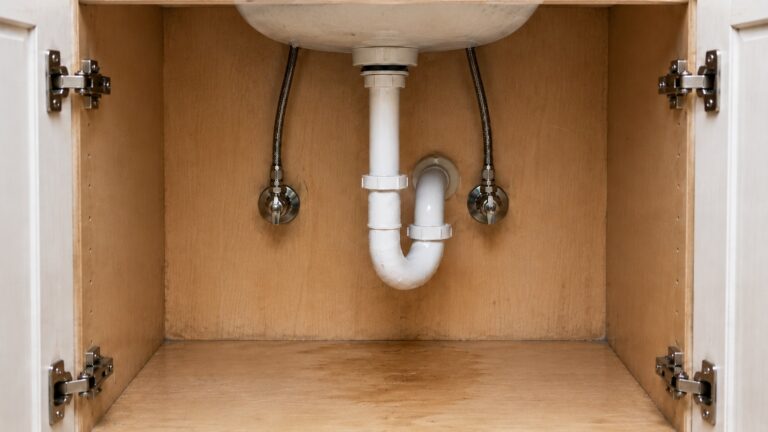
If you are comparing shower wall symptoms with moisture signs in other parts of the home, use our guide on how to find hidden moisture in different areas of your home to check nearby walls, floors, ceilings, cabinets, and trim before damage spreads.
One Comment
Comments are closed.