
Signs of Wind Damage on Roofs
Signs of wind damage on roofs include missing shingles, lifted shingle edges, creased or folded tabs, torn roof materials, loose flashing, damaged ridge caps, shifted vents, and new moisture signs after wind-driven rain. Some damage is obvious from the ground. Other signs are subtle and may only become noticeable when rain gets beneath loosened roof materials.
Wind damage matters because the roof is designed to shed water before moisture reaches the structure below. When high winds lift, loosen, tear, or shift roofing materials, rain can move under the roof covering. That can lead to attic dampness, wet insulation, stained roof decking, ceiling spots, and other moisture problems in homes.
Not every roof irregularity after a storm is wind damage. Some curled, brittle, or uneven shingles are caused by age, heat exposure, poor installation, or old repairs. But sudden changes after high winds deserve attention, especially if shingles are missing, tabs are creased, flashing is loose, or interior moisture appears after the storm.
Wind-related roof problems belong within the larger group of roofing material failures that lead to leaks. Once the roof covering no longer lies flat, stays sealed, or protects roof transitions, wind-driven rain may find a path into the roof system.
Why Wind Damage on Roofs Can Lead to Moisture Problems
Wind damage is not only a surface appearance issue. The main concern is water entry. High winds can create uplift that pulls shingles, ridge caps, vents, flashing, or roof edges away from their proper position. Once those materials are loosened, rain can be pushed underneath during the same storm or during a later storm.
A roof can be vulnerable even if no large hole is visible. A lifted shingle tab may allow wind-driven rain beneath it. A creased shingle may no longer lie flat. A torn shingle may expose underlayment. A loose vent cap may allow water around a penetration. Bent flashing can open a gap at a chimney, wall, valley, or roof edge.
The moisture problem may not appear immediately. Water can move beneath the roof covering, travel along underlayment, follow a nail, run beside a rafter, or collect in insulation before it becomes visible indoors. That is why a small wind-damage sign outside can eventually become a ceiling stain inside.
The most important wind-damage signs are the ones that show the roof has lost its ability to shed water cleanly. Missing shingles are obvious. Lifted, folded, creased, torn, or loosened materials may be less dramatic, but they can still create moisture risk.
Obvious Signs of Wind Damage on a Roof
Some wind damage is easy to recognize from the ground or around the yard. These signs do not require climbing onto the roof to notice. They often show that the wind was strong enough to remove, tear, or move parts of the roof covering.
Missing Shingles
Missing shingles are one of the clearest signs of wind damage. If shingles are gone from a roof slope, ridge, hip, or edge, the underlayment or roof deck may be more exposed to rain. Even if the underlayment is still intact, it is not meant to serve as the long-term outer roof covering.
Missing shingles are especially urgent when rain is expected or when the missing area is near a valley, ridge, chimney, skylight, or roof edge. Those areas already handle concentrated water movement or transition points.
Shingles or Roof Pieces in the Yard
If you find shingles, shingle tabs, ridge cap pieces, vent fragments, or roof material in the yard after high winds, assume the roof may have lost protective material. The piece may not come from the most visible side of the house, so do not rely only on the front roof slope.
Roof pieces on the ground are especially important when they are fresh, match your roofing material, or appear immediately after a storm. Take photos from the ground, note where the pieces were found, and check whether the closest roof slope, ridge, valley, or edge shows a matching missing area.
Torn, Folded, or Creased Shingles
Wind can fold a shingle tab backward, crease it, or tear part of it loose. A creased shingle may look like it has a bend line across the tab. A folded shingle may appear raised or flipped. A torn shingle may expose the layer below.
These signs matter because the shingle may no longer lie flat or seal properly. Even if it falls back into place after the storm, the crease or tear may remain. That damaged area can become vulnerable to later wind-driven rain.
Visible Exposed Underlayment or Roof Decking
If you can see dark underlayment, exposed sheathing, or areas where the normal roof covering is missing, the roof needs prompt attention. Exposed underlayment may temporarily slow water entry, but it is not a permanent roof surface. Exposed decking is more serious because the structural roof layer may be directly vulnerable to moisture.
Any visible exposure after high winds should be treated as a possible leak risk, even if water has not appeared indoors yet.
Missing or Damaged Ridge Caps
Ridge caps sit at the peak of the roof and are exposed to wind from multiple directions. If ridge cap shingles are missing, cracked, lifted, or shifted, rain may enter along the top of the roof. Damage at the ridge can also affect attic ventilation components if a ridge vent is present.
Because ridge areas are high and exposed, homeowners may not notice missing ridge caps from every angle. A roof may look normal from the front but show damage from the side or rear.
Subtle Signs Roof Shingles Were Lifted by Wind
Not all wind damage removes shingles completely. In many cases, wind lifts the shingle, weakens the seal, or bends the tab without tearing it off. These signs are easier to miss, but they can still allow water underneath during storms.
Raised Shingle Edges
Raised shingle edges may show that wind lifted the shingle tab. From the ground, this can look like uneven shadow lines, shingles that do not lie flat, or tabs that appear slightly lifted compared with surrounding areas.
A raised edge is more concerning when it appears suddenly after high winds or when several shingles on the same slope show the same pattern. If the shingle seal has been broken, the roof may be more vulnerable during future wind-driven rain.
Uneven or Rippled Roof Surfaces
A wind-damaged roof may look wavy, uneven, or disturbed in areas that used to appear flat. This may happen when shingles have lifted, shifted, or loosened. Unevenness can also come from old roof decking, aging shingles, or poor installation, so the timing matters.
If the surface looked normal before the storm and looks uneven afterward, that change deserves attention. A full workflow to inspect roof shingles after high winds can help separate visible warning signs from conditions that need closer professional evaluation.
Creases Across Shingle Tabs
Creases are stronger evidence of wind stress than a shingle that is merely old or slightly curled. A crease may show where wind bent the shingle backward. Once creased, the shingle may be weakened even if it later lies close to its original position.
Creased shingles can lose strength and may not seal properly again. They are also more likely to tear during future storms.
Folded Corners or Tabs
Folded shingle corners are another sign that wind may have lifted the roofing material. A folded corner can create a small opening where wind-driven rain can enter beneath the shingle. Even if the corner settles down later, the fold may leave the shingle weakened or no longer fully sealed.
This kind of damage is often easier to see when sunlight creates shadows along the roof surface. From the ground, the roof may look slightly uneven or ruffled rather than obviously damaged.
Exposed Nail Areas
If wind lifts or tears shingles enough to expose nail areas, the roof becomes more vulnerable to water entry. Nails and fasteners are potential leak points when they are no longer protected by the shingle above them.
Exposed nail areas can be hard to see from the ground, but they may show up as dark lines, gaps, or missing pieces. If you suspect exposed fasteners after a windstorm, avoid climbing onto the roof and have the area evaluated safely.
Tabs That No Longer Lie Flat
Shingle tabs should generally lie flat against the roof surface. Tabs that lift repeatedly, flap in wind, or appear raised after a storm may indicate broken seals or wind stress. A loose tab may not leak during every rain, but it can allow water in when rain is driven upward or sideways by wind.
This is where wind damage becomes a delayed leak risk. A roof may not leak during the first storm, but a lifted tab may worsen during later wind events. For a deeper explanation of delayed moisture risk, see hidden wind damage that leads to roof leaks.
Signs the Shingle Seal Has Been Disturbed
Many asphalt shingles rely on seal strips to hold tabs down and resist uplift. When wind breaks or weakens that bond, shingles may become easier for future wind to lift. Visible clues can include raised tabs, shingles that shift out of line, repeated lifting in the same area, or tabs that look loose compared with nearby shingles.
This article focuses on visible signs. The deeper seal behavior is covered in how wind damage weakens roof seals, especially when a roof looks mostly intact but shingles no longer resist uplift the way they should.
Signs Wind Damaged Roof Edges, Ridges, and Valleys
Wind damage often appears first at exposed roof areas. Edges, corners, ridges, hips, and valleys handle more wind pressure, more water movement, or more roof transitions than broad flat roof sections. When these areas are damaged, the roof can become vulnerable quickly.
Damaged Roof Edges
Roof edges are vulnerable because wind can get underneath the first rows of roofing material. Missing edge shingles, lifted starter strips, bent drip edge, loose fascia, or displaced materials near gutters can all suggest wind damage.
Edge damage matters because water can enter beneath the roof covering and affect the decking or fascia. If the edge no longer directs water cleanly into the gutter system, moisture can also move into soffits, trim, or wall areas.
Loose or Missing Ridge Caps
Ridge caps protect the highest roof intersections. They are exposed to wind from several directions and can loosen, crack, fold, or blow off during high winds. Missing ridge caps may expose the ridge line and create a path for wind-driven rain.
If your roof has a ridge vent, wind damage at the ridge can also affect ventilation components. A damaged ridge vent or displaced cap material can allow moisture to enter near the top of the attic.
Hip Cap Damage
Hip caps run along sloped outside roof corners. Like ridge caps, they are exposed and can be lifted or torn by high winds. Damage along hips may show up as missing cap shingles, shifted pieces, broken edges, or uneven lines along the roof corner.
Because hips are raised transitions, water can enter beneath damaged cap material and travel along the roof plane before appearing in the attic or ceiling below.
Valley Damage
Roof valleys carry concentrated water runoff. Wind can lift shingles near valleys, loosen valley metal, or push debris into the valley area. Even small damage in a valley can become serious because more water passes through that area during rain.
Watch for missing shingles near valleys, lifted edges, loose valley flashing, debris caught under shingles, or stains indoors below valley areas after storms. Valley leaks can be difficult to trace because water may travel before it becomes visible inside.
Drip Edge or Gutter-Line Movement
High winds can loosen or bend drip edge, gutter attachments, fascia trim, or roof-edge metal. These parts help direct water away from the roof edge. If they shift, water may no longer drain cleanly and may be pushed back toward vulnerable roof or wall areas.
After a windstorm, bent metal along the gutter line, loose gutter sections, exposed roof edges, or trim pieces pulling away from the house can be clues that the roof edge needs evaluation.
Flashing, Vent, and Roof Penetration Warning Signs
Wind damage is not limited to shingles. Roof leaks often start at transition points, and high winds can shift the components that protect those transitions. Flashing, vents, pipe boots, skylights, chimneys, and ridge vents should all be considered when looking for wind-related damage signs.
Bent or Lifted Flashing
Flashing protects places where the roof meets another surface, such as a wall, chimney, skylight, valley, or roof edge. If wind bends, lifts, or loosens flashing, water may enter behind it. This can happen even when the main roof field still looks normal.
Warning signs include flashing that appears raised, separated, crooked, bent, missing, or pulled away from masonry, siding, or trim. Chimney flashing and step flashing are especially important because they protect common leak-prone areas.
Loose Roof Vents
Roof vents can shift, crack, or loosen during high winds. A vent that no longer sits flat may allow water around its base. Plastic vents may crack. Metal vents may bend. Fasteners may loosen. Wind-driven rain can then enter beneath the vent flange or surrounding shingles.
If a vent appears tilted, raised, cracked, missing a cap, or surrounded by disturbed shingles, it should be checked before the next heavy rain.
Damaged Pipe Boots
Pipe boots seal plumbing vent pipes where they pass through the roof. High winds can disturb the surrounding shingles or loosen already aged rubber boots. If the boot is cracked, lifted, torn, or separated from the pipe, water can enter around the penetration.
Pipe boot leaks are common because they involve both roofing materials and flexible sealing components. After high winds, any visible shift around roof pipes should be treated as a possible leak source.
Skylight and Chimney Warning Signs
Skylights and chimneys are vulnerable because they interrupt the roof surface. Wind can loosen flashing, lift nearby shingles, shift trim, or open small gaps around these features. A leak near a skylight or chimney after wind-driven rain may come from flashing movement rather than damage to the broad roof field.
Look for bent metal, separated sealant, lifted shingles, debris trapped around flashing, or new interior staining near the skylight or chimney area.
Interior and Attic Signs of Wind-Driven Roof Leaks
Wind damage becomes more urgent when exterior roof signs are paired with moisture inside the home. A missing shingle or lifted tab is already a warning sign, but ceiling stains, attic dampness, and wet insulation suggest that water may have moved beneath the roof covering.
Wind-driven roof leaks can be intermittent. The roof may not leak during calm rain, but it may leak when rain is pushed sideways or upward beneath lifted shingles, loose flashing, or damaged roof penetrations. This is why some homeowners only notice moisture after storms with both wind and rain.
Ceiling Stains After Wind-Driven Rain
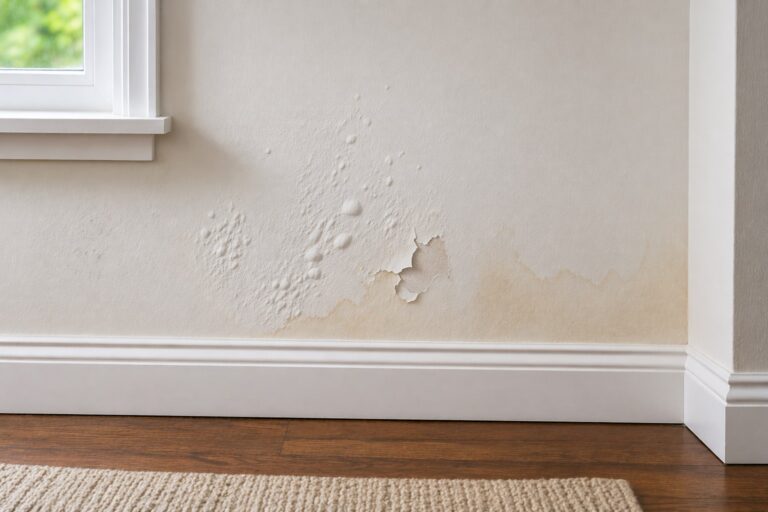
A new ceiling stain after a windy storm is one of the clearest interior warning signs. The stain may be small, yellow-brown, circular, or irregular. It may appear near an upstairs ceiling, around a chimney, below a roof valley, near an exterior wall, or under a roof penetration. Mark the edge lightly with tape or take a dated photo so you can tell whether the stain grows after the next rain.
The stain does not always appear directly below the damaged roof area. Water can travel along underlayment, rafters, insulation, or ceiling framing before it reaches drywall. If you see stains after high winds, compare them with other signs of roof leaks inside the house instead of assuming the problem is only cosmetic.
Damp Attic Insulation
Attic insulation can hide wind-driven roof leaks before the leak reaches the living space. A lifted shingle, loose vent, or bent flashing area may allow water into the attic, where insulation absorbs moisture. The ceiling below may stay dry at first, even though the roof system is already leaking.
Damp insulation after high winds should be taken seriously. Wet insulation can lose performance, hold moisture against nearby materials, and make it harder to find the actual leak path.
Water Stains on Roof Decking or Rafters
Inside the attic, wind-driven leaks may show up as dark stains on roof decking, water marks around nails, streaks on rafters, or damp spots below valleys and penetrations. These signs suggest that water has passed beneath the roof covering and reached the structure below.
Stains on decking or rafters may remain visible after the area dries, so timing matters. A fresh wet area after wind-driven rain is more urgent than an old dry stain. Repeated wetting, however, can lead to broader water damage from roof leaks.
Musty Odors After Storms
A musty smell in the attic or upper rooms after high winds can indicate damp materials. Odor alone does not prove wind damage, but if it appears after storms and is paired with lifted shingles, damaged flashing, or attic stains, it may point to hidden moisture.
Musty odors are especially concerning when they return after each storm. That pattern suggests materials may be getting wet repeatedly and not drying fully between weather events.
Signs That May Look Like Wind Damage but Could Be Roof Aging
Some roof conditions can look like wind damage even when they developed slowly over time. This distinction matters because the right response depends on the cause. Recent storm damage, long-term aging, poor installation, and previous repairs can all create uneven roof surfaces.
Old Curling Shingles
Curling shingles are not always recent wind damage. Shingles can curl from age, heat exposure, poor attic ventilation, manufacturing issues, or long-term weathering. Curling becomes more suspicious after wind when it appears suddenly, affects one storm-facing area, or is paired with missing, folded, torn, or creased shingles.
Gradual Granule Loss
Granule loss can happen as shingles age. Long-term granule shedding may show up slowly in gutters or on the ground below roof edges. Wind damage is more likely when granule loss appears suddenly after a storm, especially with lifted tabs, exposed asphalt, torn shingles, or other fresh displacement.
Brittle Cracking
Old shingles can crack because they become brittle over time. Wind may worsen brittle cracking, but not every crack started with the storm. The concern is higher when cracks appear with fresh creases, folds, missing tabs, or interior moisture after high winds.
Poor Installation or Old Repairs
Improper nailing, weak sealing, poor flashing work, and old patch repairs can make a roof more vulnerable to wind. After a storm, these areas may fail first. The damage may be wind-related, but the underlying weakness may have been installation or repair quality.
This is one reason homeowners should avoid diagnosing the full cause from the ground. Visible signs can tell you the roof needs attention, but they may not reveal whether the problem started with wind, age, installation, or a combination of factors.
When Wind Damage Needs Professional Evaluation
Wind damage needs professional evaluation when visible roof damage or interior moisture suggests the roof is no longer shedding water reliably. The goal is not to replace or repair the roof based on guesswork. The goal is to find out whether high winds loosened, lifted, shifted, or damaged materials enough to create leak risk.
Call for evaluation when you notice:
- Missing shingles, ridge caps, or roof pieces.
- Shingles in the yard after high winds.
- Lifted, folded, creased, or torn shingles.
- Loose flashing around chimneys, walls, valleys, or skylights.
- Damaged vents, pipe boots, ridge vents, or roof caps.
- Visible exposed underlayment or roof decking.
- Ceiling stains after wind-driven rain.
- Damp attic insulation or fresh roof-deck stains.
- Leaks that happen only during windy rain.
- Repeated moisture after storms.
Homeowners should avoid climbing onto the roof after high winds. Roof materials may be loose, surfaces may be slippery, and damaged shingles may not support foot traffic safely. Safer steps include taking photos from the ground, checking for fallen roof materials, looking in the attic if it is safe and accessible, and recording when moisture appears.
If moisture is already visible inside the home or attic, do not wait for the next storm to see if it happens again. Wind-damaged roofs can leak intermittently, but each wetting cycle can increase damage. A guide on when to hire a roofing contractor for moisture problems can help you decide when the issue has moved beyond simple observation. If the damage is widespread, repeated, or paired with exposed decking, the next question may be when wind damage requires roof replacement.
After the roof is stabilized or repaired, the next priority is preventing repeated water entry. Even a small wind-damaged area can become more costly if water reaches insulation, decking, or ceilings. Early evaluation can help prevent roof leak damage before it spreads into hidden areas.
FAQ About Signs of Wind Damage on Roofs
What does wind damage look like on a roof?
Wind damage may look like missing shingles, lifted tabs, folded corners, creased shingles, torn materials, missing ridge caps, bent flashing, loose vents, or exposed underlayment. It may also show up indoors as ceiling stains or attic dampness after wind-driven rain.
Can wind damage a roof without missing shingles?
Yes. Wind can lift, crease, loosen, or break the seal on shingles without removing them completely. A roof may still look mostly covered while wind-driven rain is able to get beneath raised tabs, loose flashing, or damaged roof penetrations.
Are lifted shingles serious?
Lifted shingles can be serious because they may no longer shed water properly. If a lifted tab has a broken seal, crease, tear, or exposed fastener area, future wind-driven rain may get underneath. Lifted shingles should be evaluated, especially if they appear after a storm.
Can wind damage cause leaks later?
Yes. Wind damage can cause leaks later when lifted or loosened roofing materials worsen during future storms. A shingle may not leak the first time it lifts, but repeated wind and rain can open the path enough for water to reach underlayment, decking, insulation, or ceilings.
How soon should I check for wind damage?
Check safely as soon as conditions are calm and the area is safe. Look from the ground for missing shingles, roof pieces in the yard, damaged flashing, loose vents, or roof edges that look disturbed. Avoid climbing onto the roof, especially after a storm.
Is curling always wind damage?
No. Curling can come from age, heat, poor ventilation, installation issues, or long-term weathering. Curling is more suspicious after high winds when it appears suddenly or is paired with missing shingles, creases, folds, tears, lifted tabs, or interior moisture.
Should I climb on the roof to check for wind damage?
No. A storm-damaged roof may have loose materials, slippery surfaces, and hidden weak areas. Use ground-level observation, attic checks if safe and accessible, and photos from safe locations. Call a qualified roofer when you see missing, lifted, torn, or moisture-related signs.
What to Do After You See Signs of Wind Damage
Wind damage is most concerning when it creates a path for water. Missing shingles, lifted tabs, creased shingles, torn materials, shifted flashing, damaged vents, and loose ridge caps can all let wind-driven rain move beneath the roof covering.
After high winds, document visible damage from the ground, check the attic only if it is safe and accessible, and watch for ceiling stains, damp insulation, or fresh roof-deck marks after rain. If roof damage or interior moisture appears, have the damaged area evaluated before repeated wetting spreads into insulation, decking, ceilings, or hidden structural areas.
One Comment
Comments are closed.